
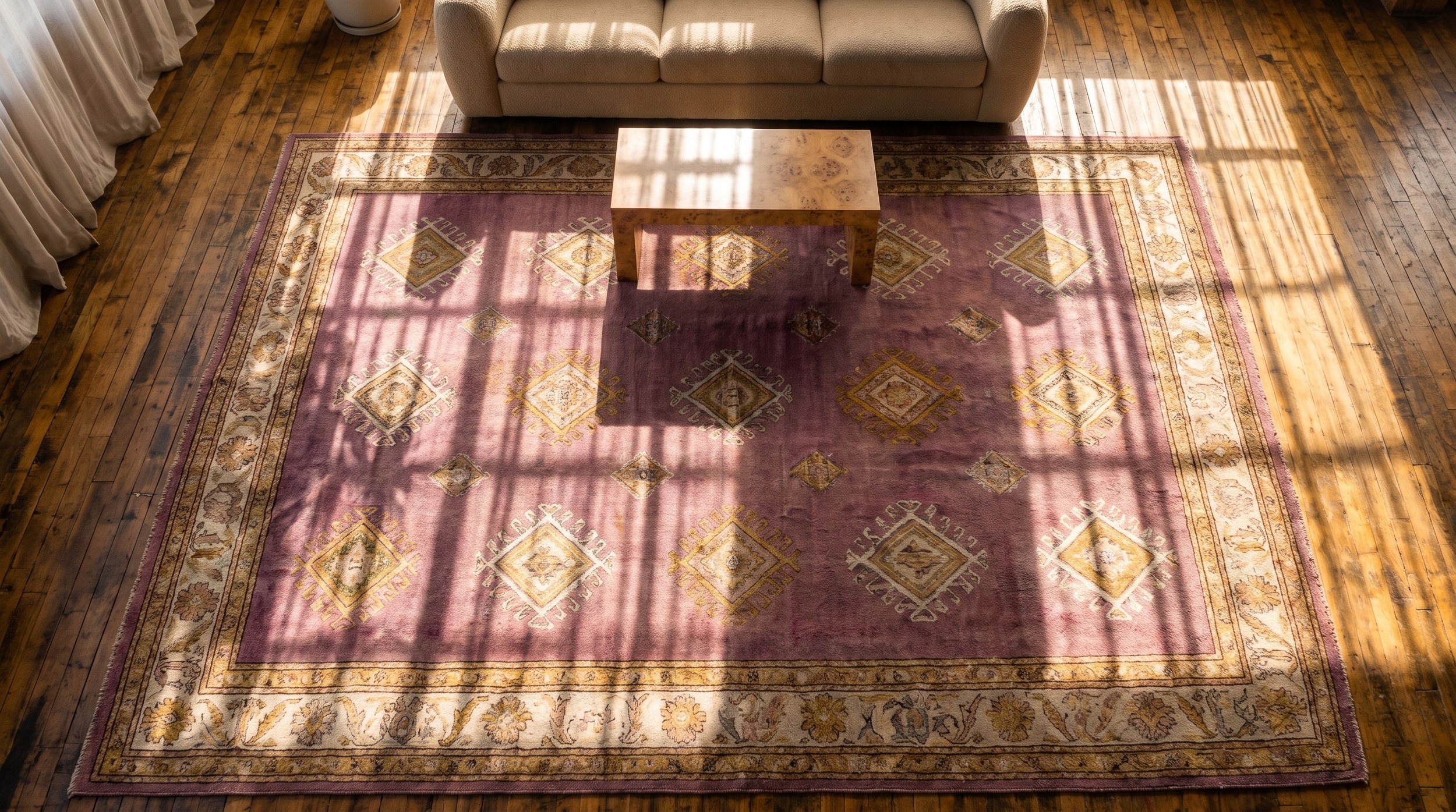


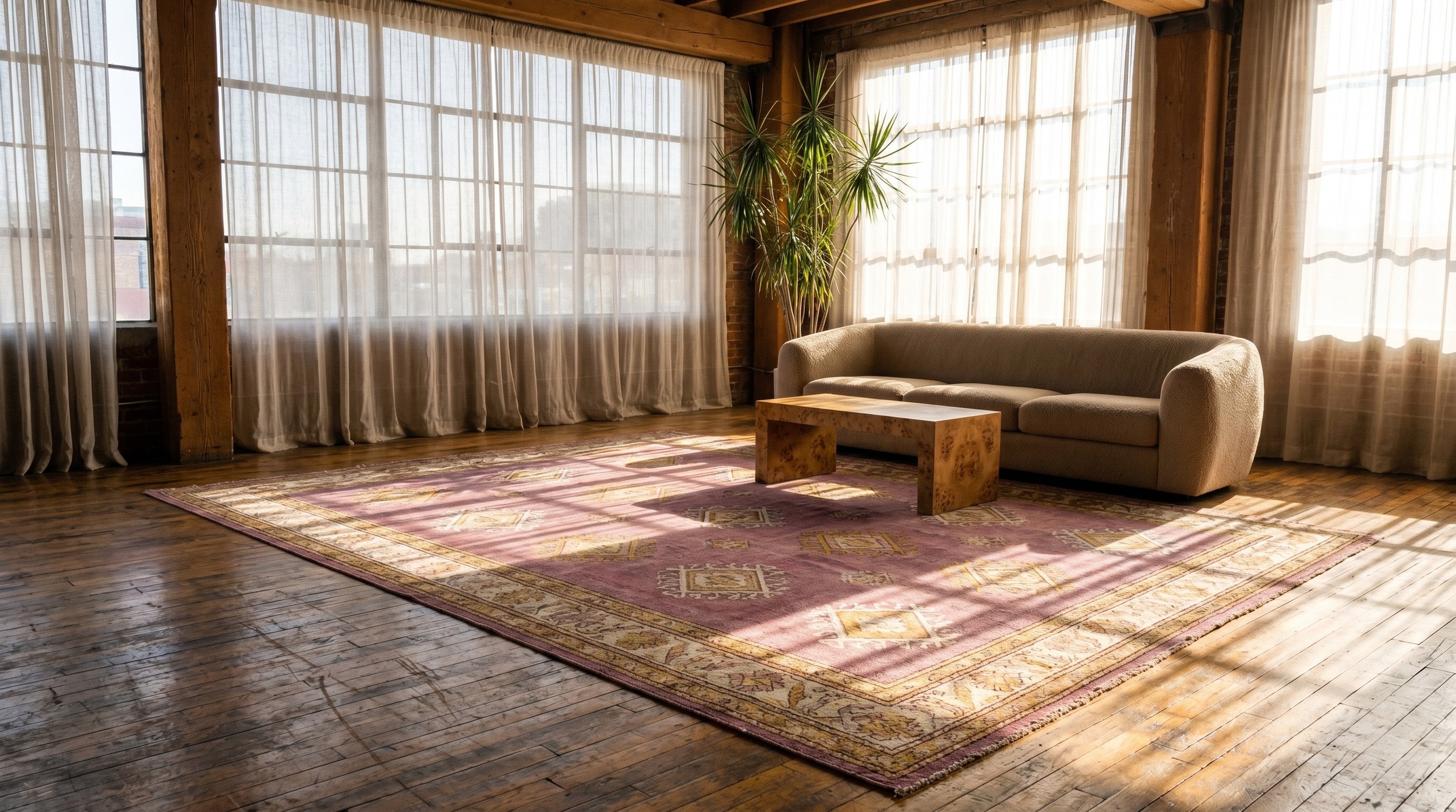
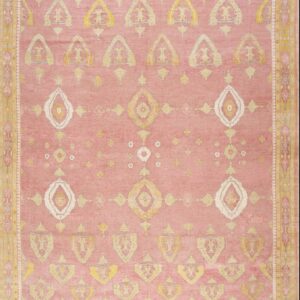
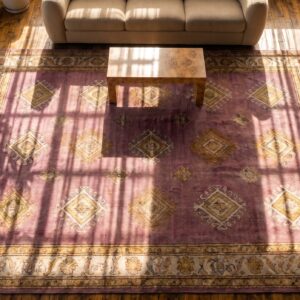




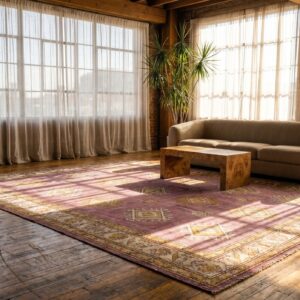
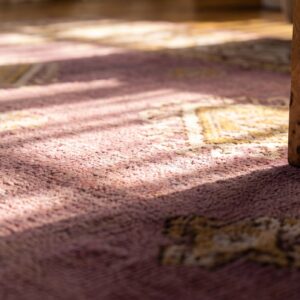
This antique oversized Indian Agra rug, dating from the late nineteenth century, is a monumental exemplar of the “Imperial Agra” tradition, a style that represents the sophisticated intersection of Mughal grandeur and British colonial aesthetics. Historically, the city of Agra—home to the Taj Mahal—was one of the primary centers for carpet weaving in India, having been established by the Mughal emperors who imported master weavers from Persia. By the late 1800s, Agra workshops were renowned for producing carpets of exceptional scale and structural integrity, often commissioned for the grand administrative buildings and stately manors of the British Raj and the European aristocracy. This specific specimen is defined by its rare and hauntingly beautiful “purple” field, a color that reflects the Victorian fascination with soft, muted tones and the innovative use of botanical dyes to create complex, layered purple palettes.
The composition features a “large-scale allover design,” a departure from the more rigid, centralized medallions of the Persian heartland. This sprawling arrangement of oversized palmettes, serrated leaves, and bold scrolling vines is a direct descendant of the 16th-century “Vase” and “Vine-Scroll” carpets of the Safavid era, yet it is rendered here with the characteristic weight and “painterly” quality of the Agra looms. The sheer scale of the motifs is intentional; it was designed to accommodate the vast, high-ceilinged architectural spaces of the late 19th century, ensuring that the rug’s artistry remained visible even beneath massive pieces of mahogany or walnut furniture. The “tribal” undertone in these large-scale motifs speaks to the rugged interpretation of classical court designs by the Agra weavers, who imbued the formal patterns with a sense of vitality and rhythmic power.
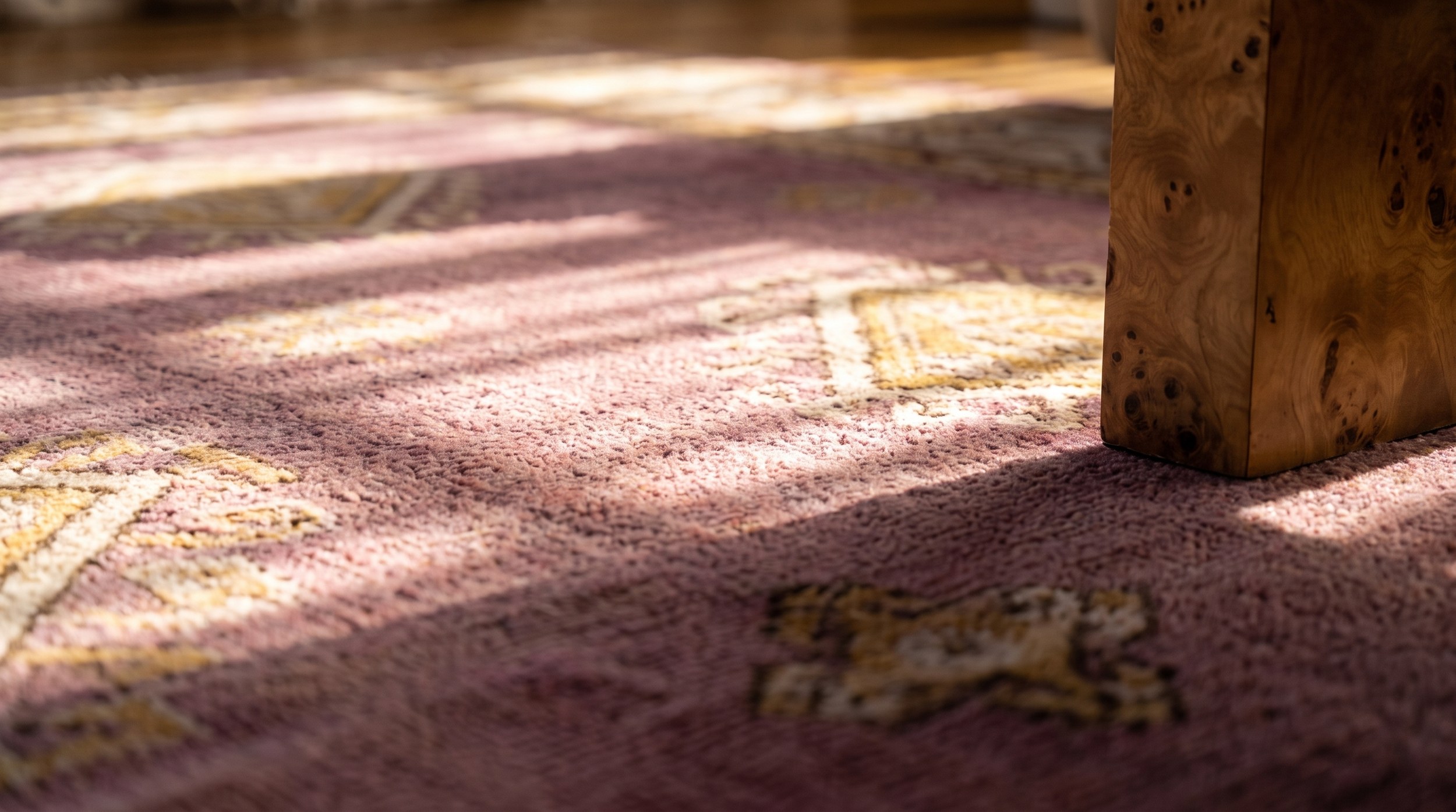
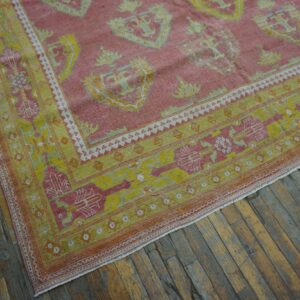
Technically, The antique rugs from India are prized for their dense construction and the use of superior, high-luster wool. The “purple” ground color is particularly significant, as such subtle tonal values require a master dyer’s hand to achieve consistency across an oversized surface. Over the decades, this color has developed a sophisticated abrash, where the natural variations in the wool have softened into a shimmering, multidimensional patina. The borders are equally impressive, featuring a primary band of alternating rosettes and stylized cloud-bands that act as a stately frame to the explosive energy of the central field. To possess an antique Agra of this magnitude and rare coloration is to hold a fragment of world history—a work that bridges the gap between the majestic legacy of the Mughal Empire and the refined, globalized luxury of the Victorian age.
Condition: Good. Rewoven. Wear consistent with age and use.