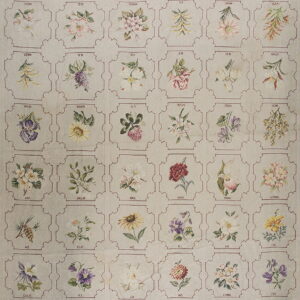
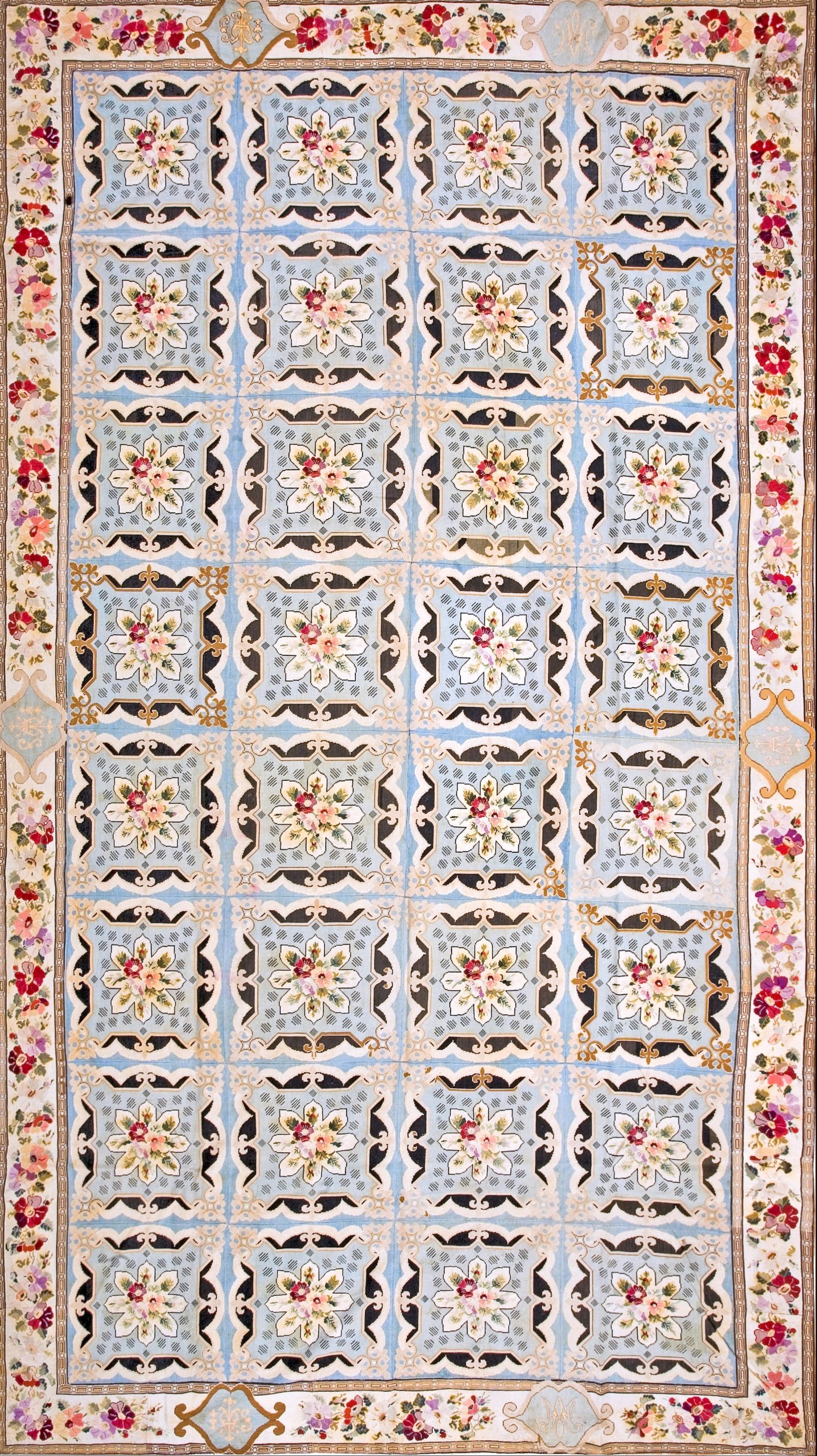
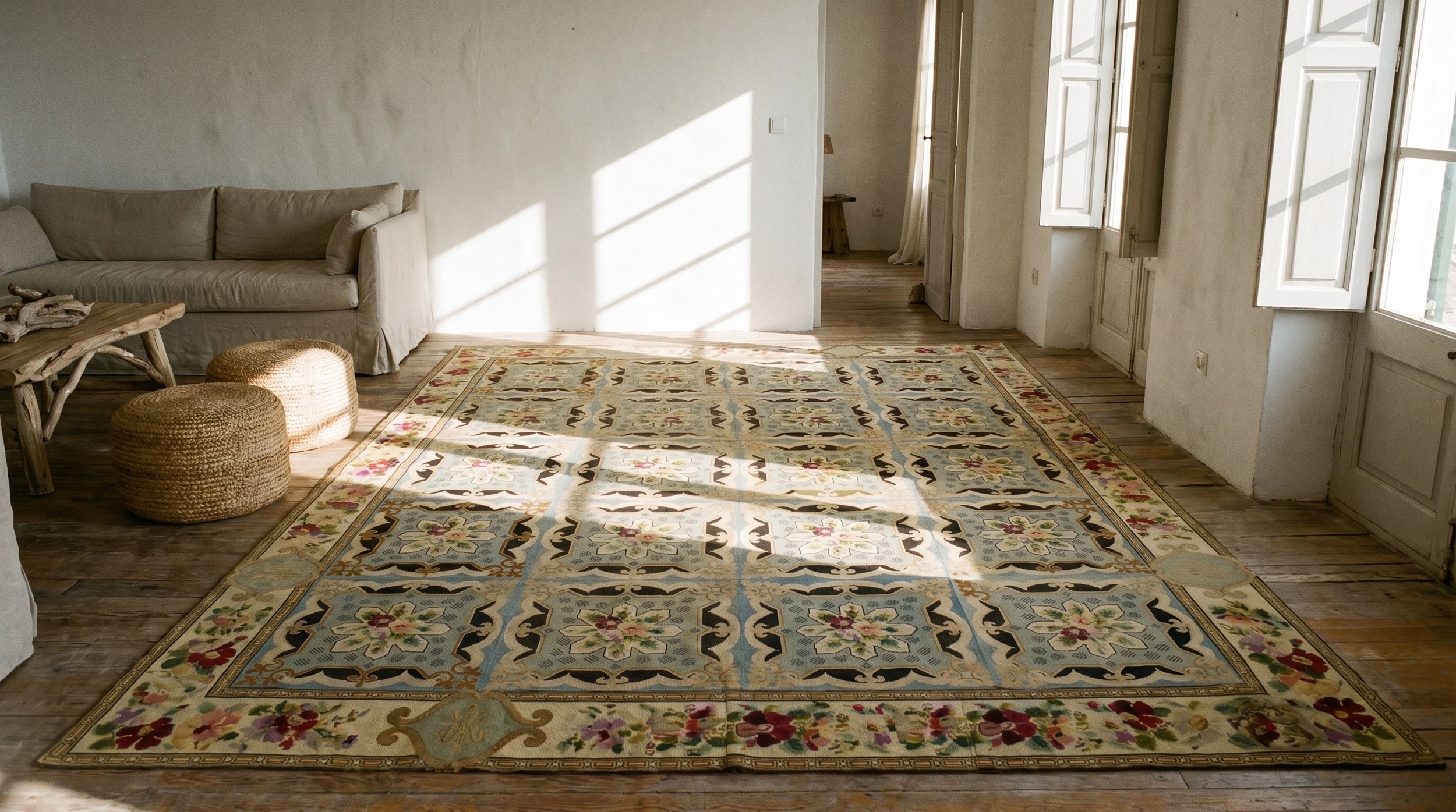
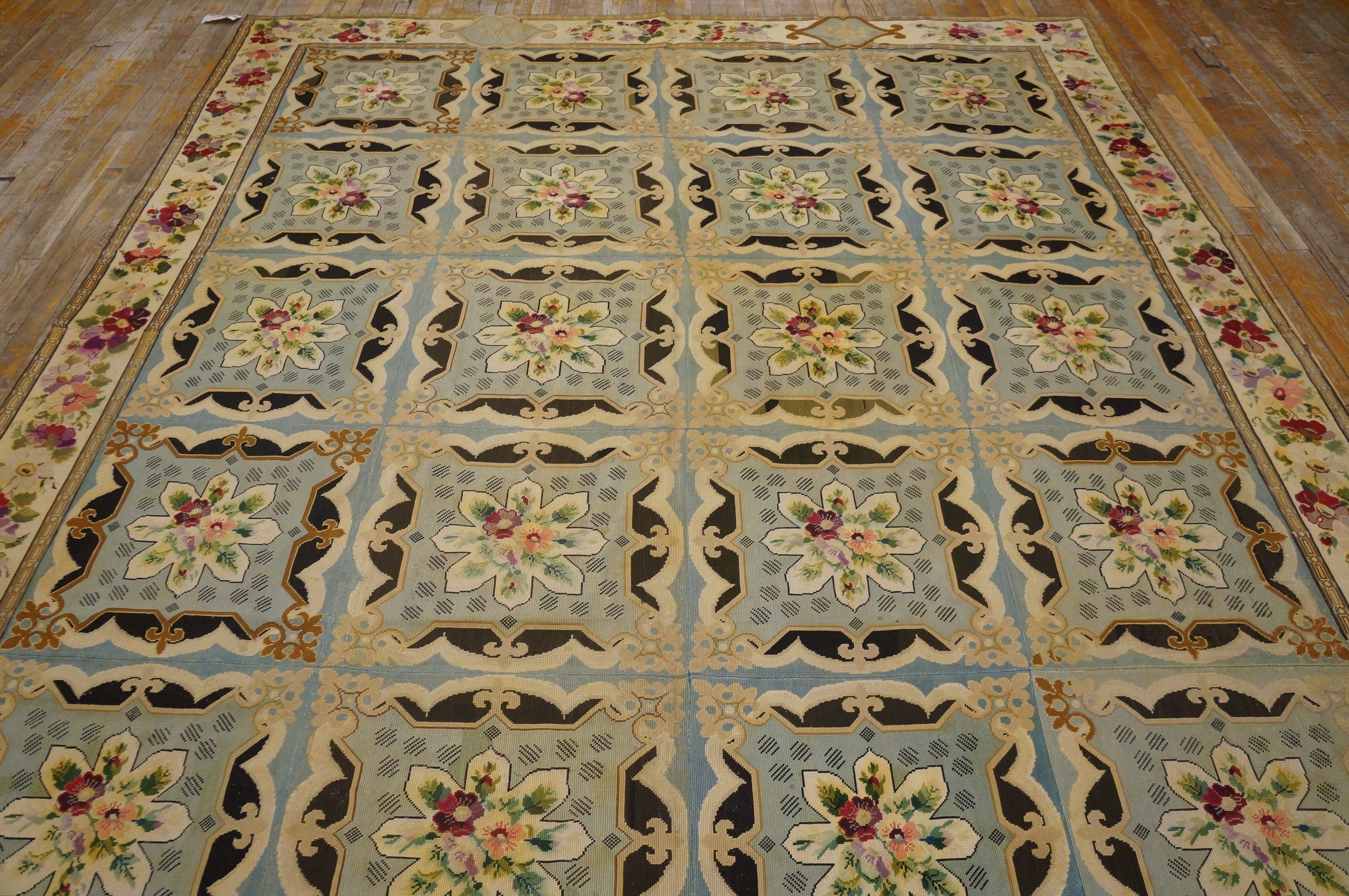
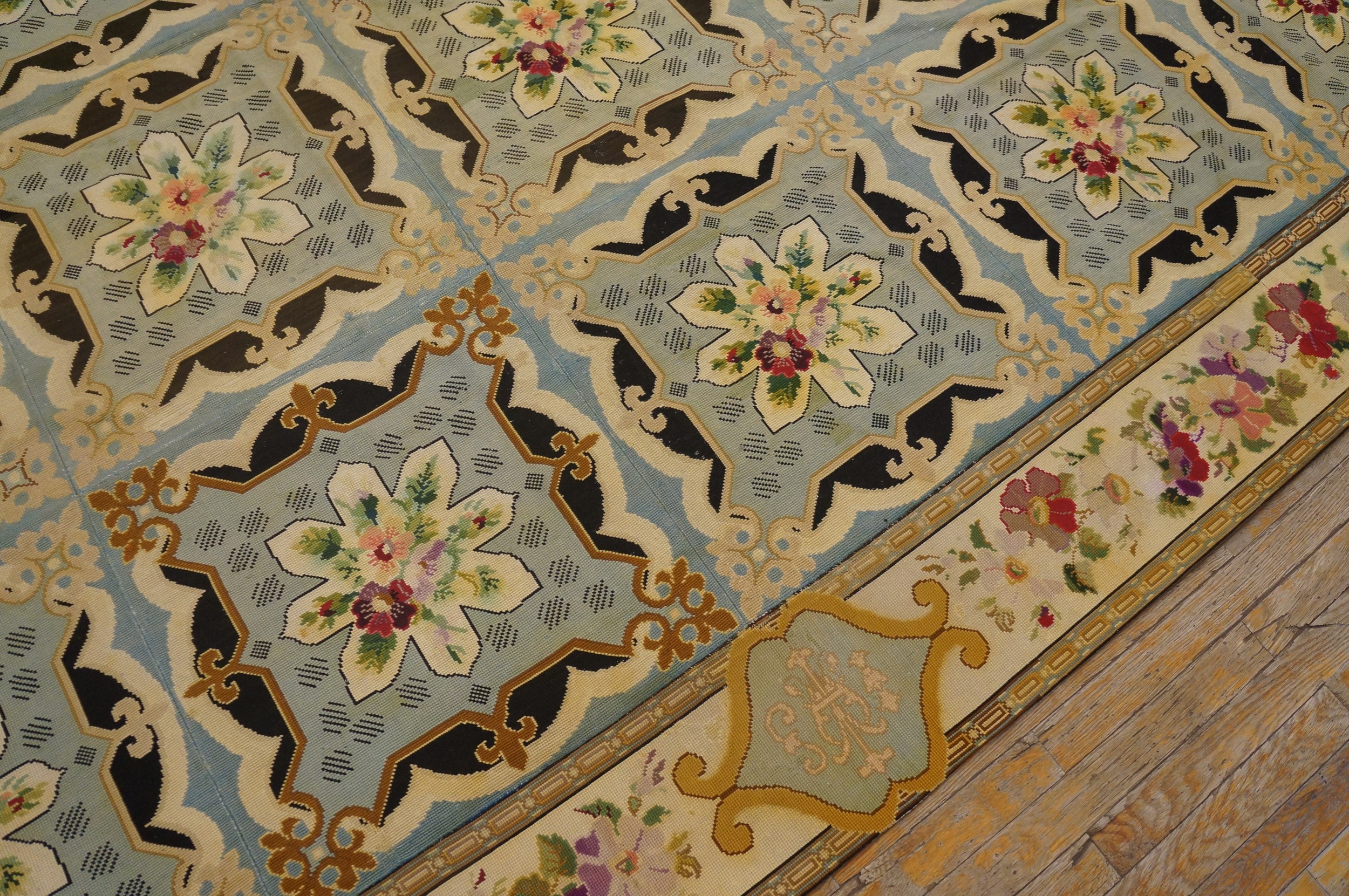
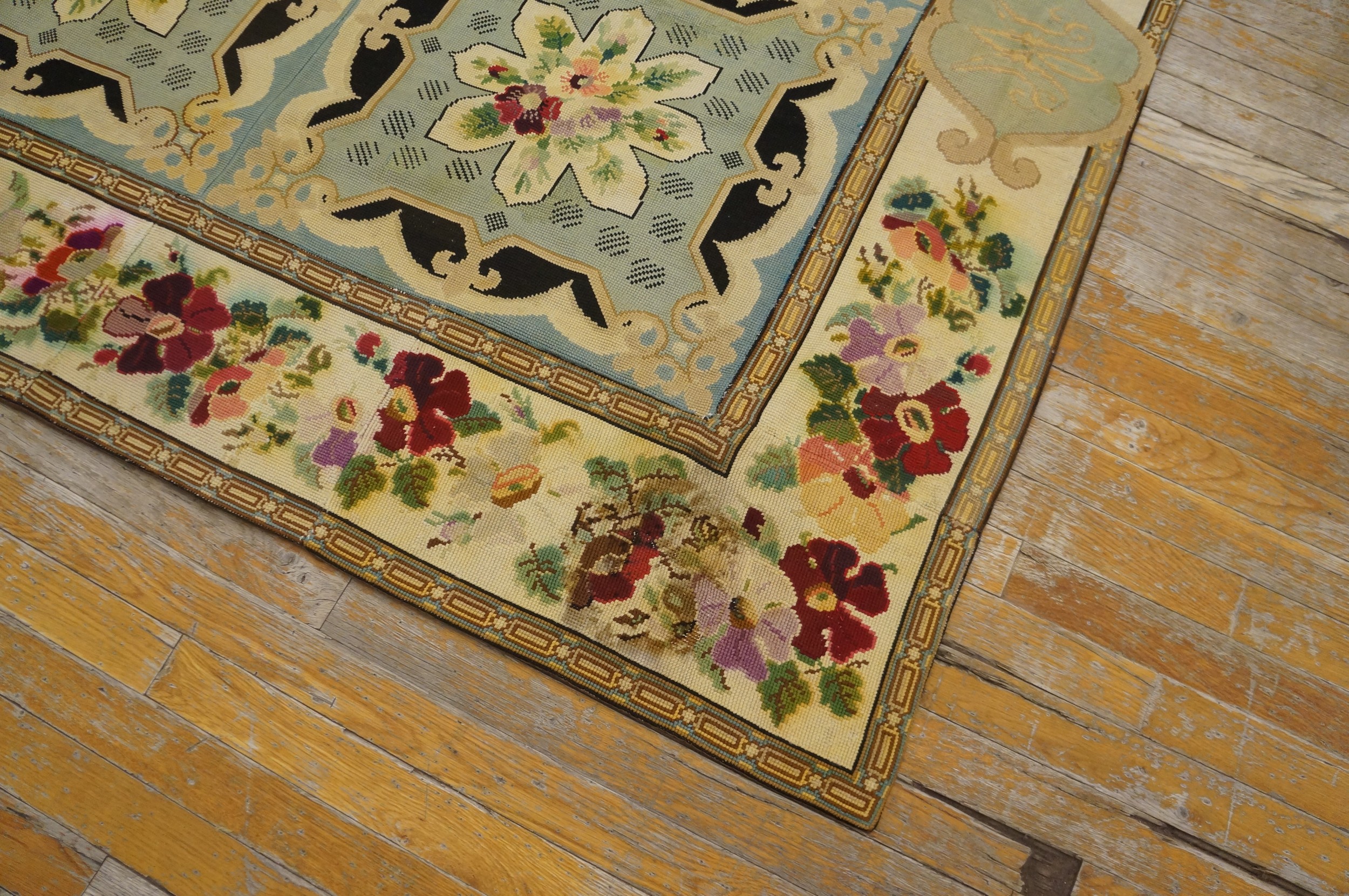
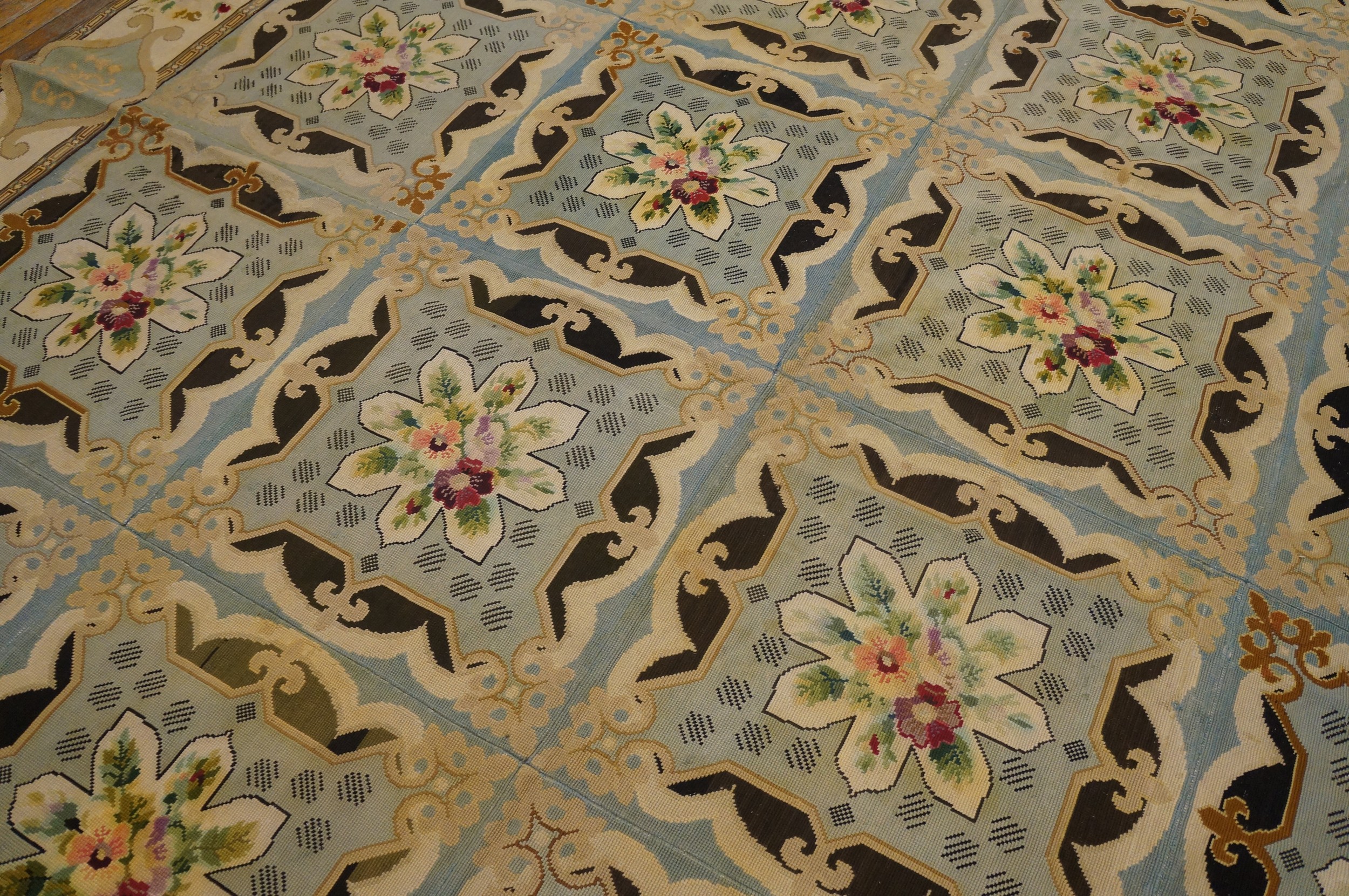
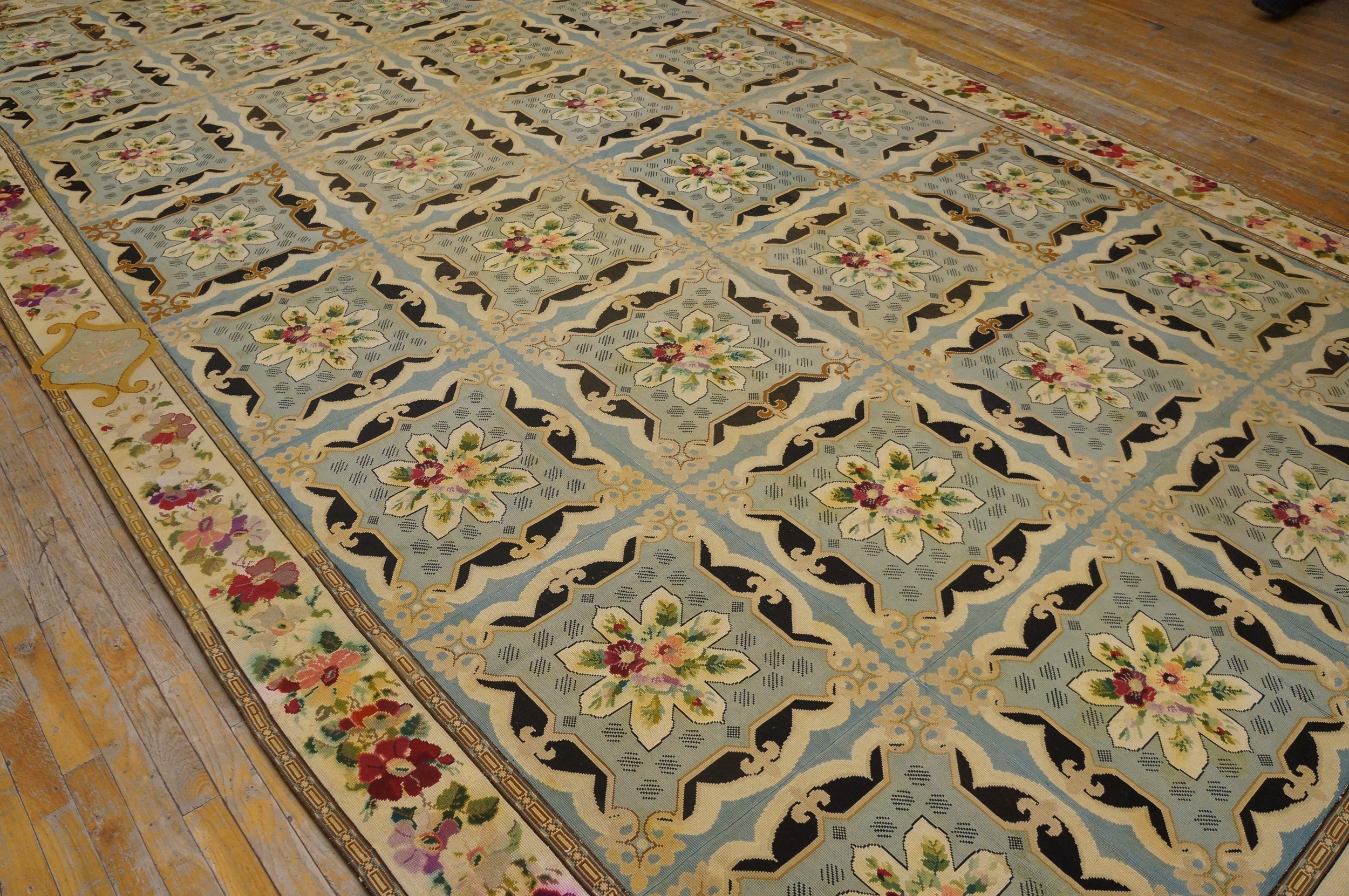
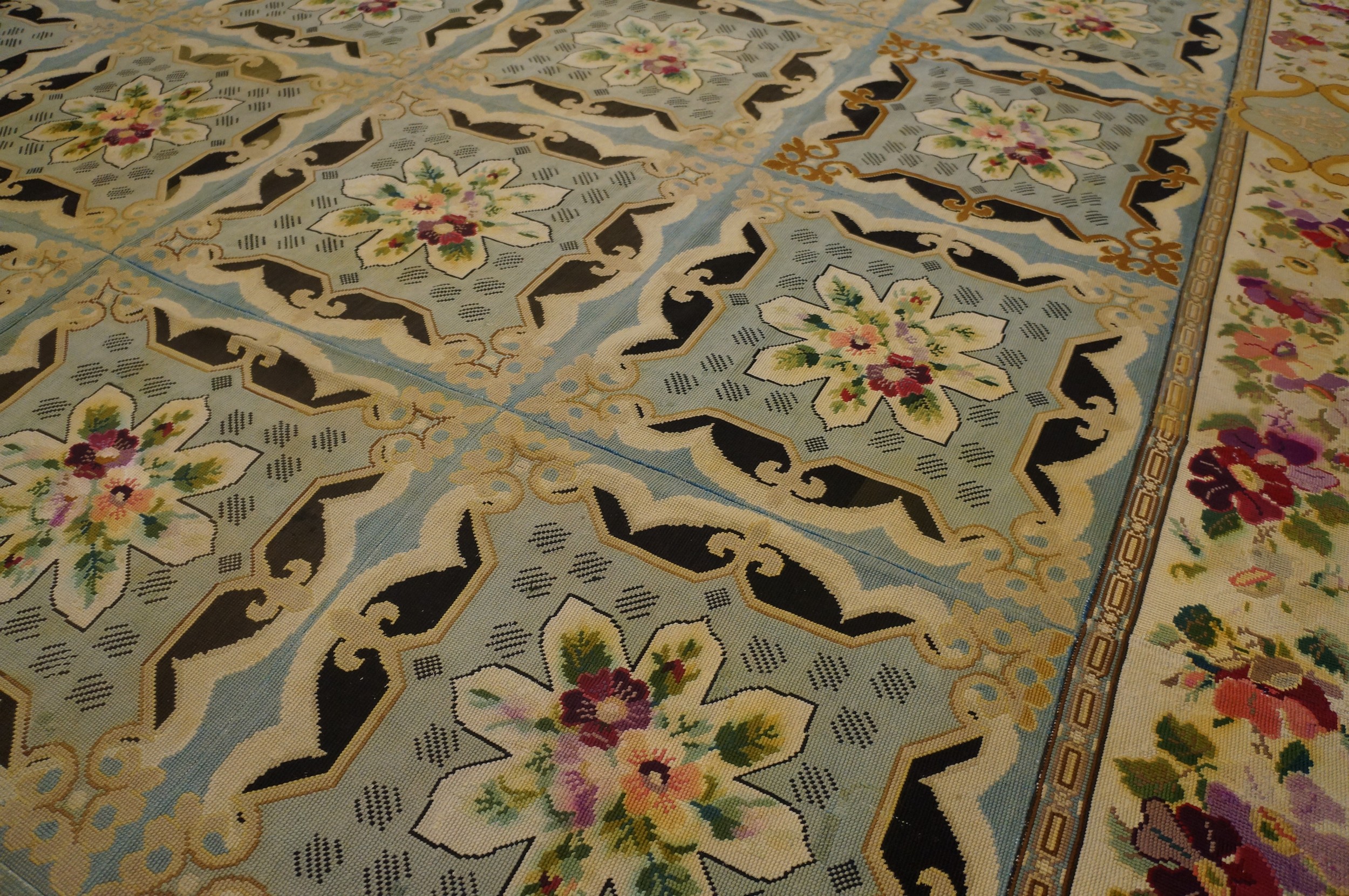
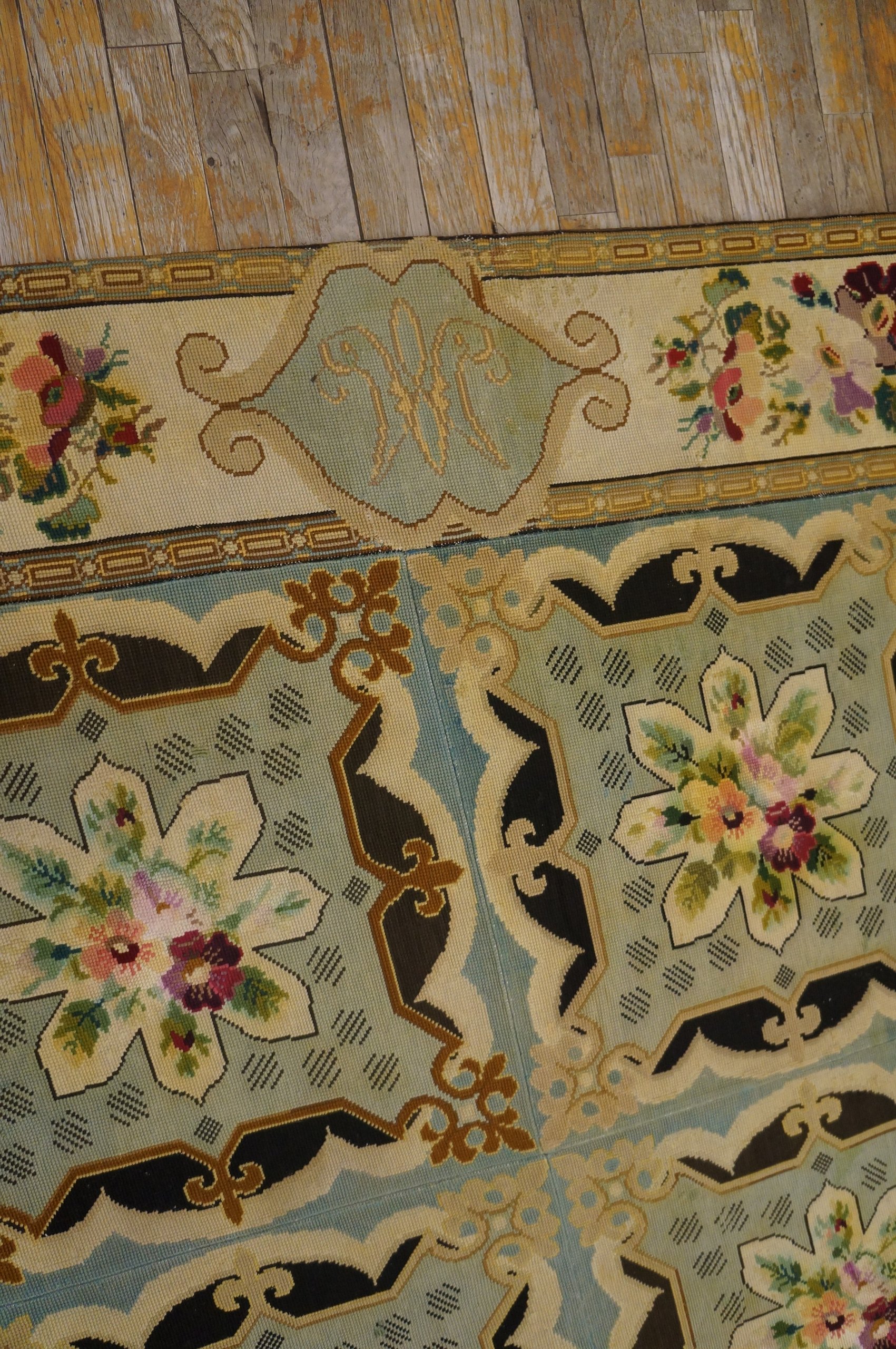
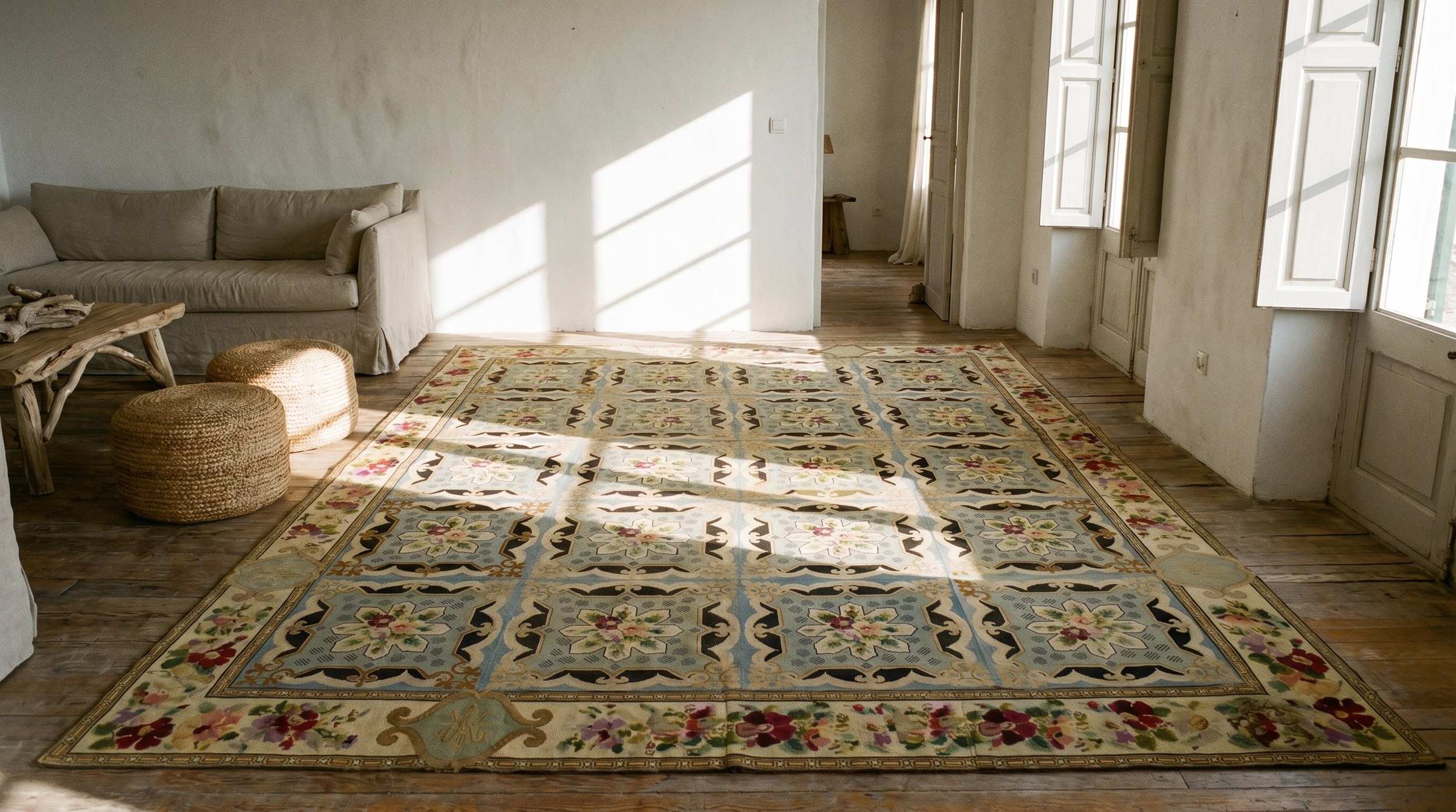
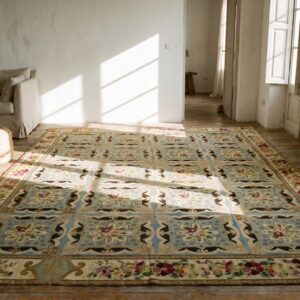
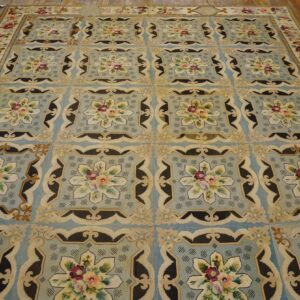
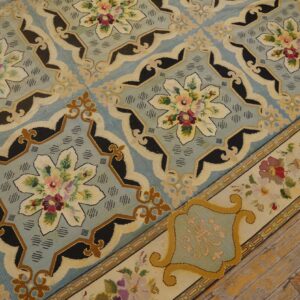
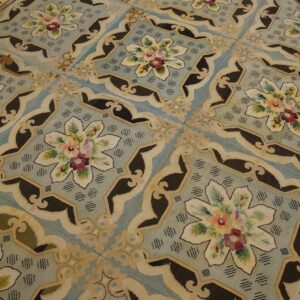
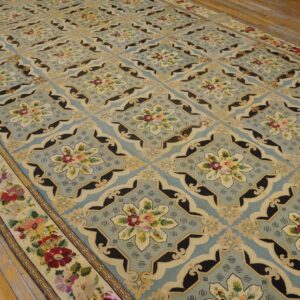
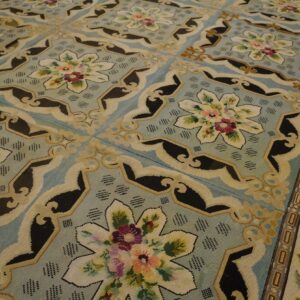
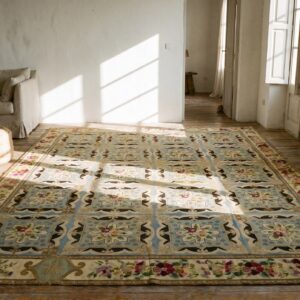
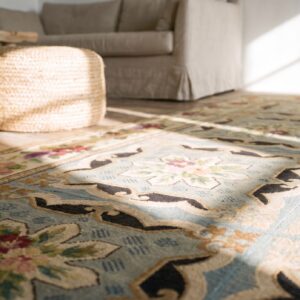
This magnificent large-sized antique English needlepoint rug, dating from the nineteenth century, is a superlative example of the “Grand Manor” aesthetic, where the precision of British needlecraft rugs met the heraldic traditions of Continental Europe. Historically, English rugs of this era were a labor of extreme dedication, hand-stitched with fine wool yarns onto a structural mesh canvas to create a “textile mosaic” of unparalleled clarity. This specific specimen is defined by its luminous ivory field and the rhythmic inclusion of the fleur-de-lis—the stylized lily that has served for centuries as a symbol of royalty, purity, and artistic refinement.
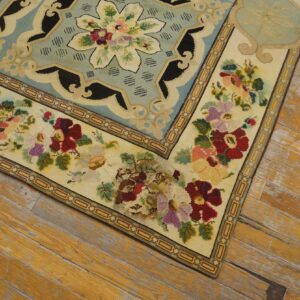
The composition represents a sophisticated stylistic fusion: the disciplined, geometric repeating patterns of the fleur-de-lis are softened by an exuberant floral border, creating a harmonious balance between structural order and botanical romance. While the fleur-de-lis design pattern is traditionally associated with French royalty, it was adopted by the high-status English weaving houses of the Victorian era to appeal to an aristocracy that favored “International Neoclassicism.” The ivory ground acts as a radiant stage, allowing the subtle pastel blushes, soft greens, and earthy ochres of the needlework to float with a three-dimensional quality, a hallmark of the “Berlin Woolwork” influence that dominated nineteenth-century British textile design.
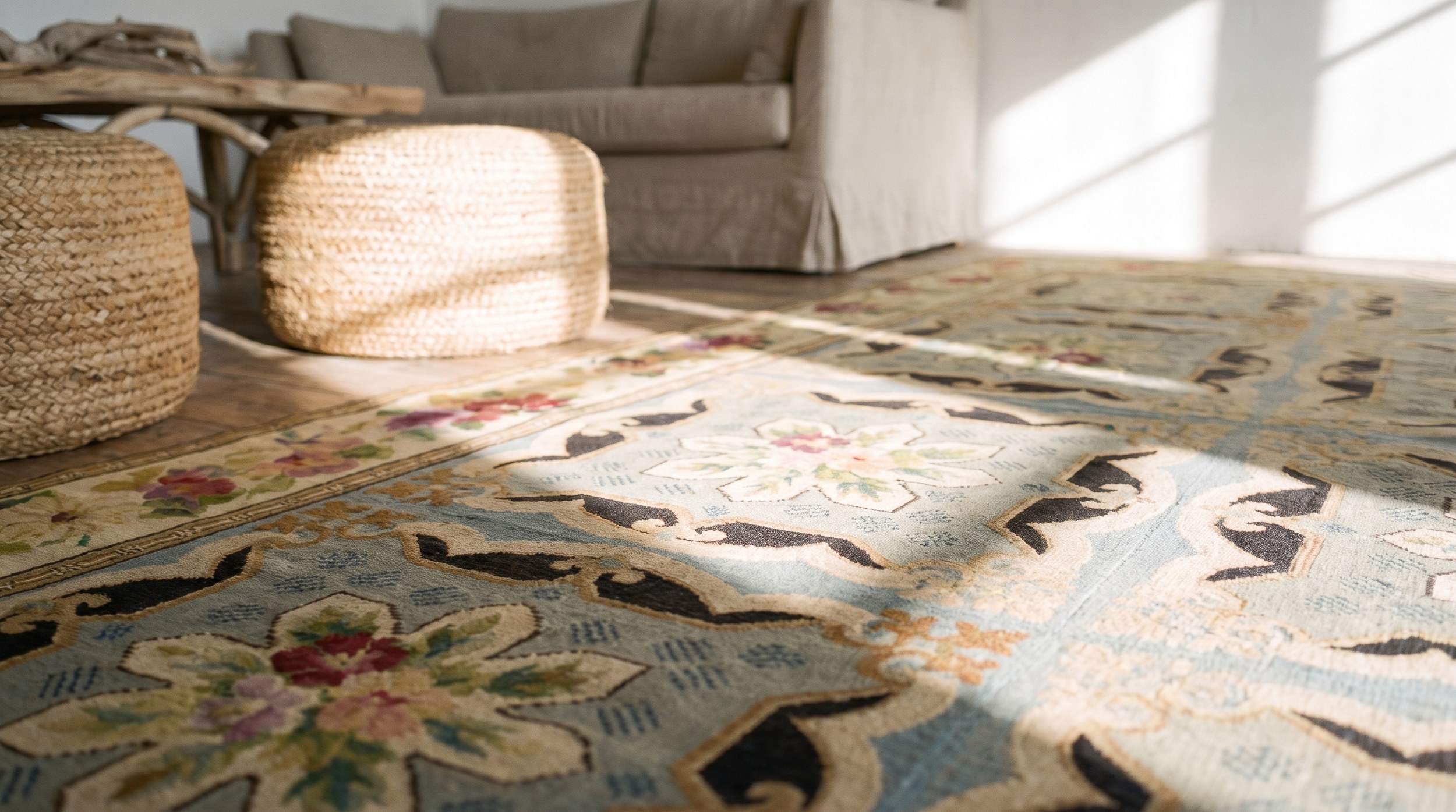
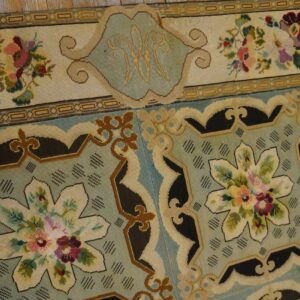
Historically, a needlepoint rug of this substantial “large size” was a rare and costly undertaking. Unlike the loom-woven Axminster or Wilton carpets, every square inch of this rug was produced by hand, stitch by stitch, likely requiring years of work by a team of skilled artisans. This process resulted in a flatweave that possesses the durability of a tapestry but the refined, low-profile handle preferred for the formal drawing rooms and libraries of the Gilded Age. The border, featuring a lush “garland of the garden,” serves to anchor the ethereal ivory field, grounding the heraldic symbols in a quintessentially English floral embrace. To possess such a piece today is to hold a monument to nineteenth-century domestic scholarship—a work that transforms the floor into a sprawling, hand-wrought canvas of European history and botanical art.