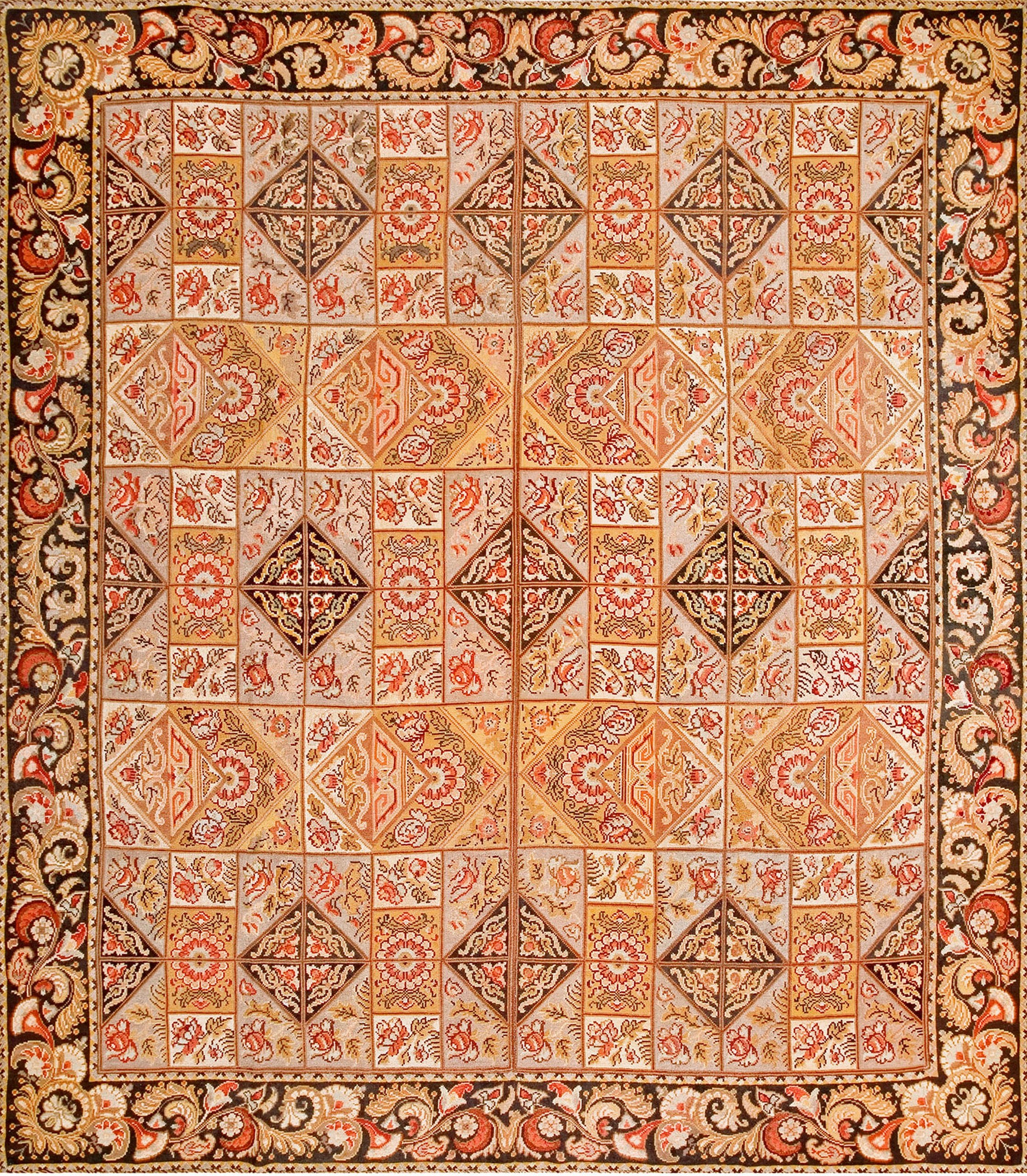
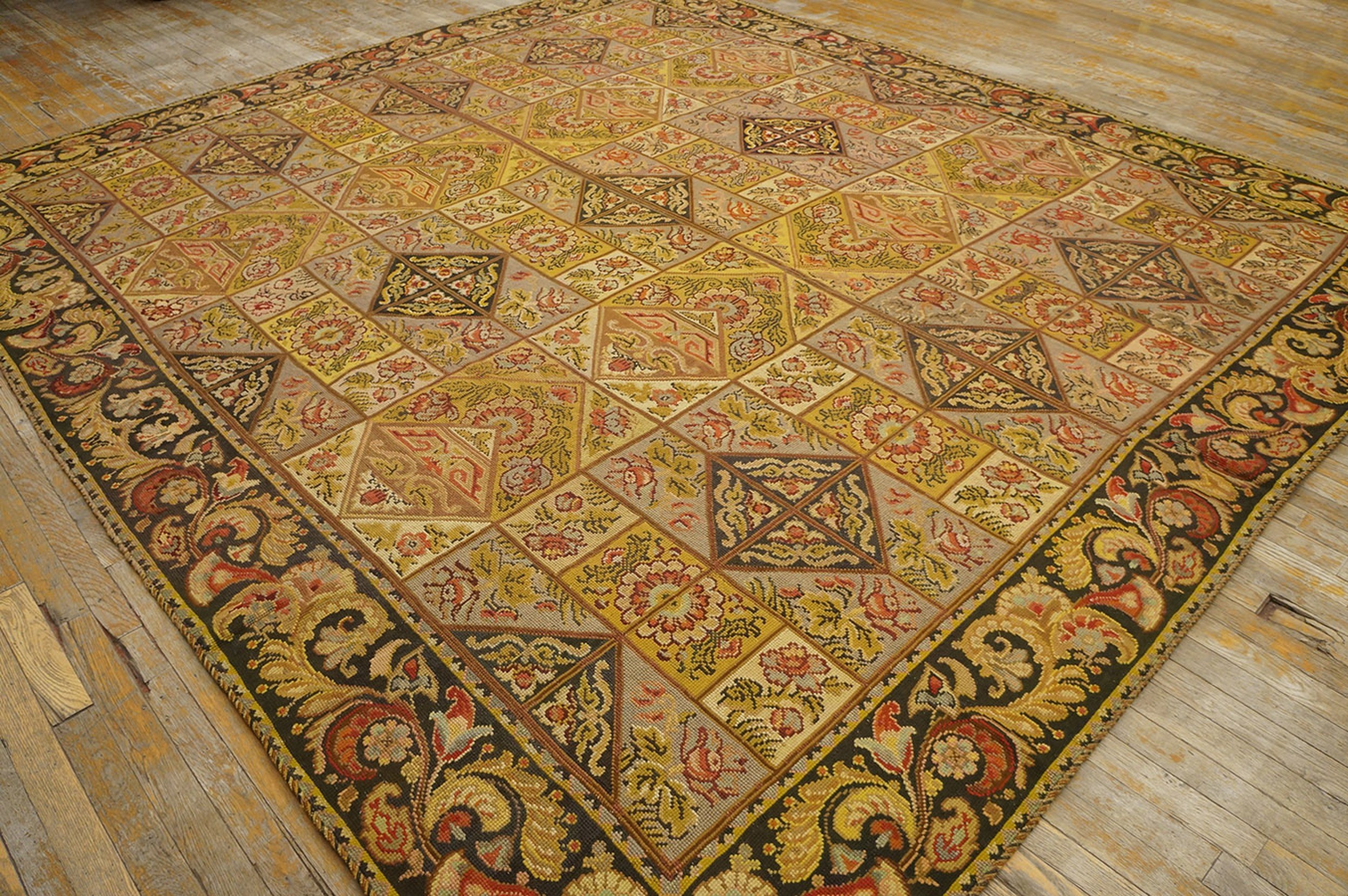
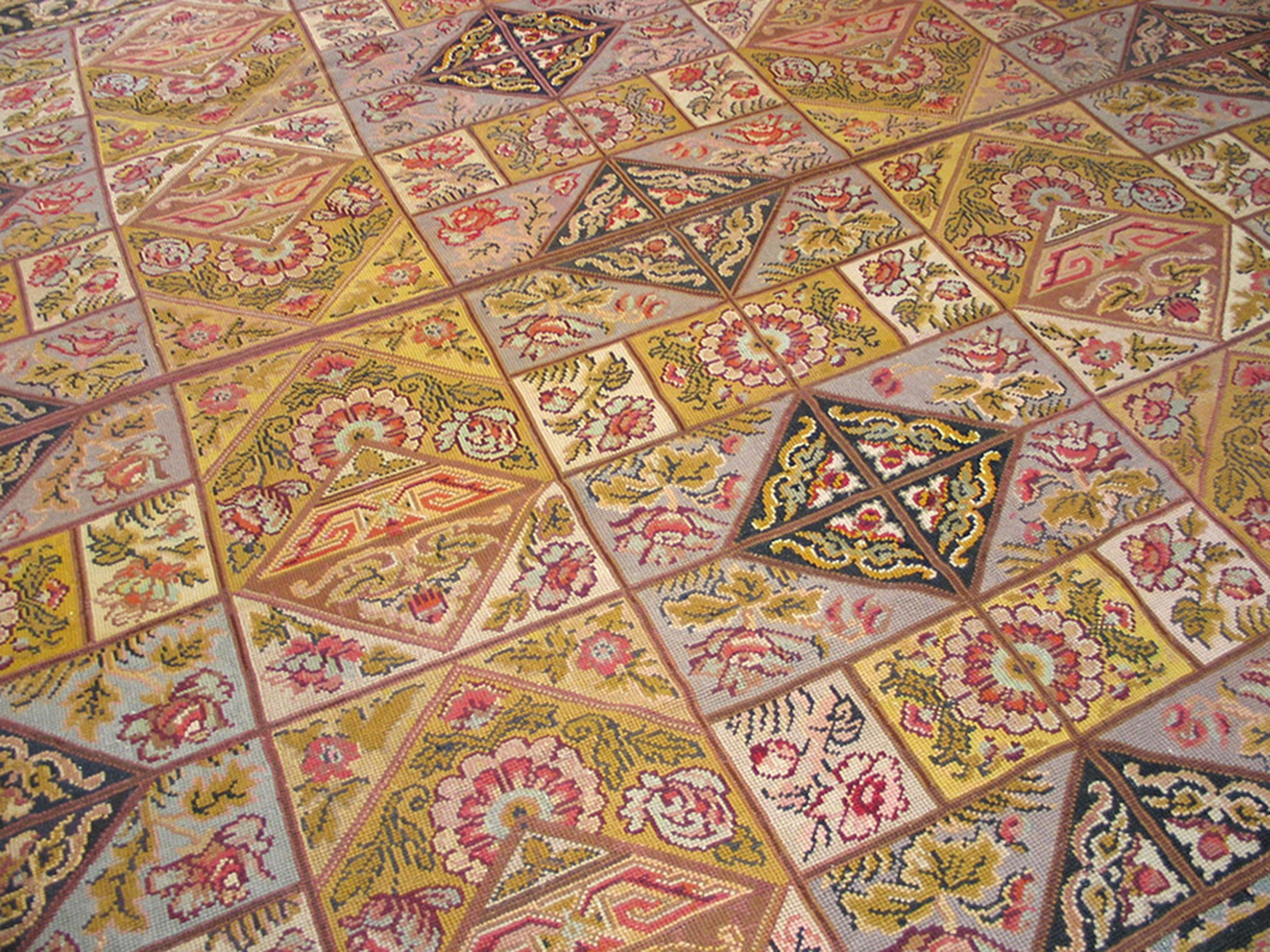
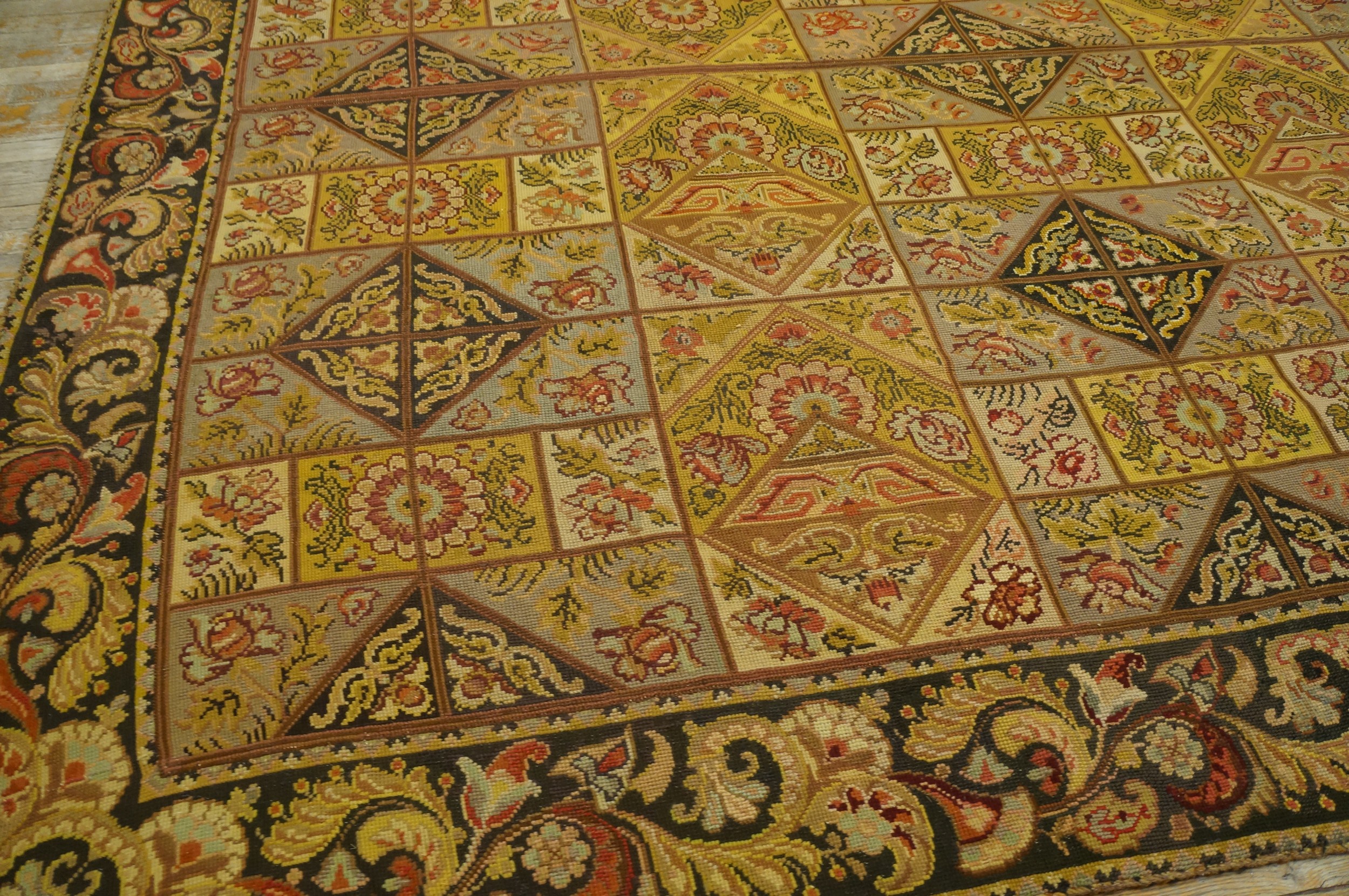
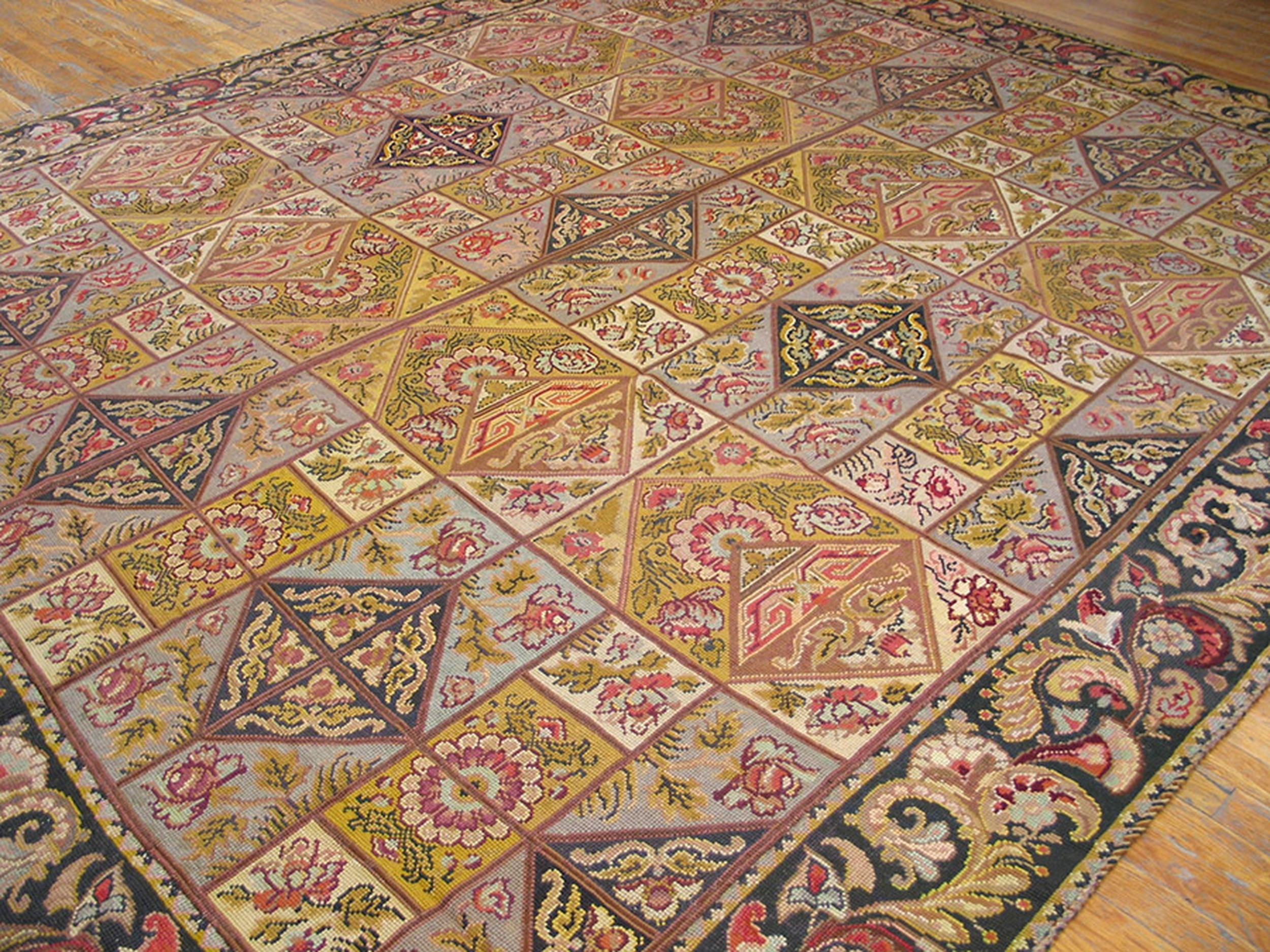
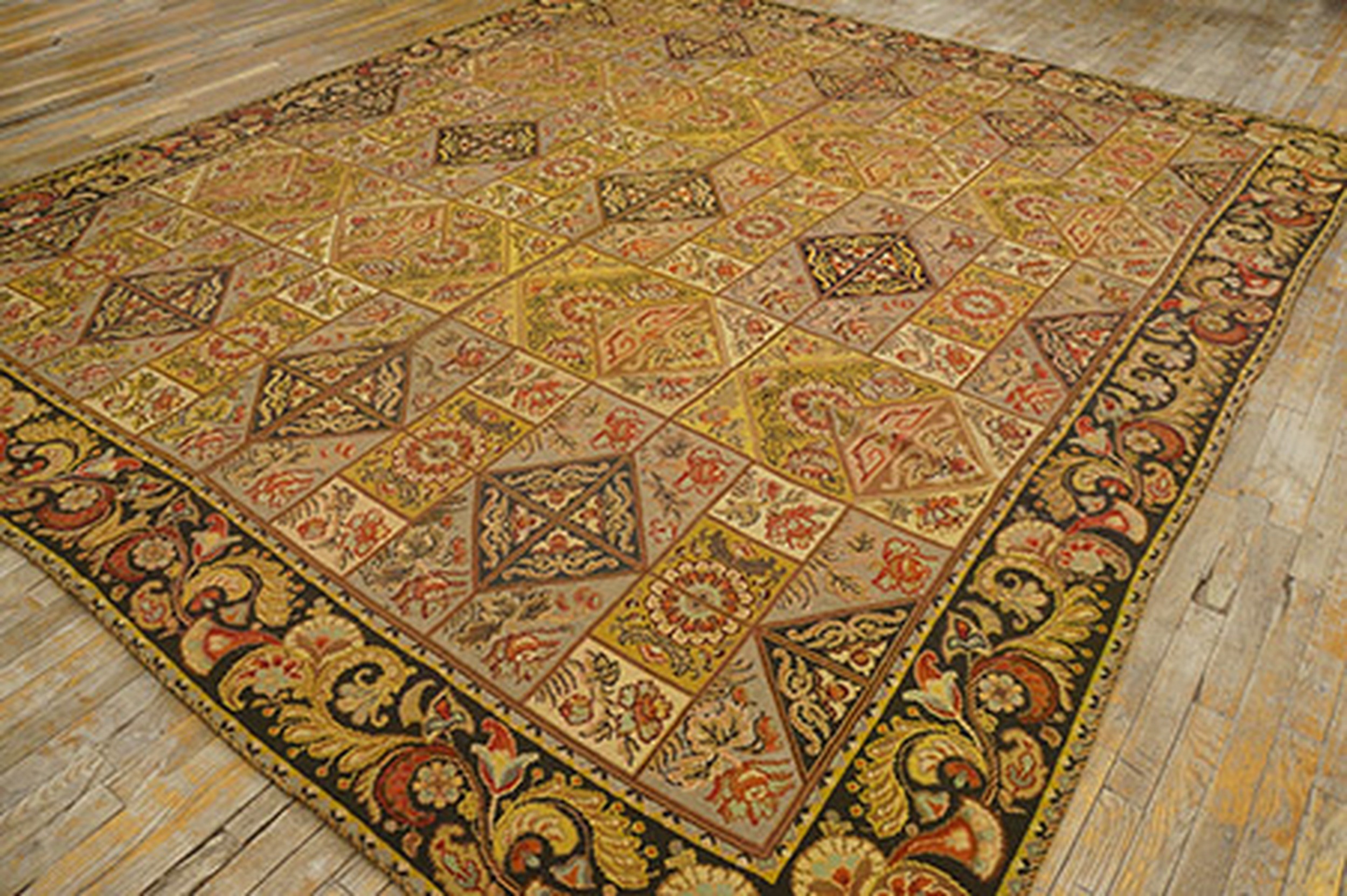
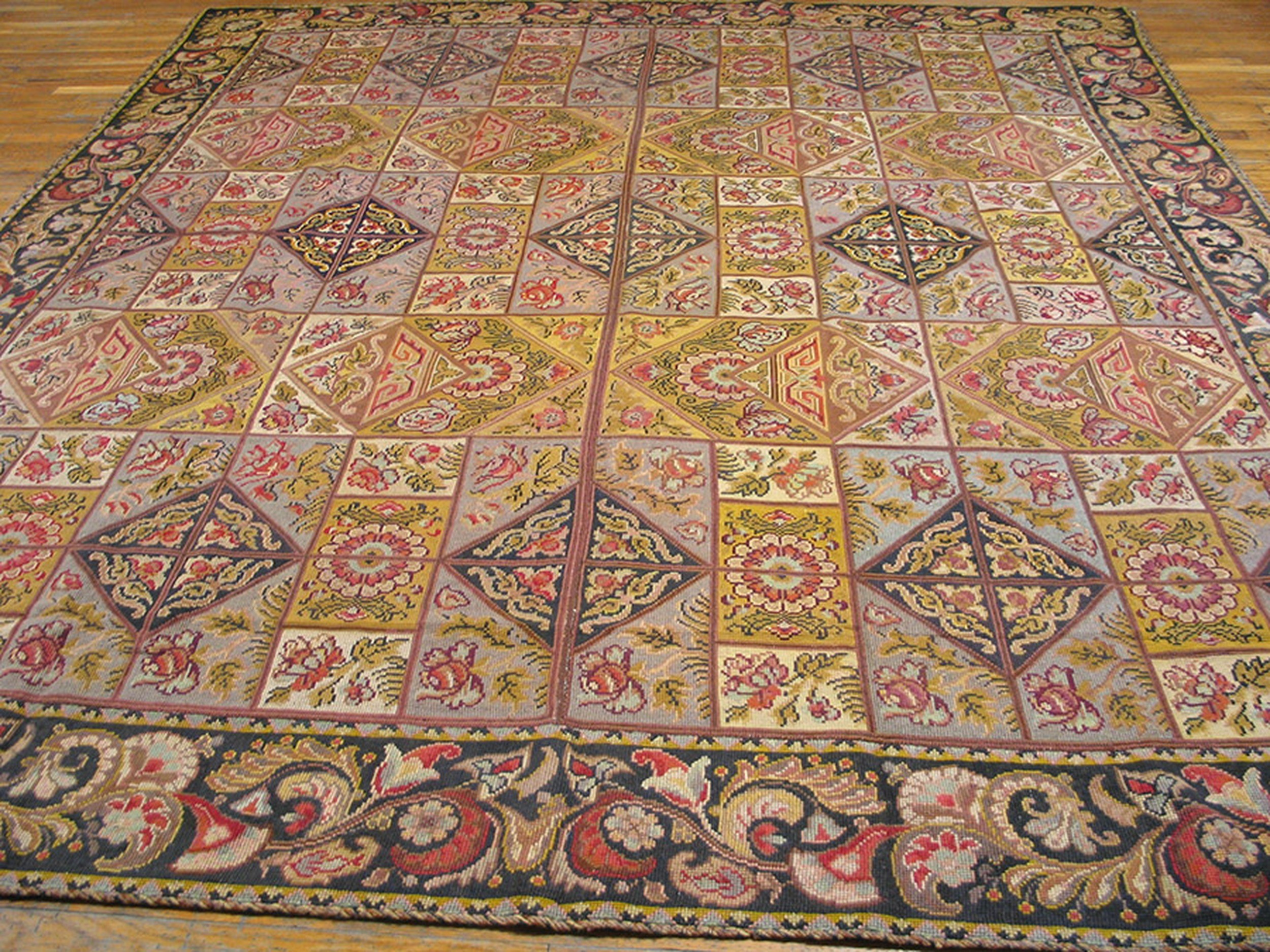
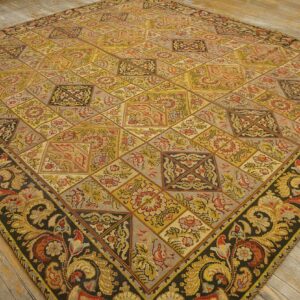
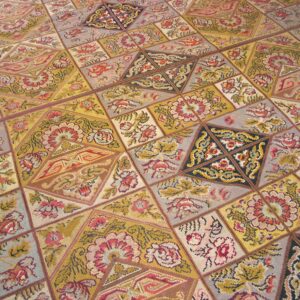
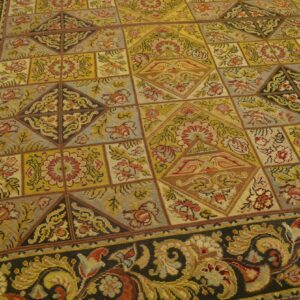
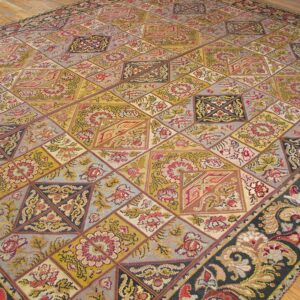
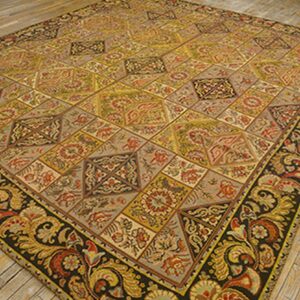
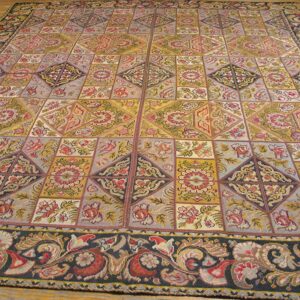
This magnificent late nineteenth-century French needlepoint carpet is a rare and prestigious example of “Le Goût Français,” representing the height of Parisian decorative elegance. Historically, needlepoint (or point de Beauvais) carpets were favored by the European aristocracy as a more delicate, artistic alternative to heavy hand knotted-pile rugs. This specific specimen is distinguished by its highly coveted square format, a shape that offers exceptional architectural versatility for formal salons or high-status reception rooms where traditional rectangular proportions might feel too conventional.
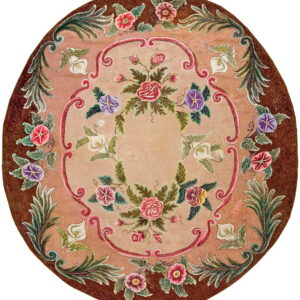
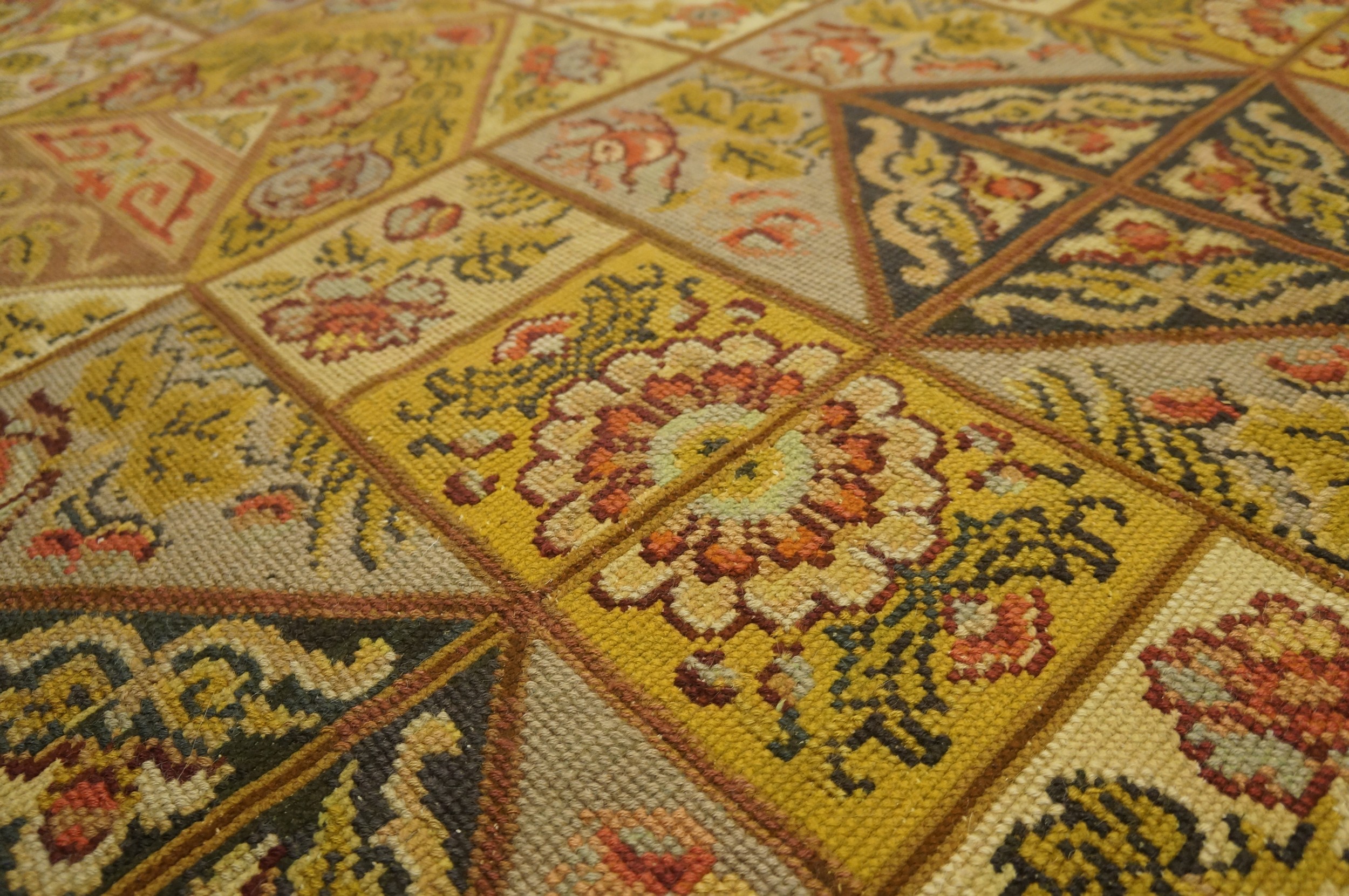
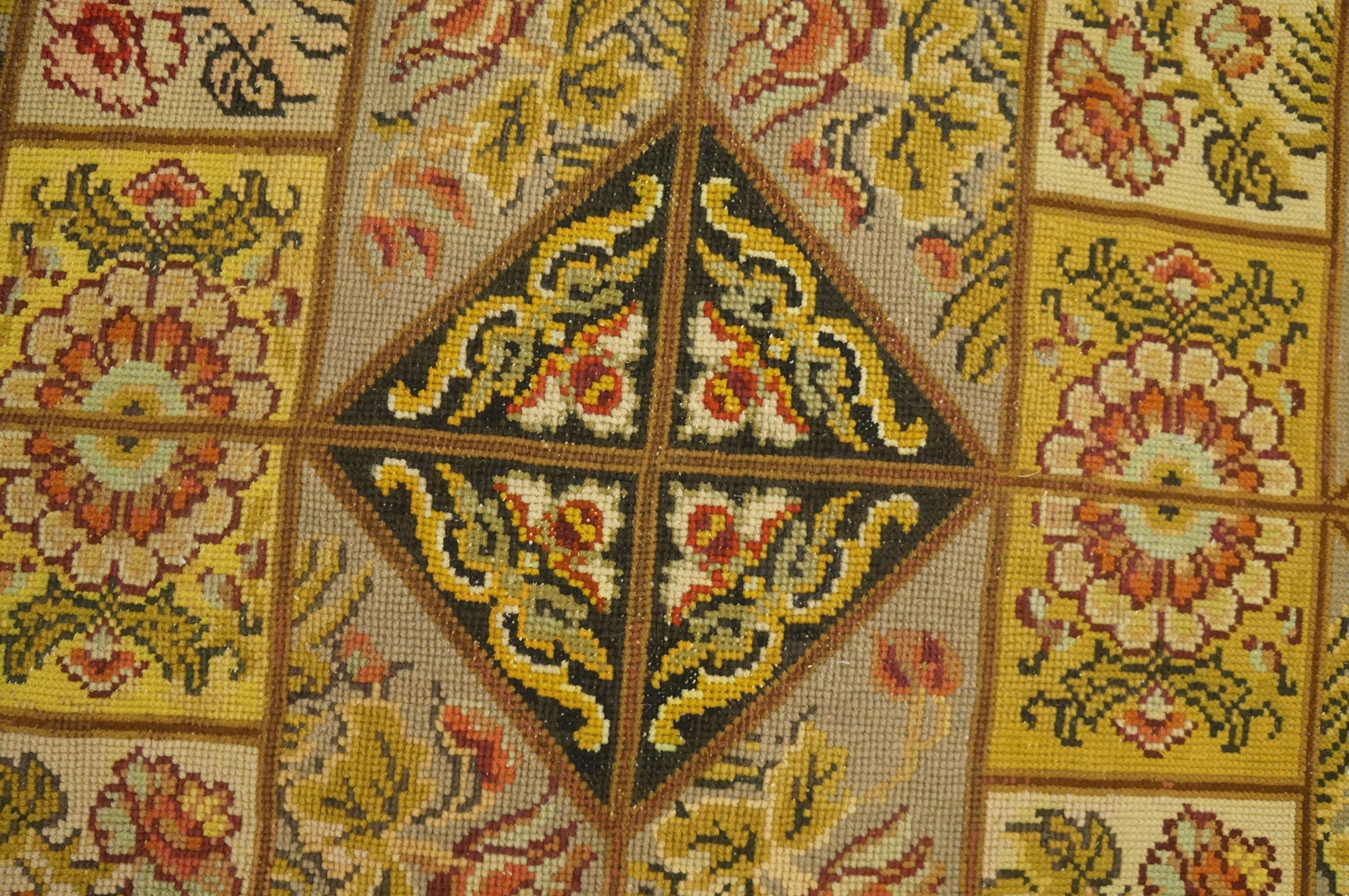
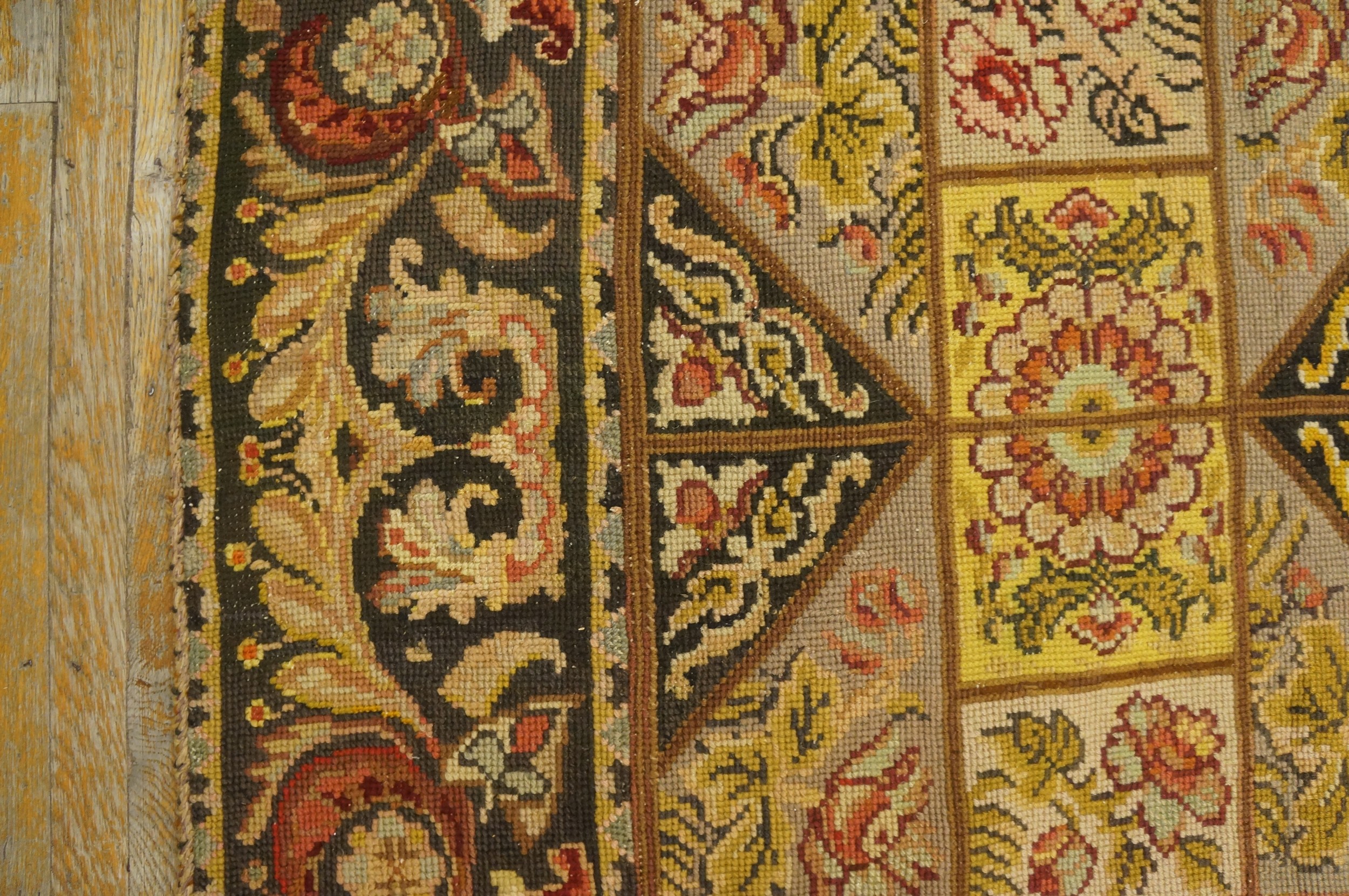
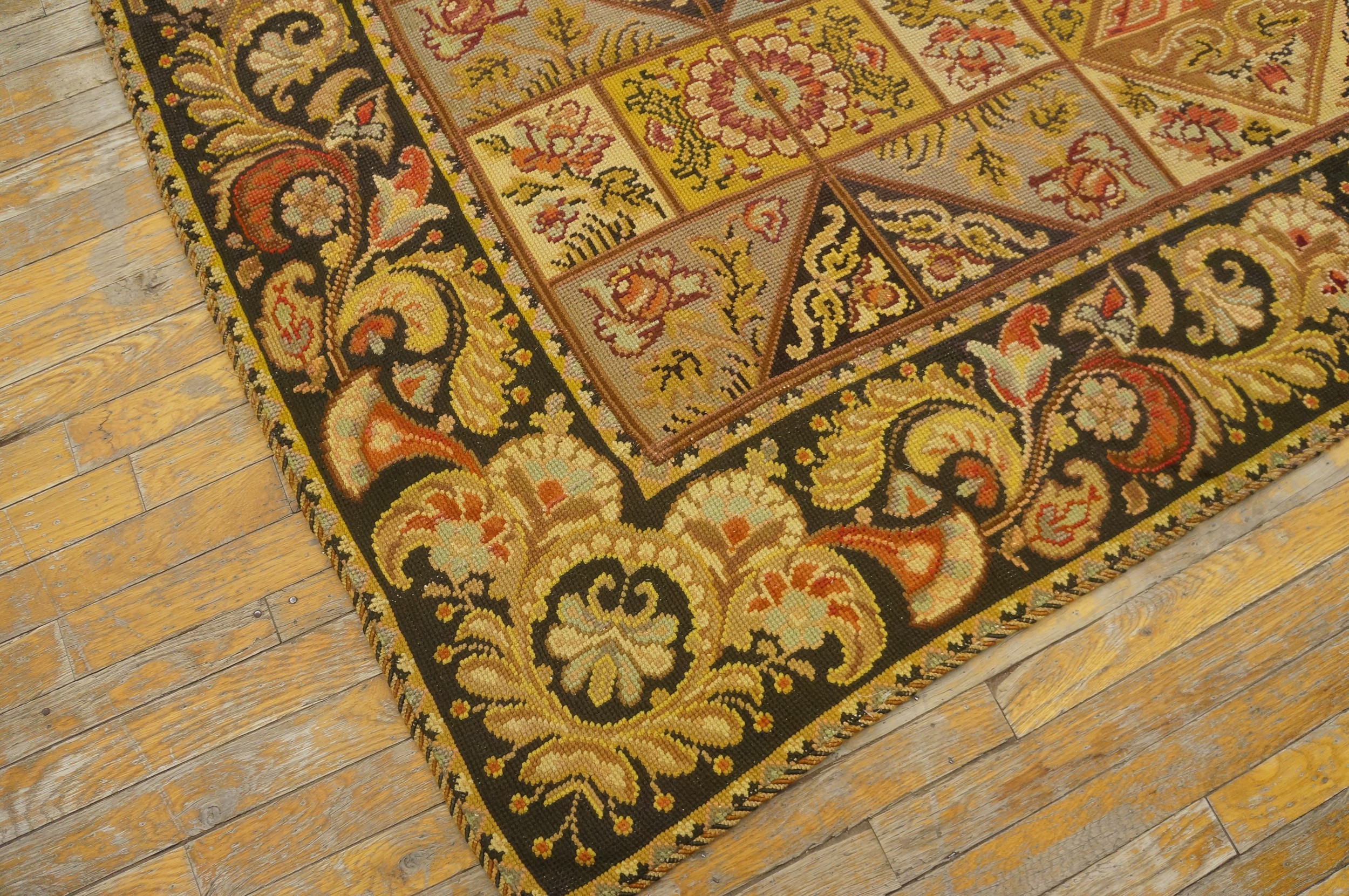
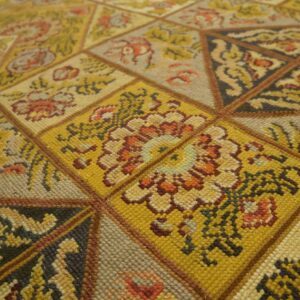
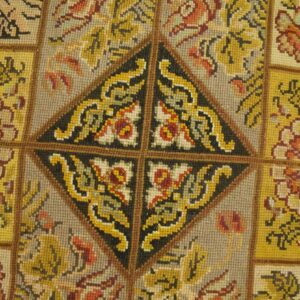
The composition is a virtuoso display of the “Grand Floral” style, rooted in the traditions of the Savonnerie and Aubusson workshops. The design features a sprawling, romantic garden of European flowers, including oversized peonies, lush roses, and delicate lilies, all entwined with scrolling acanthus leaves and classical cartouches. Unlike the geometric rigidity of Eastern carpets, this square needlepoint utilizes a “painterly” technique—employing thousands of tiny, hand-stitched points to create seamless color transitions and a three-dimensional, sculptural depth that mimics a Renaissance oil painting.
The palette is a masterclass in the use of sophisticated, period-correct tones. The field typically features a soft ivory, champagne, or deep “nocturnal” black, providing a dramatic stage for the vibrant, yet antique-toned florals. Shades of dusty rose, sage green, and burnished gold predominate, all derived from natural dyes that have mellowed over a century into a shimmering, “watercolor” patina.
Technically, a needlepoint of this “Room Size” scale is a monumental achievement of patience and skill. Each square inch requires meticulous hand-work on a canvas foundation, resulting in a flat-woven textile that is remarkably durable yet possesses a refined, “tapestry-like” handle. The absence of a thick pile allows the intricate botanical details to appear “razor-sharp,” making it a perfect choice for rooms with fine antique furniture.
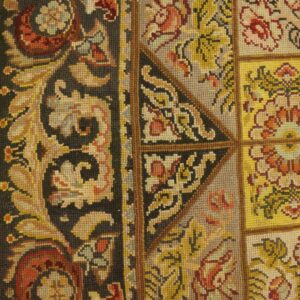
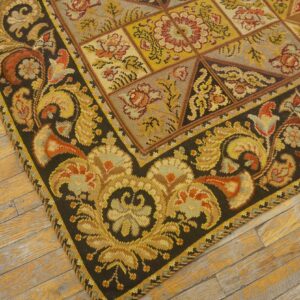
The borders act as a regal frame, often featuring a primary “frame-within-a-frame” design with ornate corner motifs that anchor the exuberant energy of the central field. To possess an antique French carpet of this magnitude is to hold a monument to the peak of European textile art—a work that transforms the floor into an eternal, hand-wrought garden of French history and timeless, scholarly opulence.