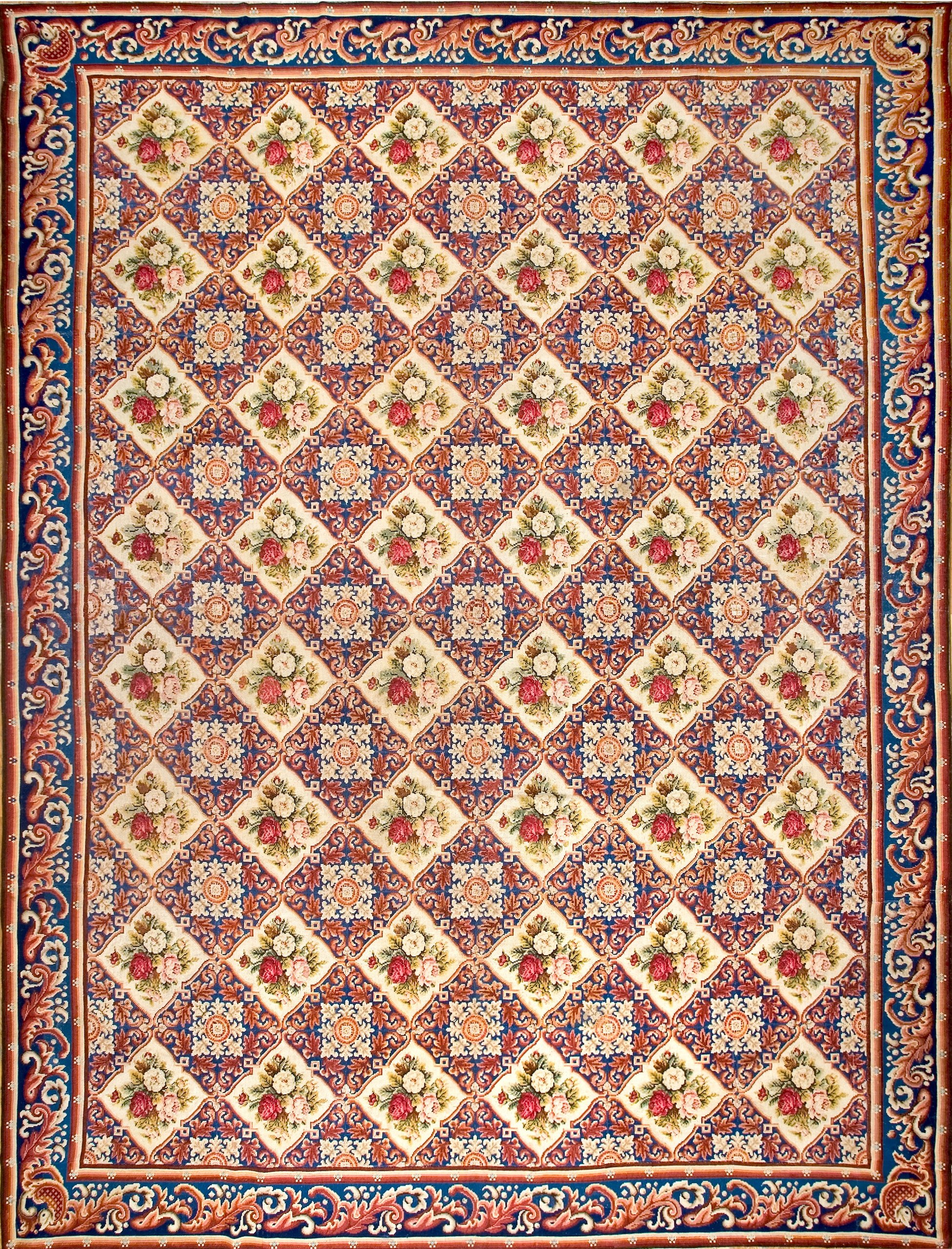
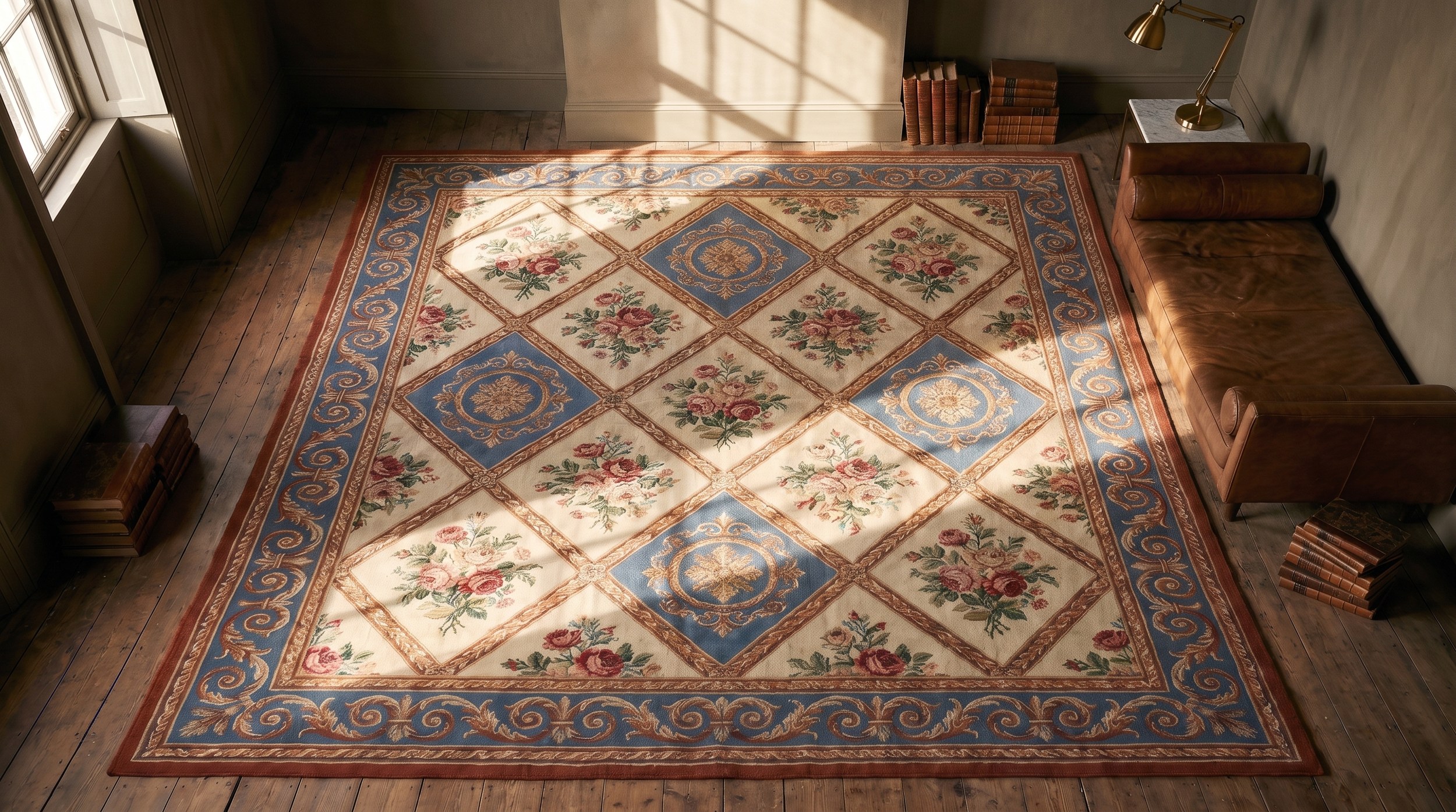
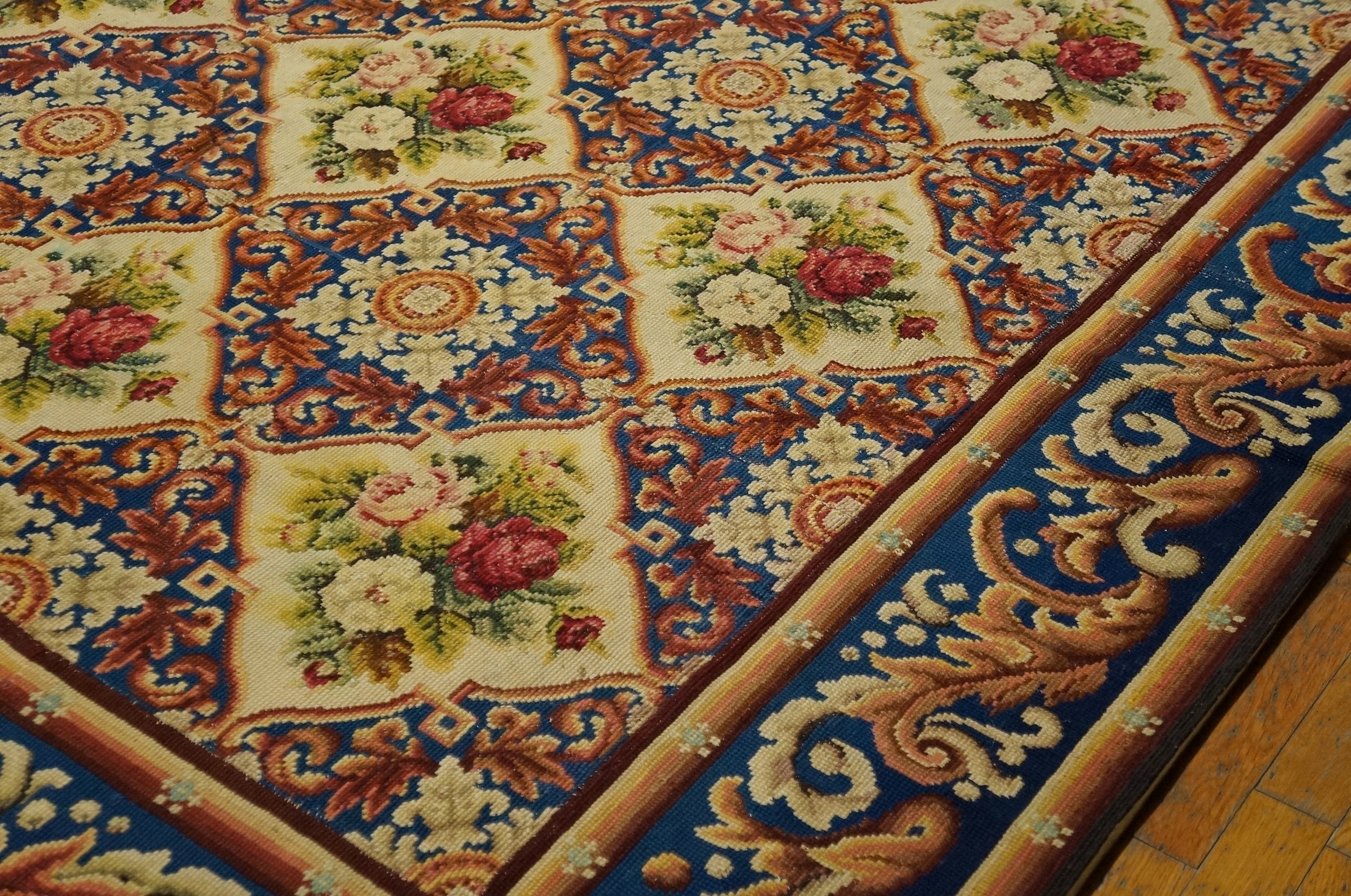
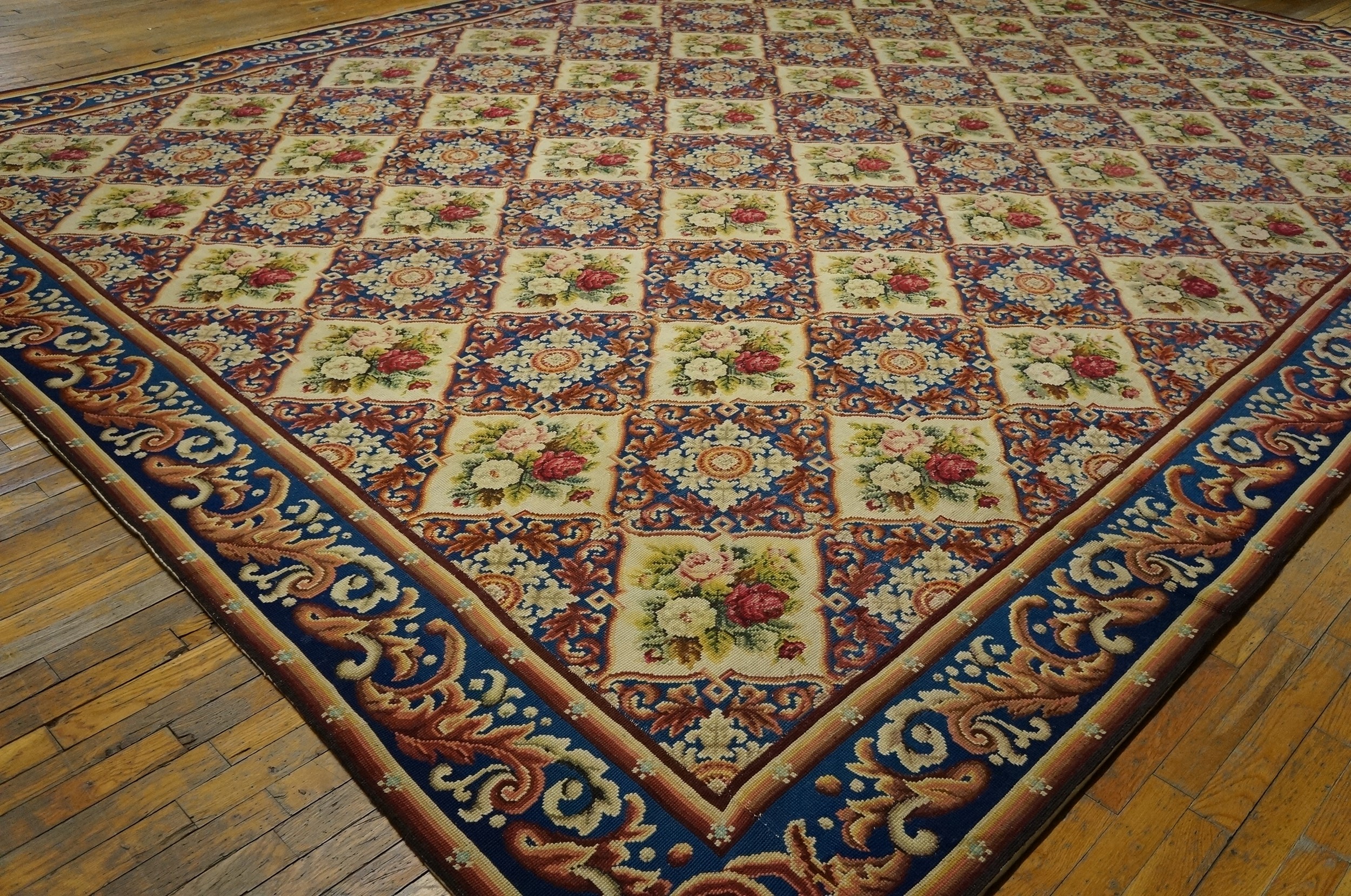
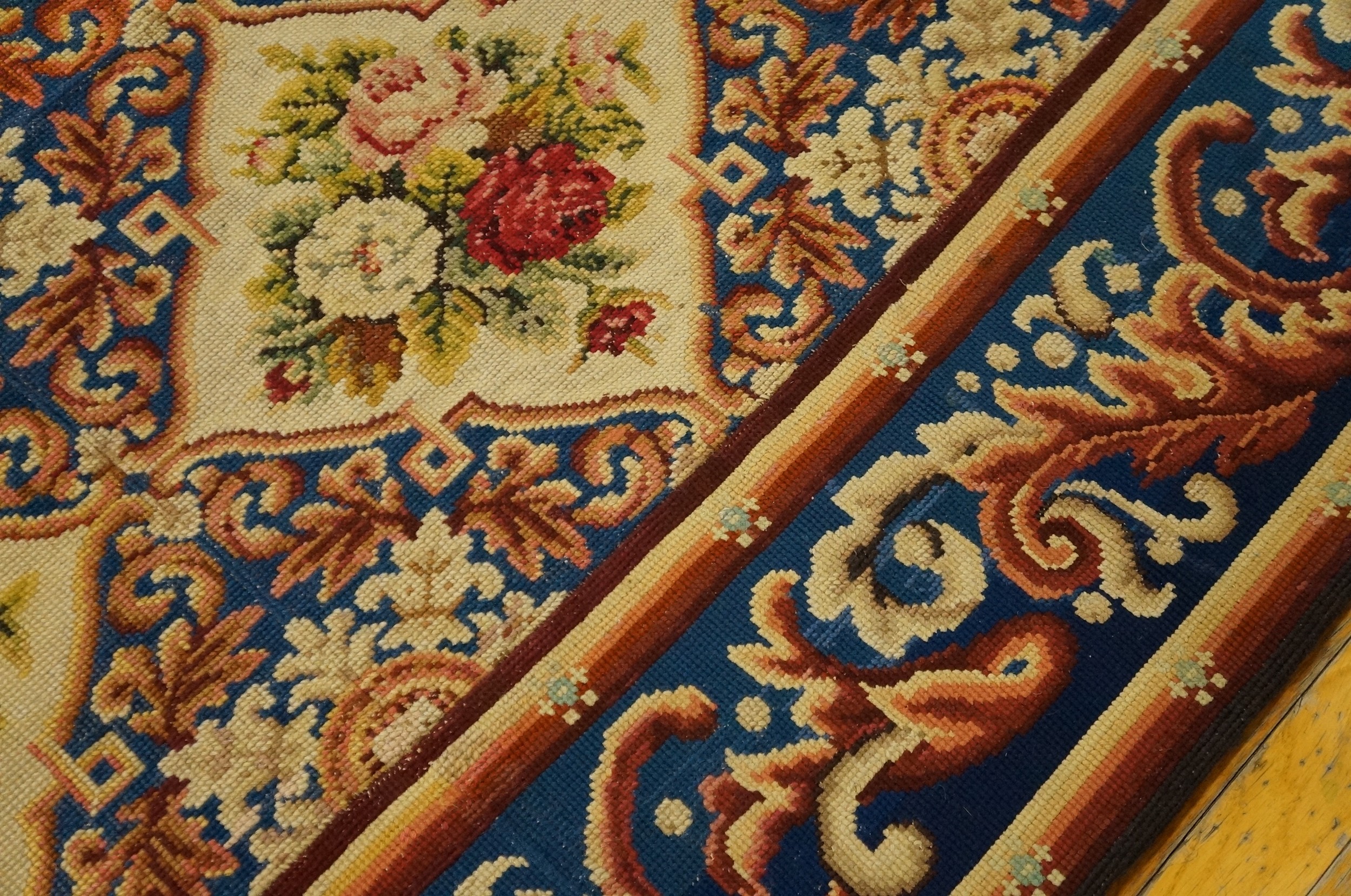
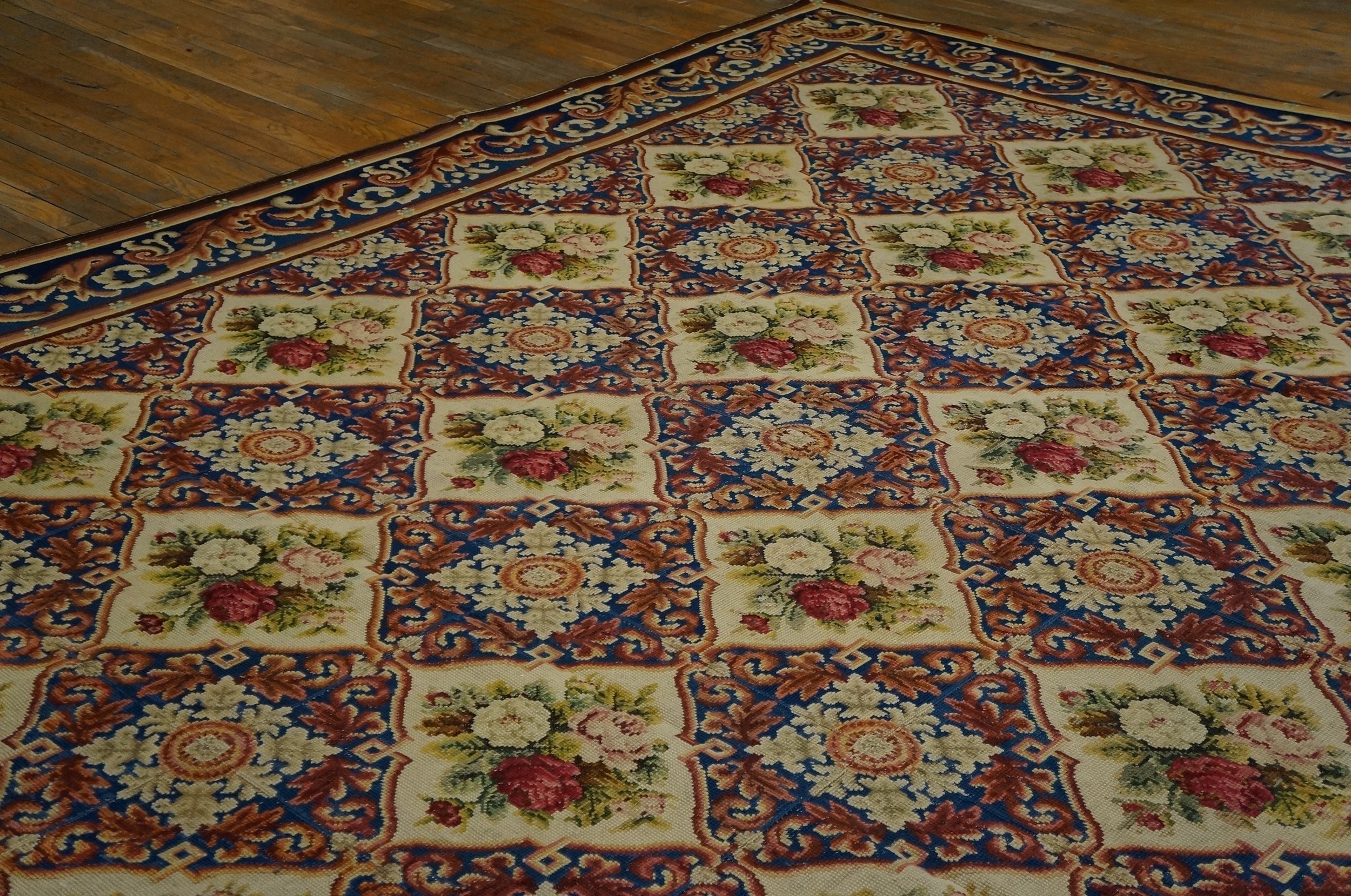
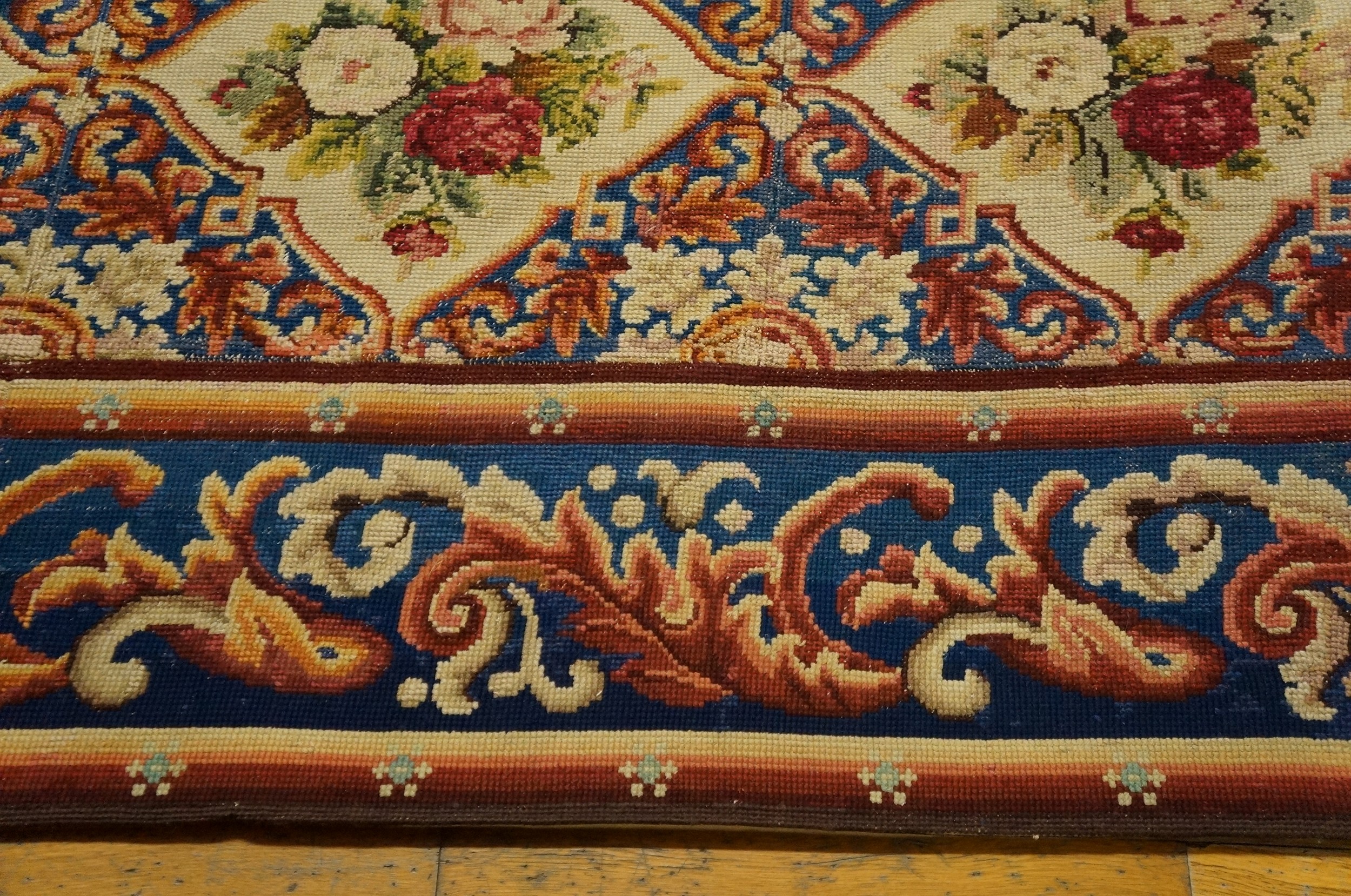
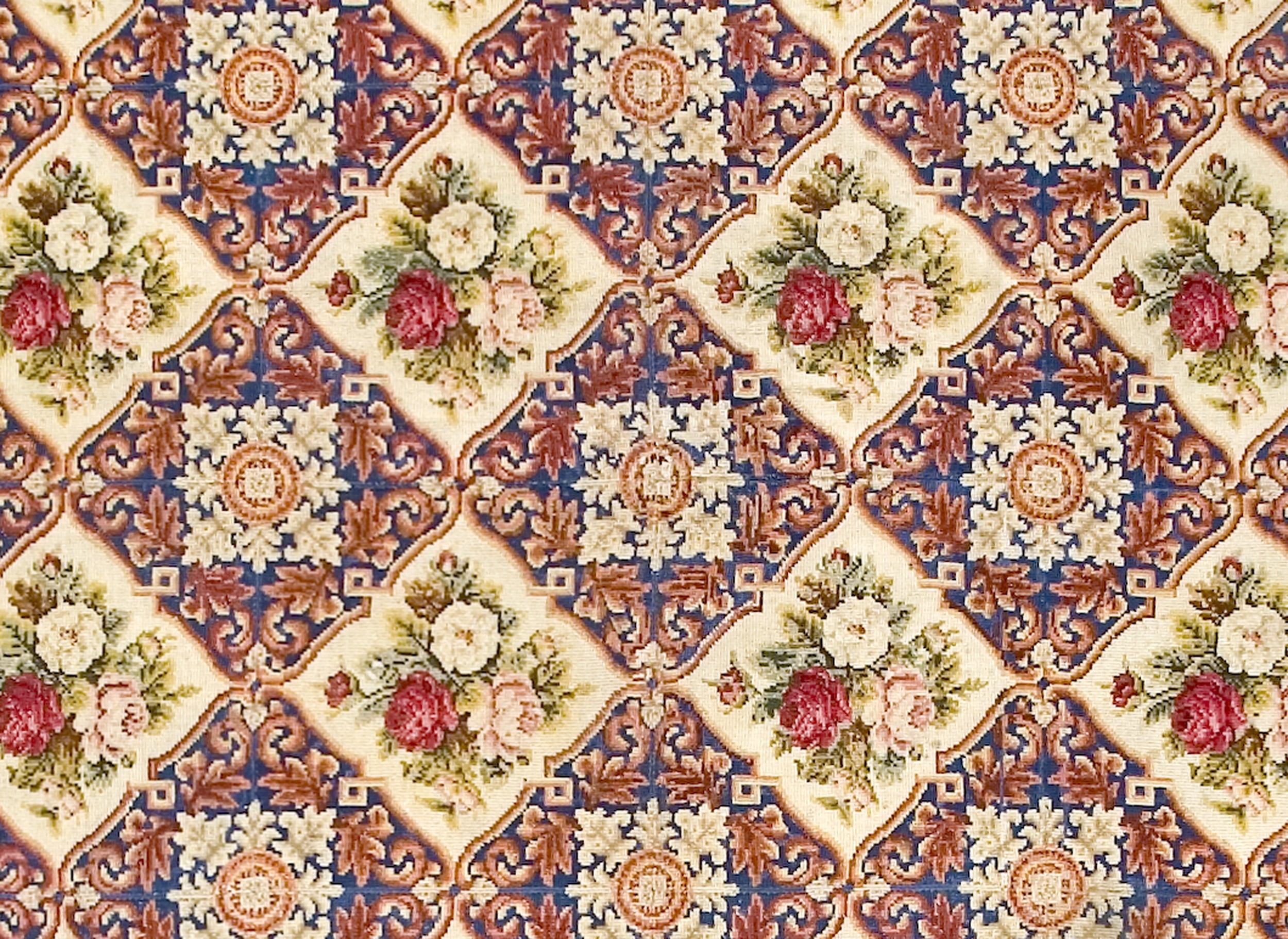
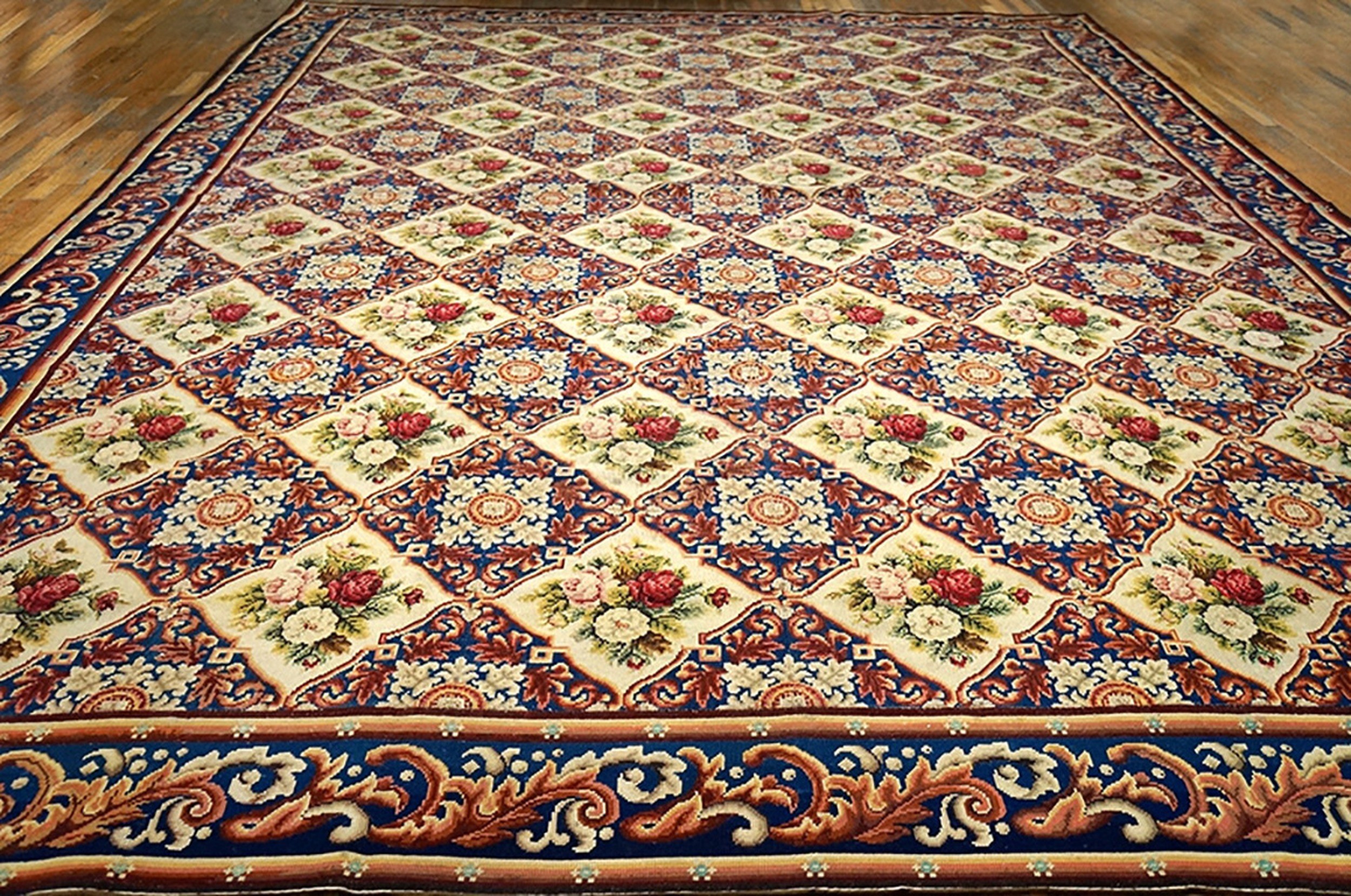
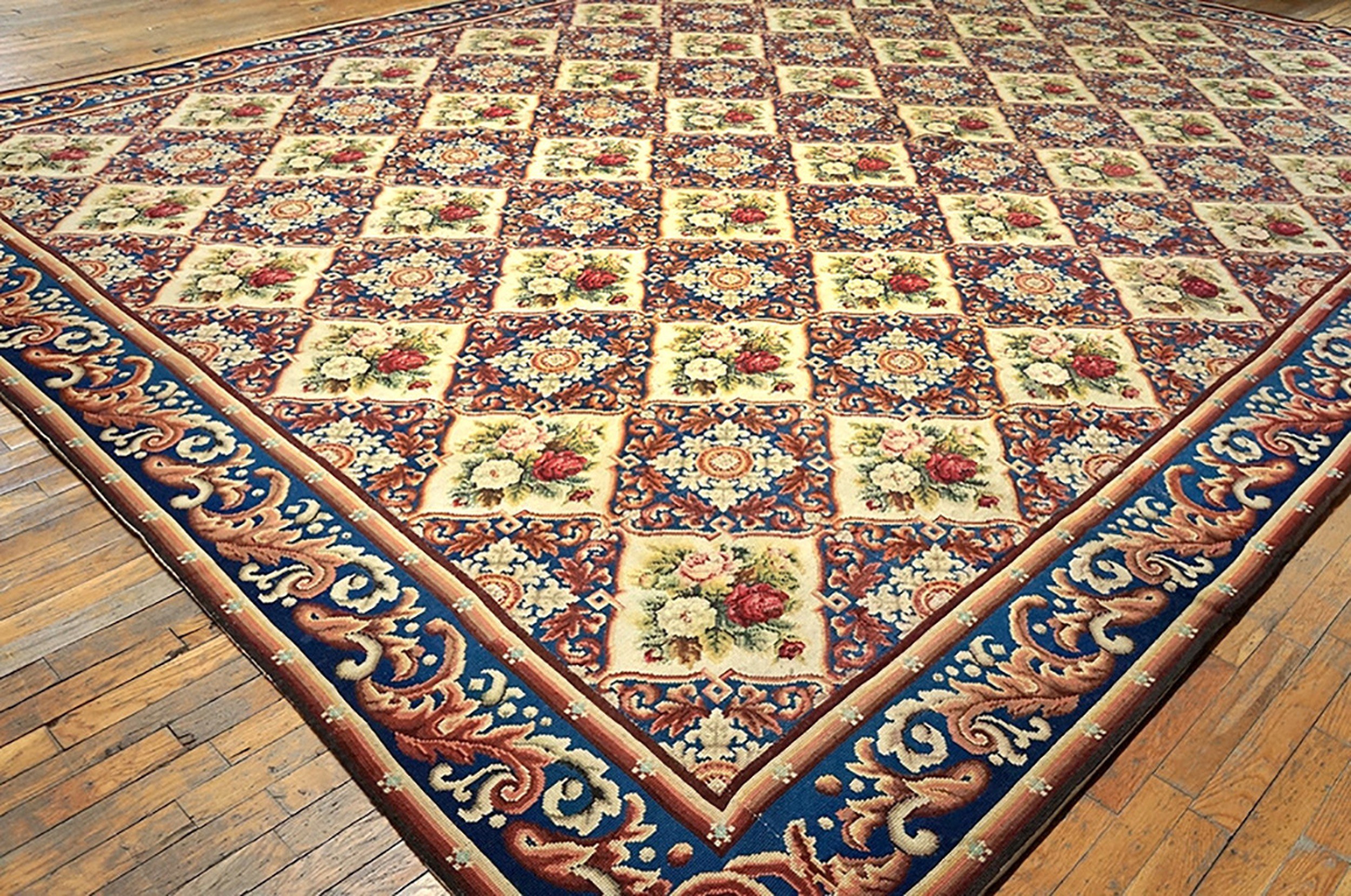
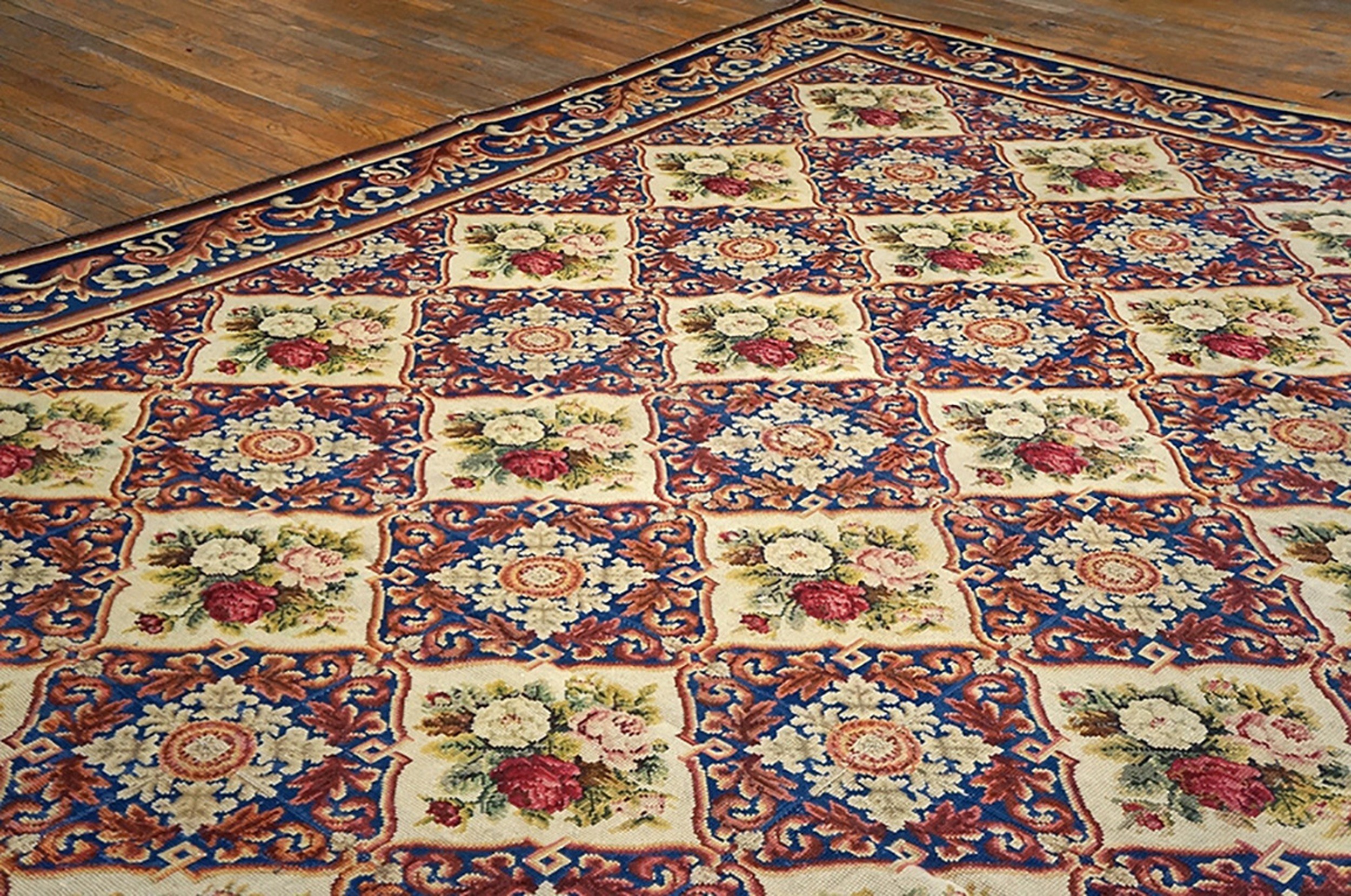
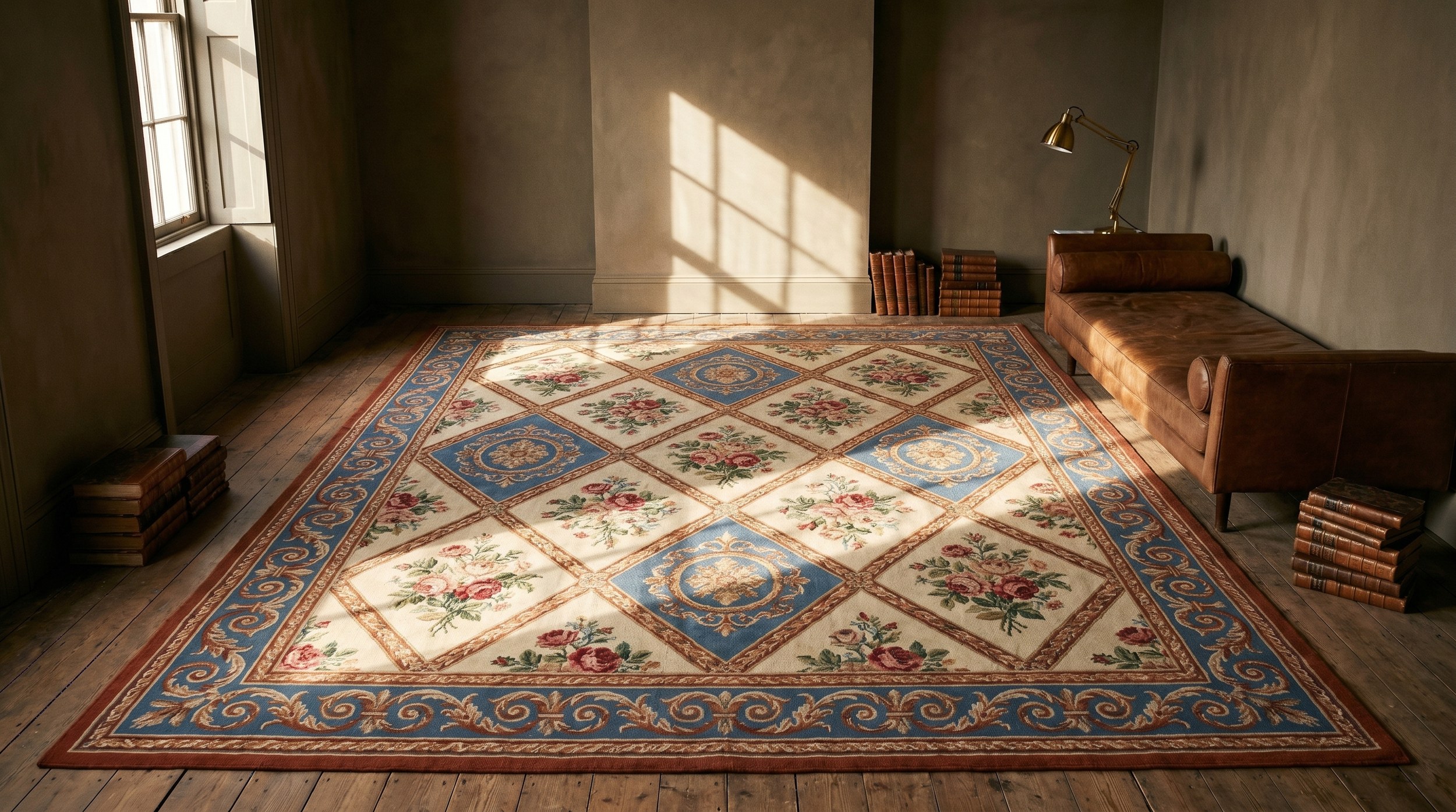
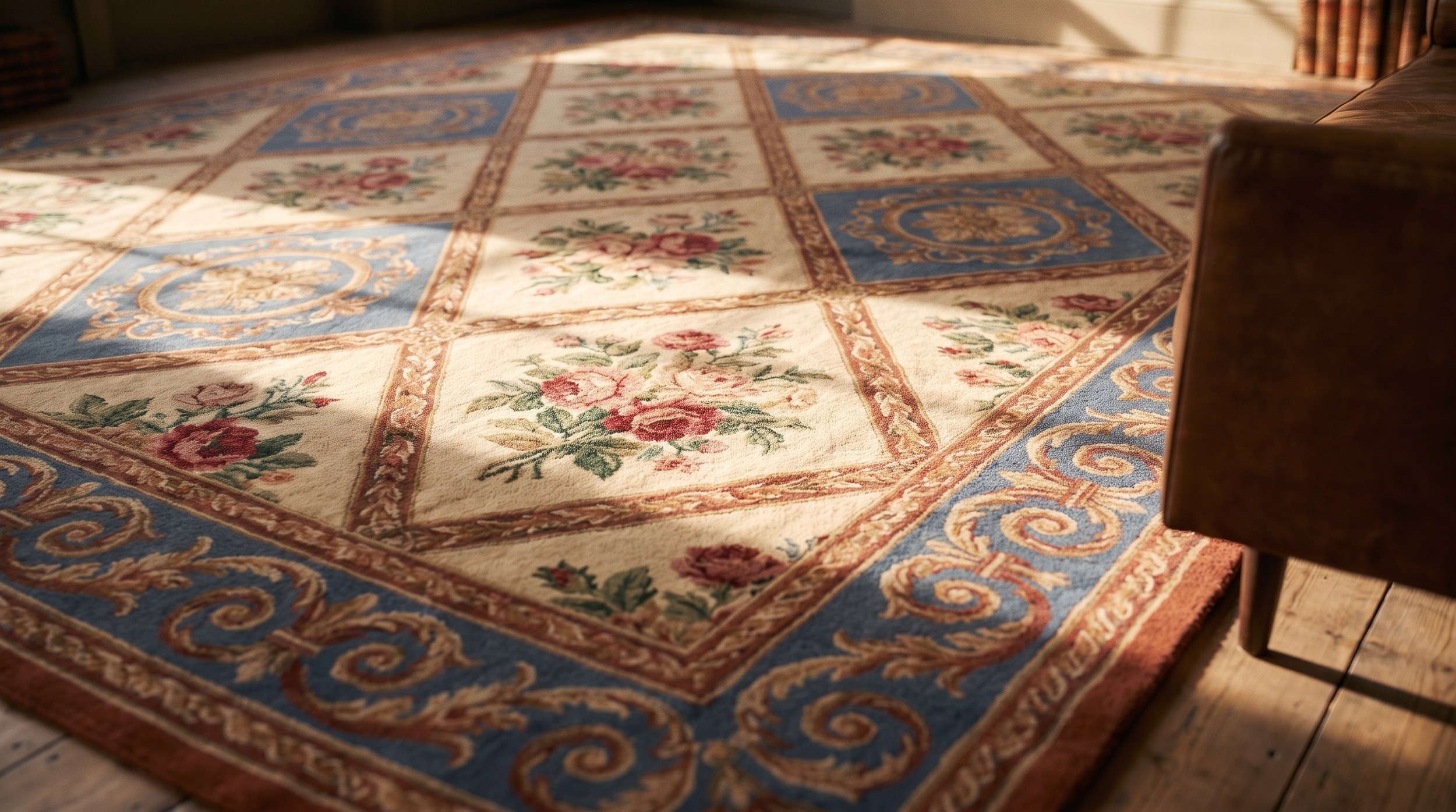
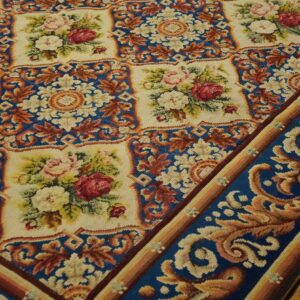
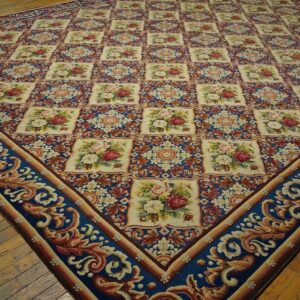
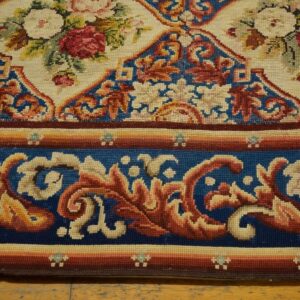
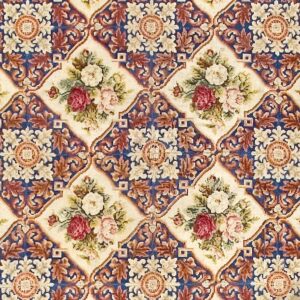
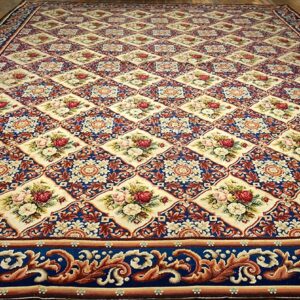
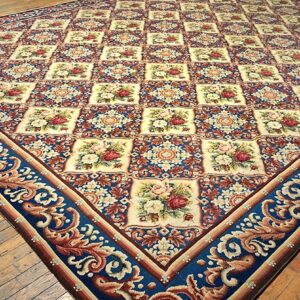
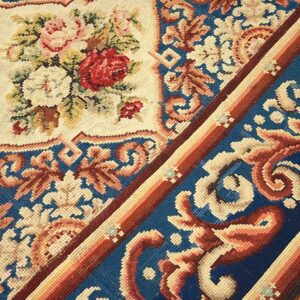
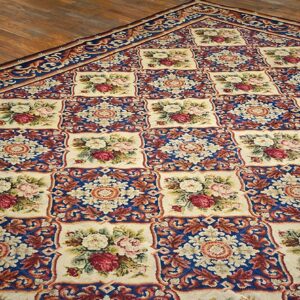
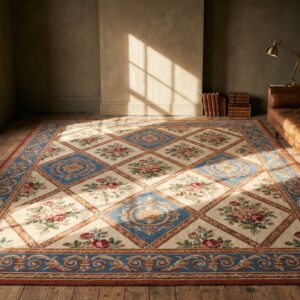
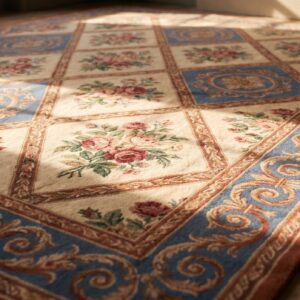
This magnificent room-sized antique Victorian English carpet is a quintessential masterwork of nineteenth-century textile art, embodying the romantic “Garden in the Home” aesthetic that defined the high Victorian era. Historically, English needlepoint rugs experienced a grand revival during the mid-to-late 1800s, spurred by the popularity of “Berlin Woolwork” and the domestic craftsmanship championed by the Arts and Crafts movement. Unlike the formal, courtly restraint of French needlework, English specimens from this period are celebrated for their “jewel-tone” color vibrancy—utilizing deep magentas, royal blues, and rich emeralds to create a dramatic, multi-dimensional floral landscape that mirrored the exotic botanical discoveries of the British Empire’s explorers.
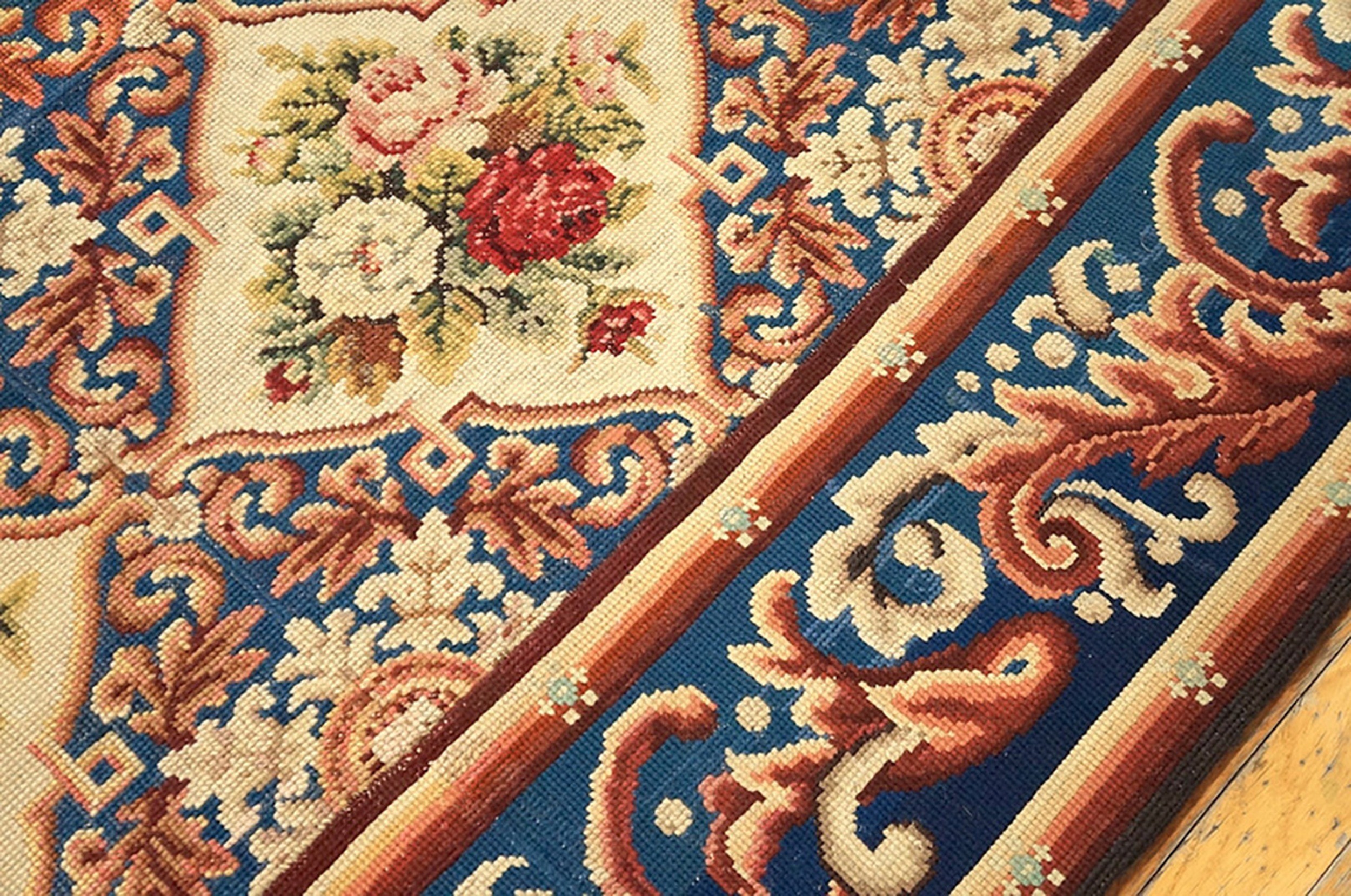
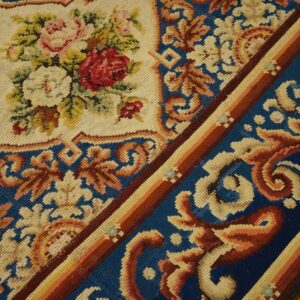
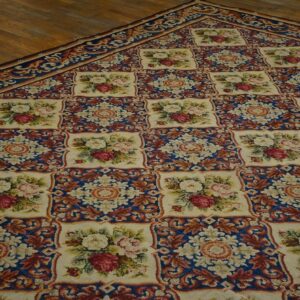
The composition is a virtuoso display of horticultural realism, featuring a dense, “all-over” arrangement of roses, lilies, and scrolling acanthus leaves. This design reflects the nineteenth-century fascination with the language of flowers, where each botanical element carried a specific sentimental meaning. The “needlepoint” technique—painstakingly hand-stitched with wool yarn onto a structural canvas—allowed for a degree of shaded detail and color gradation that surpassed the capabilities of the traditional loom. The use of a saturated, dark-toned background was a deliberate stylistic choice common in the 1860s and 70s; it served to illuminate the floral motifs, making the “jewel tones” appear to glow as if caught in a shaft of light within a Victorian parlor.
Historically, a needlepoint rug of this substantial room size was a labor-intensive luxury of the highest order. Because every square inch required thousands of individual hand-stitches, such a piece was often the result of years of collaborative effort by skilled needlewomen or a prestigious London workshop commission. These rugs were designed to be the tonal anchor of a grand interior, providing a soft, tactile counterpoint to the era’s heavy mahogany and walnut furnishings. Today, this specimen stands as a vibrant monument to the Victorian decorative spirit—a work that combines the disciplined geometry of the stitch with the exuberant, untamed beauty of the English cottage garden. To possess such a piece is to hold a fragment of nineteenth-century social history, representing a time when the domestic sphere was transformed into a sanctuary of hand-wrought, botanical art.