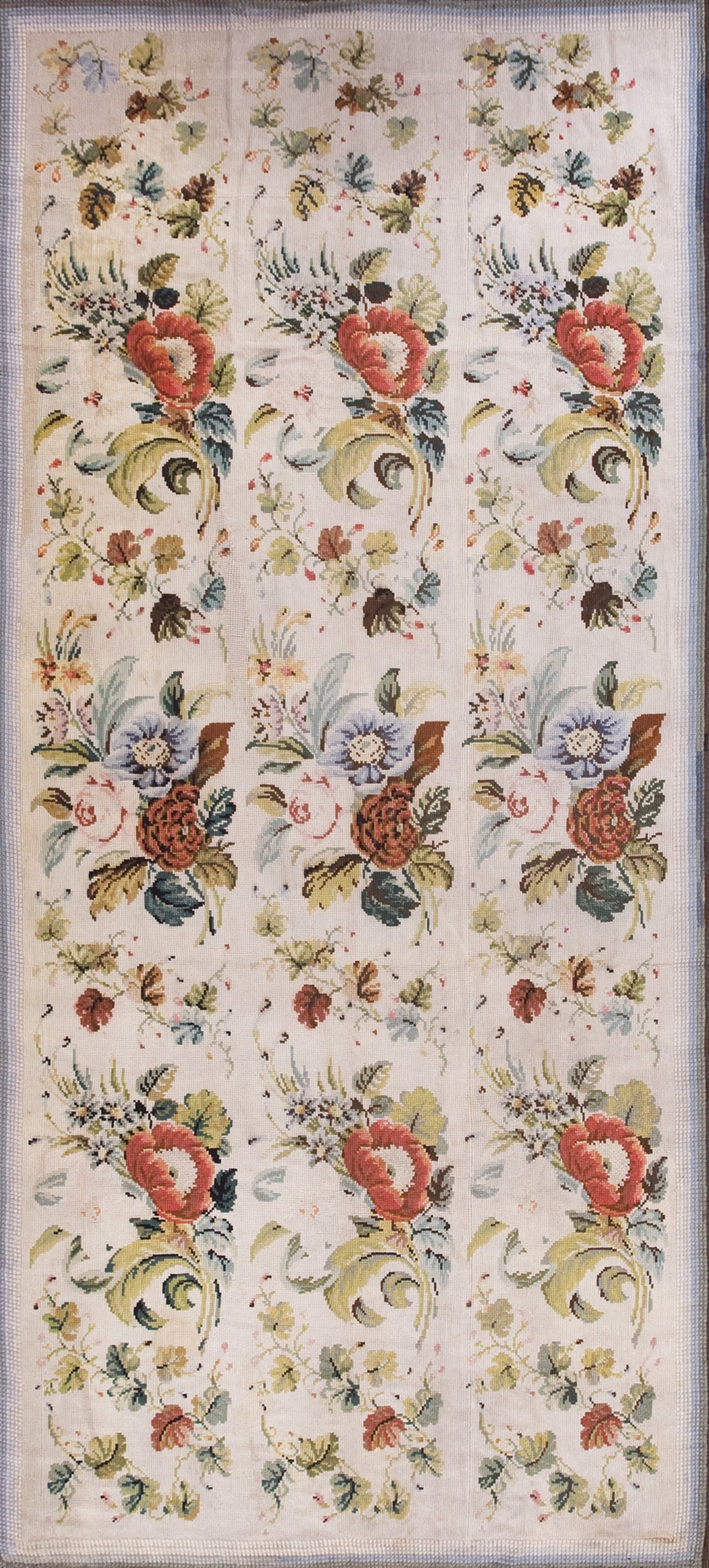
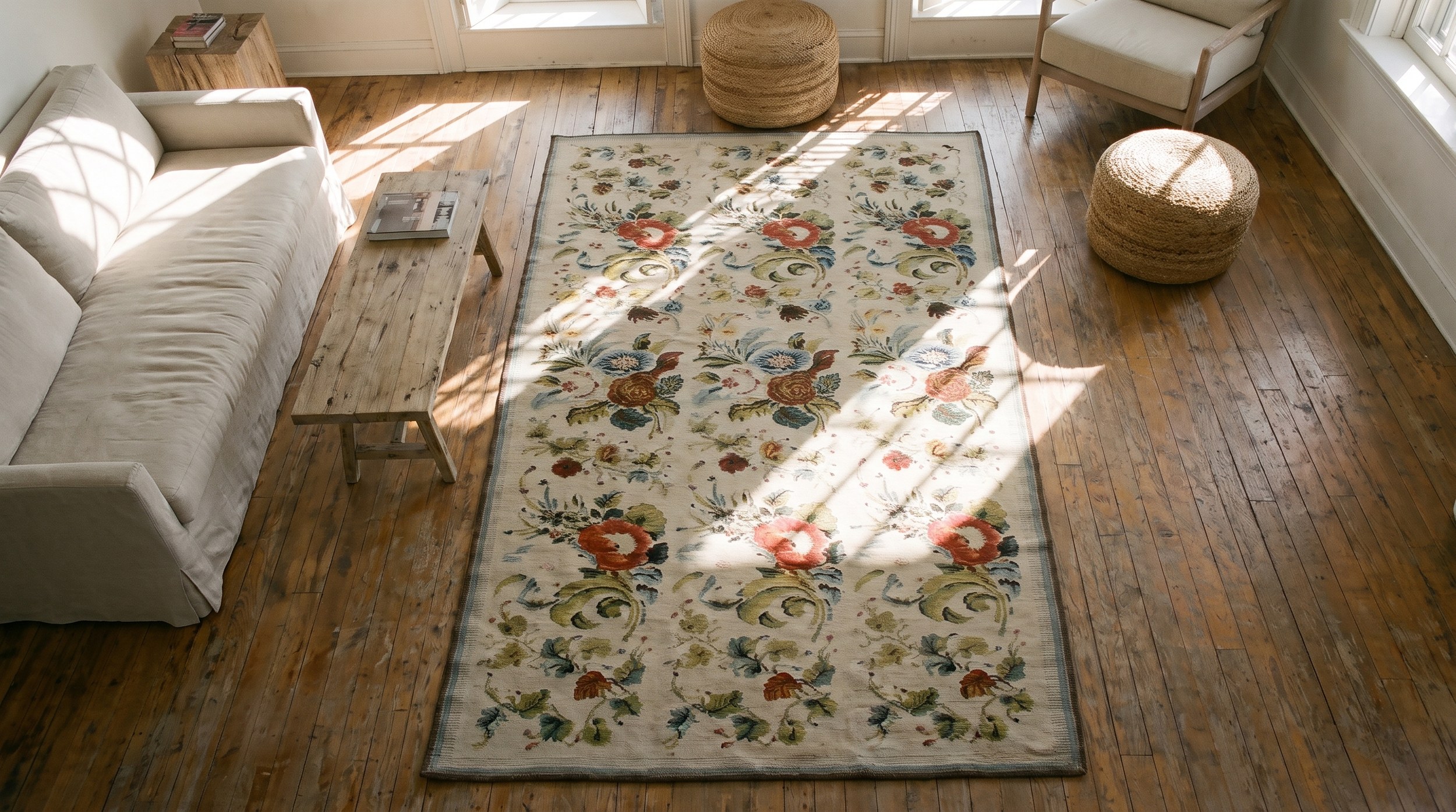
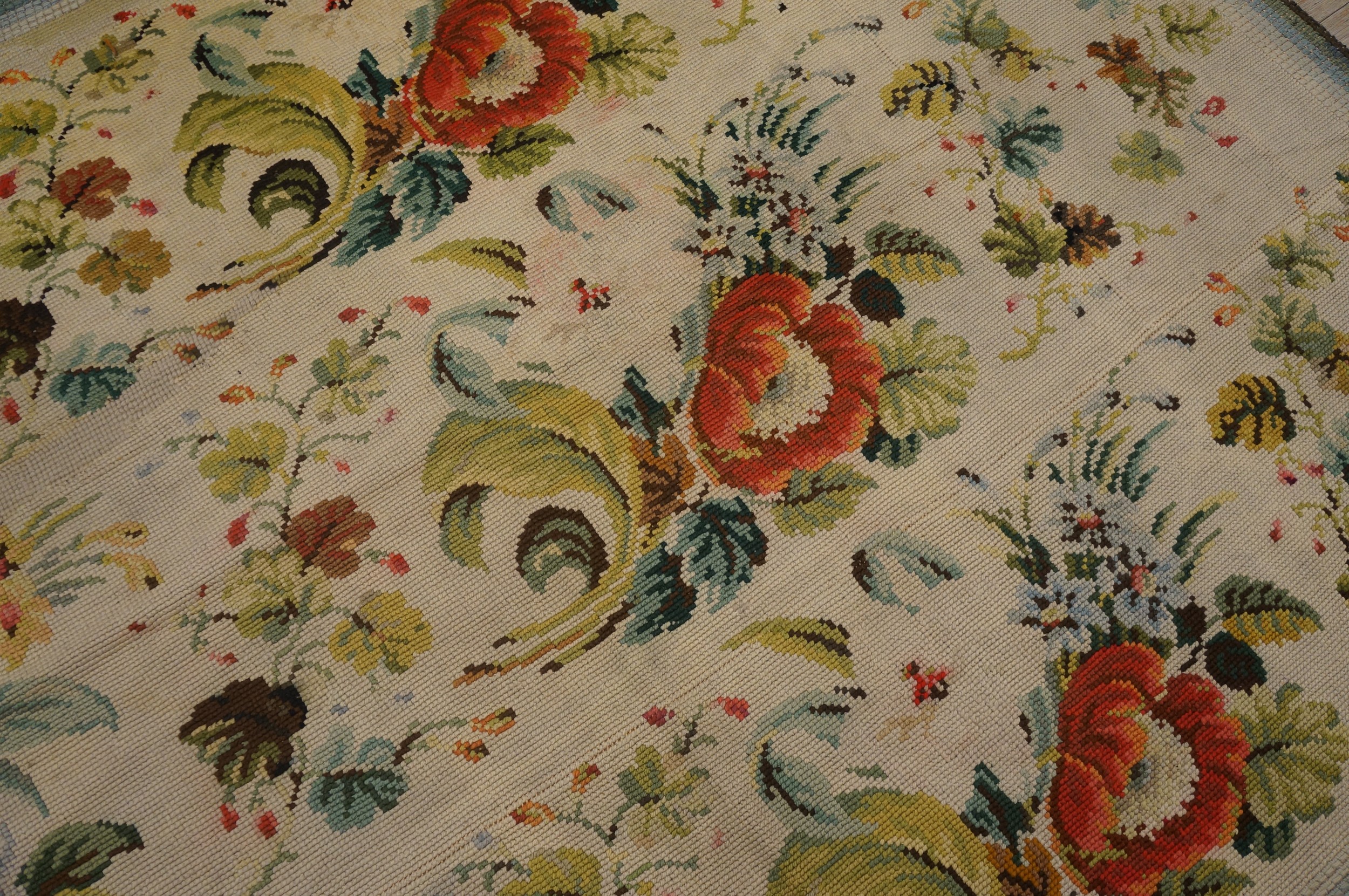
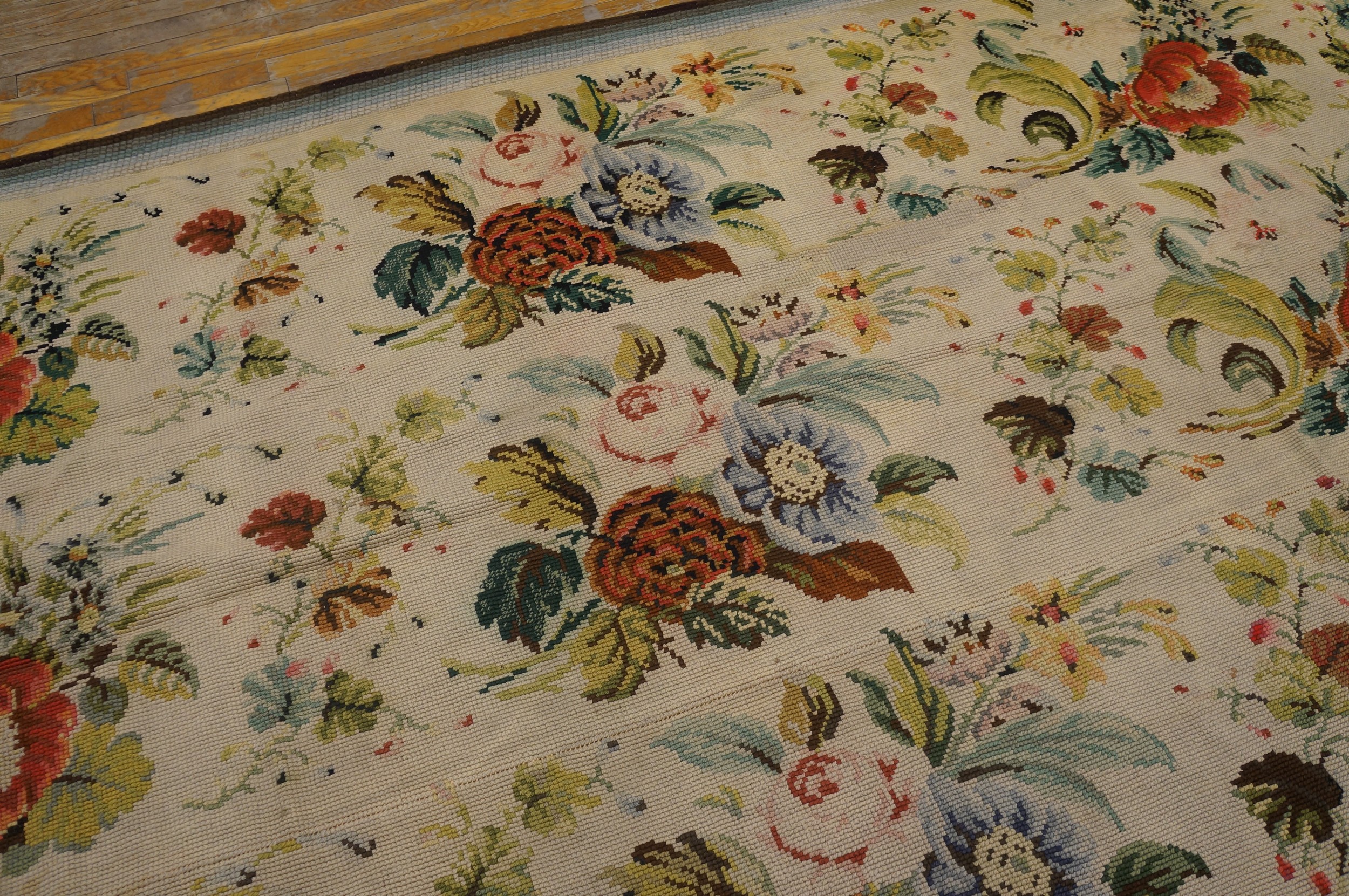
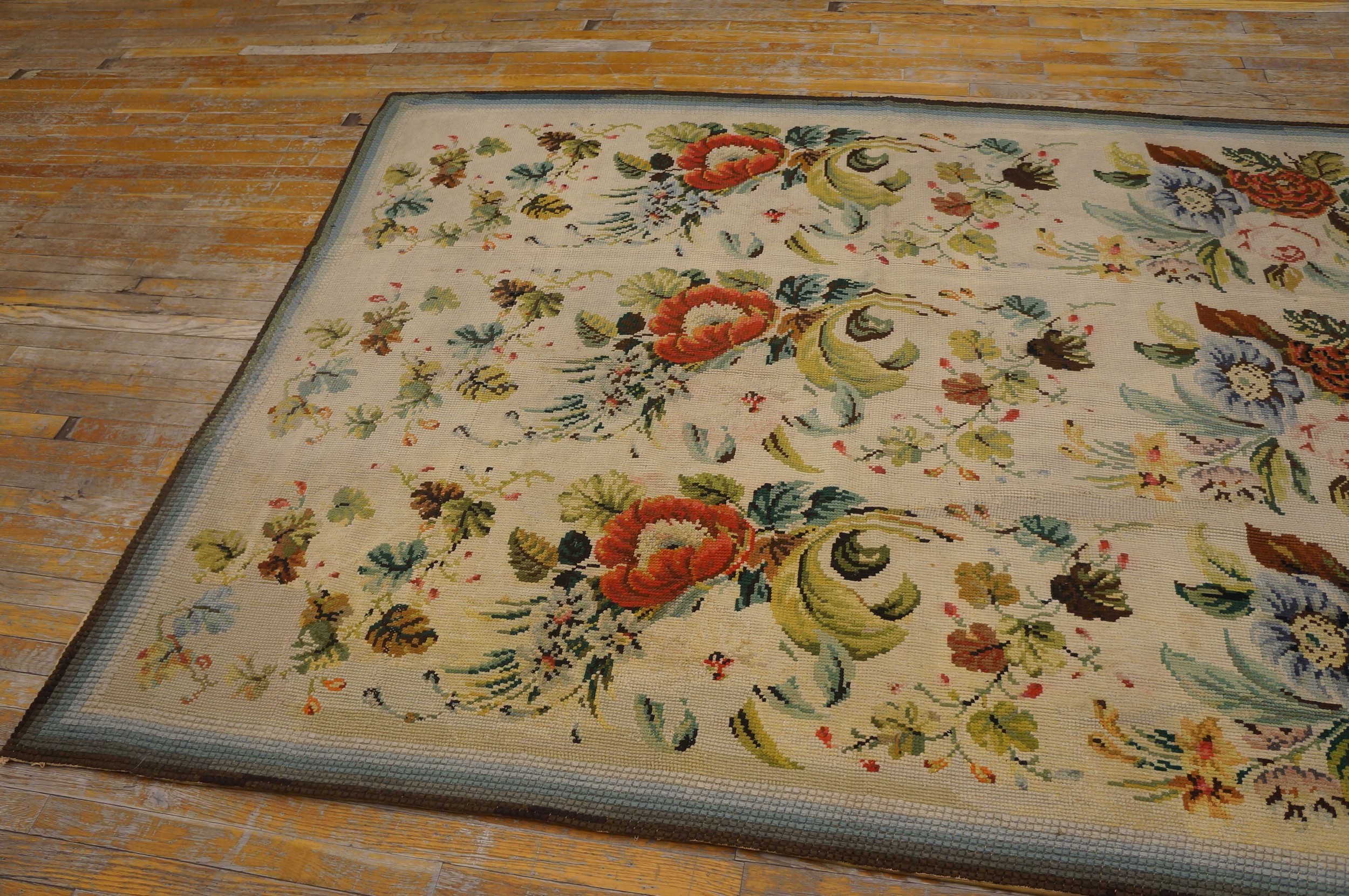
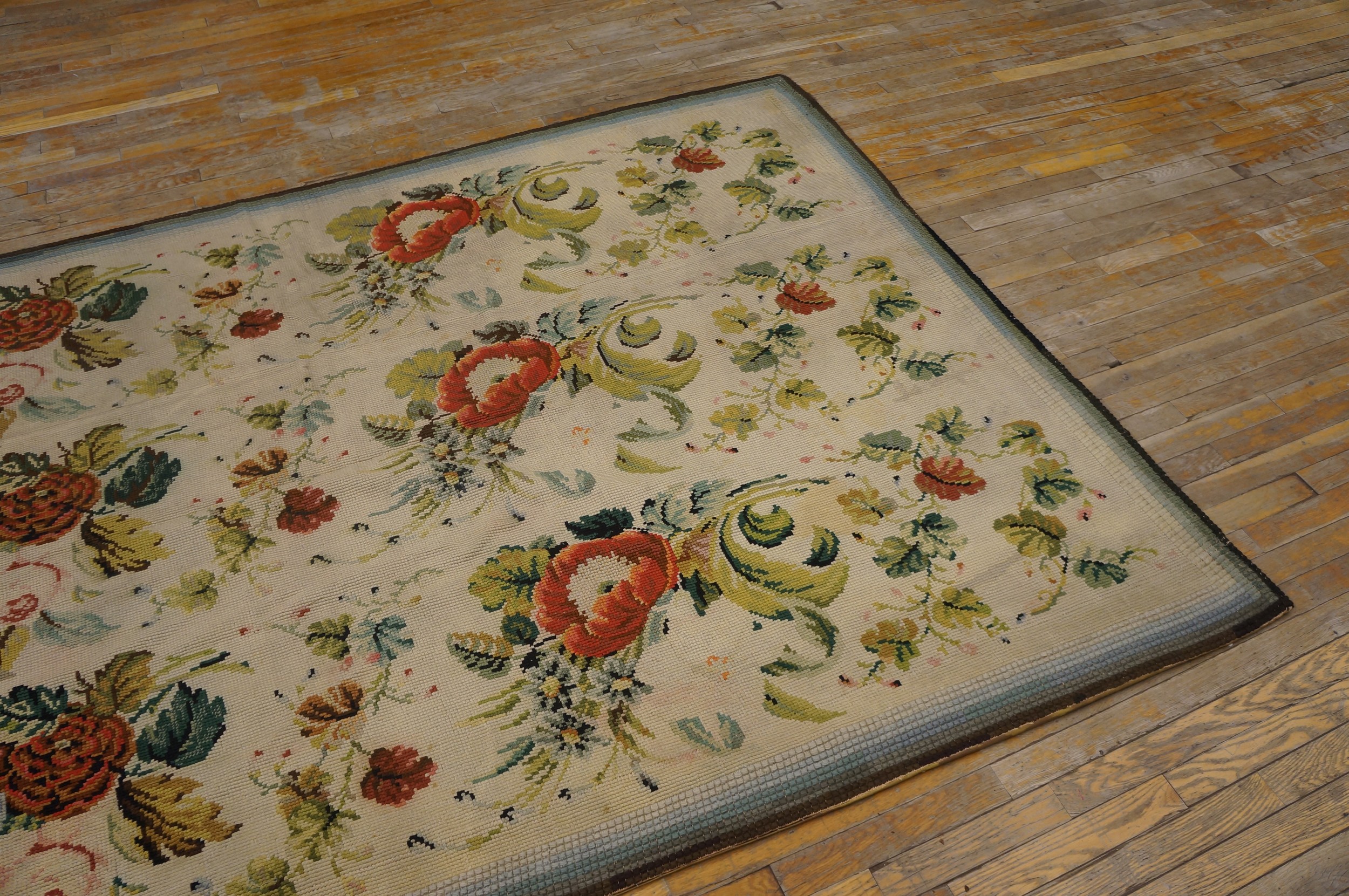
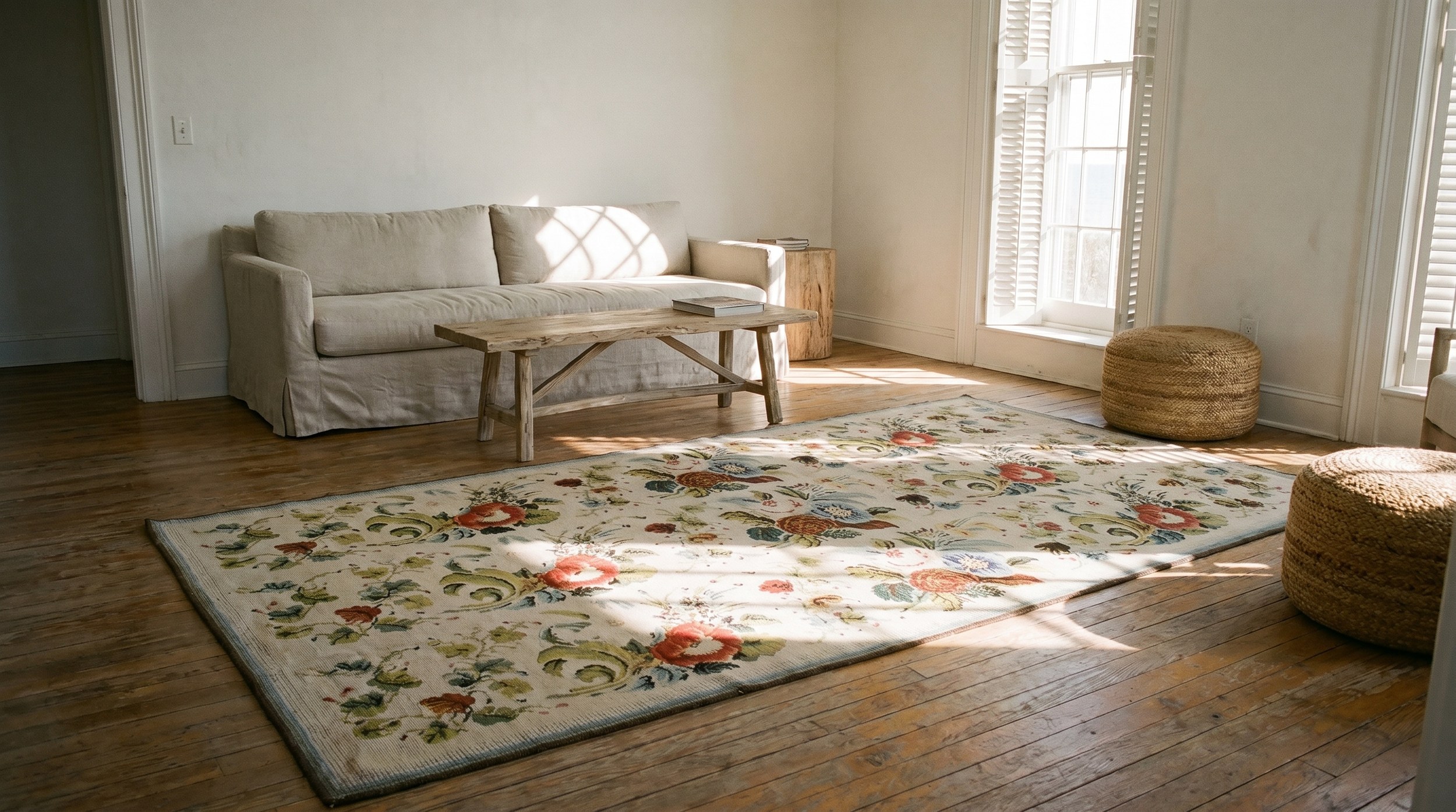
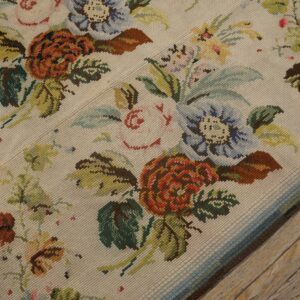
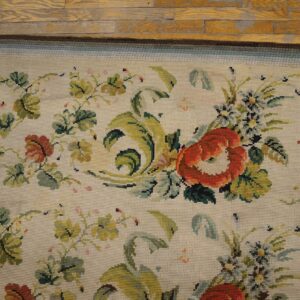
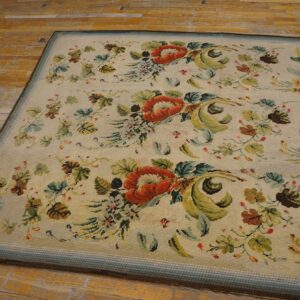
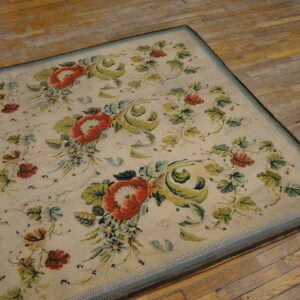
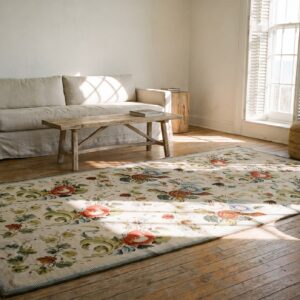
This English Victorian Needlepoint nineteenth-century carpet is a superlative example of the “Feminine Arts” that flourished during the reign of Queen Victoria. Historically, these types of English carpets were the ultimate symbols of domestic leisure and aristocratic refinement; unlike loom-woven area rugs, these were hand-stitched on canvas, often by groups of skilled women, making them deeply personal and labor-intensive works of art.
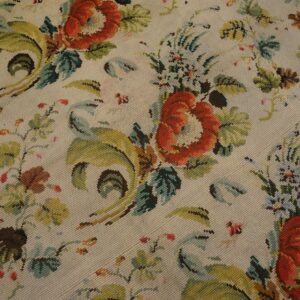
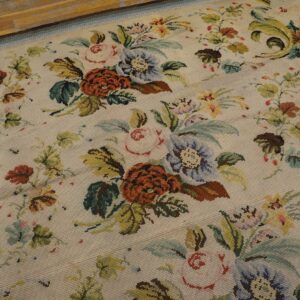
The composition is a virtuoso display of the European Floral tradition, defined by its romantic and “painterly” botanical realism. This specific specimen features an ethereal Ivory field, which serves as a luminous, “blank canvas” for the sprawling arrangement of lush roses, peonies, and lilies. The design reflects the Victorian obsession with the “Language of Flowers,” where each bloom carried a specific symbolic meaning of devotion, virtue, or prosperity. The arrangement is typically organic and graceful, eschewing the rigid geometry of the East in favor of a soft, garden-inspired fluidity.
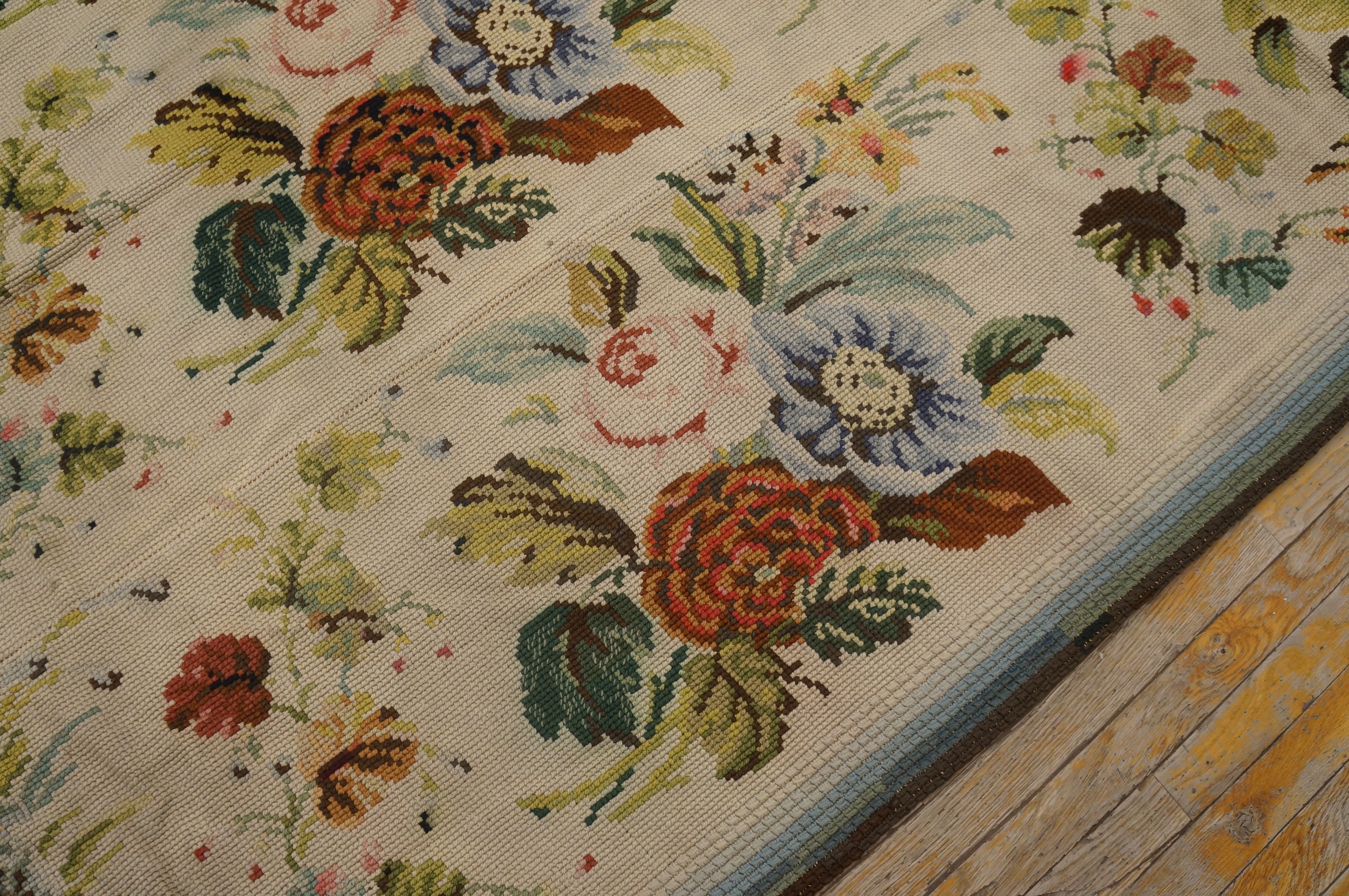
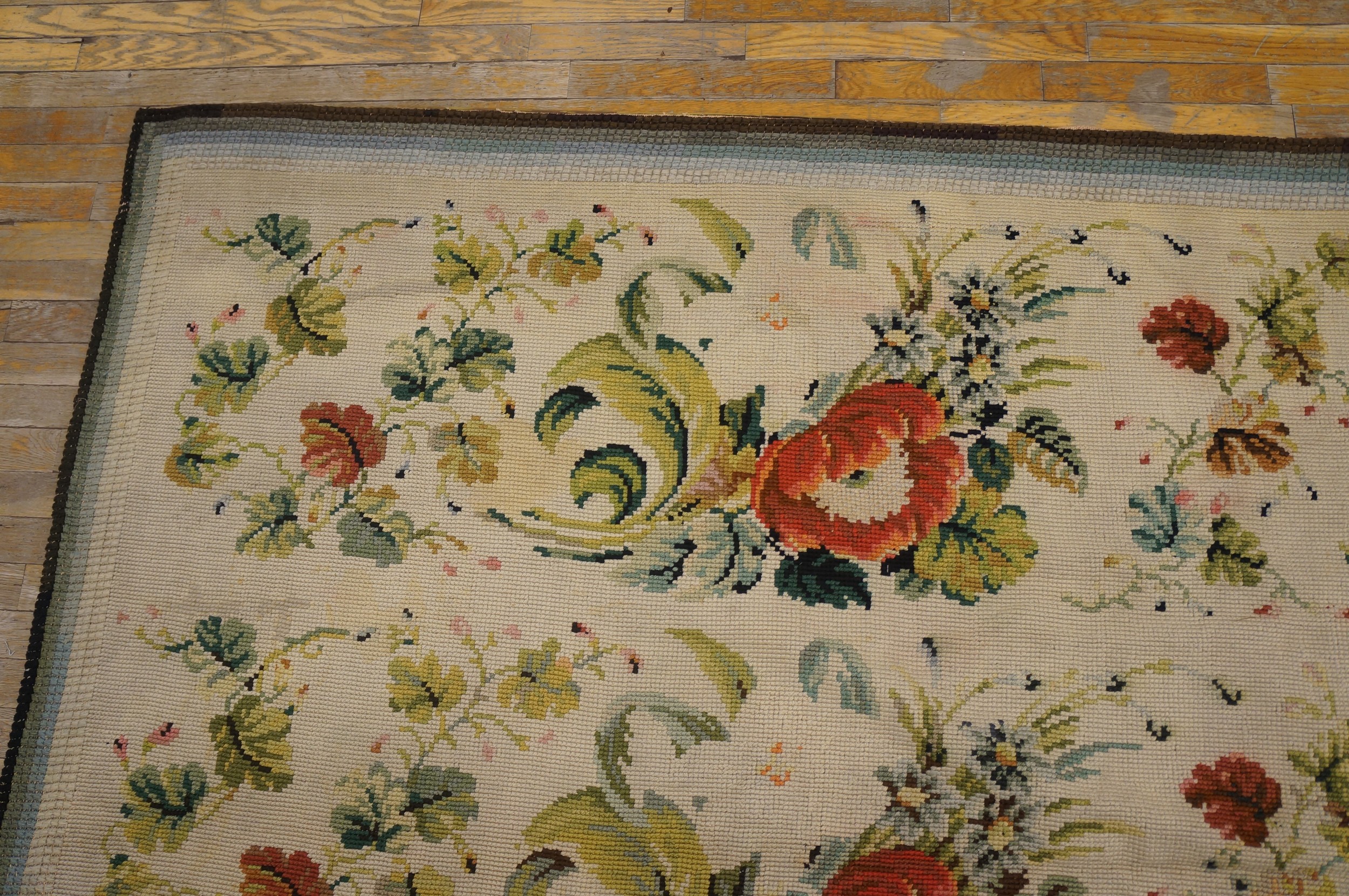
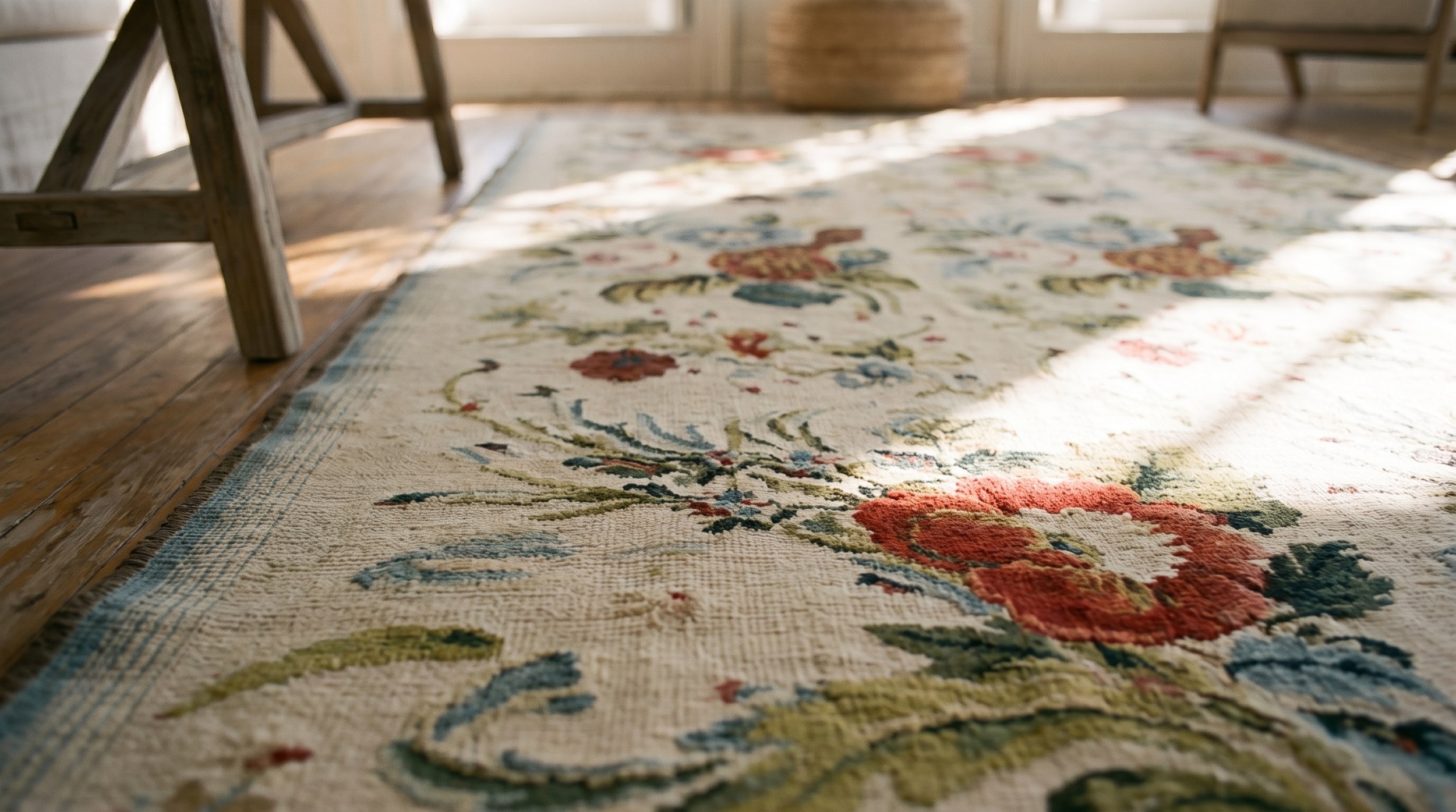
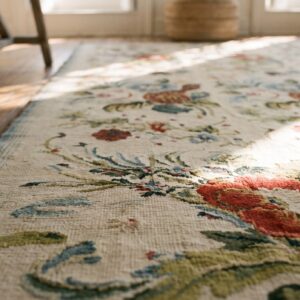
The palette is a masterclass in mid-to-late 19th-century sophistication. Against the creamy ivory ground, the artisan has used a “jewelry box” of colors—saturated dusty rose, sage green, burgundy, and soft gold. Because needlepoint uses individual stitches (the petit point or gros point technique), the weaver could achieve extraordinary shading and “contouring” within each petal, giving the flowers a three-dimensional, sculptural quality. Over a century of preservation has bestowed the wool with a soft, matte patina that feels both antique and remarkably fresh.
Technically, an English Needlepoint is prized for its flat, architectural handle and its incredible detail. Because it lacks a traditional knotted pile, the rug sits low to the floor, making it the perfect “Designer” choice for showcasing fine antique furniture. The wool yarn used in Victorian needlework was exceptionally fine, allowing for a level of botanical precision that mimics a Dutch still-life painting.
The borders act as a regal frame, often featuring a “ribbon and garland” or “scrollwork” motif that grounds the exuberant energy of the central field. To possess magnificent antique ivory needlepoint carpets like this one, is to hold a monument to a vanished era of handmade luxury. It is a work that bridges the gap between textile and fine art—a serene, hand-stitched sanctuary that transforms a room into a space of historical gravity and timeless, feminine elegance.