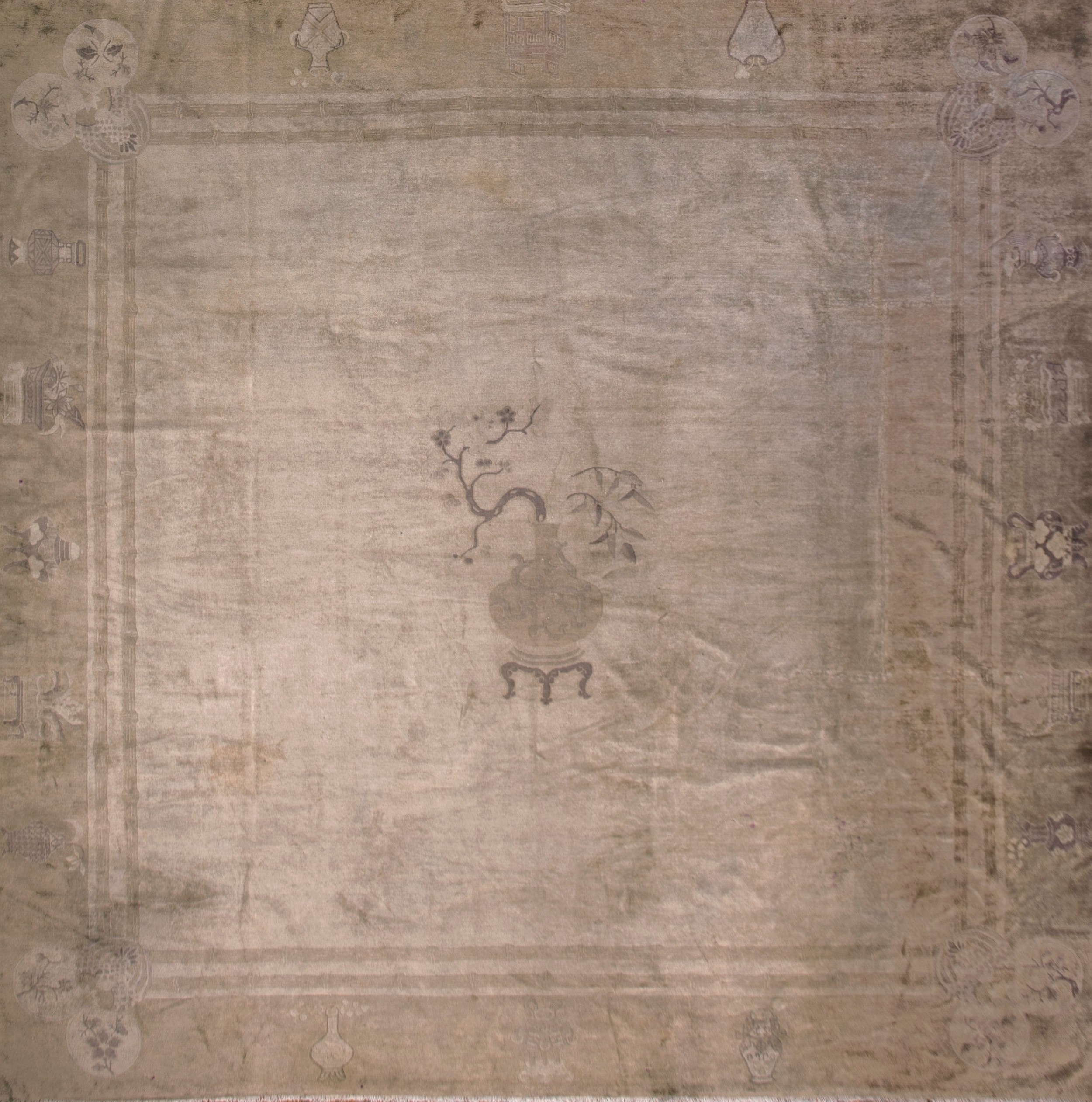
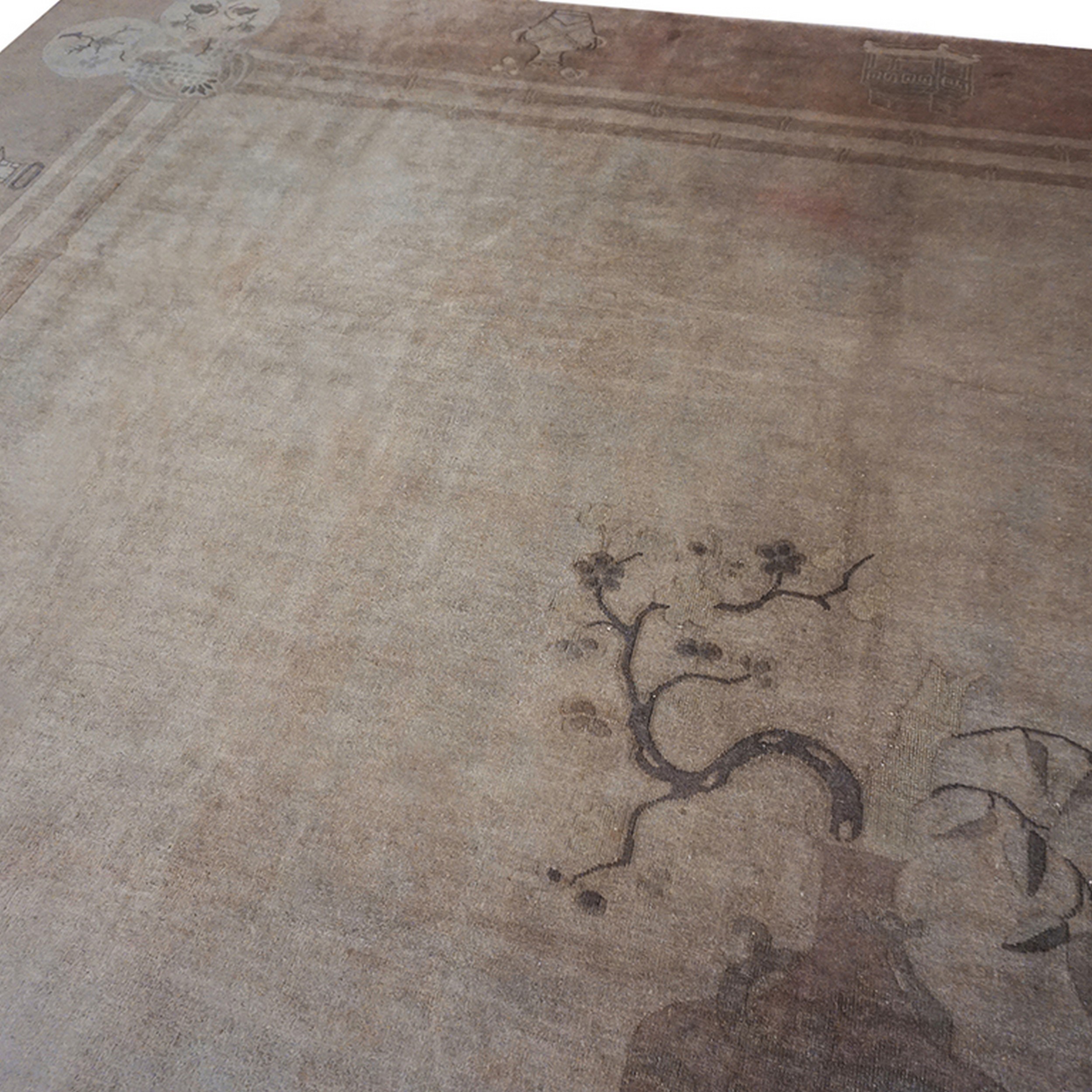
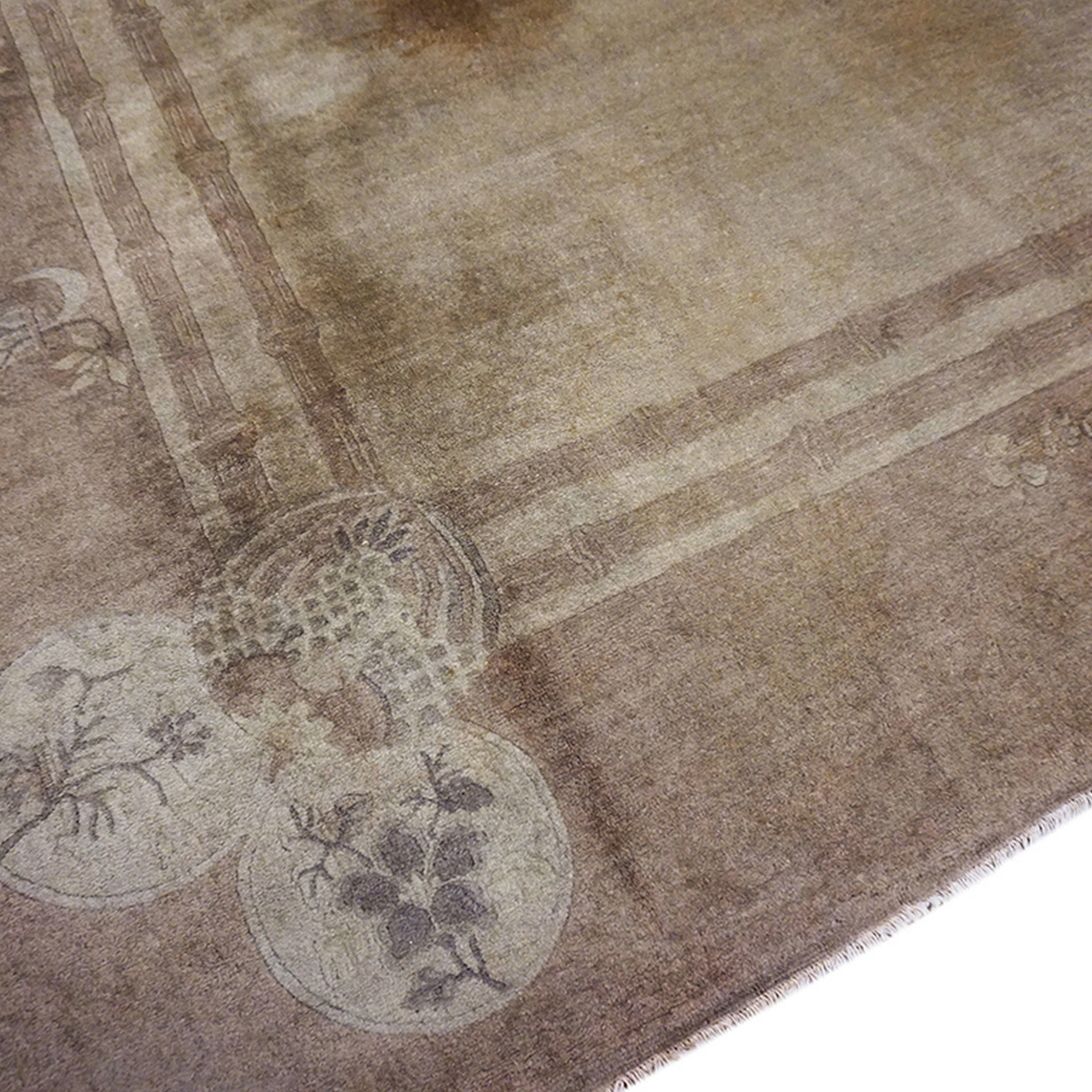
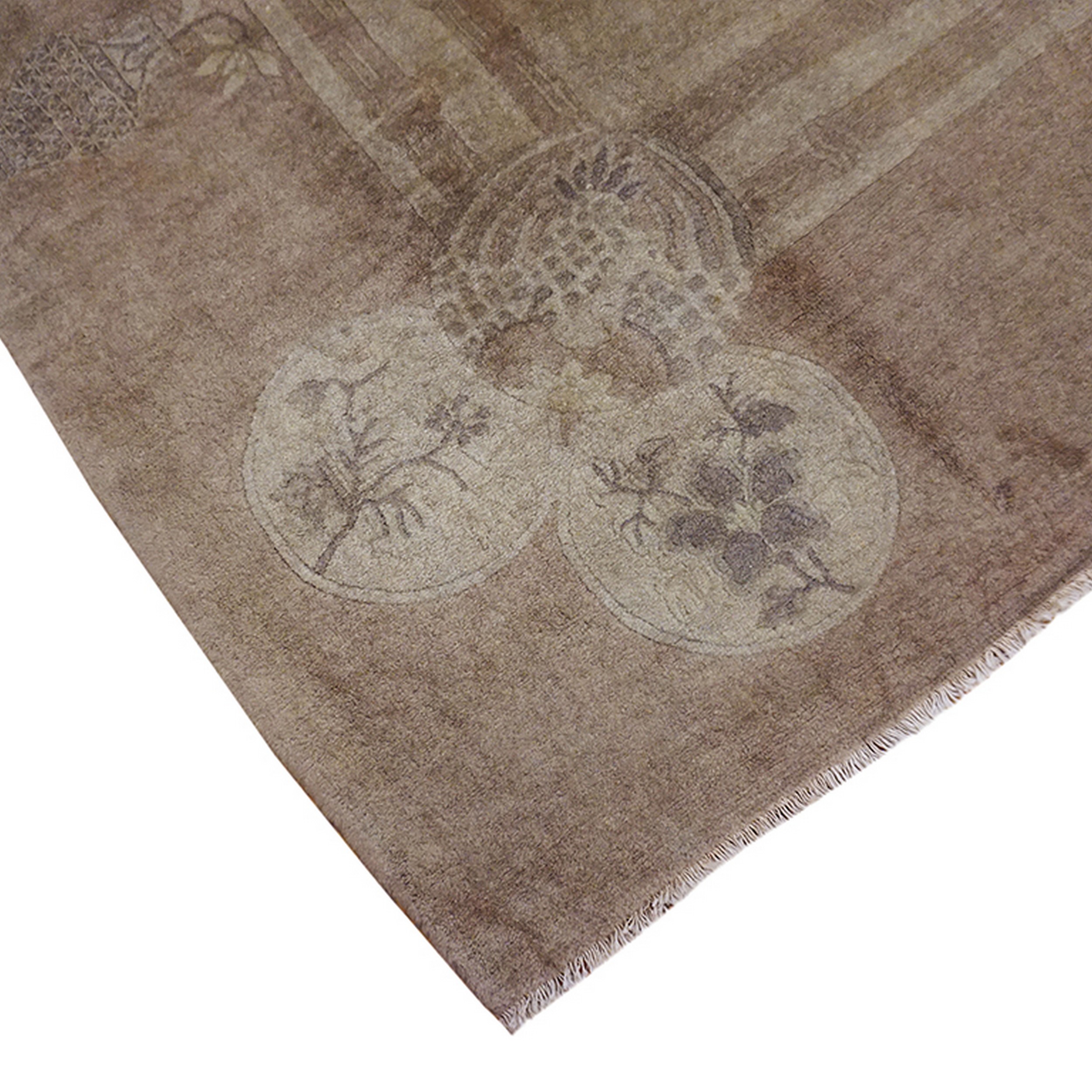
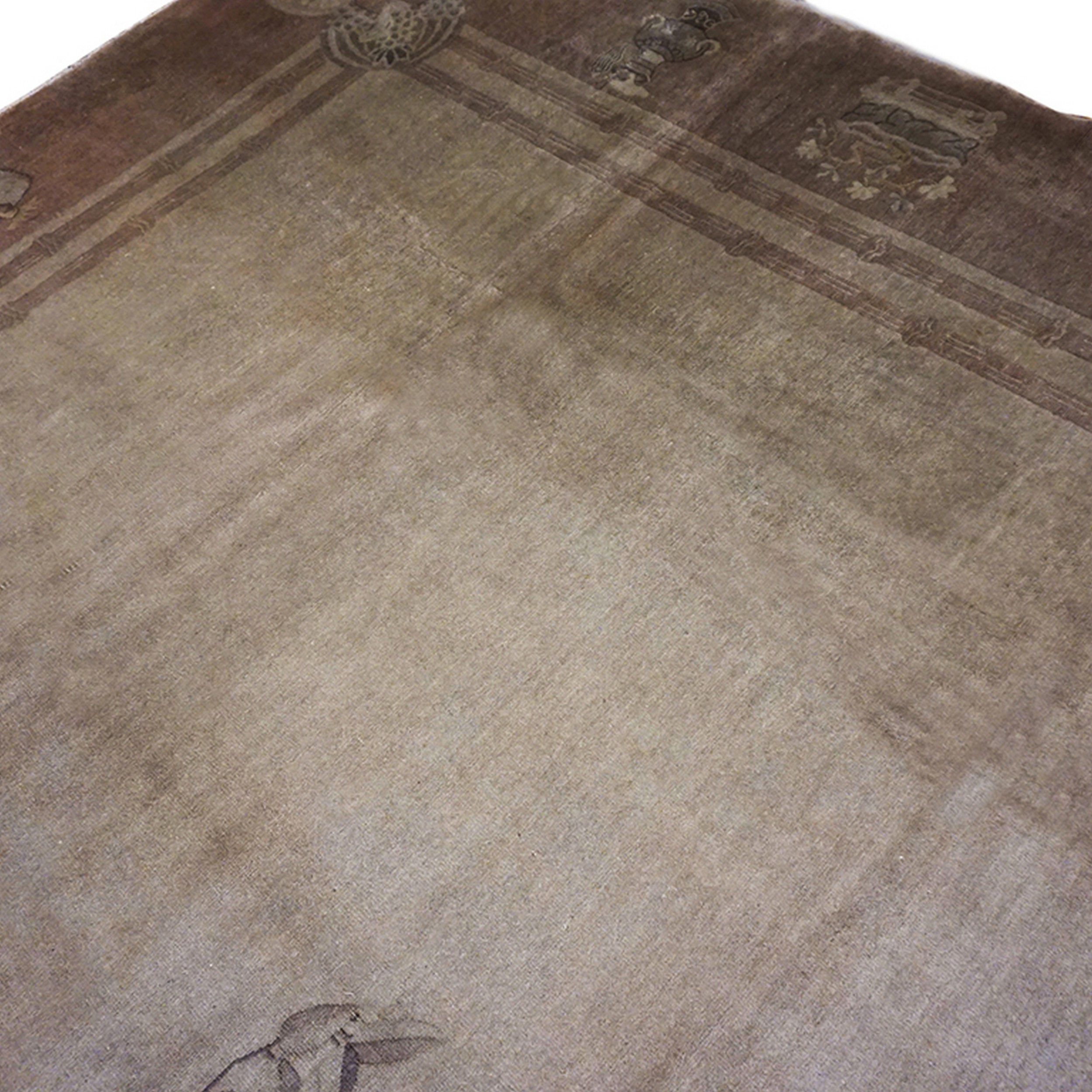
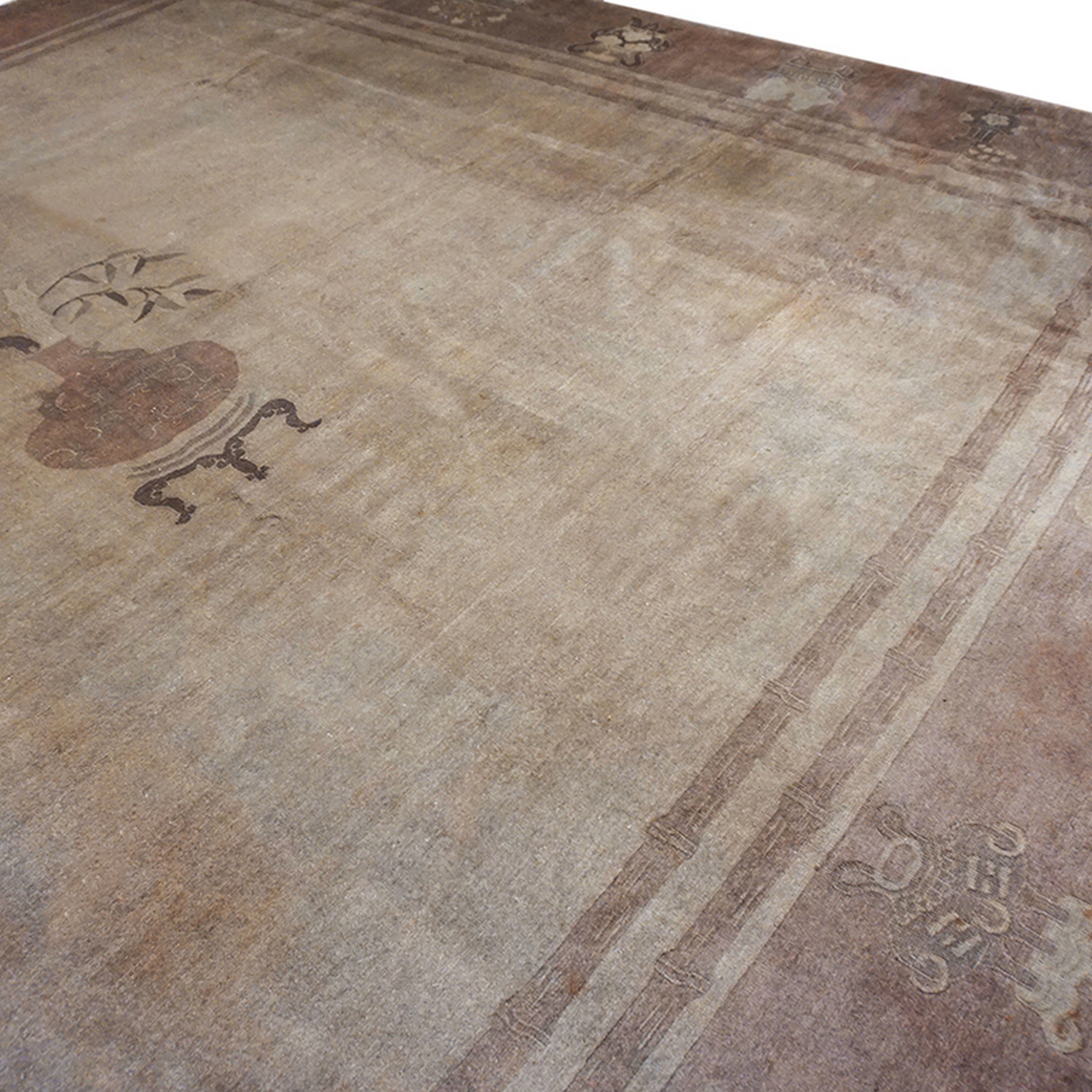
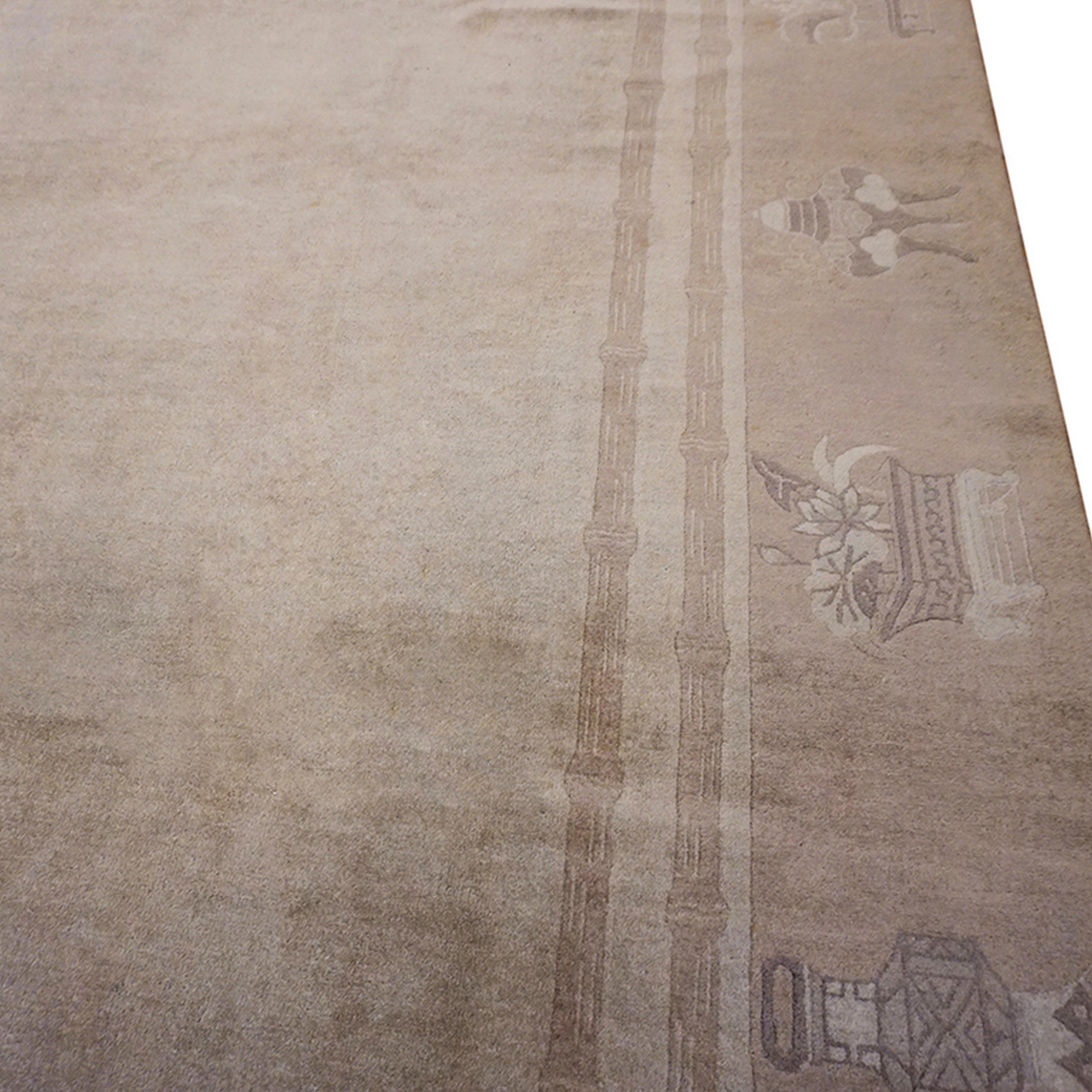
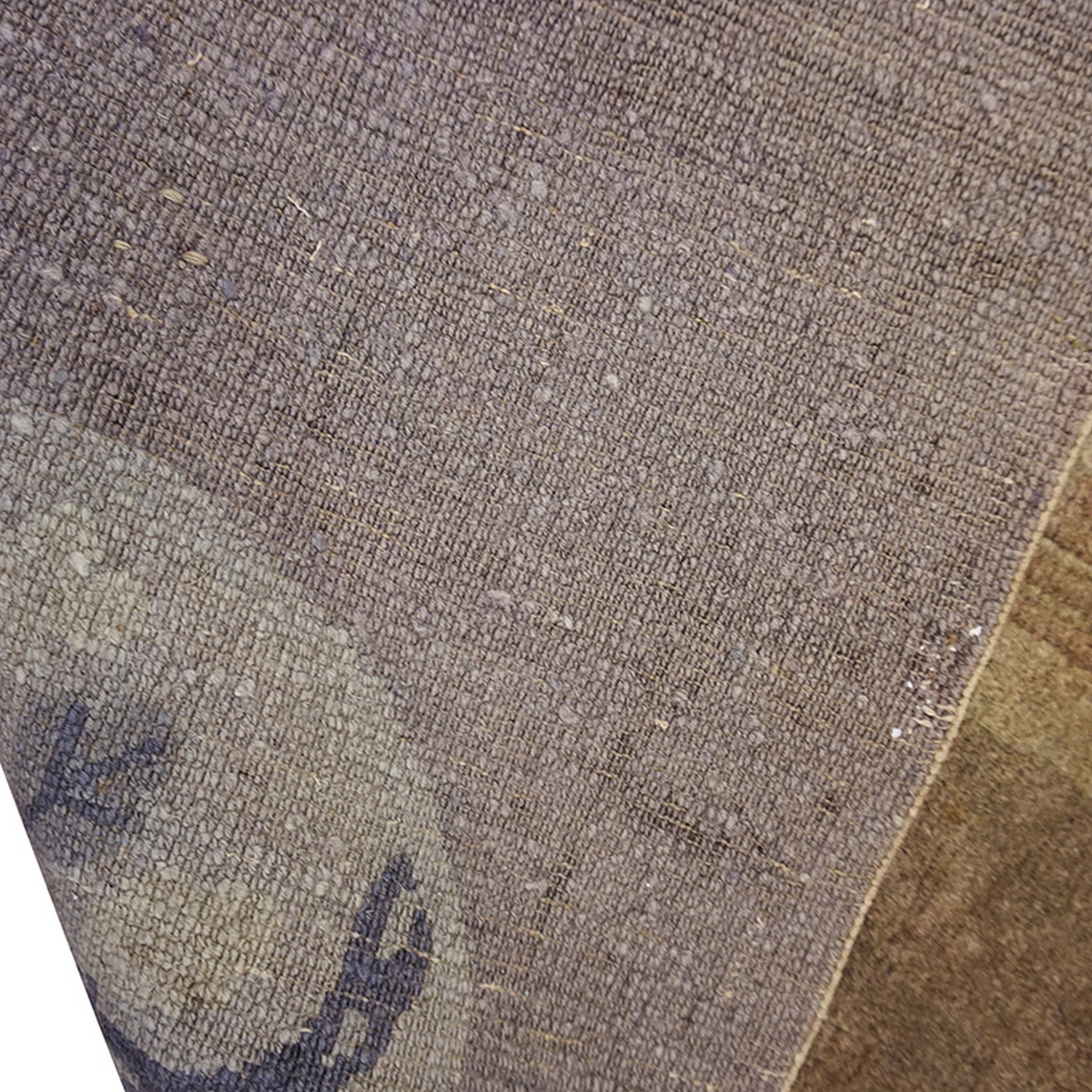
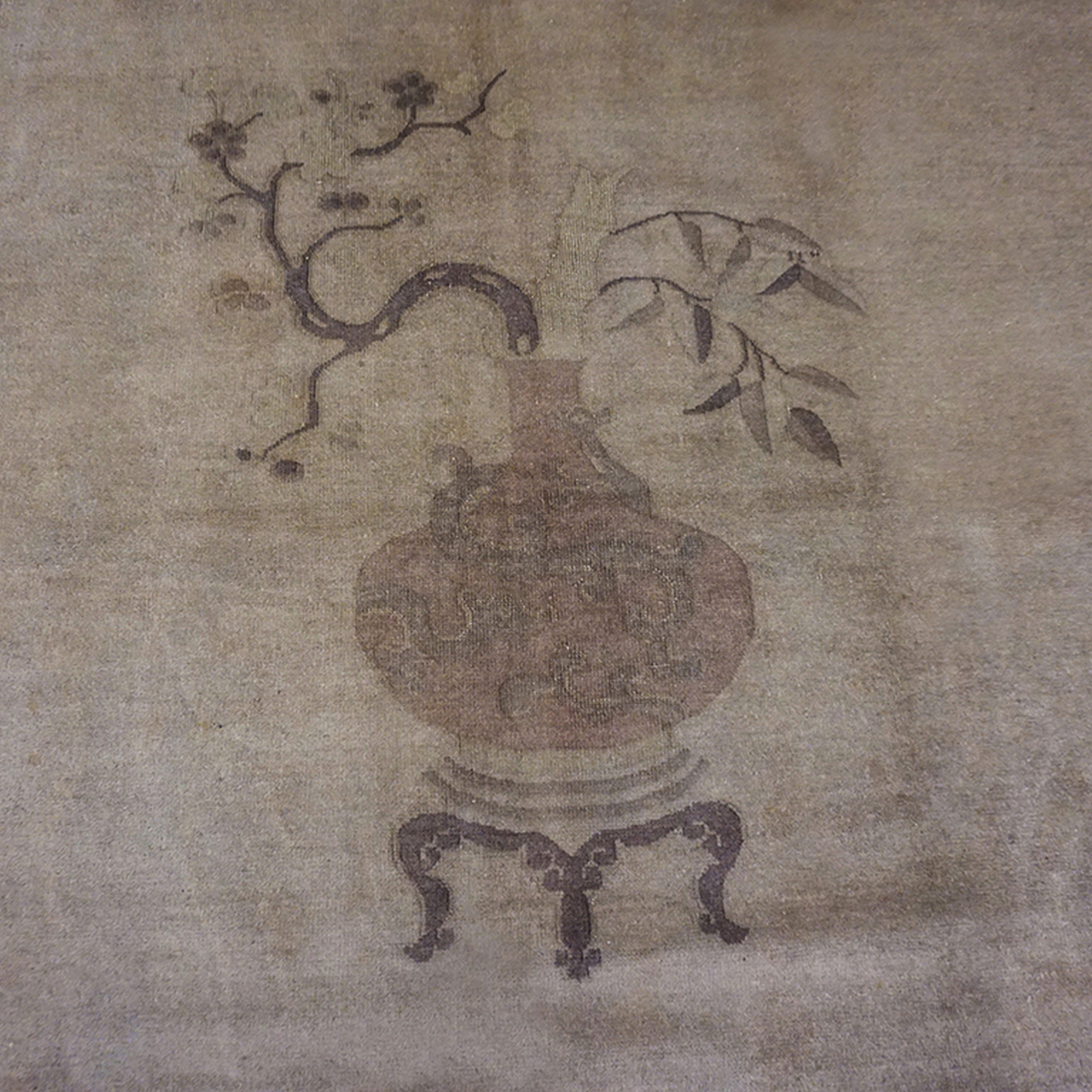
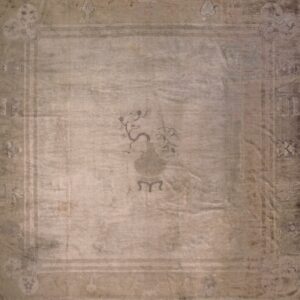
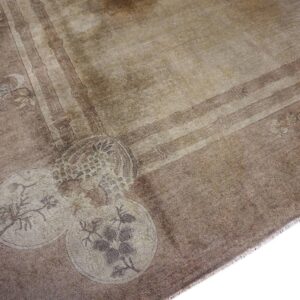
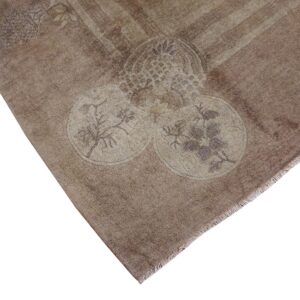
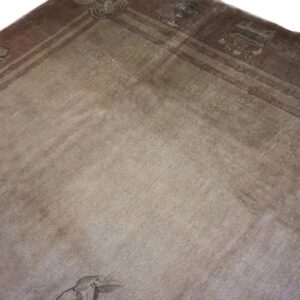
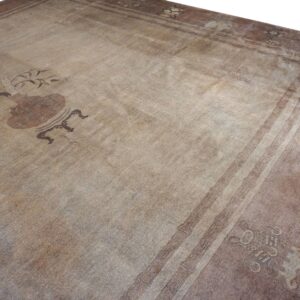
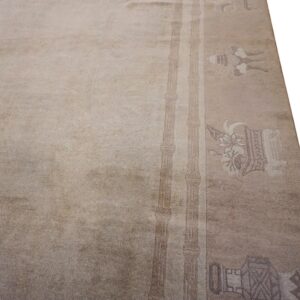
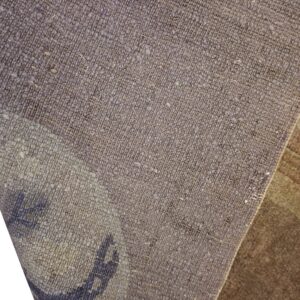
This minimalist early 20th-century antique Chinese rug is a study in monochromatic elegance, stripped of the vibrant indigoes and deep cinnabars common to its era. By utilizing a strictly neutral palette of taupe, cream, and ivory, this carpet transcends its antique origins to become a masterwork of modern minimalism.
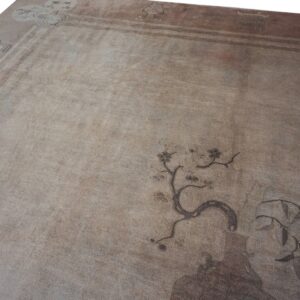
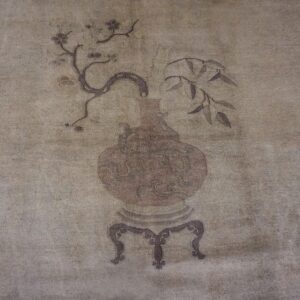
The composition relies entirely on the interplay of light and texture. Against the expansive ivory and cream field, the minimalist vase pattern is rendered in subtle taupe tones. In Chinese culture, the vase (ping) is a visual pun for “peace,” but here, the symbol is treated with the restraint of a shadow. Without competing colors, the viewer’s focus is drawn to the “negative space”—a luxury in rug design that emphasizes a sense of openness and calm.
The color story is achieved through the masterful use of un-dyed and naturally toned wools. The taupe accents likely come from the natural hair of goats or sheep rather than a vat of pigment, ensuring a softness of line that feels organic. This specific range of “off-white” tones creates a shimmering abrash (tonal variation) that gives the solid-colored field a rhythmic, watercolor depth.
Technically, this square room-size format is a significant architectural find. The antique Chinese Peking rugs are prized for their plush, high-lanolin pile, which provides a lustrous sheen that mimics silk. In this neutral palette, that luster is heightened, allowing the taupe patterns to catch the light and appear almost three-dimensional against the matte cream ground.
To possess this minimalist Peking rug is to hold a rare intersection of Eastern tradition and contemporary “Quiet Luxury.” It is a work that ignores the noise of color in favor of the purity of form—a serene, hand-knotted foundation that transforms a space into a sanctuary of architectural clarity and timeless, tonal sophistication.