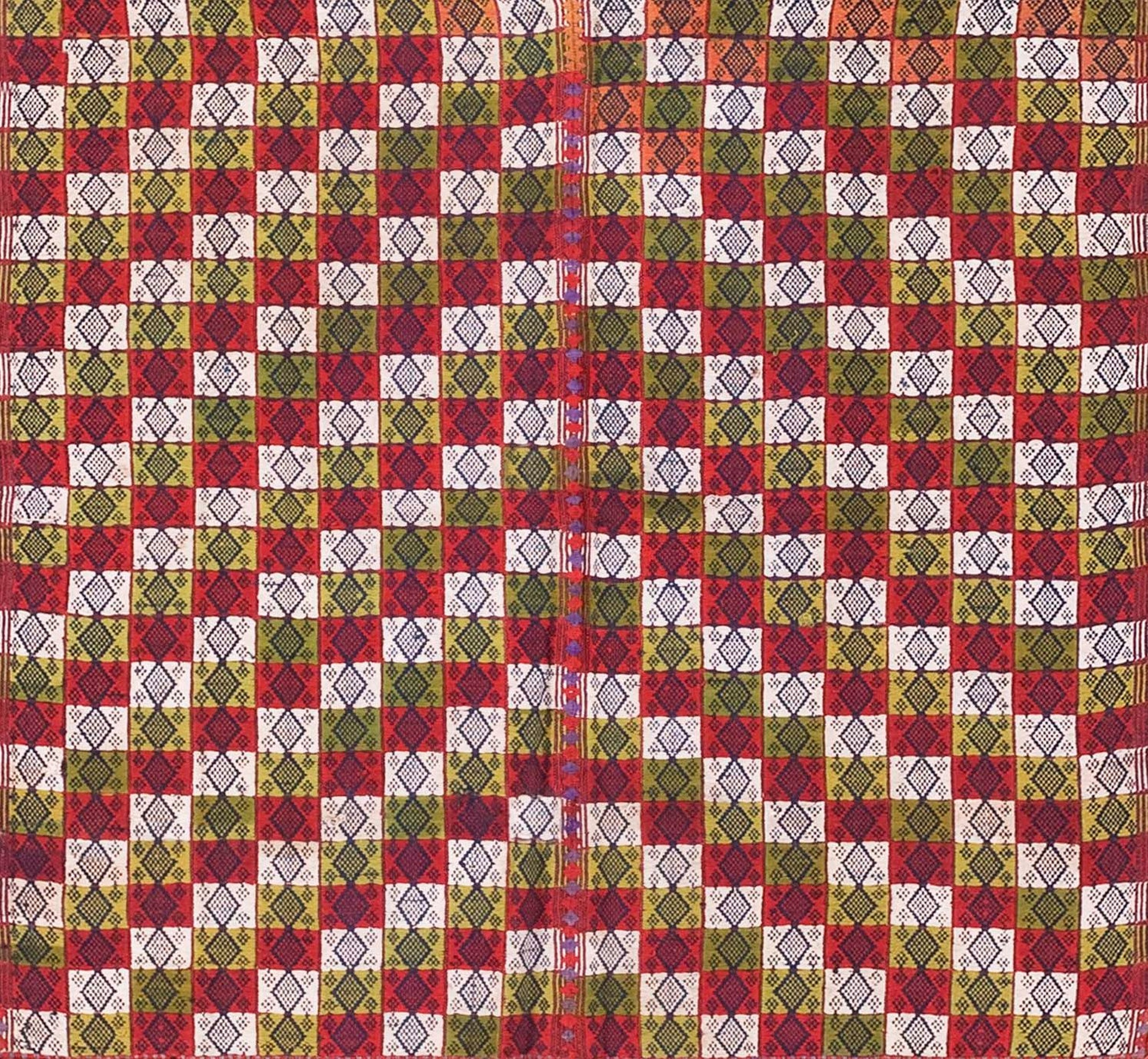
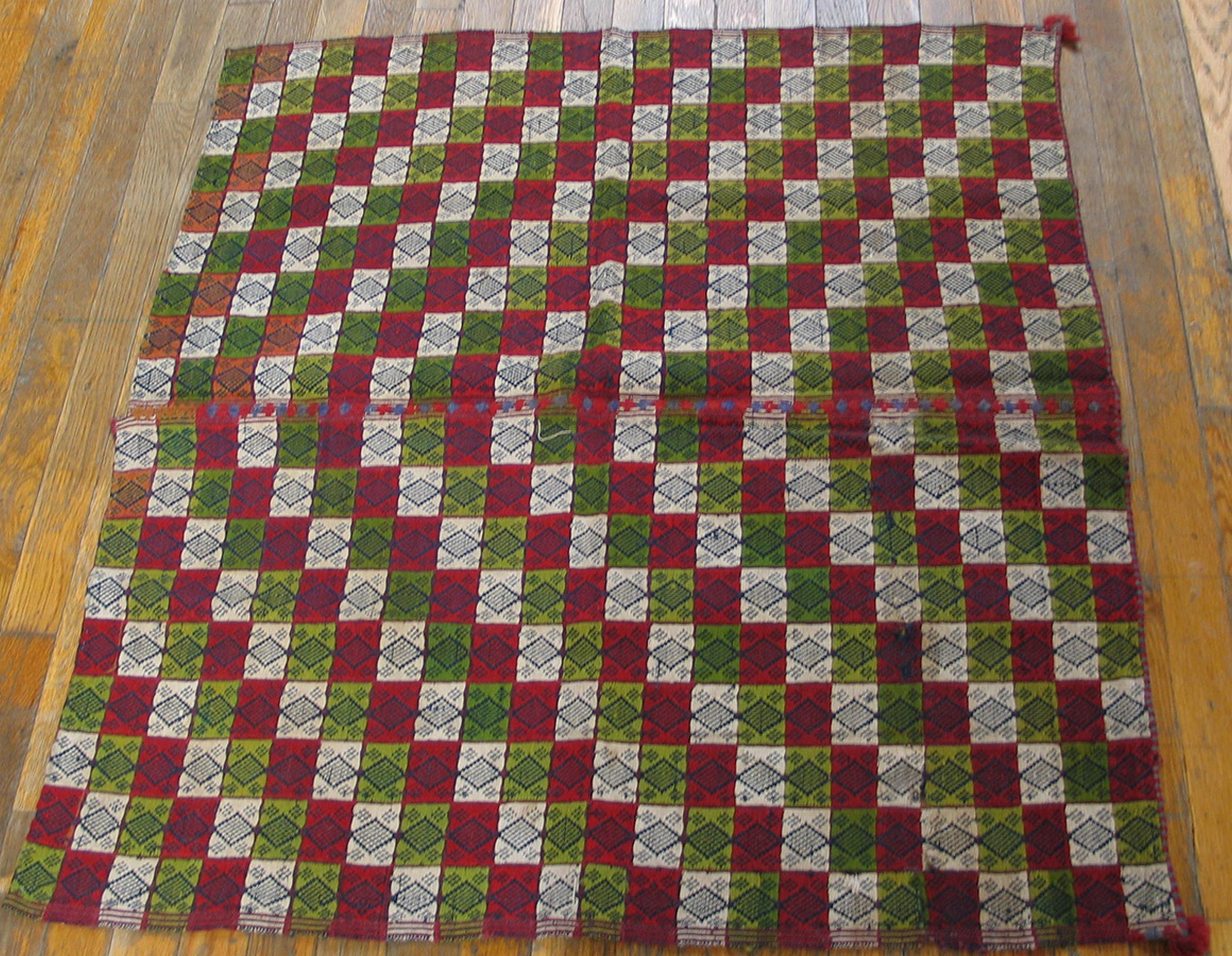
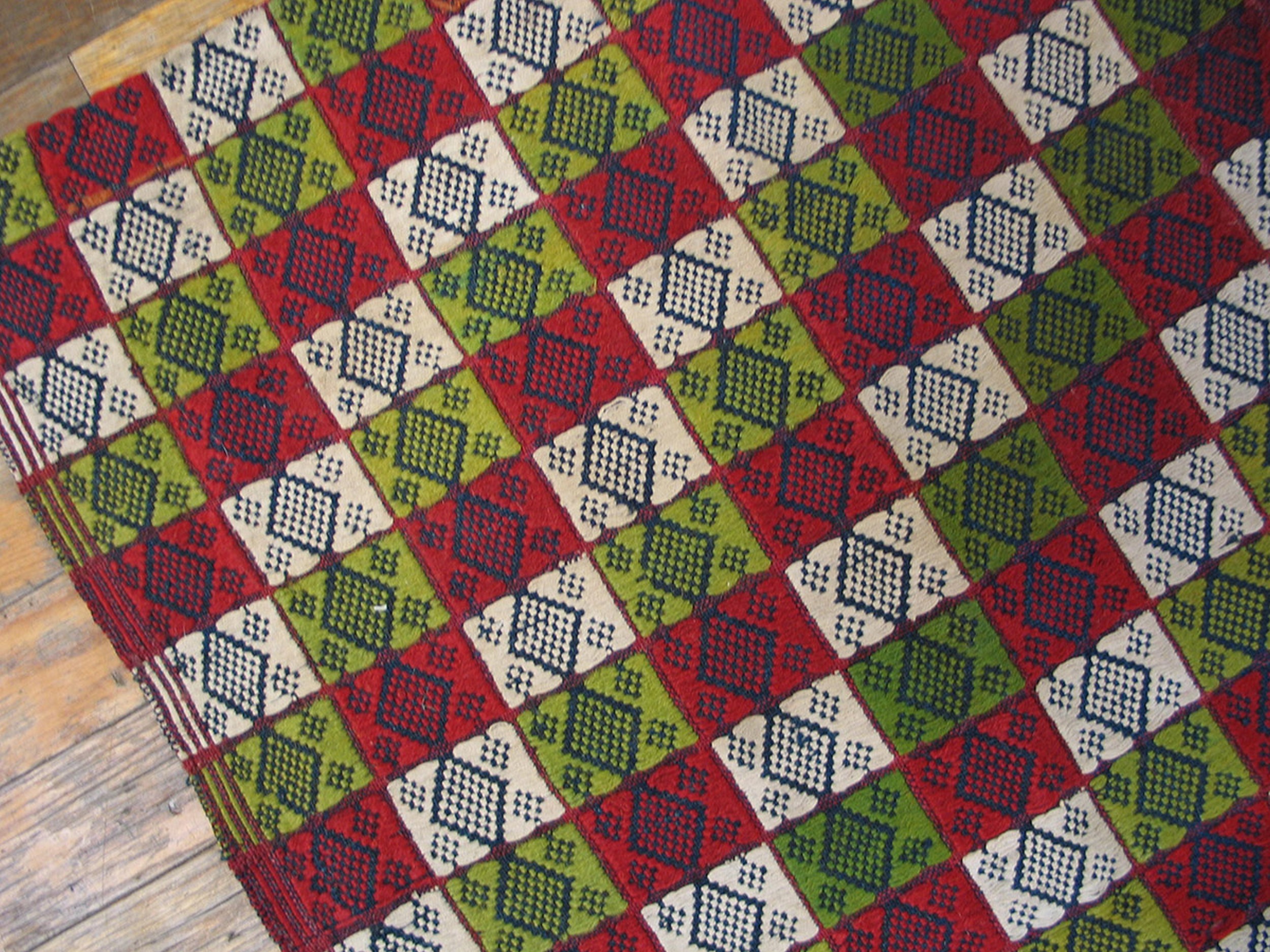
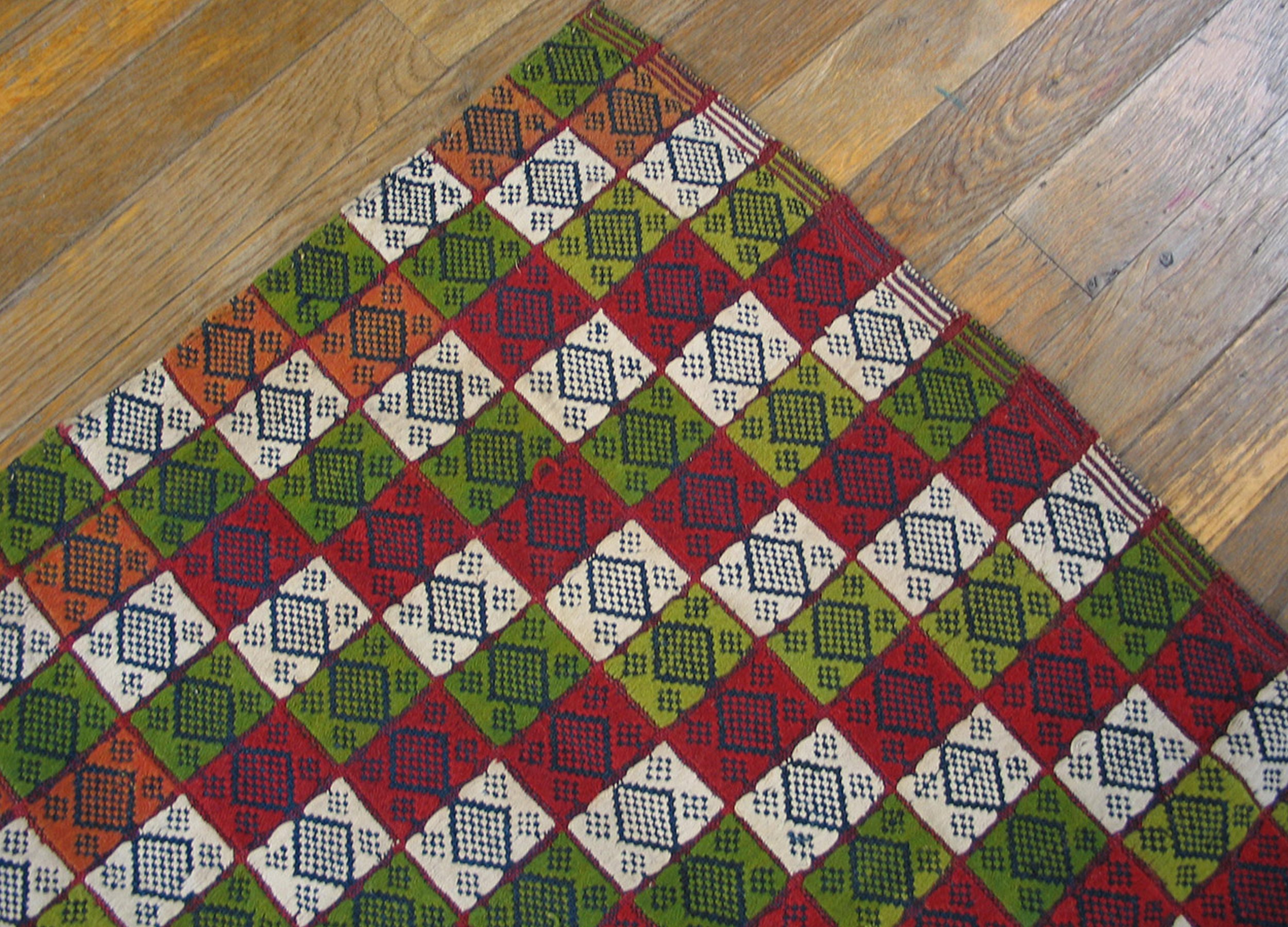
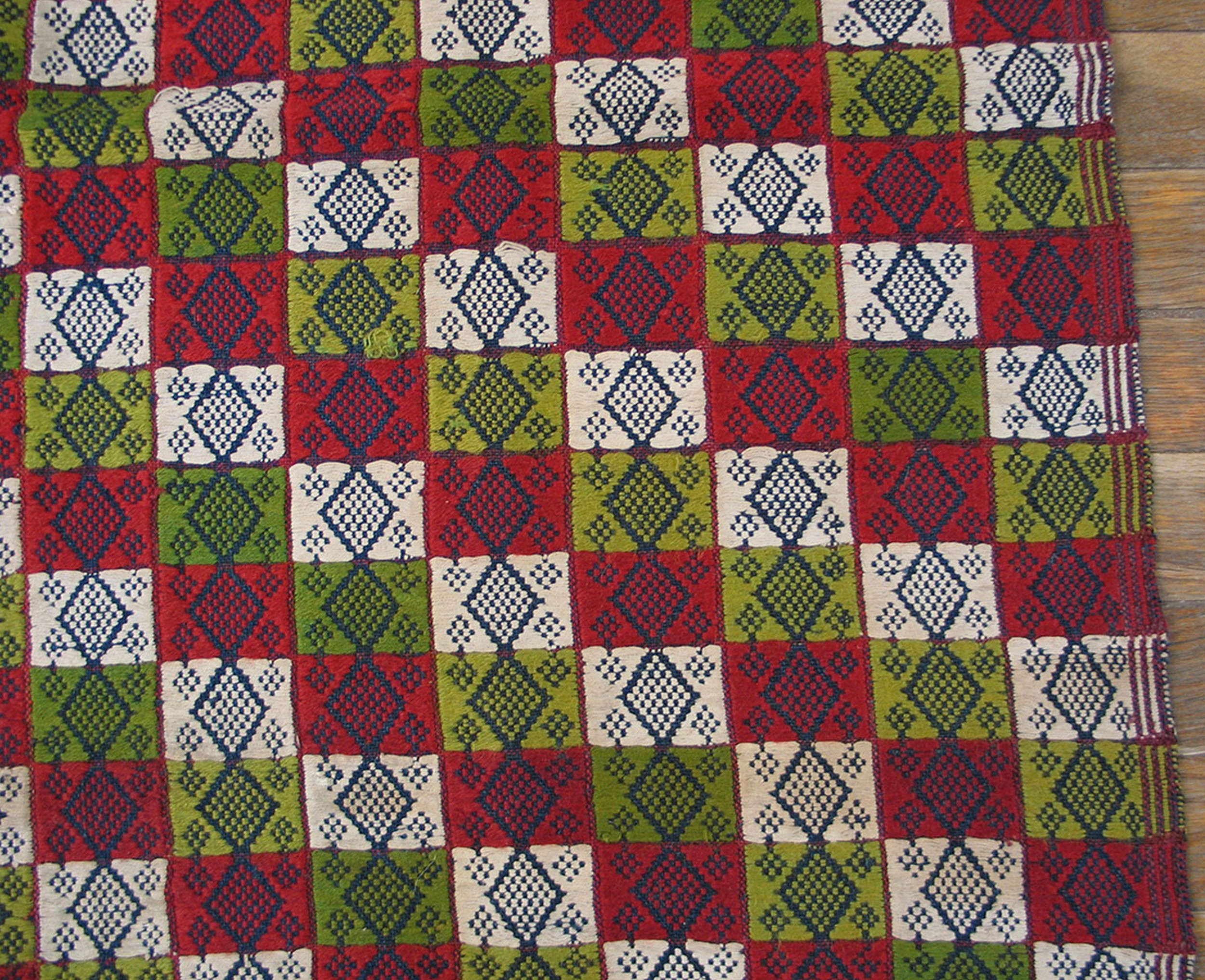
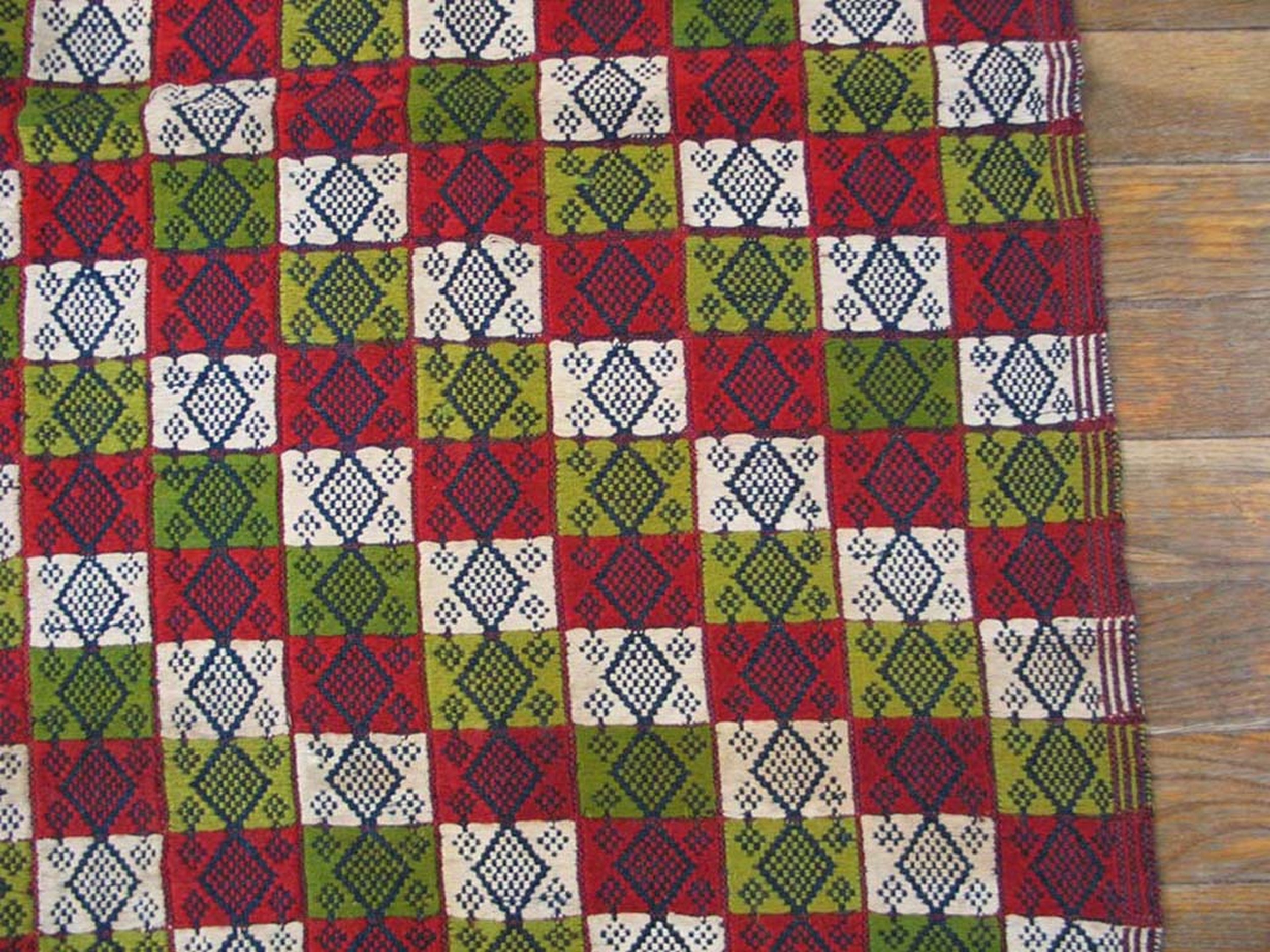
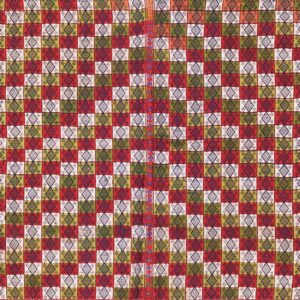
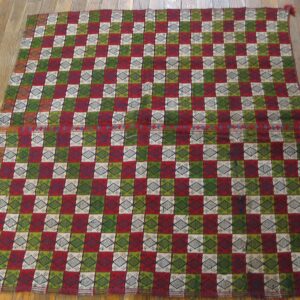
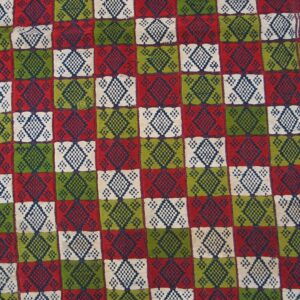
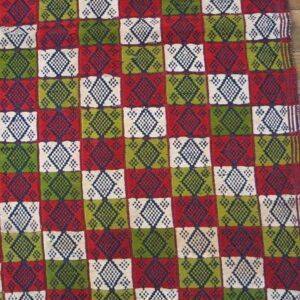
This late nineteenth-century Turkish Kilim is a vibrant and rare example of Anatolian tribal art, distinguished by its exceptionally uncommon square shape. While most antique kilims are woven in long, narrow formats to suit nomadic tents or village floor runners, square shape area rugs were often specific commissions for ceremonial use or for specific architectural “sofas” (built-in seating) in traditional Turkish homes.
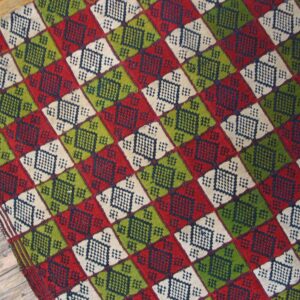
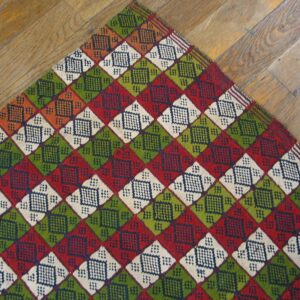
The composition is centered upon a Bold Tribal Geometric pattern, featuring a dense arrangement of “Elibelinde” (hands-on-hips) or “Wolf’s Mouth” motifs. These are ancient Anatolian symbols representing motherhood, fertility, and protection. The drawing is quintessentially tribal and spontaneous; because kilims are woven on portable looms, the weaver often adjusted the pattern as she progressed, resulting in a delightful, hand-wrought asymmetry that gives the antique Turkish area rug its “soul.” The square layout concentrates this energy, creating a kaleidoscopic effect that pulls the eye toward the center.
The palette is anchored by a Colorful and High-Contrast theory, a hallmark of the central and eastern Anatolian weaving traditions. It features a festive array of Madder Red, Indigo Blue, Saffron Yellow, and Terracotta. Because this is an antique specimen, the colors have a magnificent “mellowed brilliance.” The natural vegetable dyes have oxidized over 120+ years, resulting in a soft, matte patina. The “abrash” (tonal variation) within each color block provides a painterly depth, where a single red section may shift from a deep brick to a sun-faded coral.
Technically, this kilim is a Slit-Weave Flat-weave, characterized by its crisp, reversible surface and lightweight handle. The “slits” are intentional gaps created between different color blocks, which provide the tribal design rug with its sharp, clean geometric definition. The wool is hand-spun and high-altitude, giving the flat weave rug a rugged, organic texture that is both durable and tactile. Unlike modern reproductions, the handle is supple and “cloth-like,” allowing it to be used as a floor covering, a wall hanging, or even a decorative table throw.
The borders act as a protective architectural frame, often featuring “Running Water” or “Hook” motifs that signify the weaver’s hope for prosperity and the warding off of the “evil eye.” To possess this small antique Turkish kilim square shape area rug is to own a piece of nomadic history. It bridges the gap between ancient Anatolian folklore and the sophisticated, “bohemian-modern” requirements of contemporary interiors—transforming any corner or wall into a sanctuary of historical gravity and vibrant, tribal spirit.