
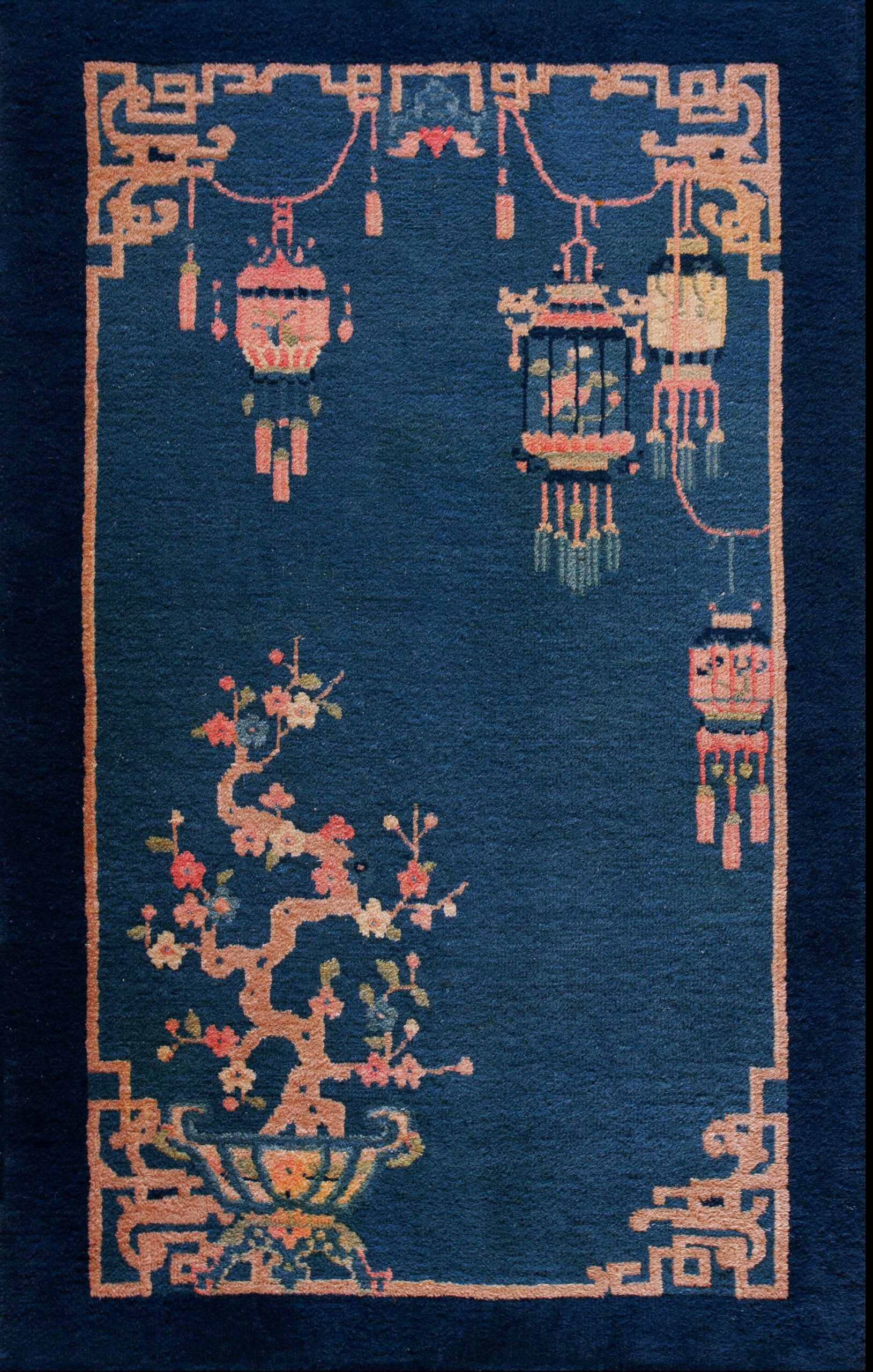
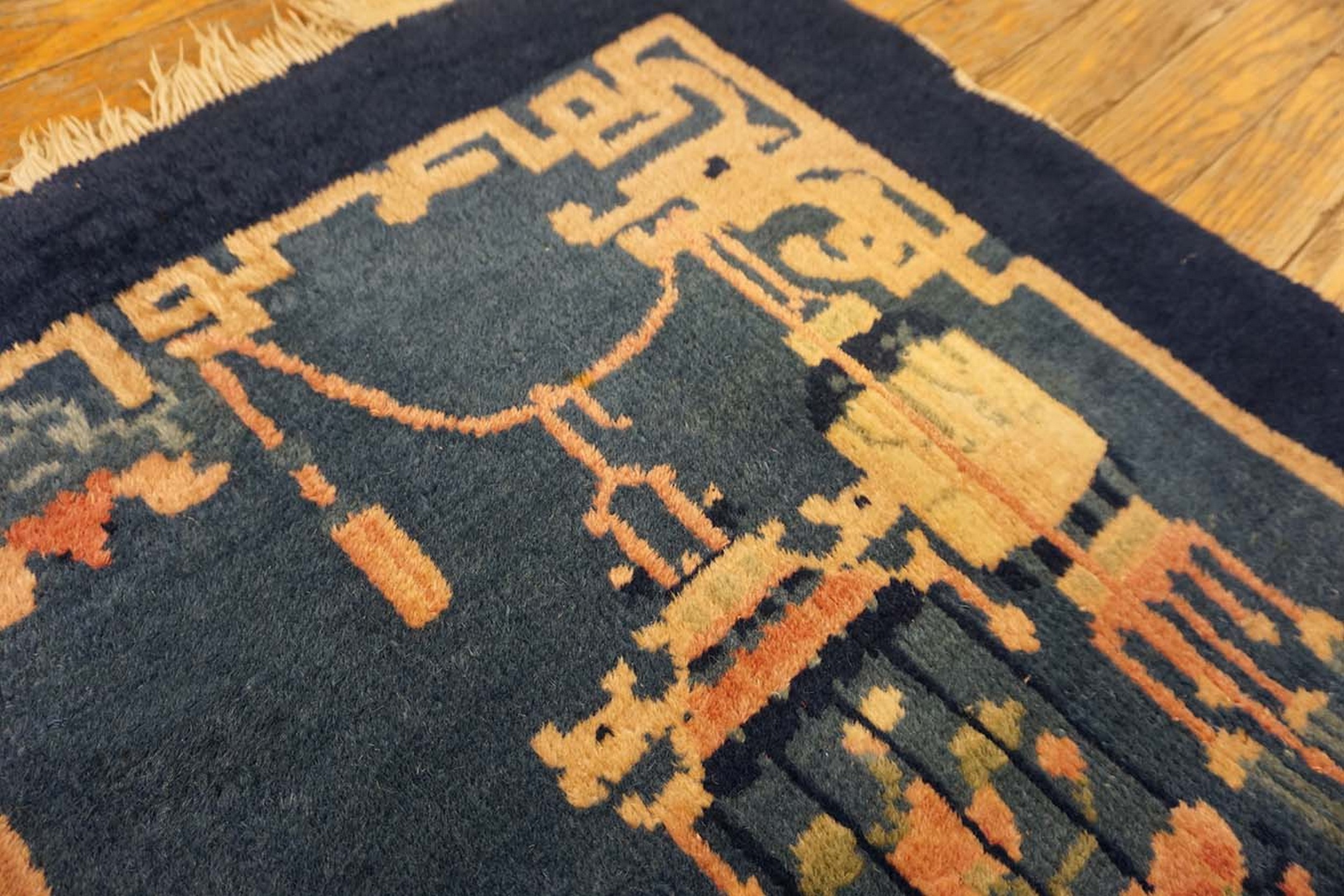
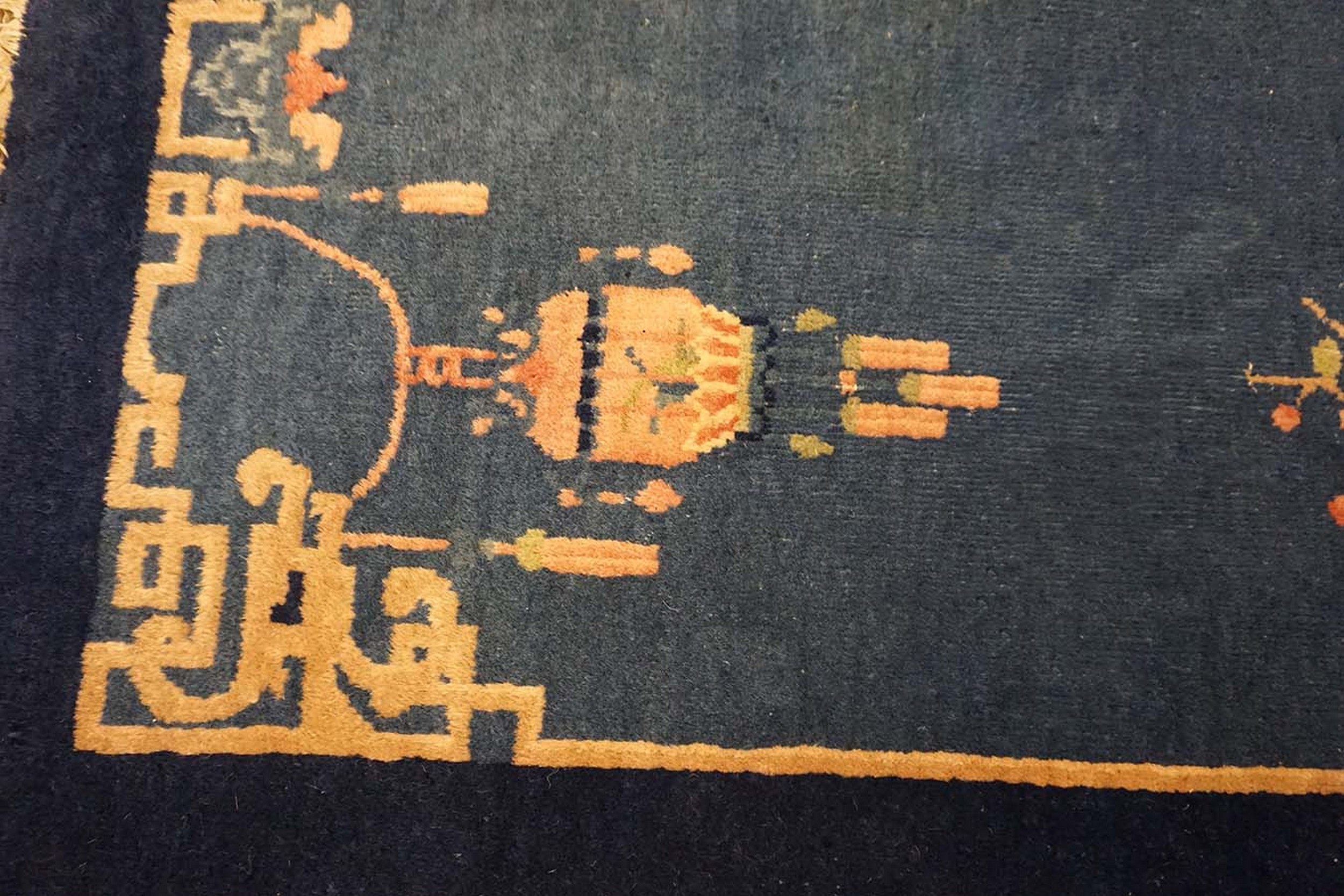
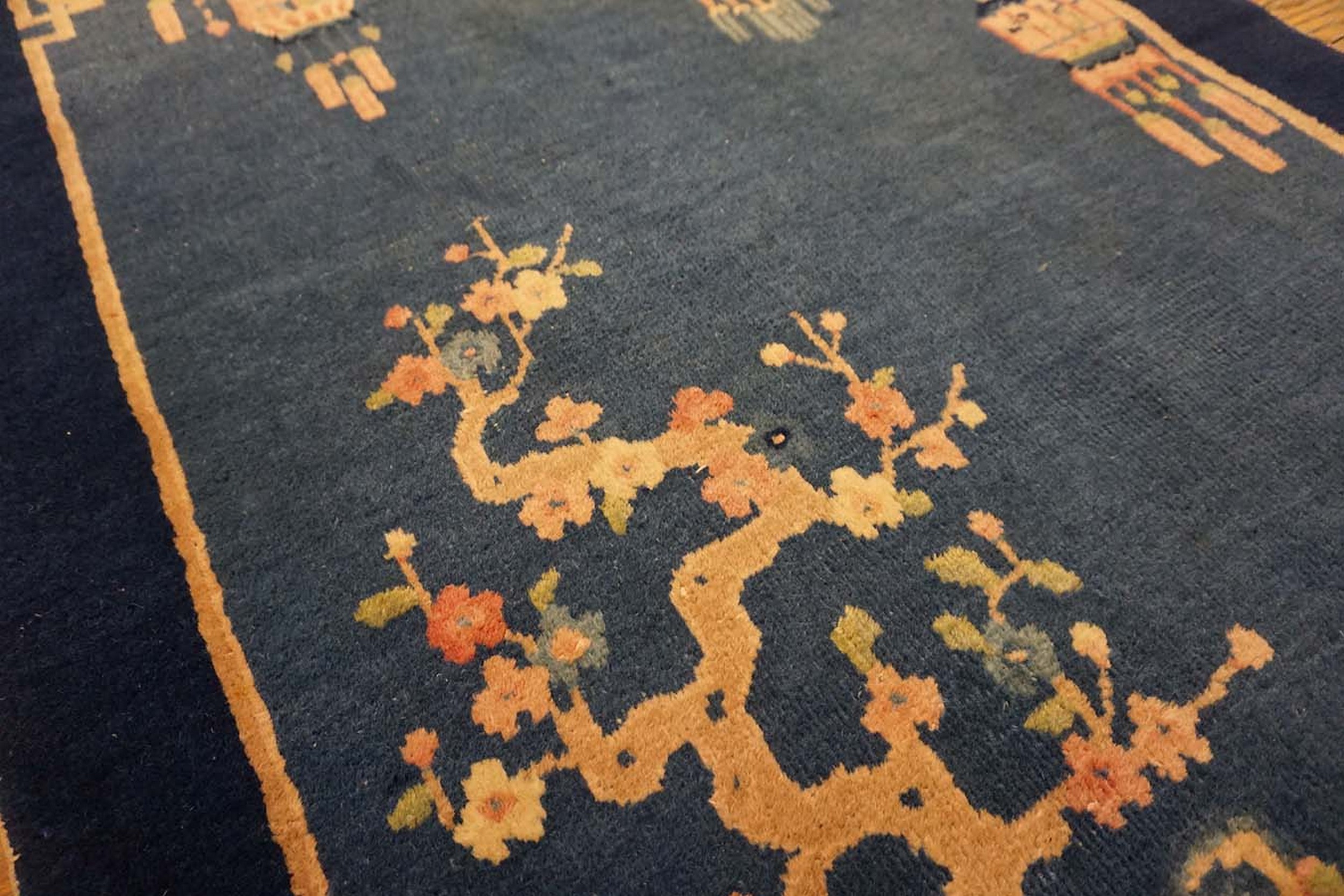
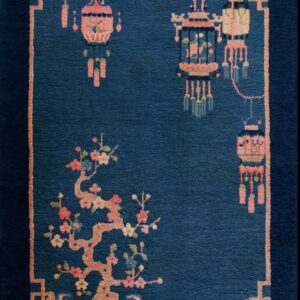
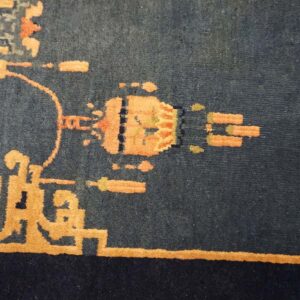
This early 20th-century calming antique Chinese rug is a jewel-like example of the “East-meets-West” aesthetic that revolutionized interior design during the 1920s and 30s. Produced in the renowned workshops of Tientsin or Beijing, this small-format specimen (likely a hearth or small scatter size rug) captures the high-glamour, modernist spirit of the Jazz Age in a compact and versatile size.
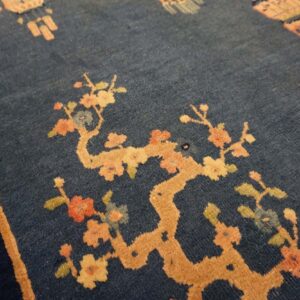
The composition is defined by its Asymmetrical Minimalist design. Eschewing the traditional central medallions of the previous century, the Art Deco style favored a bold, “painterly” approach. This piece likely features a stylized floral spray or a singular botanical motif—such as a peony or a lotus—nestled into a corner or along the edge. This clever use of negative space creates a sense of movement and “Quiet Luxury,” making it an ideal choice for an entryway, a bedside accent, or a curated nook within a modern apartment.
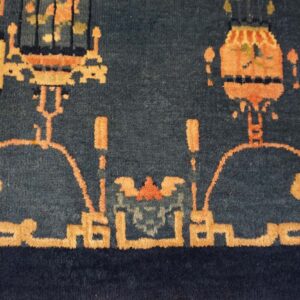
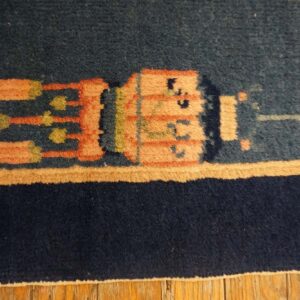
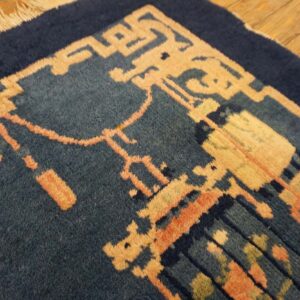
The palette is anchored by a rich and soulful Deep Blue or Sapphire foundation. In the hierarchy of Art Deco rugs, this vibrant blue ground is highly coveted for its ability to serve as a high-contrast stage for jewel-toned accents. Against this “midnight” background, the motifs are often rendered in vibrant magentas, emerald greens, and hints of old gold. Because this is an antique specimen, the natural dyes have aged into a soft, matte patina, with the blue field exhibiting a subtle “watercolor” abrash that gives the rug a shimmering, three-dimensional depth.
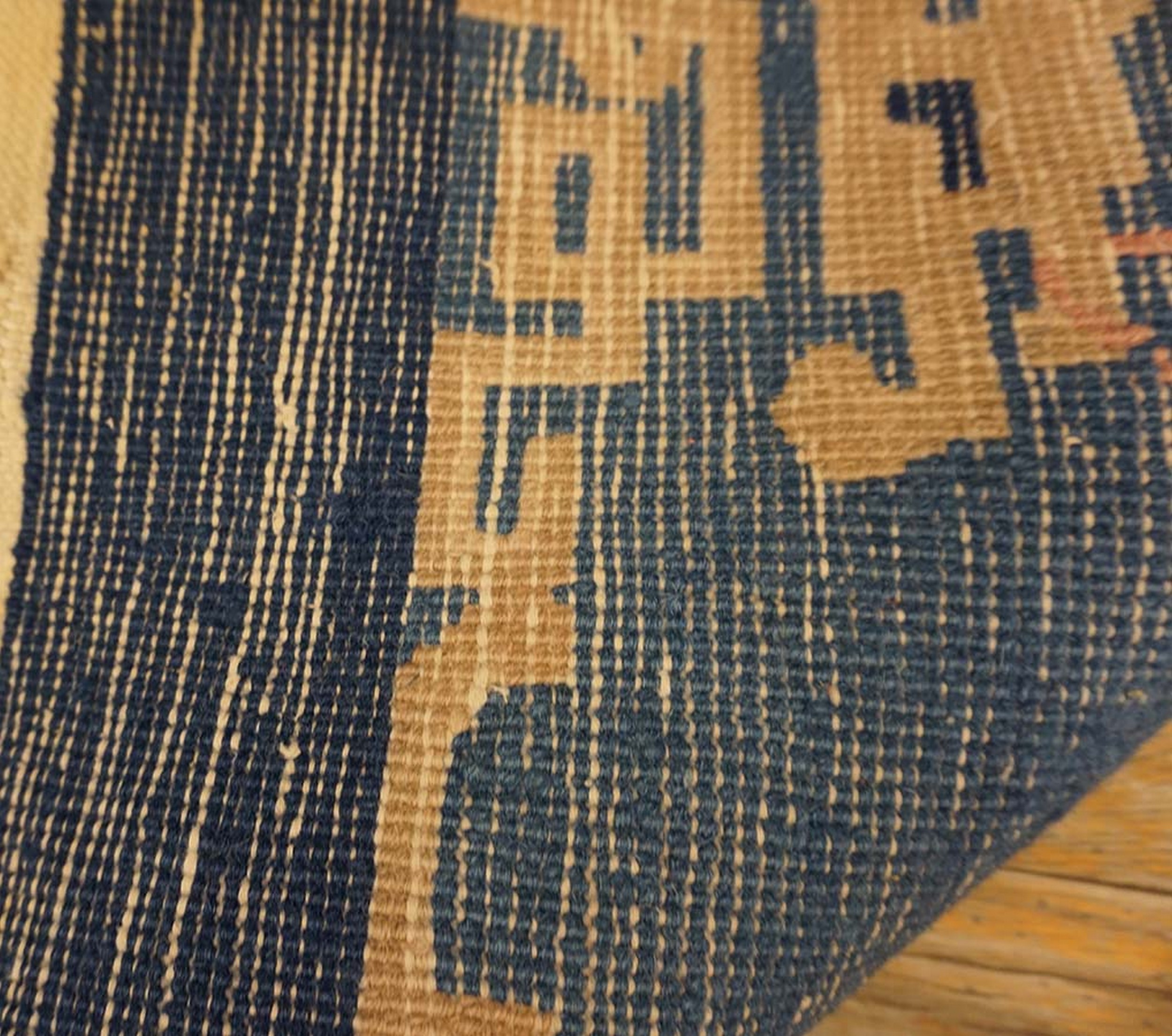
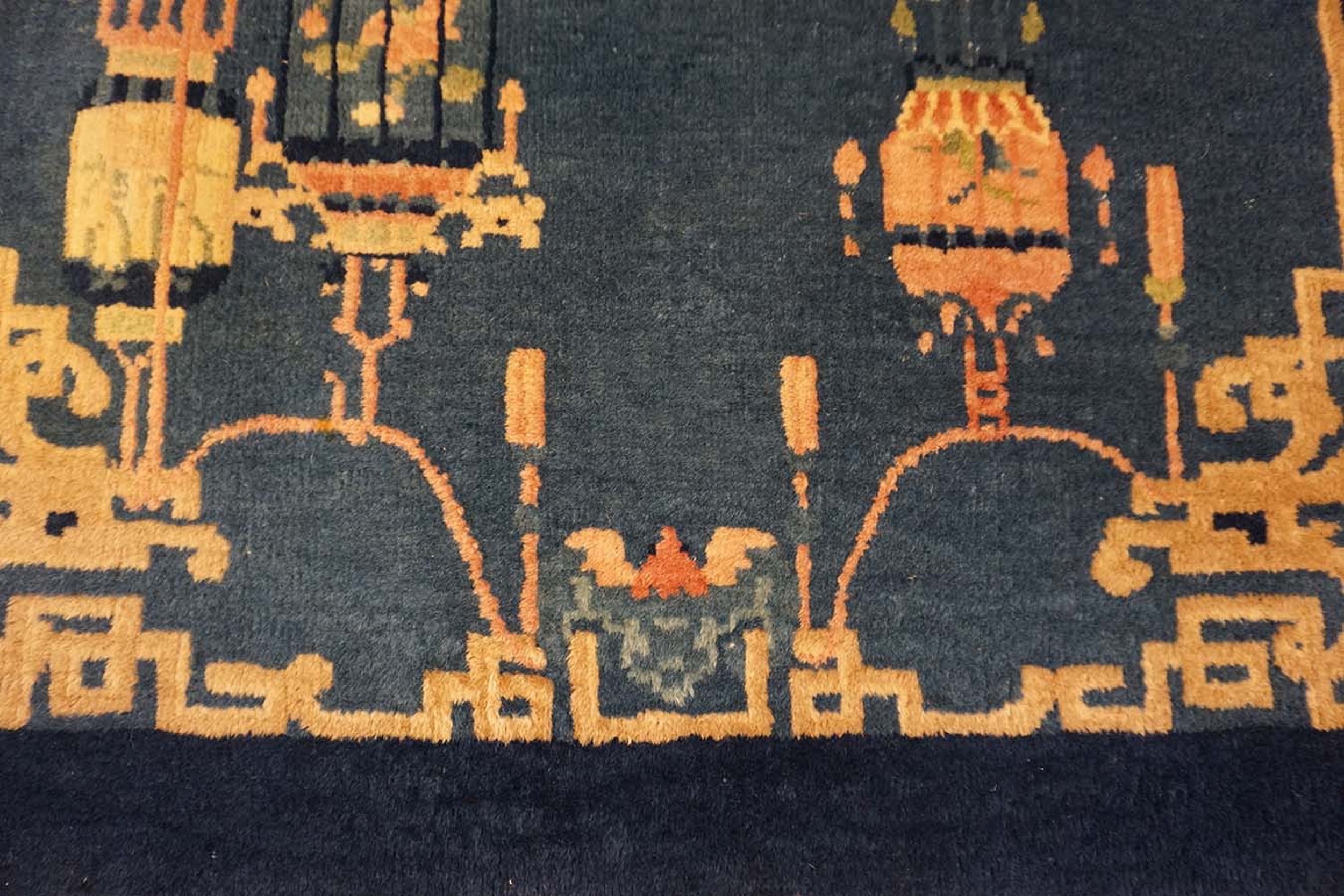
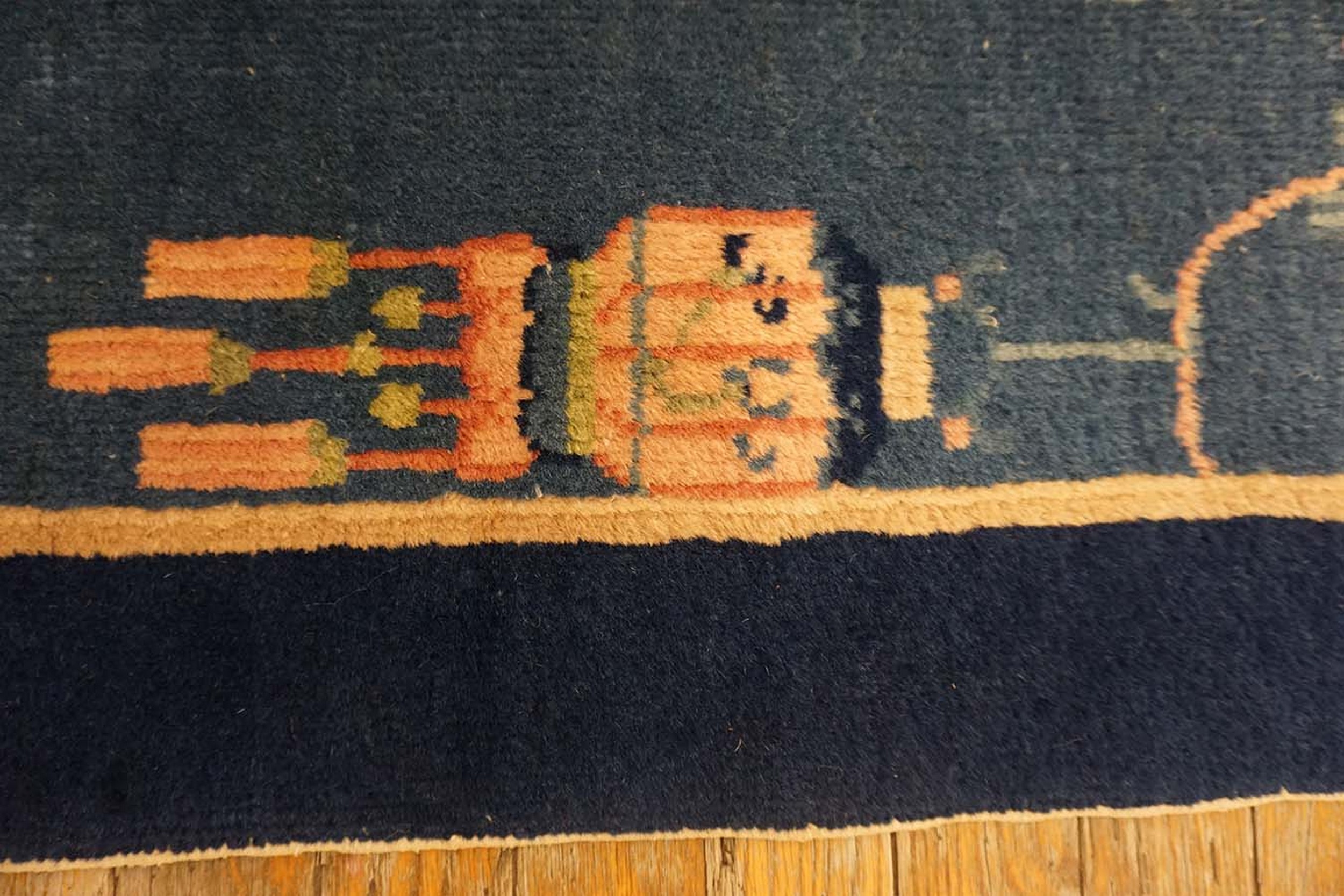
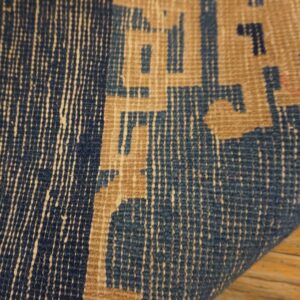
Technically, this antique Chinese Art Deco rug is prized for its exceptionally thick, plush pile and substantial, “heavy” handle. The wool used in this era was often a high-grade “Lustre Wool,” known for its long fibers and high natural lanolin content. This results in a surface that is not only incredibly durable but possesses a silky, reflective sheen. A hallmark of this tradition is the hand-carving or “incising” technique, where the weaver hand-clipped the wool around the decorative elements to create a sculptural, high-relief effect.
The borders are typically minimal—often a single solid-color band—acting as a sharp architectural frame that “locks in” the vibrant energy of the field. To possess this small antique Chinese art deco design blue colored area rug is to own a piece of 20th-century design history. It bridges the gap between ancient Eastern craftsmanship and the avant-garde spirit of the West—transforming any small corner into a sanctuary of historical soul and serene, modern grace.