
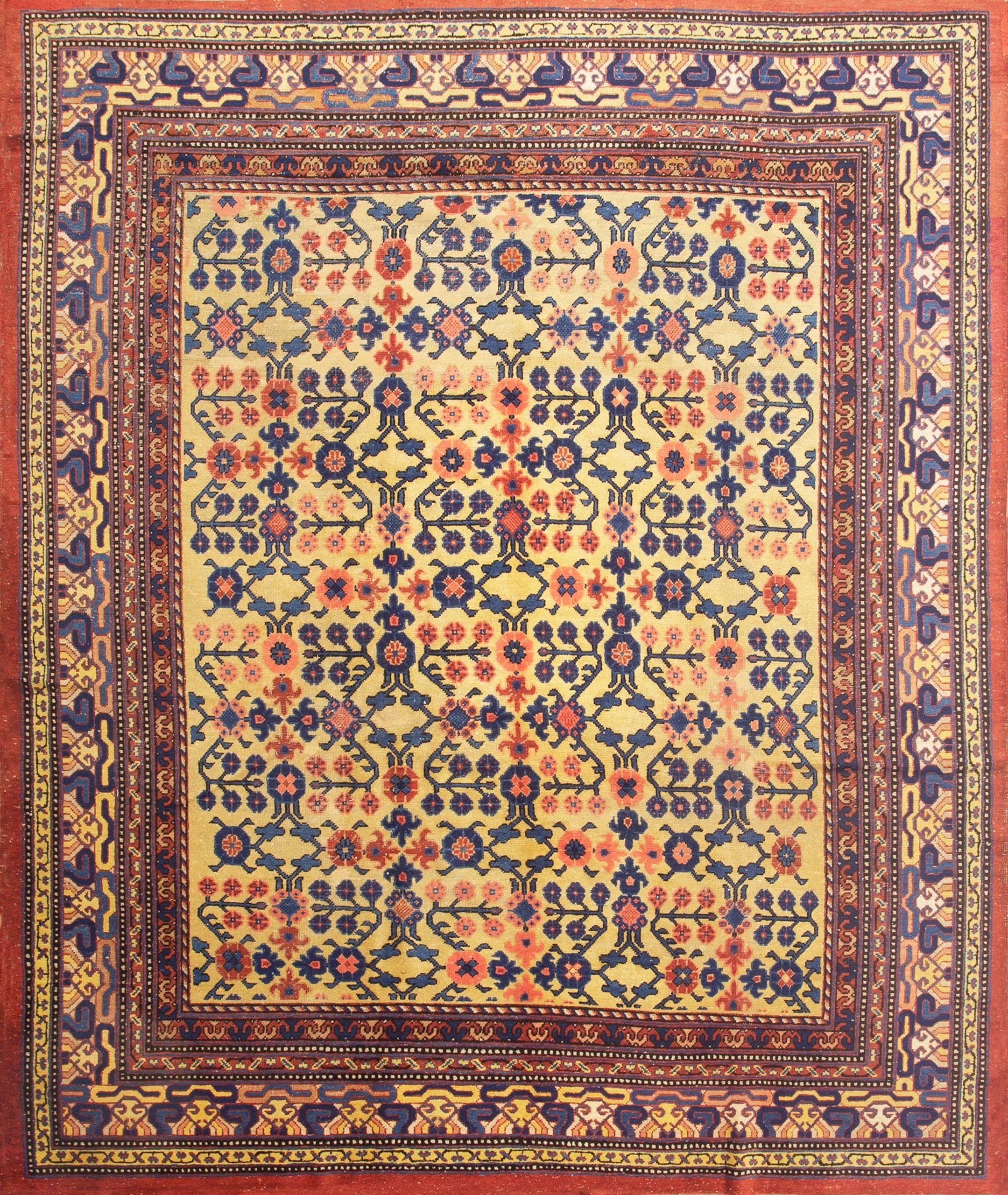
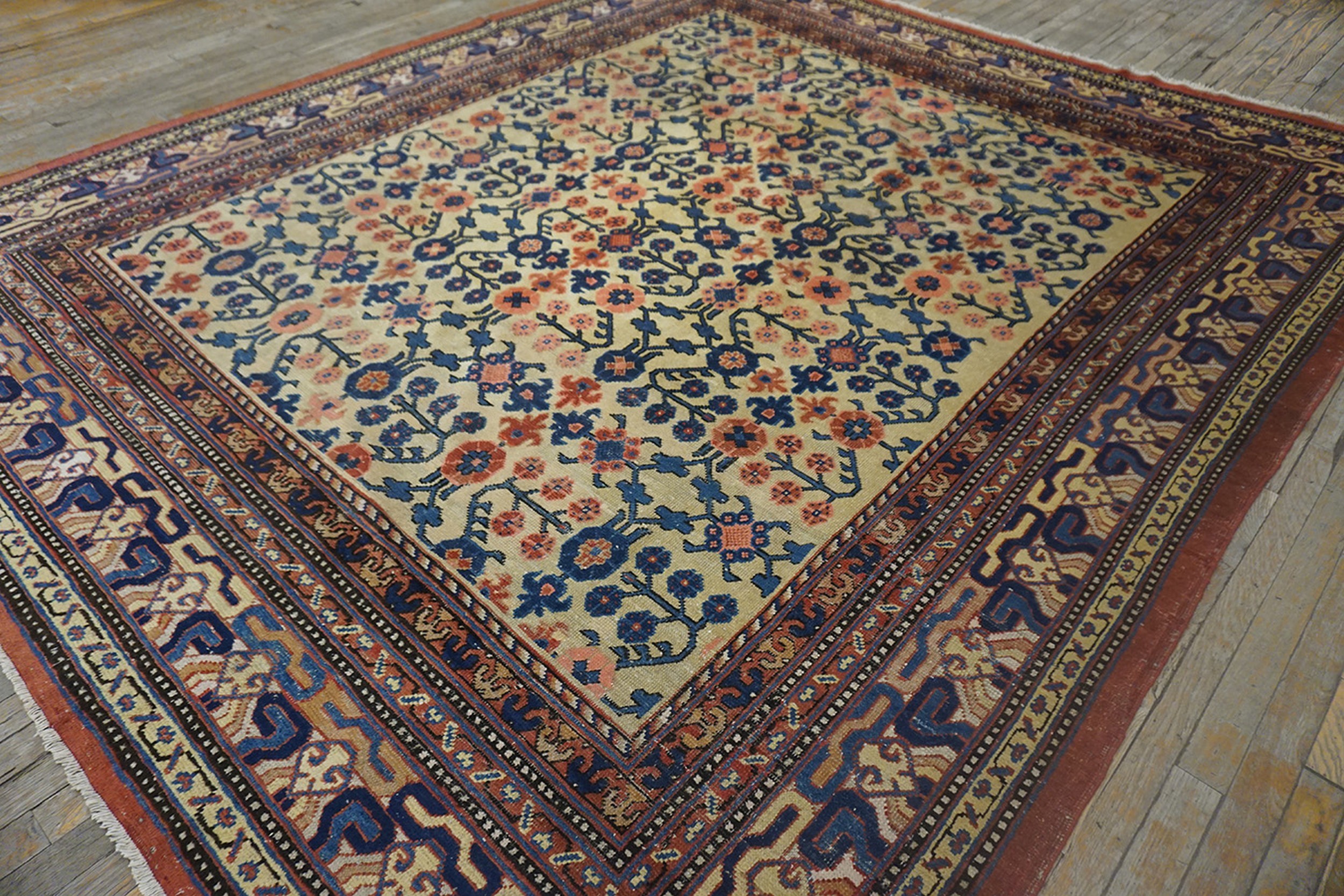
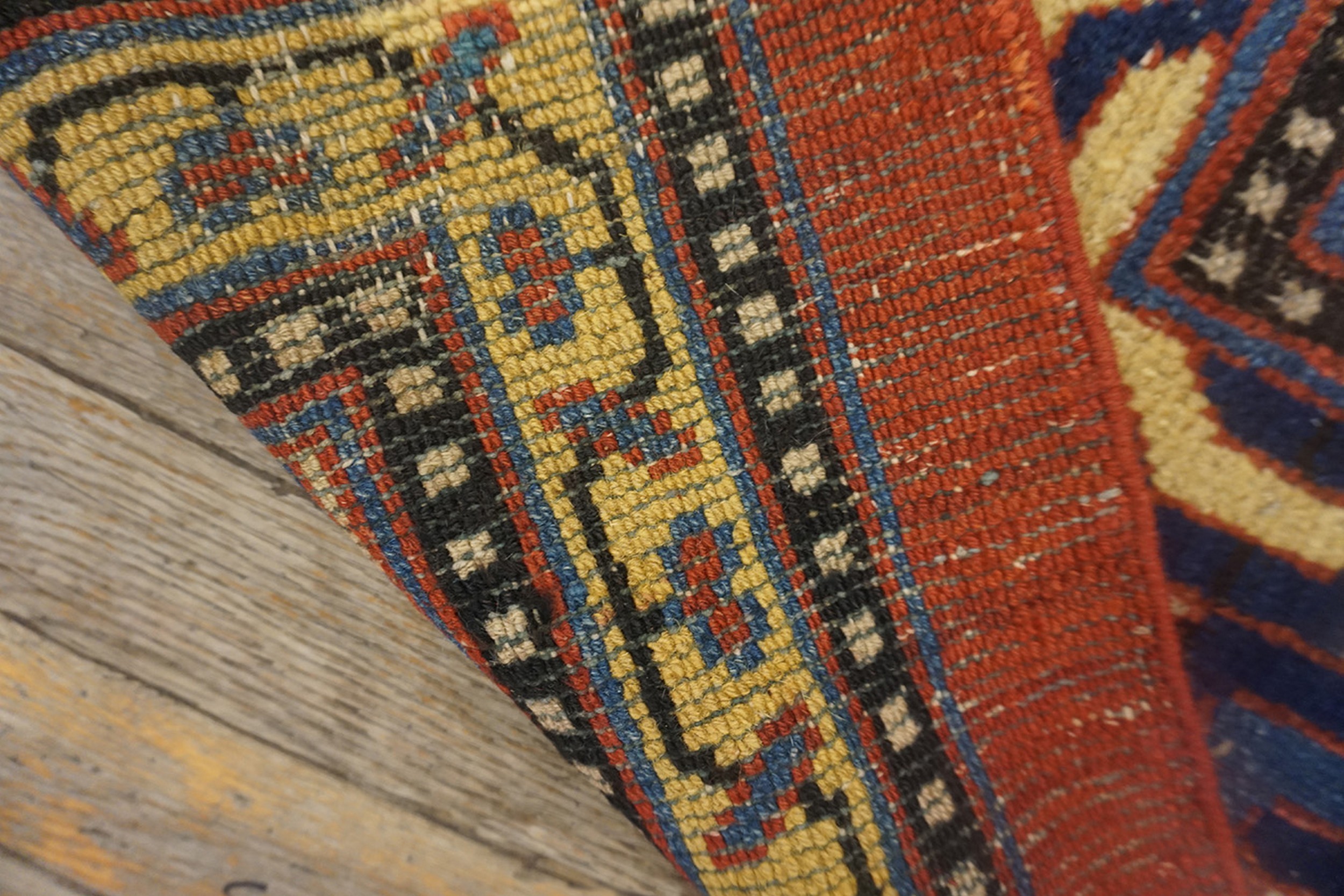
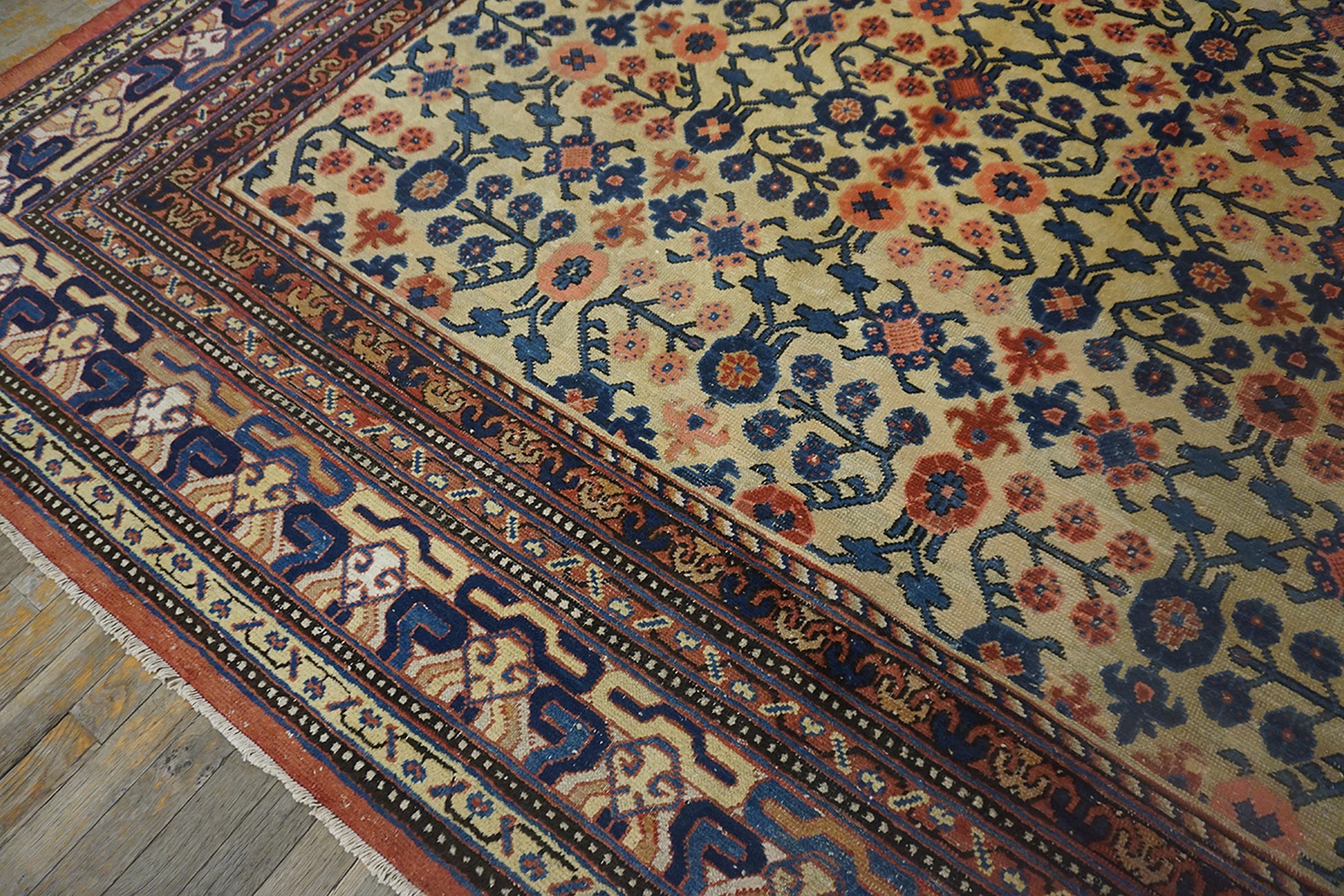
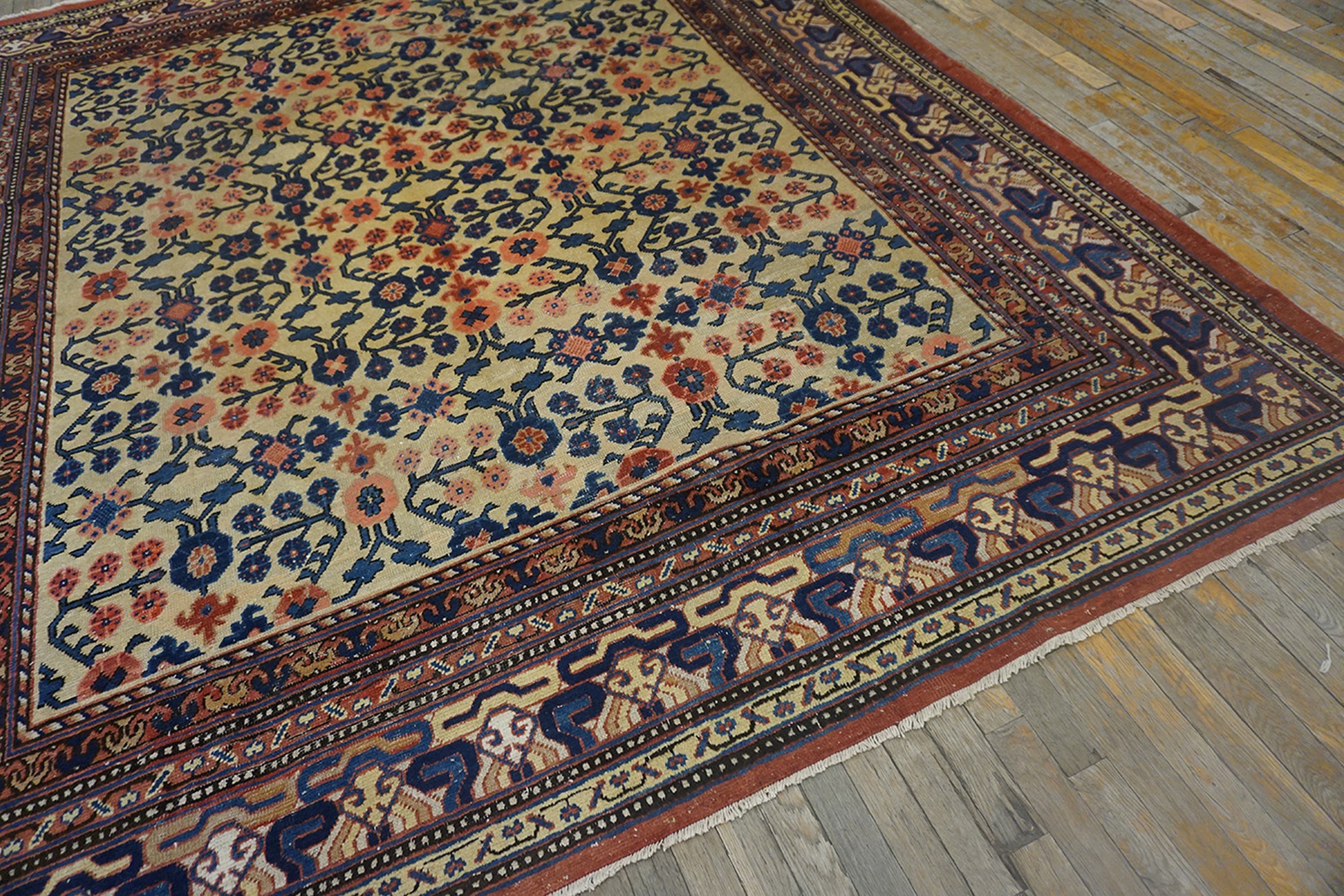
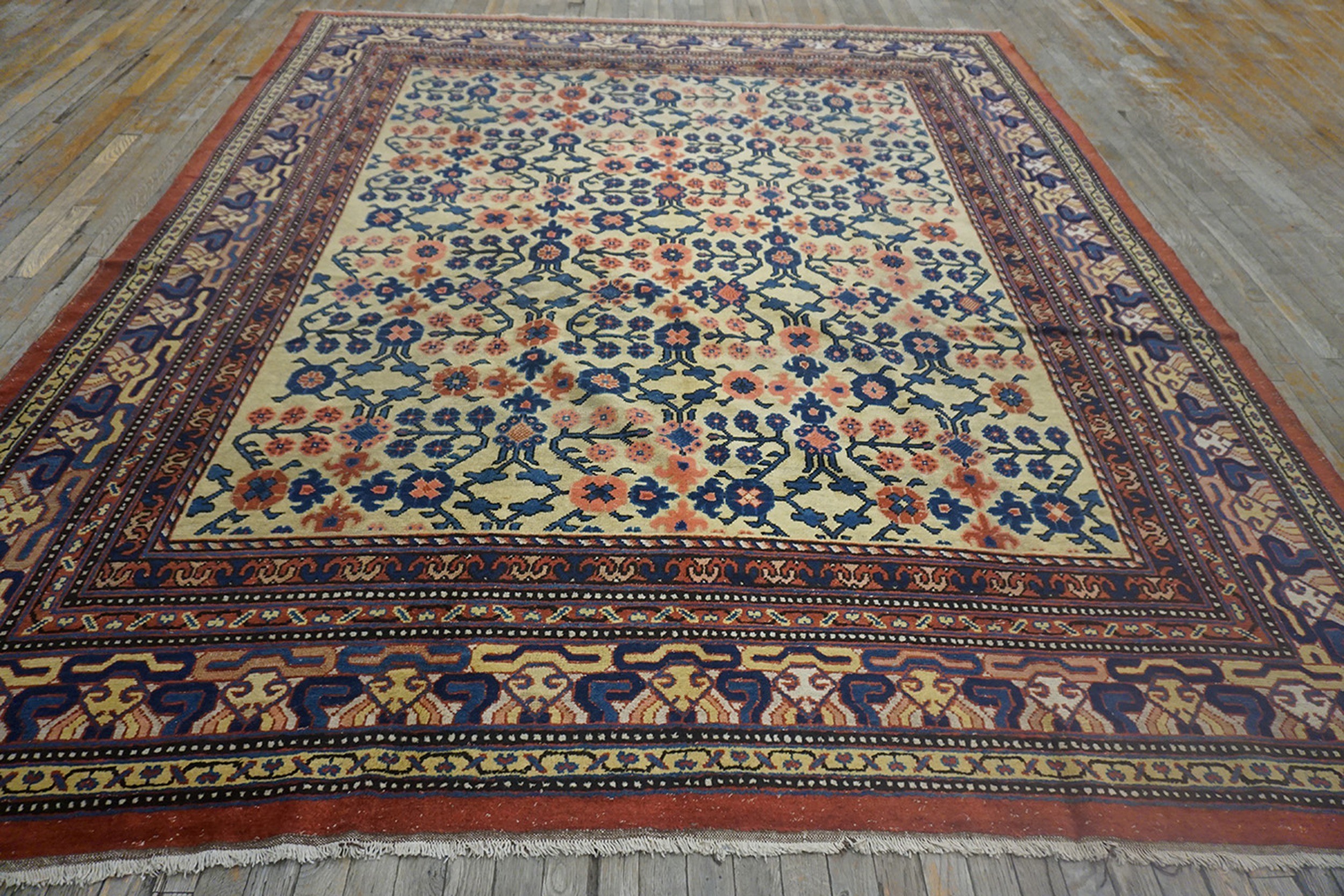
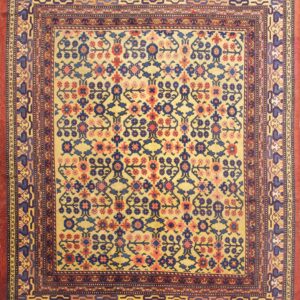
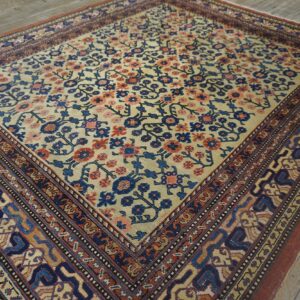
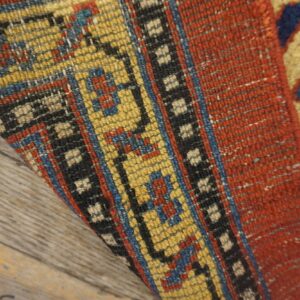
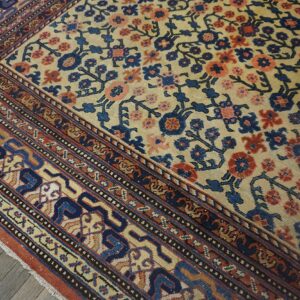
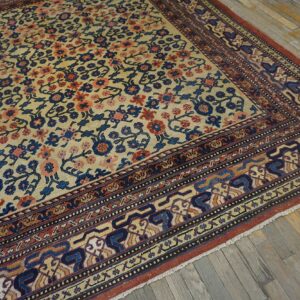
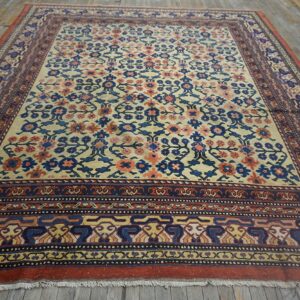
This rare, nineteenth-century antique Yarkand-Khotan rug from East Turkestan is a masterpiece of Central Asian textile art, distinguished by its luminous yellow background and the venerable “Pomegranate” design. Historically, the oasis towns of the Silk Road—Khotan, Yarkand, and Kashgar—served as a cultural bridge where Chinese, Tibetan, and Persian aesthetic sensibilities fused into a singular, exotic style. This specific specimen features a vibrant yellow field, a color of immense prestige in the East Turkestan rugs weaving tradition, often associated with royalty, divinity, and the life-giving sun of the Taklamakan Desert. Achieving such a clear, sun-drenched hue required a masterful use of local vegetal dyes, typically derived from saffron or weld, applied to the region’s characteristically soft and lustrous wool.
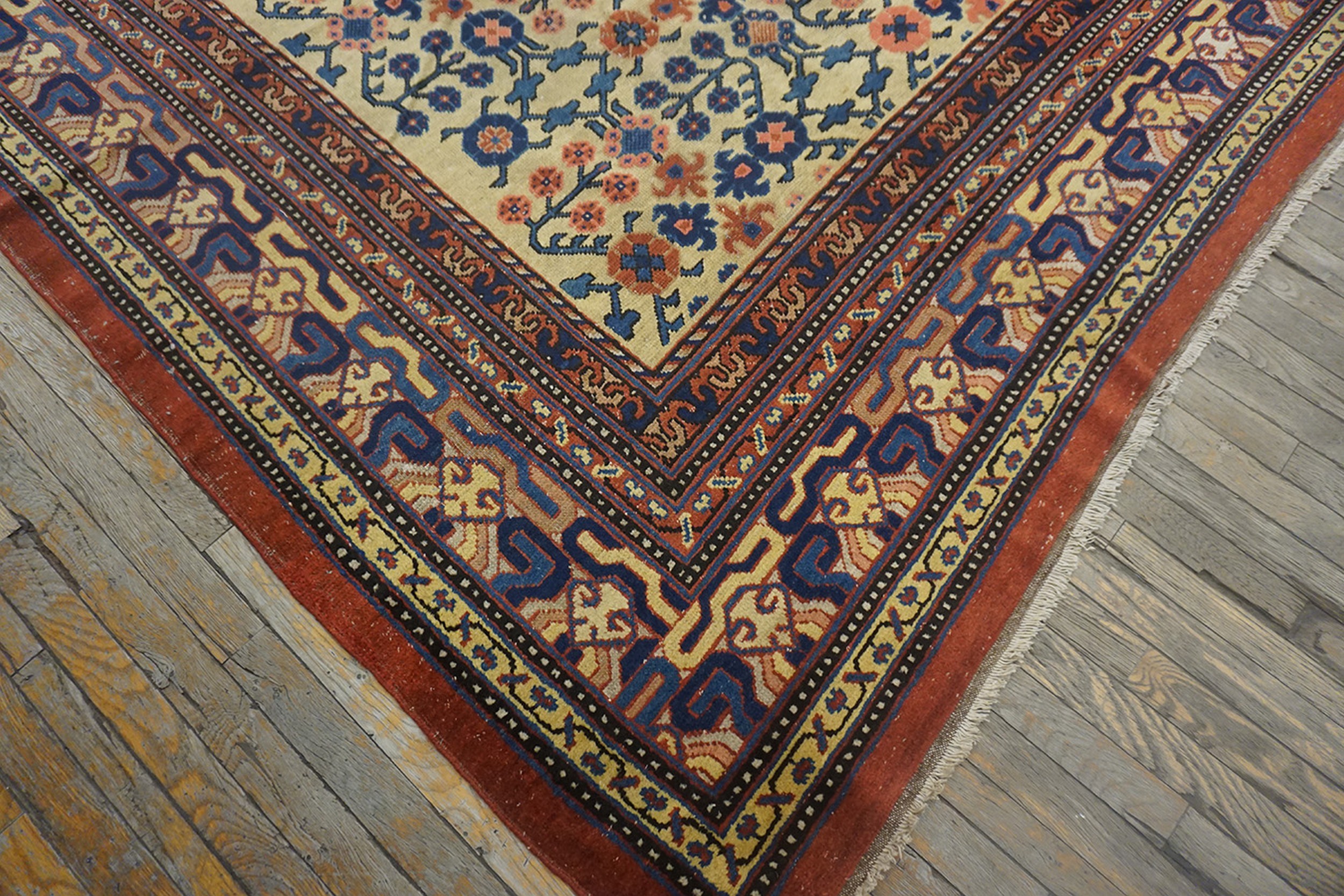
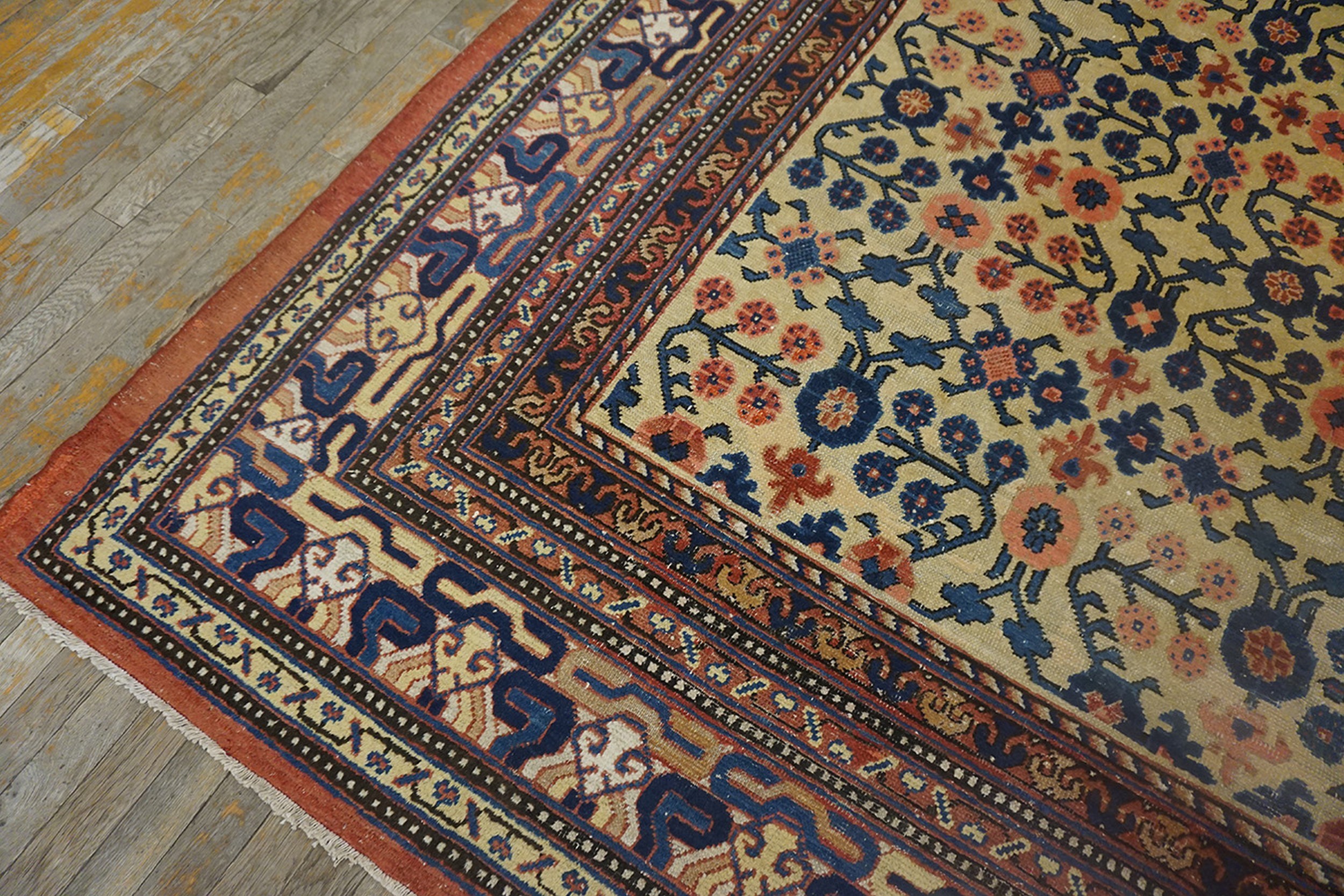
The “Pomegranate” (Anar) design is perhaps the most iconic and symbolic motif of the Khotan weaving tradition. In Central Asian mythology, the pomegranate is a potent symbol of fertility, abundance, and the continuity of life, due to its myriad of seeds. On this rug, the motif is rendered as a “Tree of Life,” where branching stalks terminate in stylized, jewel-like fruit. The geometry of the design reflects a fascinating cultural synthesis: the scrolling, organic nature of the branches hints at Persian influence, while the restrained, almost minimalist execution and the use of fretwork-style borders are distinctly Chinese. This “Pomegranate” layout was highly prized by the Qing Dynasty court and later became a hallmark of the “Samarkand” style sought after by Western designers during the Art Deco movement.
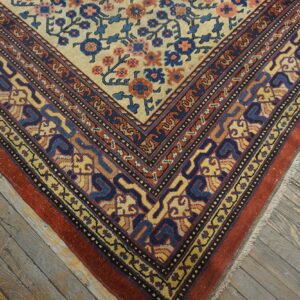
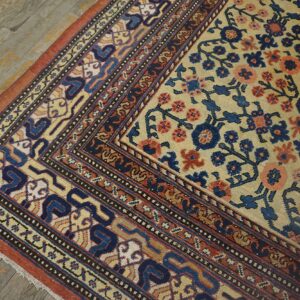
Historically, a room-sized Khotan of this caliber was a significant luxury, as most rugs from this region were produced in smaller, narrower formats (long runners or “saf” prayer rugs). The presence of such an expansive, yellow-field carpet suggests a high-status commission, likely intended for a formal reception hall or a palatial residence. The borders often feature the “wave and crest” or “running water” pattern, providing a symbolic protection for the garden of pomegranates within. Today, this 19th-century Yarkand-Khotan stands as a testament to the sophisticated “Silk Road” aesthetic—a textile that captures the spiritual geometry of the East and the warm, yellow light of the ancient desert oases. To possess such a piece is to hold a fragment of a lost world where trade, religion, and art converged into a shimmering, yellow tapestry.