
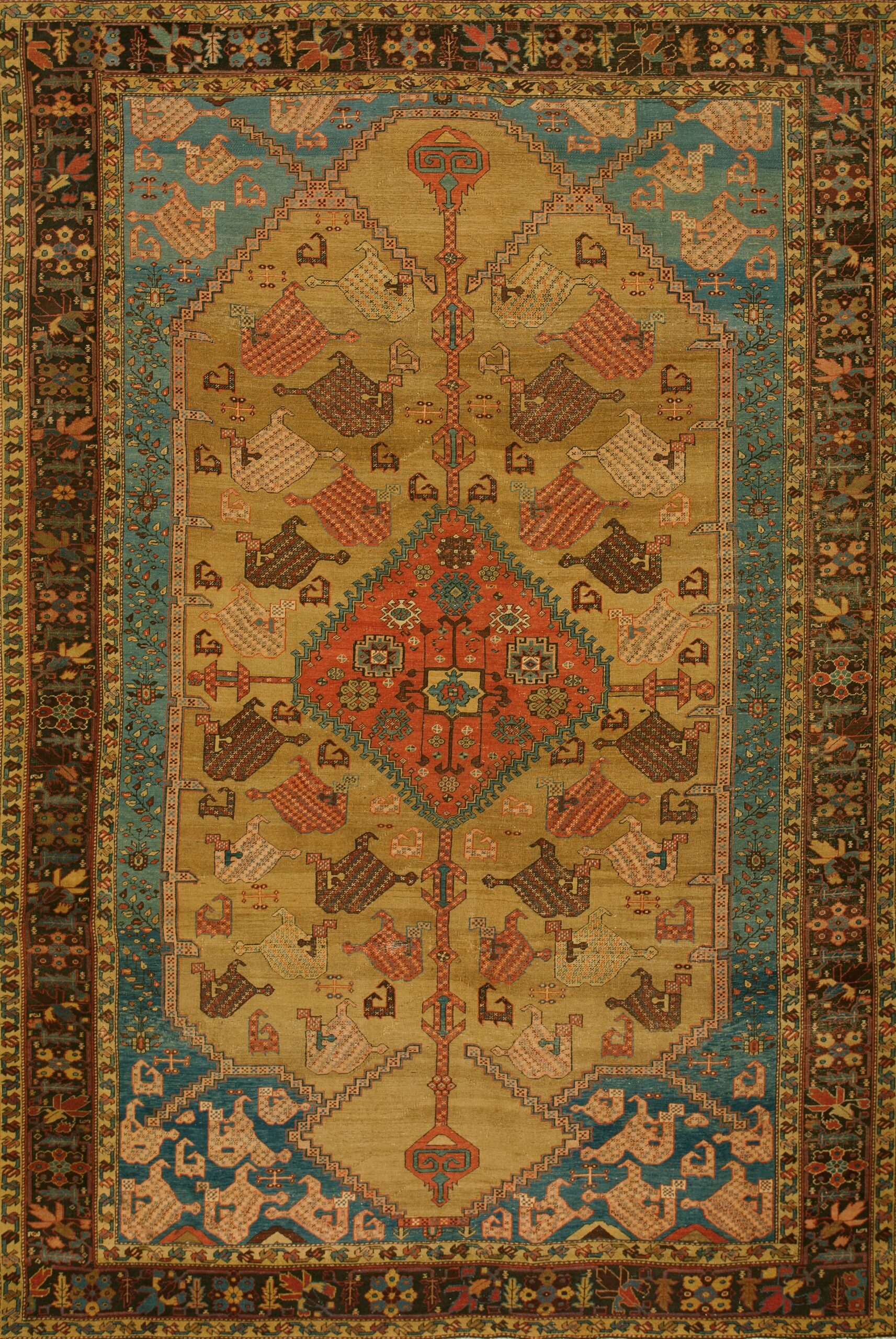
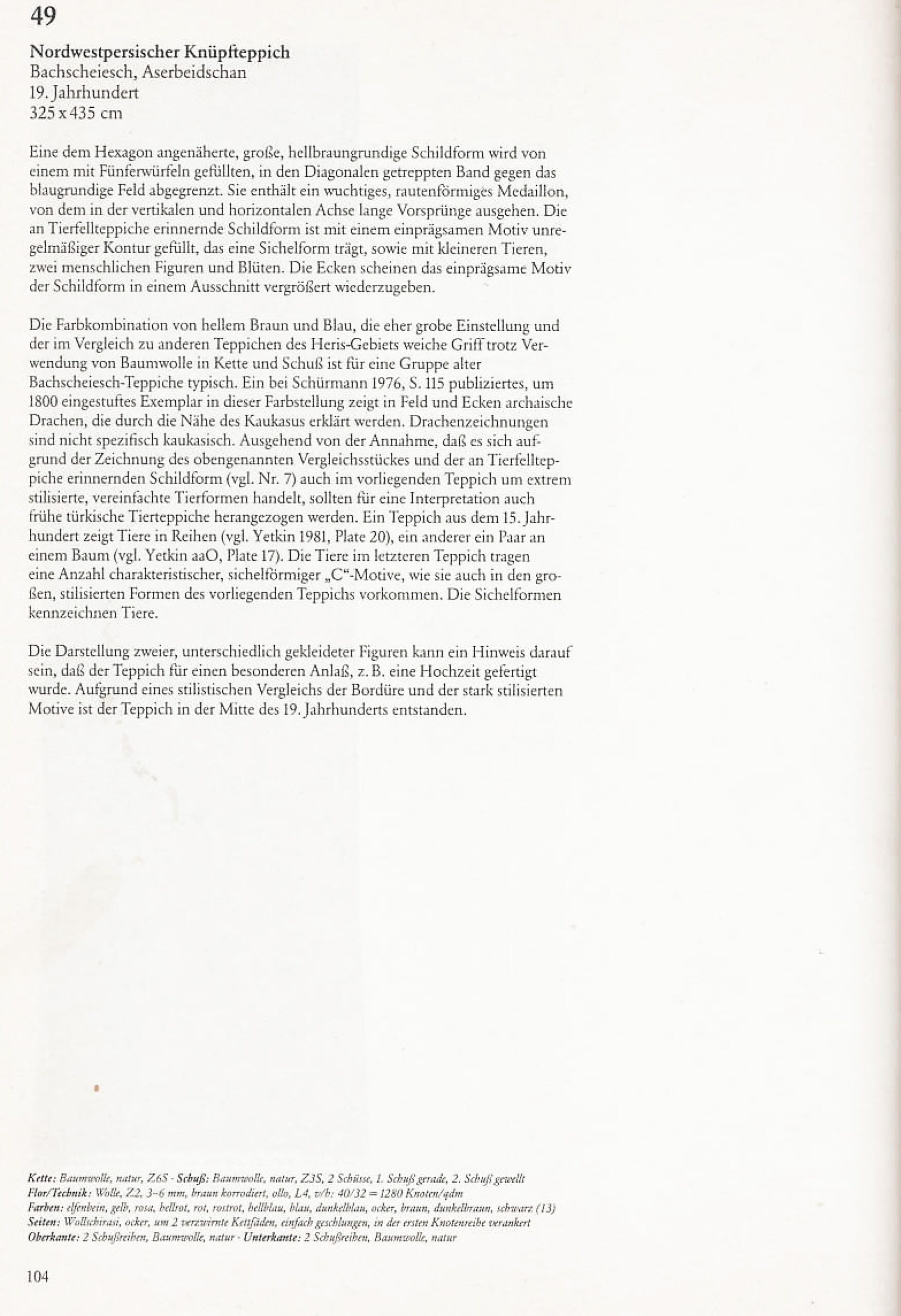
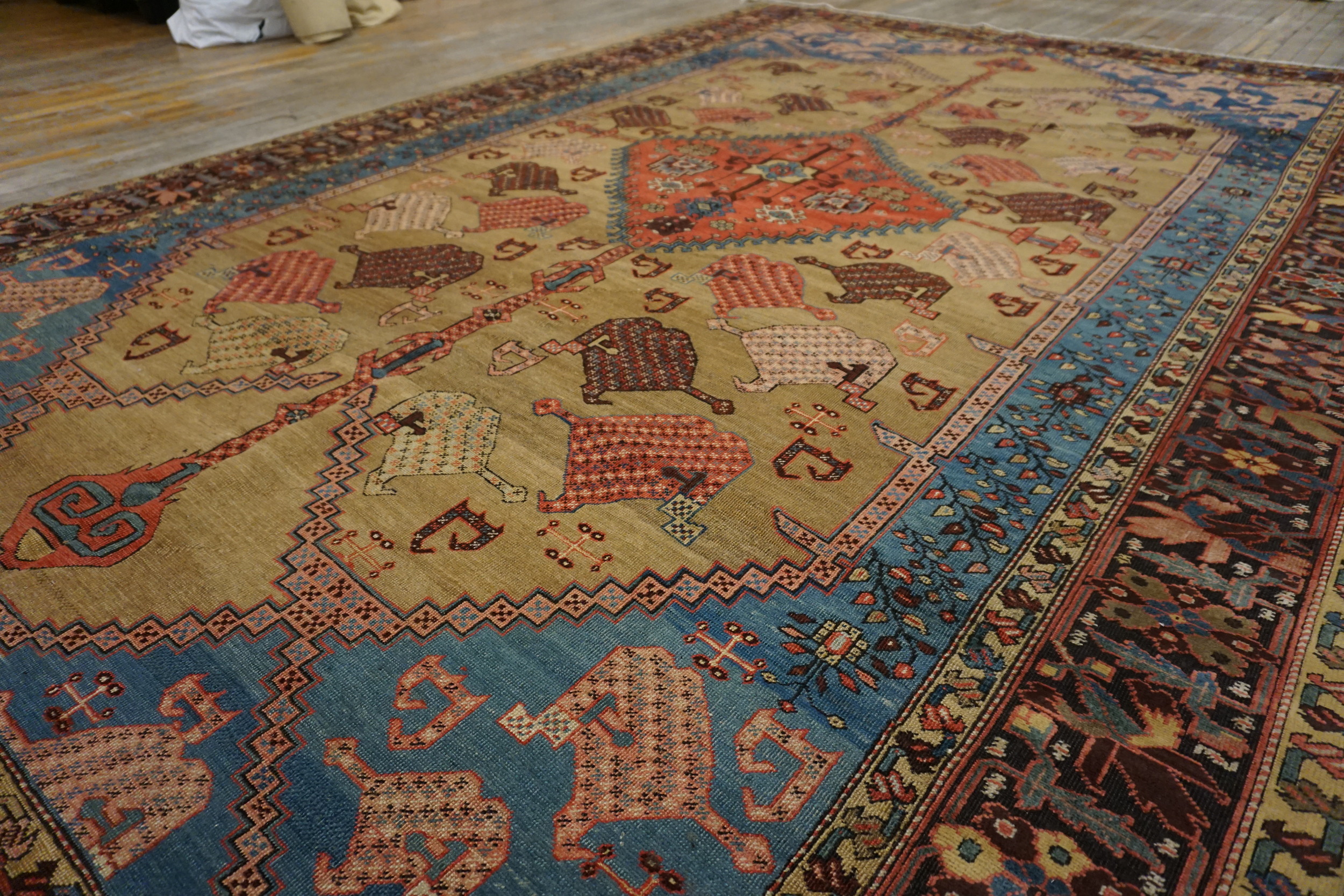
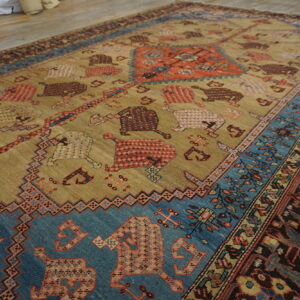
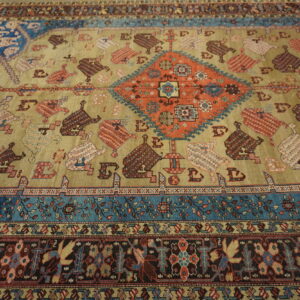
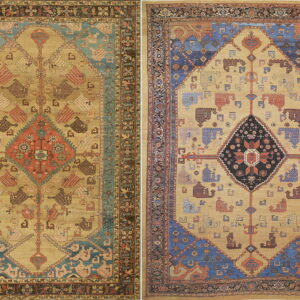
Antique Bakshaish Persian Geometric Medallion Hand Knotted Pile Rug, Country of Origin: Iran / Persia, Circa Date: 1870s. This exceptional example of 19th-century weaving showcases the distinctive, monumental scale and geometric abstraction characteristic of bakshaish rugs. Originating from the Heriz region, this piece represents a pinnacle of nomadic and village artistry from the late Qajar period of Iranian / Persian rugs.
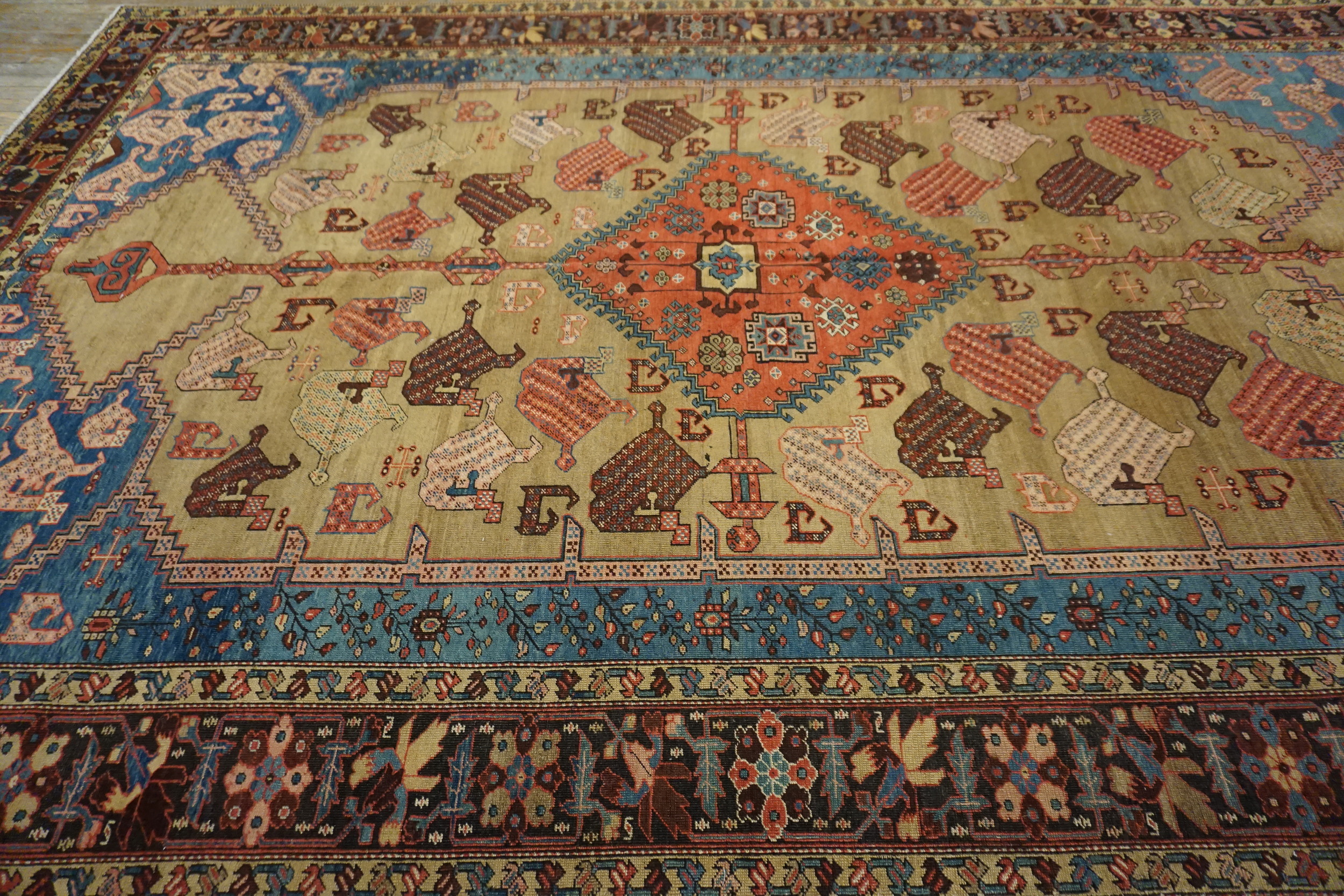
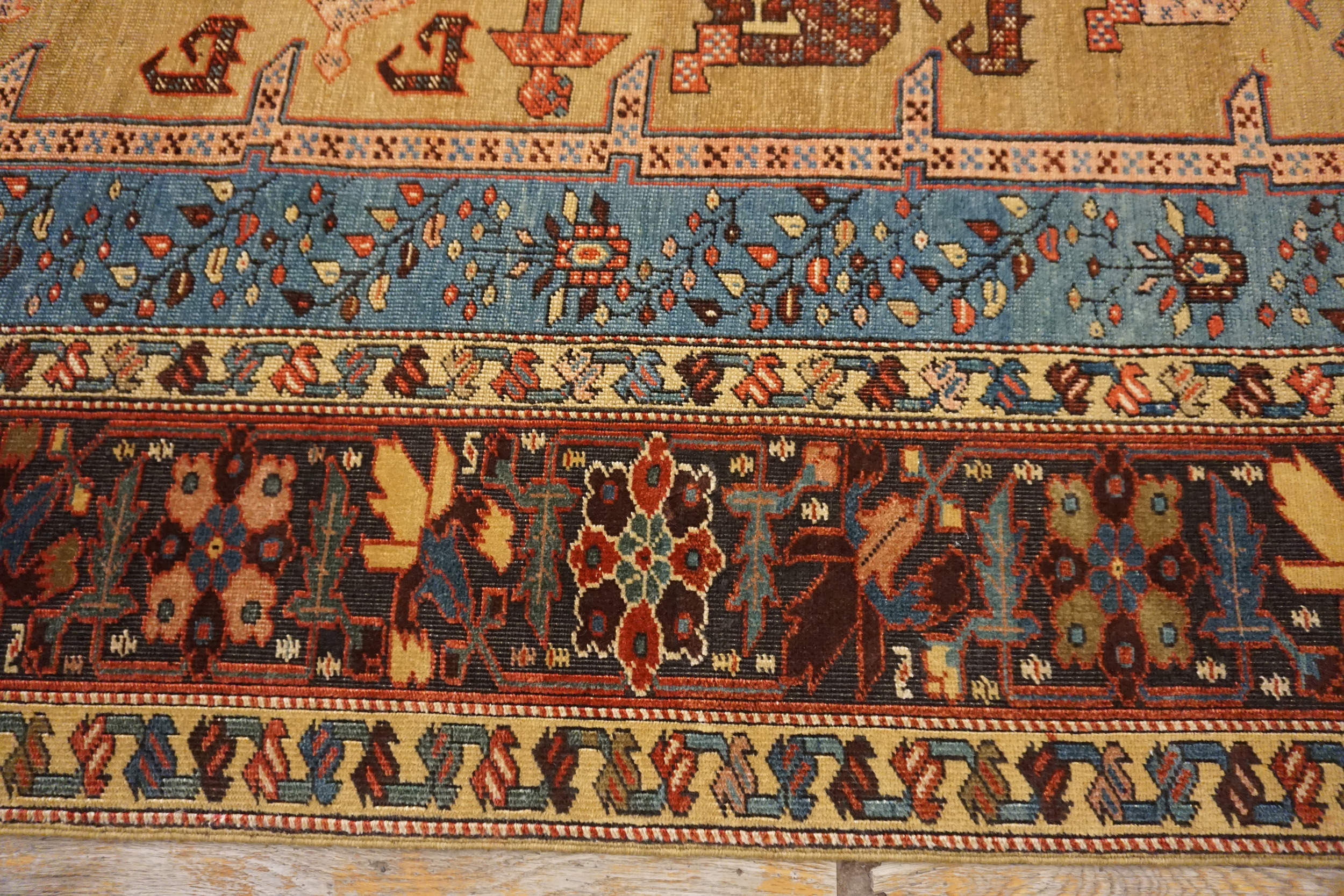
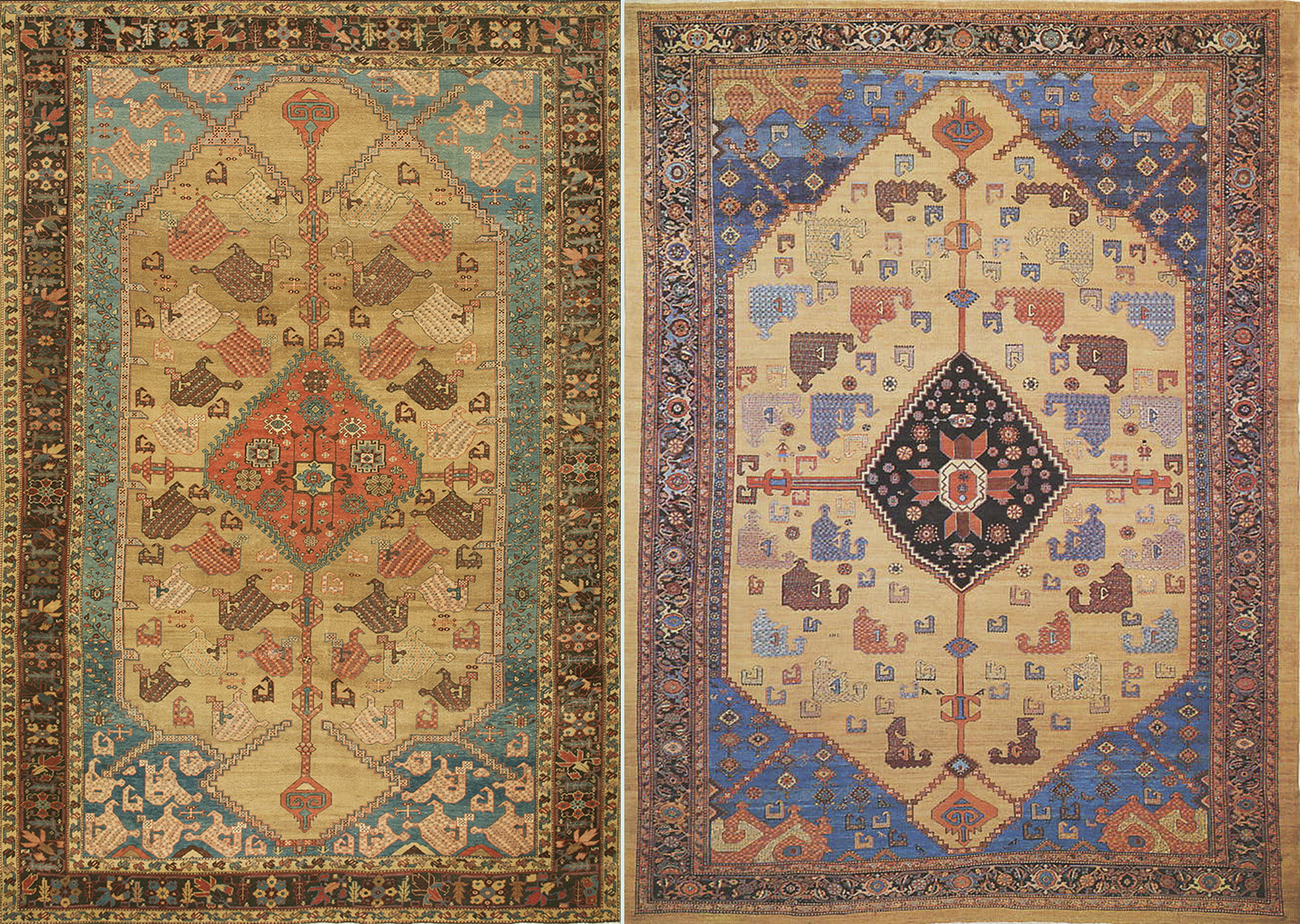
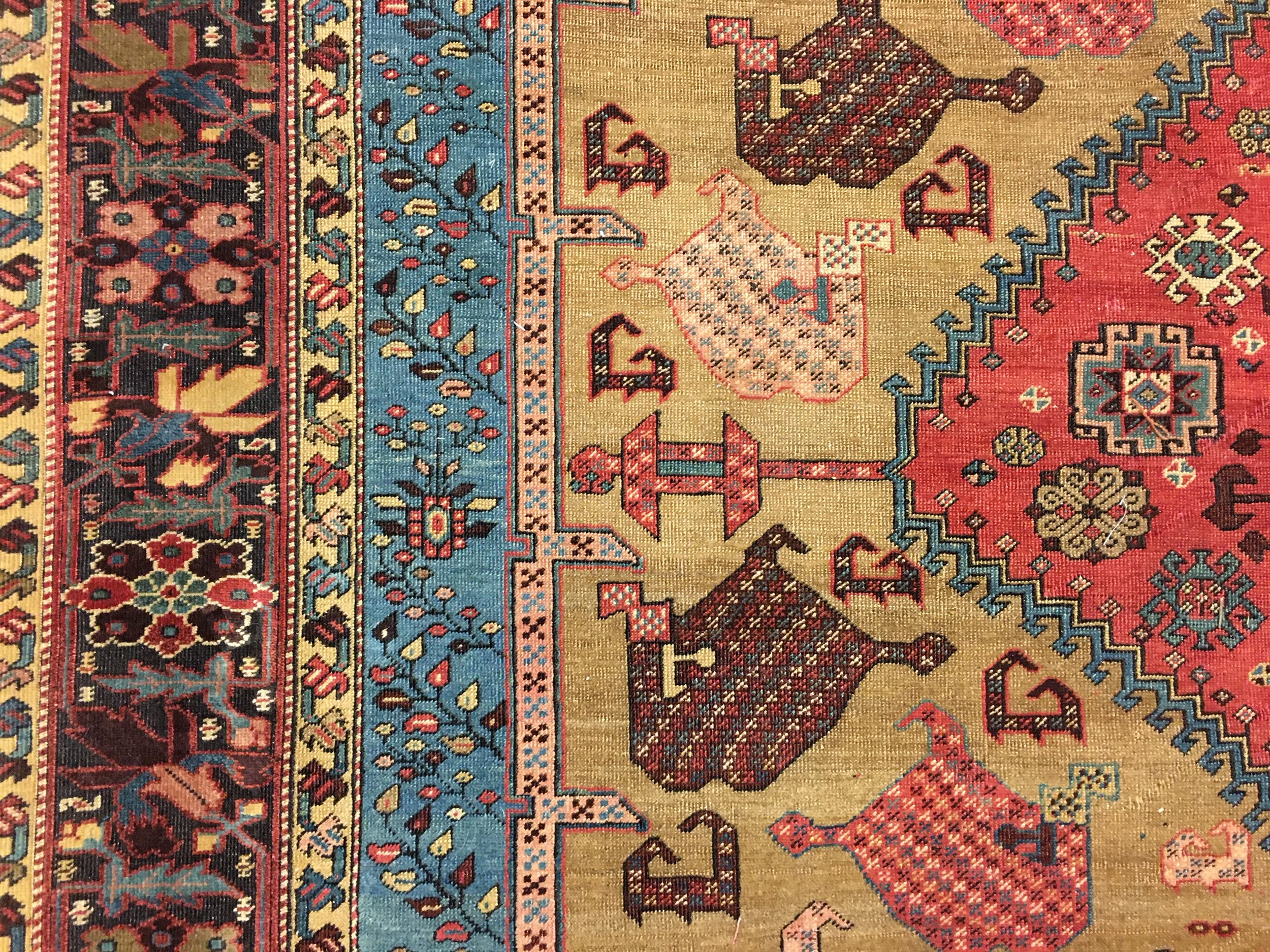
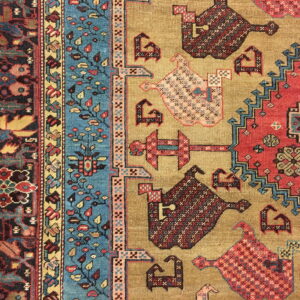
The expansive field is dominated by a striking, earthy camel hue, providing a sophisticated backdrop for the large, stylized central medallion rendered in terracotta, rust, and deep indigo. The overall palette relies on natural dyes, resulting in a harmonious blend of saturated blues and deep earth tone color rugs, which have mellowed beautifully over the rug’s long history.
Woven with a robust wool pile, this piece was designed to anchor a major living space, making it one of the most desirable room size rugs available from this era. Its impressive scale and durable construction ensure that this textile remains a functional work of art, highly sought after among collectors of fine antique rugs.
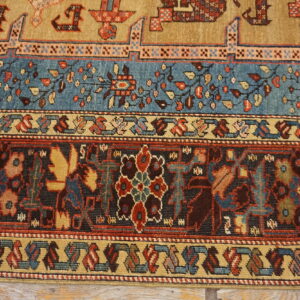
The major border frames the composition with dense, abstract floral and stylized animal motifs set against a rich, dark ground, contrasting sharply with the expansive, open field. The geometric figures populating the main field—often interpreted as stylized animals or primitive boteh—add a layer of narrative complexity, confirming this Bakshaish as a magnificent example of tribal weaving tradition.