
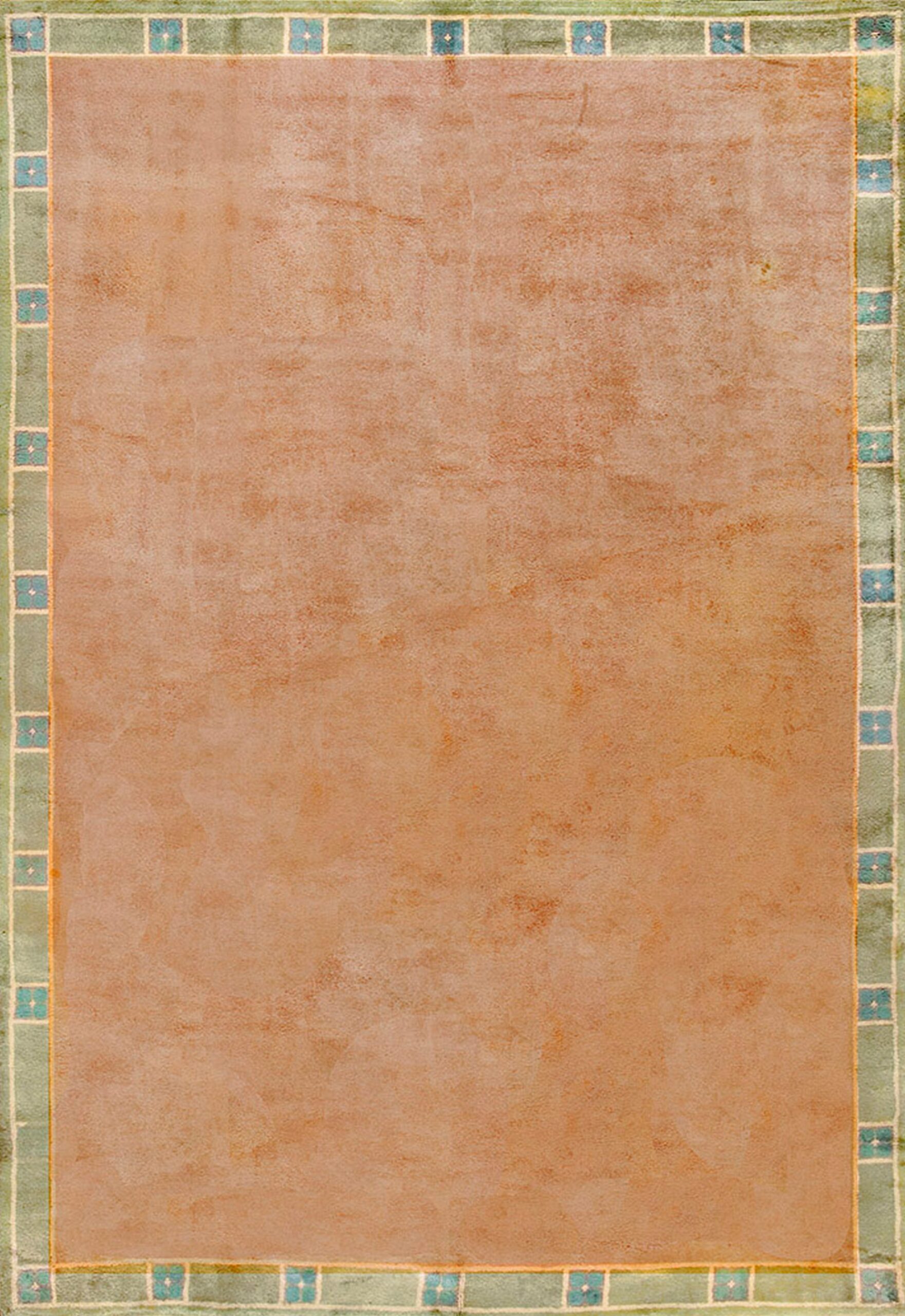
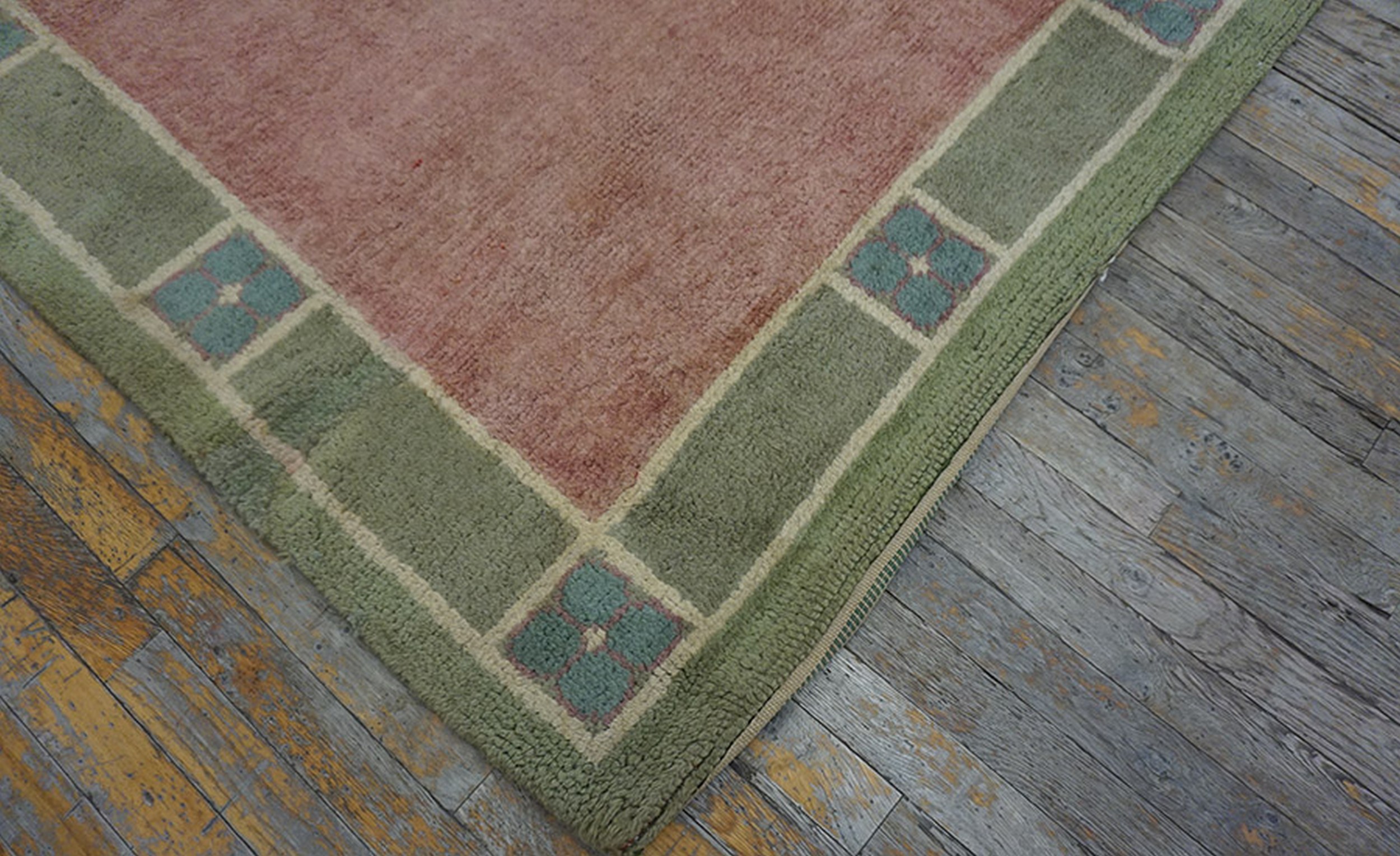
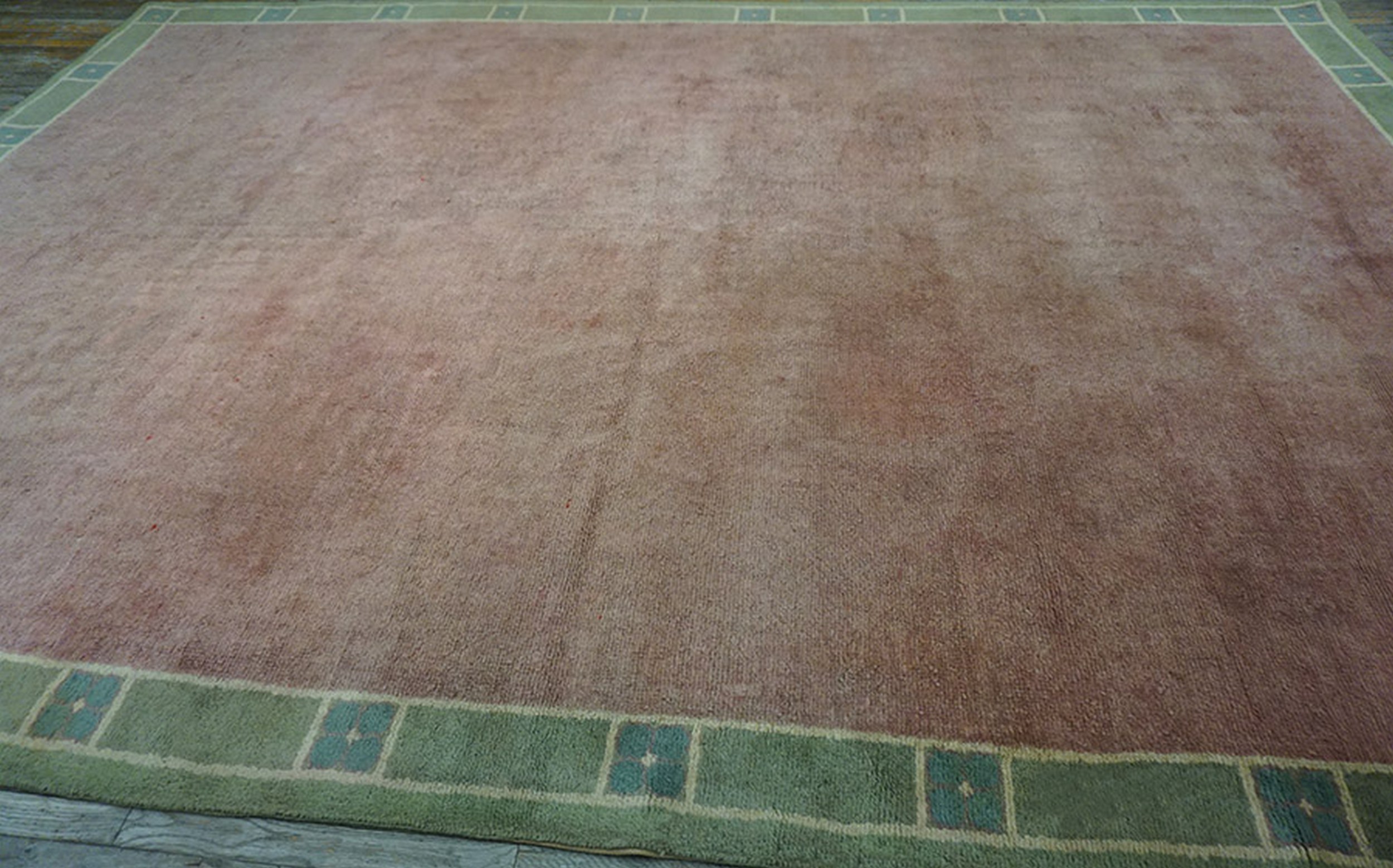
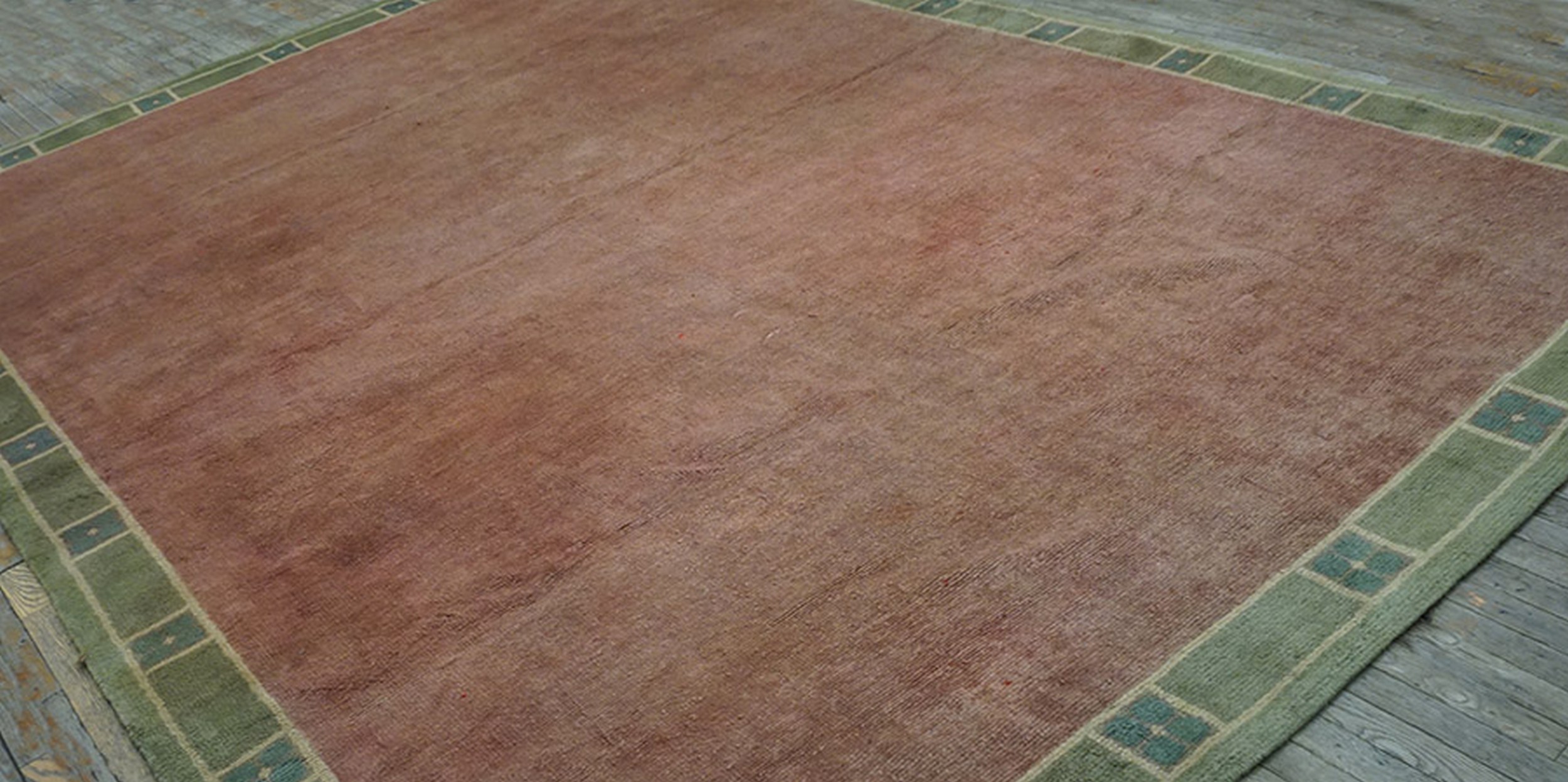
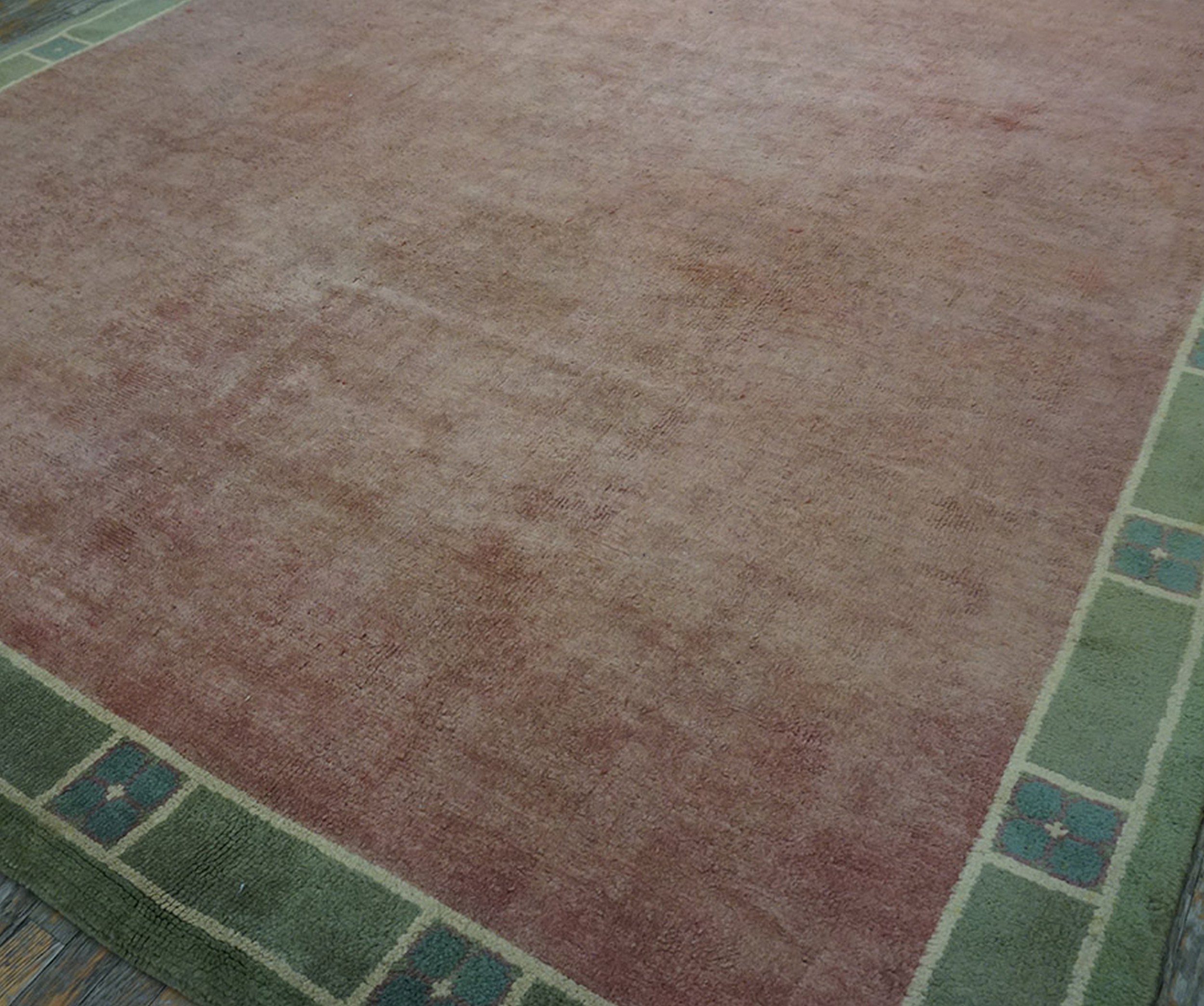
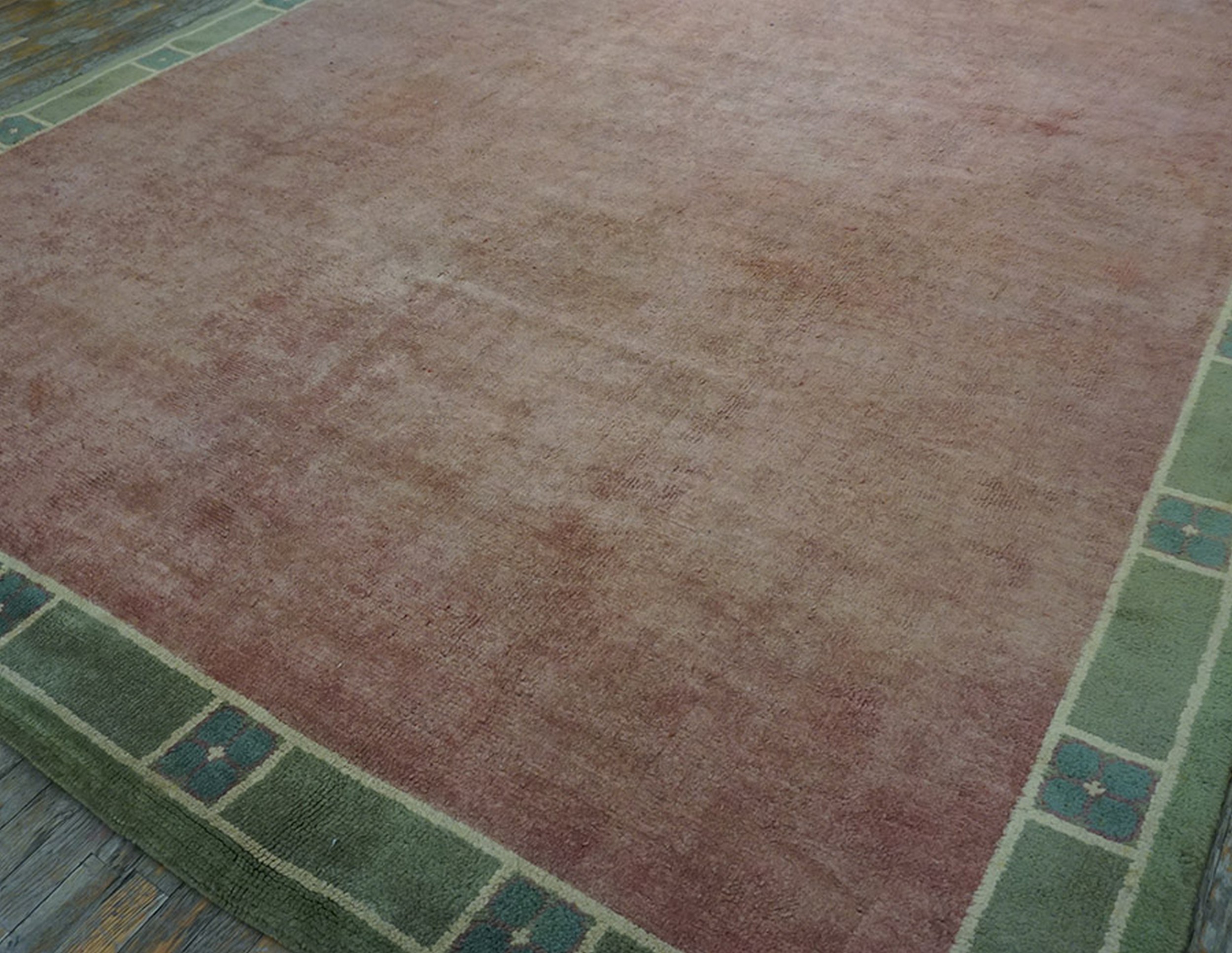
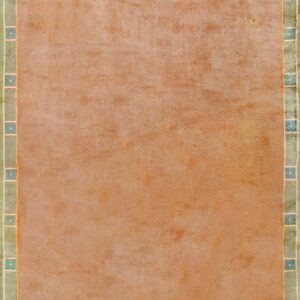
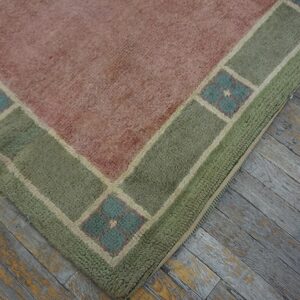
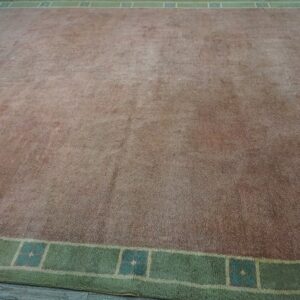
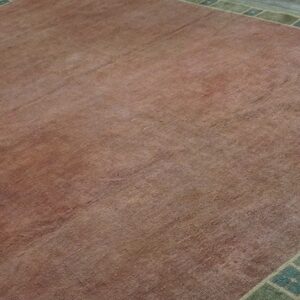
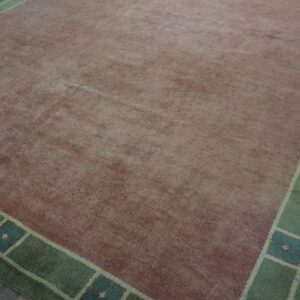
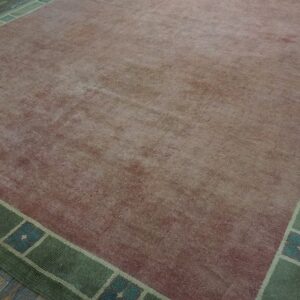
This early 20th-century Austrian carpet is a rare and sophisticated artifact of the Wiener Werkstätte (Vienna Workshop), a movement that bridged the gap between Art Nouveau and the burgeoning Modernist aesthetic. Historically, the Wiener Werkstätte was an alliance of artists, architects, and designers—most famously Josef Hoffmann and Koloman Moser—who sought to elevate everyday objects to the status of fine art. This specific specimen is defined by its minimalist “Open Solid” field in a luminous Coral color hue, a choice that embodies the romantic, “Secessionist” charm of interwar Vienna while embracing the minimalist clarity of the avant-garde.
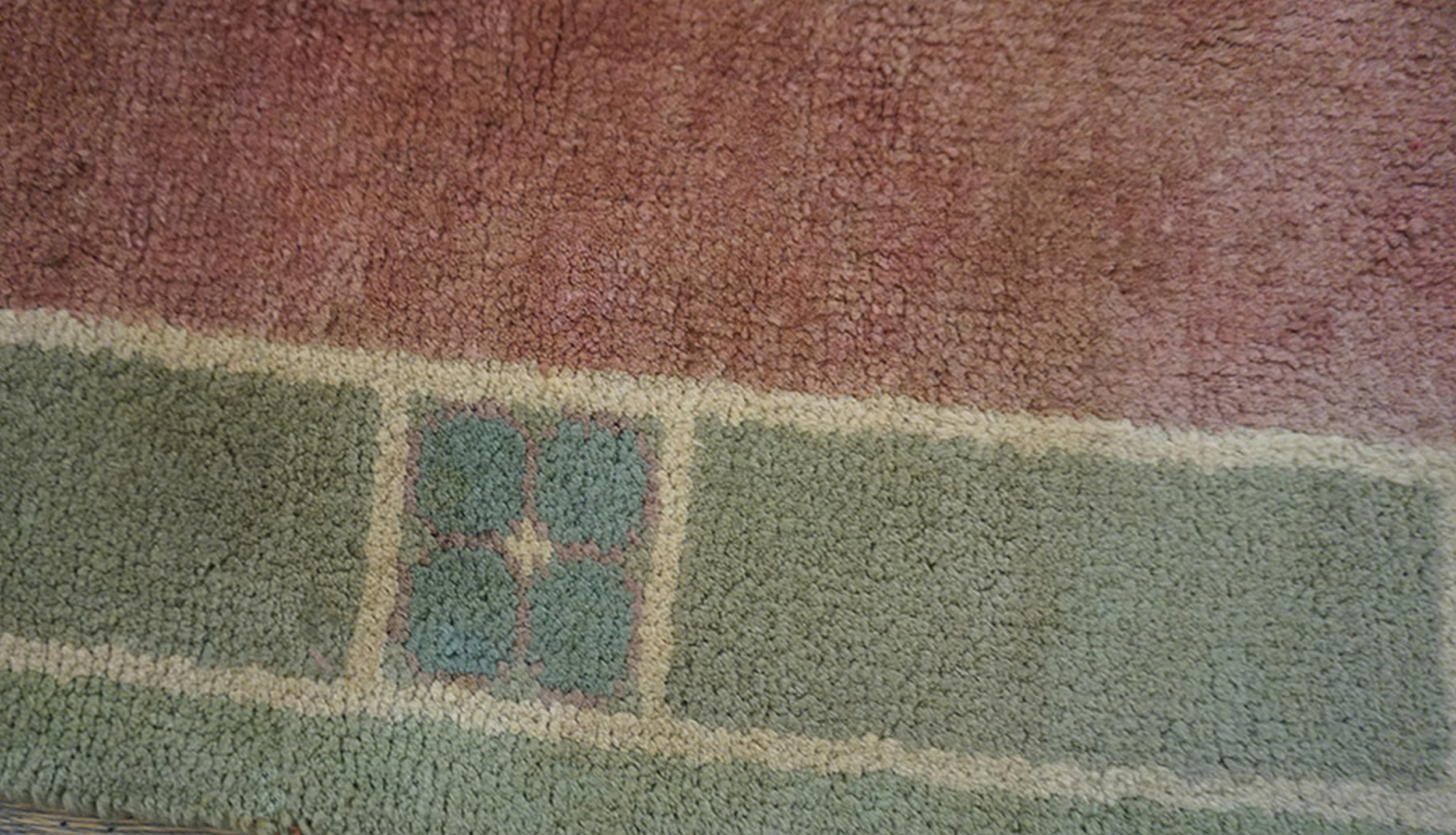
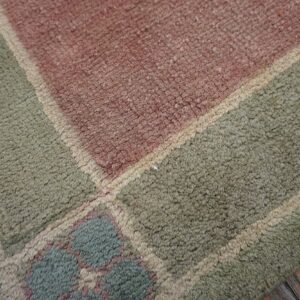
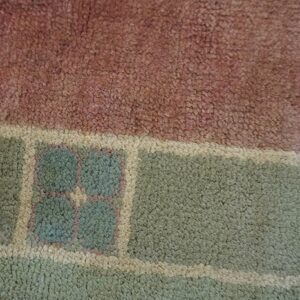
The composition is a virtuoso exercise in restraint and architectural proportion. Unlike the dense, sprawling florals of the preceding Victorian era, this Viennese carpet prioritizes an expansive, “open” field of color. This solid expanse of dusty coral serves as a “painterly” foundation, designed to unify a room without competing with the bold, geometric furniture typical of the period. The minimal decoration is often restricted to a narrow, disciplined border—frequently featuring a “checkerboard” or “staccato” pattern of alternating squares and rectangles. This rhythmic framing is a signature of the “Square Style” (Quadratstil) popularized by Hoffmann, which emphasized the grid as a primary aesthetic unit.
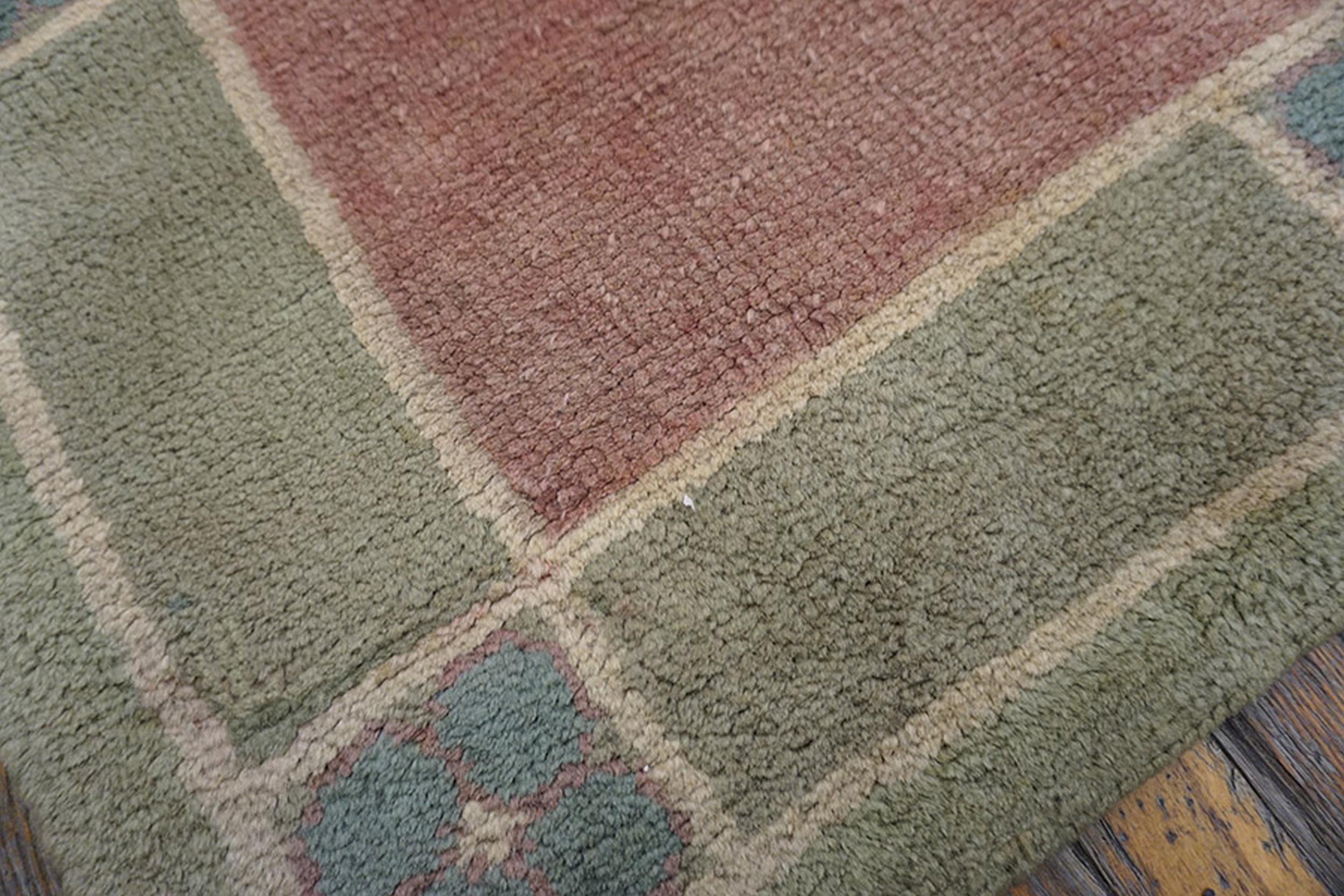
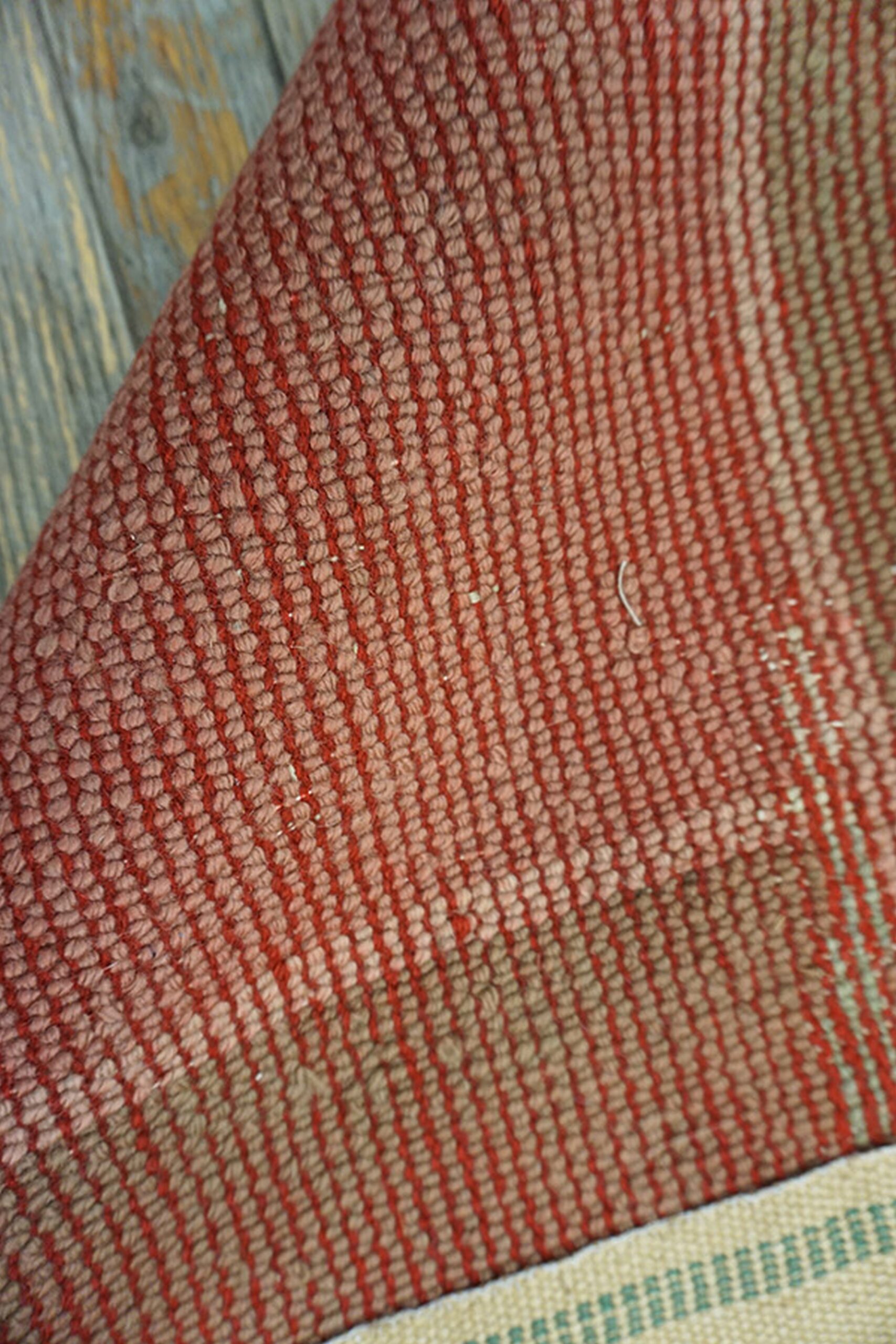
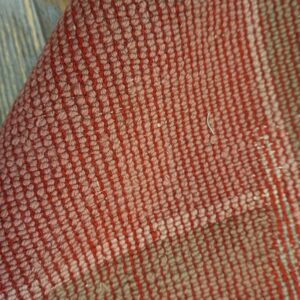
Technically, Austrian Werkstätte carpets of this era are prized for their high-quality, hand-knotted construction and the use of finely spun wool that produces a low-profile, “velvety” pile. The “Coral” ground is rarely a flat, industrial shade; instead, it possesses a subtle tonal depth and shimmer characteristic of natural dyes and hand-carded wool. This “soft-modernist” palette—often incorporating secondary accents of sage green, buff, or charcoal—was intended to harmonize with the “total work of art” (Gesamtkunstwerk) philosophy, where the rug, wallpaper, and furniture functioned as a single, coherent masterpiece.
To possess an antique Viennese Art Nouveau carpet of this caliber is to hold a monument to a transformative moment in European design history. It is a work that bridges the gap between the lyrical elegance of the Belle Époque and the bold, geometric optimism of the early 20th century—a serene, hand-wrought canvas that transforms the floor into a statement of scholarly refinement and timeless, minimalist grace.