
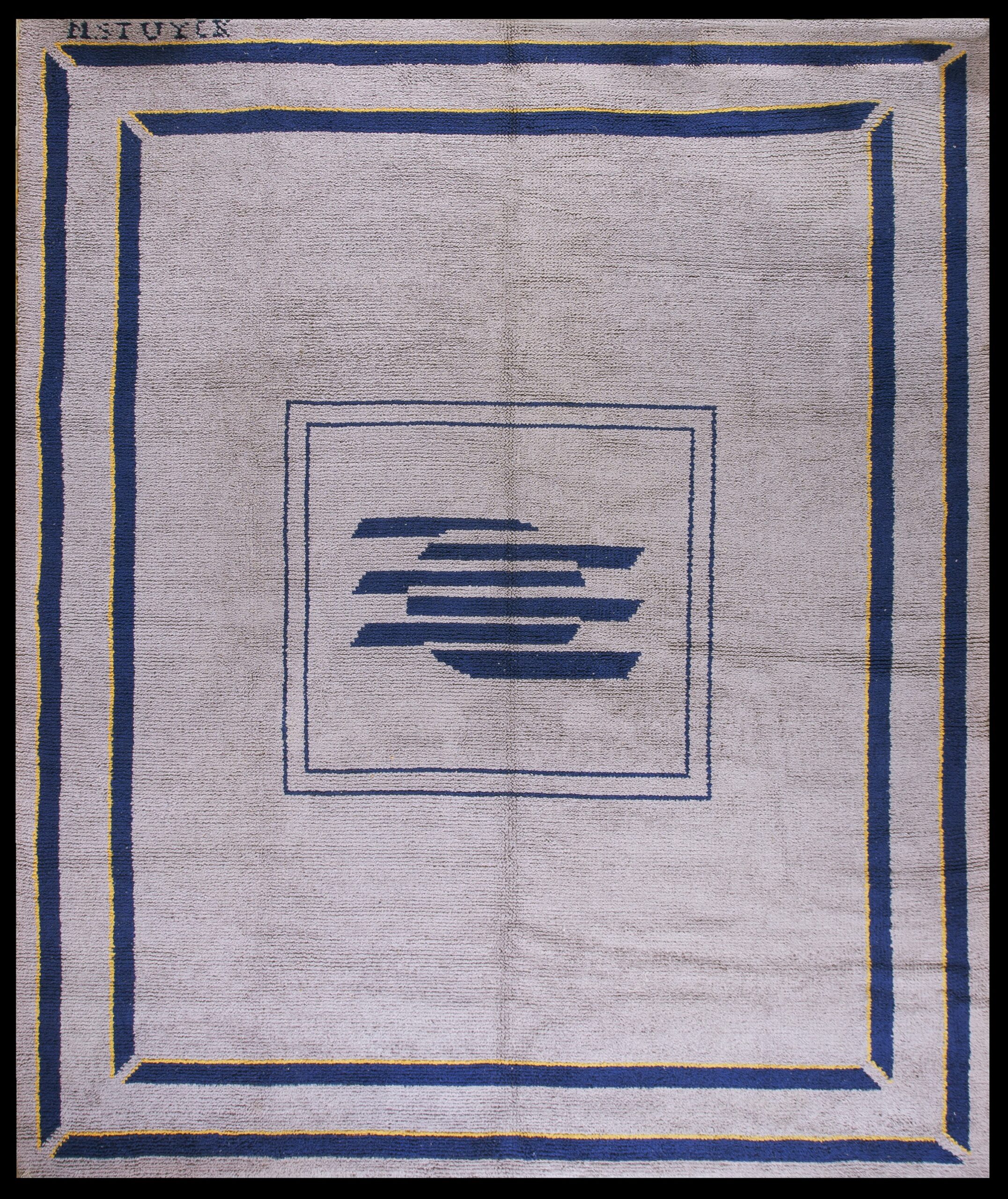
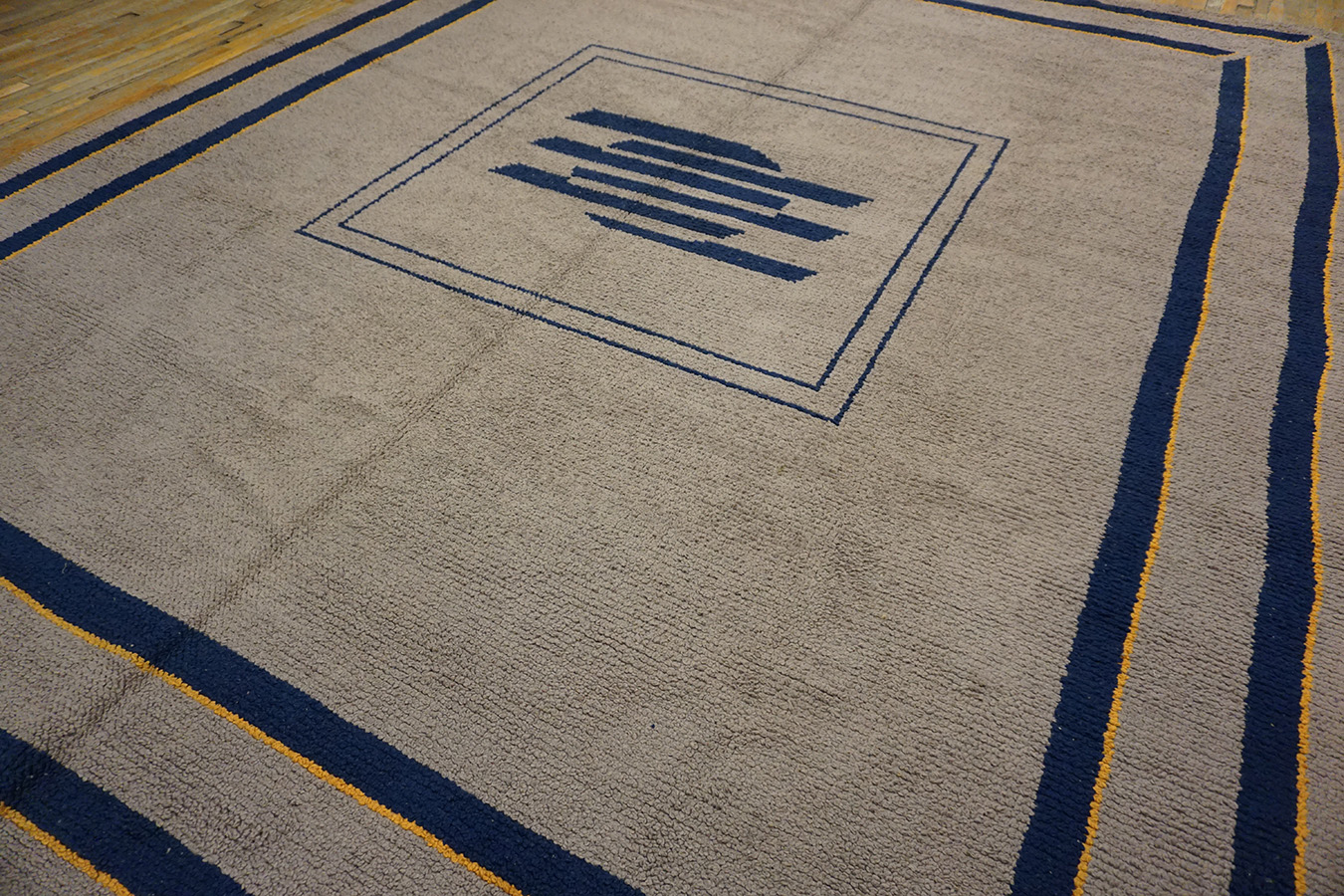
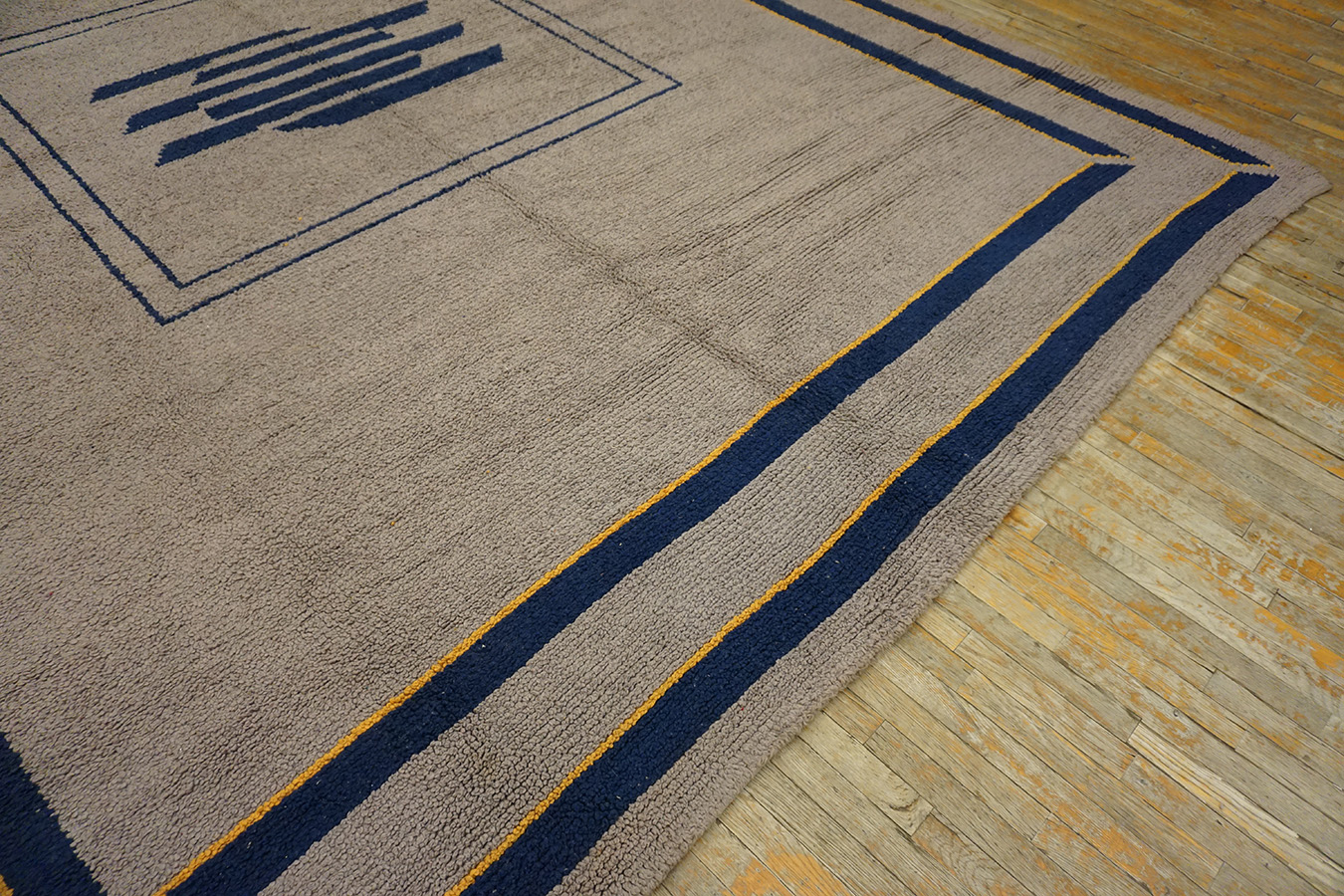
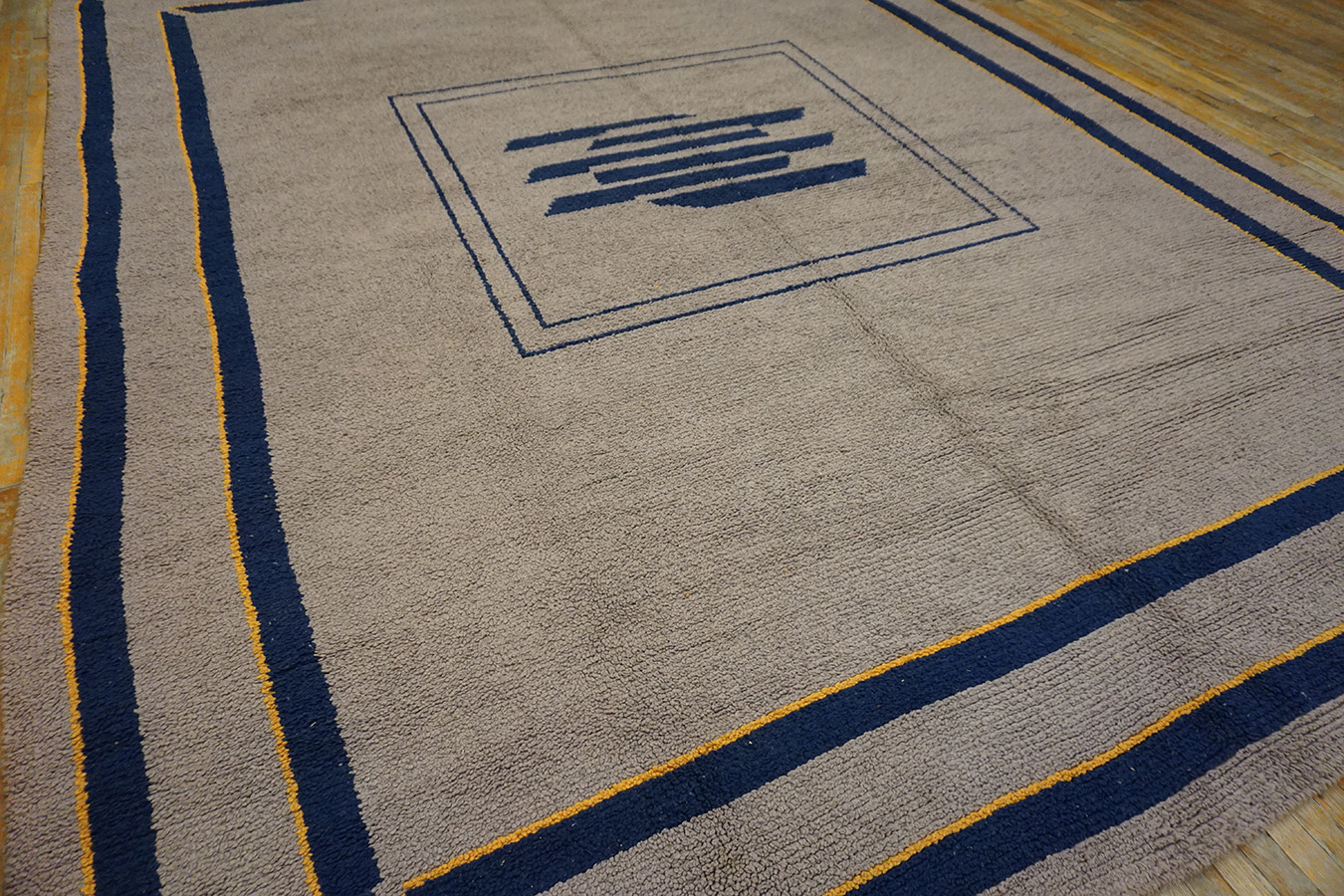
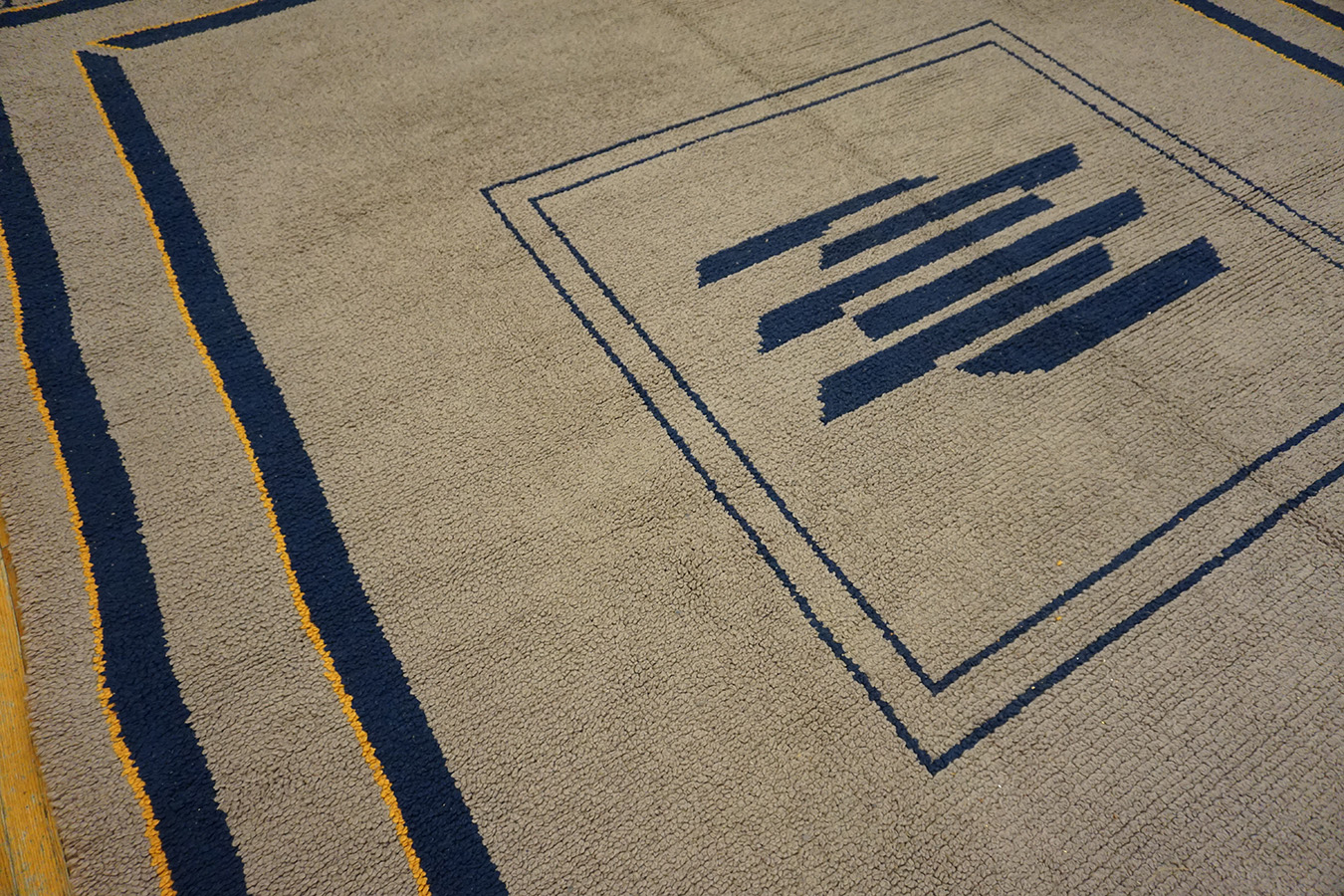
This magnificent early 20th-century Spanish carpet is a superlative example of the “Transition Era,” where the classical weaving traditions of the Iberian Peninsula met the avant-garde sensibilities of the Art Deco movement. Historically, antique Spanish carpets—produced in renowned centers like Cuenca or Alcaraz—were celebrated for their unique “Spanish Knot” and a design language that bridged the gap between Moorish geometry and European Renaissance motifs. This specific specimen represents the evolution of that heritage into the “Modernist” aesthetic that captivated European design circles in the 1920s and 30s.
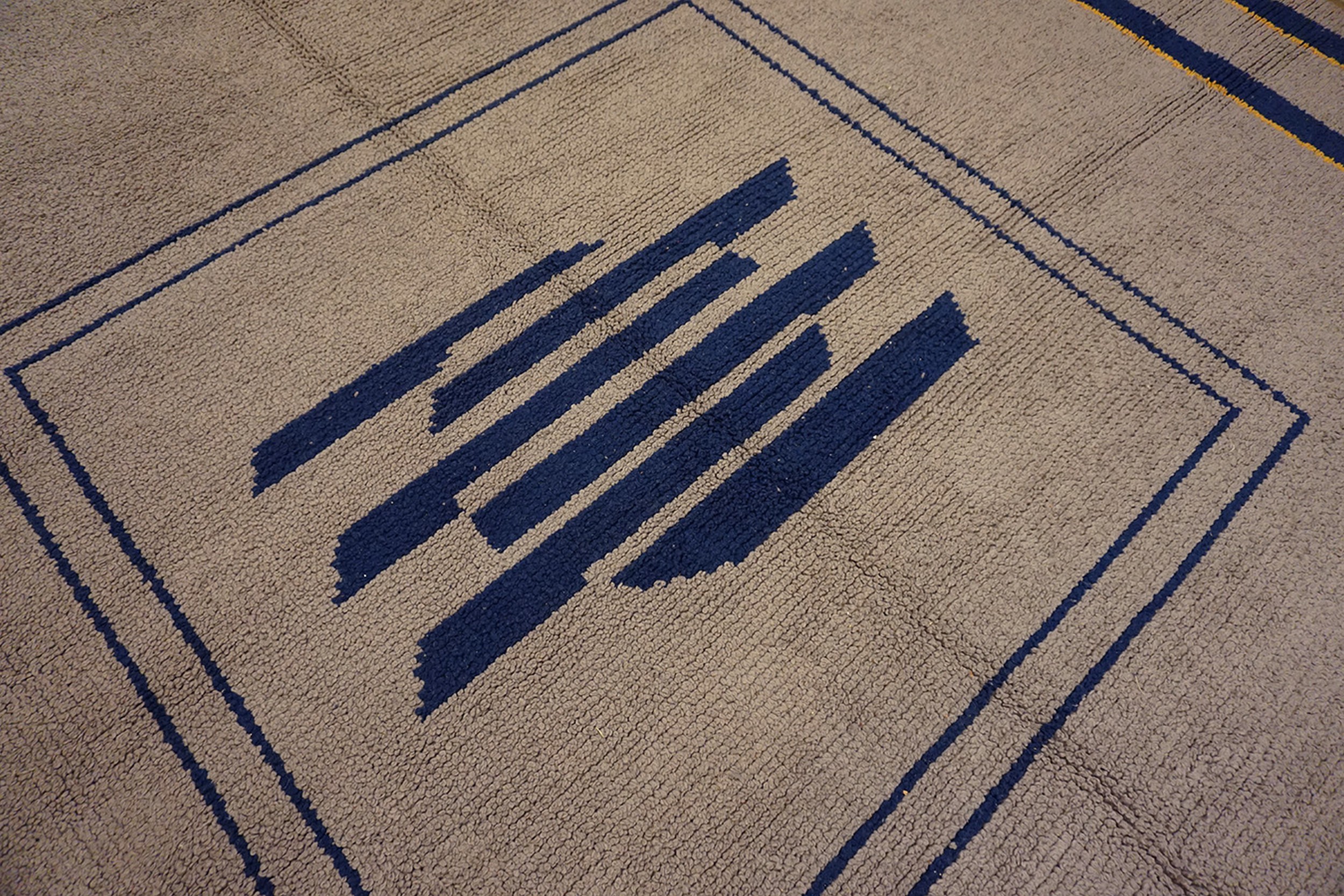
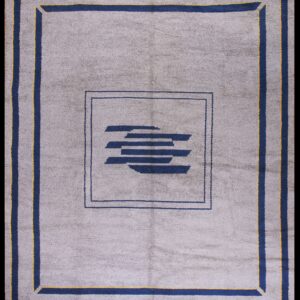
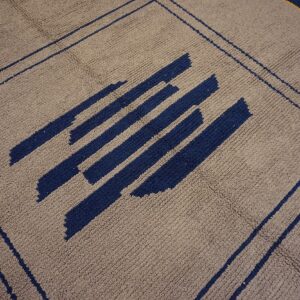
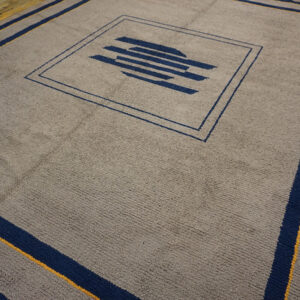
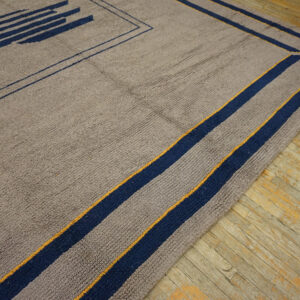
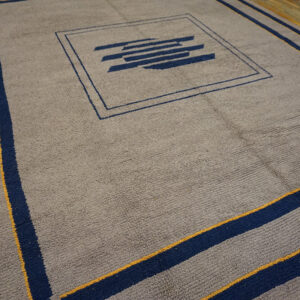
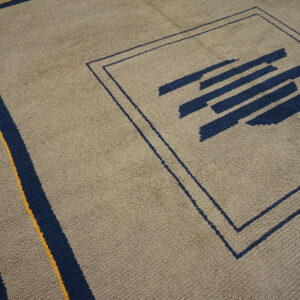
The composition is defined by its luminous ivory field, which serves as a serene, architectural canvas for a sophisticated geometric arrangement. Unlike the dense floral abundance of the preceding Victorian era, this Art Deco masterpiece embraces “the beauty of space.” The design features a rhythmic, minimalist geometry—likely utilizing clean lines, stepped motifs, or stylized foliate elements—that reflects the influence of Cubism and the burgeoning Bauhaus school. The choice of an ivory-on-ivory or high-contrast neutral palette was a mark of extreme sophistication, designed to harmonize with the streamlined furniture of the “Machine Age” and the light-filled interiors of Art Deco villas.
Historically, a room-sized Spanish carpet of this caliber was a high-status commission, often intended for the formal salons of the European elite who sought a “New Classicism.” The wool used in Spanish carpets of this period is famously dense and lustrous, providing a plush, substantial pile that offers a luxurious tactile experience. The “geometric-floral” hybridity often seen in these pieces allows them to retain a sense of organic warmth while maintaining a disciplined, modern structure.
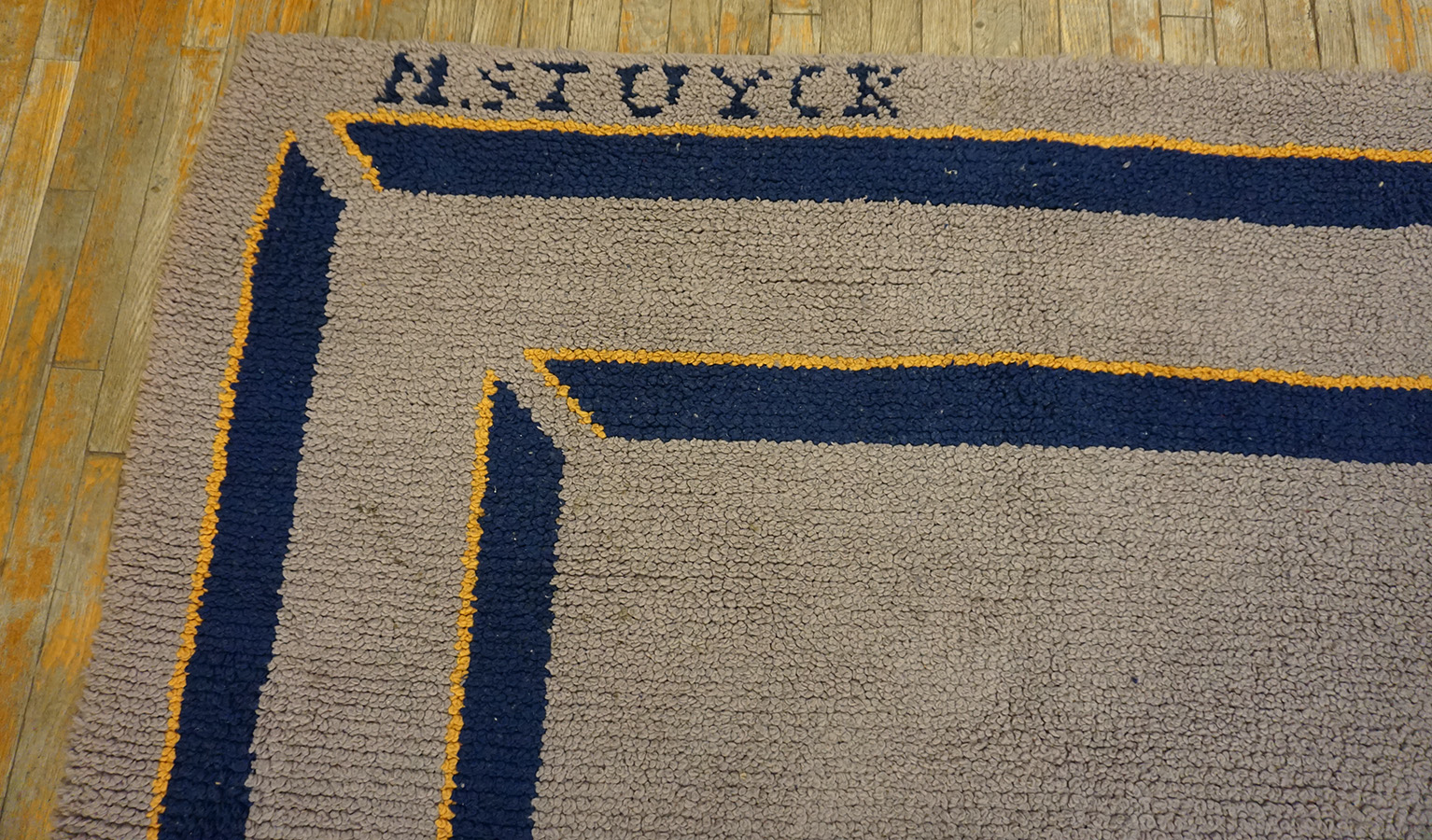
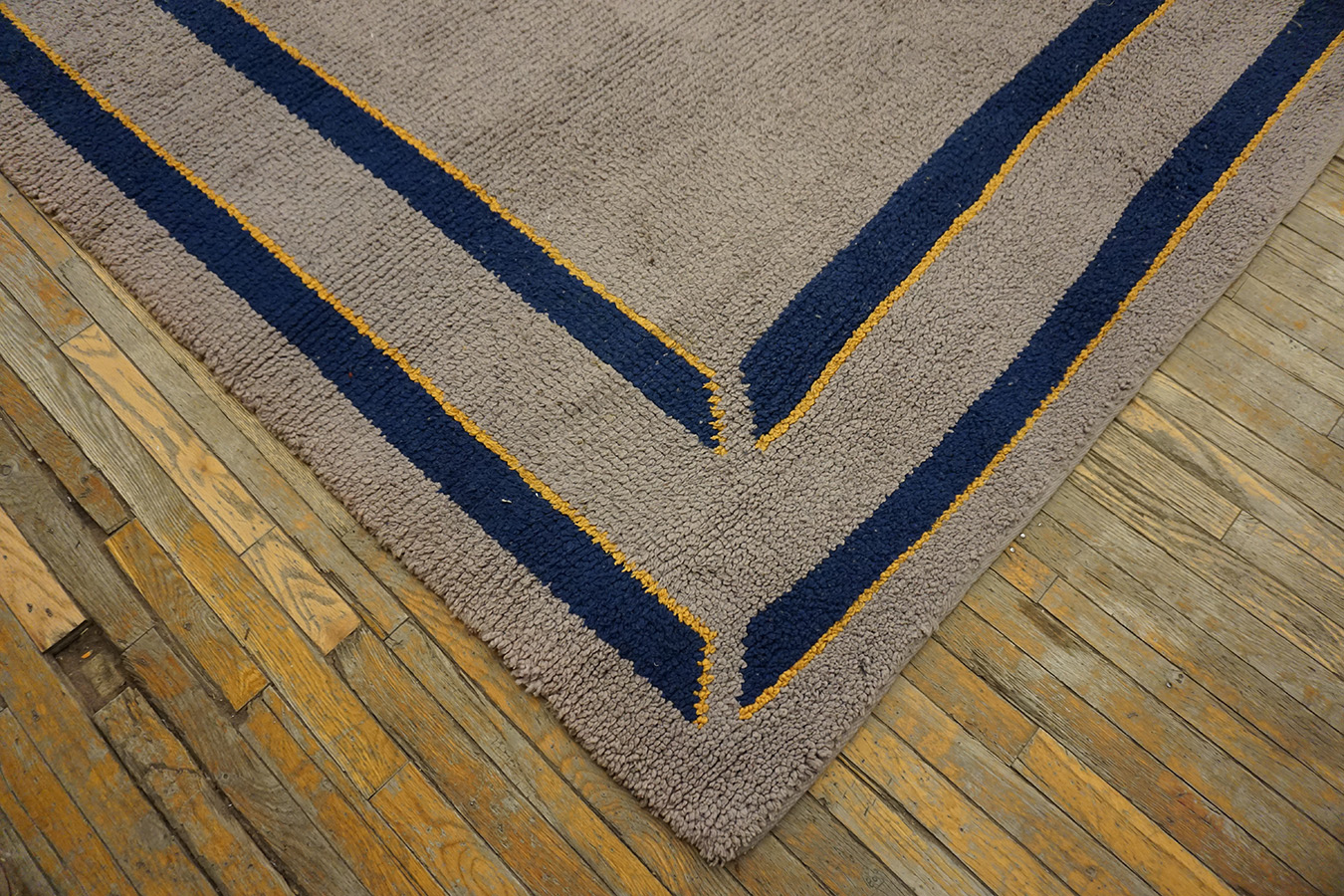
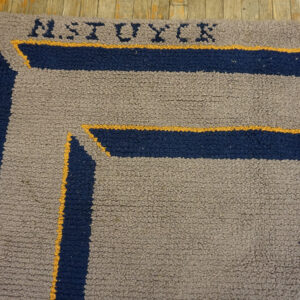
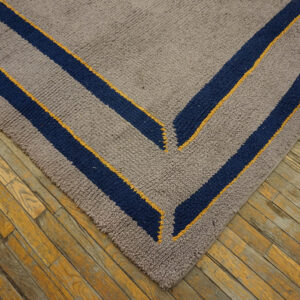
The borders act as a continuation of this architectural theme, providing a subtle frame that anchors the expansive ivory field without disrupting its minimalist flow. Over the decades, the natural wool has developed a soft, creamy patina, a quality that gives the antique carpet a “lived-in” elegance. To possess an early 20th-century Spanish European Art Deco carpet is to hold a monument to a transformative moment in decorative history—a work that bridges the gap between ancient craftsmanship and the bold, geometric optimism of the early modern world.