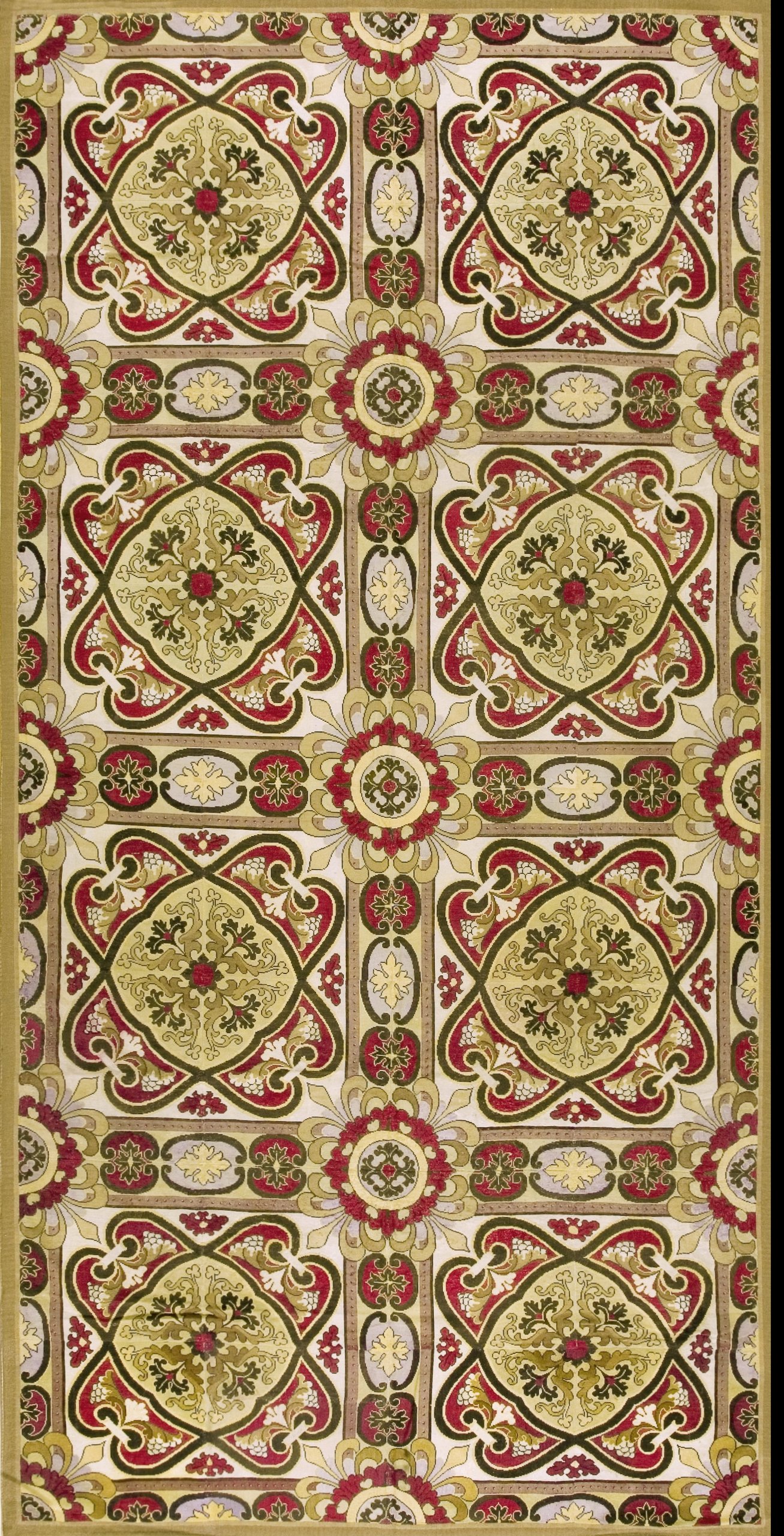
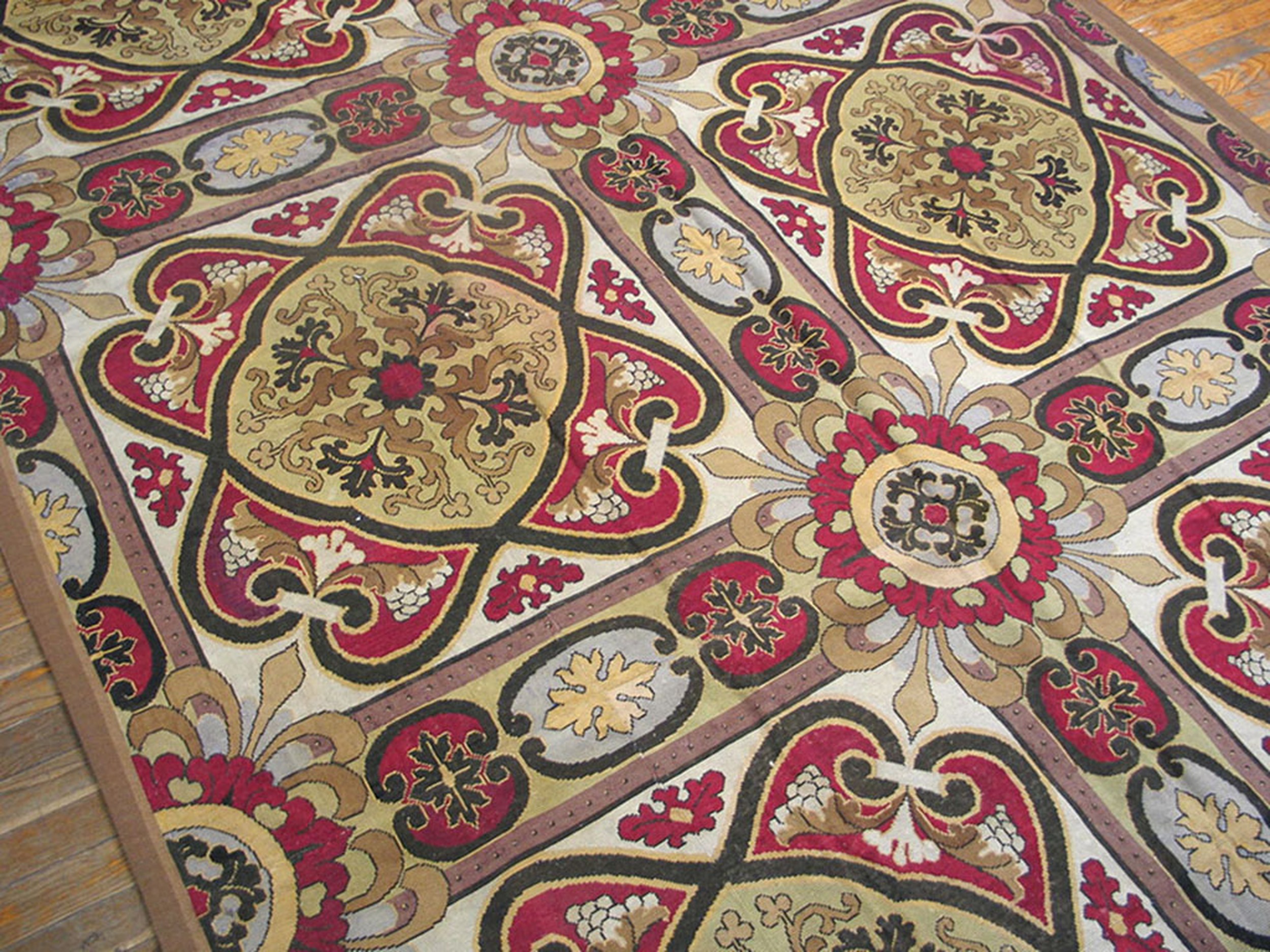
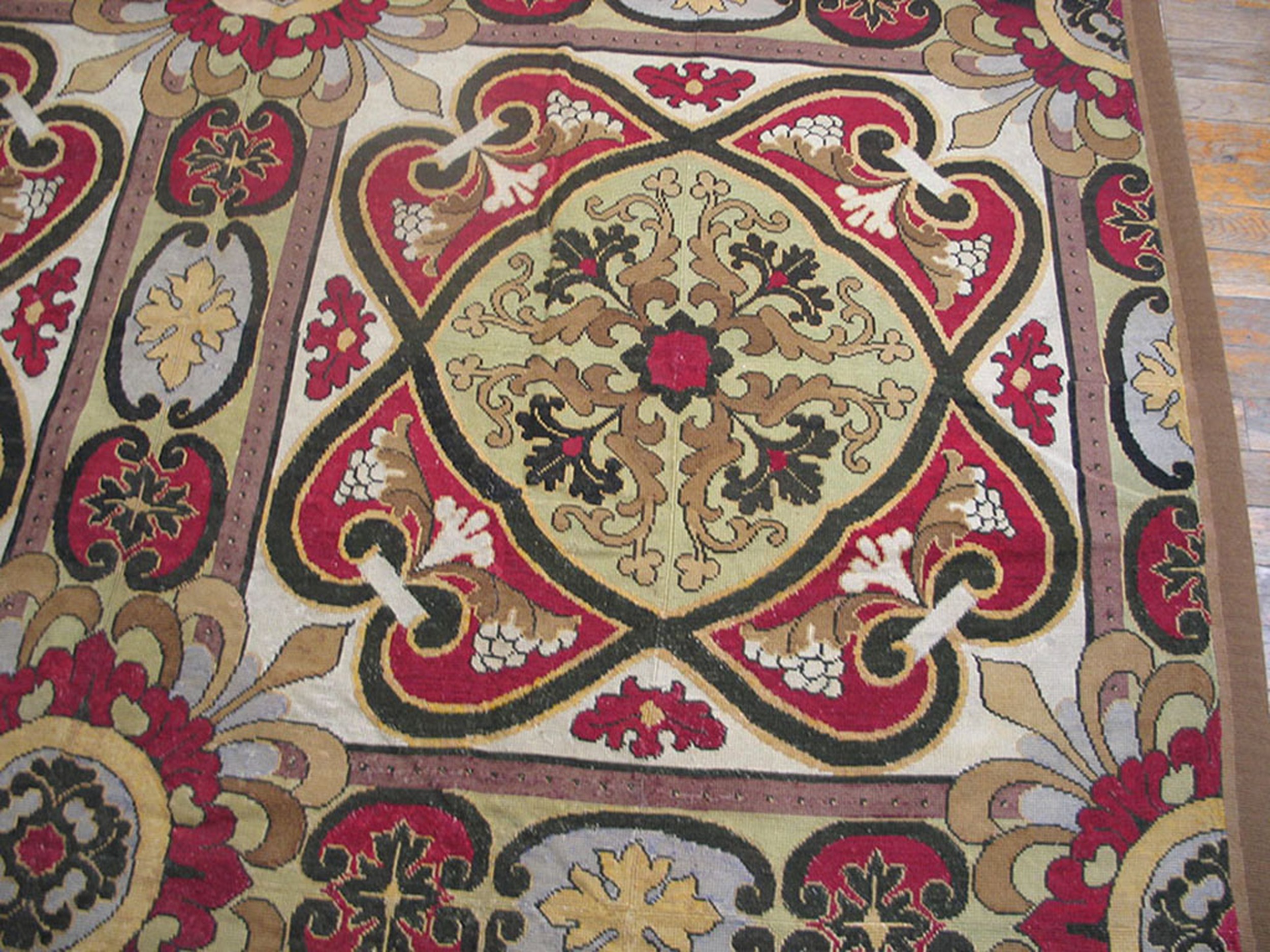
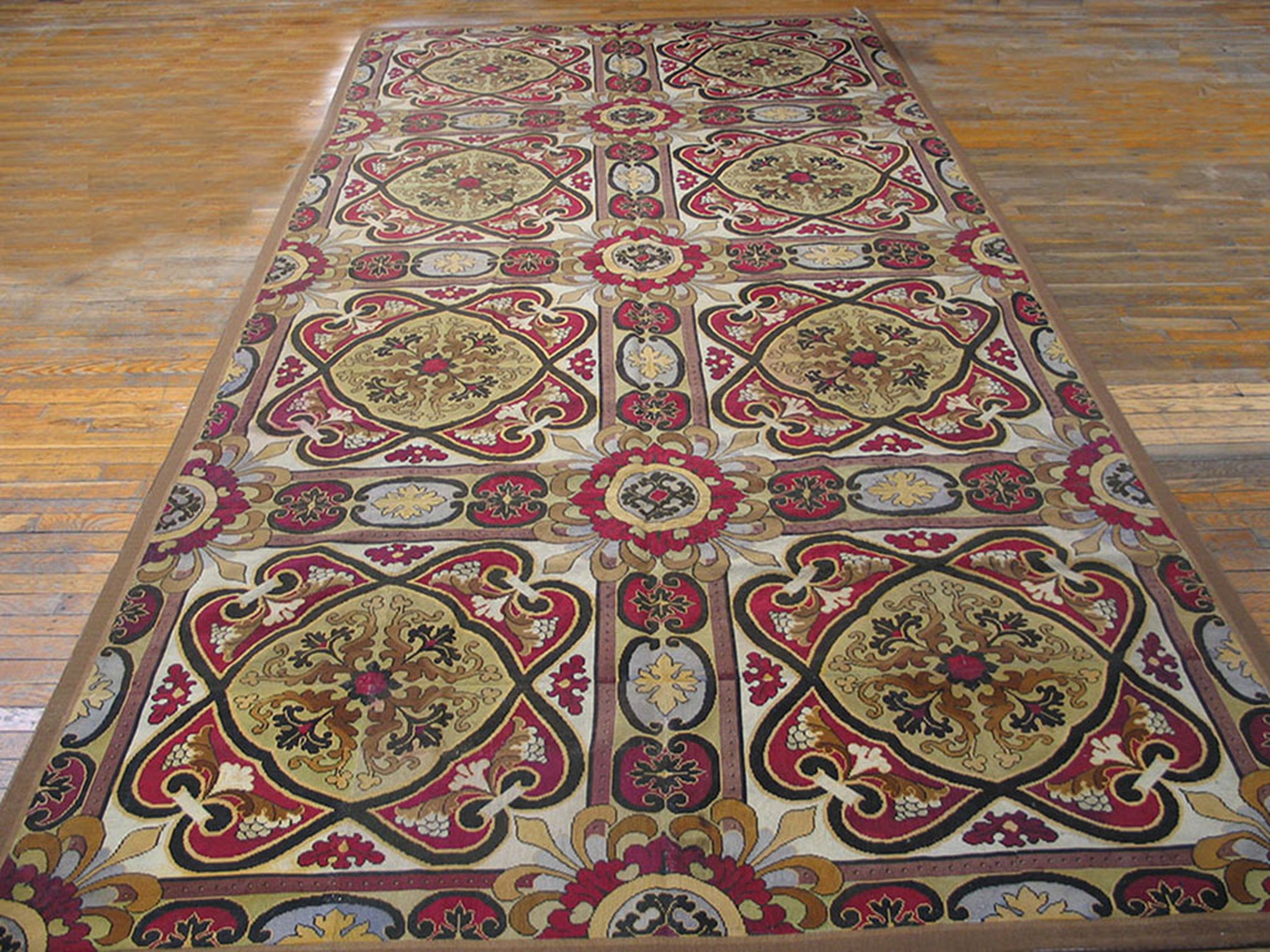
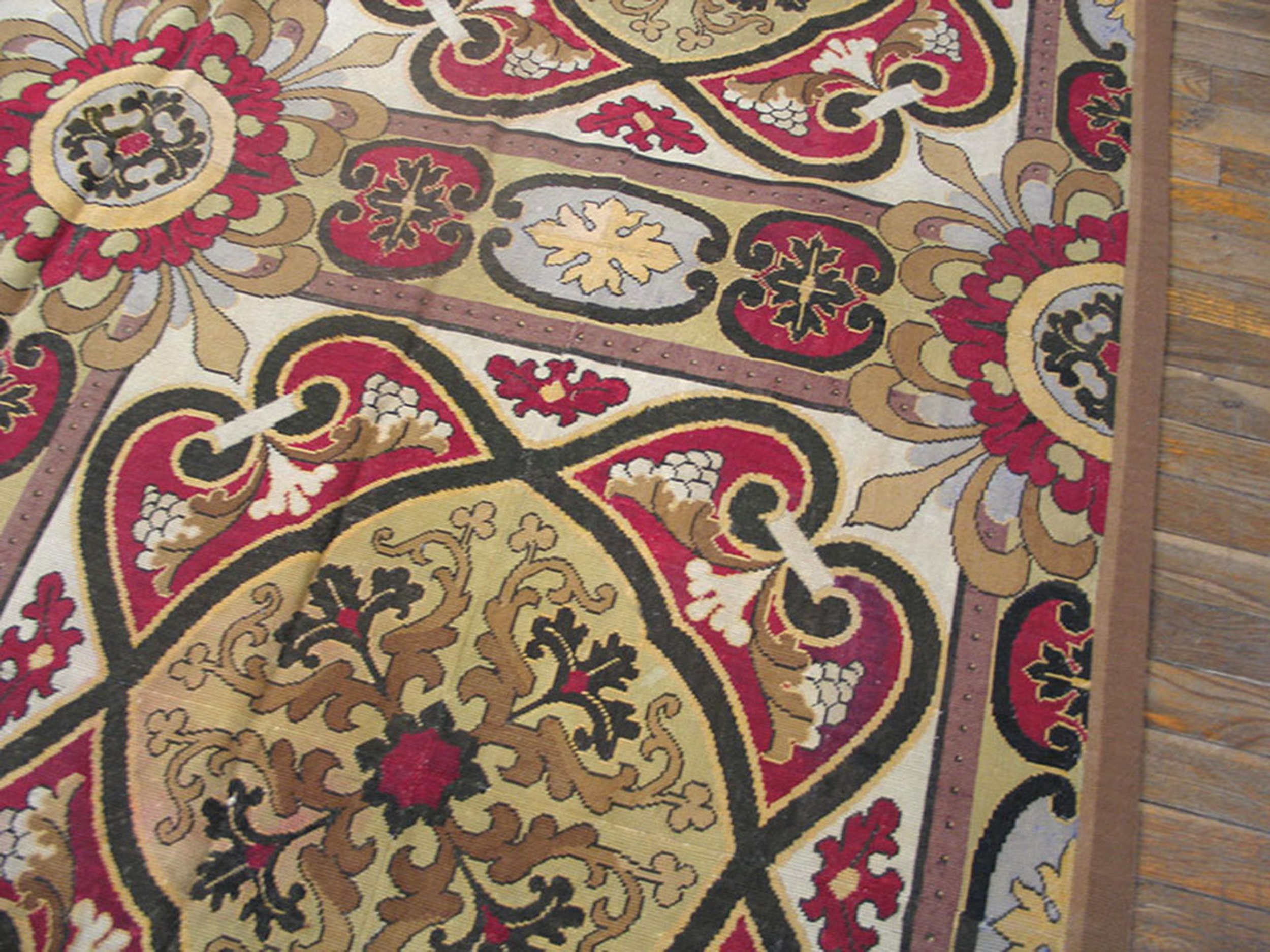
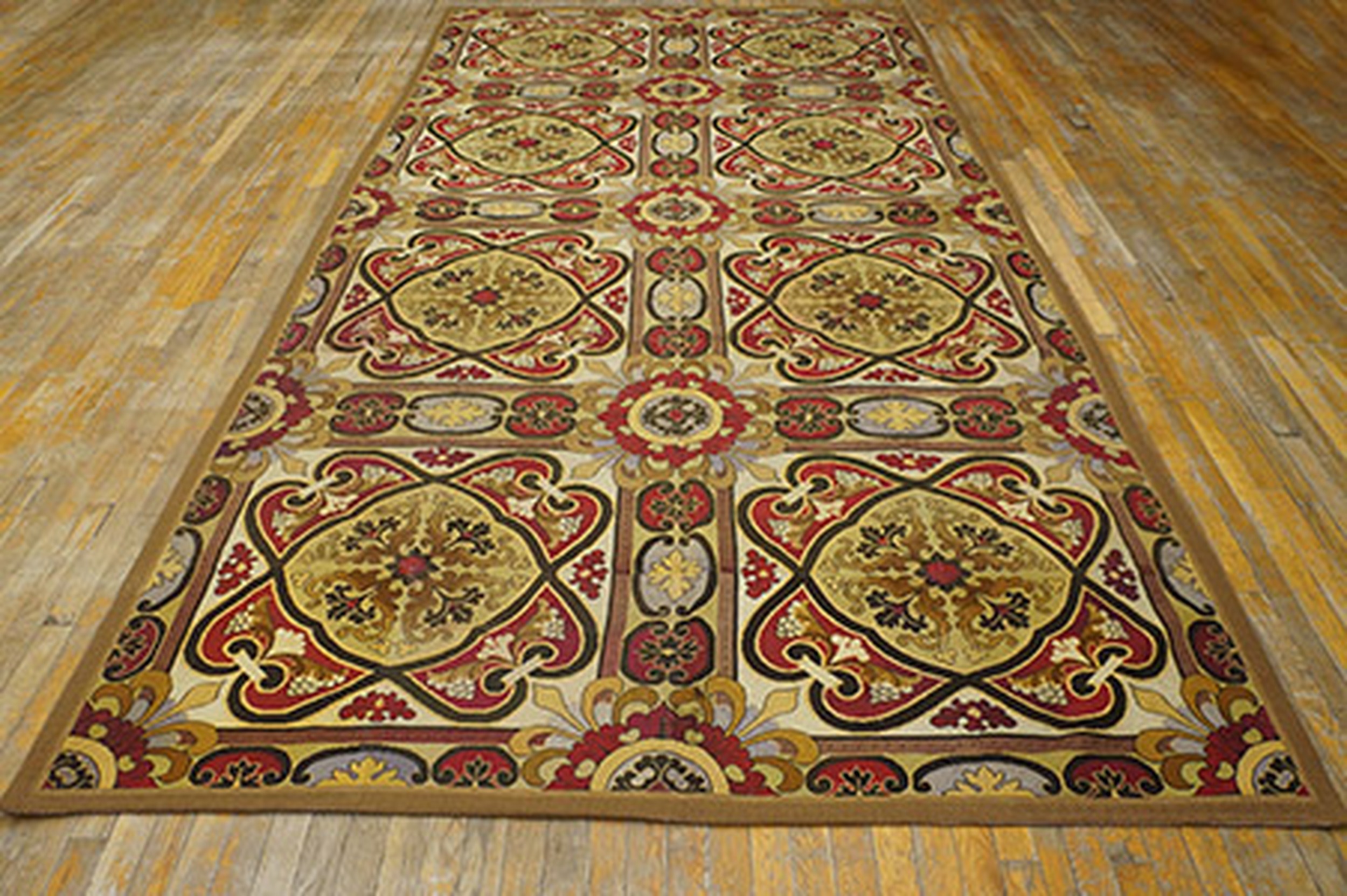
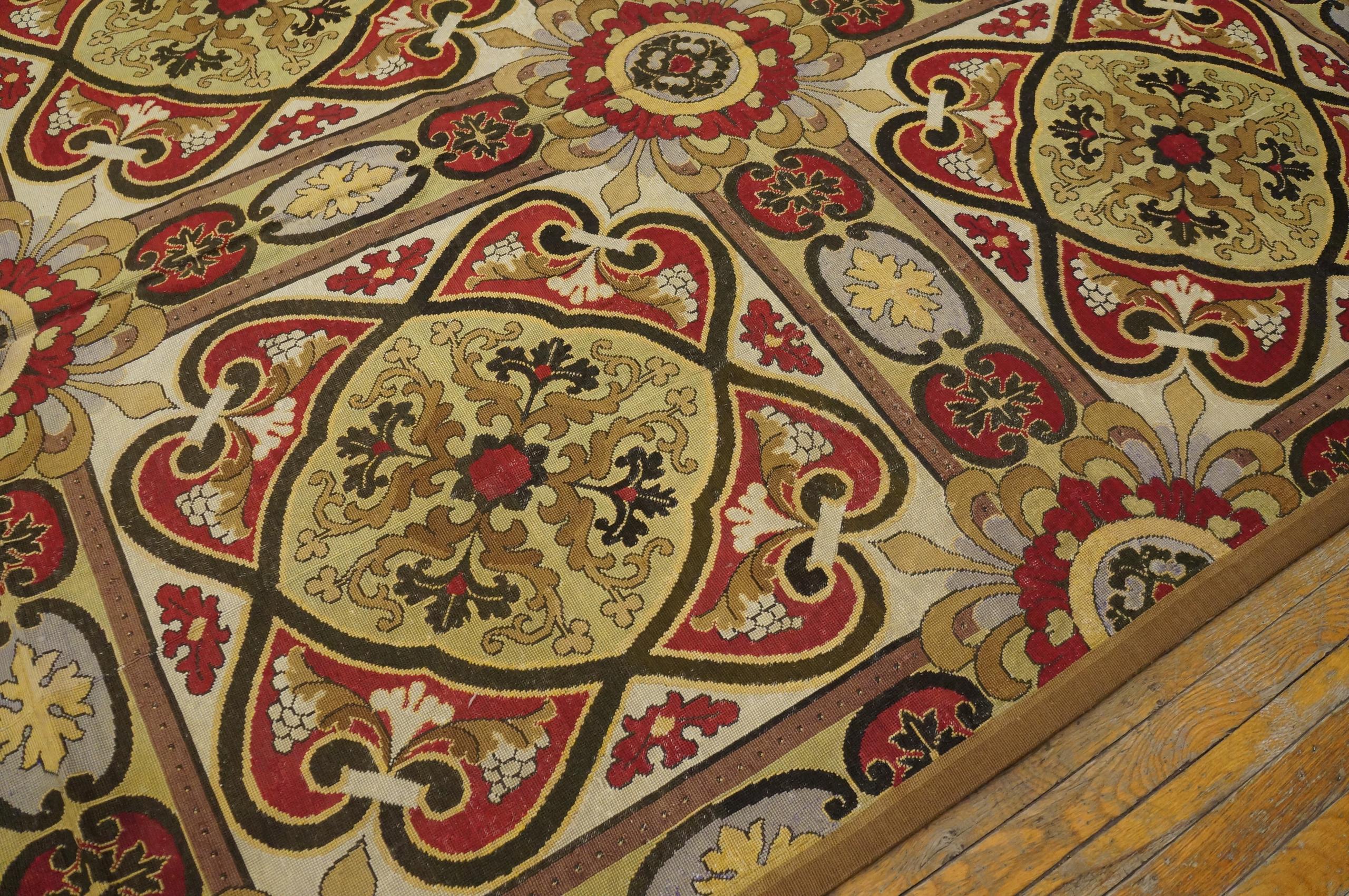
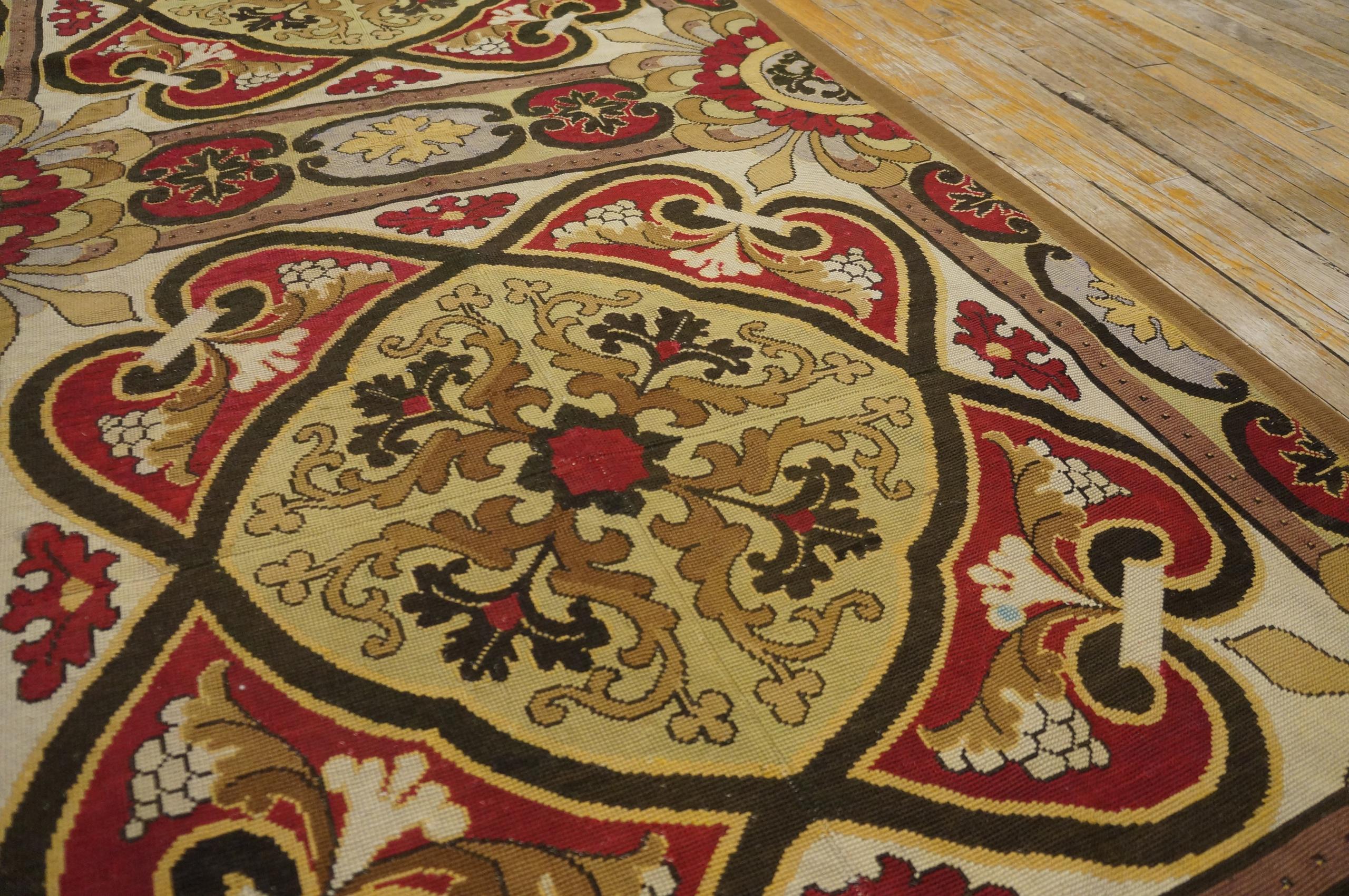
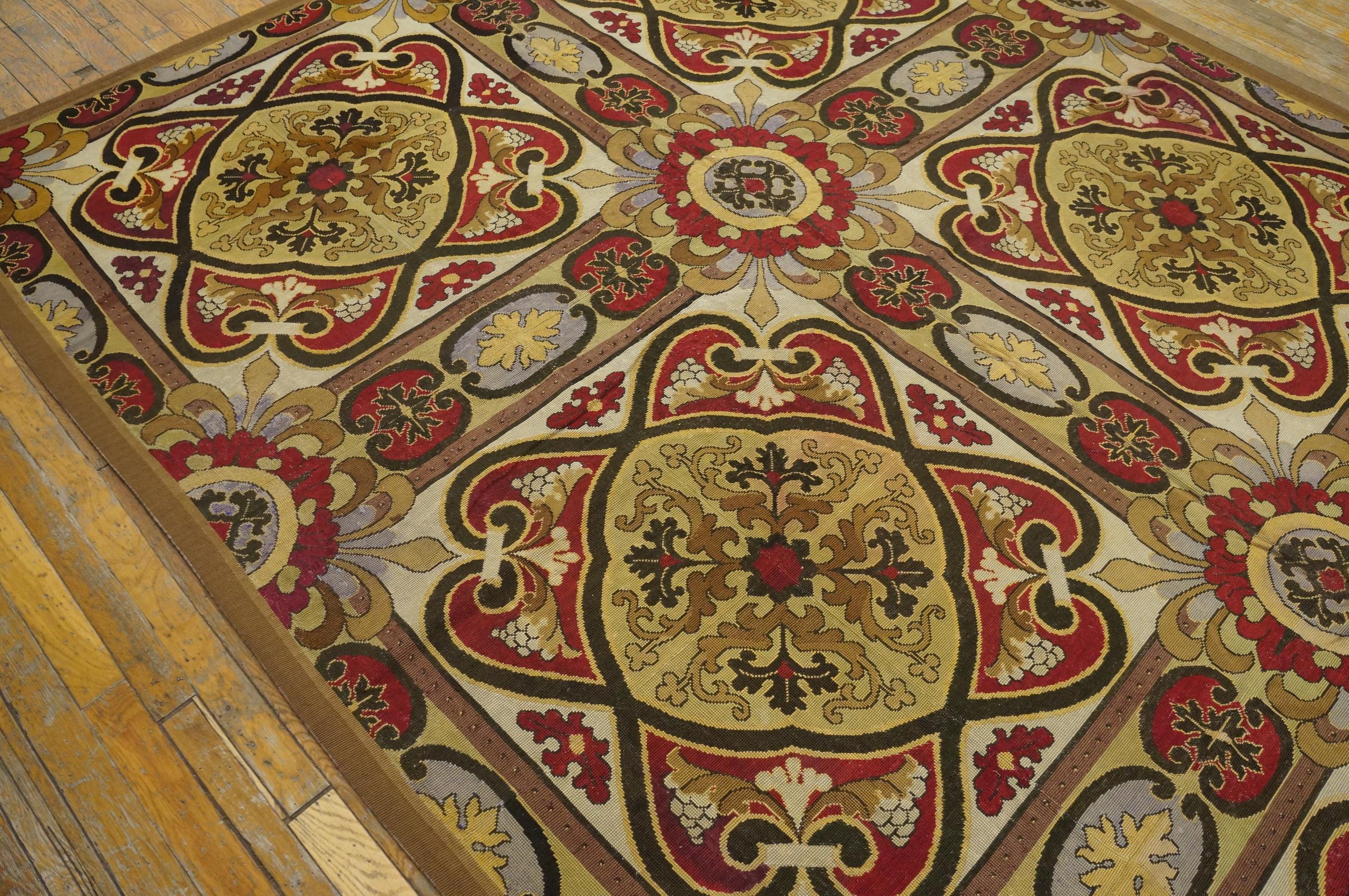
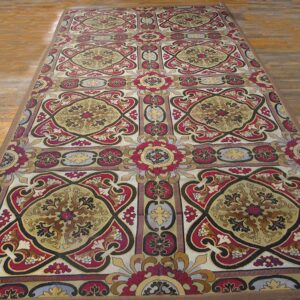
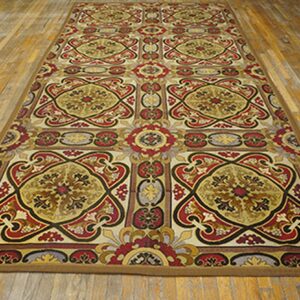
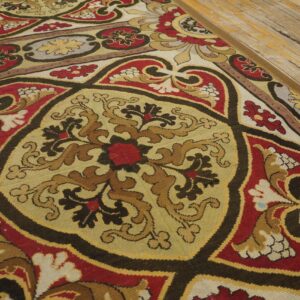
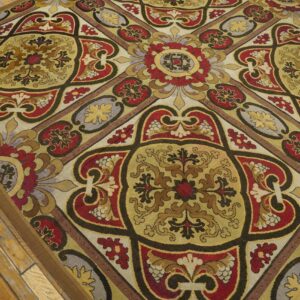
This nineteenth-century English carpet is a breathtaking exemplar of Victorian “High Style,” representing a period where the English aristocracy sought to bring the lushness of a formal botanical garden into the interior sanctuary of the home. Distinguishing itself from the more common colorful specimens, this specific antique Needlepoint carpet is a masterclass in monochromatic sophistication, executed in a rare and ethereal palette of Ivory, Cream, and soft Taupe.
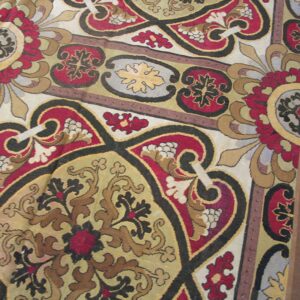
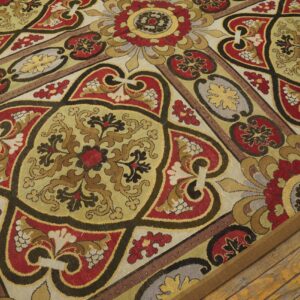
The composition is a virtuoso display of the European Floral tradition. The design features a sprawling, “painterly” arrangement of oversized roses, scrolling acanthus leaves, and delicate vine-work. Unlike the rigid, mathematical symmetry of Oriental weaving, this needlepoint embraces a soft, organic fluidity. The absence of bold reds or blues allows the “sculptural” nature of the needlework to take center stage; the subtle tonal shifts in the cream and taupe yarns create a three-dimensional effect, giving the blossoms a lifelike, “embossed” quality that seems to rise from the ivory field.
The palette is the defining feature of this “Designer” piece. By strictly adhering to neutral earth tones, the artisan has created a textile that feels remarkably contemporary despite its antique pedigree. The “ivory-on-cream” aesthetic was historically a marker of extreme luxury, as these pale fibers required the highest quality of wool and impeccable care during the hand-stitching process. Over the last century, these natural wool tones have developed a soft, matte patina that exudes a sense of “Quiet Luxury” and historical gravity.
Technically, an English Needlepoint of this caliber is prized for its flat, architectural handle. Because it is hand-stitched on a canvas foundation rather than knotted on a loom, it lacks a heavy pile, allowing it to sit flush with the floor. This makes it an ideal choice for rooms with fine antique furniture or heavy doors, providing a sophisticated foundation that doesn’t compete with the room’s architecture. Each stitch is a testament to the thousands of hours of manual labor required to complete a work of this scale.
The borders act as a disciplined, regal frame, featuring a repeating floral garland or a classic “ribbon” motif that anchors the exuberant energy of the central field. To possess antique rugs like this ivory-and-cream needlepoint is to hold a monument to a vanished era of handmade elegance. It is a work that bridges the gap between textile and fine art—a serene, hand-wrought sanctuary that transforms a room into a space of architectural clarity and timeless, feminine grace.