
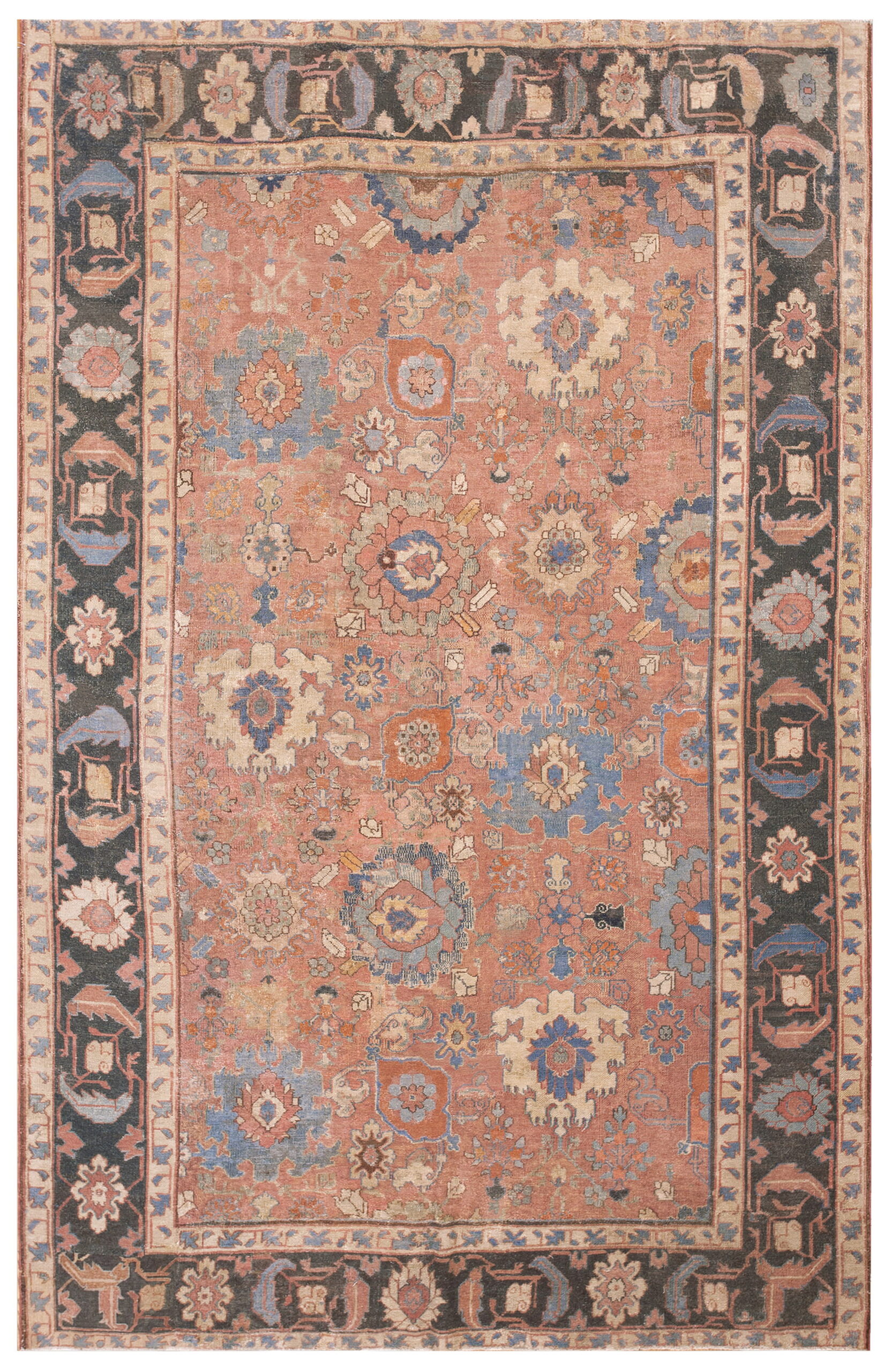
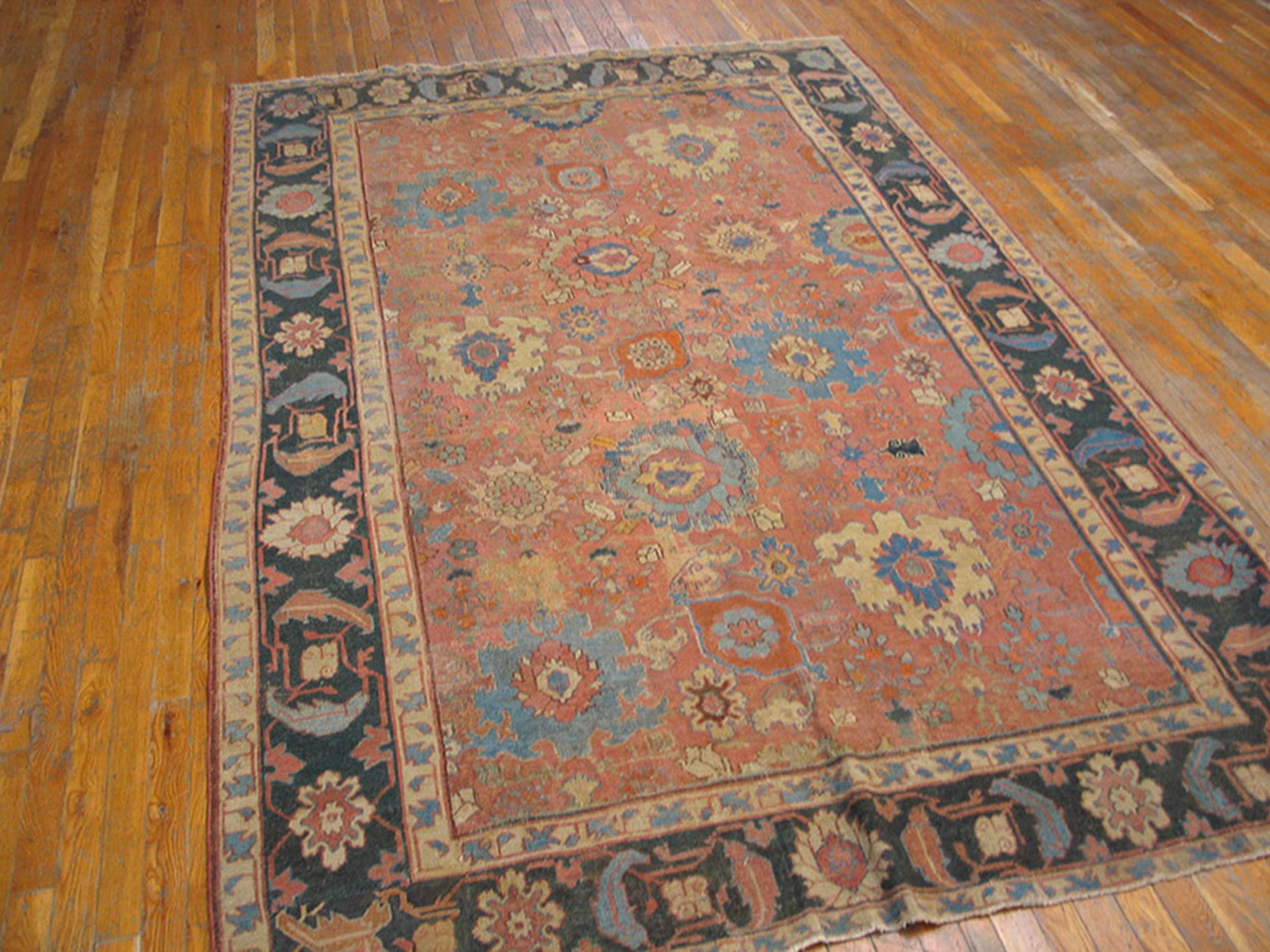
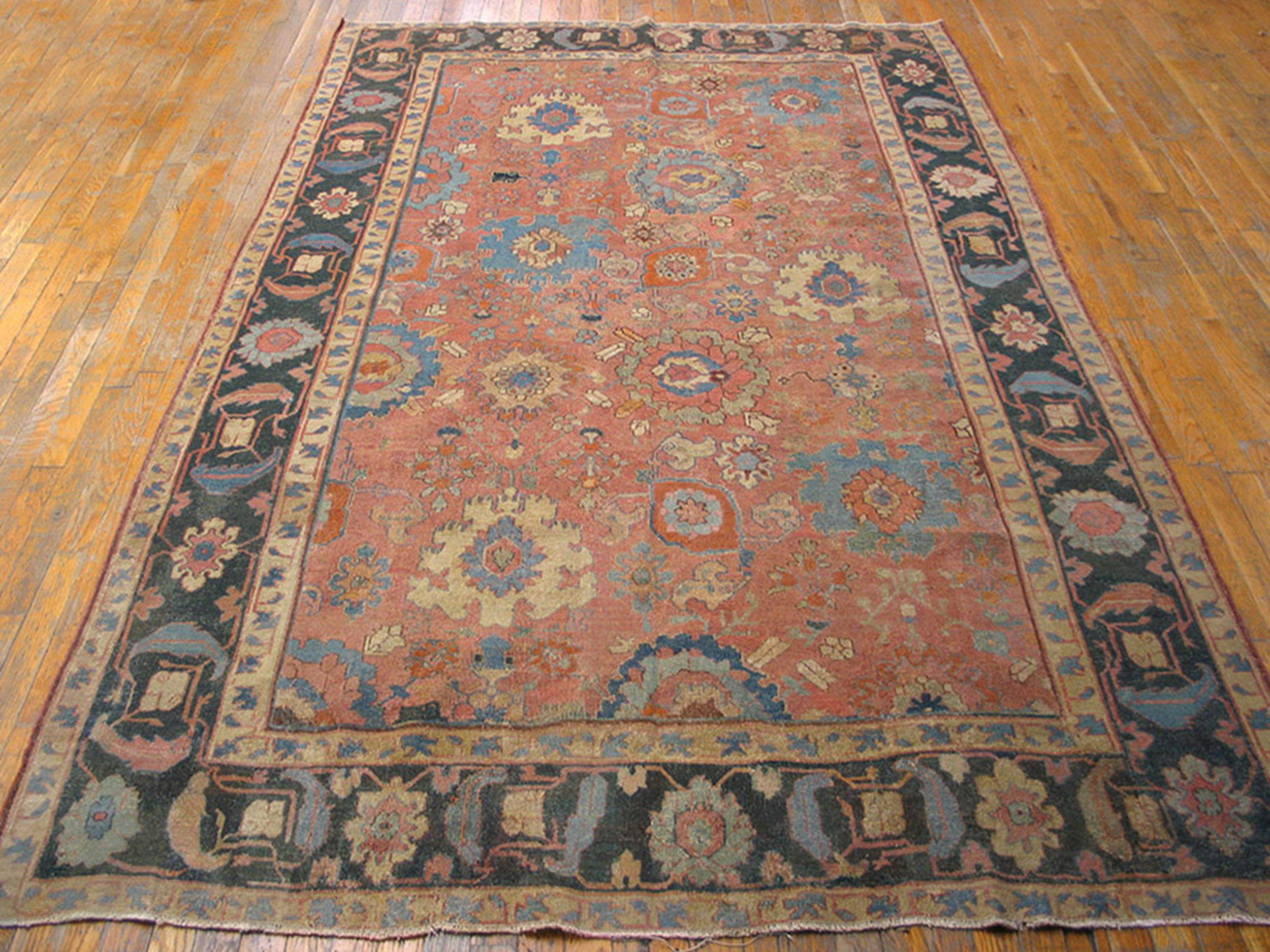
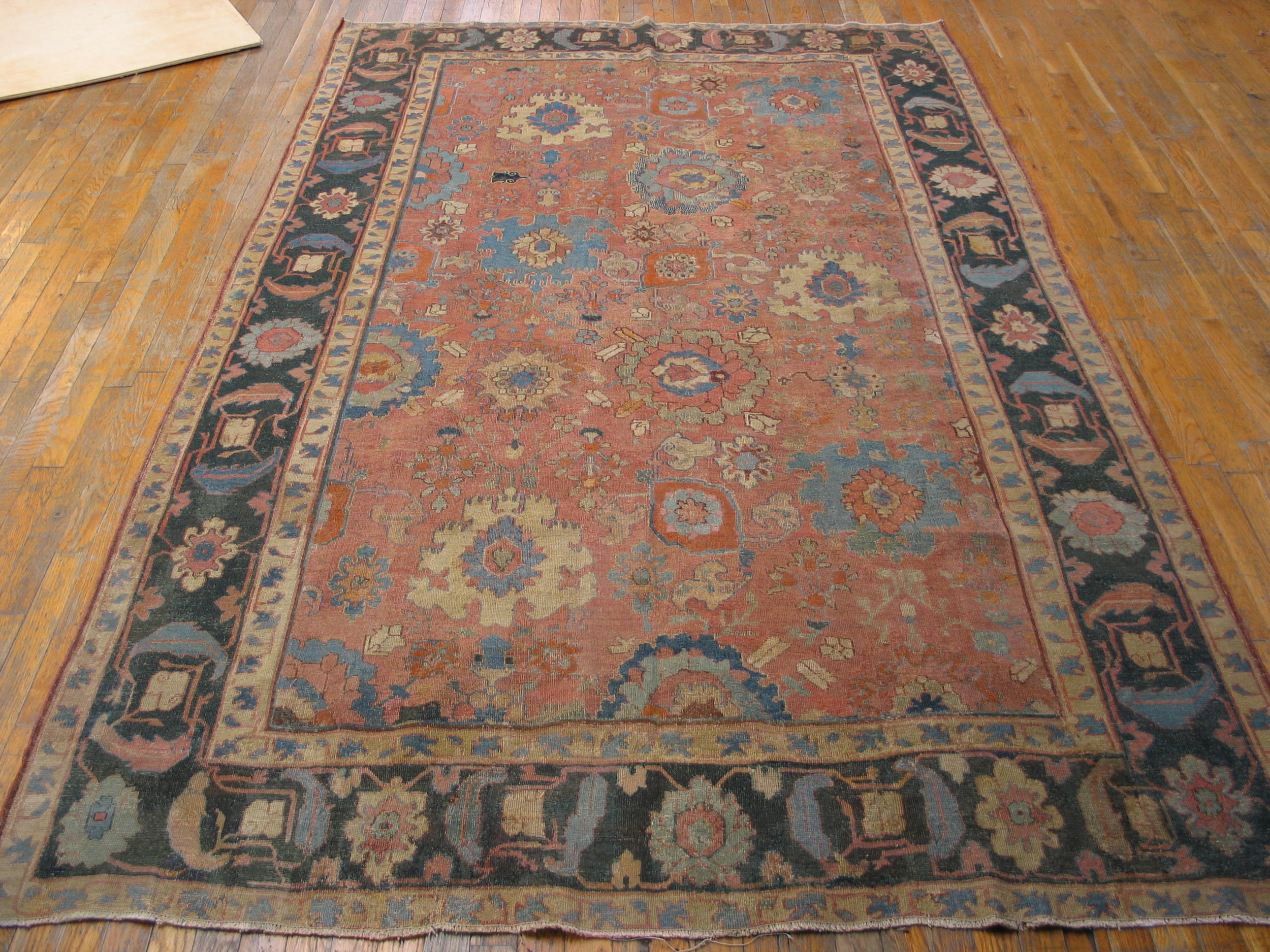
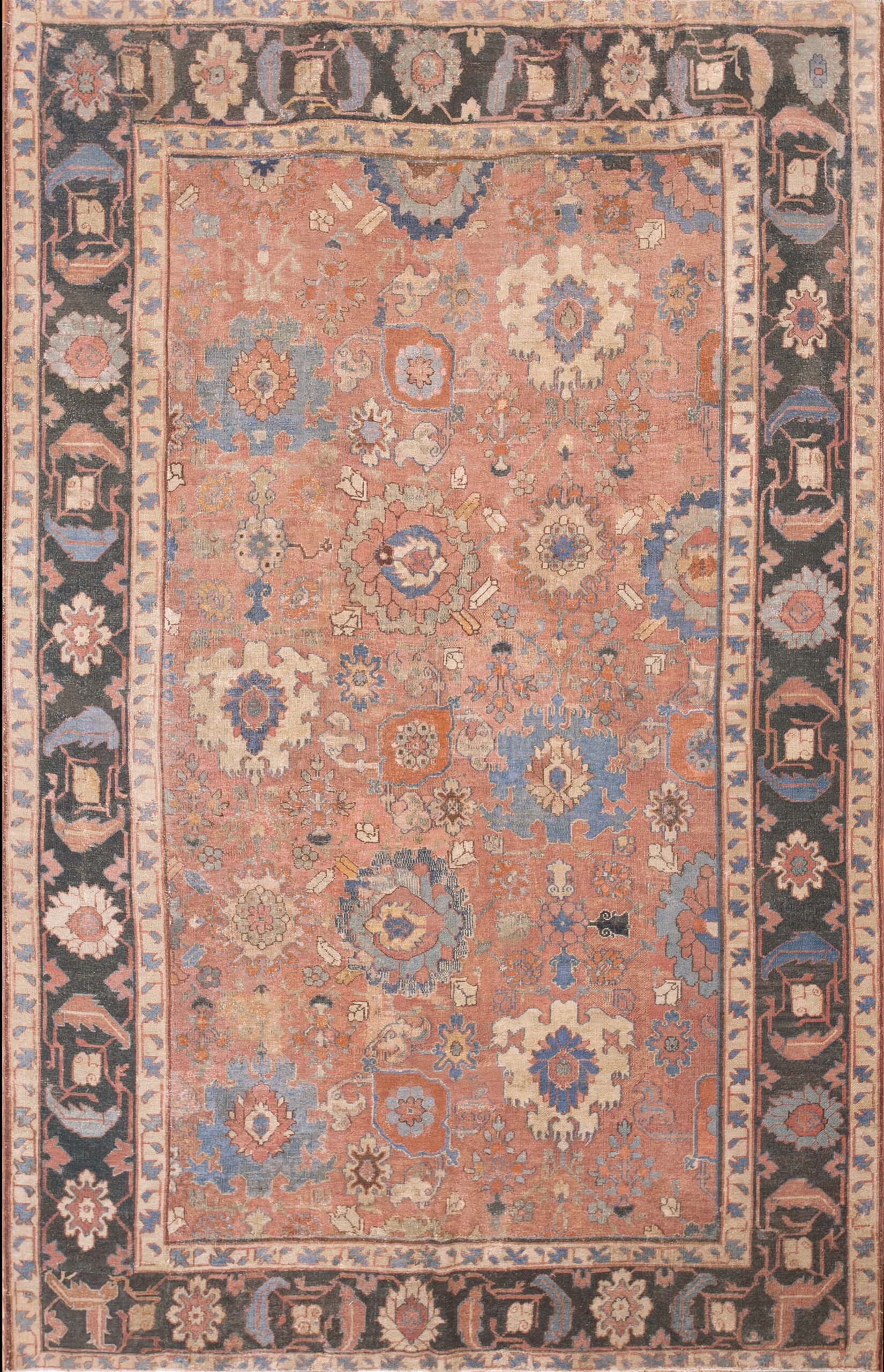
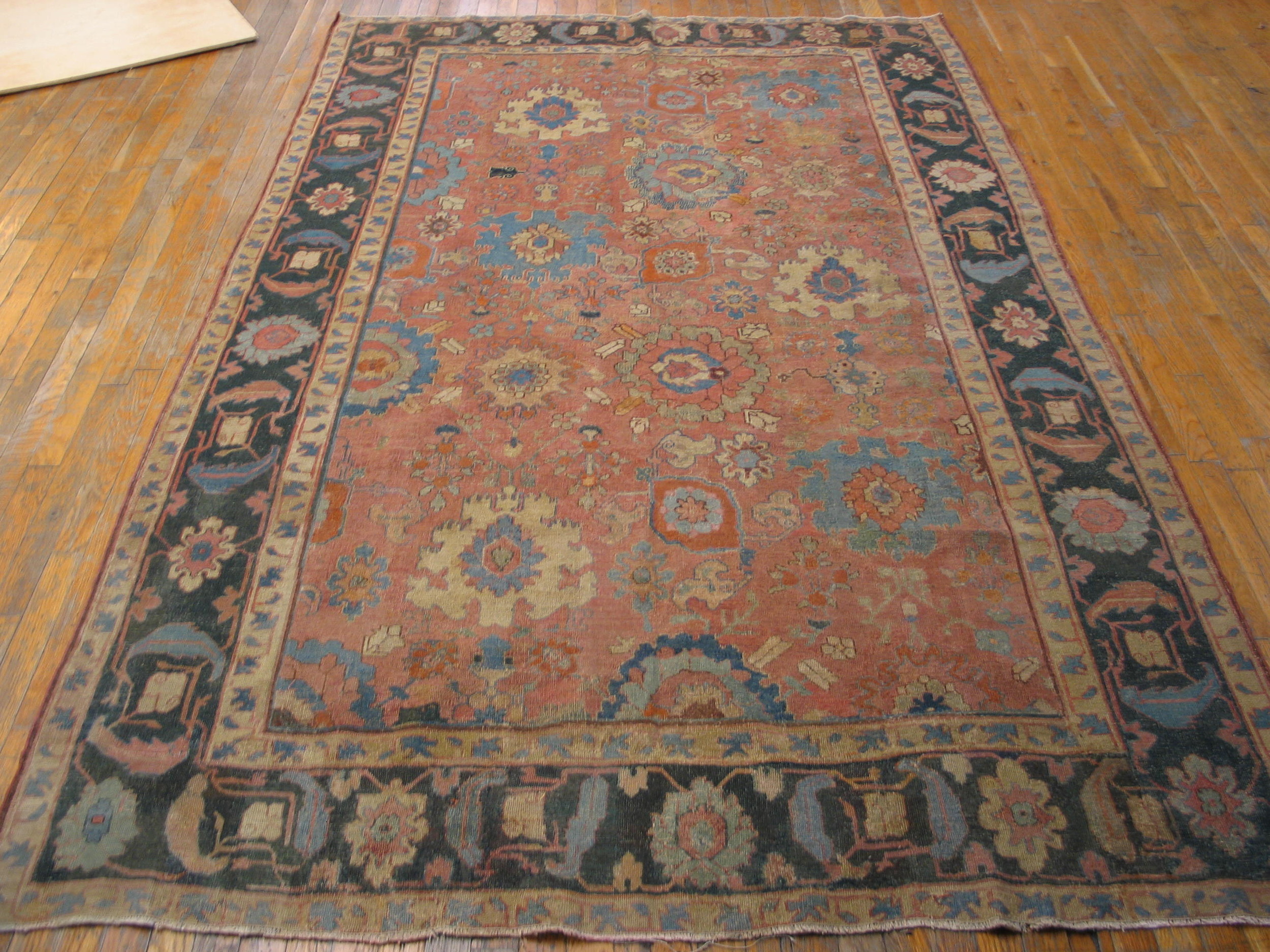
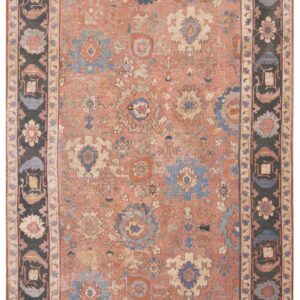
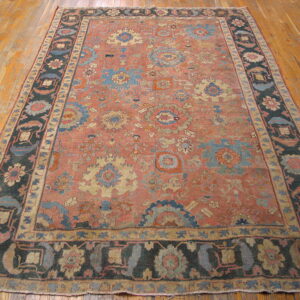
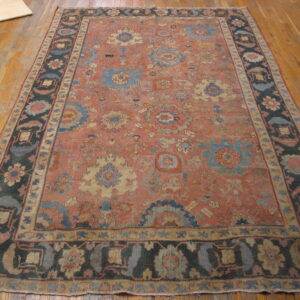
Important 18th-Century Northeast Persian Khorasan Carpet, Circa 1750, Origin: Northeast Persia (Khorasan Province)
Style: Early “Harshang” (Crab) Palmette Composition
Historical Significance
This rare and early carpet dates to the mid-18th century, a period of significant artistic transition in Northeast Persia. Unlike the denser, smaller-scale patterns of the 19th-century “carpet boom,” this piece retains the monumental scale and spaciousness typical of pre-industrial Khorasan weaving. It represents a bridge between the classical floral traditions of the Safavid era and the powerful, rectilinear “village-inflected” aesthetic that emerged in the 1700s.
Design & Aesthetic
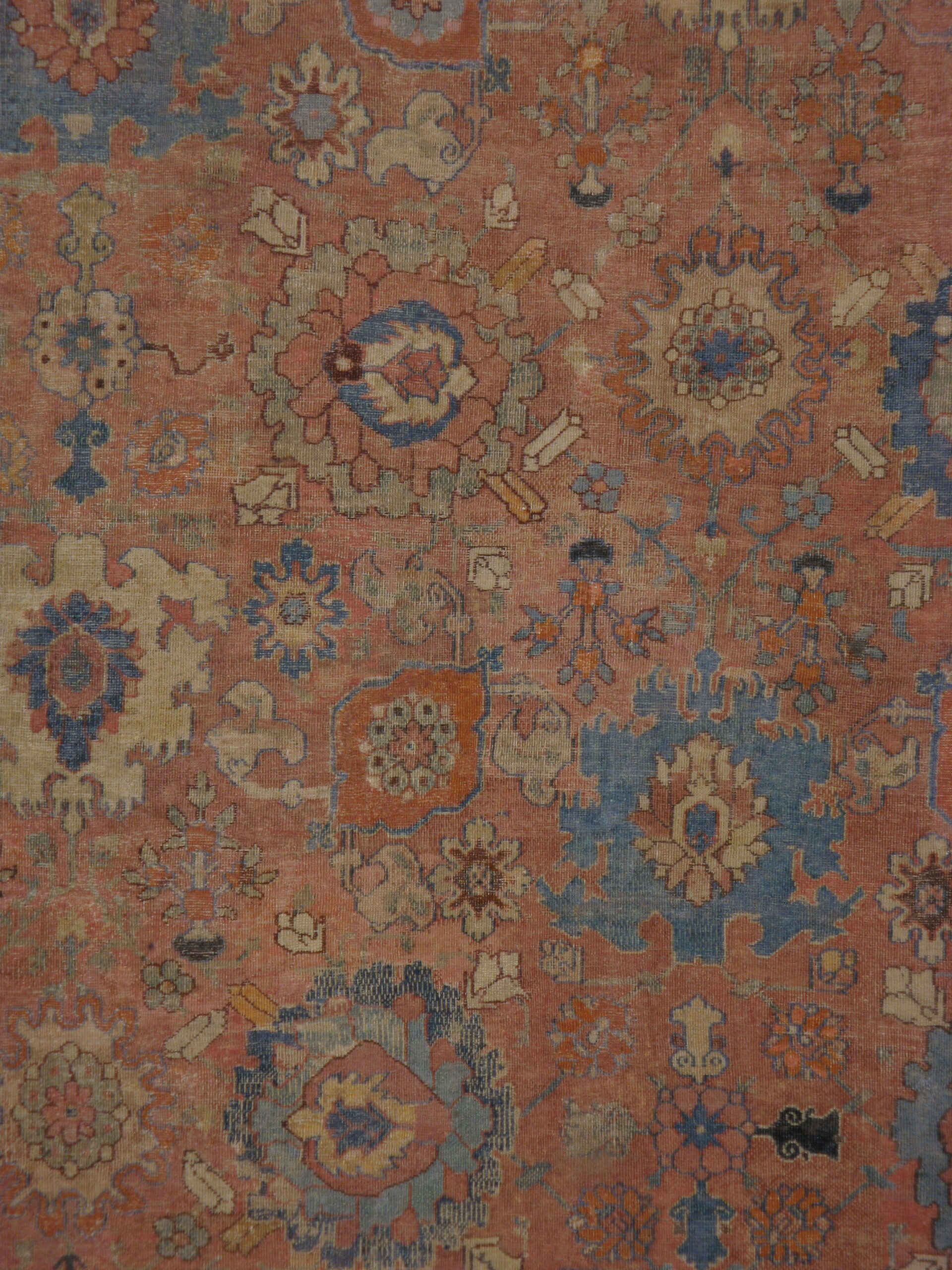
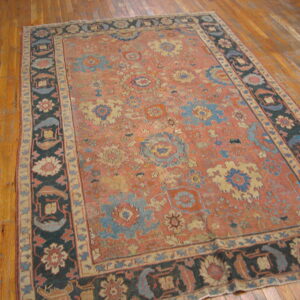
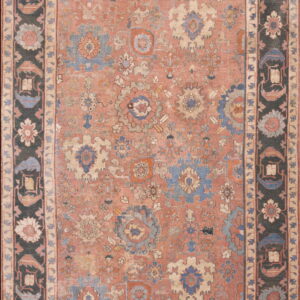
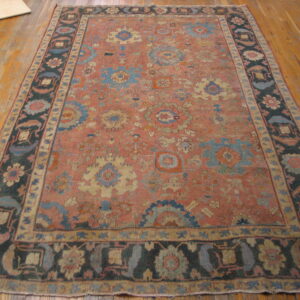
The Field: A grand, open-spaced layout featuring oversized, stylized floral heads and geometric palmettes. This is a classic iteration of the “Harshang” (Crab) design, where every motif is given “room to breathe”—a luxury of space rarely seen in pieces woven after 1800.
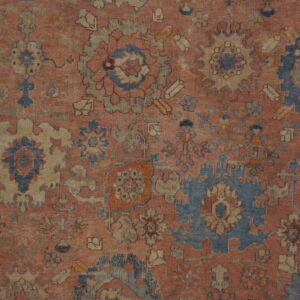
The Palette: The carpet showcases the sophisticated color theory of 18th-century Northeast Persia. The field is a rich, mellowed coral, providing a warm contrast to the high-contrast azure, teal, and charcoal motifs. The ivory accents are used sparingly to “light” the design from within.
The Borders: The primary border features a robust, continuous “Leaf and Palmette” scroll on a deep navy ground. The borders are flanked by thin, archaic guard stripes, a hallmark of the high-level workshop production of the mid-1700s.
Key Characteristics of the 1750 Era
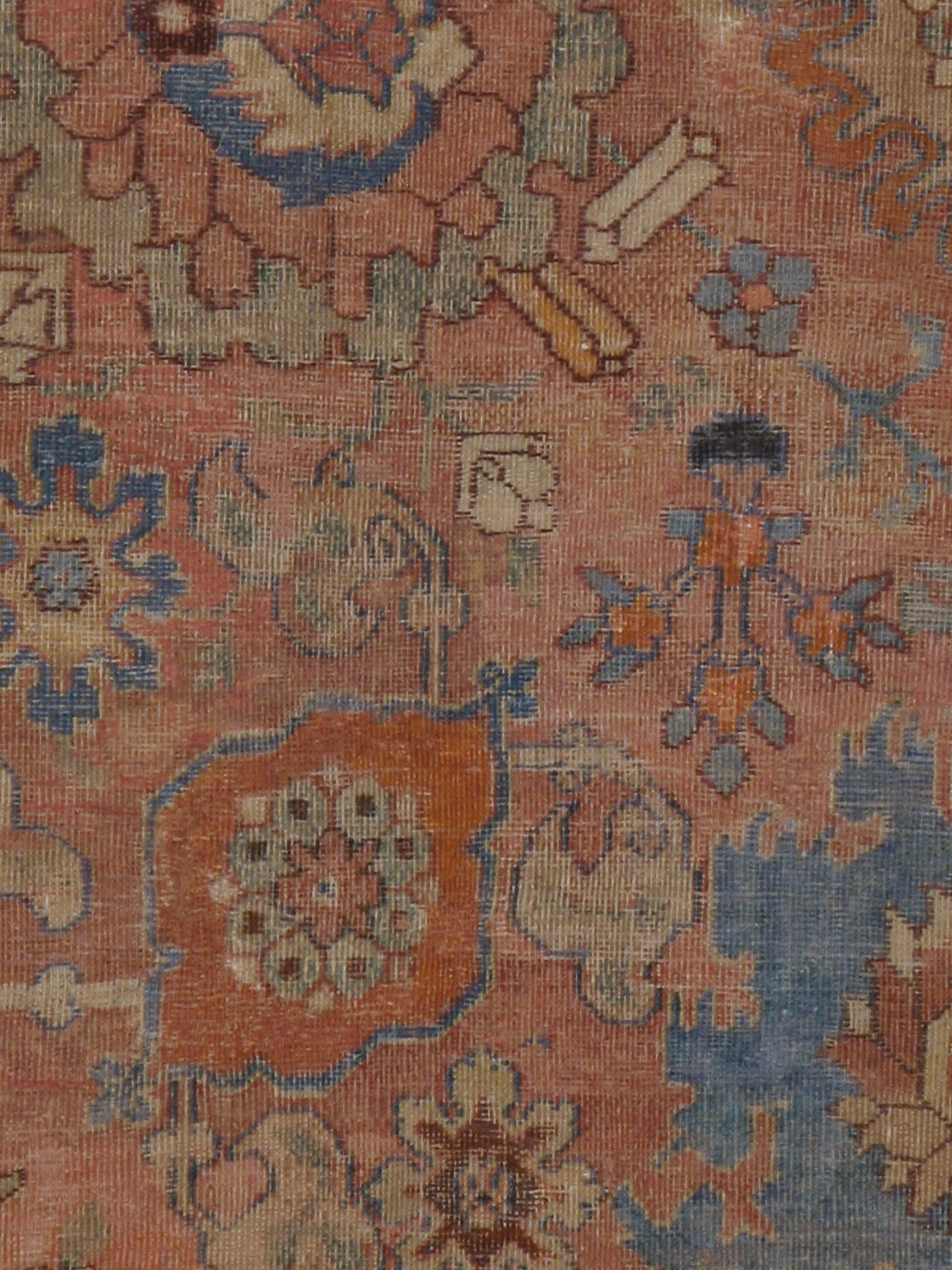
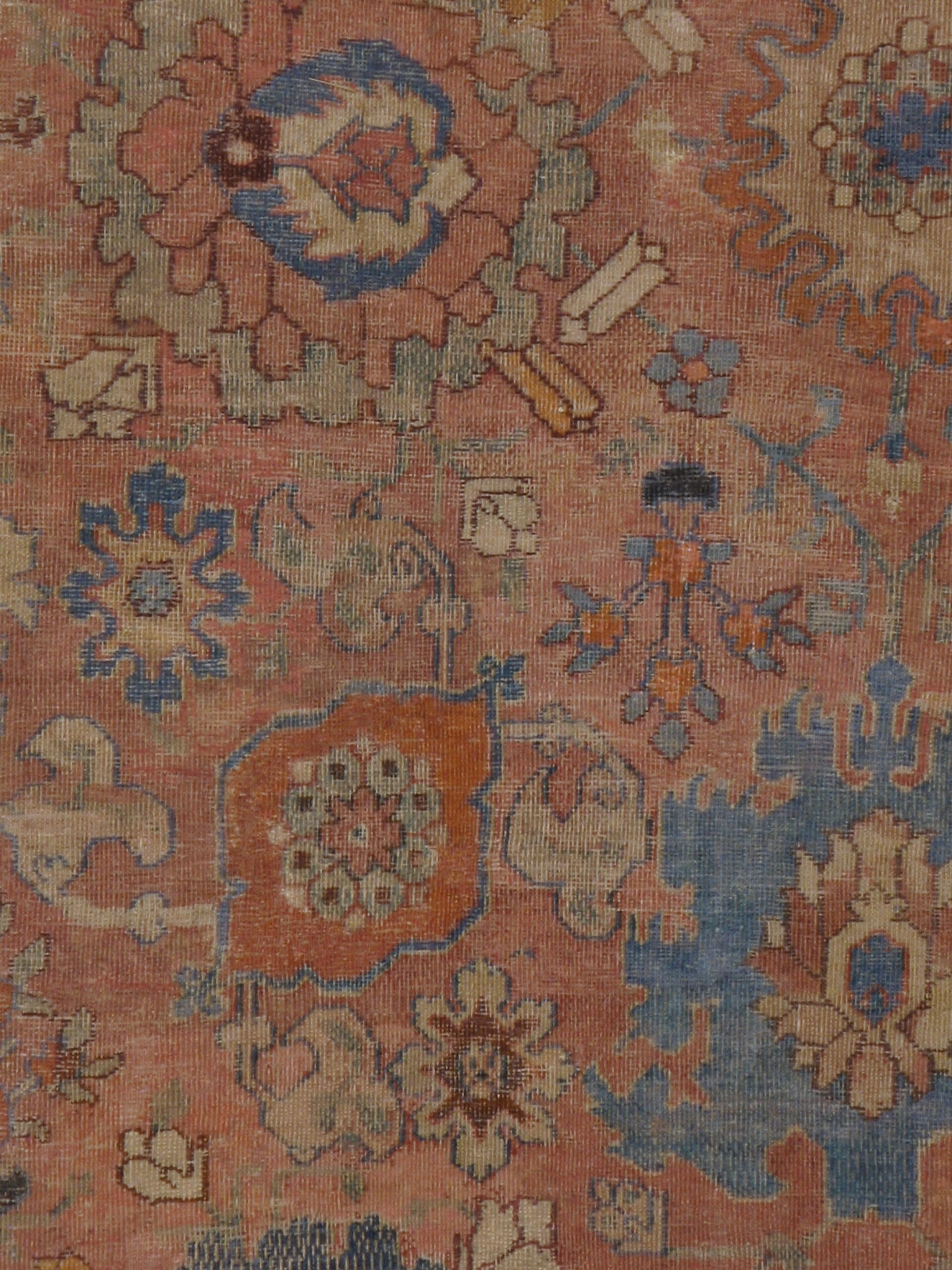
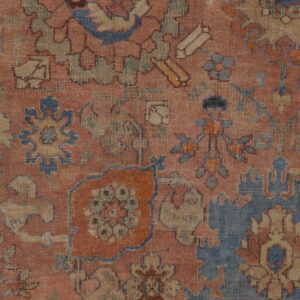
Archaic Drawing: The motifs are drawn with a raw, “rectilinear” strength. The geometric abstraction of the flowers suggests a weaver who was interpreting classical court designs with a bold, tribal-influenced hand.
Natural Dye Quality: The colors are derived entirely from ancient vegetable and insect dye recipes. The subtle “abrash” (natural tonal shifting) across the field is a testament to the hand-spun wool and small-batch dyeing processes of the mid-18th century, which beautifully preserve the depth of the coral tones.
Supple Handle: Typical of early Khorasan carpets, the wool is exceptionally soft and luminous, having developed a velvet-like patina over nearly three centuries.
Collector’s Note
Carpets of this age and geographic origin are increasingly scarce. The combination of its mid-18th-century provenance and its highly desirable “all-over” geometric layout makes this a cornerstone piece for a connoisseur of early Persian textiles. It is a testament to a time when carpets were woven with a focus on artistic proportion rather than commercial repetition.