
Introduction to Houndstooth Rugs
Discover our curated range of modern houndstooth design rugs and elevate your space.
What Is Houndstooth in Rug Design?
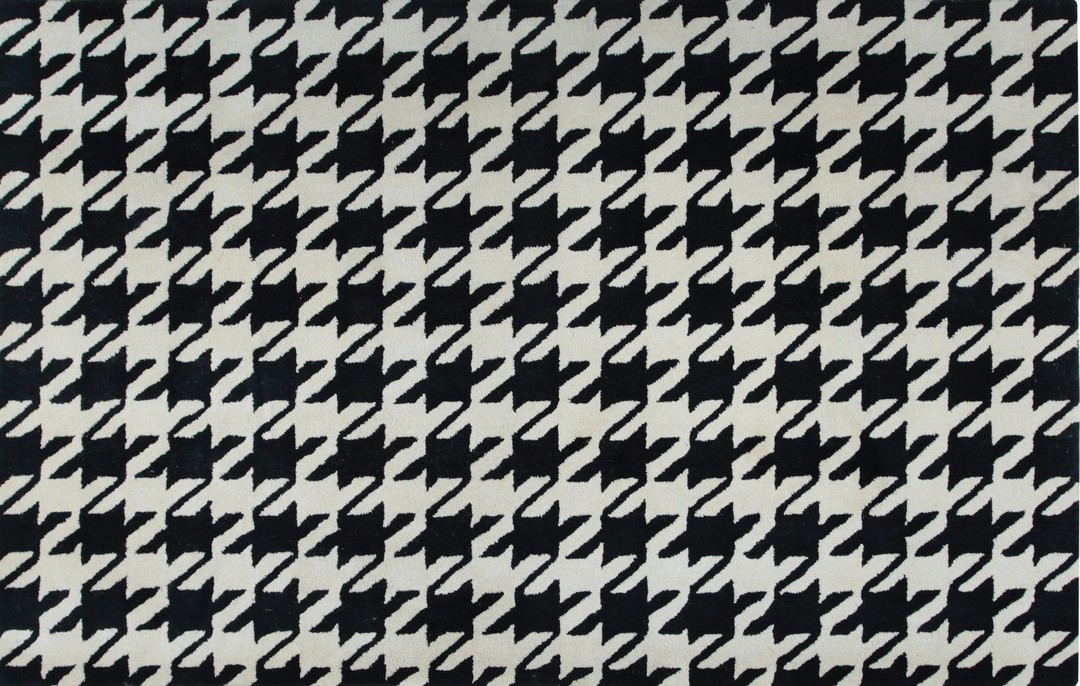
A houndstooth rug is defined by its sharp, two-tone pattern made of broken checks that resemble the jagged outline of a dog’s tooth. Unlike the simple checkerboard, the design creates an optical effect of movement with its slanted edges and alternating contrast. When woven into a rug, the motif becomes both geometric and organic, producing a bold texture that can stand out as a centerpiece or act as a grounding element in modern and traditional interiors alike. The pattern’s adaptability in size and scale means it can be woven into everything from subtle neutral carpets to dramatic oversized statement rugs.
Name, Etymology & Synonyms
The name “houndstooth” comes from the canine reference: the uneven edges of each check look like the point of a tooth. The terminology varies across cultures and textile traditions:
- Dogtooth pattern – A term commonly used in the UK, particularly in tailoring, to describe a smaller-scale version of the design. — Why: It emphasizes the same jagged tooth-like structure but in more compact repetition.
- Pied-de-poule – French for “hen’s foot,” this version compares the pointed shape to a bird’s footprint. — Why: It reveals how different cultures described the same visual cue through familiar imagery.
- Shepherd’s check – A Scottish reference tied to rural weaving traditions. — Why: It was historically worn by shepherds, and the pattern’s broken checks camouflaged dirt and wear in outdoor settings.
These synonyms highlight the universality of the motif’s recognition, each culture naming it after everyday animal imagery that resonated locally.
Historical Origins & Geographic Roots
The houndstooth origin story stretches back further than many expect. Archaeological evidence shows that versions of the broken check pattern were woven into wool textiles in Hallstatt, Austria during the 8th century BCE, making it one of the oldest documented geometric motifs in Europe. Swedish Iron Age textiles also show comparable designs, proving its broad northern European presence. Despite these early appearances, the design is most strongly tied to the Scottish Lowlands, where it became part of practical rural life. Known as shepherd’s check, the pattern was woven in coarse wool and used for cloaks and blankets. Its dual-tone, broken check structure made it excellent at concealing dirt, an essential feature for garments and coverings exposed to the rugged Scottish countryside. From these humble beginnings, the motif carried forward into fashion, upholstery, and eventually rug design.
Tradition and Practicality Behind Shepherd’s Check
The term shepherd’s check is more than just a name—it reflects the practical use of the pattern in Scotland’s pastoral communities. Shepherds wore heavy wool cloaks patterned with houndstooth not only for warmth but also for function. The irregularity of the motif helped disguise stains, dust, and weathering, extending the life of the textile. What began as a matter of utility eventually grew into an enduring symbol of Scottish craft, later transformed into high fashion by European designers and reinterpreted in modern rug weaving. In rugs today, this same duality—functionality paired with striking design—remains at the heart of the houndstooth’s appeal. It is instantly recognizable, steeped in ancient and rural tradition, and continues to evolve as a timeless motif in global design.
Visual & Technical Design Characteristics
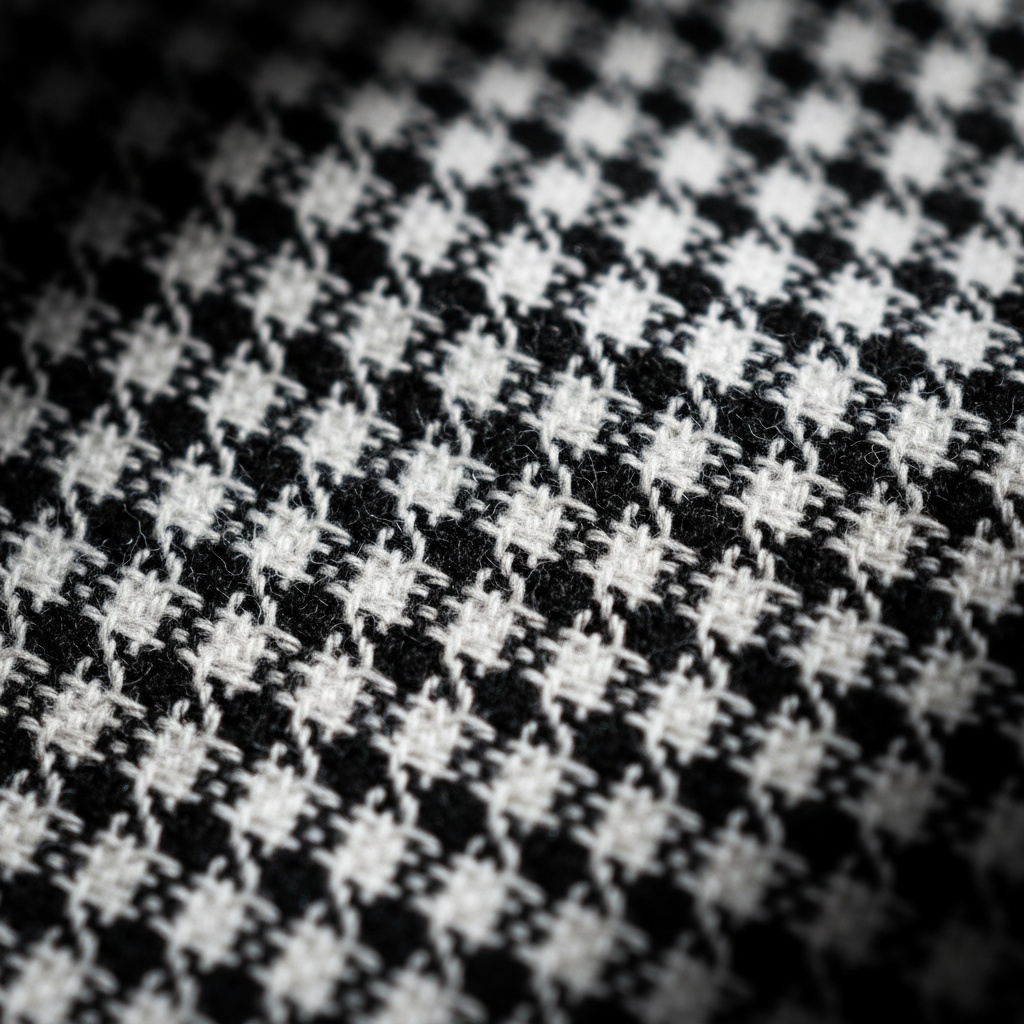
Macro view of the distinct interlocking geometric weave.
Motif Structure & Optical Qualities
At its core, the houndstooth motif is defined by its jagged, four-pointed structure, often called a “broken check.” Unlike simple squares, each unit of the design extends into sharp notches that resemble a dog’s tooth. Traditionally created through a two-over-two twill weave, the pattern alternates groups of four dark threads with four light threads in both warp and weft, resulting in its distinctive stepped outline. When repeated across a rug, this structure produces an optical illusion of motion, with checks appearing to ripple or shift depending on viewing angle and lighting. This dynamic, geometric energy is one reason the pattern has remained both functional and fashionable for centuries.
Colorways: Classic and Contemporary
The classic houndstooth rug almost always appears in black and white, a pairing that maximizes contrast and sharpens the broken check’s visibility. This timeless palette continues to dominate interiors, evoking both modern minimalism and traditional heritage. Yet, contemporary design has expanded the vocabulary of the motif. Designers experiment with bold duos such as navy-and-cream, red-and-black, or even neon pairings, while muted combinations like taupe-and-ivory or soft pastels lend a more understated effect. The adaptability of houndstooth ensures it can transition seamlessly from high-fashion interiors to casual, everyday spaces without losing its instantly recognizable identity.
Materials and Weave Construction
To identify an authentic houndstooth weave, one must look at both material and structure. The pattern was historically woven in wool, which provided crisp definition, natural resilience, and the ability to retain sharp contrast even after years of use. A houndstooth wool rug still offers superior durability and bold visual clarity today. Cotton versions bring a lighter, more breathable feel, while synthetics such as polypropylene or polyester are often chosen for affordability or outdoor use. These synthetics can successfully mimic traditional houndstooth but lack the tactile richness of wool. Weave construction also matters:
- Flatweave houndstooth rugs (such as kilims or dhurries) provide the sharpest, most graphic pattern because the twill or plain weave creates a reversible, tightly bound surface.
- Pile weaves (knotted, tufted, or machine-made) add plushness and comfort but can soften or blur the motif if the pile is too high. The balance between texture and clarity is central to how a rug will perform visually.
Scale, Pile Height & Pattern Clarity
The scale of a houndstooth design directly impacts how it is perceived. A small-scale dogtooth pattern produces a refined, tight visual field that almost reads as texture from afar. In contrast, large-scale versions deliver bold, graphic drama, often used in contemporary rug design. Pile height is another critical factor. A low pile or flatweave ensures a crisp houndstooth pattern, where each jagged edge is sharply defined. Higher pile heights introduce softness underfoot but can blur the edges, making the motif less distinct. For those seeking a strong geometric statement, a short pile or flatweave is ideal. For comfort and warmth, a medium to high pile works but with some sacrifice in clarity.
Material Durability and Longevity
Wool is not only traditional but also practical—it naturally resists crushing, enhances contrast, and stands up to heavy use, giving a houndstooth wool rug both durability and definition. Black-and-white wool rugs are relatively resistant to fading when made with high-quality dyes, though cheaper synthetics may lose their vibrancy more quickly under sunlight. Meanwhile, outdoor polypropylene houndstooth rugs offer weather resistance and easy maintenance, making them a modern solution for patios and high-traffic spaces. Together, these design characteristics—motif, colorways, materials, scale, and pile—explain why houndstooth remains such a versatile and enduring rug pattern, equally at home in rustic tradition and cutting-edge design.
Houndstooth in Rug-Making Traditions
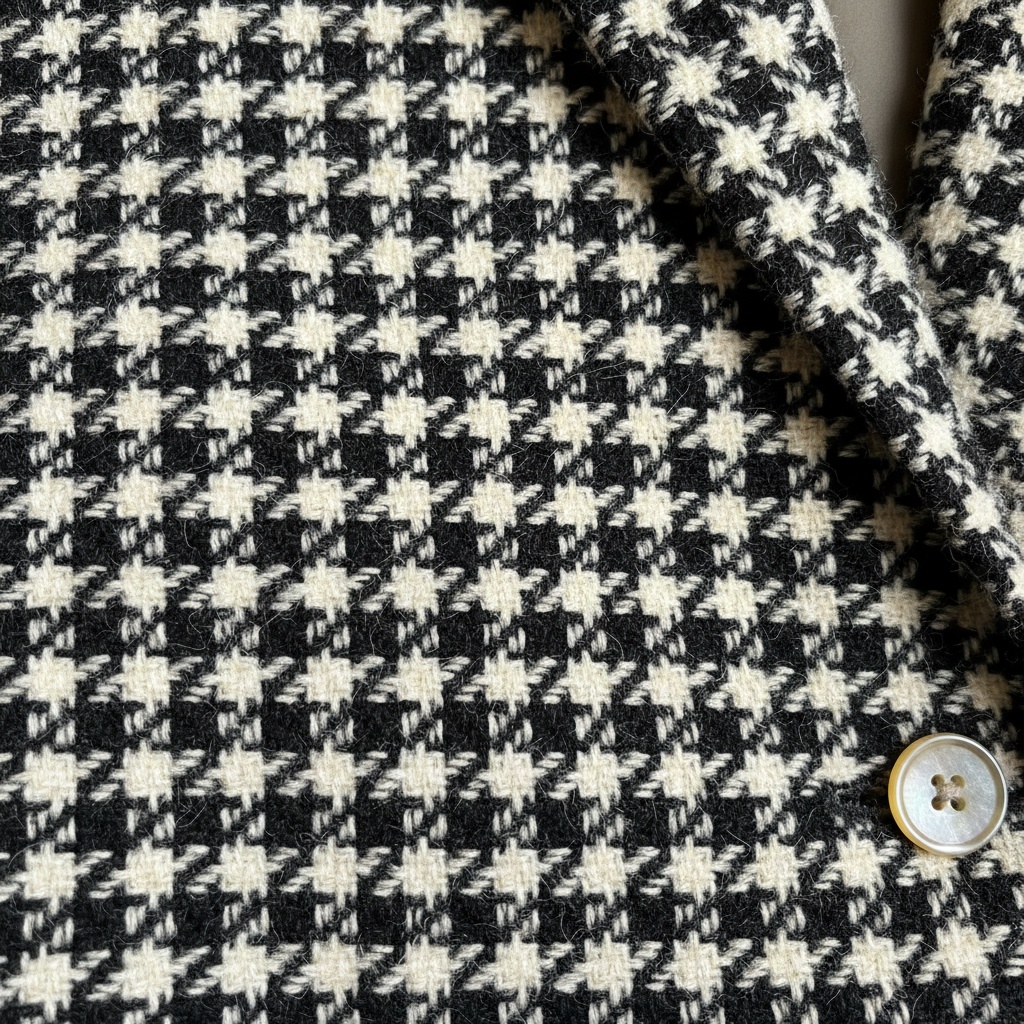
Classic houndstooth textile pattern detail.
Historical Evolution: From Shepherds to Fashion Icon
The houndstooth motif began as a shepherd’s check, woven into wool cloaks and blankets for rural Scots who valued its practicality for warmth and dirt-hiding qualities. For centuries it remained a countryside textile, until the mid-20th century, when fashion houses such as Dior and Chanel elevated the pattern into a symbol of modern elegance. From postwar tailoring to luxury interiors, houndstooth shifted from purely functional to a global style icon. Today, it is a staple of both fashion and rug design, instantly recognizable in everything from minimalist Scandinavian rooms to high-fashion home décor collections.
Flatweave vs. Pile: Texture and Feel
The question of how flatweave construction impacts houndstooth rug feel is central to understanding its design versatility. A flatweave houndstooth rug offers a thin, crisp texture that highlights the sharp geometry of the pattern. It is often reversible, making it a practical choice for high-traffic areas. By contrast, pile rugs introduce plushness and warmth but can soften the clarity of the jagged checks, especially if the pile height is long. Choosing between flatweave and pile depends on whether the priority is visual sharpness or underfoot comfort.
Identifying Authentic Houndstooth Weave
- Check for the broken check motif — Why: True houndstooth is defined by its jagged, four-pointed check, not simple squares.
- Look at thread groupings — Why: Authentic weaving alternates four dark and four light threads in warp and weft.
- Examine the weave style — Why: Traditional houndstooth comes from a two-over-two twill, producing a reversible diagonal structure.
- Consider scale and clarity — Why: Smaller dogtooth is precise; larger houndstooth is bold but must maintain jagged edges.
These details distinguish a genuine houndstooth rug from imitations with blurred or simplified checks.
Handwoven vs. Power-Loomed Houndstooth Rugs
- Handwoven houndstooth rug: Offers rich texture, slight irregularities, and cultural authenticity. — Why: Each piece reflects artisan skill and carries potential long-term value.
- Power-loomed houndstooth: Uniform, affordable, and widely available. — Why: Machine precision ensures consistency, making it accessible for everyday use.
Both have merit—handwoven for tradition and individuality, power-loomed for practicality and cost-effectiveness.
Outdoor & Modern Materials: Polypropylene, Nylon, and Beyond
The demand for adaptable floor coverings has led to outdoor houndstooth rugs made from polypropylene, nylon, and other synthetics. These versions are durable, weather-resistant, and easy to clean, making them ideal for patios or entryways. While they can mimic traditional houndstooth visually, they often lack the tactile depth of wool. Nylon adds strength and fade-resistance, while polypropylene delivers affordability and moisture resistance. When comparing synthetic vs wool houndstooth, wool remains the gold standard for richness, warmth, and long life, but synthetics provide functional value at a lower price tier. This spectrum of materials allows the motif to move seamlessly from rustic shepherd’s wear to high-fashion homes and outdoor spaces worldwide.
Cultural, Symbolic & Interior Design Relevance
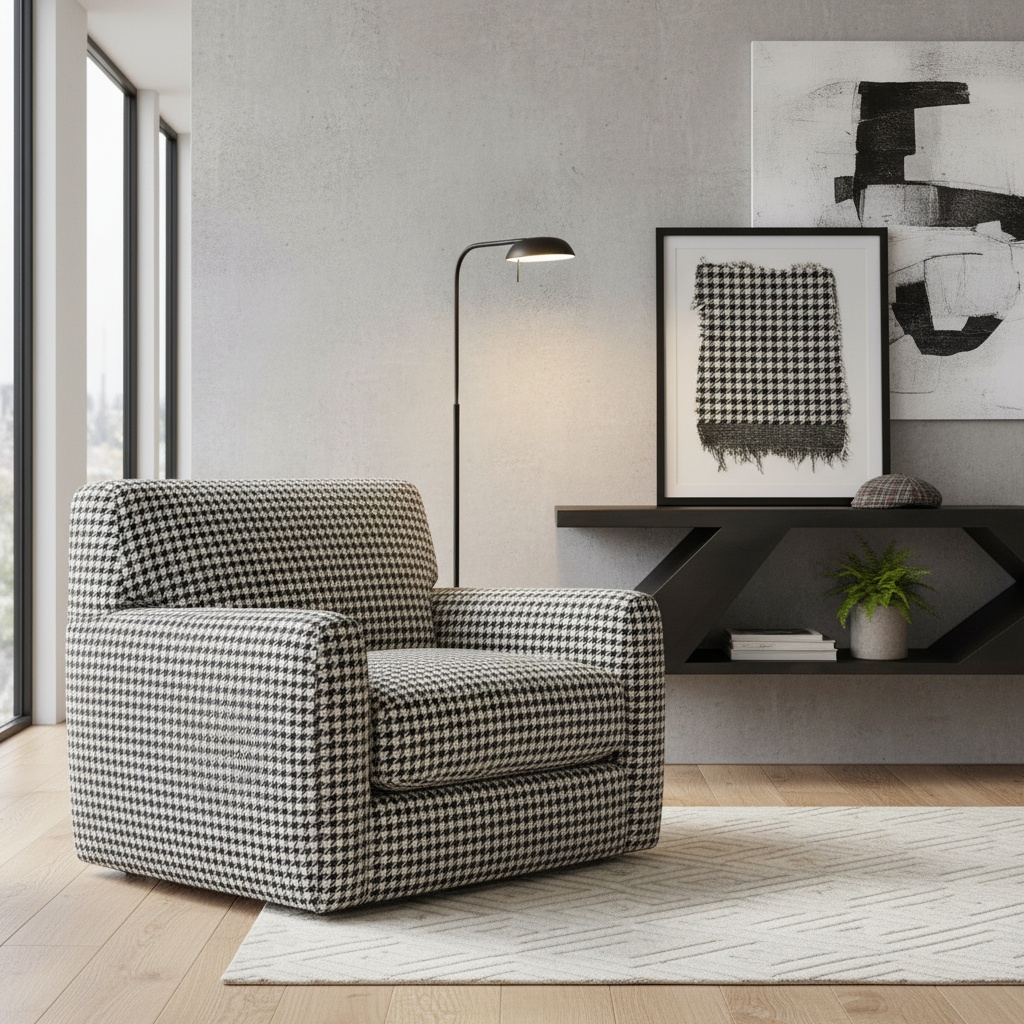
Houndstooth upholstery in modern interior design.
Houndstooth in Global and Local Contexts
Though rooted in the Scottish Lowlands as a utilitarian shepherd’s check, houndstooth quickly transcended its rural origins. In France, it became synonymous with couture after houses like Dior and Chanel elevated it in the mid-20th century. In the United States, the motif carries a distinctly American association with University of Alabama football coach Paul “Bear” Bryant, who was rarely seen without his signature houndstooth hat, cementing the design as a collegiate icon. In Asia, particularly in Japan and South Korea, houndstooth has experienced periodic revivals as a retro-modern fashion statement, blending Western chic with local trends. This global journey shows the motif’s adaptability to both heritage and modern identities.
Symbolism: From Rural Utility to Urban Chic
Houndstooth is more than a pattern—it is a symbol of transformation. As a shepherd’s check, it embodied durability, camouflage, and practicality. In the modern world, it represents confidence, refinement, and versatility. Its universal recognizability allows it to act as a design “bridge,” connecting rural history with urban sophistication, and tradition with forward-looking style. A houndstooth rug in today’s interiors communicates both grounding heritage and chic modernity.
Houndstooth in Contemporary Minimalist and Modern Interiors
Yes, houndstooth works beautifully in contemporary minimalist interiors. A minimalist houndstooth rug serves as a bold focal point against clean lines and restrained palettes, introducing graphic energy without overwhelming the space. In modern settings, oversized houndstooth patterns in neutral colors—black and white, cream and charcoal—offer striking contrast, while muted pastels or tonal combinations integrate subtly into serene environments. The adaptability of scale and color ensures the motif enhances both sleek minimalism and layered eclectic spaces.
Mixing Houndstooth with Other Geometric Rugs
- Stripes — Why: The linear rhythm of stripes complements the jagged checks, balancing order with energy.
- Chevrons — Why: Both share angular geometry, creating dynamic harmony when layered or paired.
- Solids or textured weaves — Why: Solid rugs ground houndstooth’s busy motif, preventing visual clutter.
- Checkered or plaid — Why: Combining houndstooth with larger, more open checks creates a playful yet structured contrast.
Designers often mix and match geometric rugs to layer depth and visual variety, with houndstooth serving as either the bold accent or the balancing anchor.
Color Innovations: Modernizing the Motif
- Navy and cream — Why: A softer alternative to black-and-white, perfect for coastal or transitional spaces.
- Red and white — Why: A vibrant, contemporary update that injects energy into interiors.
- Pastels (mint, blush, lavender) — Why: Trend-forward palettes that soften houndstooth for modern, youthful spaces.
- Monochrome tonal grays — Why: Keeps the motif subtle, aligning with minimalist design aesthetics.
These modern houndstooth colors expand the pattern’s reach, allowing it to match diverse design goals and interior moods.
Houndstooth in Design Forecasts: 2025 and Beyond
Industry reports indicate that the houndstooth interior trend is resurging strongly for 2025. Its mix of heritage appeal and adaptability to modern palettes positions it as a reliable design forecast element for the coming years. Designers are expected to highlight houndstooth as both a statement pattern and a versatile backdrop, appearing in rugs, upholstery, and accent décor. With its ability to be bold, subtle, classic, or experimental, the houndstooth motif is not just holding steady—it is regaining its place as a defining rug and interior design pattern for the next decade.
Buying, Collecting & Care
How to Shop for Houndstooth Rugs: Sizing, Materials, Budget
- Consider room size first — Why: A large living room benefits from a bold houndstooth area rug, while a smaller room may call for a scaled-down version to avoid overwhelming the space.
- Decide between wool vs synthetic houndstooth — Why: Wool provides luxury, warmth, and longevity, while synthetics (like polypropylene) offer stain resistance and affordability.
- Set a clear budget — Why: Prices range from inexpensive machine-made synthetics to costly bespoke houndstooth rugs; knowing your ceiling narrows the field.
Affordable vs. Luxury: Price Tiers Explained
- Synthetic flatweaves and machine-made options — Why: These affordable houndstooth area rugs start at budget-friendly prices and are widely available online and at big-box retailers.
- Mid-range wool rugs — Why: Offer better durability and a crisper pattern, making them a strong choice for long-term use.
- Luxury and bespoke houndstooth rug commissions — Why: Handwoven wool or silk versions may carry higher price tags but provide unmatched artistry, individuality, and collector value.
This distinction ensures buyers can match their purchase to both lifestyle and budget.
Are Vintage Houndstooth Rugs Collectible?
Yes—vintage houndstooth rugs hold collectible appeal, particularly mid-century examples connected to high fashion or design houses such as Chanel or Dior. Handwoven pieces or rugs with documented provenance can appreciate in value, offering not only decorative impact but also long-term significance for collectors.
Where to Buy Large and Affordable Houndstooth Rugs
Large, affordable houndstooth area rugs are widely available through online retailers, home décor platforms, and big-box chains. These options typically come in synthetic fibers like polypropylene, making them easy to maintain and cost-effective for families, rentals, or high-traffic areas. For those prioritizing both size and budget, mass-market retailers are the most practical source.
Should You Invest in Bespoke or Handwoven Houndstooth?
- Yes, if seeking artistry and uniqueness — Why: A bespoke houndstooth rug captures artisan skill and can become a focal point or heirloom.
- Yes, for collectors — Why: Handwoven houndstooth rug commissions often hold long-term value, particularly when crafted in wool.
- No, if budget and practicality matter most — Why: Machine-made synthetics deliver the look without the premium cost.
The choice hinges on whether the buyer values individuality and legacy or everyday functionality.
Care, Maintenance & Fading Concerns
Houndstooth rug care involves both preventative and active maintenance. Black-and-white versions are prone to fading if placed in direct sunlight; rotating the rug and using UV-protective window treatments can help preserve vibrancy. Wool rugs should be vacuumed gently and cleaned professionally to maintain their natural resilience, while synthetics can often be spot-cleaned at home. Longevity tips include using rug pads to reduce wear, rotating regularly, and avoiding prolonged moisture exposure. By recognizing the differences between wool vs synthetic houndstooth, shoppers can make informed choices that balance style, budget, and durability—whether investing in a luxury collectible or choosing an affordable houndstooth area rug for everyday living.
Expert & Designer Insights
Designer Strategies: Incorporating Houndstooth in Rooms
- Use as a bold focal point — Why: A styling houndstooth rug anchors a space with its jagged geometry, instantly drawing the eye and adding character.
- Pair with neutrals — Why: The strong black-and-white motif balances clean interiors, preventing them from feeling sterile.
- Layer with softer textures — Why: Designers often combine houndstooth with wool throws, linen upholstery, or solid rugs to temper its boldness.
- Mix with other geometrics — Why: Stripes, chevrons, or plaids harmonize with houndstooth’s angular rhythm, creating layered depth without chaos.
These designer houndstooth tips emphasize the versatility of the motif, whether as centerpiece or accent.
Wool vs. Synthetic: Durability, Texture, and Longevity
- Wool houndstooth durability — Why: Wool fibers naturally resist crushing, retain sharp contrasts, and provide warmth, making them ideal for heirloom-quality rugs.
- Synthetic houndstooth rugs — Why: Polypropylene or nylon versions resist stains and weather, delivering affordability and practicality for everyday or outdoor use.
- Hybrid blends — Why: Some designers choose wool-synthetic mixes to balance cost with tactile depth, offering mid-tier durability and softness.
Understanding wool vs. synthetic houndstooth helps buyers align investment with lifestyle.
Pile Height & Pattern Clarity: What to Know
- Low pile or flatweave — Why: Best for pile height pattern clarity, ensuring each jagged edge stays crisp and defined.
- Medium pile — Why: Adds comfort while maintaining reasonable definition, striking a balance for living rooms and bedrooms.
- High pile — Why: Soft underfoot but blurs the broken check, reducing the graphic sharpness that defines authentic houndstooth.
Experts agree: pile height should be chosen based on whether comfort or pattern precision is the priority.
Actionable Takeaways: Choosing, Styling, and Caring for Houndstooth Rugs
- Choose scale wisely — Why: Large-scale motifs make bold statements; small dogtooth reads as subtle texture.
- Match material to use — Why: Wool for longevity and rich contrast, synthetics for affordability and outdoor practicality.
- Rotate regularly — Why: Prevents uneven fading, especially in black-and-white versions exposed to sunlight.
- Vacuum and clean professionally — Why: Maintains sharpness and extends rug life, particularly in wool pieces.
- Style as accent or anchor — Why: A houndstooth rug can either dominate as a graphic centerpiece or quietly complement as a grounding layer.
By applying these expert houndstooth insights, buyers and collectors can maximize both style and lifespan—whether investing in a bespoke wool heirloom or choosing a practical synthetic for daily use.
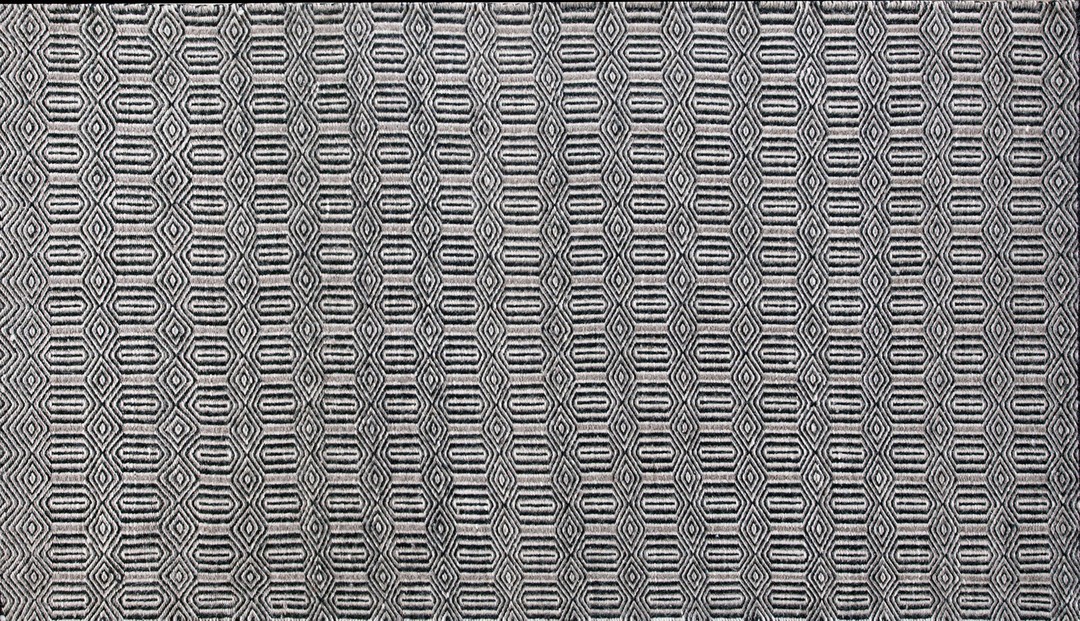
Explore a Few of Our Favorite Houndstooth Rugs
FAQ
- How do I style a black-and-white houndstooth rug without overwhelming a room?
Balance the houndstooth rug with wood, natural textures, and one accent color. Limit other bold patterns to small doses like pillows.
- What edge finish suits a houndstooth rug best?
Serged or bound edges keep houndstooth rugs crisp; fringe skews traditional. Choose bound edges for modern, high-contrast looks.
- Can houndstooth rugs be custom-sized or recolored?
Many makers offer custom sizes and colorways for houndstooth rugs. Expect standard widths with made-to-length options and expanded palettes.
- How do I stop a houndstooth rug from slipping or curling?
Add a felt-rubber pad cut 1–2″ smaller than the houndstooth rug. Corner grippers help flatten edges.
- Are houndstooth rugs kid- and pet-friendly?
They can be—pick low pile and mid-tone colorways that mask mess. Use a washable or spot-cleanable construction for everyday life.
- Is a houndstooth rug practical under a dining table?
Yes—choose low-pile or flatweave for easy chair movement and cleanup. Size it so the rug extends at least 24–30″ beyond the table.
- Are dogtooth or puppytooth rugs the same as houndstooth rugs?
They’re scale variants of the same motif. “Dogtooth/puppytooth” usually means a smaller, tighter houndstooth.
- How do houndstooth rugs differ from checkered rugs?
Houndstooth rugs use jagged, stepped checks; checkered rugs use clean squares. Houndstooth looks more dynamic at the same scale.
- What’s the difference between houndstooth rugs and herringbone rugs?
Houndstooth rugs show broken checks with toothlike corners; herringbone rugs show V-shaped chevrons. One reads checkered, the other zigzag.
- How should I orient a houndstooth rug in a room?
Align the houndstooth rug’s grid parallel to the room’s main wall or seating. Squaring it visually reduces skewed lines.
- Are wool houndstooth rugs good for high-traffic areas?
Wool houndstooth rugs are resilient and spring back well. A flatweave or low pile (<0.4") handles entryways and family rooms best.
- Can I use a houndstooth rug outdoors?
Yes—outdoor houndstooth rugs in polypropylene resist UV and moisture. Hose off seasonally and air-dry flat in the sun.
- How do I clean a houndstooth rug day to day?
Vacuum houndstooth rugs weekly and blot spills immediately with mild detergent. Avoid harsh scrubbing that can fuzz edges of the pattern.
- Do houndstooth rugs show dirt, lint, or pet hair?
High-contrast houndstooth rugs can highlight light lint and dark fur. Melange yarns or mid-tone colorways disguise debris better.
- Are houndstooth runner rugs good for hallways?
Houndstooth runner rugs hide foot traffic well and add direction. Choose low-pile or flatweave for easy door clearance.
- How do I mix patterns with a houndstooth rug?
Let the houndstooth rug be the hero and pair it with solids or one supporting print. Keep a shared palette and vary pattern scale.
- Do houndstooth rugs work with modern or traditional decor?
Yes—houndstooth rugs bridge both. Large-scale, high-contrast patterns feel modern; smaller, muted checks skew classic.
- What sizes do houndstooth area rugs come in?
Expect common sizes like 3’×5′, 5’×7/8′, 8’×10′, and 9’×12′. Runners are typically 2’–3′ wide with lengths from 6′ to 14′.
- How do I choose the right scale for a houndstooth rug?
Match scale to room size: small repeats feel calmer in tight rooms, large-scale reads bold in open plans. As a guide, under 2″ repeat is subtle; 6–8″+ is graphic.
- What materials are best for houndstooth rugs?
Wool houndstooth rugs balance durability and stain resistance; cotton is lighter; polypropylene suits outdoor use. Wool’s natural lanolin helps repel spills.
- What construction makes houndstooth rugs look crisp?
Flatweave houndstooth rugs show the sharpest edges; tufted versions feel plusher but soften the “teeth.” Printed options give budget-friendly precision.
- Which rooms suit houndstooth rugs?
Houndstooth rugs fit living rooms, offices, bedrooms, and entryways. Use higher contrast for statement zones and subtler tones in restful rooms.
- Which colors work best for houndstooth rugs beyond black-and-white?
Houndstooth rugs also come in charcoal/gray, navy/ivory, tan/cream, or bold duos. Tone-on-tone colorways soften contrast for calmer spaces.
- Are houndstooth rugs timeless or trendy?
Both—houndstooth rugs are a classic pattern that cycles in popularity. They’ve appeared for centuries and still read fresh in modern rooms.
- What is a houndstooth rug?
A houndstooth rug features broken checks from a twill-inspired motif with jagged “teeth.” Traditionally black-and-white, but any high-contrast pair works.