
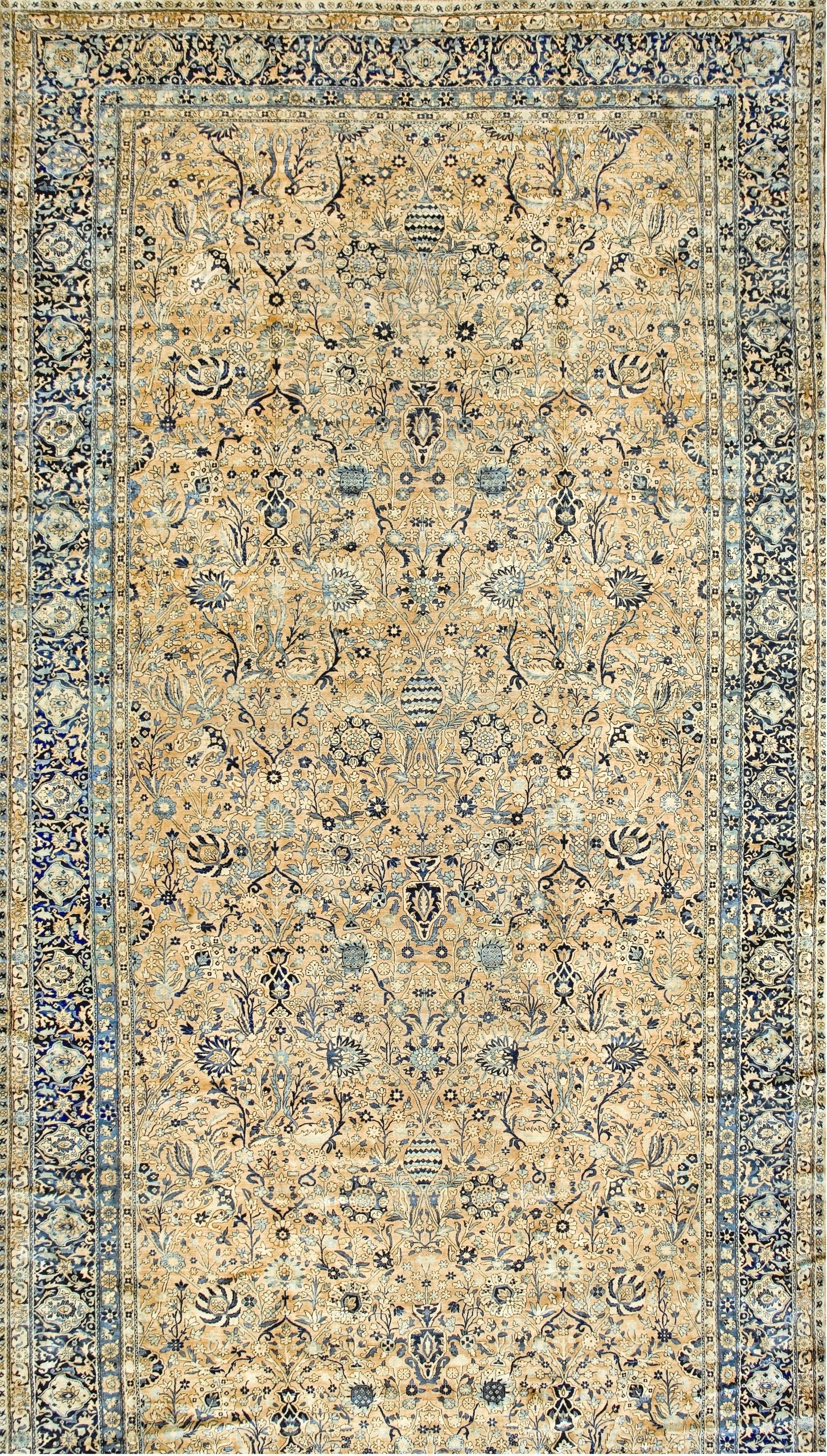
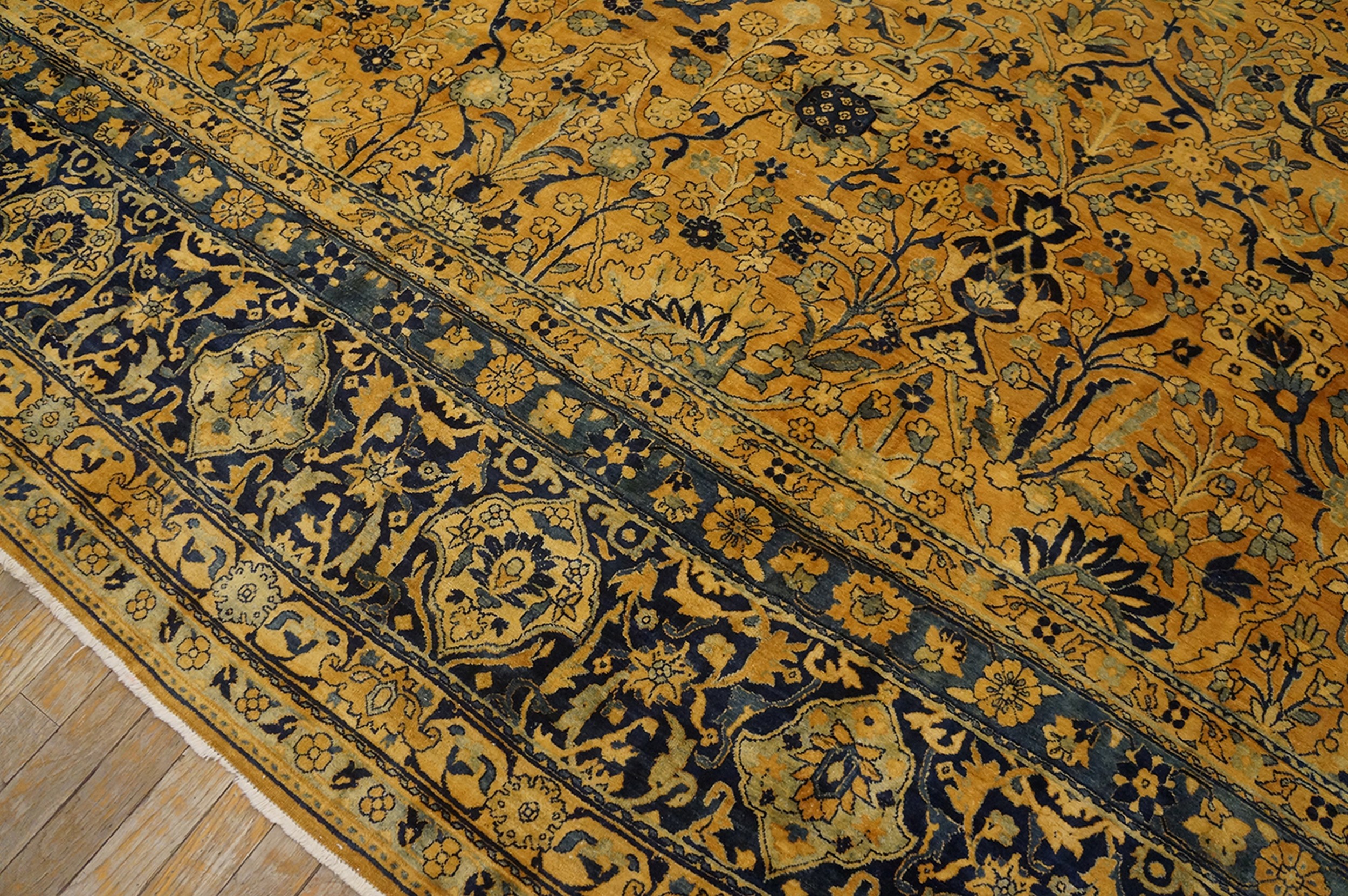
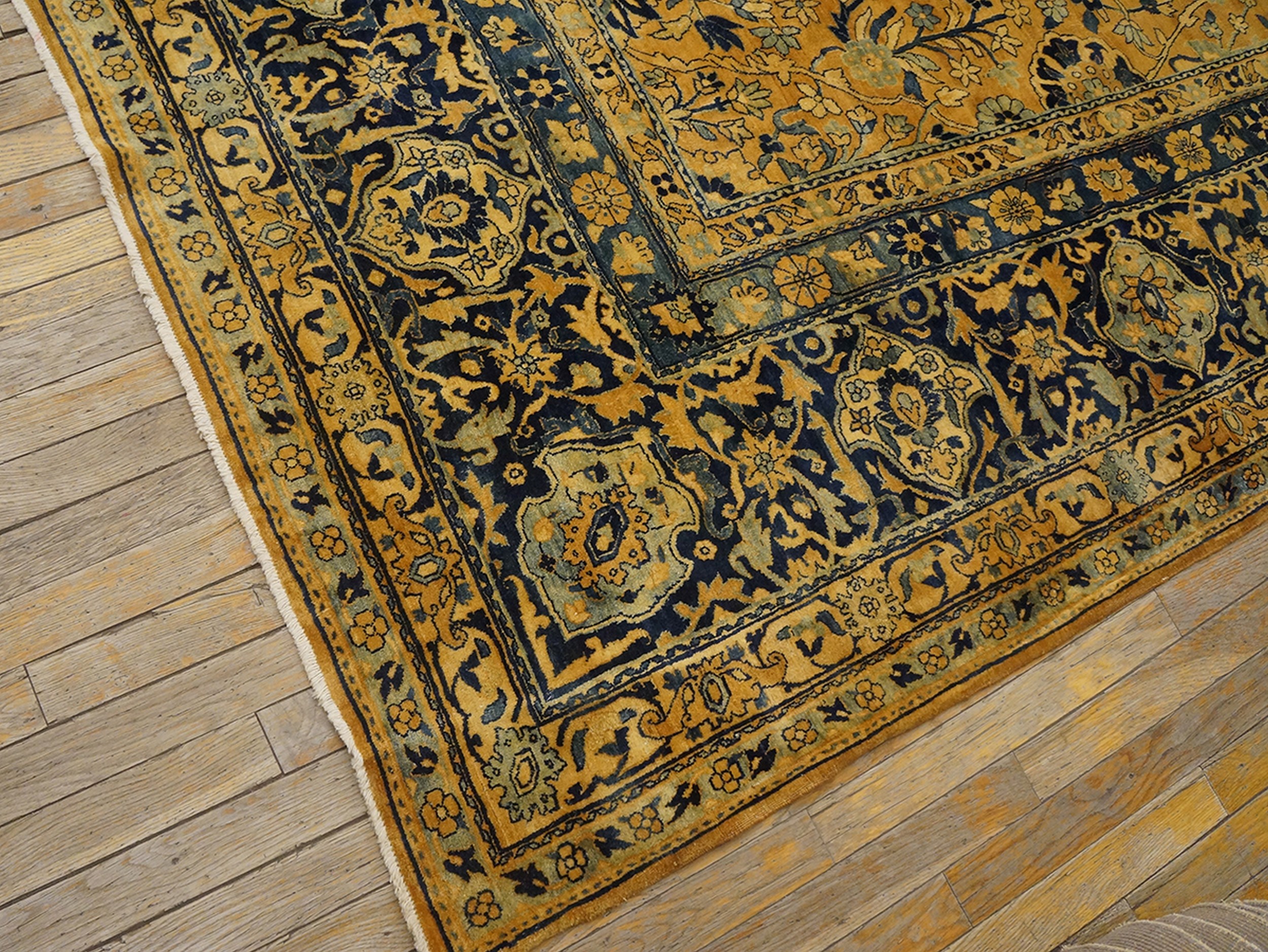
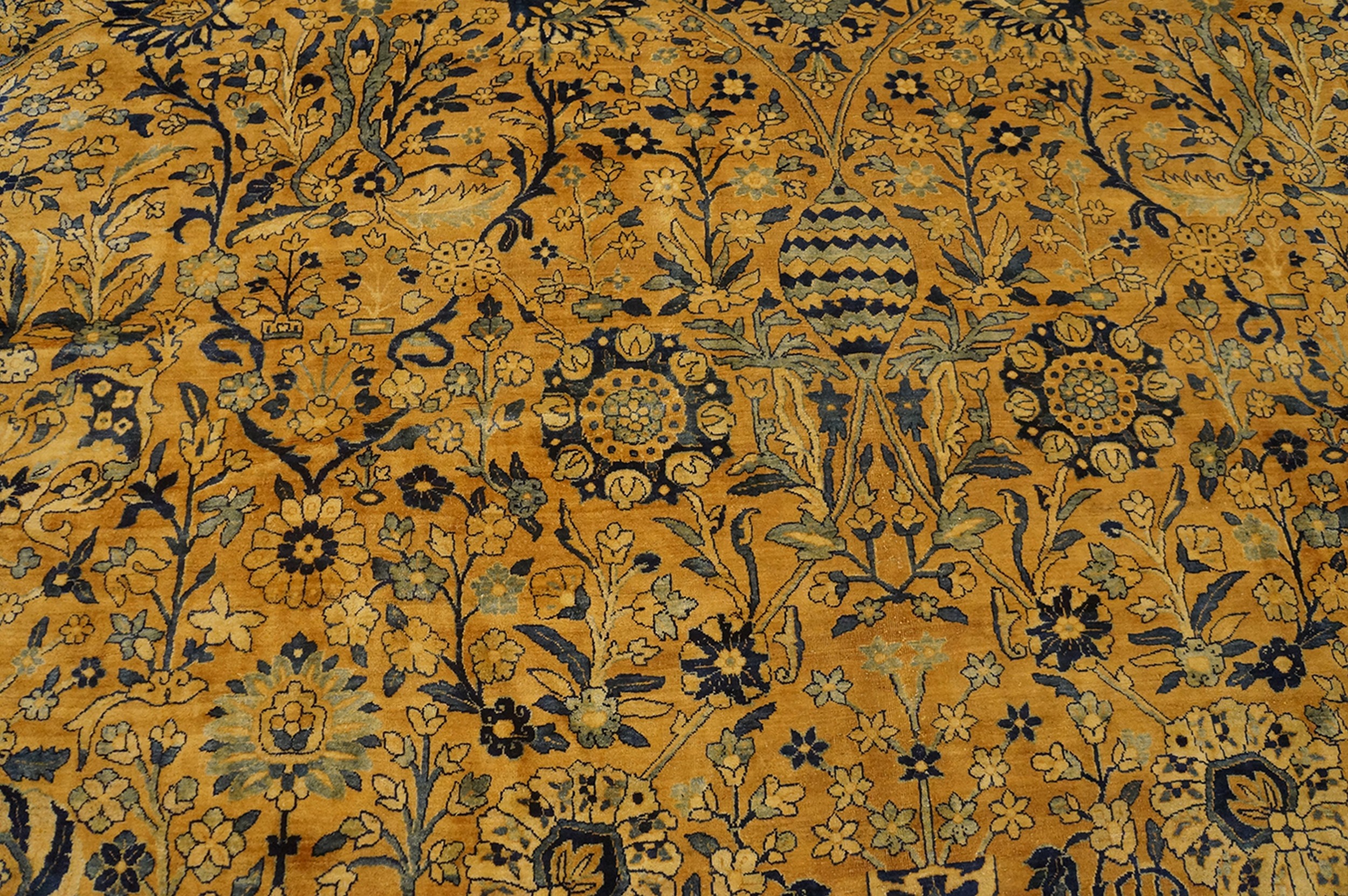
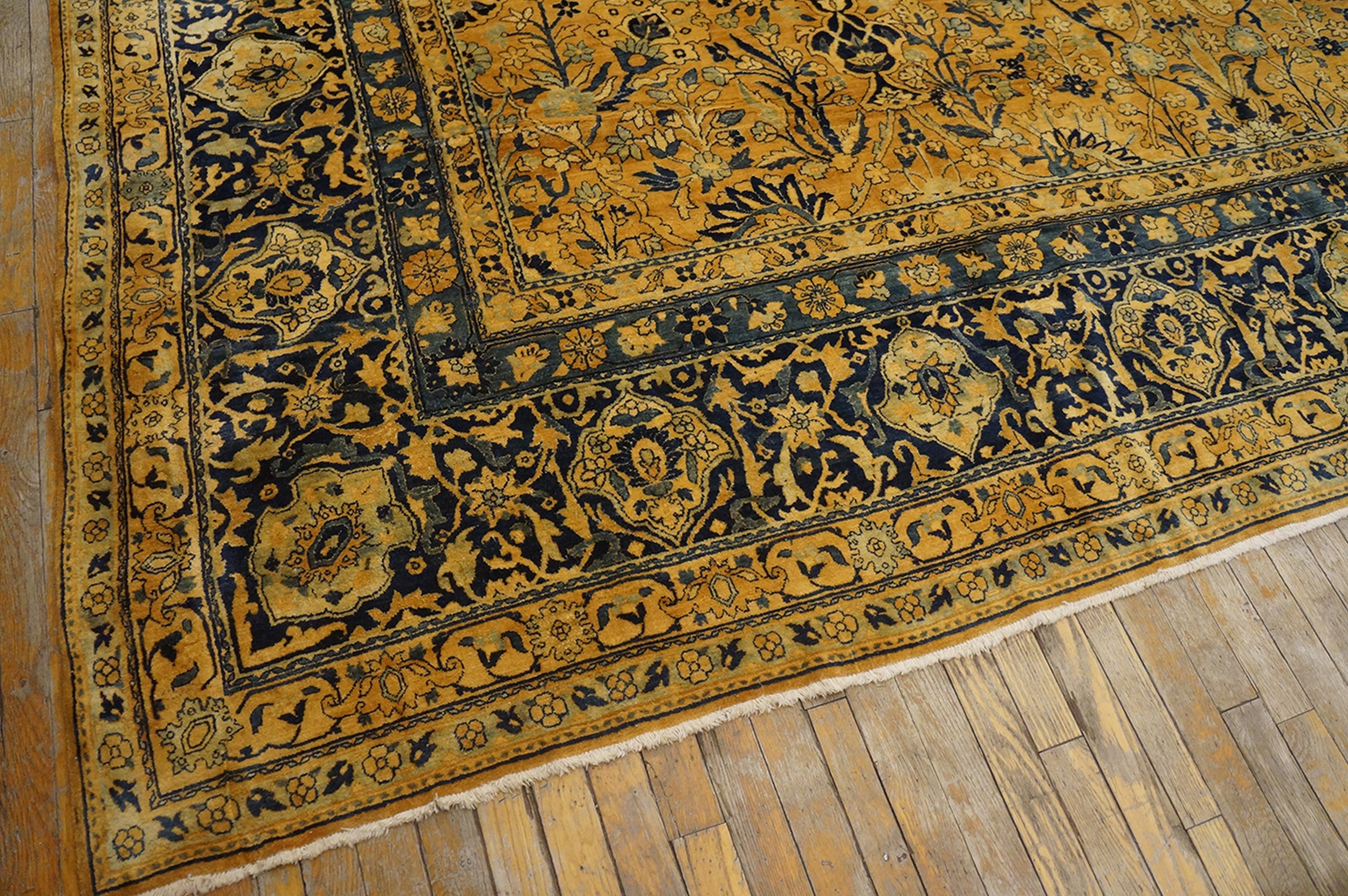
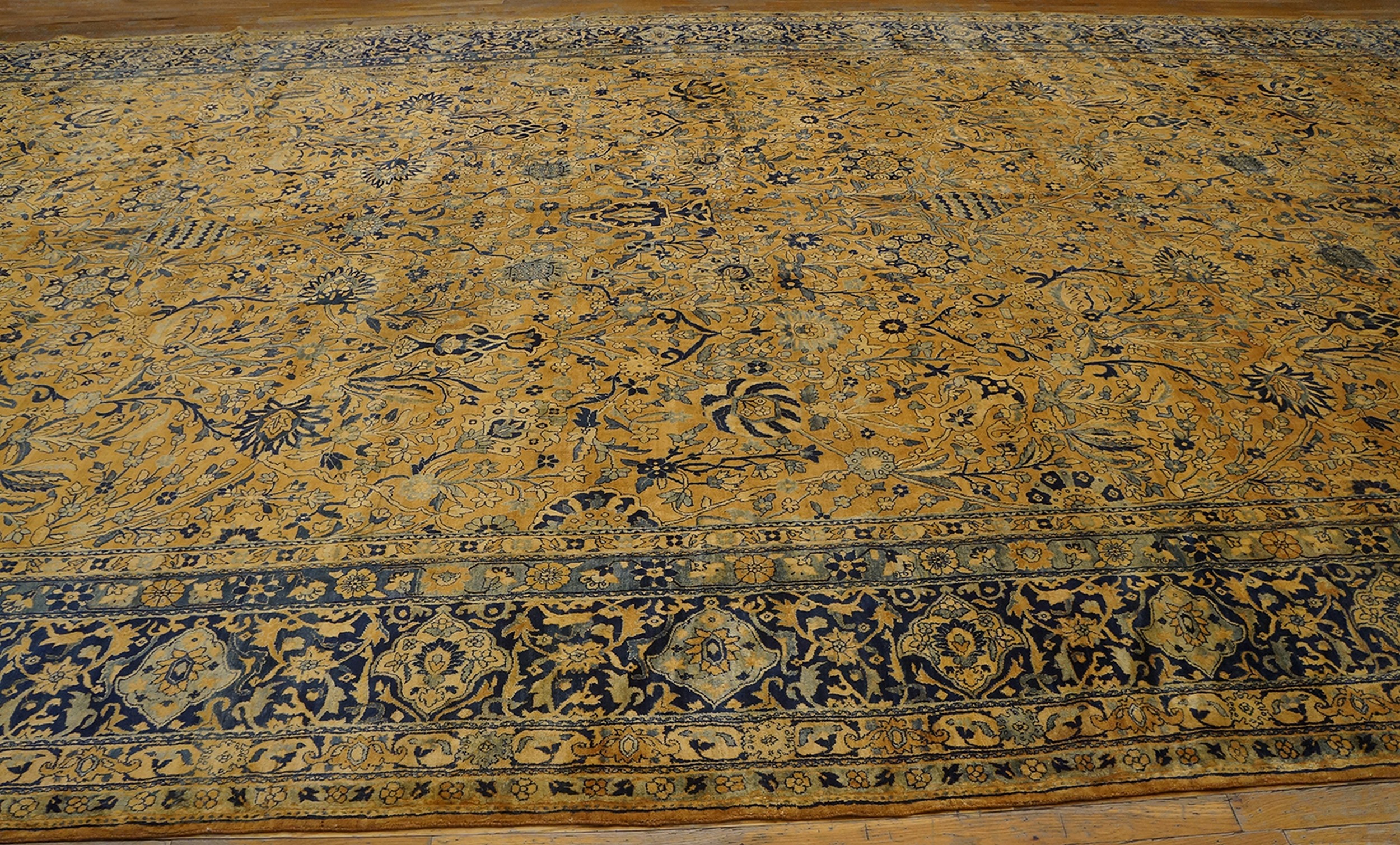
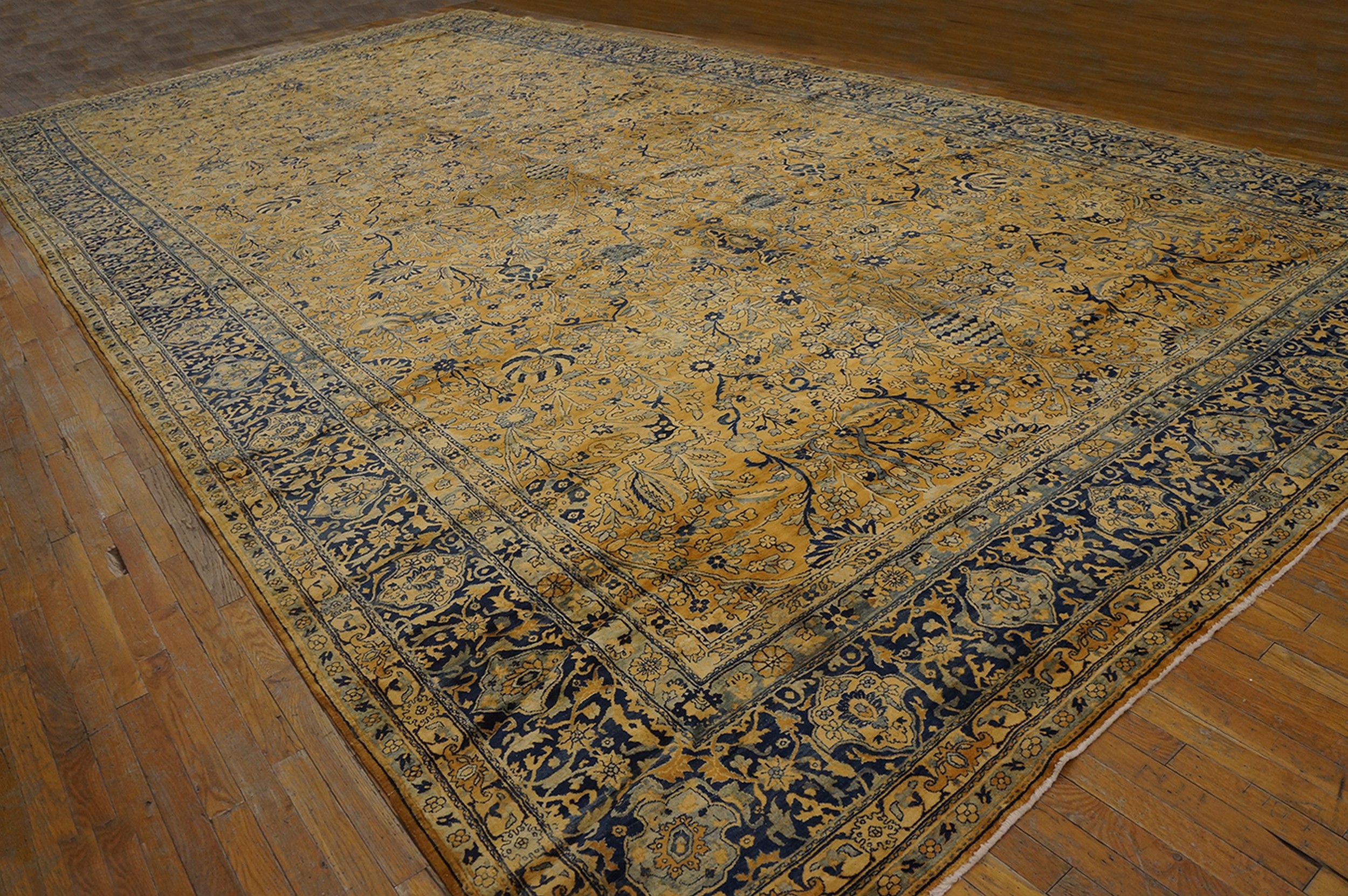
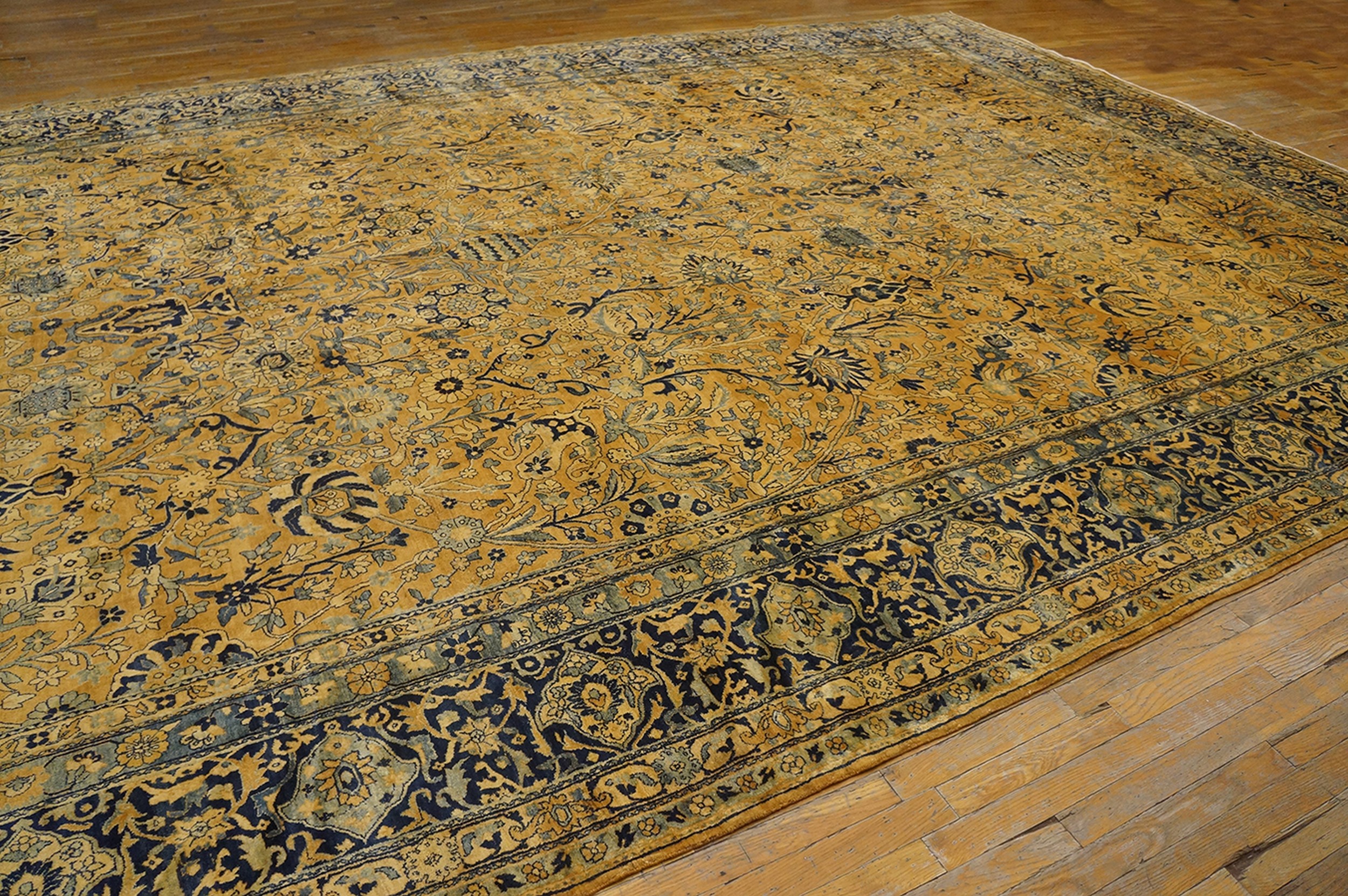
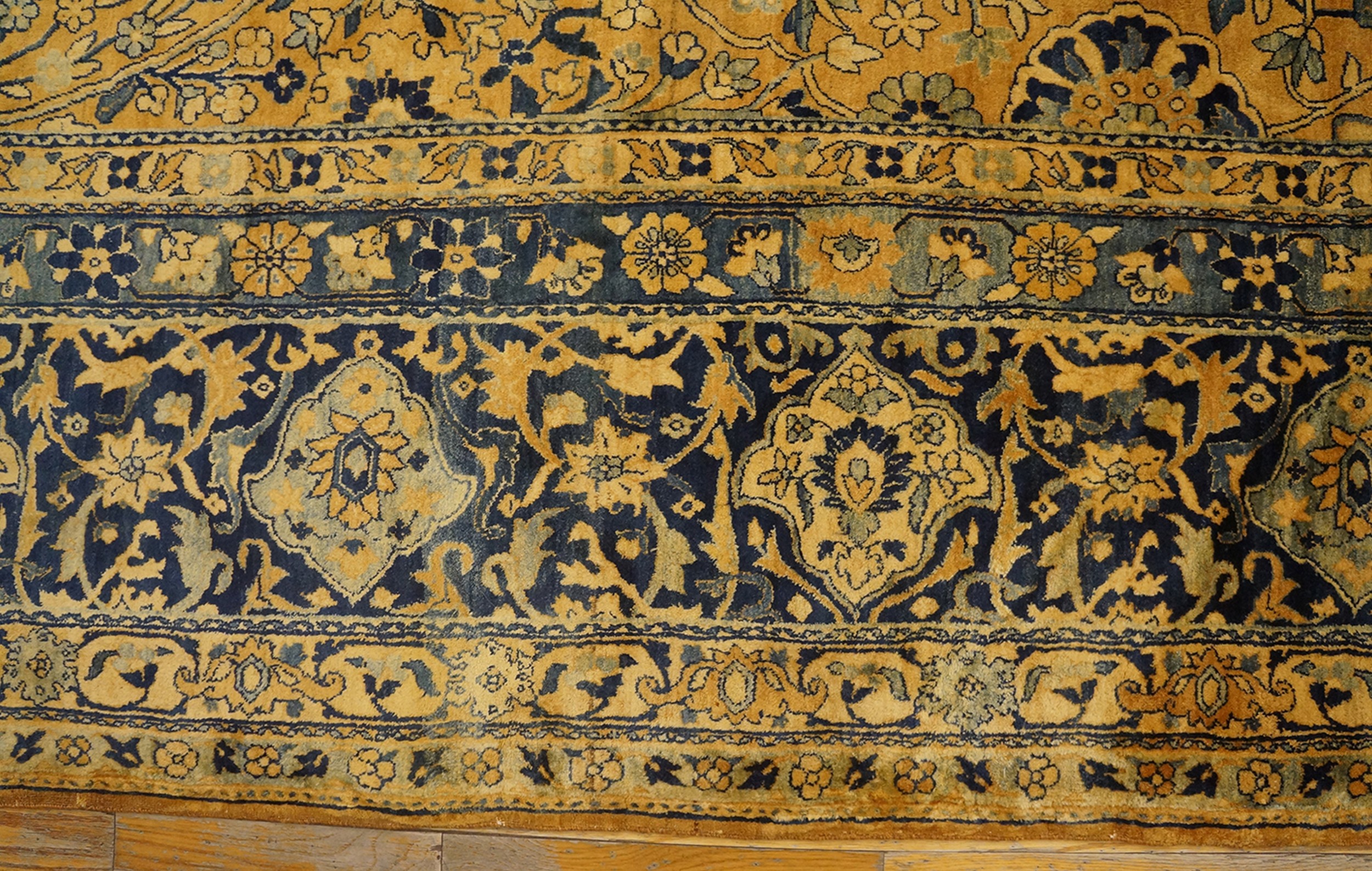
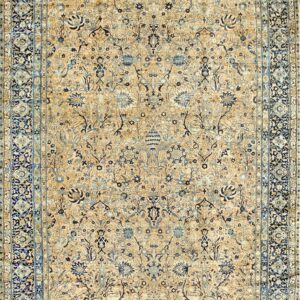
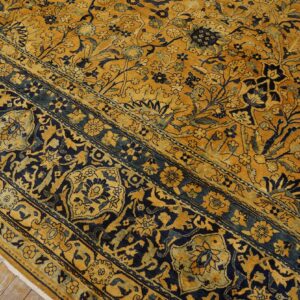
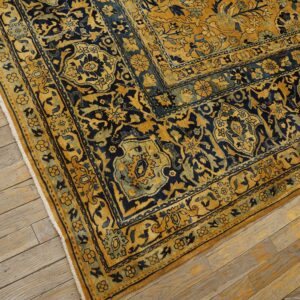
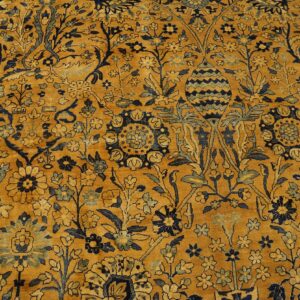
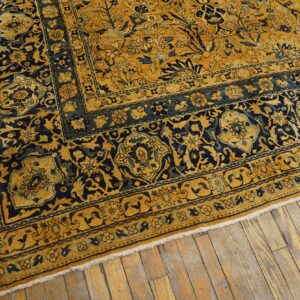
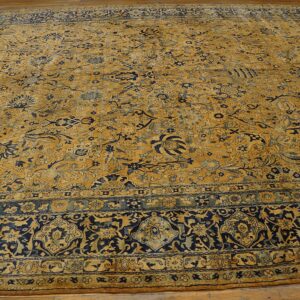
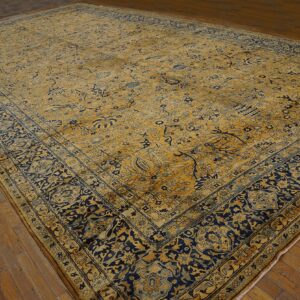
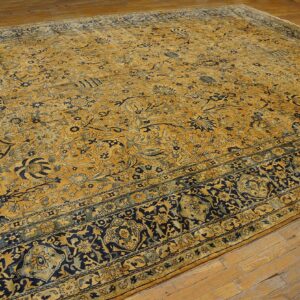
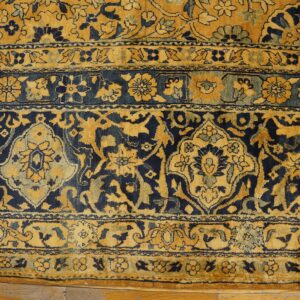
This fine antique Persian Kerman carpet, distinguished by its monumental scale and luminous warm cream field, is a superlative example of the “Vase” design tradition that flourished in South-Central Iran during the nineteenth-century revival of Safavid artistry. Kerman has long been celebrated as the cradle of Persian floral sophistication, a reputation bolstered by the region’s unique geographical isolation and its access to exceptionally soft, high-altitude wool known as kork. Unlike the tribal weaves of the north, antique Persian carpets from Kerman were designed by master “ustads” (designers) who translated the intricate beauty of Persian miniature paintings into textile form. This specific piece features an overflowing floral vase motif, an ancient symbolic representation of the “Tree of Life” and the eternal abundance of the celestial garden—a theme deeply embedded in the poetic and spiritual fabric of Persian culture.
Historically, the “Vase” technique is one of the most structurally complex in the weaving world; it originated in the 17th-century Safavid court, characterized by a triple-wefted construction that allowed for a level of curvilinear detail previously thought impossible in knotted wool. By the time this antique specimen was crafted in the late 1800s, Kerman weavers had refined this classical aesthetic to suit the grand proportions of European and American manor houses. The warm cream ground, achieved through the expert application of natural madder and pomegranate dyes, serves as a radiant canvas for a dense botanical tapestry of Damask roses, weeping willows, and palmettes. These floral elements are not merely decorative but reflect the Charbagh—the four-part paradise garden—intended to bring a sense of tranquility and spiritual order into the domestic sphere.
The presence of such an oversized carpet suggests a high-status commission, likely destined for a palatial setting where its expansive surface could anchor a large architectural space. Antique Persian Kerman rugs from this era became the favorites of Western royalty and industrial magnates precisely because of their “Lavar” quality—a term denoting the finest weave from the nearby village of Ravar. The durability of the hand-spun wool, combined with the sophisticated palette of soft blushes, sage greens, and ochres, ensures that the carpet retains its luminous “glow” even after a century of use. To stand upon this Kerman is to experience the pinnacle of the Persian city-weaving tradition, where mathematical precision in the knotting meets the wild, romantic abundance of the Iranian plateau’s most fabled gardens.