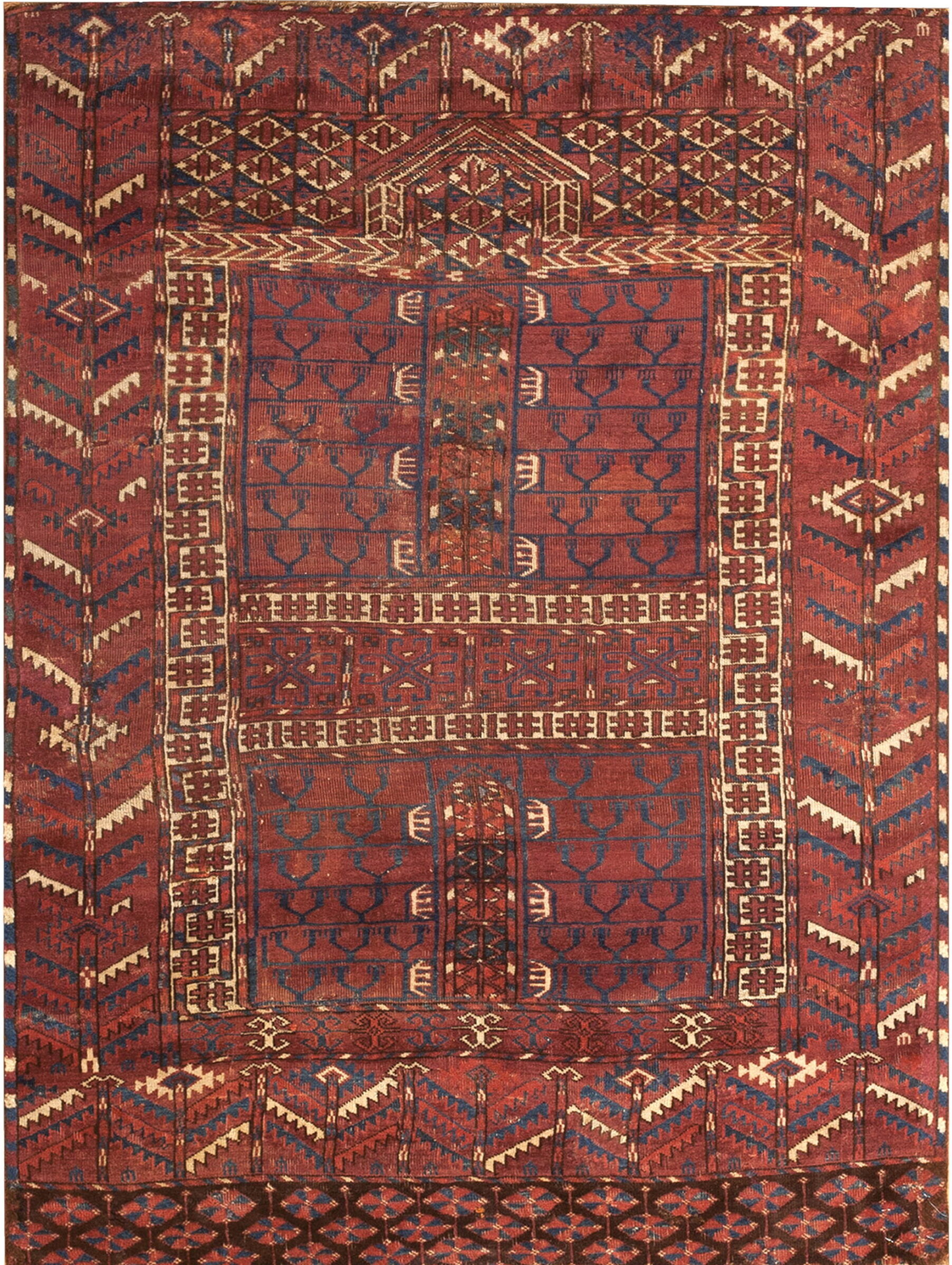
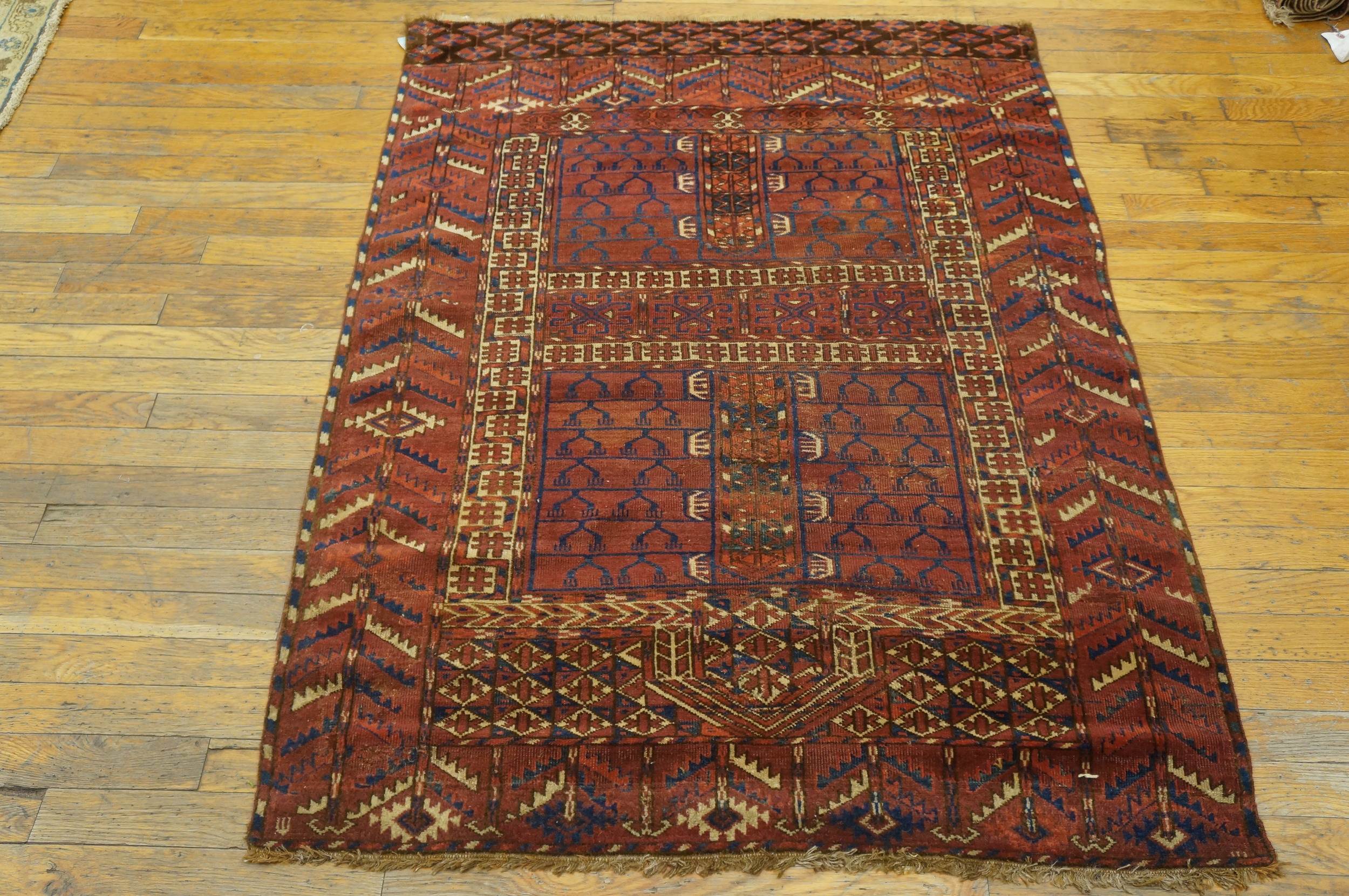
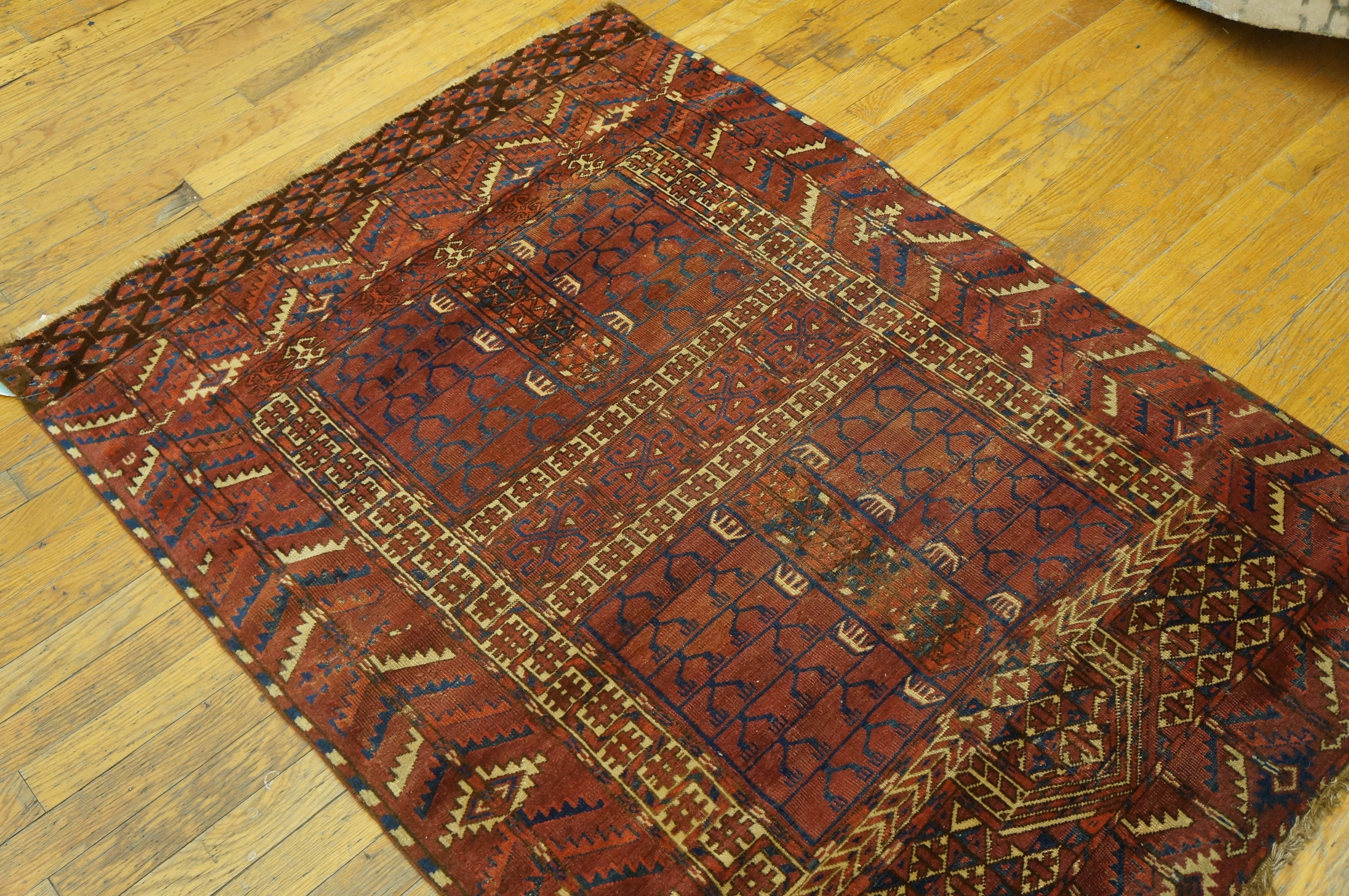
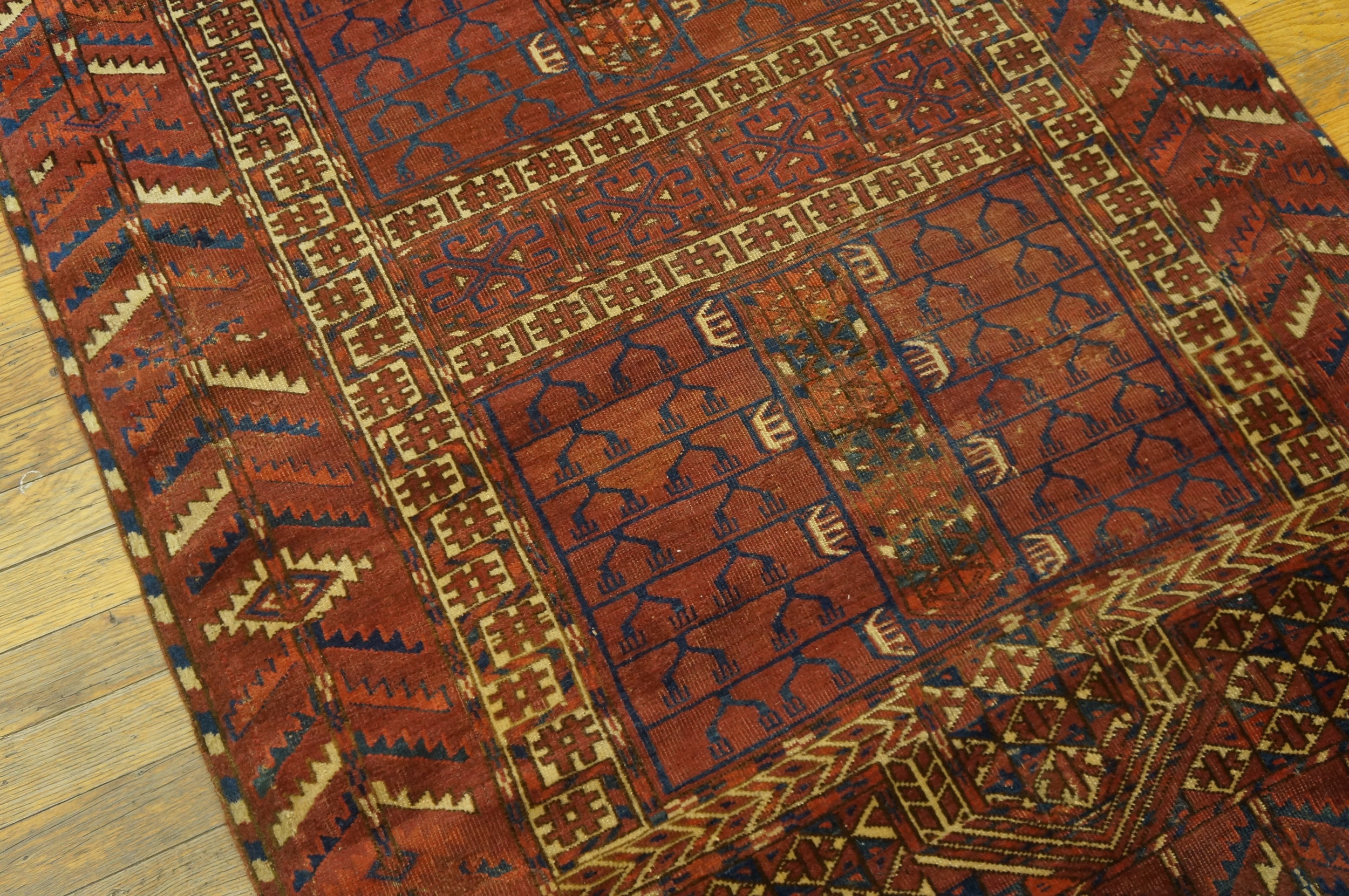
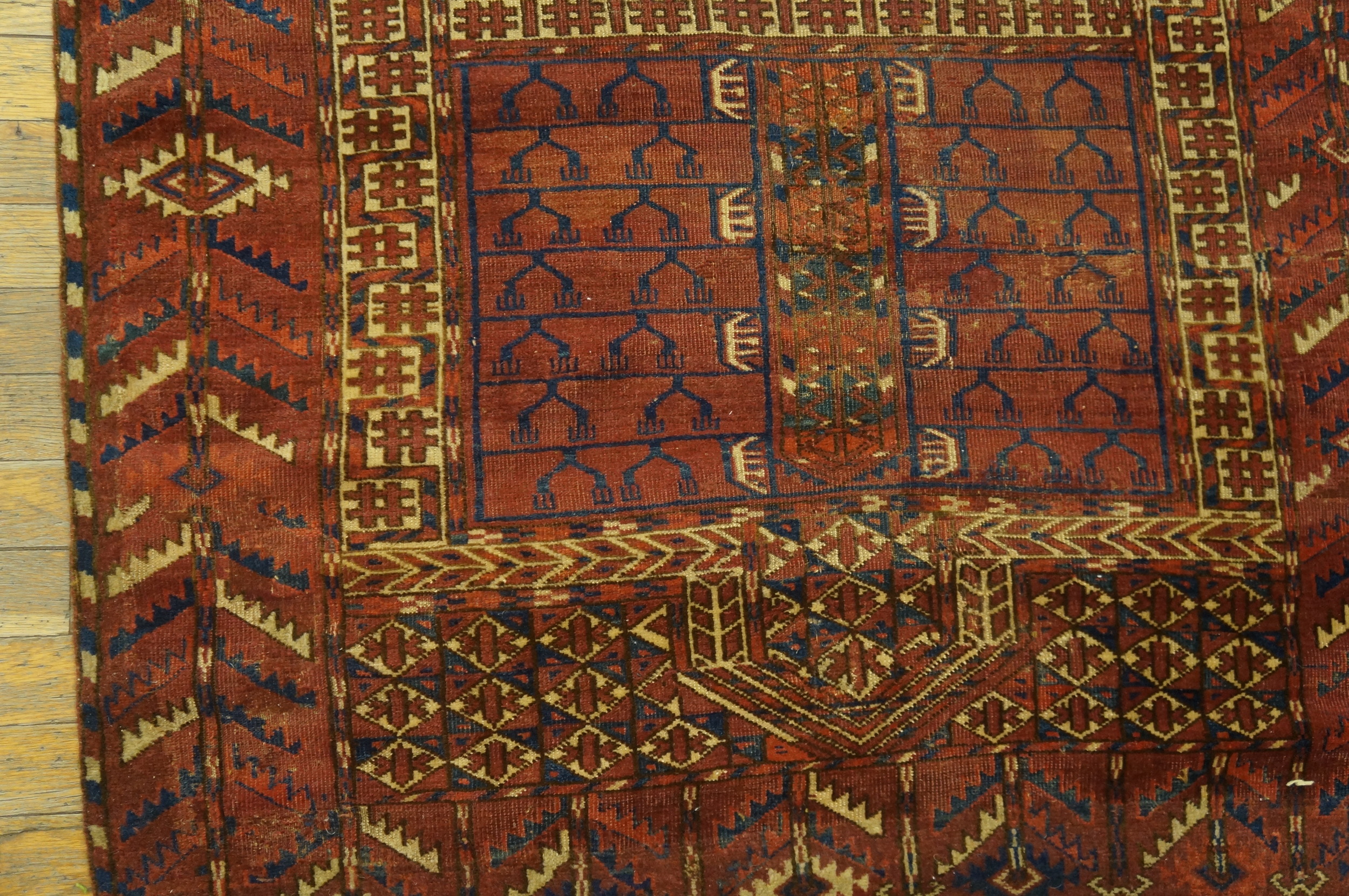
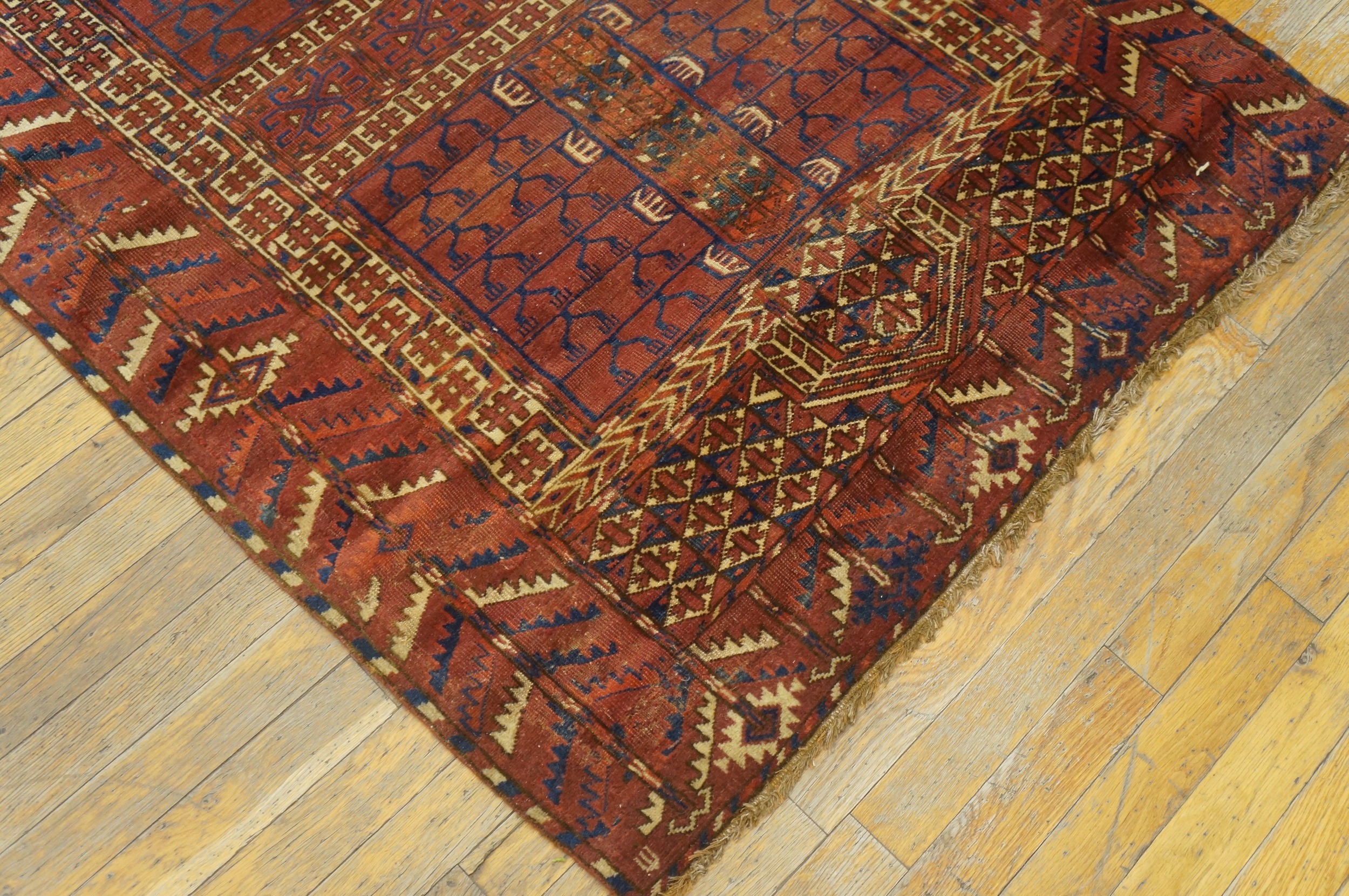
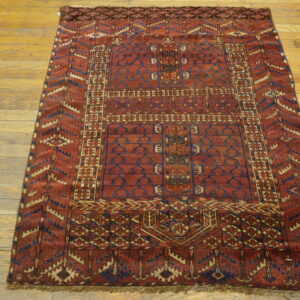
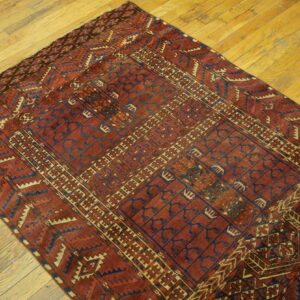
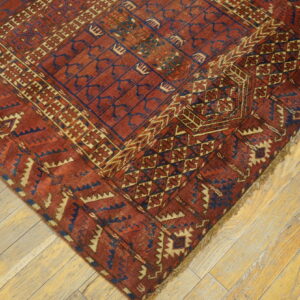
Antique Turkmen – Hatchli Caucasus Knotted Rug, Circa Date: 1880s. This exceptional example of antique rugs originates from the nomadic tribes of the Transcaspian region, displaying the rigorous geometry and deep red coloration prized by collectors. Its specific structure, characterized by the cruciform division of the central field, identifies it as a classic hatchli, a highly symbolic format traditionally used as a tent door covering or a prayer rug.
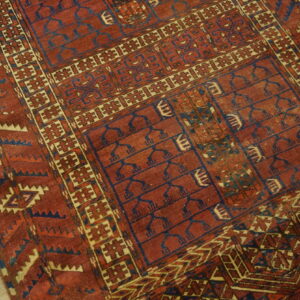
The rich, saturated ground color is a hallmark of high-quality 19th-century Turkmen weaving, featuring a deep red tone that registers beautifully among red color rugs. This intense field is segmented into the classic four-quarter design, delineated by crisp borders that contrast sharply with the prevailing red tones.
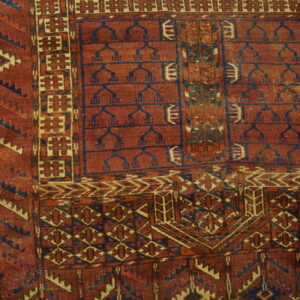
While the central field is highly structured by the Hatchli format, the surrounding elements and borders employ a dense, interlocking system of geometric guls and stepped motifs, giving the overall composition the feeling of an allover rugs pattern when viewed from a distance. The main border features serrated, stylized leaf forms and chevrons, providing dynamic movement against the static central panel.
Woven entirely from hand-spun wool and colored with natural dyes, this piece retains remarkable integrity and patina consistent with its age. Given its dimensions, typical for nomadic weavings of this function, it is perfectly suited for use among small scatter size rugs, adding a powerful piece of red textile history to a focused collection or intimate space.