
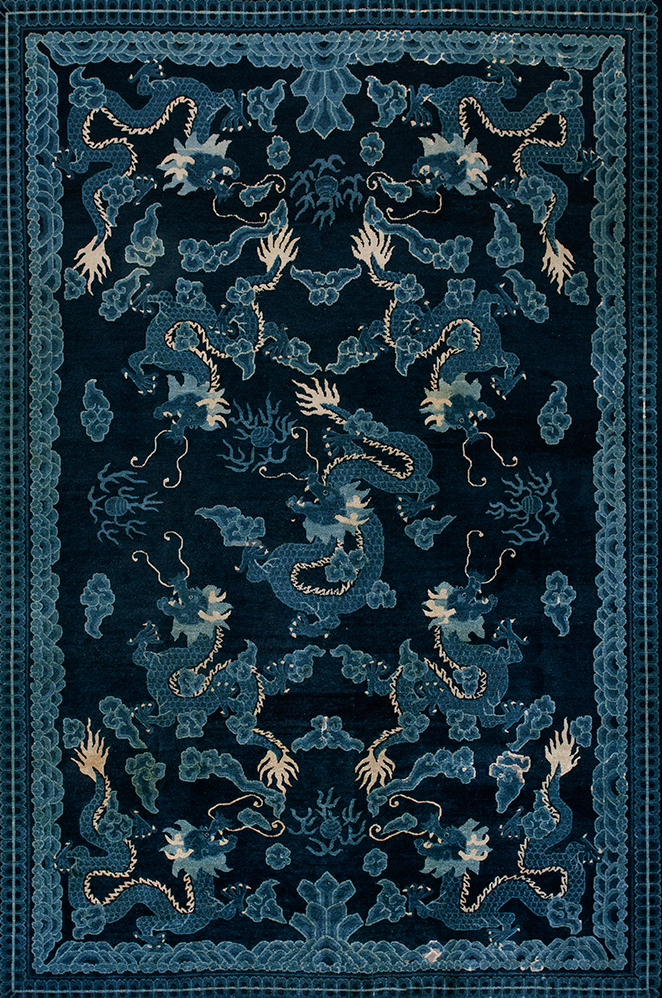
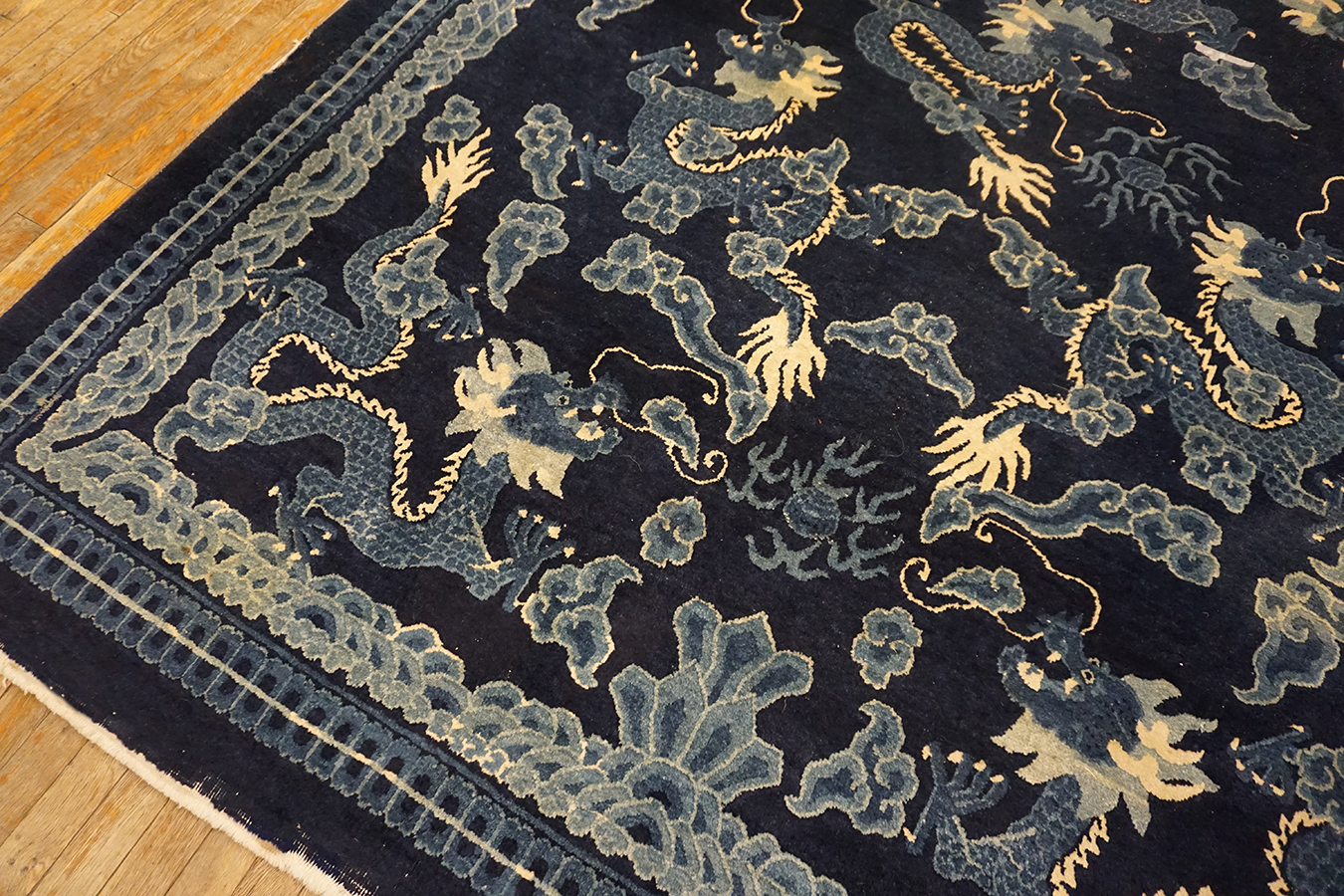
This magnificent early 20th-century Chinese Peking carpet is a superlative example of the “Imperial” aesthetic, representing the scholarly and symbolic traditions of the late Qing Dynasty and the early Republic era. Historically, Peking (Beijing) was the center of sophisticated workshop weaving, catering to the aesthetic demands of the Chinese nobility and, eventually, the refined Western market. This specific specimen is distinguished by its classic “Imperial Blue” palette and its masterful use of ancient cosmological motifs.
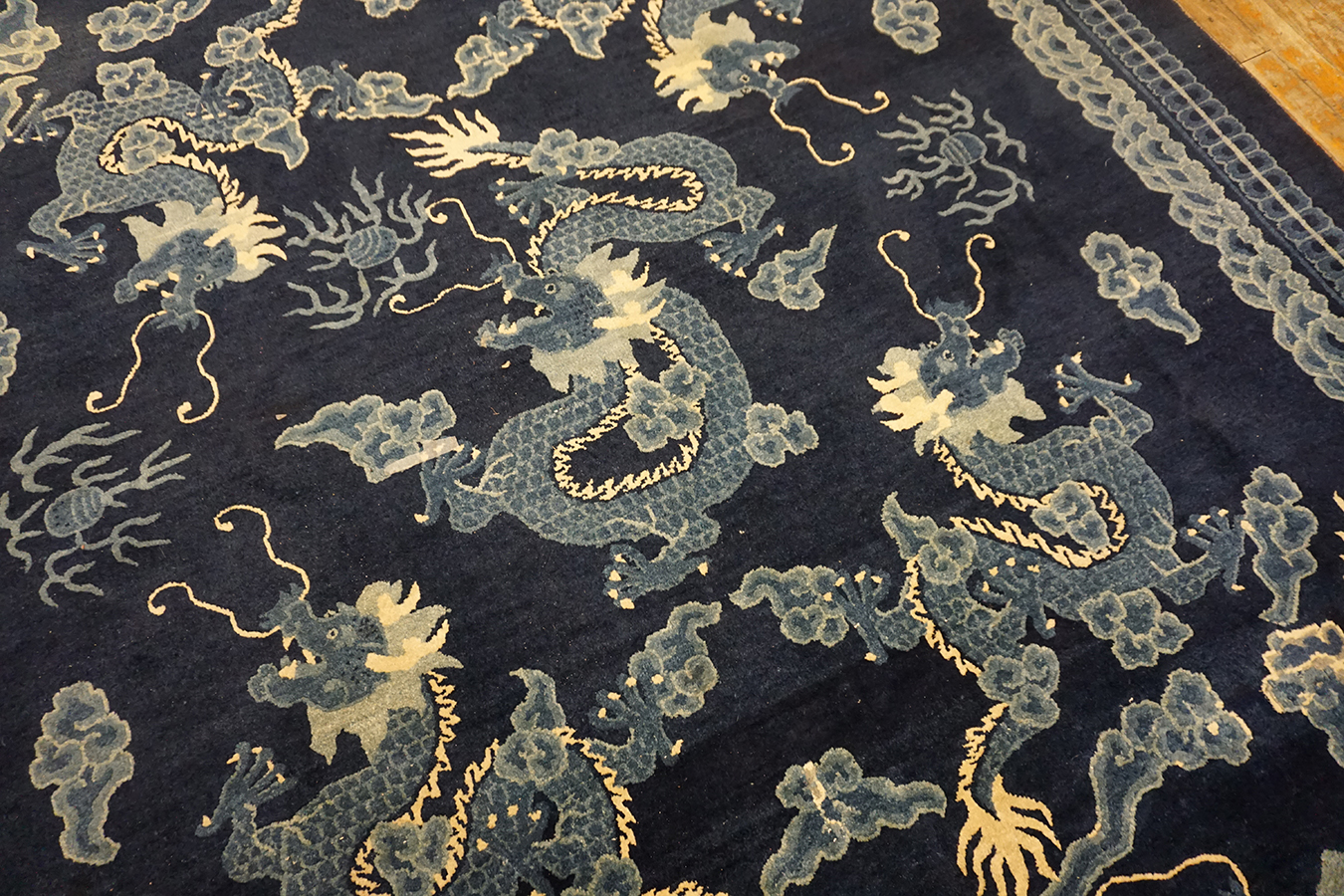
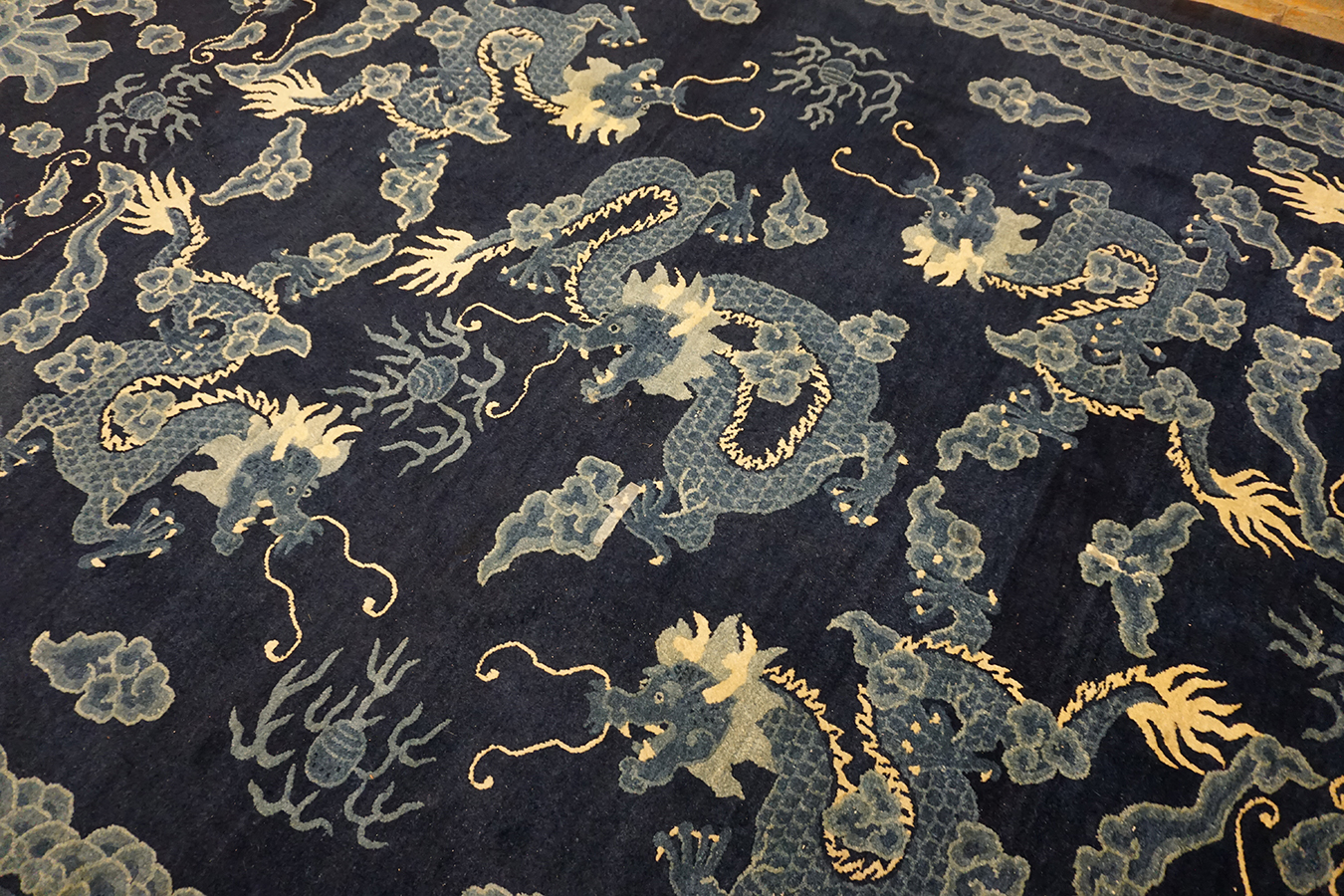
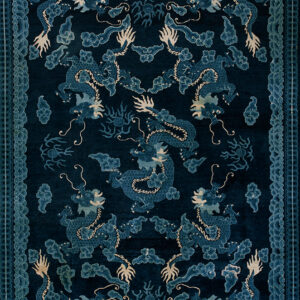
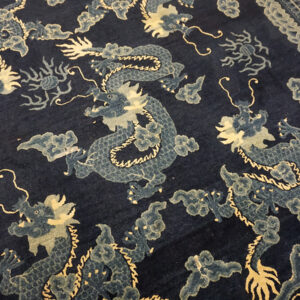
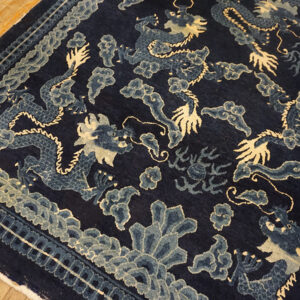
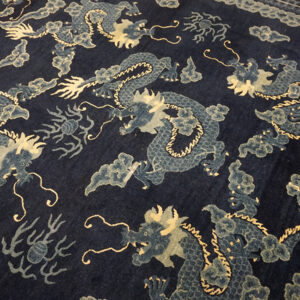
The composition is centered upon a dynamic, five-clawed dragon—a symbol of supreme power, nobility, and cosmic authority—coiling amidst a celestial landscape. The dragon is surrounded by “cloud bands” (yunwen), which represent the heavens and the breath of the universe. This “Dragon and Cloud” motif is one of the most storied in Chinese art, symbolizing the harmony between the earthly and spiritual realms. The rich, tonal indigo field provides a “nocturnal” depth, allowing the lighter shades of sapphire, ivory, and apricot to stand out with a shimmering, three-dimensional clarity.
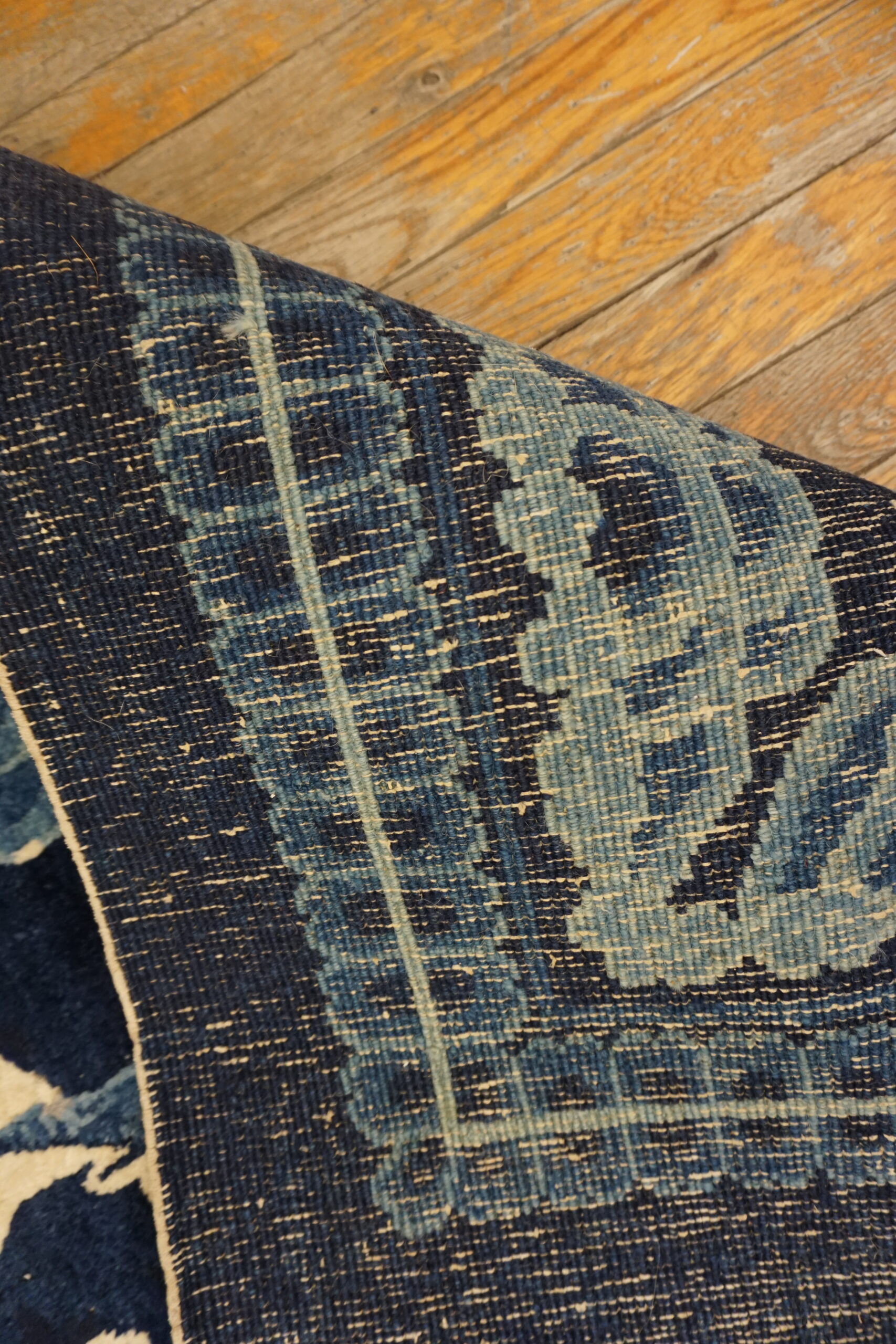
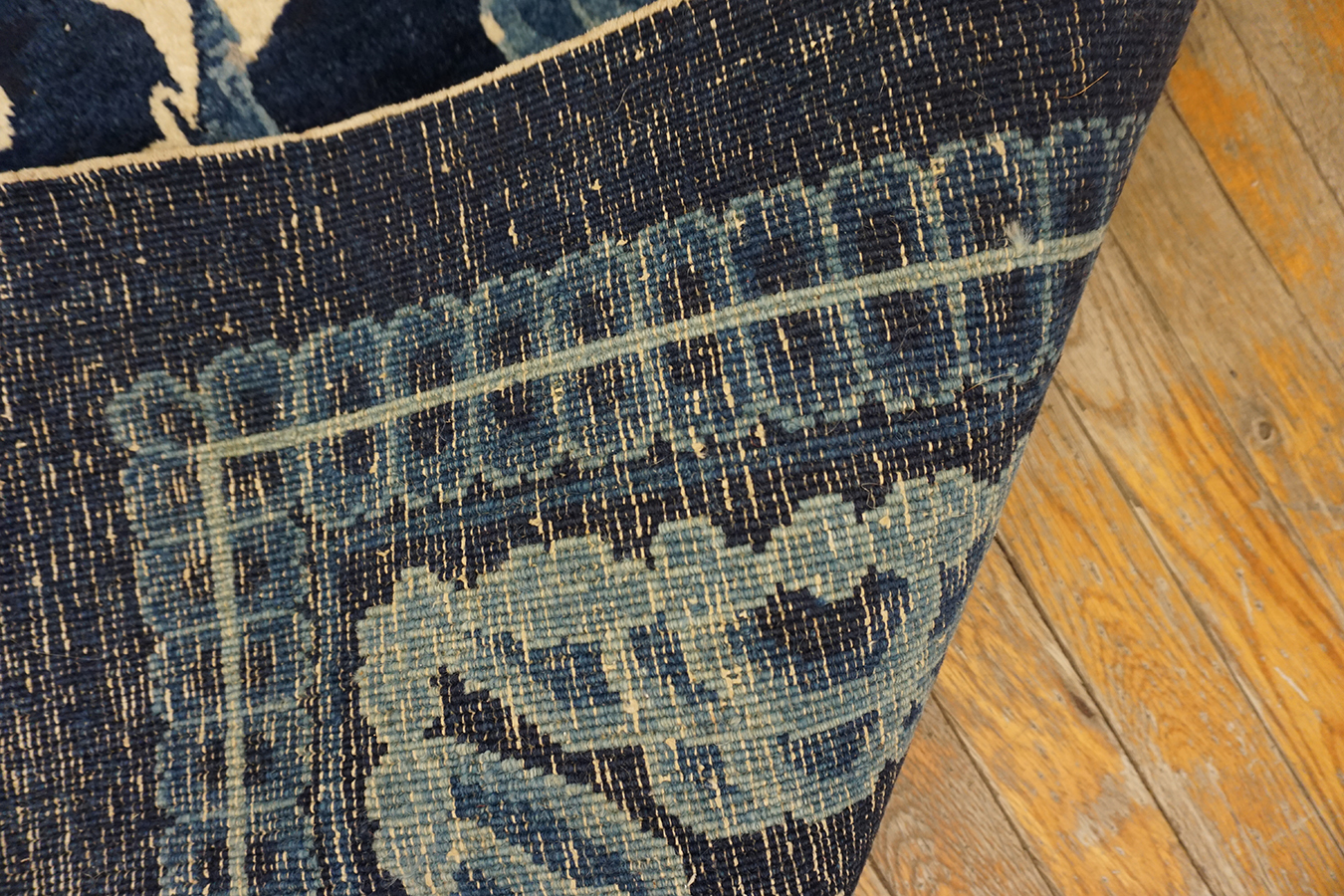
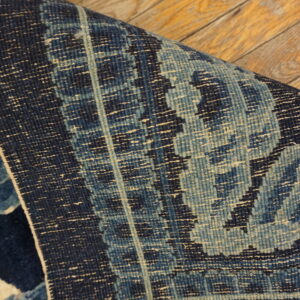
Technically, a Peking rug of this era is prized for its high-quality, lanolin-rich wool and its substantial, thick pile. Unlike the more commercial “Nichols” Chinese rugs of the same period, Peking carpets often maintained a more traditional, “soft” handle and used a more restrained, scholarly palette. The “Room Size” scale indicates this was a significant commission, intended to anchor a formal interior. Over the last century, the natural vegetable dyes have developed a soft, lustrous patina, creating a beautiful abrash (natural color variation) that gives the blue field a watercolor-like movement.
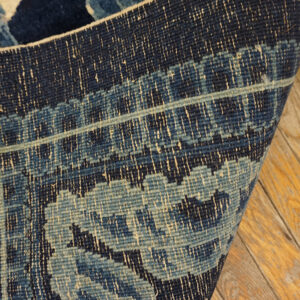
The borders act as a continuation of the celestial theme, typically featuring a “waves and mountain” (lishui) pattern or a sophisticated “Meander” (Fret) border that symbolizes longevity and the infinite. This structural frame grounds the kinetic energy of the central dragon, providing a sense of classical permanence. To possess an antique blue Peking dragon rug is to hold a monument to Chinese cultural history—a work that transforms the floor into a sprawling, hand-wrought myth, capturing the timeless elegance and mystical power of the East.