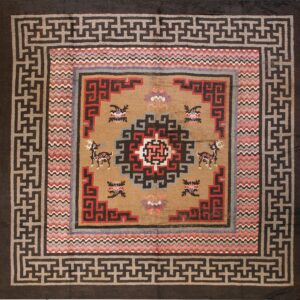
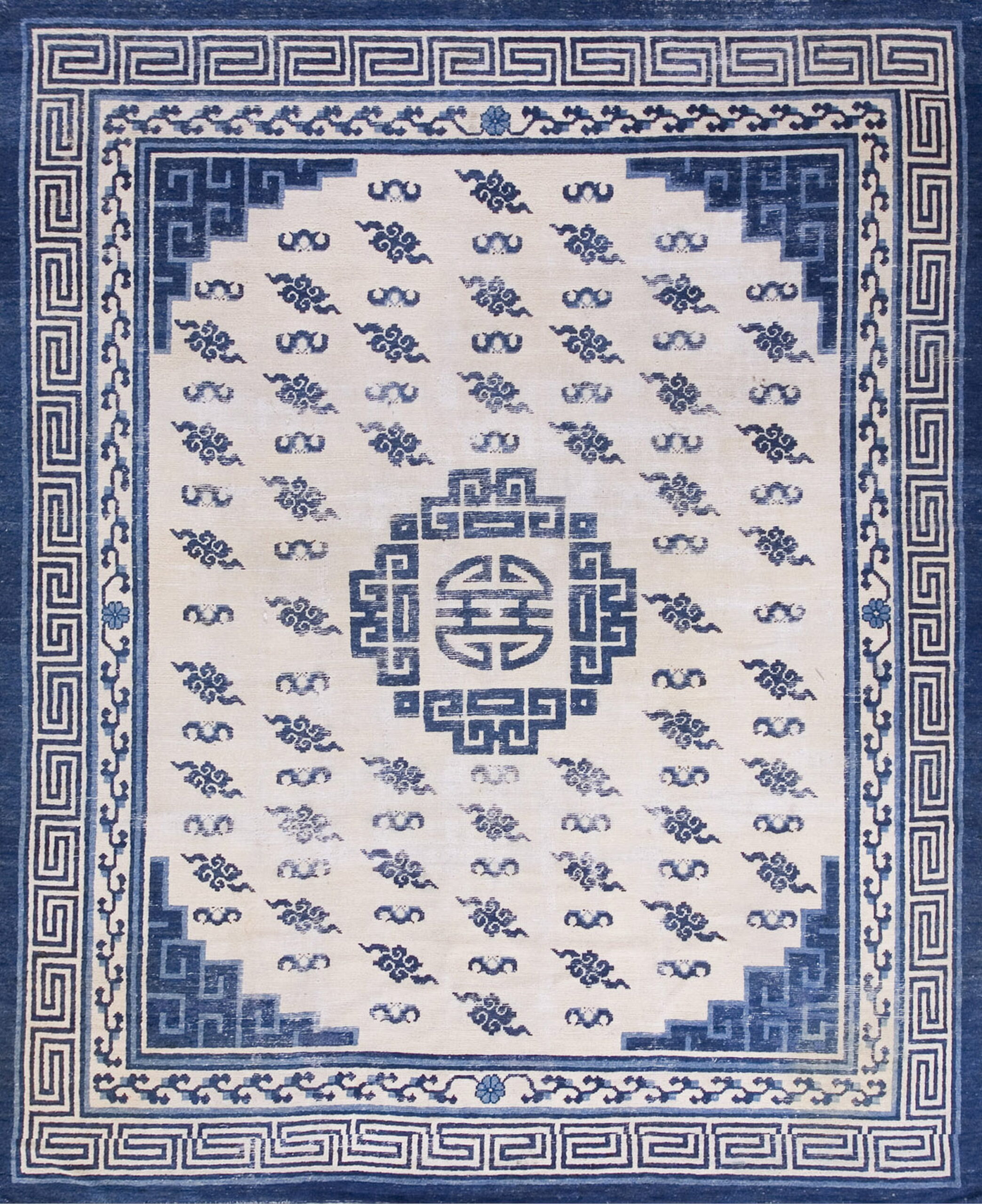
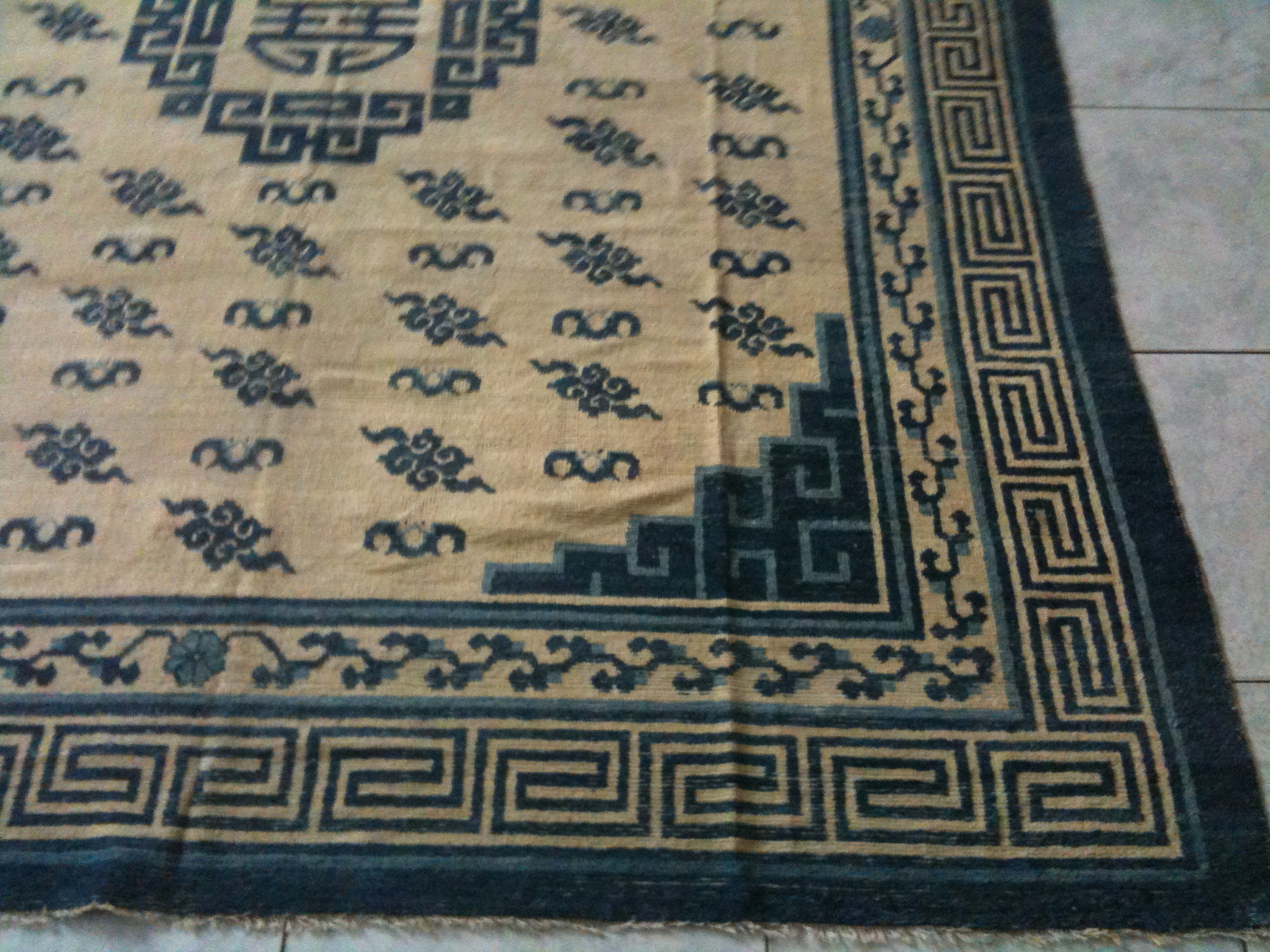
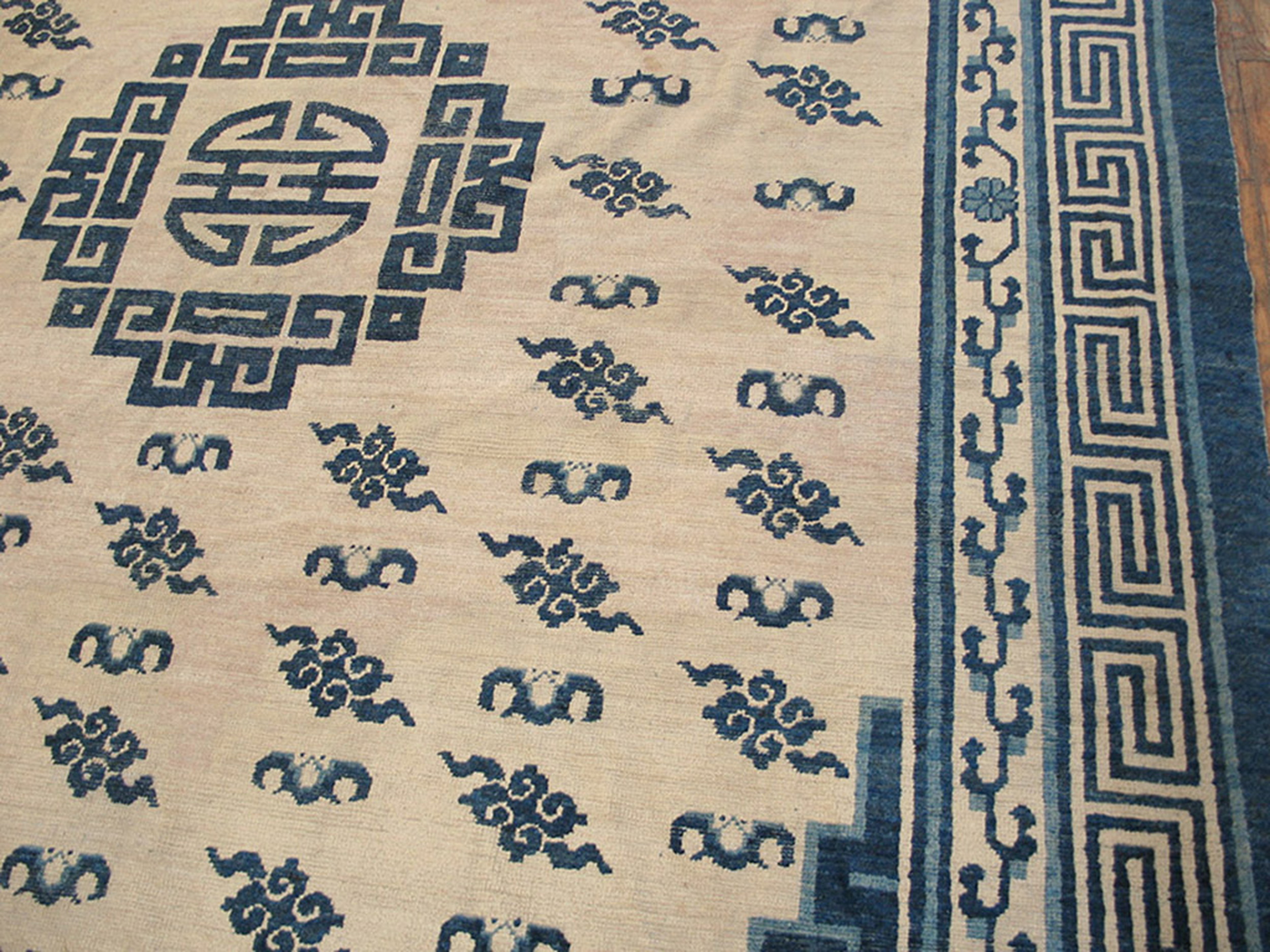
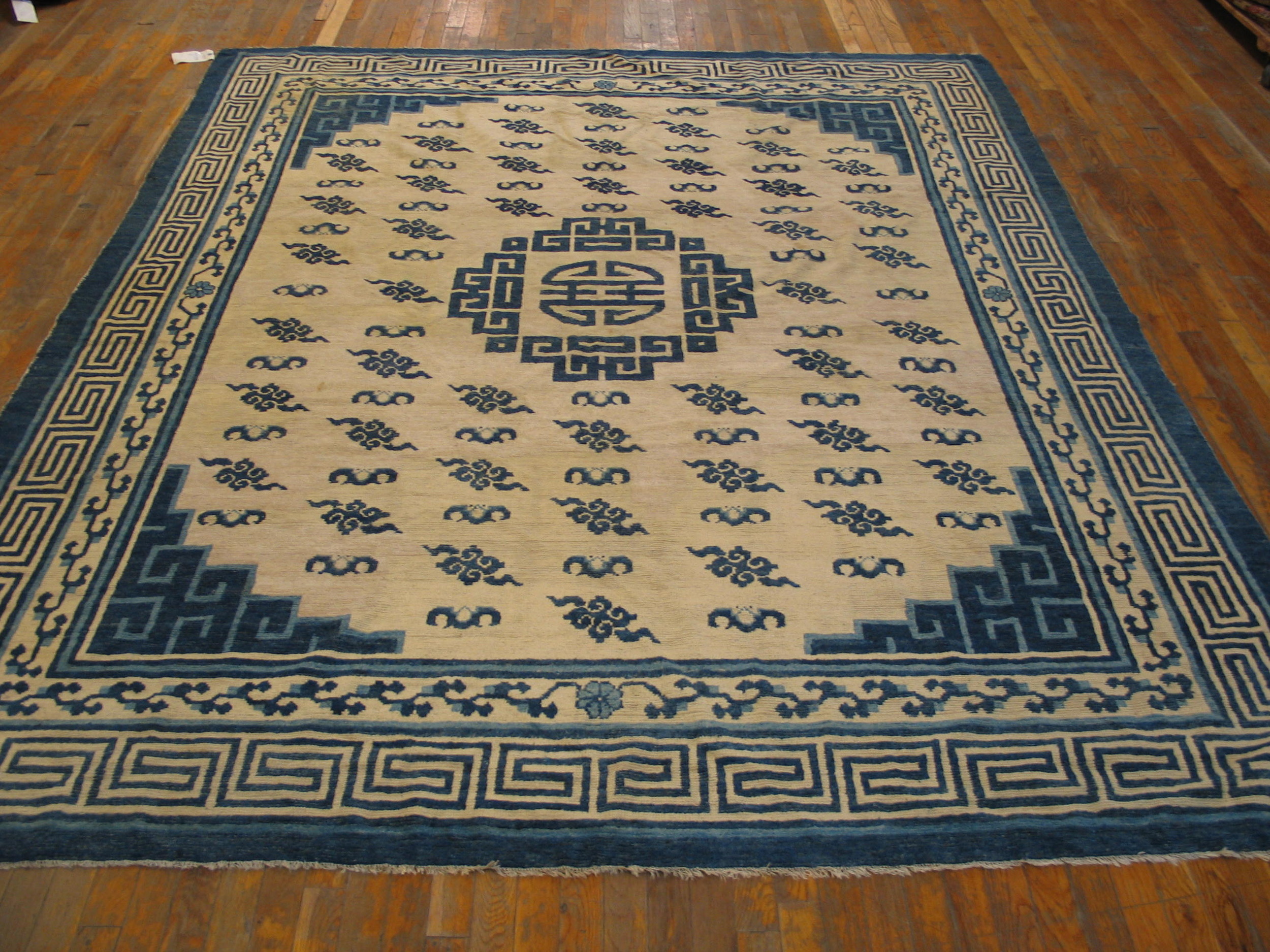
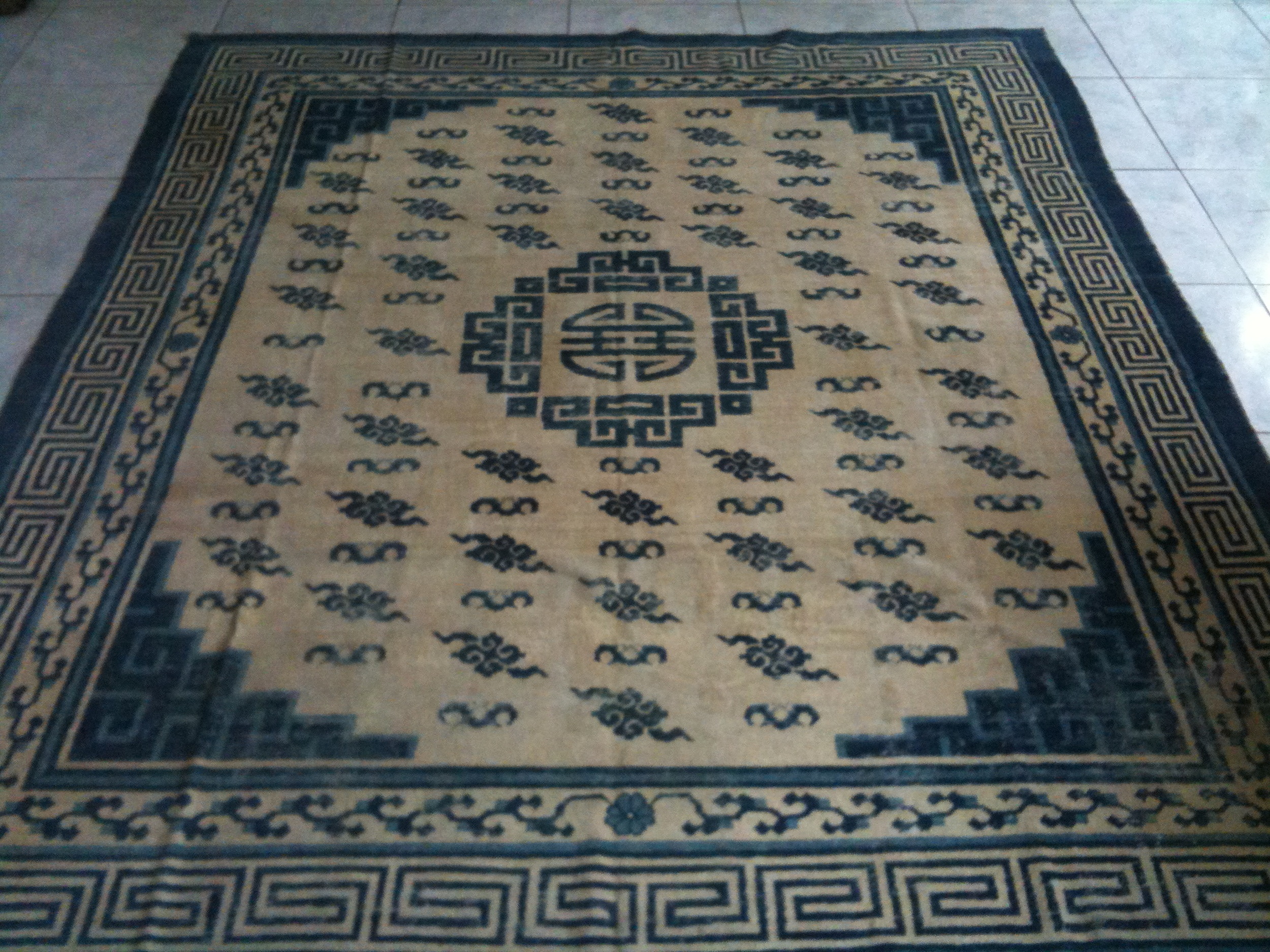
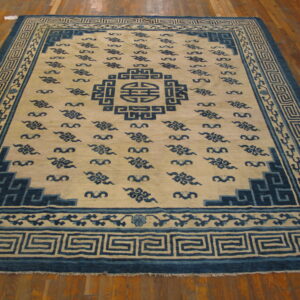
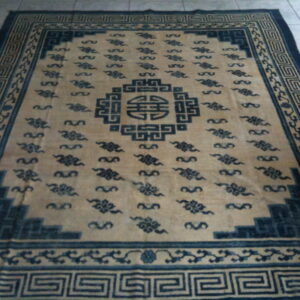
Antique Chinese – Mongolian Chinese Ivory 1860s Rug, Circa Date: 1860s. This exceptional example of 19th-century East Asian weaving is defined by its striking, two-tone palette. The expansive field is rendered in a soft, aged ivory color rugs, providing a perfect counterpoint to the deep indigo blue used throughout the primary motifs and complex borders.
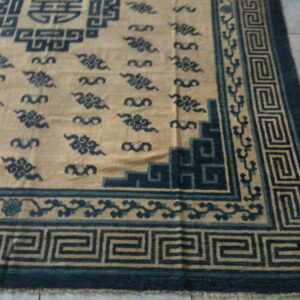
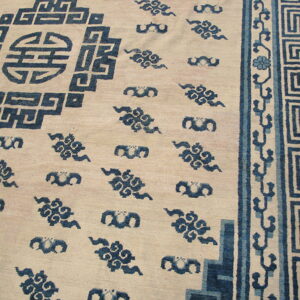
The design is highly symbolic and meticulously executed. The central medallion prominently features the traditional Shou symbol, representing longevity and good fortune, framed by a stepped, architectural structure. This is complemented by the powerful, continuous meander pattern that forms the main guard border, demonstrating the sophisticated use of geometric rugs in this region.
The open field is delicately populated with repeating Ruyi cloud bands, traditional motifs symbolizing heaven and good fortune, which float gracefully across the pale ground. The impressive scale and balanced composition suggest this piece was intended as a significant furnishing, likely a room size rugs designed to command a formal reception area.
Woven during the late Qing Dynasty, this piece represents a rare convergence of traditional Chinese iconography and the robust weaving techniques associated with Mongolian production. Its exceptional clarity of color and remarkable preservation make it a museum-quality example, highly sought after by collectors of fine antique rugs.