
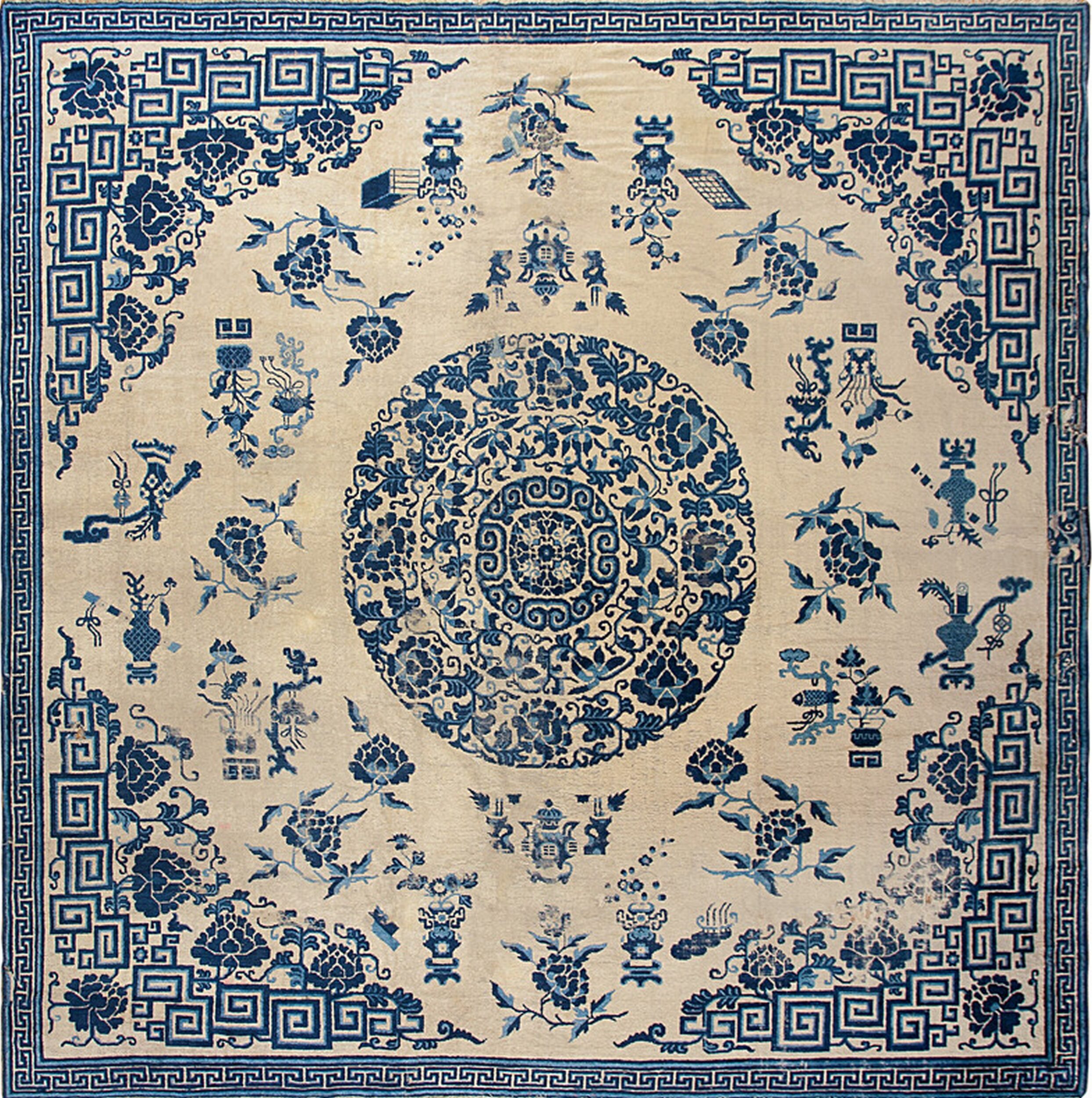
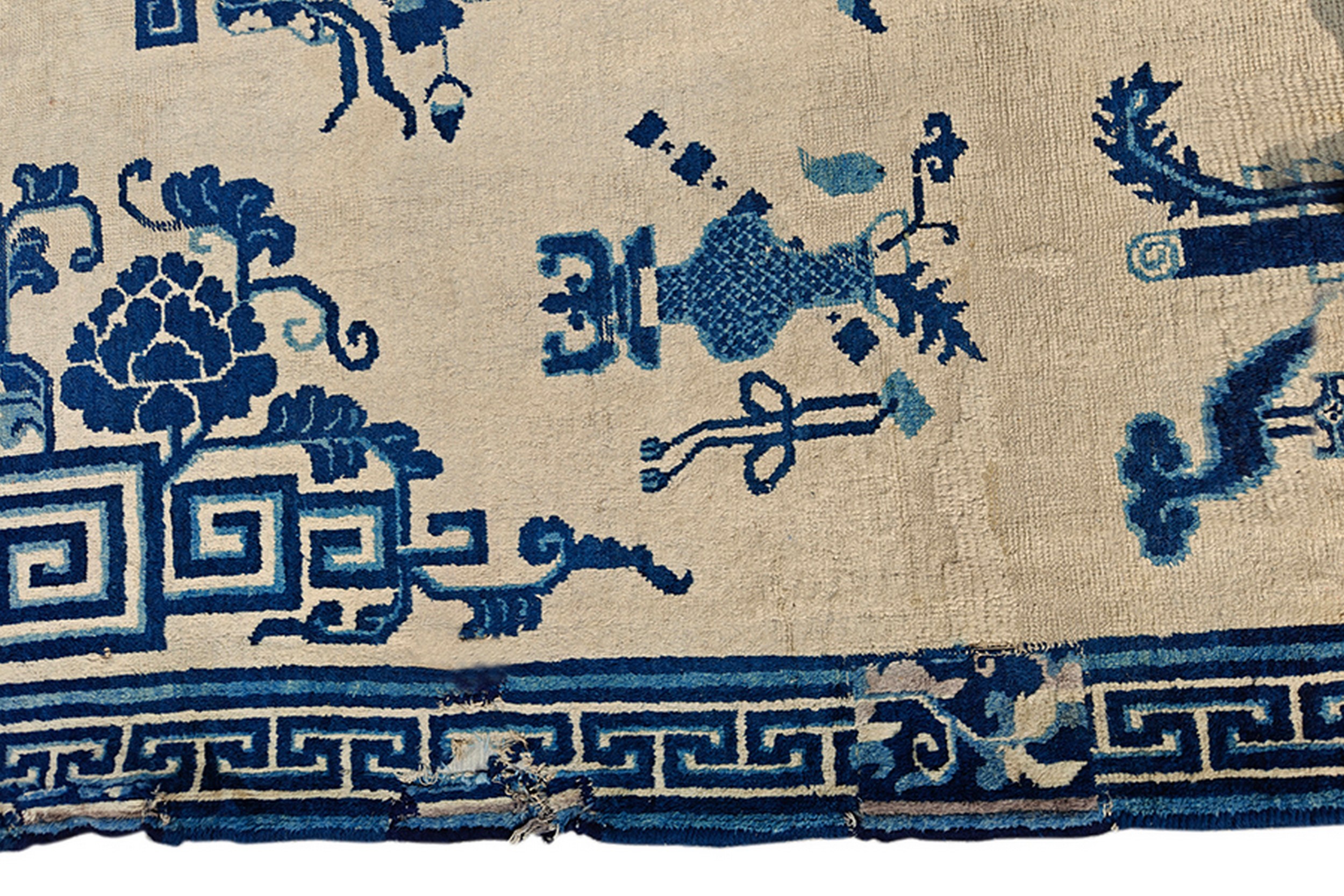
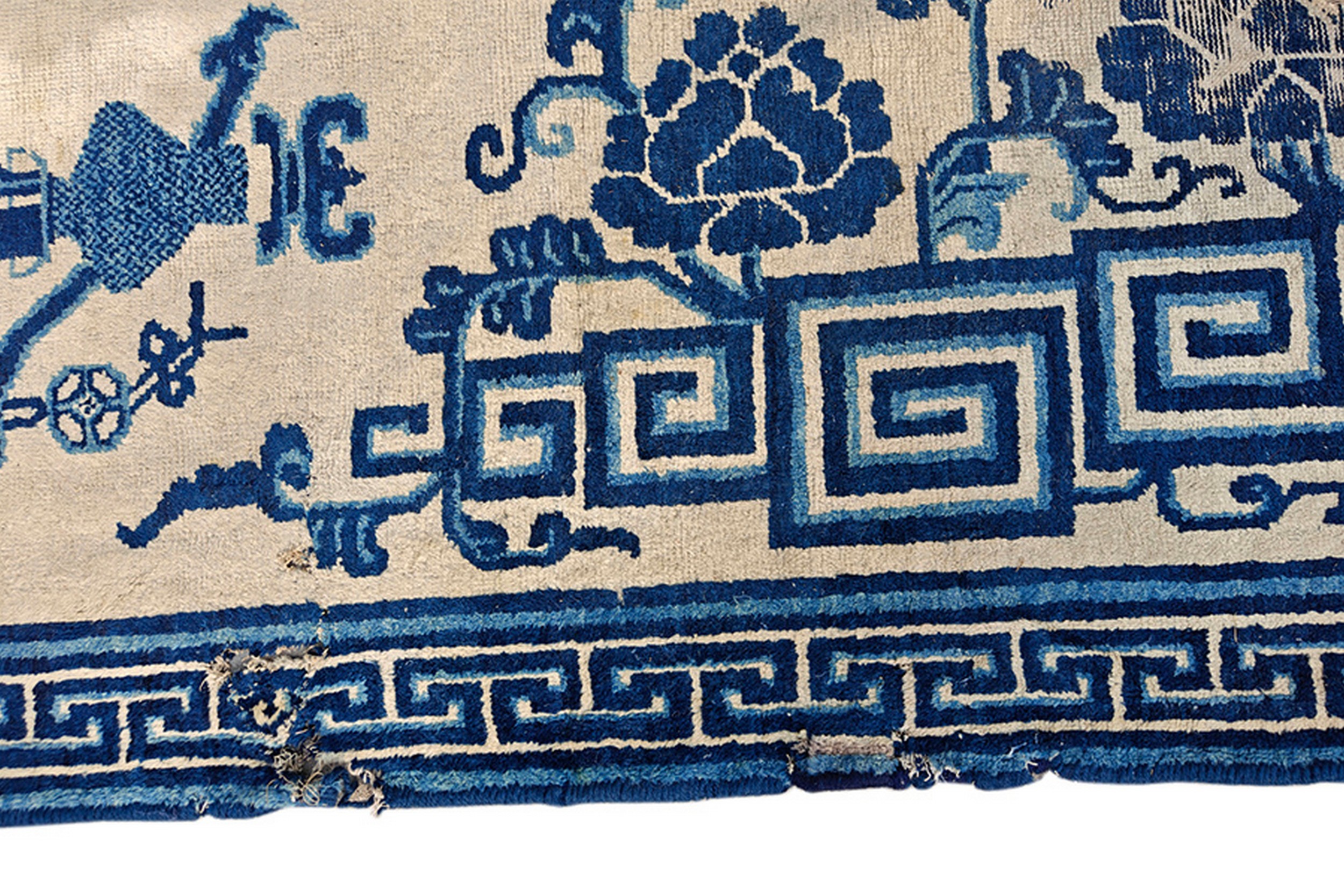
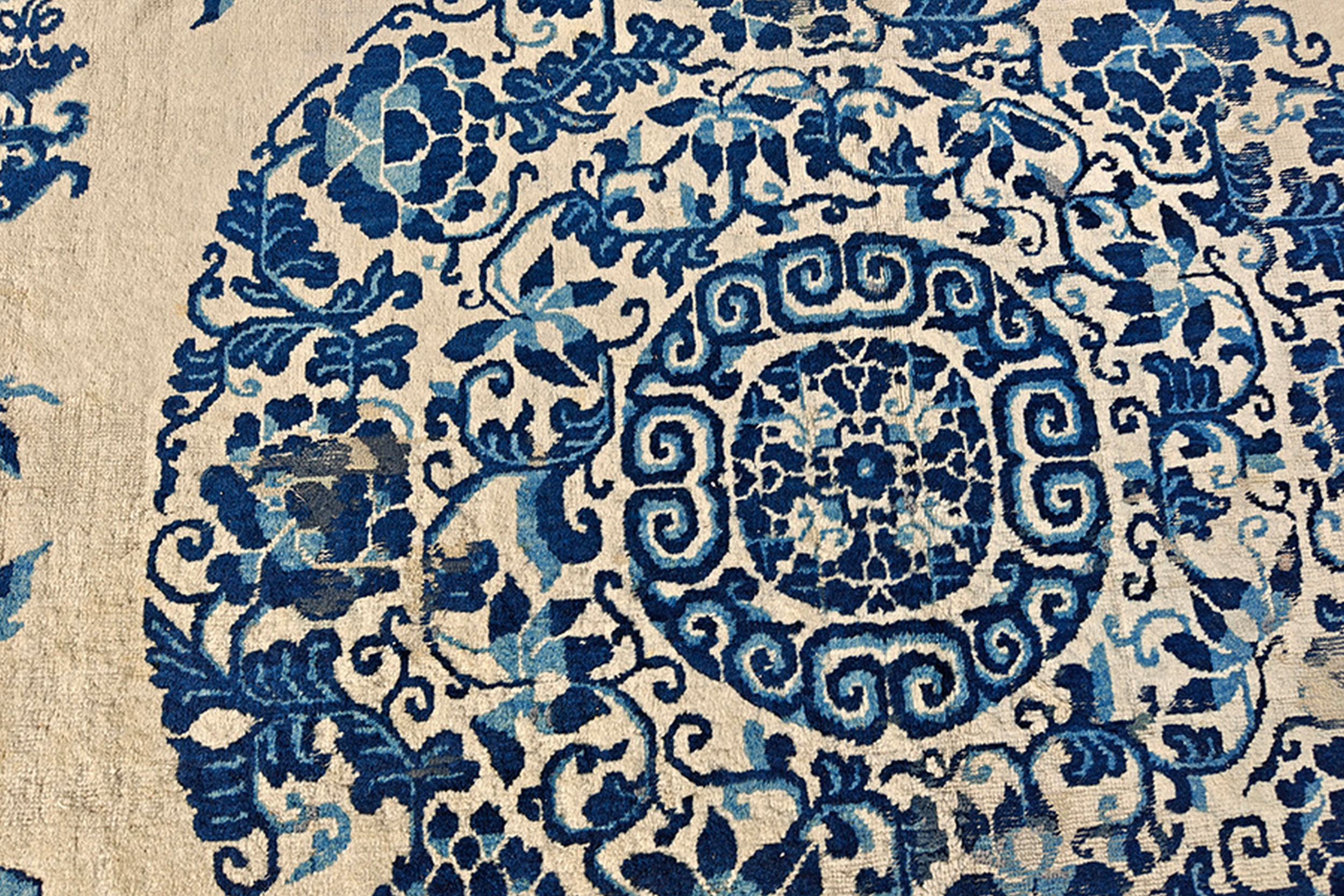
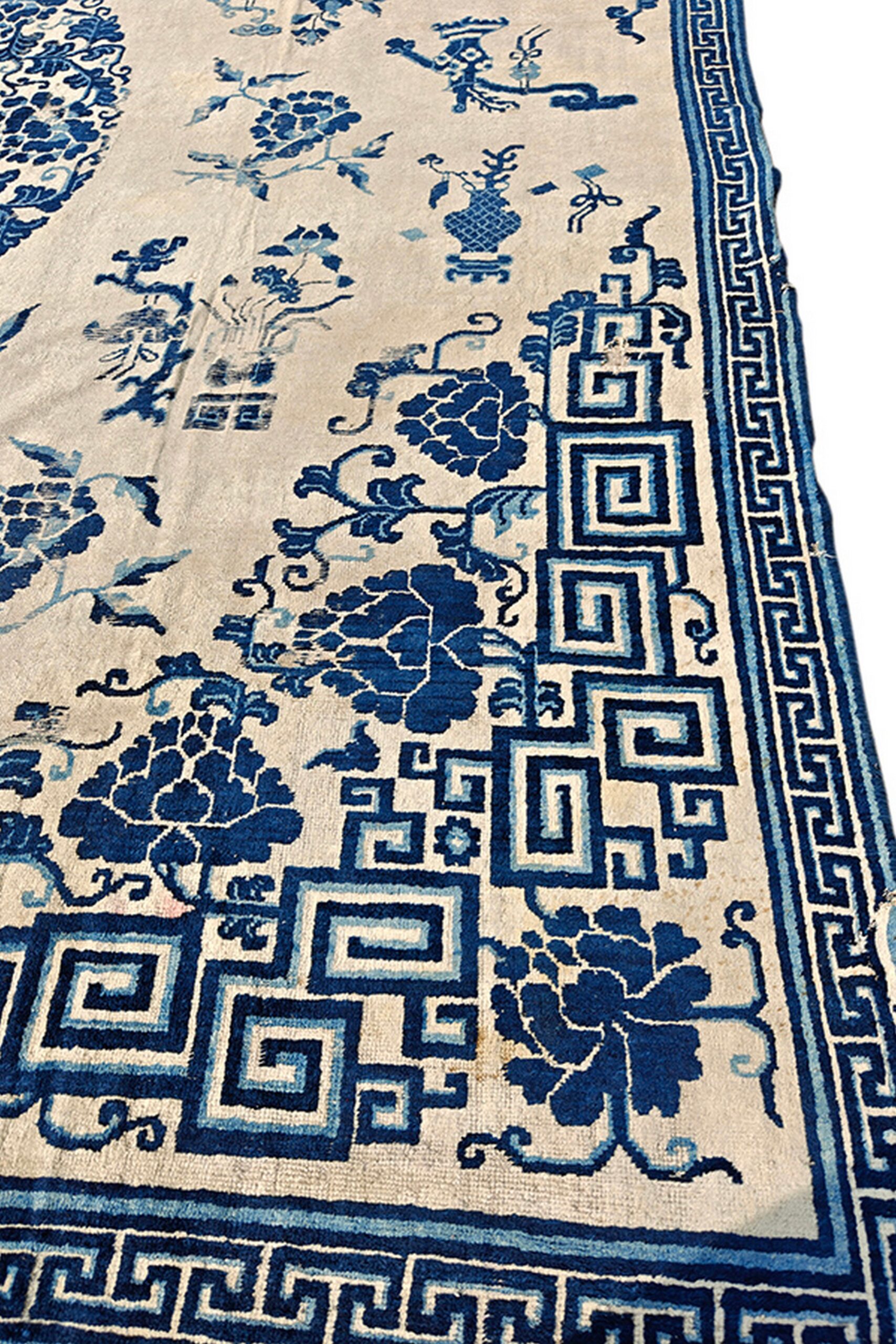
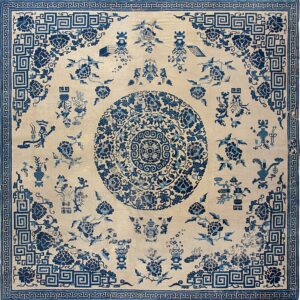
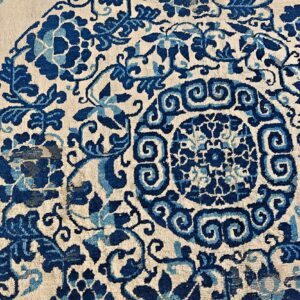
Antique Ningxia Chinese Medallion Knotted Rug, Circa Date: 1850s. This exceptional Chinese textile exemplifies the refined aesthetic of late Qing Dynasty weaving. Its balanced composition, centered around a dense floral medallion, immediately establishes it as a highly collectible example of antique rugs. The use of strong indigo dye against the pale field creates a striking visual clarity typical of the region’s finest output.
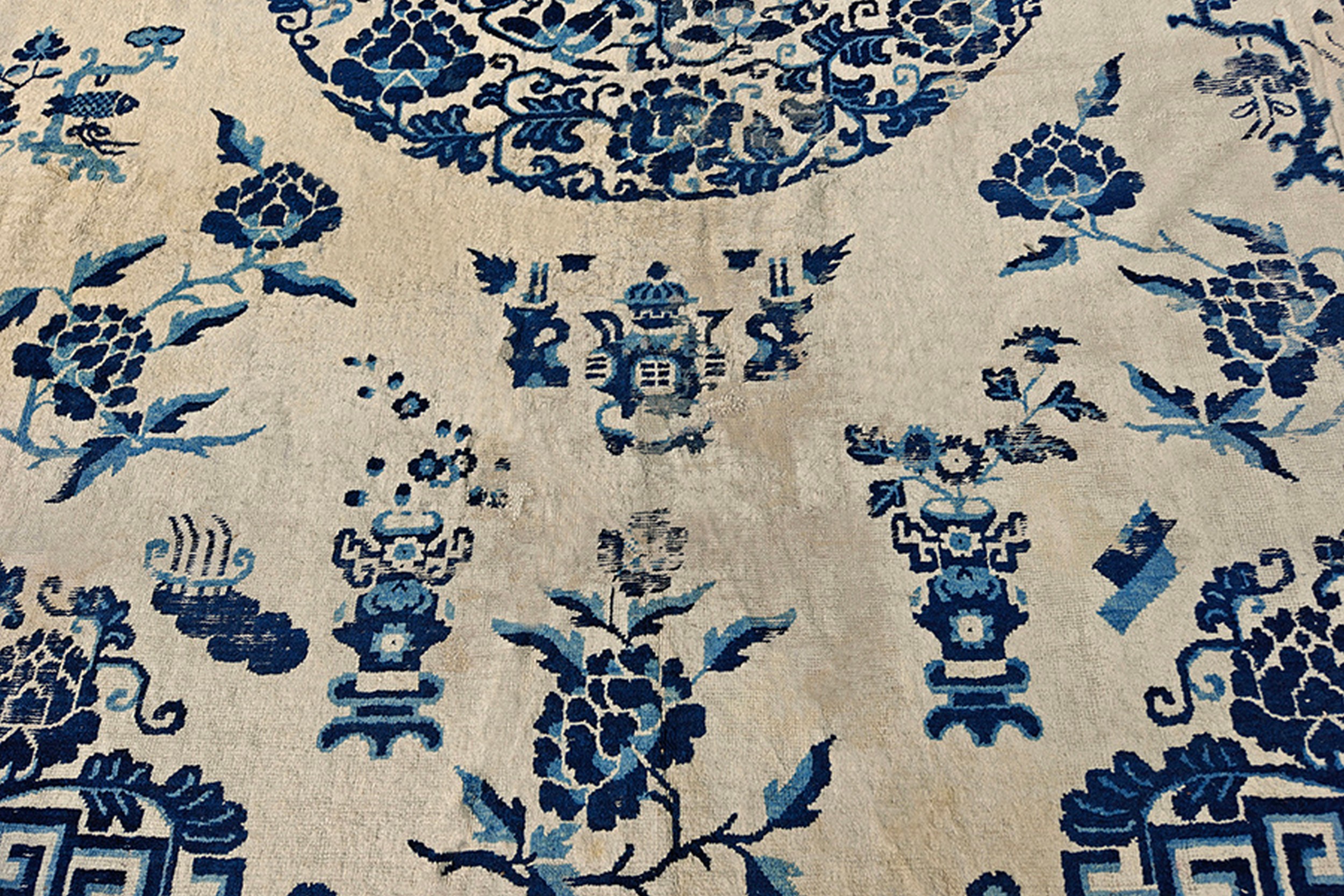
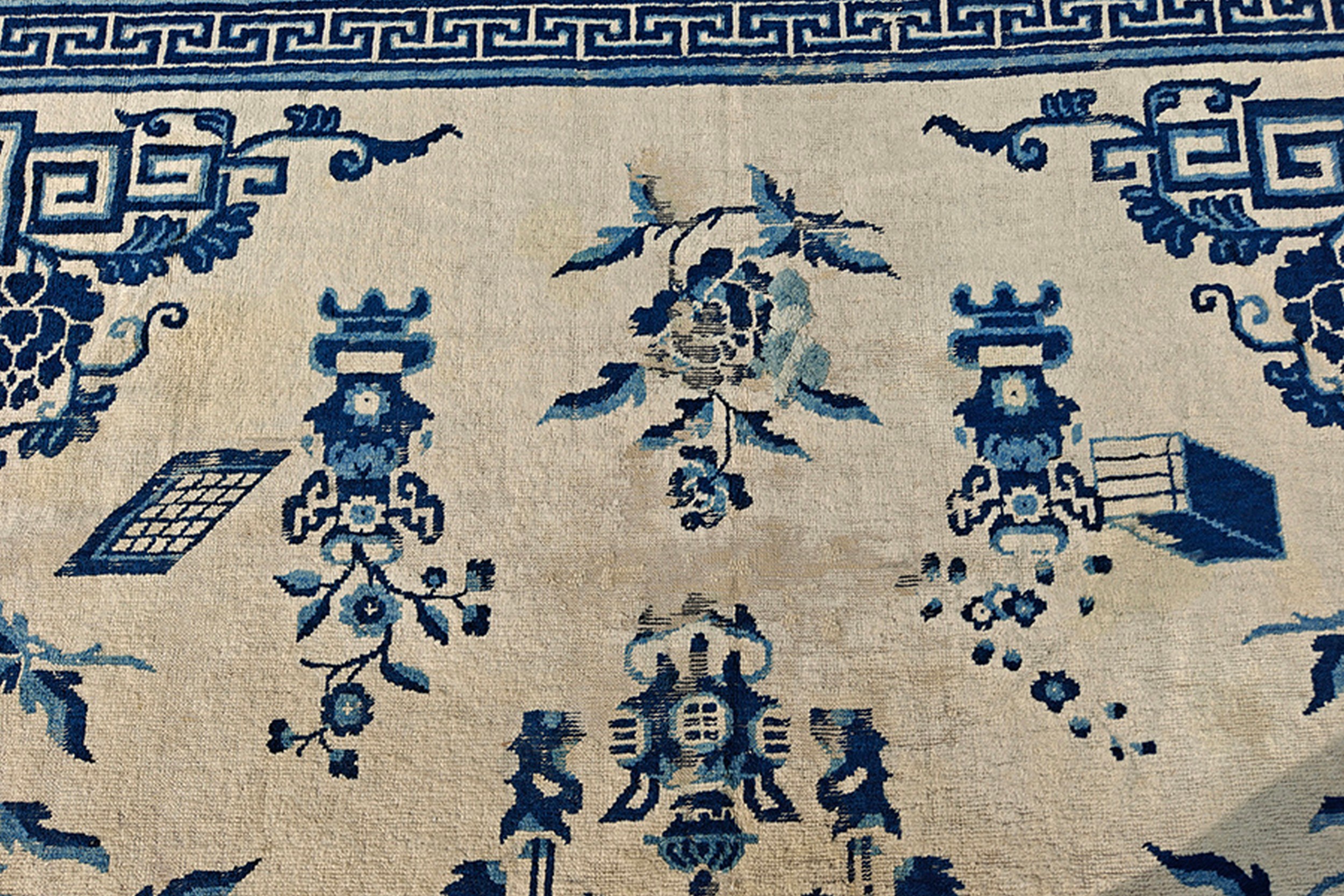
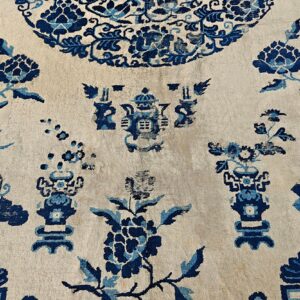
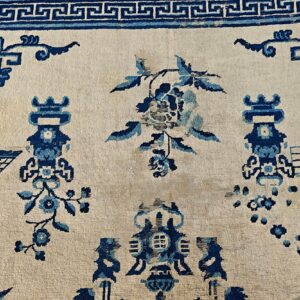
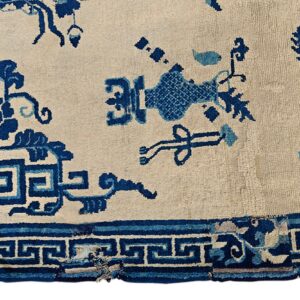
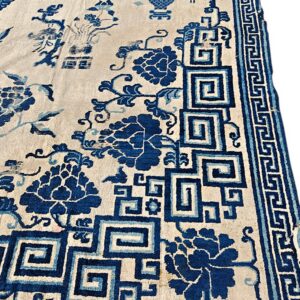
The open field is rendered in a soft, aged ivory color, providing a perfect canvas for the scattered auspicious and scholarly motifs that surround the central design. These detailed elements—including vases, ritual objects, and stylized flora—are executed with precision, showcasing the weaver’s mastery of curvilinear forms within the strict geometry of the overall design. The limited palette emphasizes form and line over chromatic complexity.
While many Ningxia pieces were smaller, this example possesses the scale and presence of a true room size rug, allowing the intricate details of the medallion to be appreciated fully. The central roundel is a microcosm of dense, stylized peonies and scrolling vines, radiating outward to anchor the entire composition. This scale makes the piece suitable for grand interiors seeking historical depth and sophisticated color contrast.
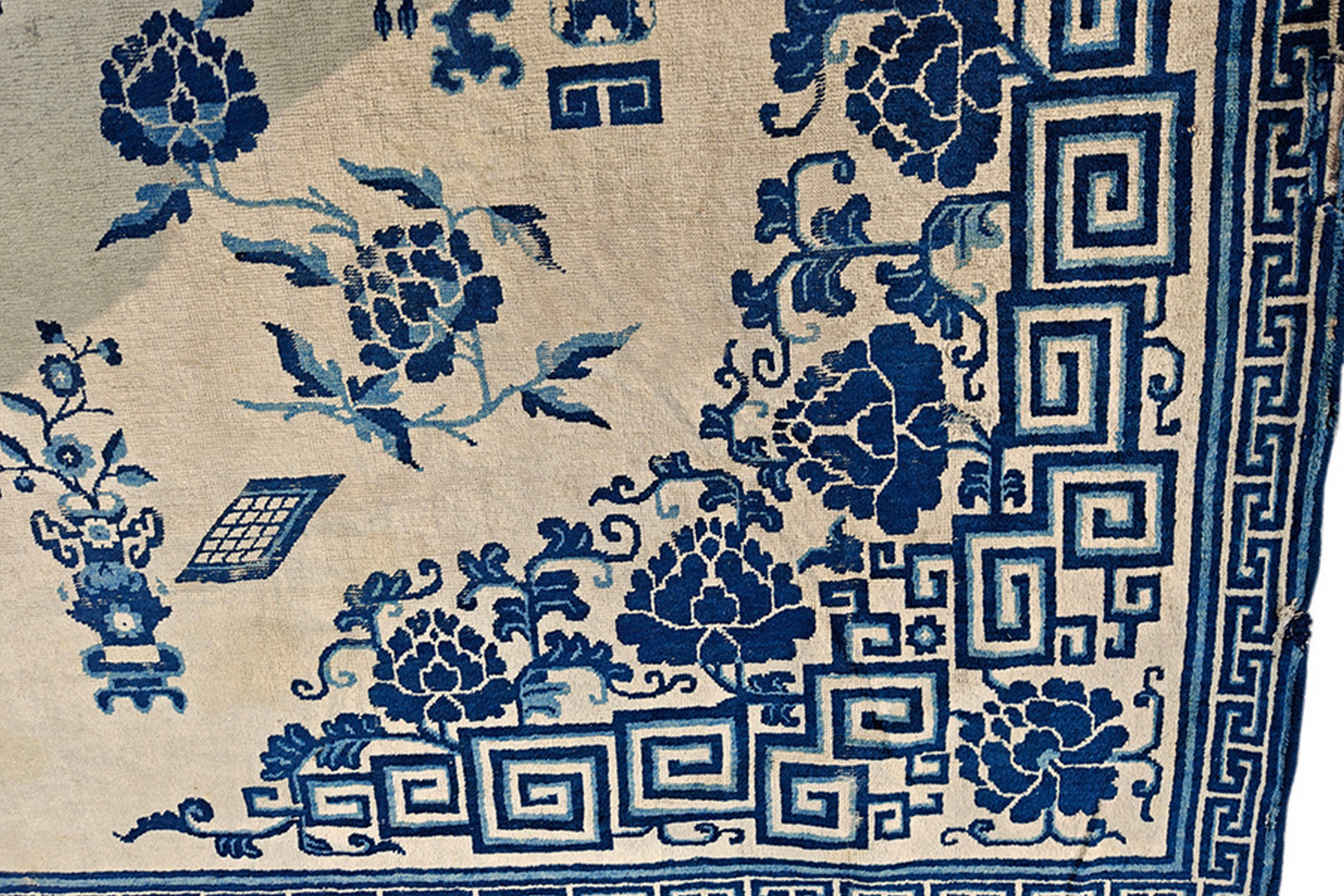
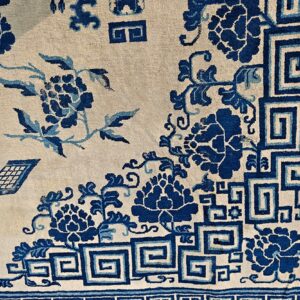
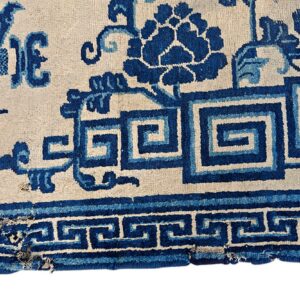
A defining characteristic is the complex, stepped border system, culminating in a bold outer frame featuring the classic Chinese interpretation of the greek Key motif. Known in China as the “Lei Wen” or thunder pattern, this geometric device provides a powerful counterpoint to the organic curves of the field. This rug represents a pinnacle of 19th-century Chinese weaving, offering both historical significance and enduring decorative appeal.