
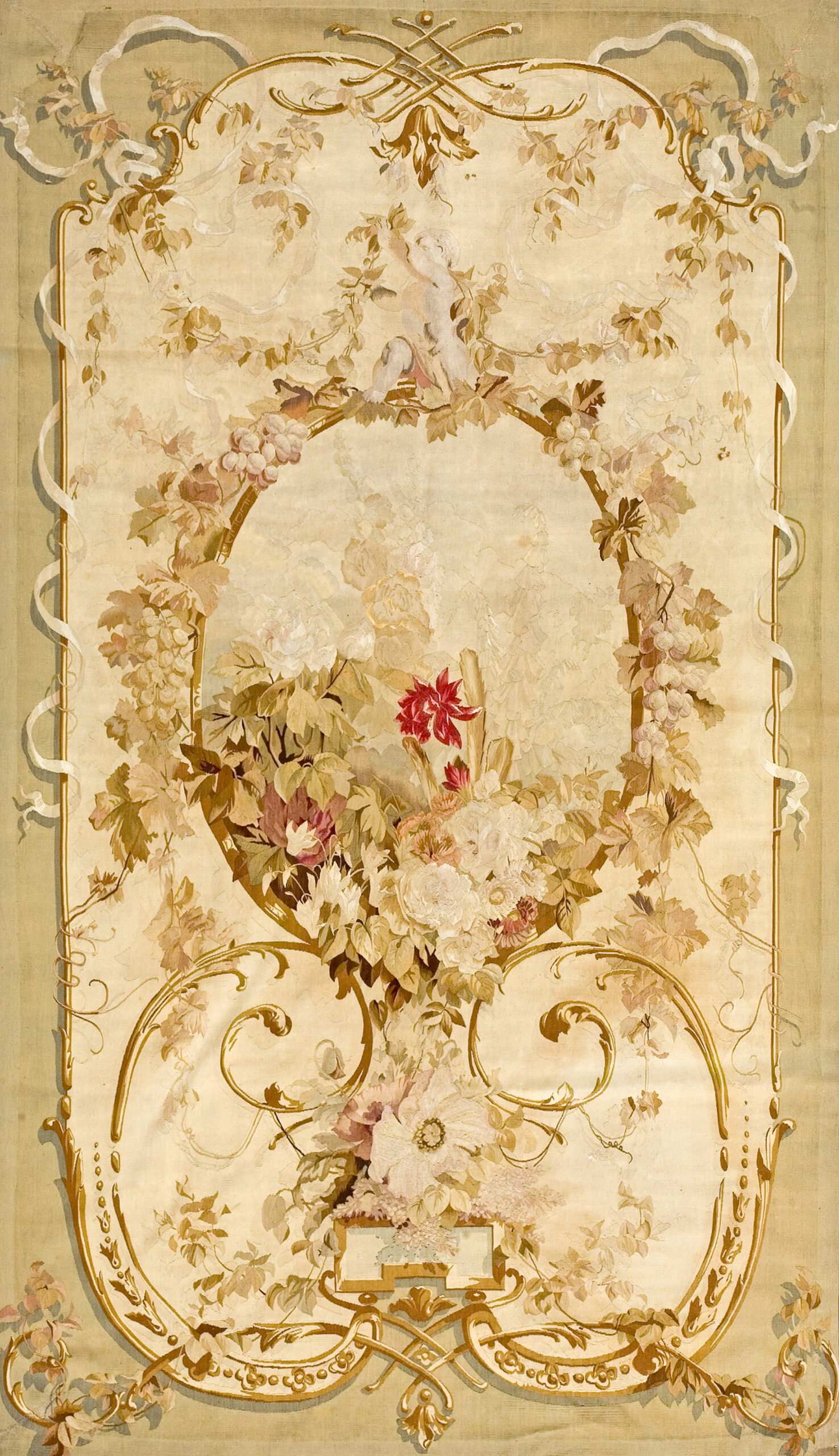
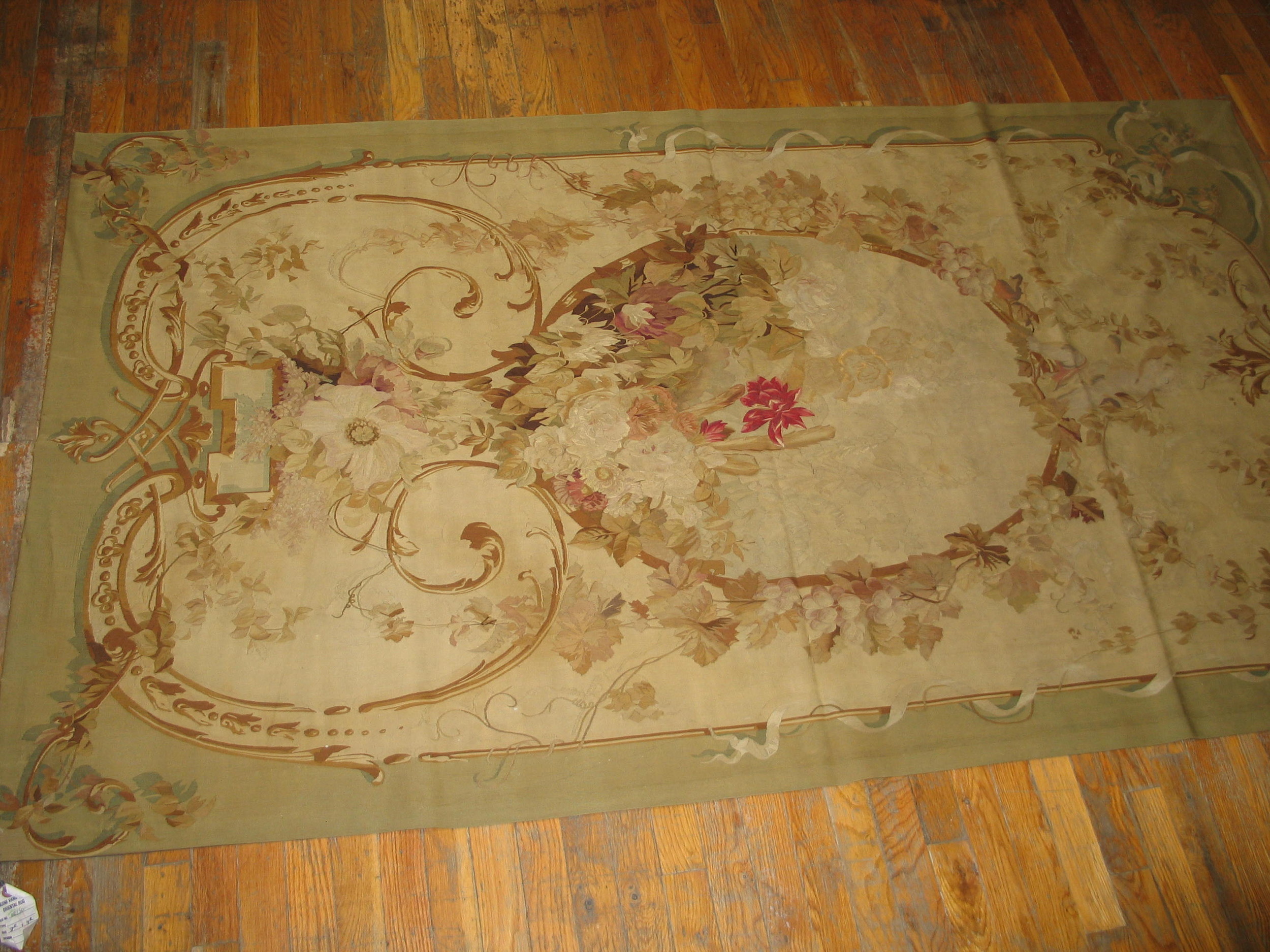
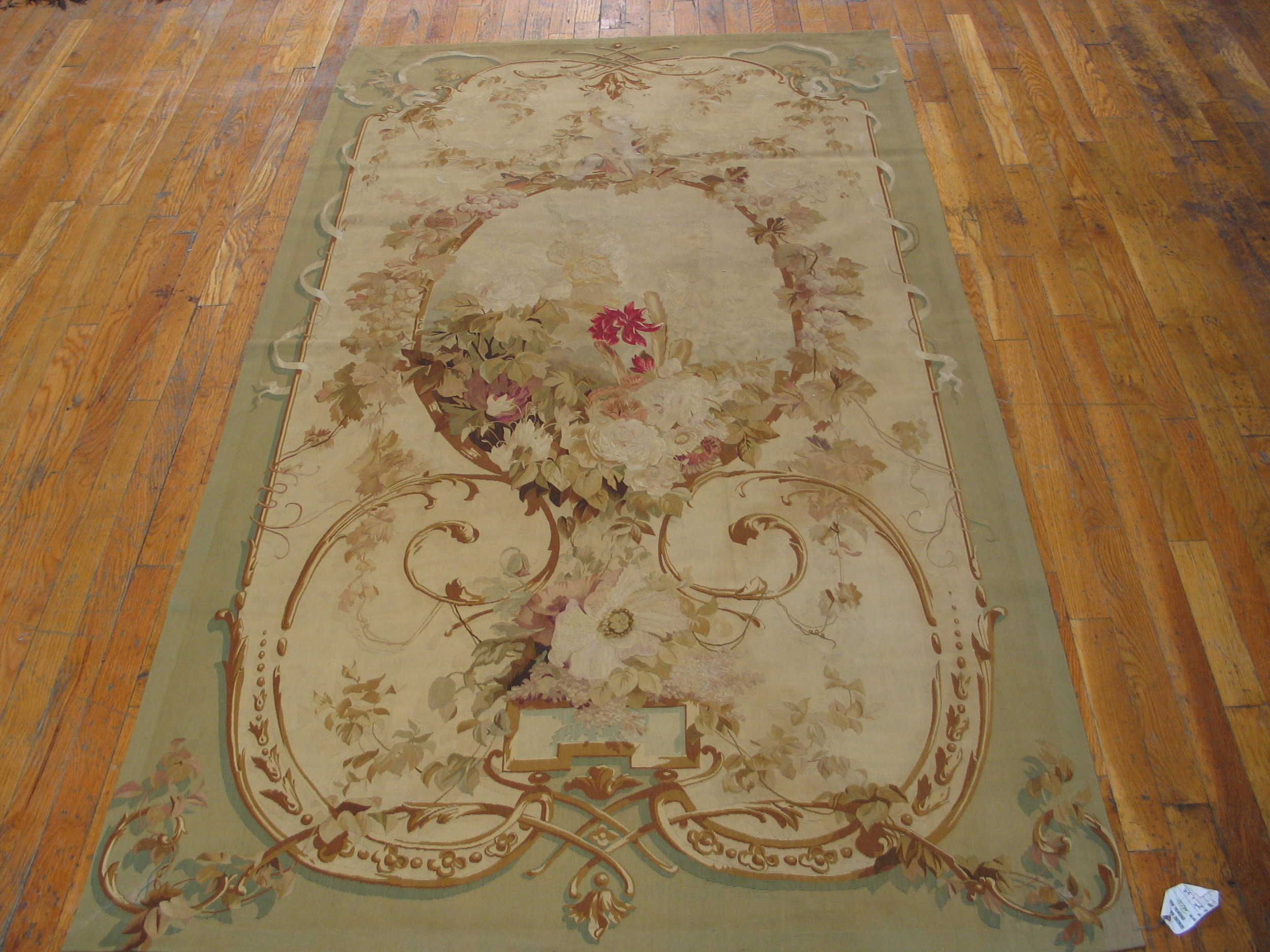
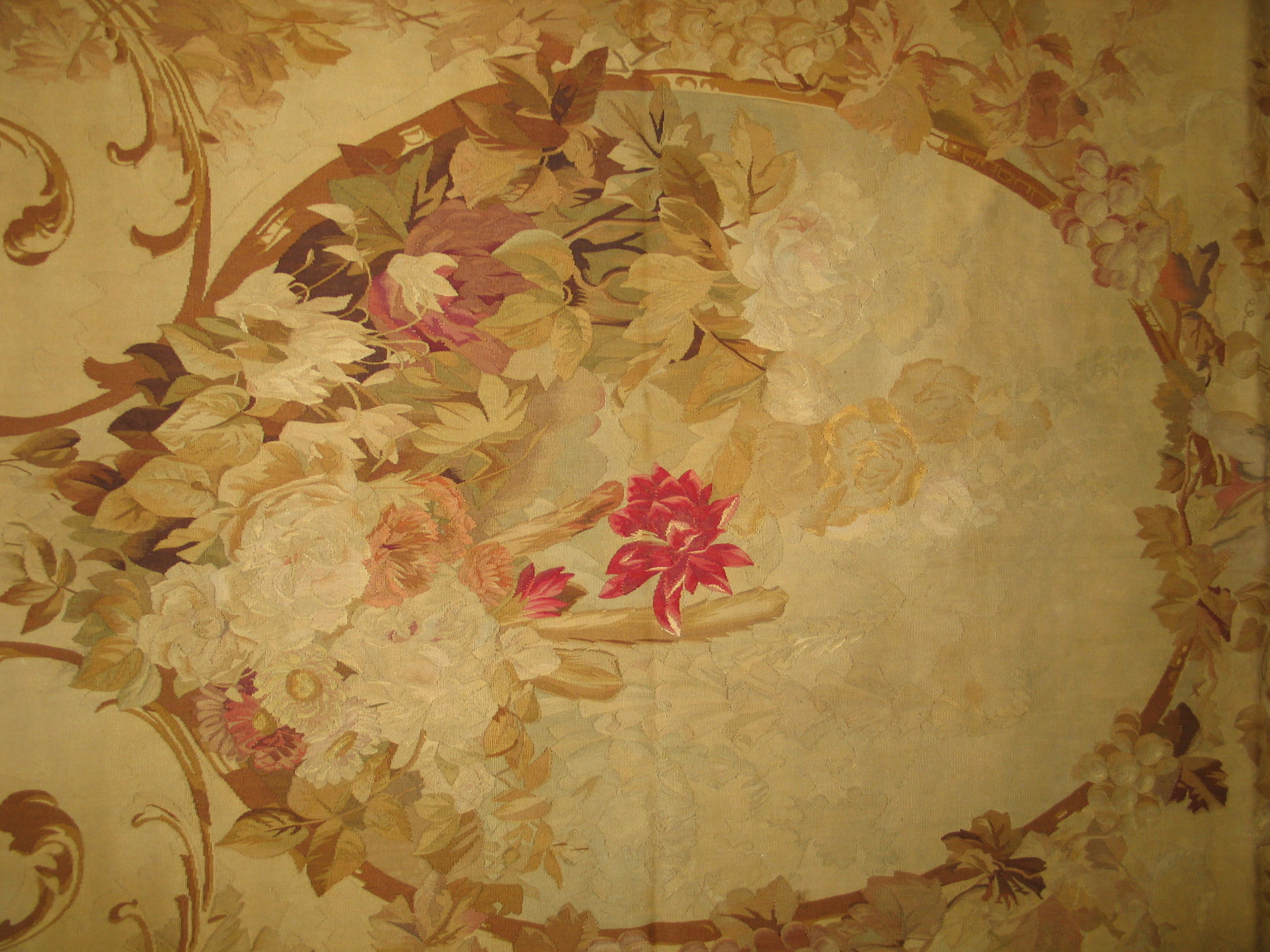
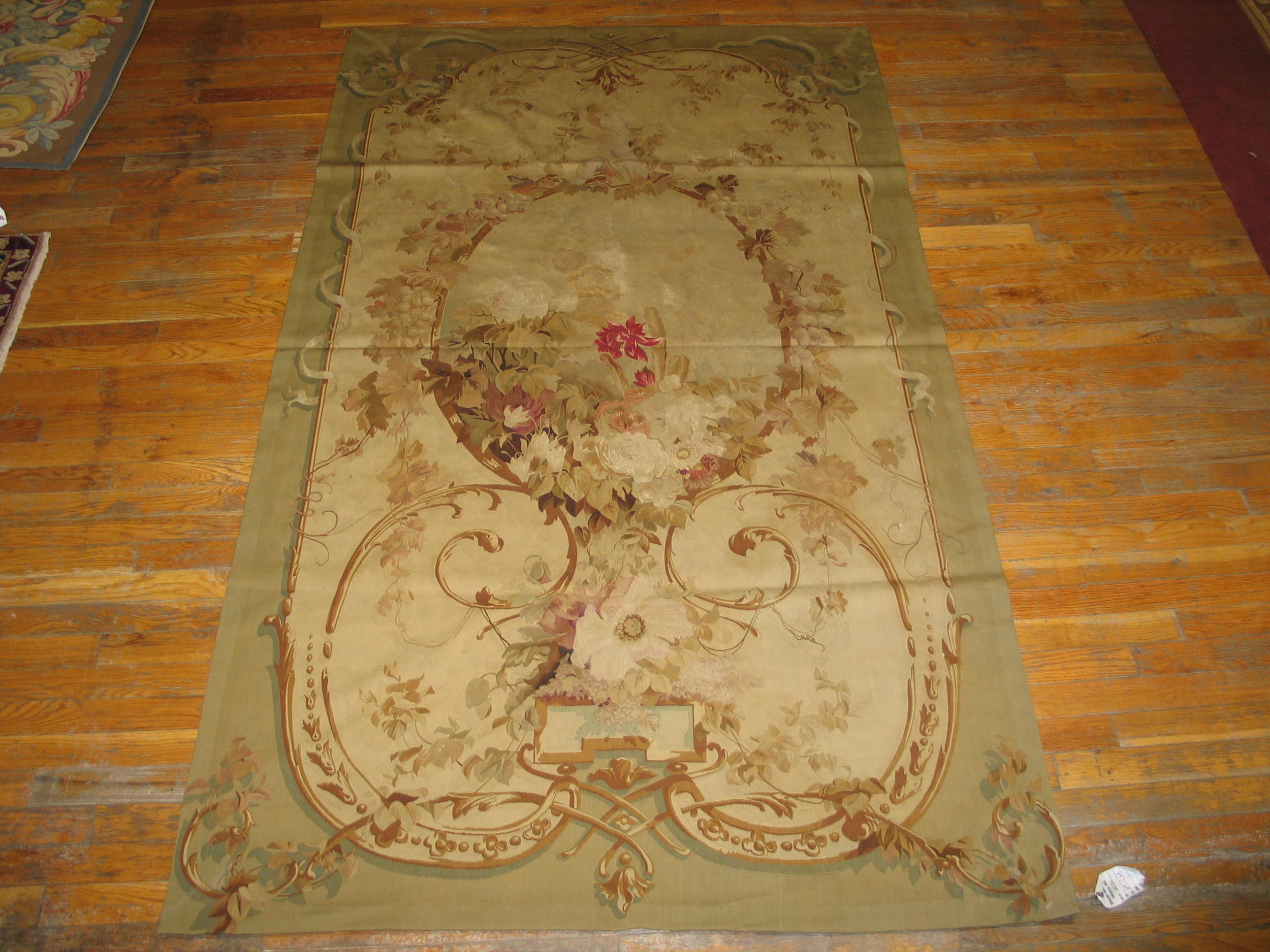
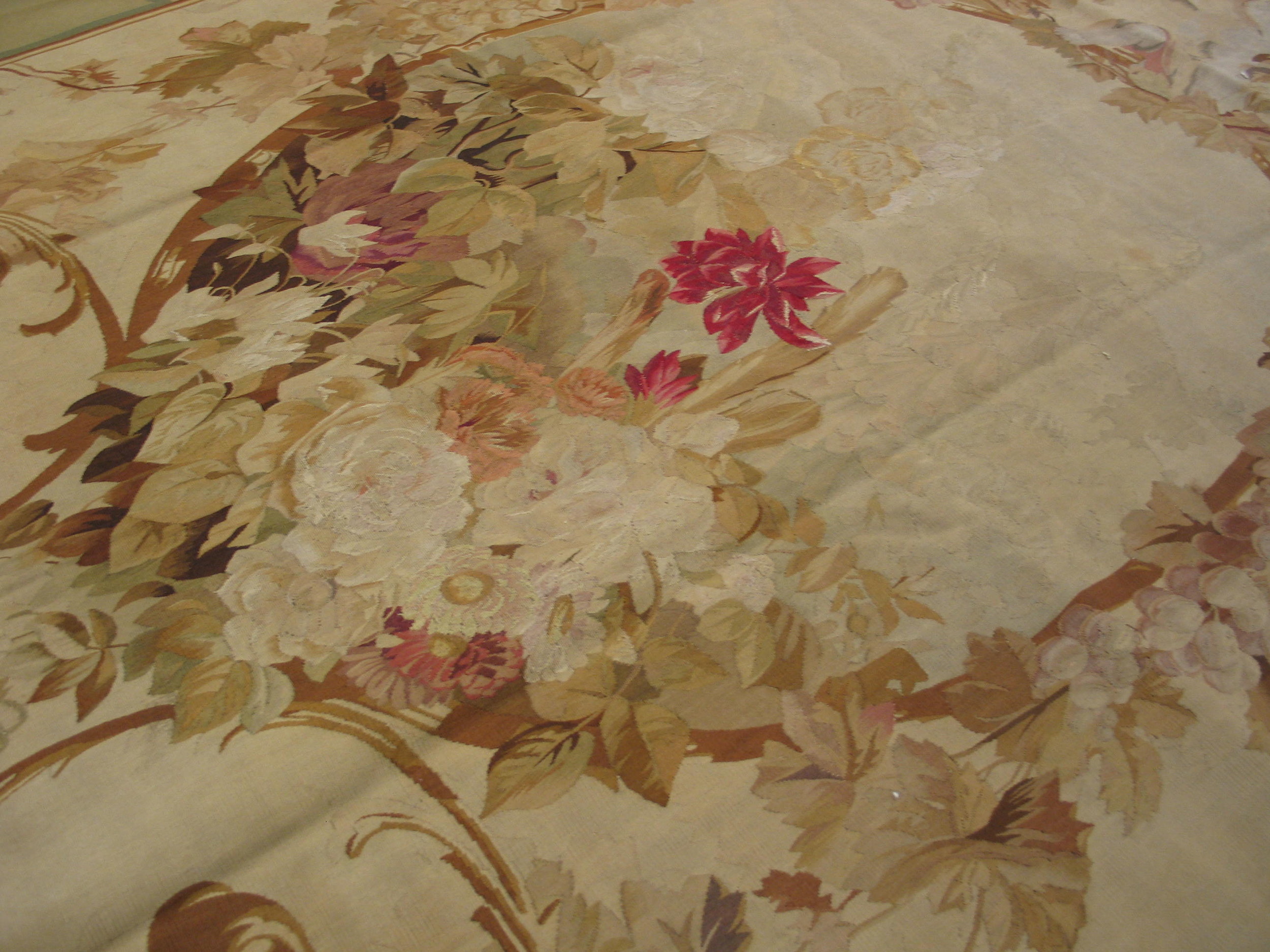
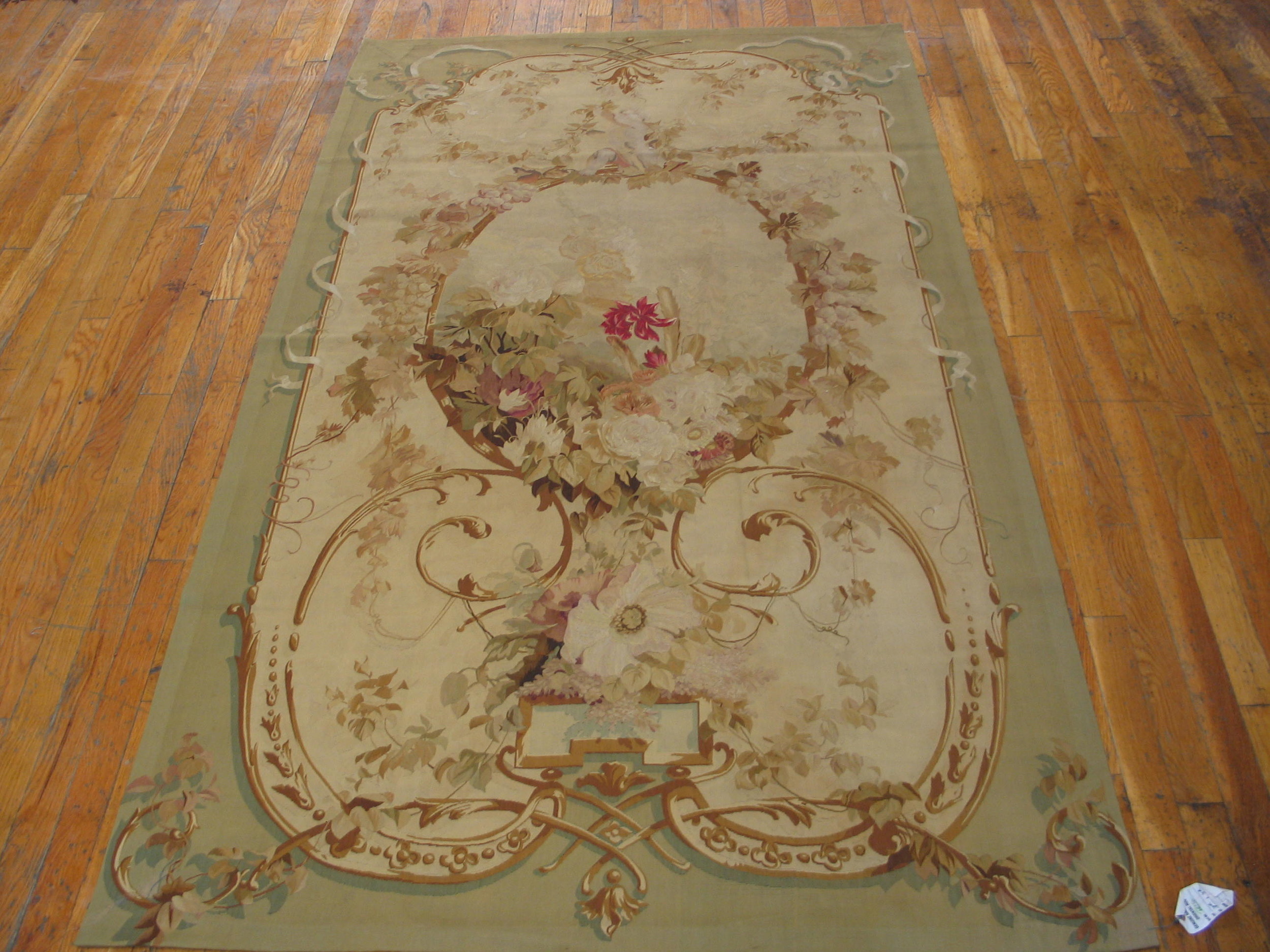
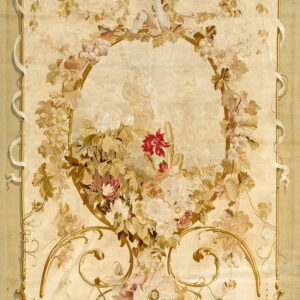
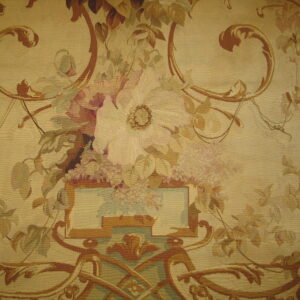
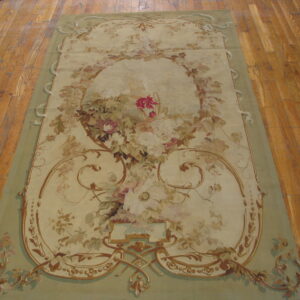
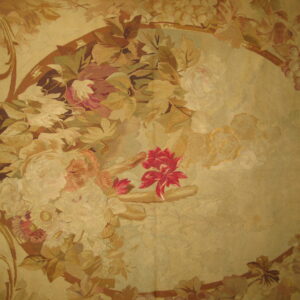
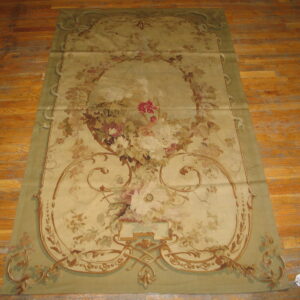
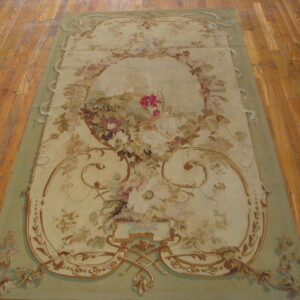
Exuding the grace of a nineteenth-century French estate, this antique Aubusson tapestry panel is a masterwork of neoclassical verticality. The composition unfolds like a window into a golden garden, featuring a playful putto perched atop a lush oval of harvested grapes and climbing vines. Below, a gilded ornamental vase overflows with pale, silken peonies, anchored by a single, dramatic bloom of deep crimson that breathes life into the ethereal, monochromatic palette.
Woven with an extraordinary eye for detail, the panel is framed by flowing ribbons and delicate architectural scrolls that mimic the fine boiserie of a Louis XVI salon. The sophisticated use of sepia, champagne, and ivory tones creates a luminous, atmospheric effect, making it a perfect architectural element for an entryway or a refined gallery space. This tapestry is a quiet celebration of abundance and French refinement, offering a timeless elegance that bridges the gap between textile art and interior architecture.
This vertical panel is an exquisite 19th-century French Aubusson tapestry, likely a “between-the-windows” panel known as a pierment (or trumeau). While your previous Aubusson was a floor covering, this is a delicate wall hanging designed to elongate a room and add a sense of neoclassical light.
This piece belongs to the Napoleon III period (also known as the Second Empire) and dates to approximately 1860–1870.
While it is executed in the Louis XVI Revival style—revisiting the light, neoclassical motifs of the late 1700s—the specific “camaïeu” (monochromatic) tonal work and the heightened romanticism of the floral arrangements are definitive hallmarks of mid-to-late 19th-century French production.
Scene and Iconography: The Harvest Allegory
The composition is a refined celebration of nature and abundance, executed in the Louis XVI Revival style common during the Napoleon III era.
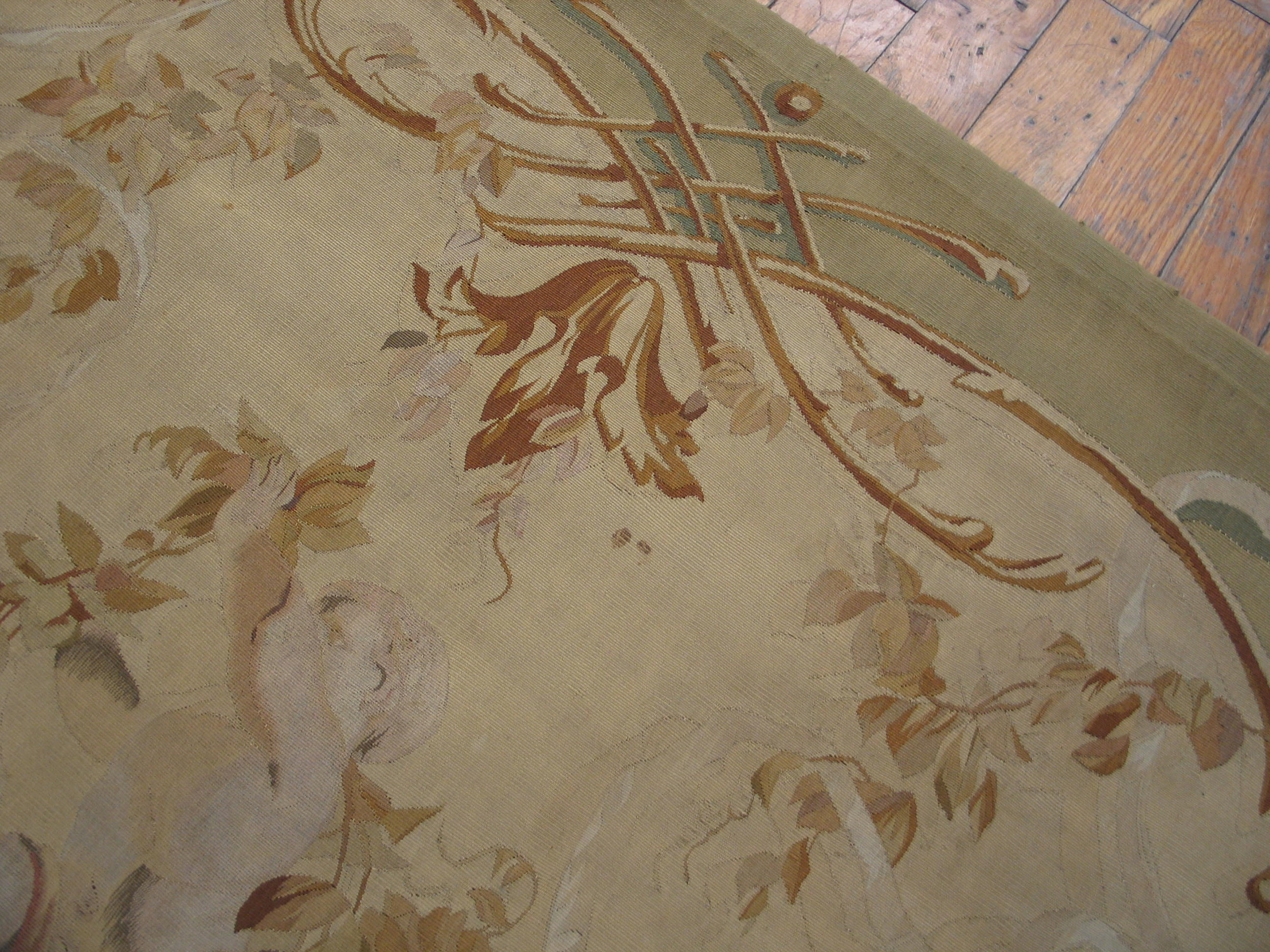
The Putti: At the very top of the central oval, a small, ethereal cherub (putto) is seen playfully reaching into a garland. In 18th and 19th-century French art, putti often represented the seasons or the playful spirit of the garden.
The Central Wreath: The primary focus is a large oval “wreath” composed of heavy clusters of grapes and vine leaves. This is a classic symbol of Autumn and Bacchus, suggesting a theme of harvest and celebration.
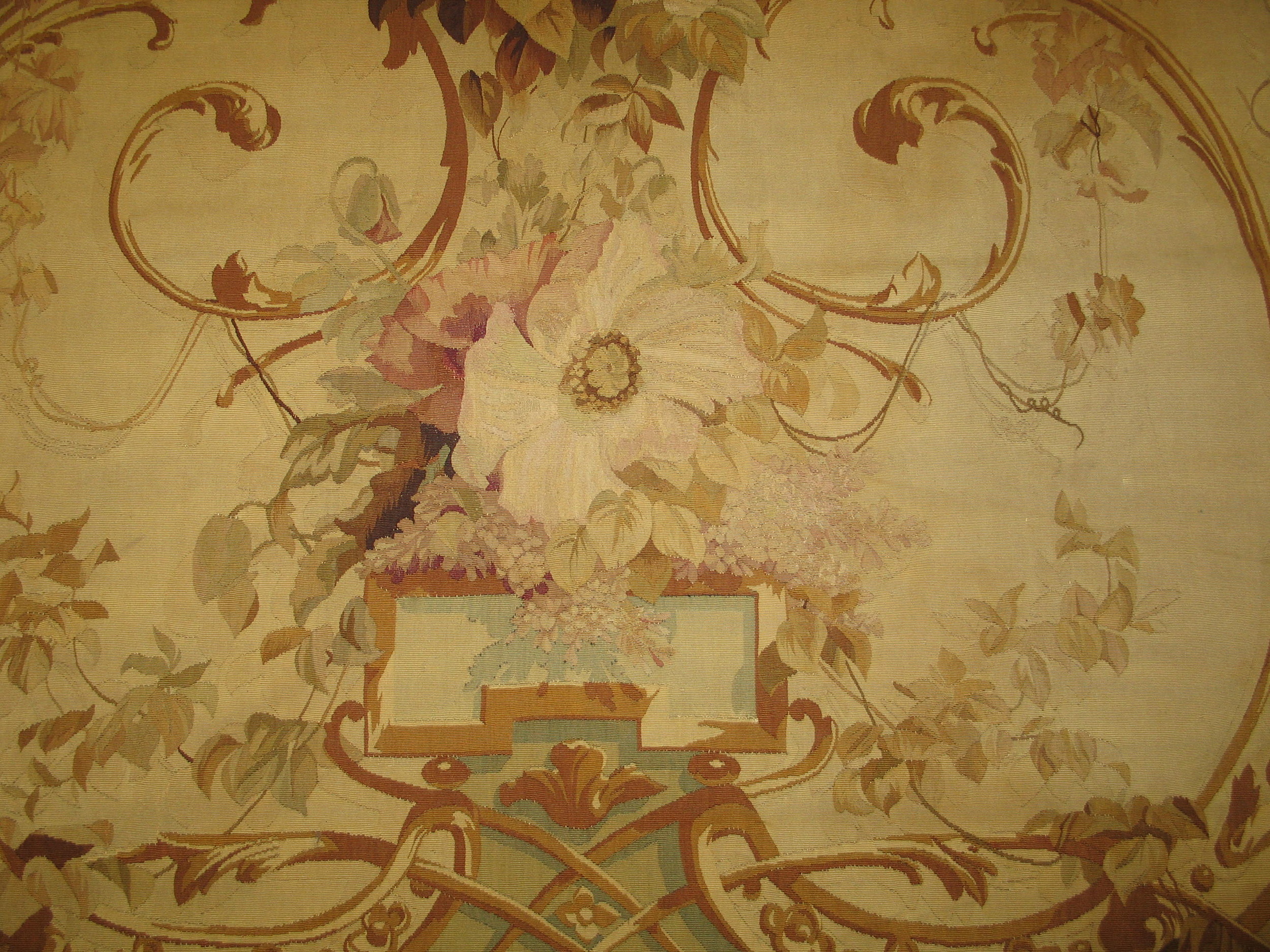
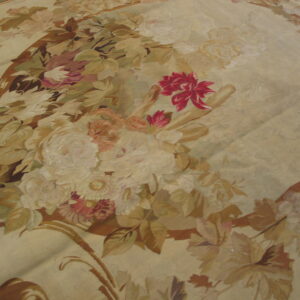
Floral Vase: The base of the tapestry features a stylized, gold-toned vase overflowing with large, pale peonies and roses. The single pop of crimson red in the center serves as a “focal heart” to the otherwise muted, tonal composition.
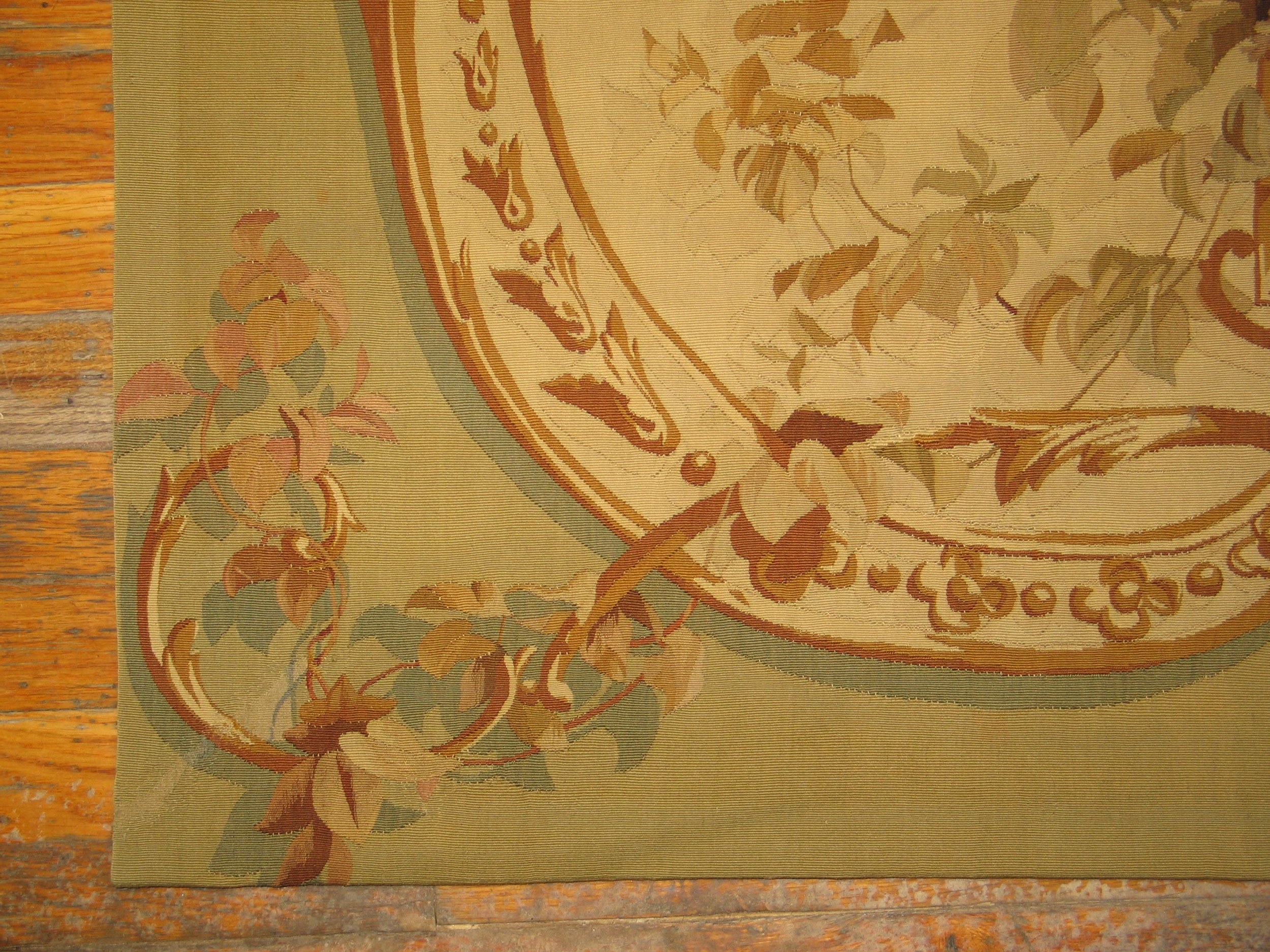
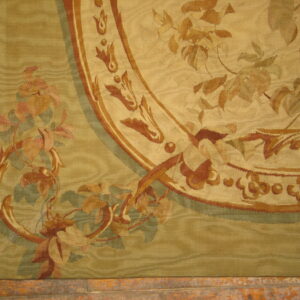
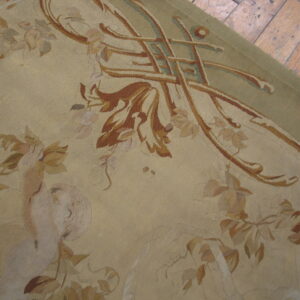
Ribbon and Bows: Framing the entire scene are delicate, flowing white ribbons and a slender gold architectural border that curls into “S” and “C” scrolls at the corners.
Factual Details
Style: Louis XVI Revival / Neoclassical.
Origin: Aubusson, France (Creuse Valley).
Technique: Flat-woven tapestry. Note the fine, “etched” quality of the grapevines; this was achieved by skilled weavers following a paper cartoon, using silk threads for the shimmering highlights in the ribbons and flower petals.
Palette: This piece utilizes a “Camaïeu” technique—a style of monochromatic or tonal painting. It relies on a spectrum of creams, champagnes, and “dead leaf” (sepia) tones, which were highly fashionable for creating a sophisticated, airy atmosphere in a grand chateau.