
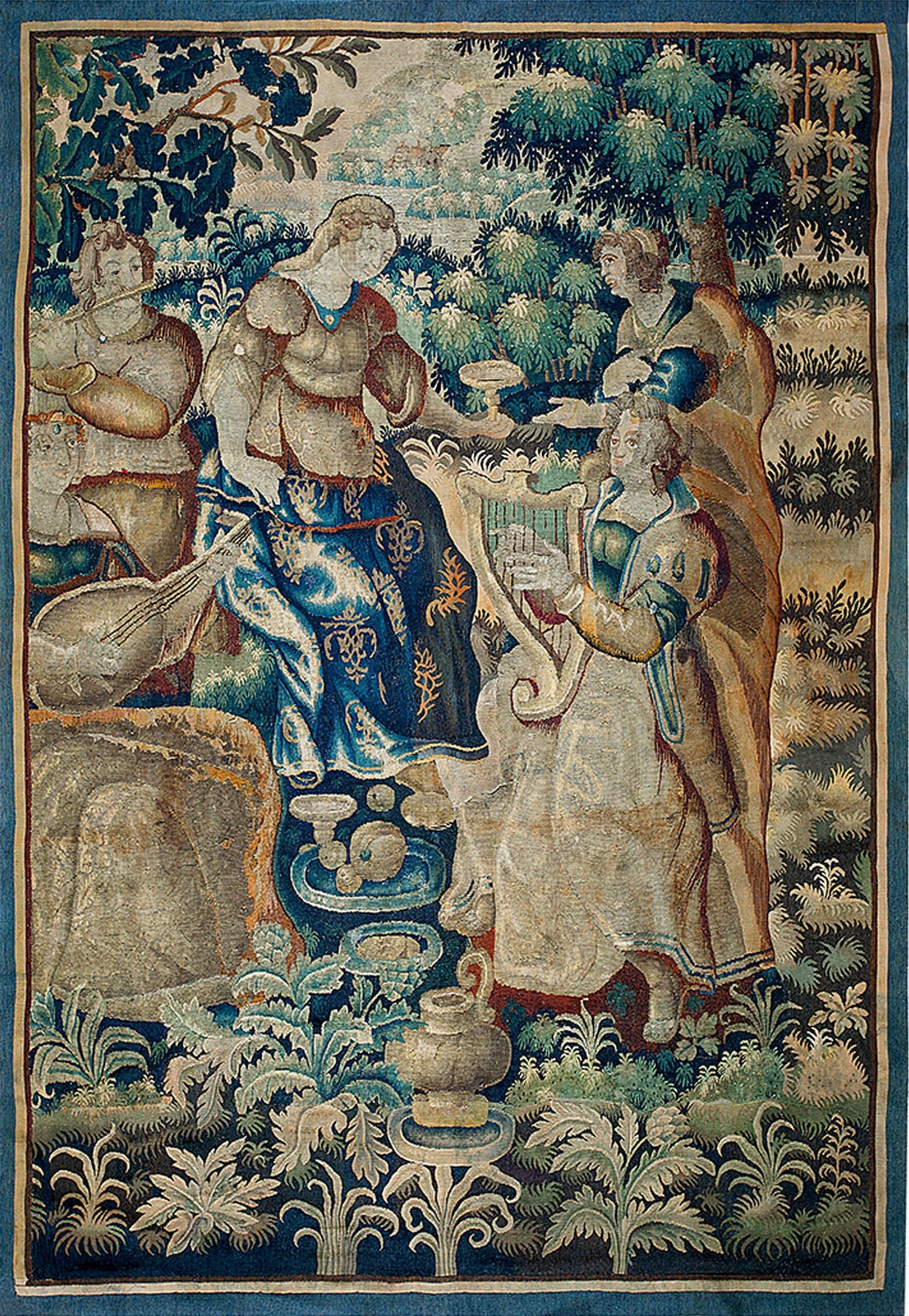
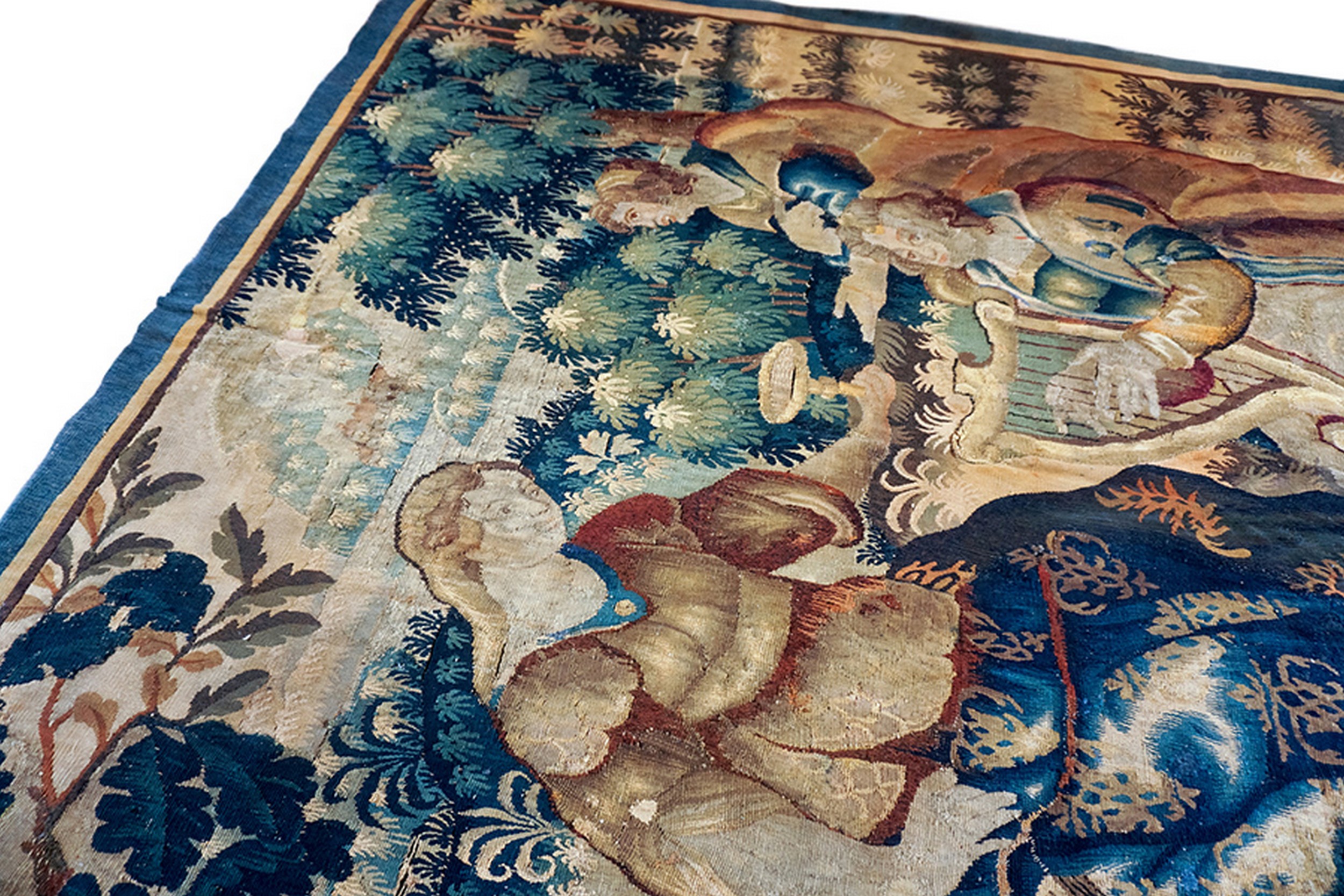
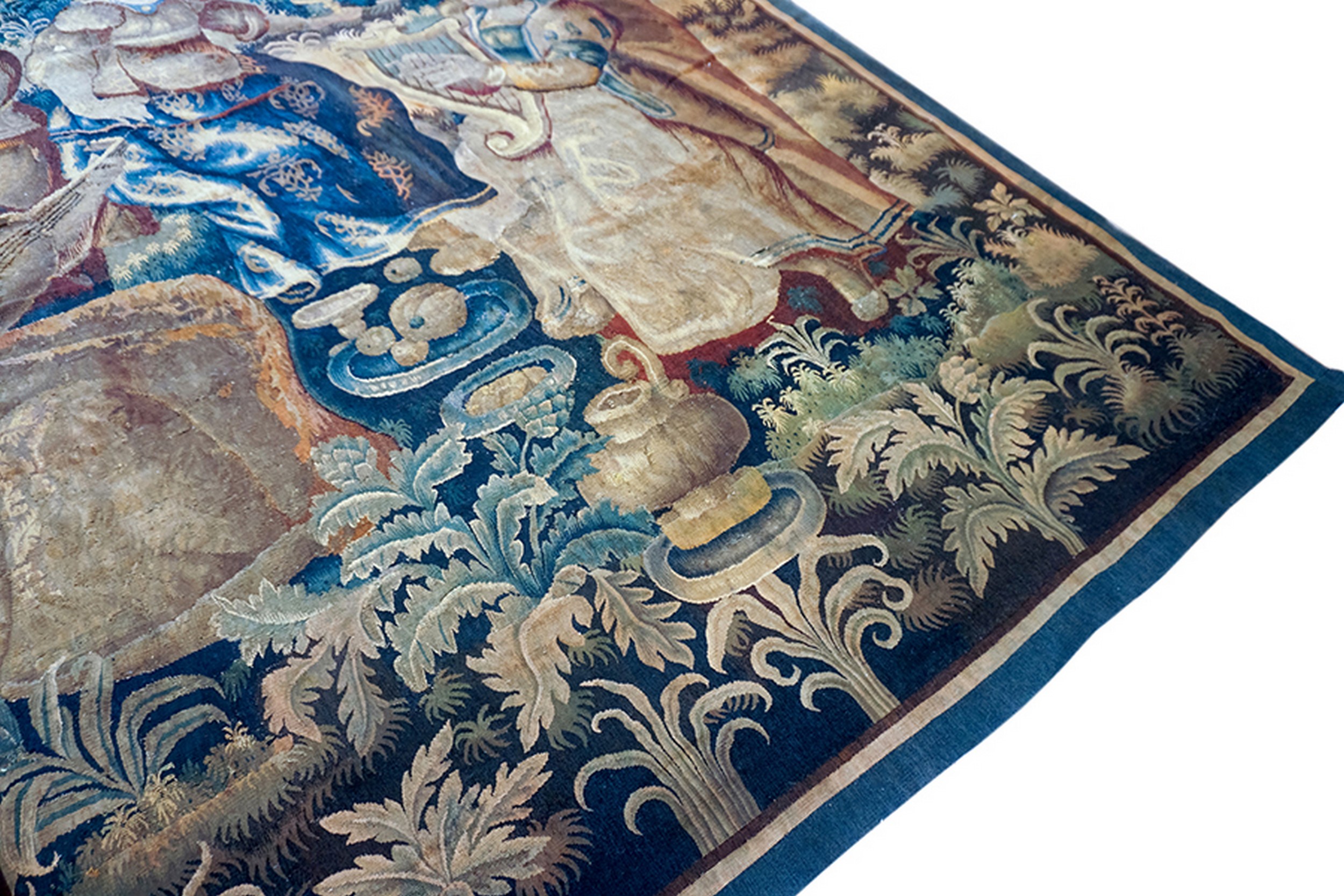
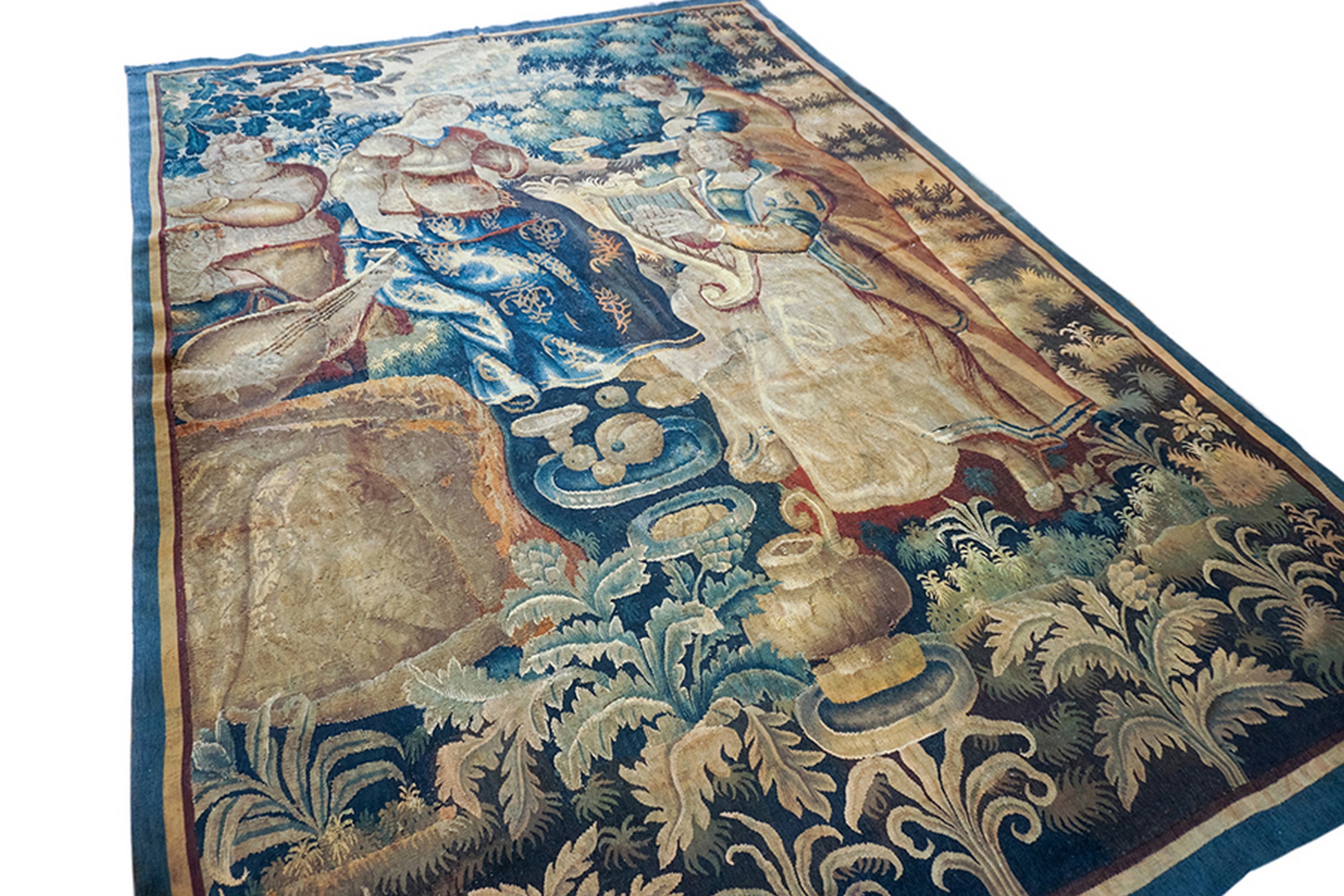
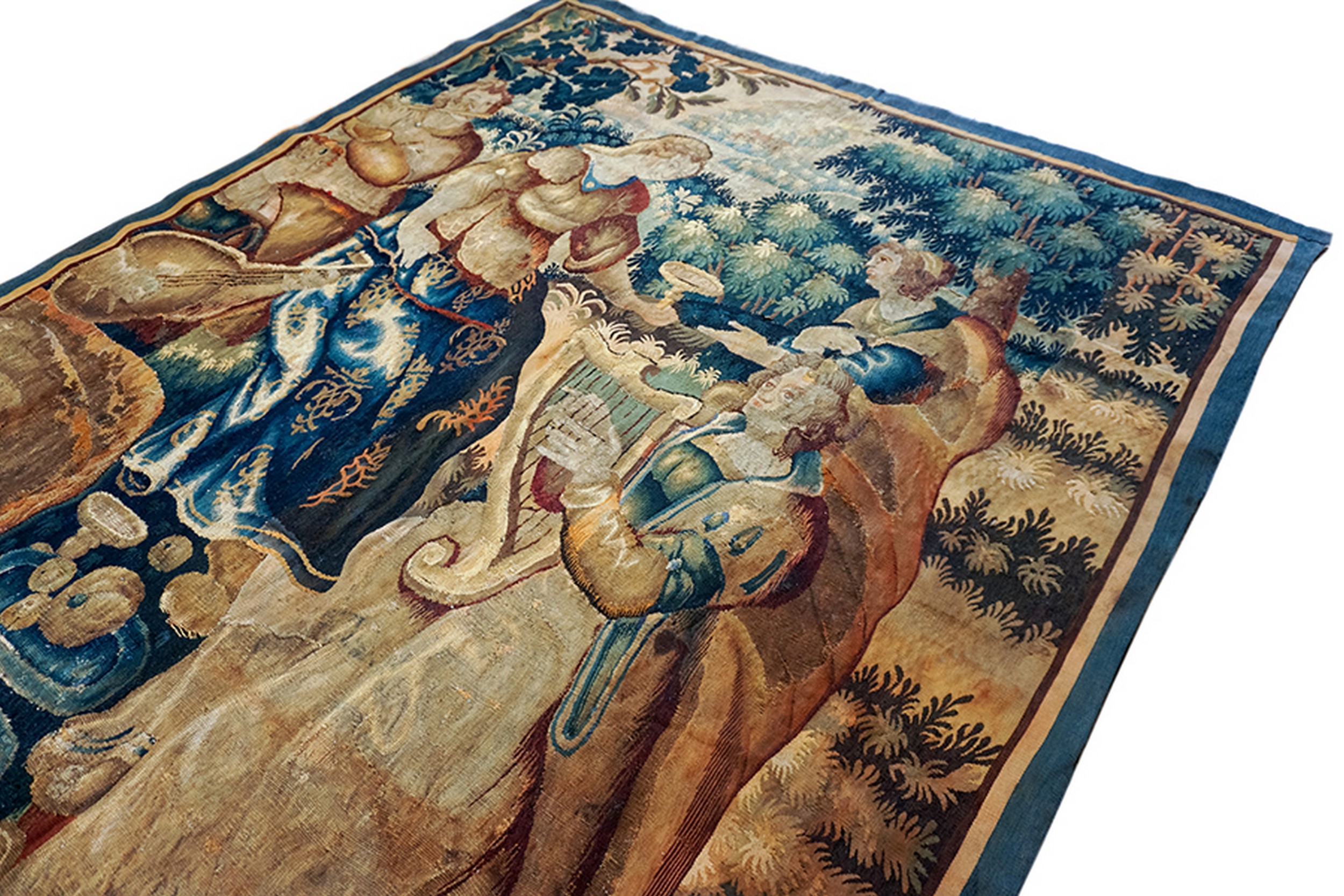
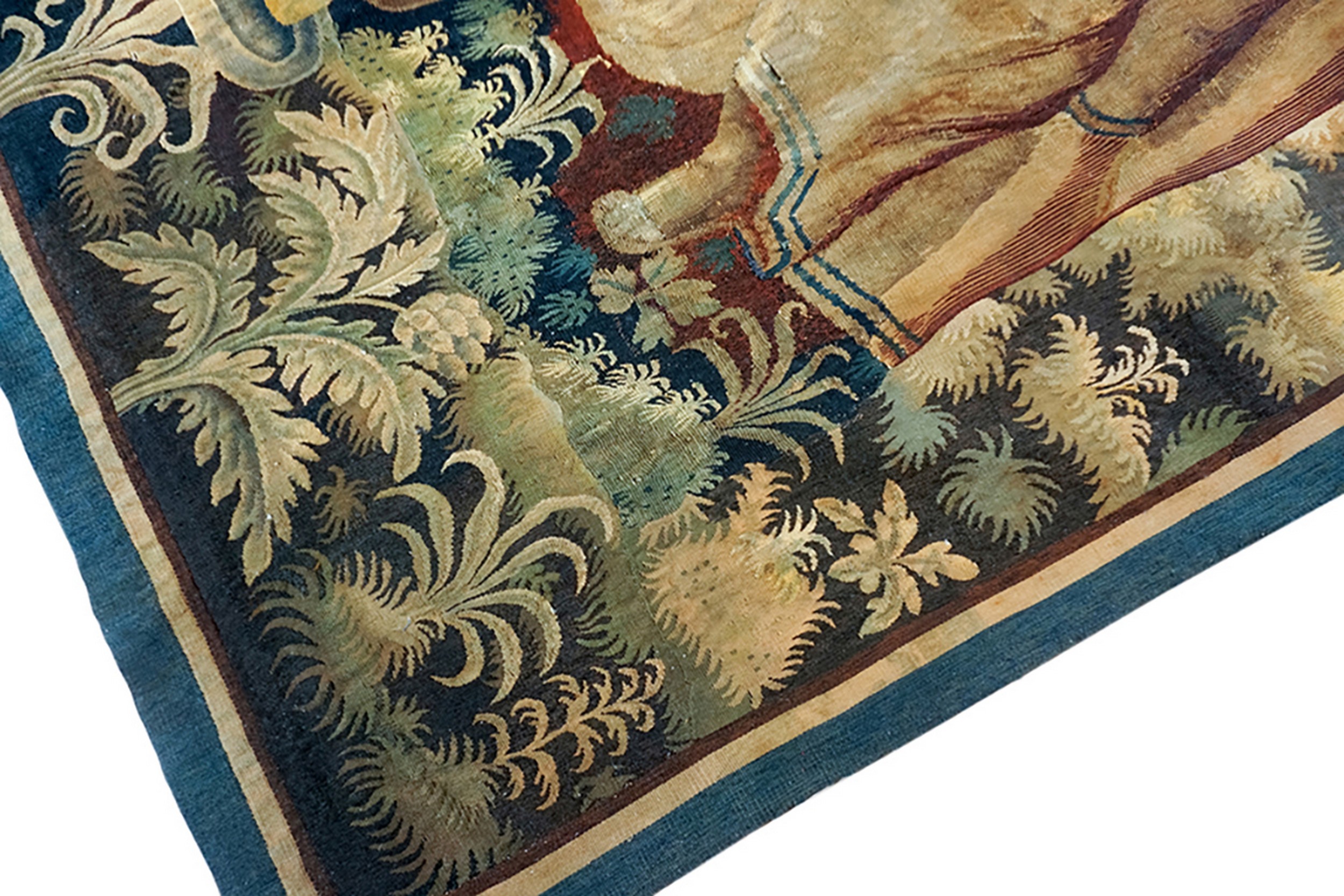
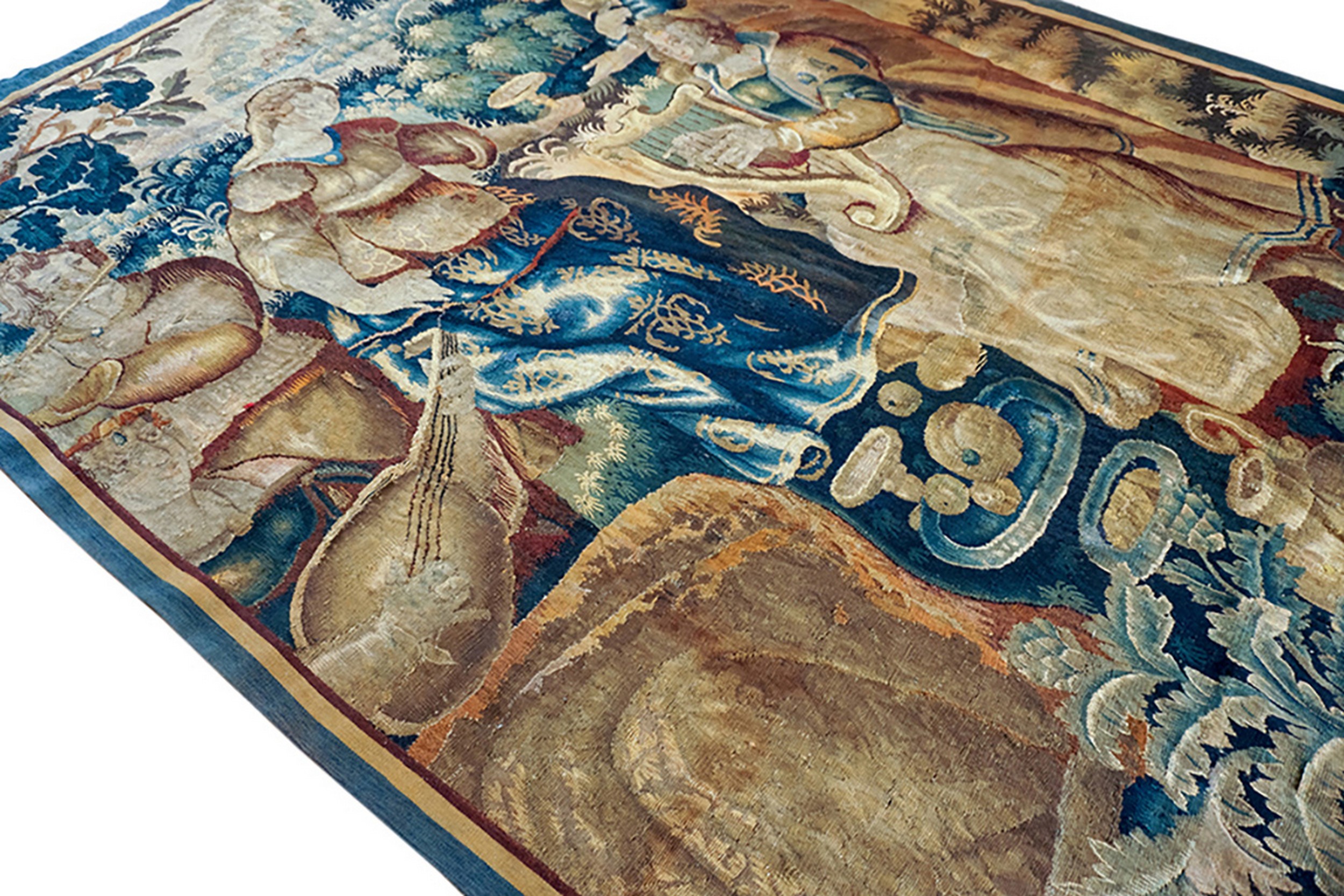
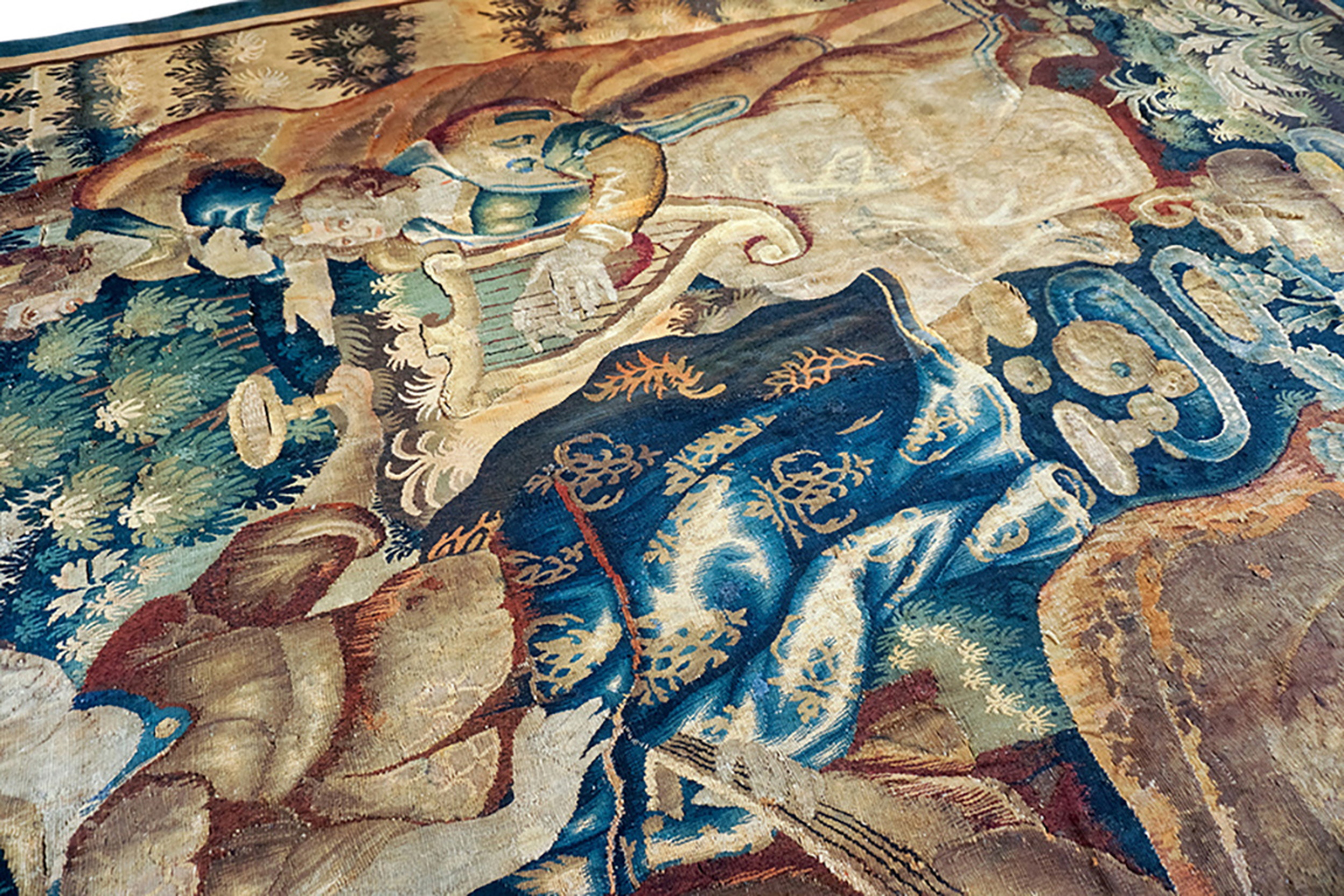
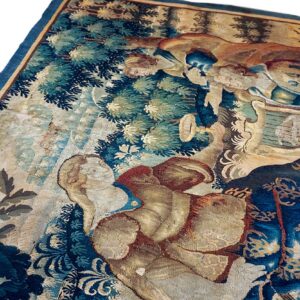
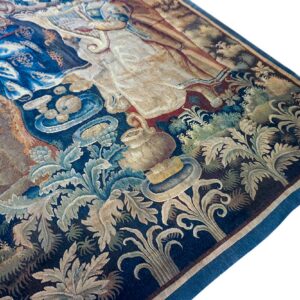
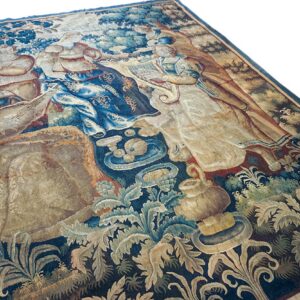
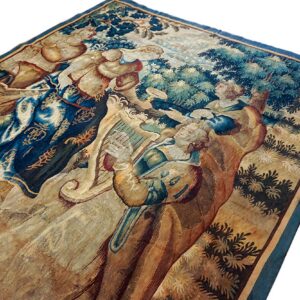
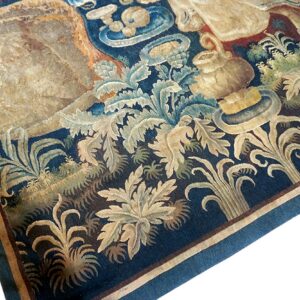
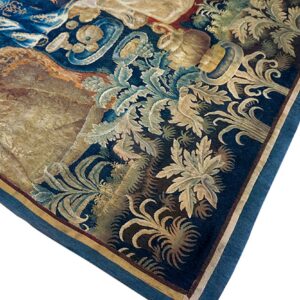
This tapestry is a classic Flemish “Musical Party” or Garden of Love scene, likely woven in Oudenarde or Brussels during the late 16th or early 17th century (circa 1580–1610).
Subject and Iconography
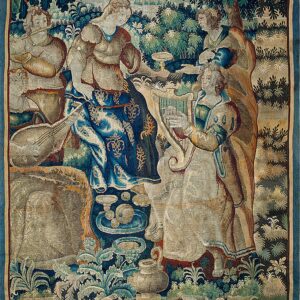
The scene depicts an aristocratic gathering in a formal garden, a theme highly popular among the European nobility of the Renaissance.
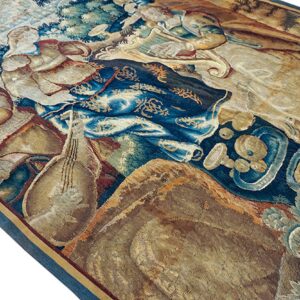
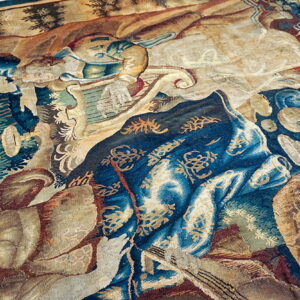
- The Musical Ensemble: The central focus is on harmony. You can see a variety of period-accurate instruments: a lute, a transverse flute, and a Gothic-style harp. In the 16th century, music in a garden setting was a common allegory for the “Harmony of Nature” and courtly courtship.
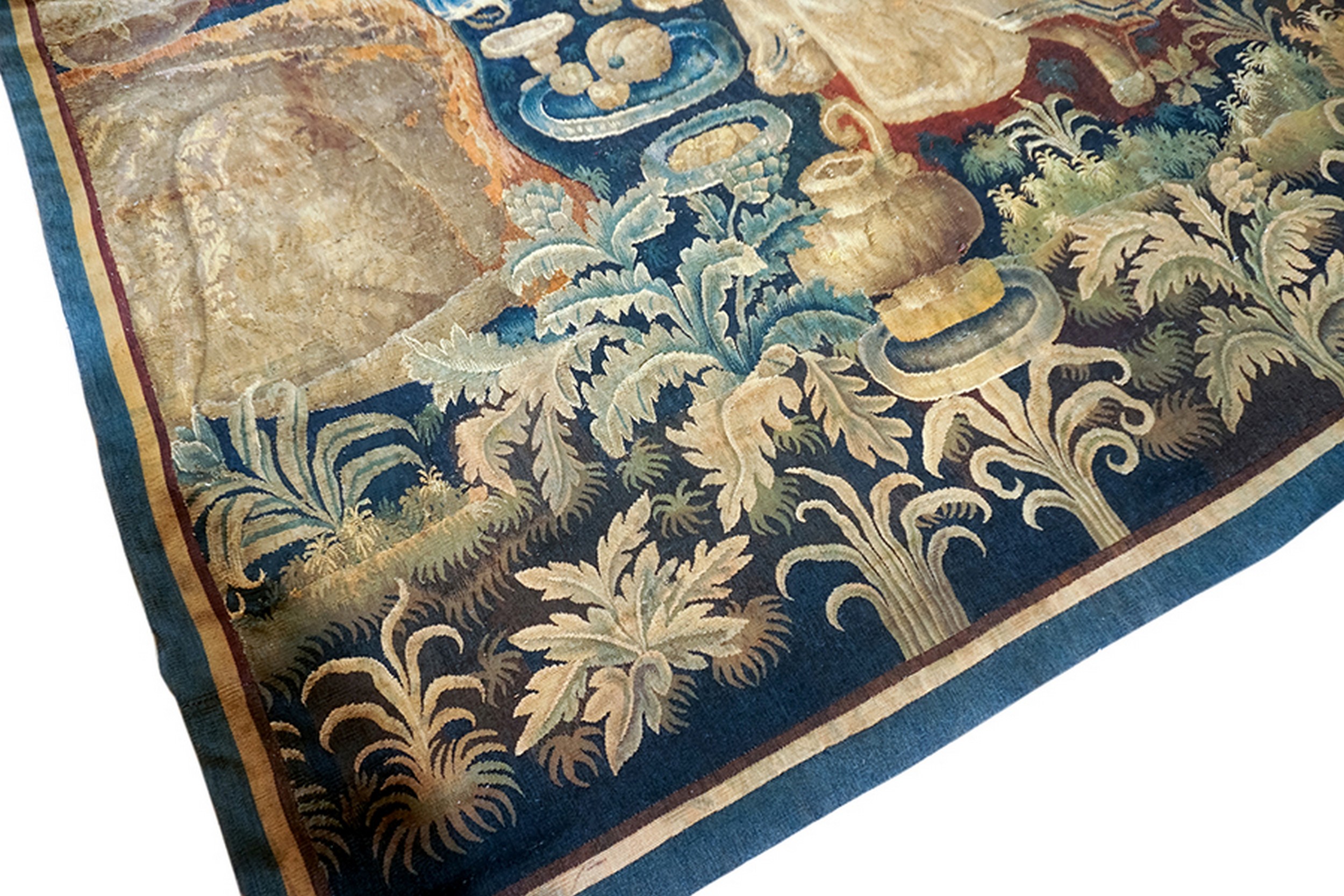
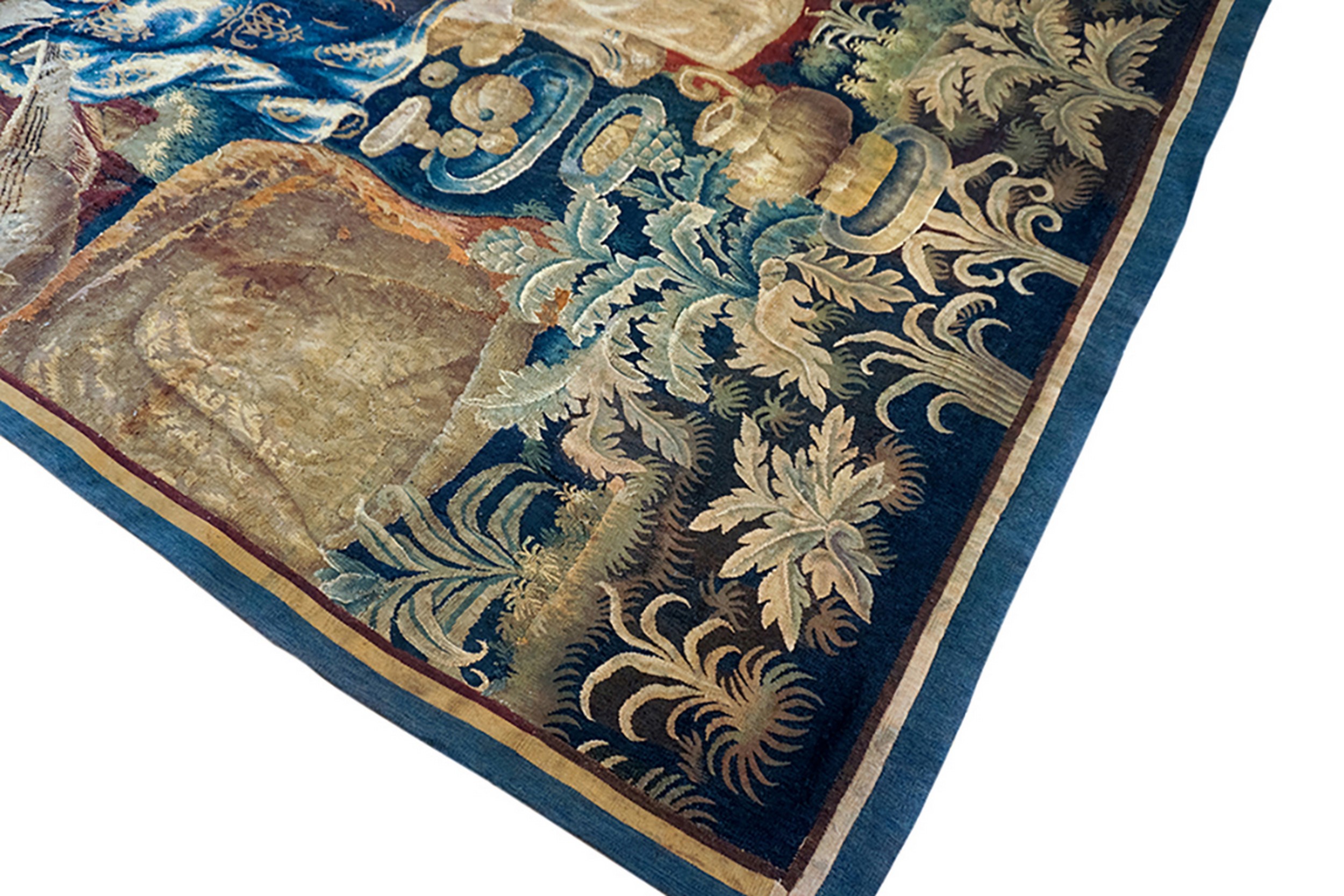
- The Refreshments: In the center foreground, there is a wine cooler (cistern) and a platter of fruit. These elements signify wealth, hospitality, and the “five senses”—specifically taste and hearing.
- The Background: In the upper register, a stylized Renaissance château sits on a hill. This establishes the setting as a private estate.
Artistic Characteristics
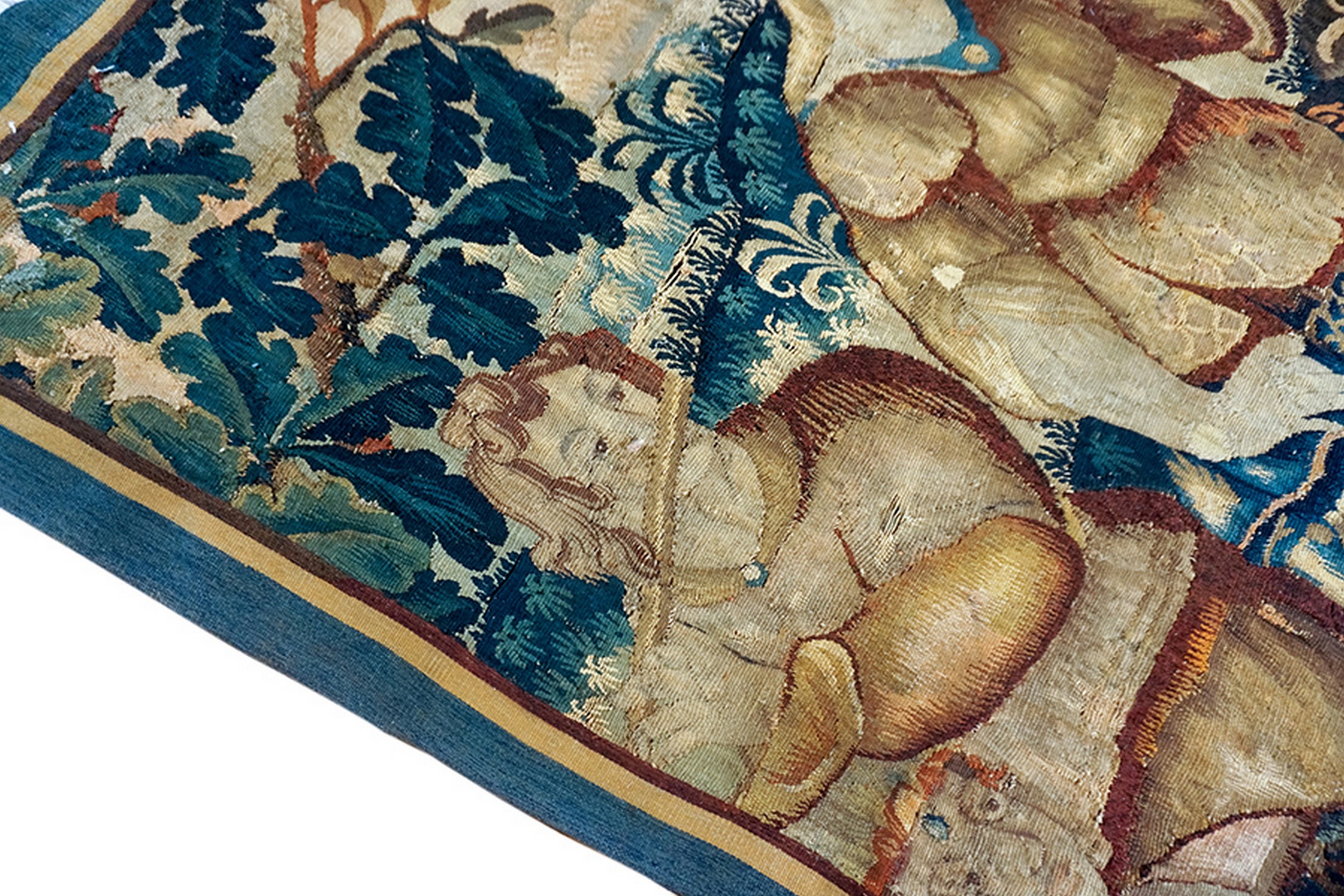
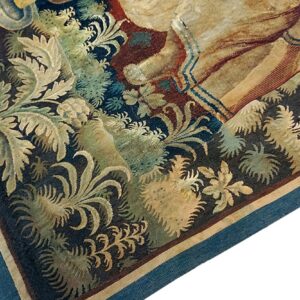
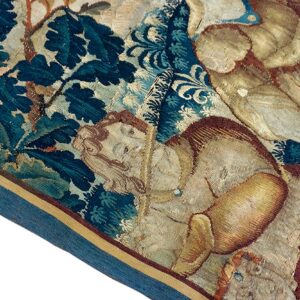
- The “Verdure” Landscape: The dense, heavy foliage—particularly the “cabbage leaf” style plants at the bottom—is a signature of Flemish weaving. The weavers used these intricate botanical details to demonstrate their technical skill.
- The Palette: The dominant blues and greens are characteristic of tapestries from this era. The reds and pinks (often made from madder or cochineal) have faded over the centuries, which is why the skin tones and some clothing now appear in shades of cream and tan.
- Costume: The figures are dressed in late Elizabethan/Valois fashion. Notice the “slashed” sleeves on the harpist and the structured, patterned bodices. These details help pin the “cartoon” (the design template) to the late 1500s.
Technical Details
- Origin: Likely Oudenarde (Belgium). While Brussels produced the most expensive “high-thread-count” pieces for royalty, Oudenarde specialized in these lush, green garden scenes (Verdures) for the burgeoning merchant class.Materials: Hand-woven using wool for the structural warp and most of the weft, with silk highlights used in the finer details of the faces, instruments, and the water in the distance.
Steeped in the courtly elegance of the late sixteenth-century Southern Netherlands, this remarkable Flemish tapestry invites the viewer into a lush “Garden of Love,” where the rhythmic beauty of Renaissance life is captured in every hand-knotted thread. The scene serves as a magnificent allegory of harmony, centering on a refined musical ensemble that features the delicate strings of a lute and a Gothic harp alongside the soft woodwinds of a transverse flute. Surrounded by a “Verdure” landscape of dense, verdant foliage and stylized cabbage-leaf flora, the figures are draped in the sophisticated, slashed-sleeve fashions of the Valois era, embodying the poise and prestige of the European aristocracy.
Beyond the immediate charm of the musical party, the composition draws the eye toward a distant, sun-dappled château perched upon a rolling hill, grounding this idyllic pastoral fantasy in a sense of noble history and permanence. The palette is a sophisticated study in time-softened indigo blues and warm ochre yellows, colors that have matured over centuries to give the textile a soulful, atmospheric depth. Whether viewed as a masterclass in Oudenarde weaving techniques or a window into the romanticized rituals of the late Renaissance, this tapestry remains a powerful statement of heritage, bringing the quiet grandeur of a sixteenth-century estate into the modern interior.