
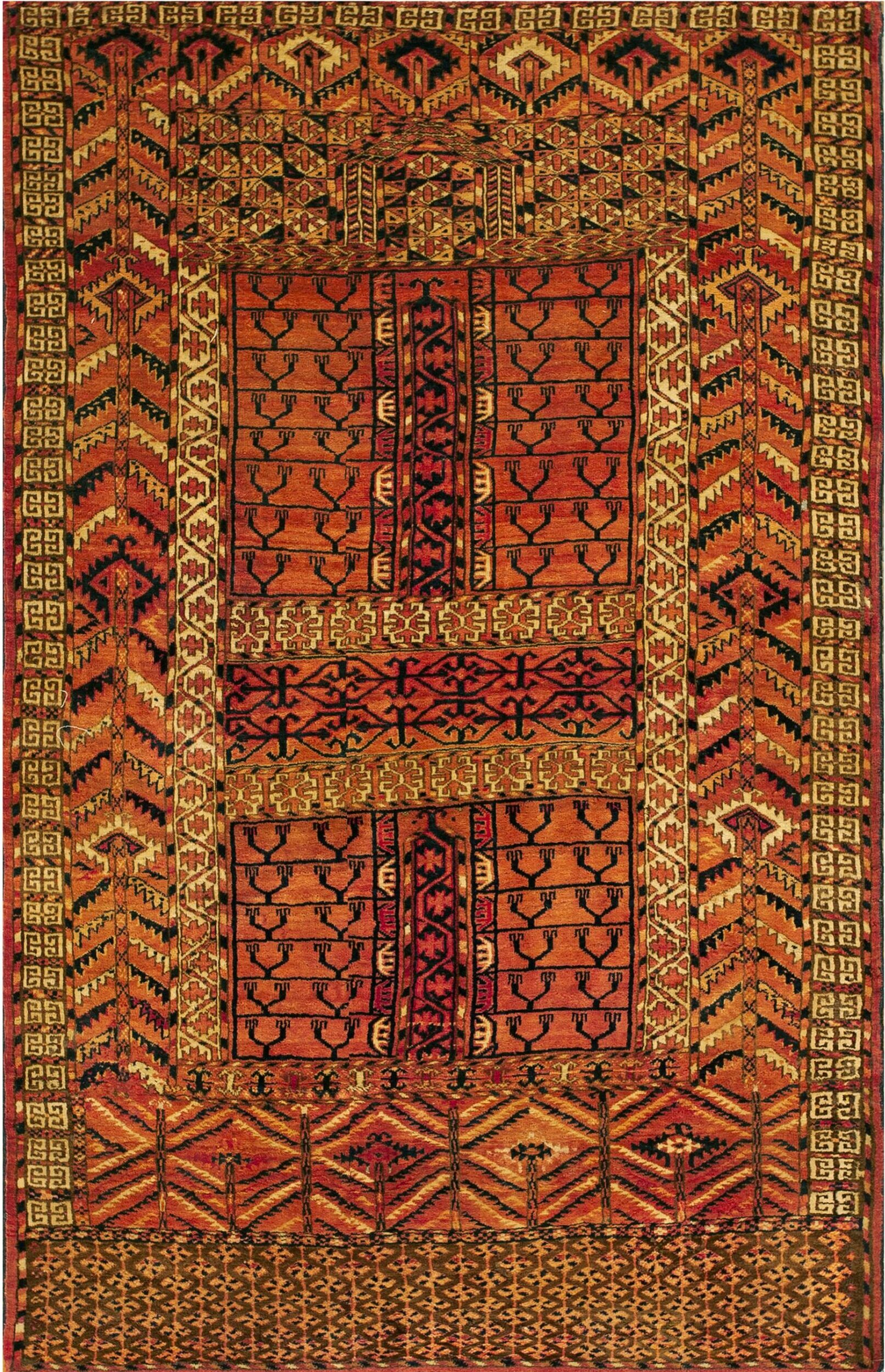
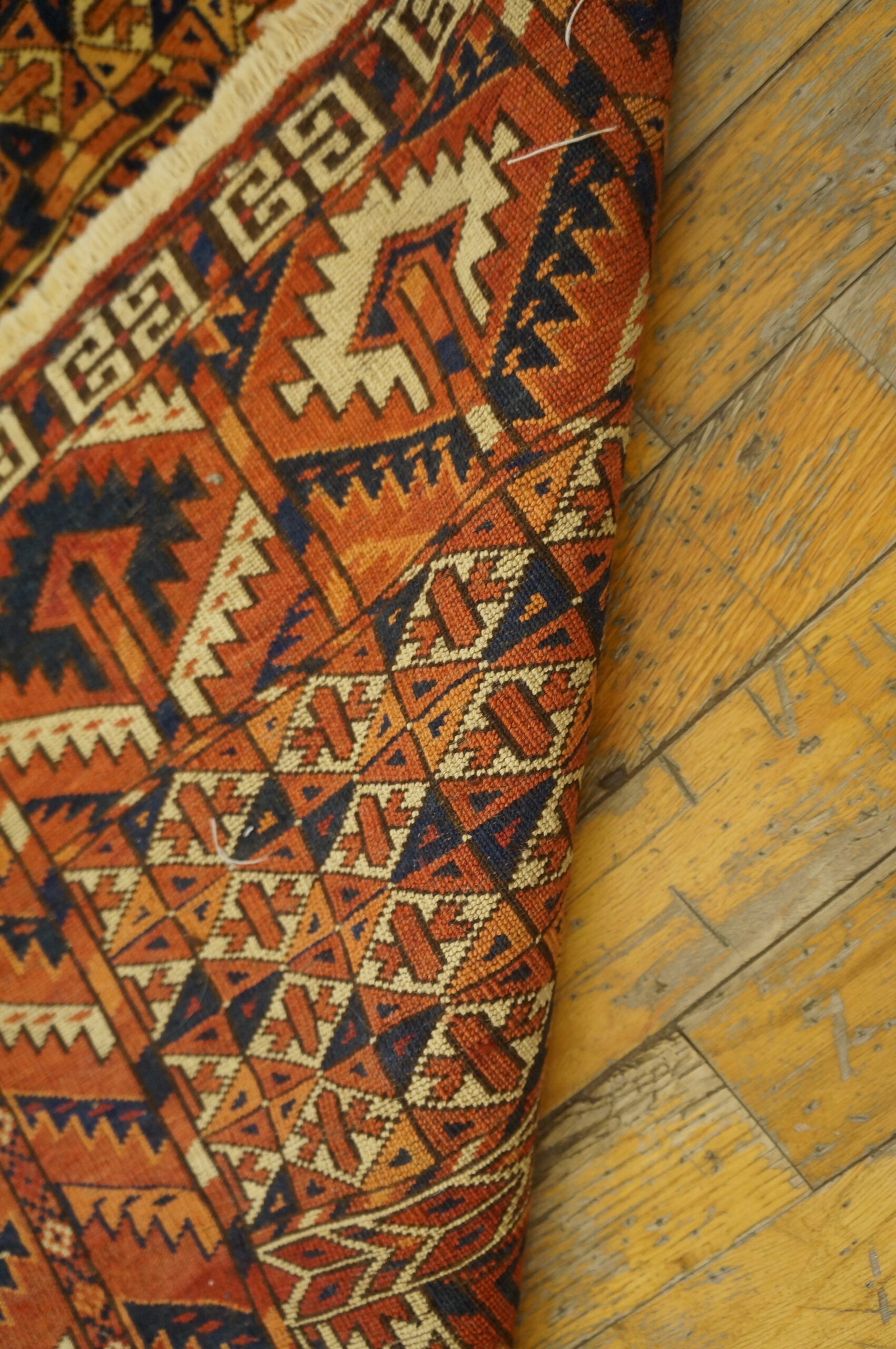
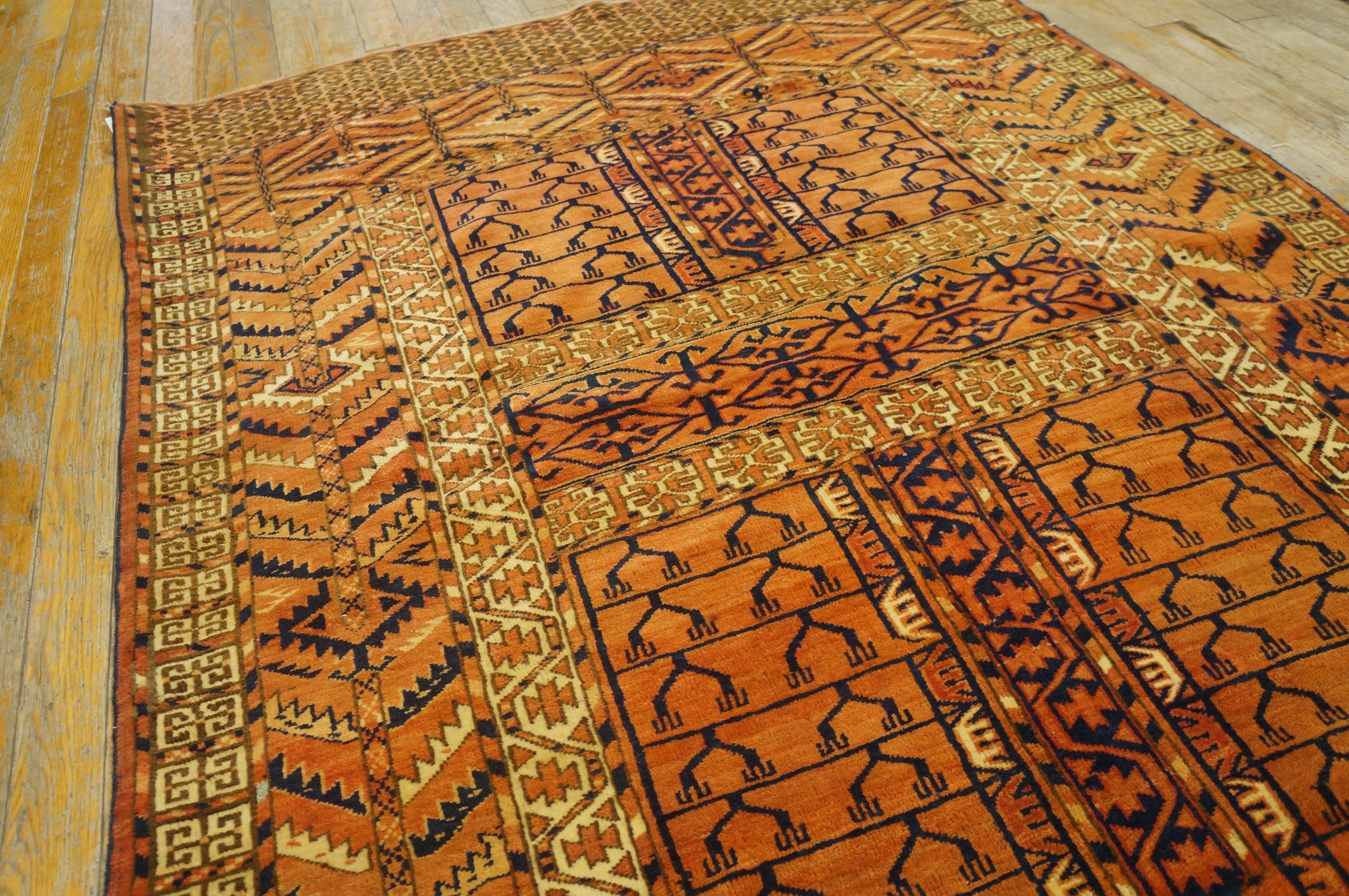
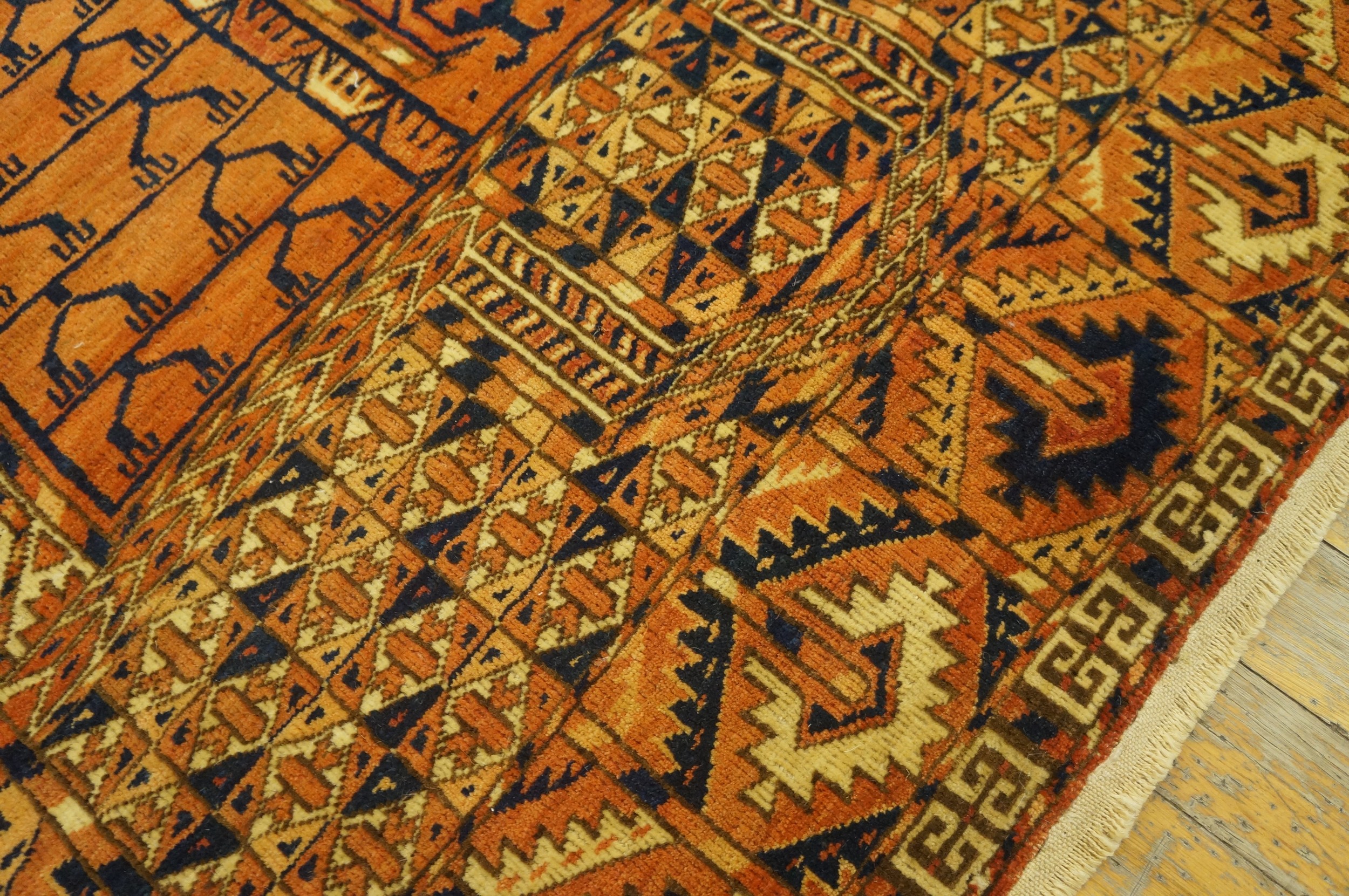
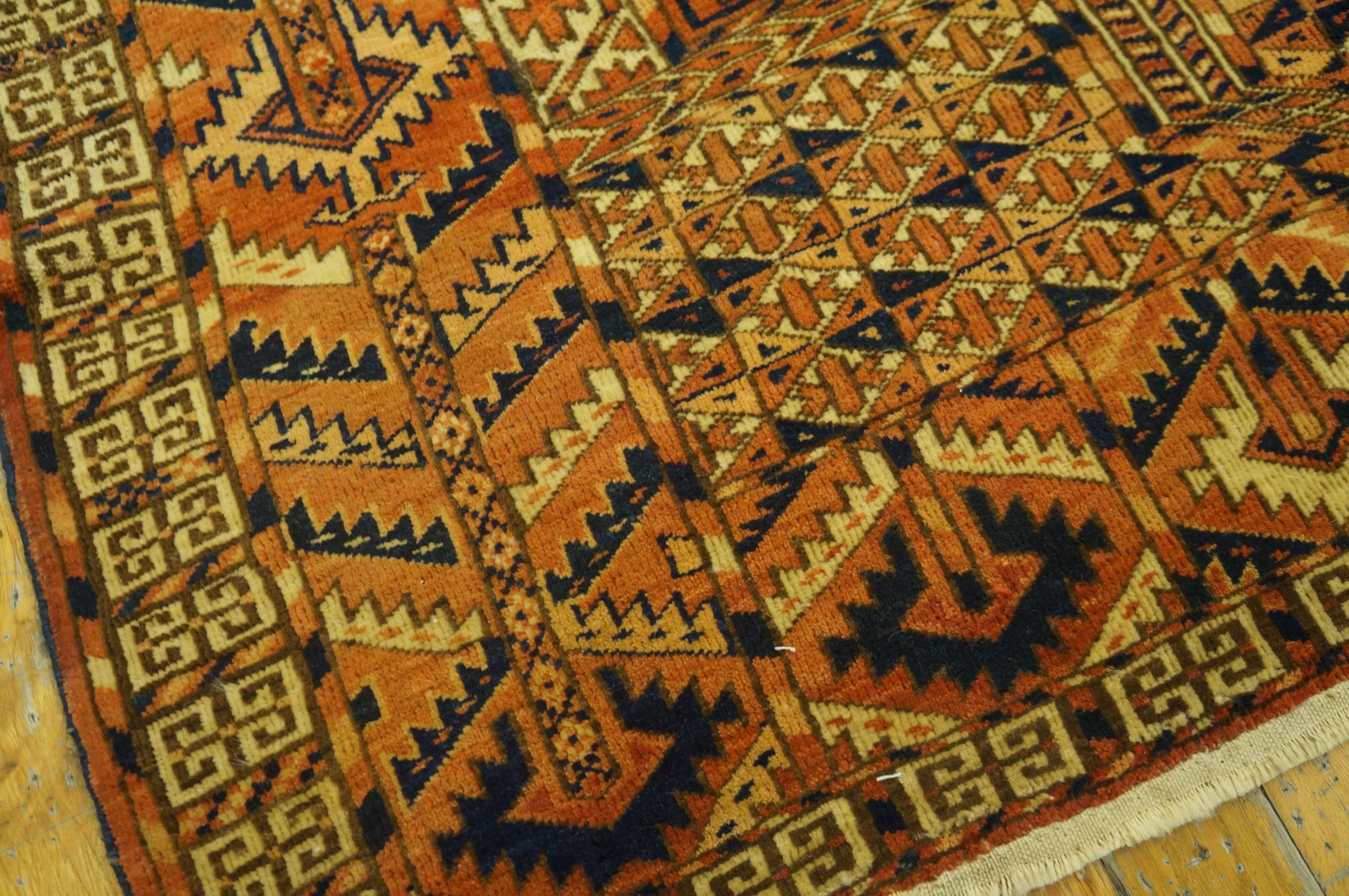
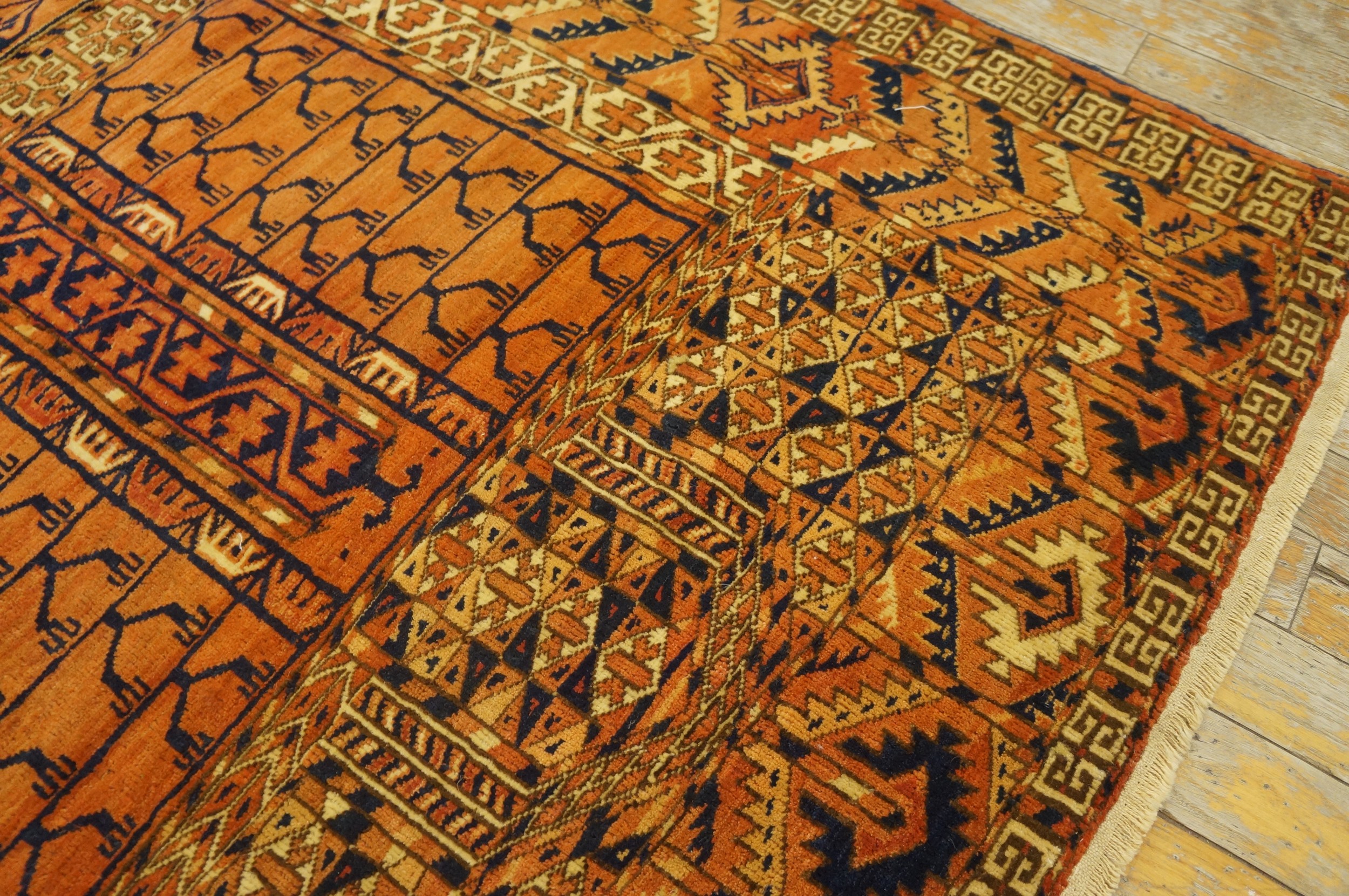
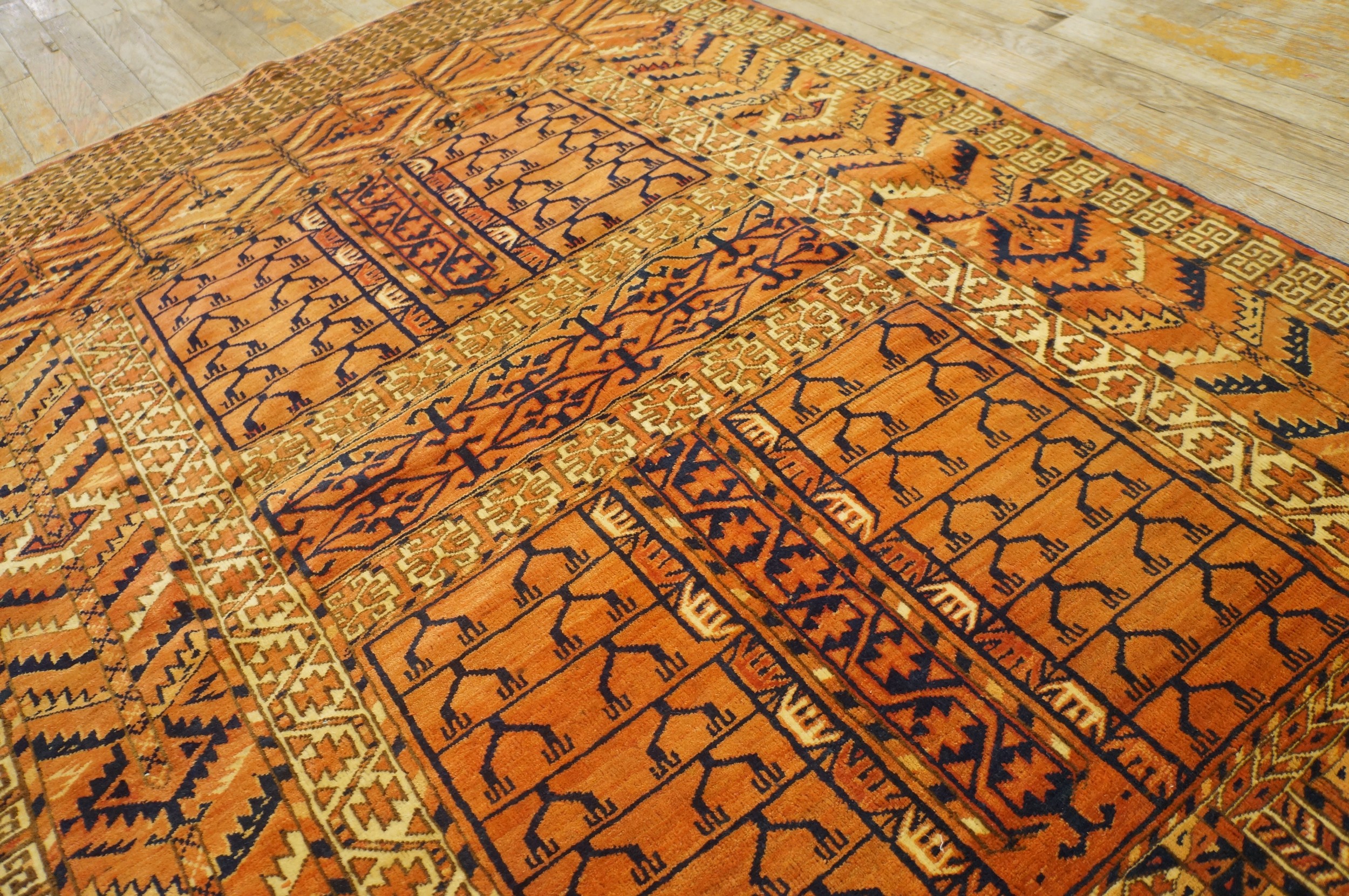
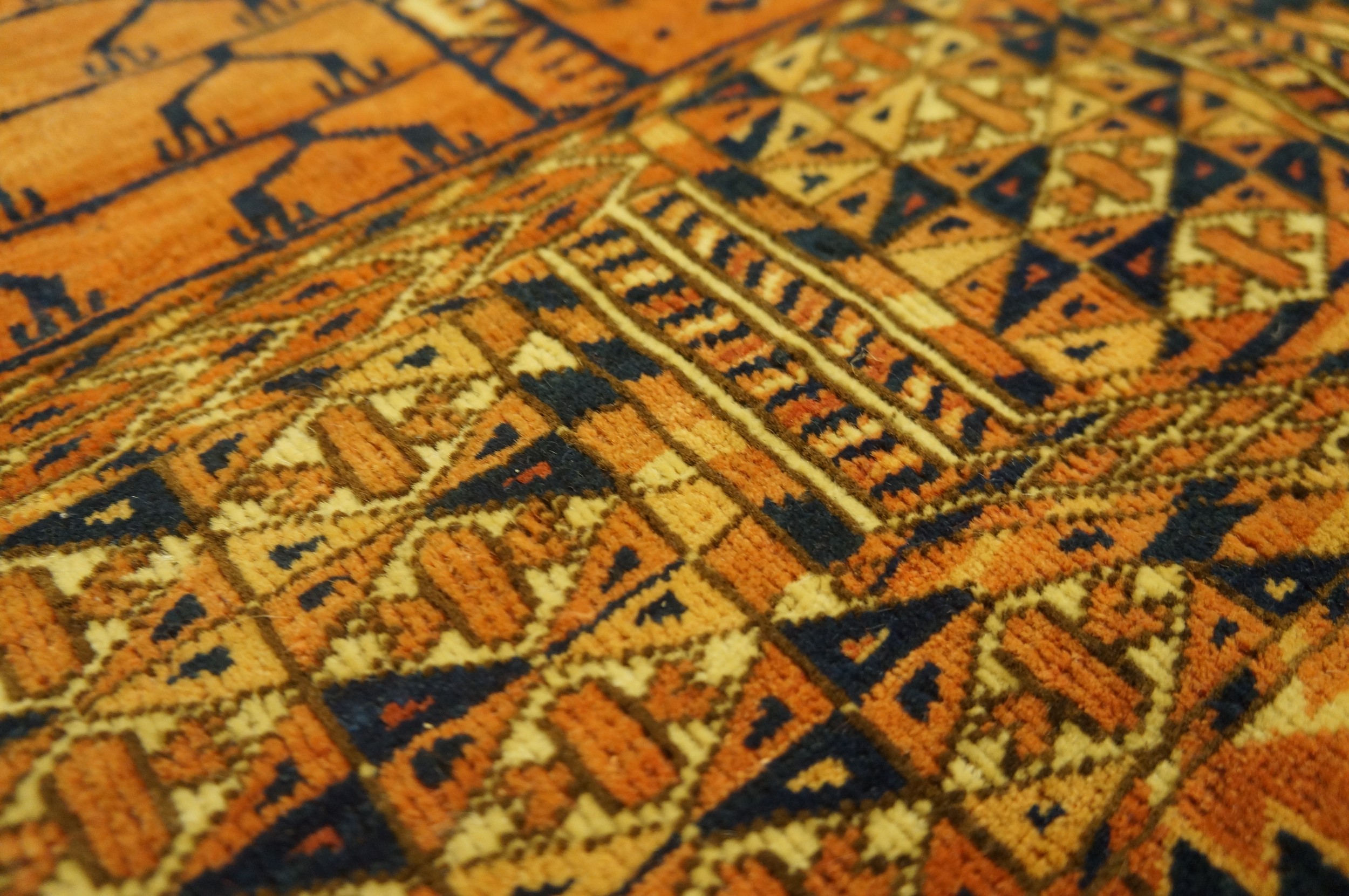
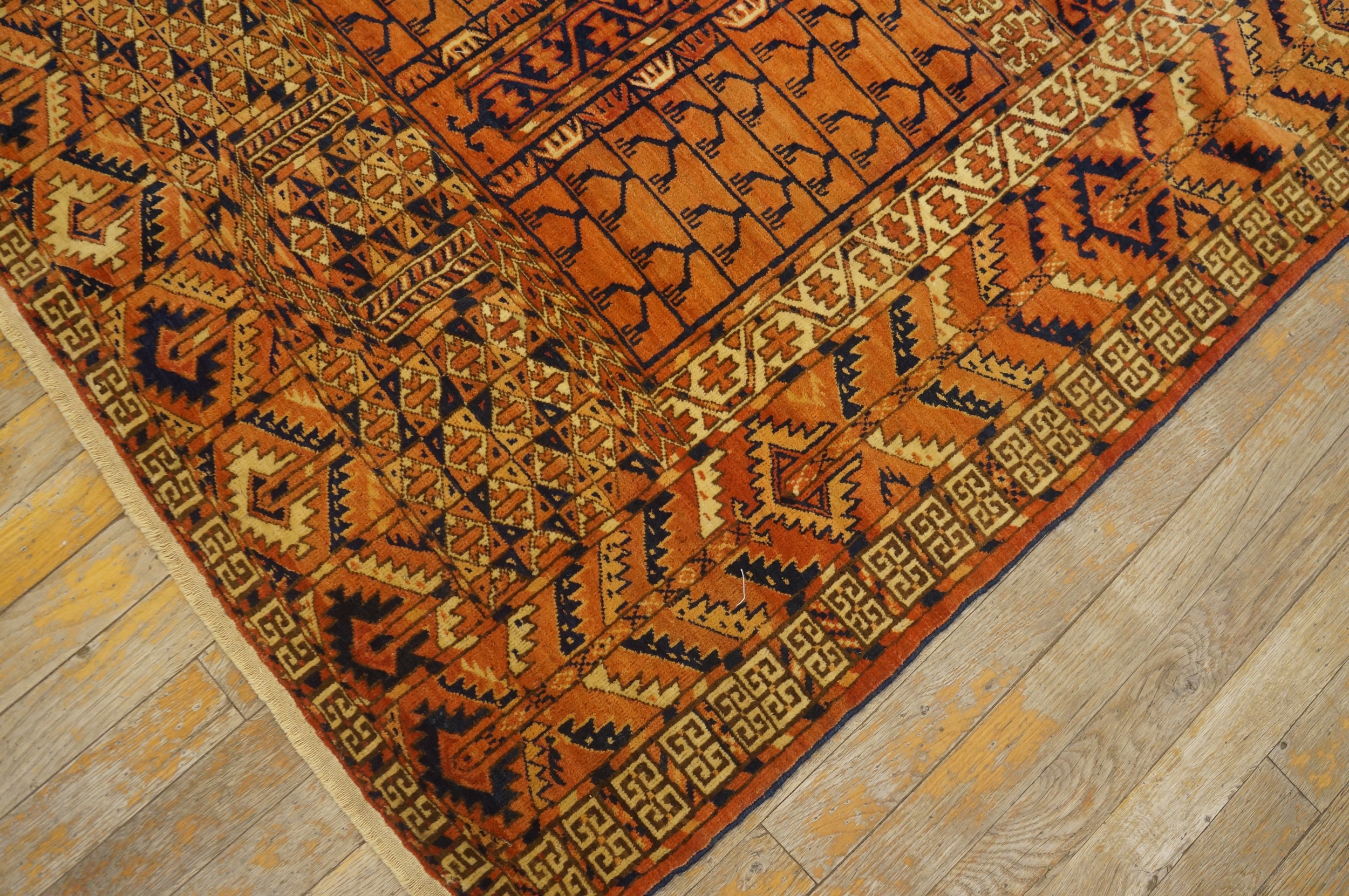
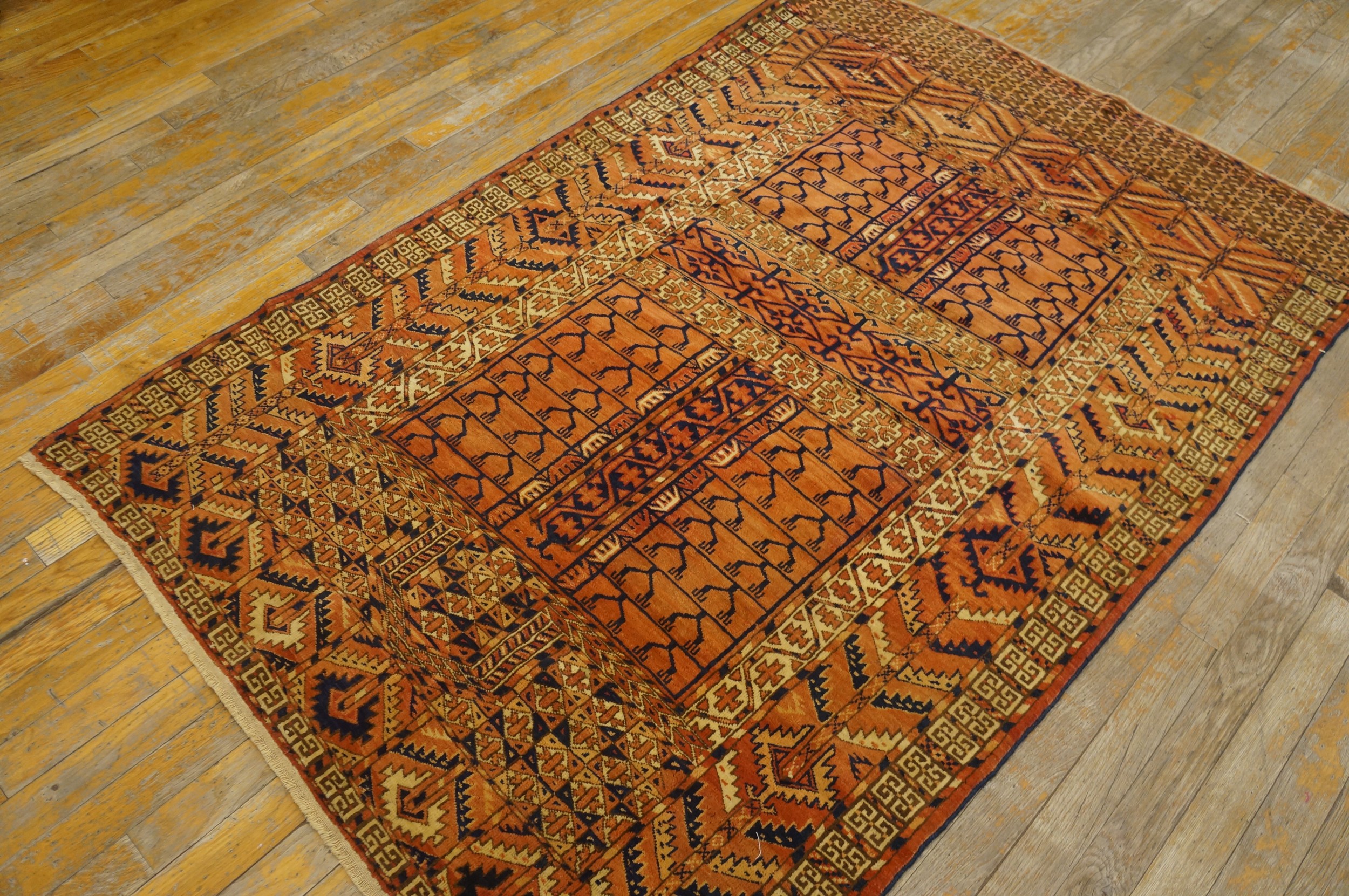
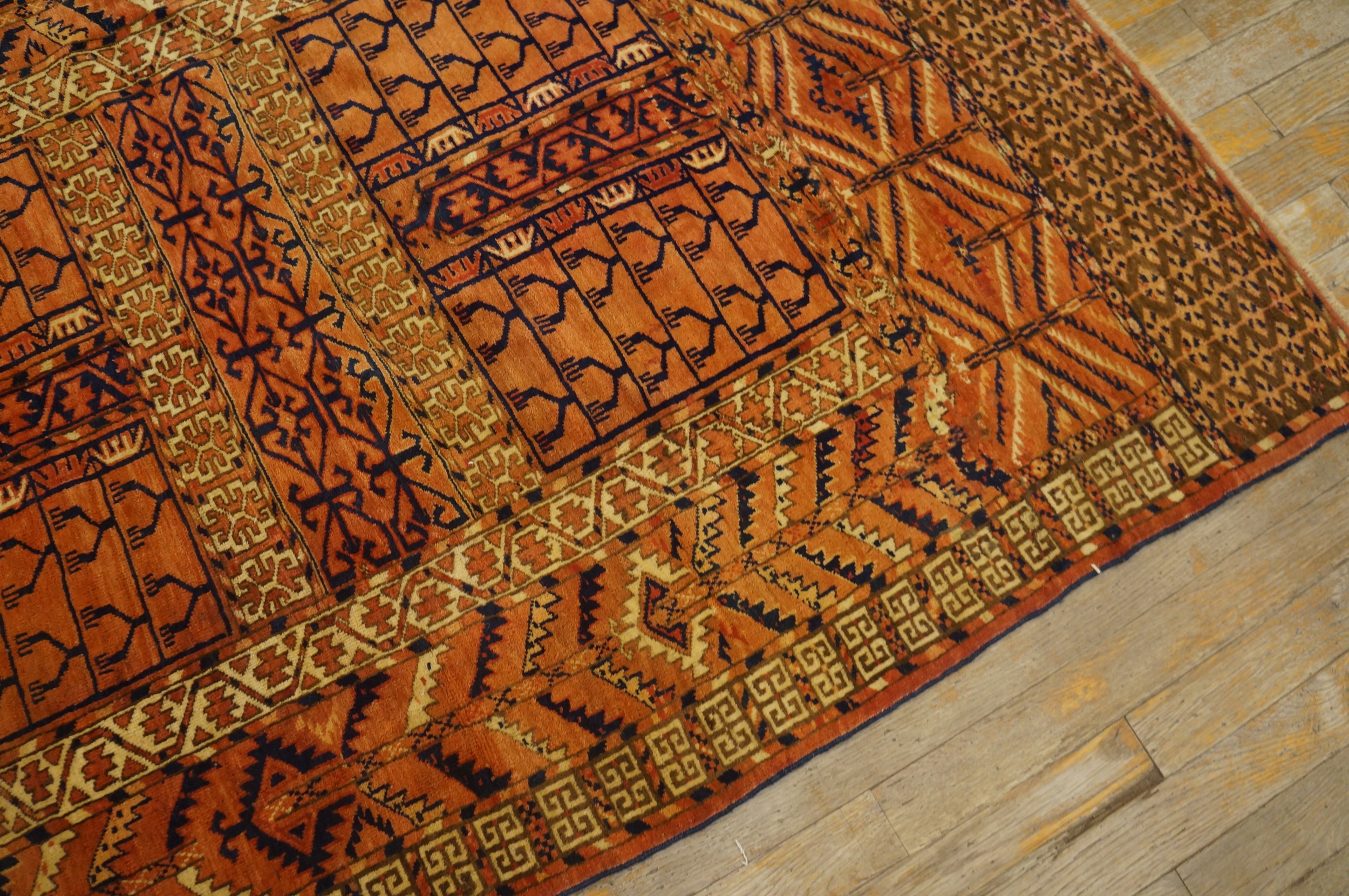
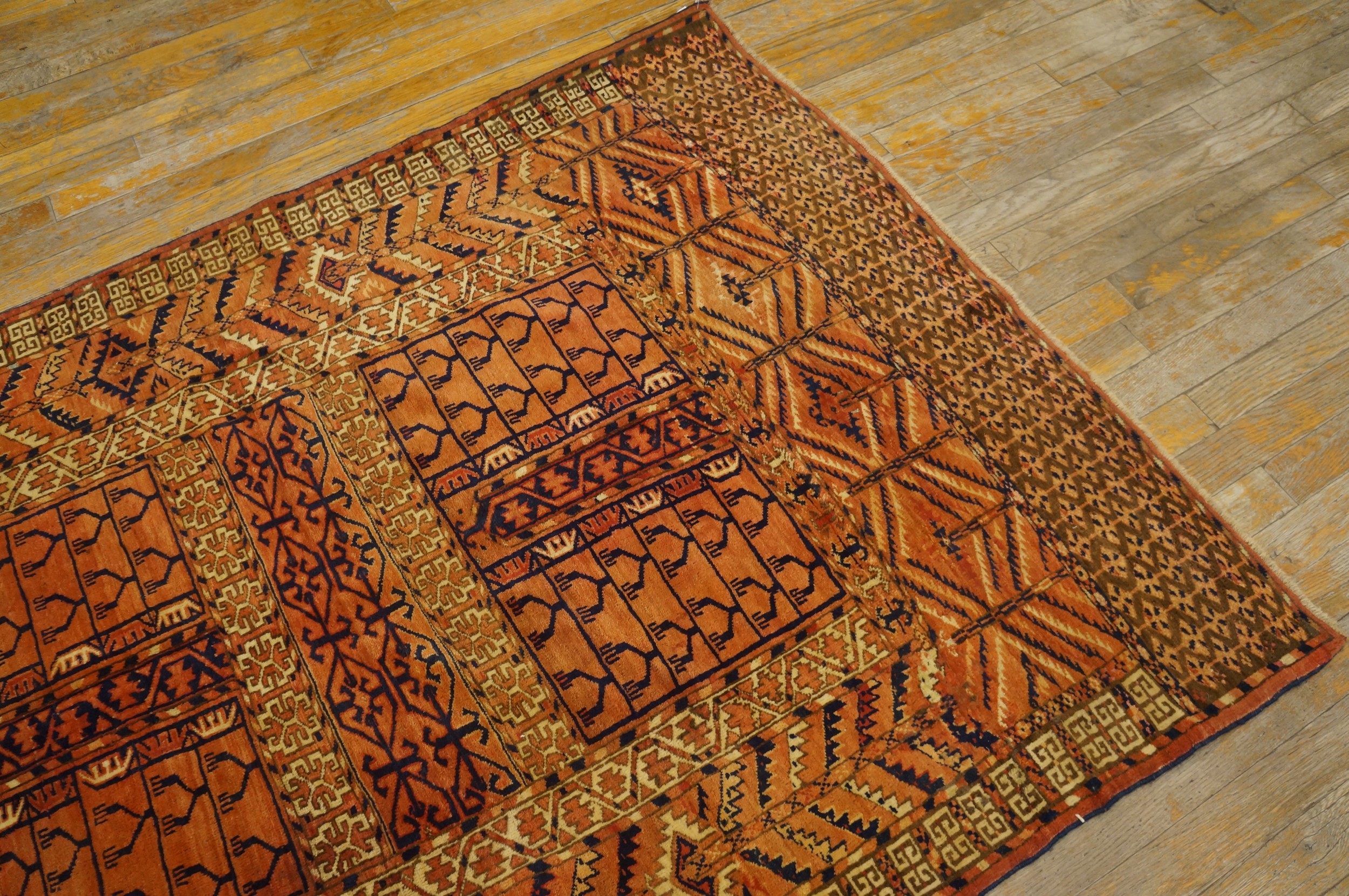
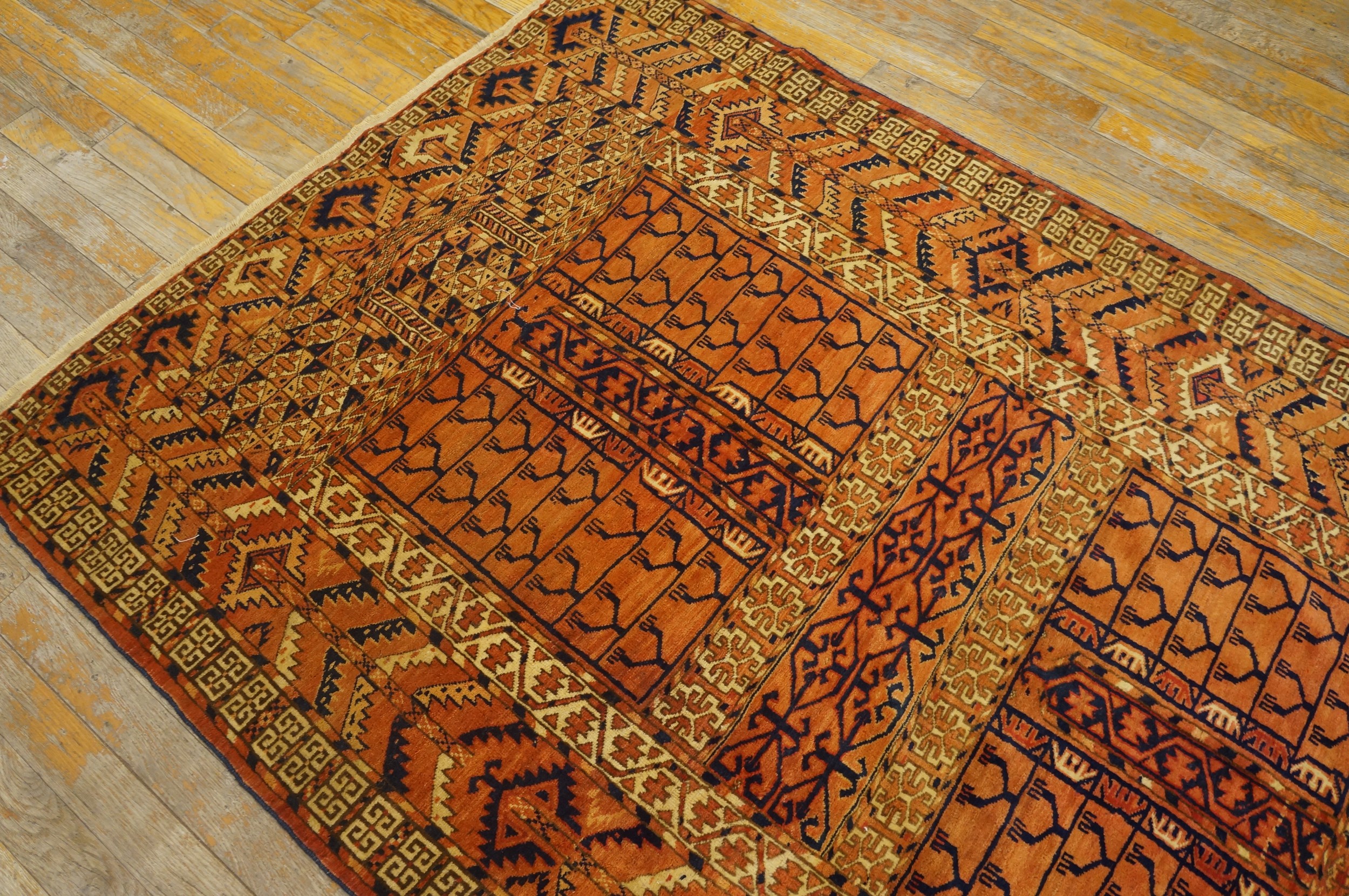
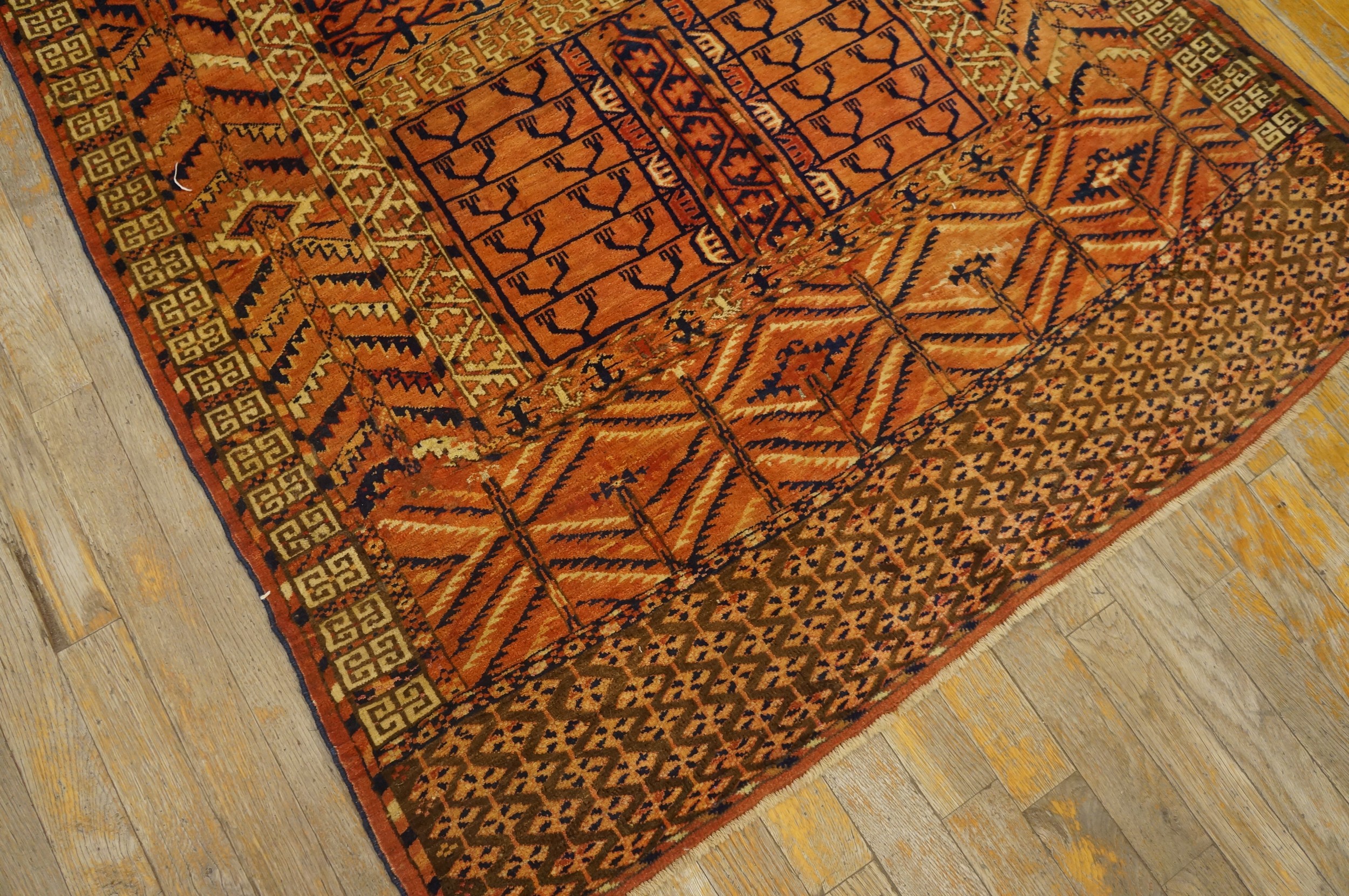
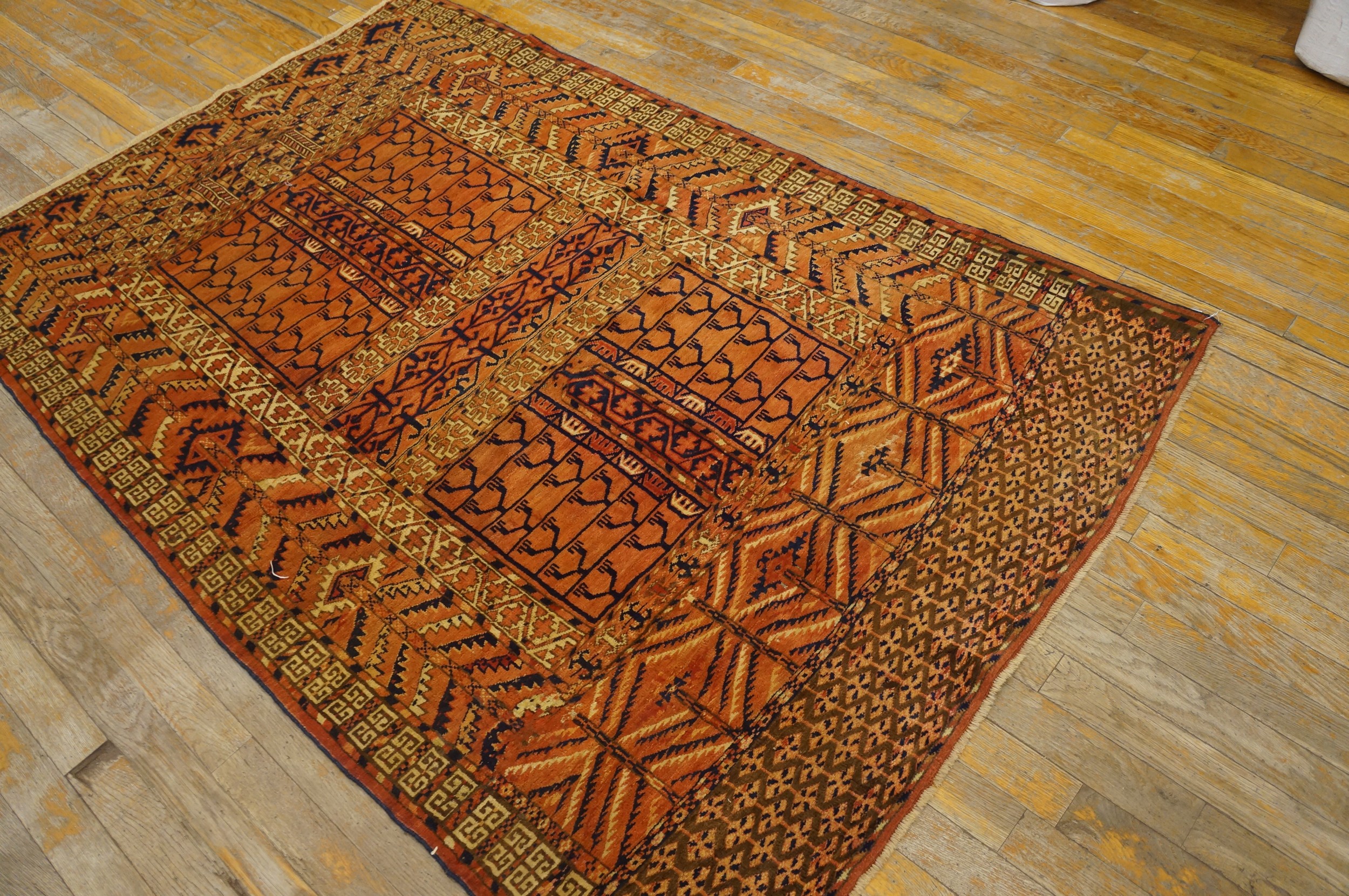
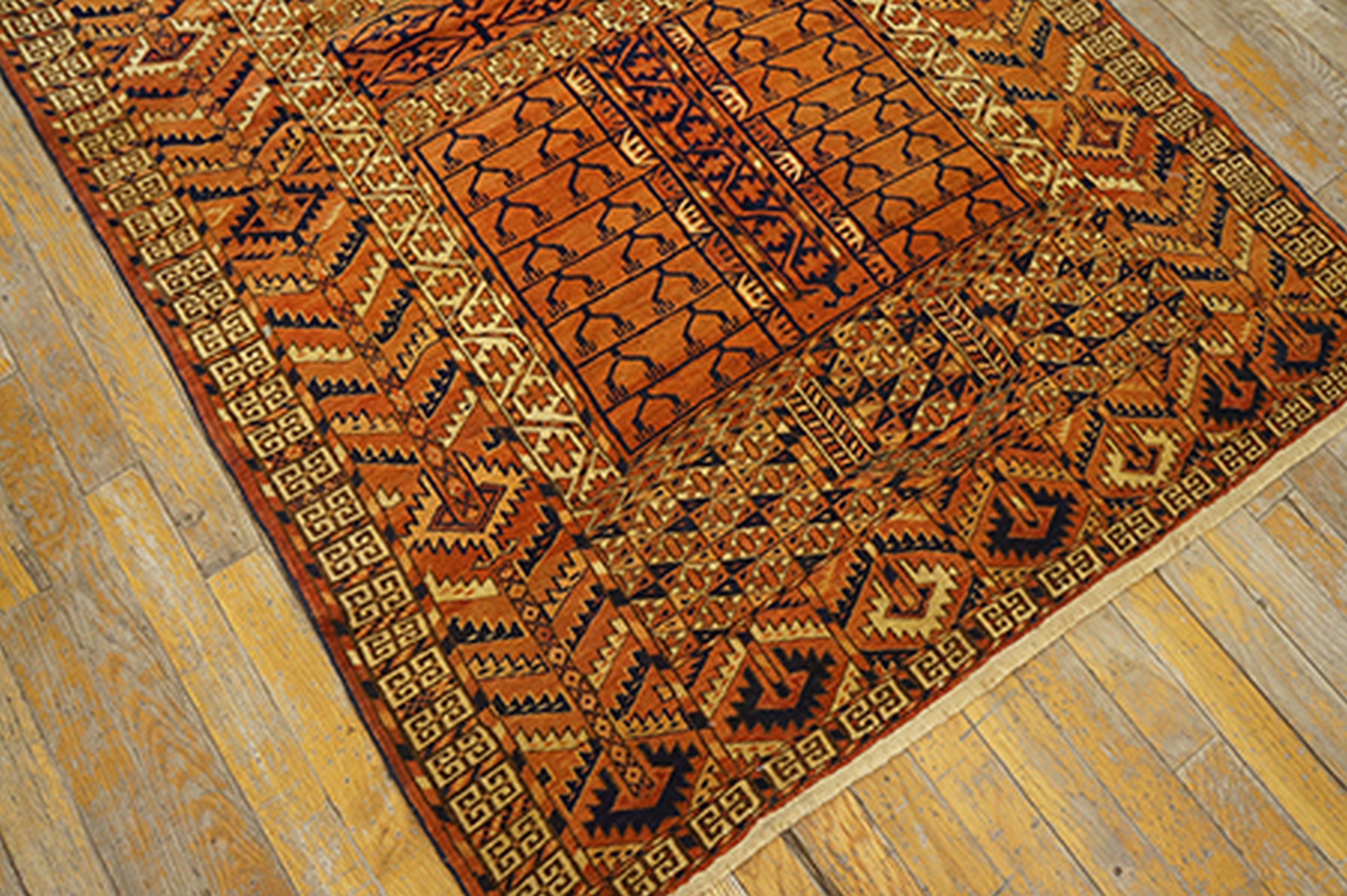
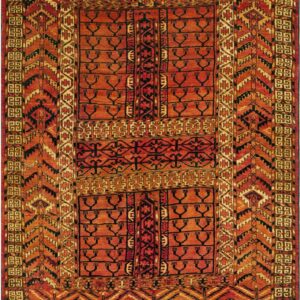
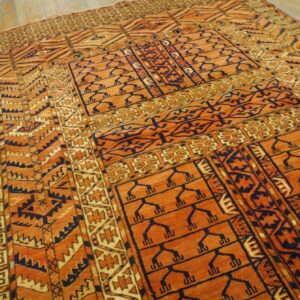
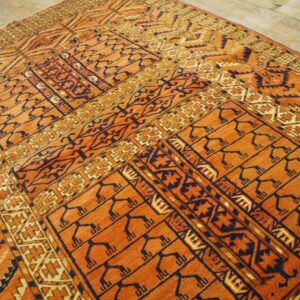
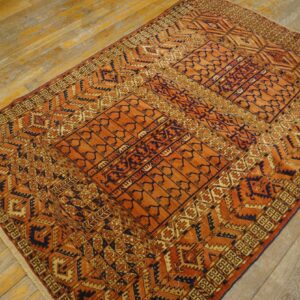
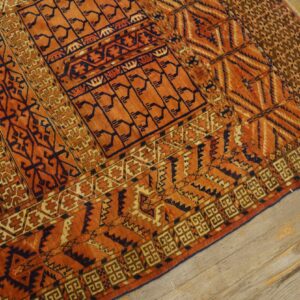
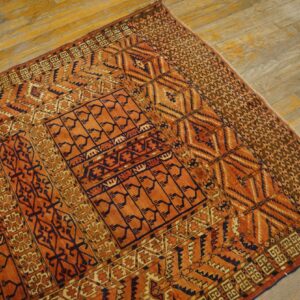
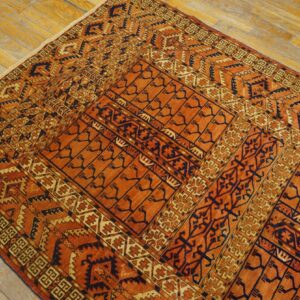
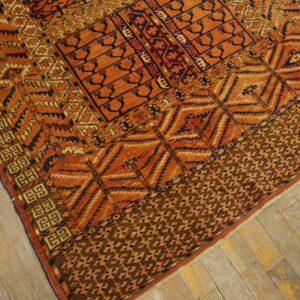
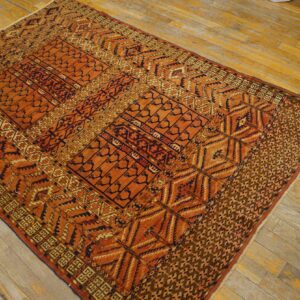
Antique Turkmen – Engsi Caucasus Geometric Rug, Circa Date: 1890s. This exceptional Engsi represents the pinnacle of late 19th-century tribal weaving, originating from the nomadic traditions of the Turkmen tribes. Engsis, traditionally used as tent entrance coverings, are highly prized antique rugs for their dense knotting and powerful, symbolic designs.
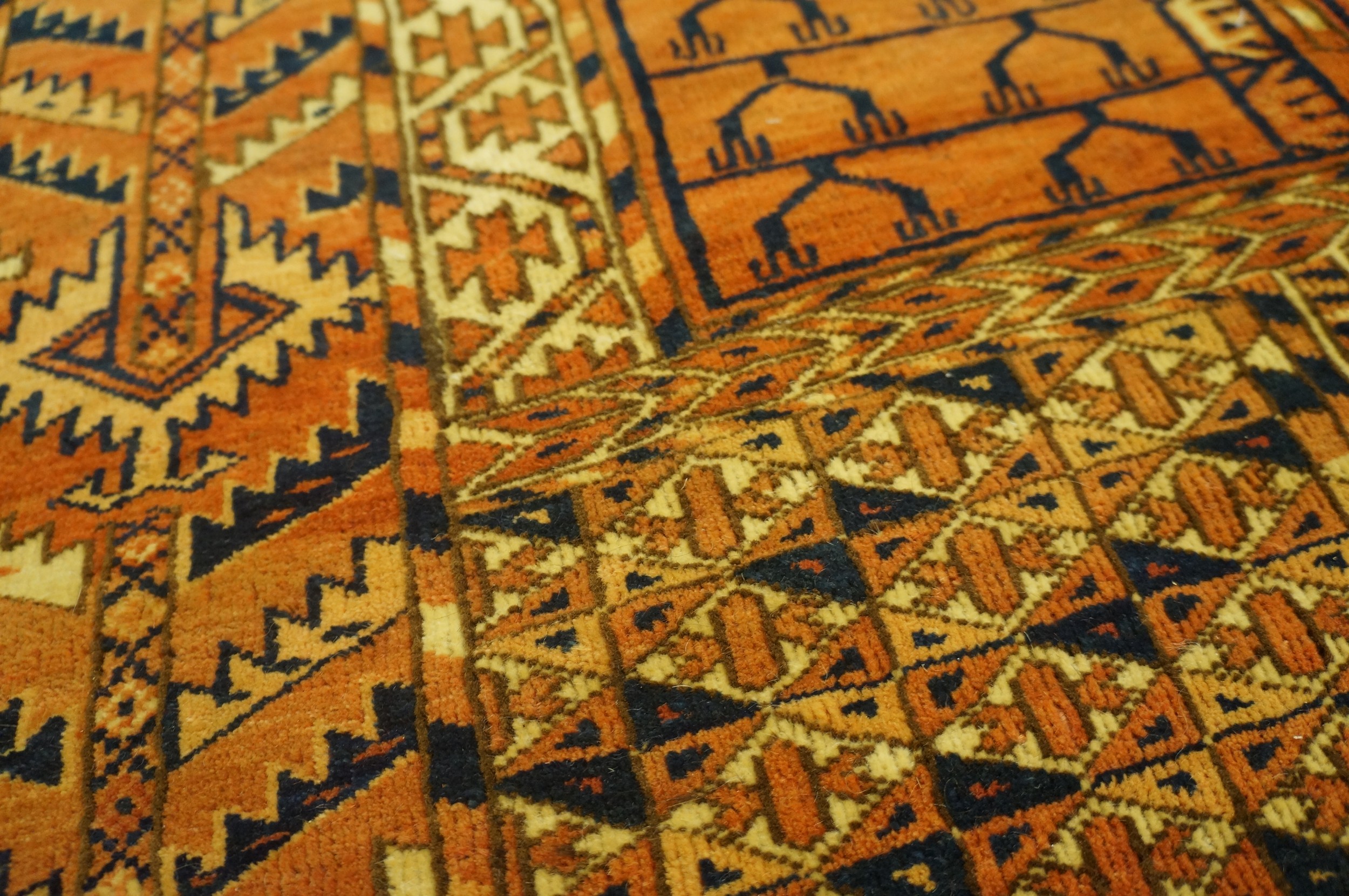
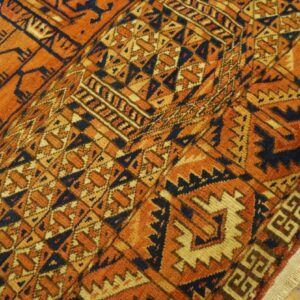
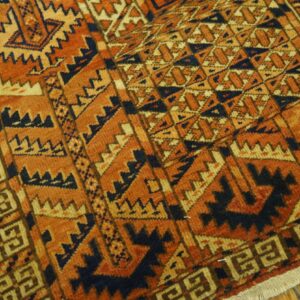
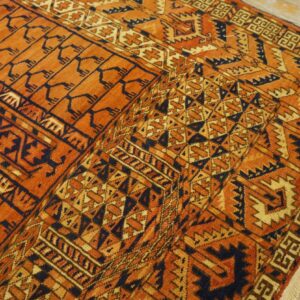
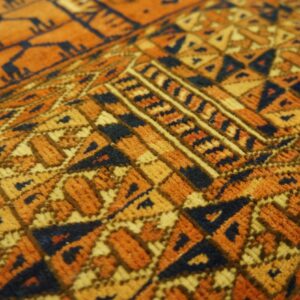
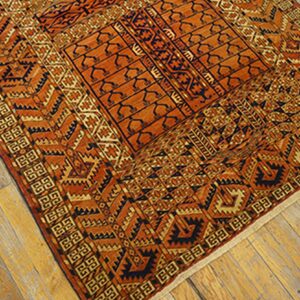
The palette is dominated by saturated tones of rust and deep terracotta, characteristic of the natural dyes favored by the weavers. These rich hues transition beautifully into subtle shades of coral color rugs where the light catches the lustrous wool, contrasting sharply with the deep indigo and black outlining the intricate guls.
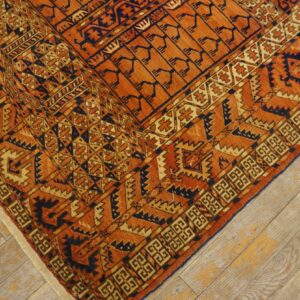
The Engsi format is defined by its cruciform structure, dividing the field into four quadrants filled with stylized, repeating motifs. The borders and subsidiary panels are densely packed with powerful geometric symbols, including stylized representations of the Tree of Life and potent apotropaic elements intended to ward off misfortune, aligning this piece with traditions utilizing evil eye protective symbols motifs rugs.
Given its age and tribal origin, this piece exhibits remarkable preservation, retaining the integrity of its structure and the vibrancy of its dyes. Its specific dimensions categorize it perfectly among small scatter size rugs, making it an ideal decorative accent or a significant collector’s item that captures the enduring artistry of Central Asian nomadic culture.