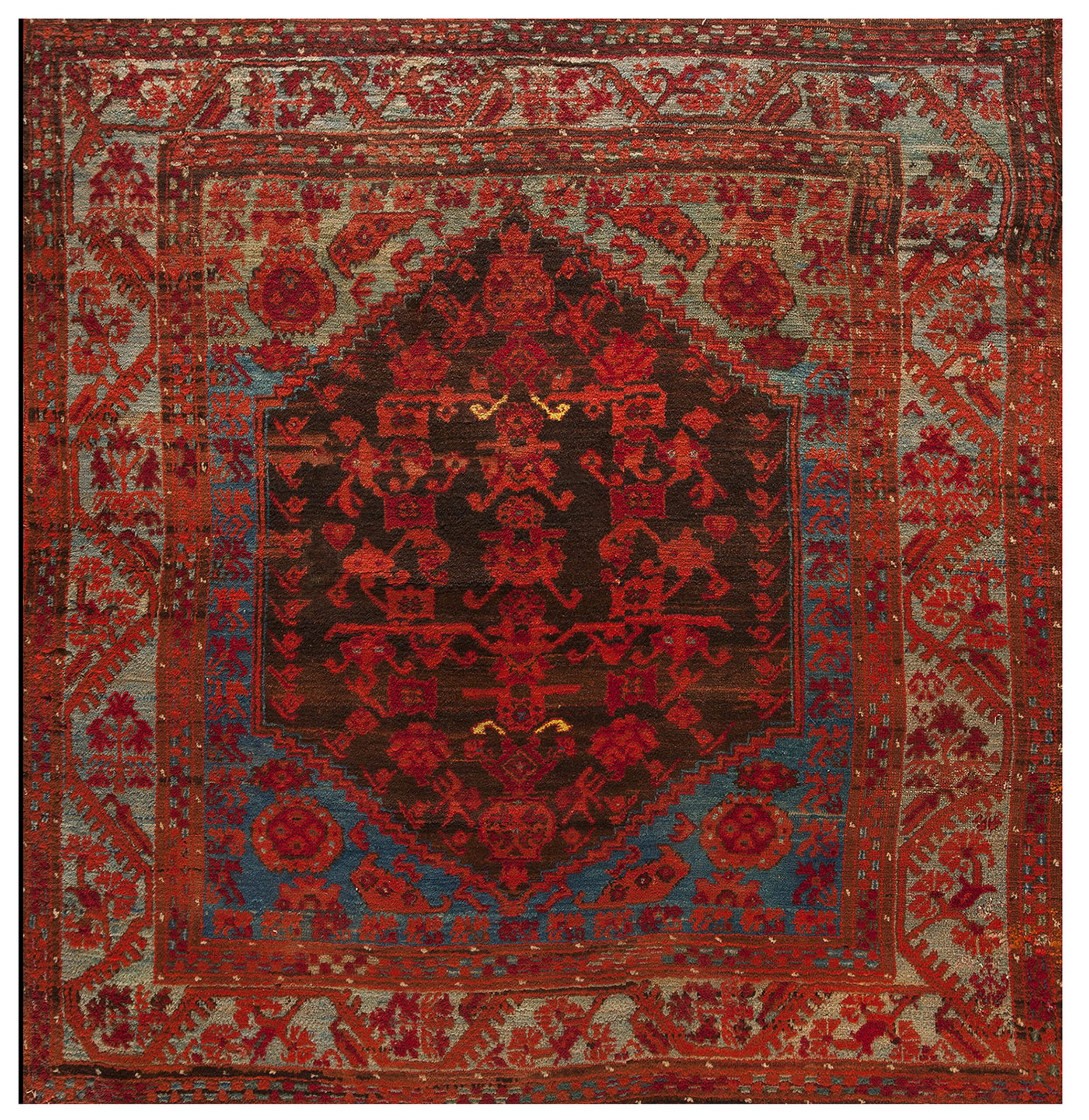

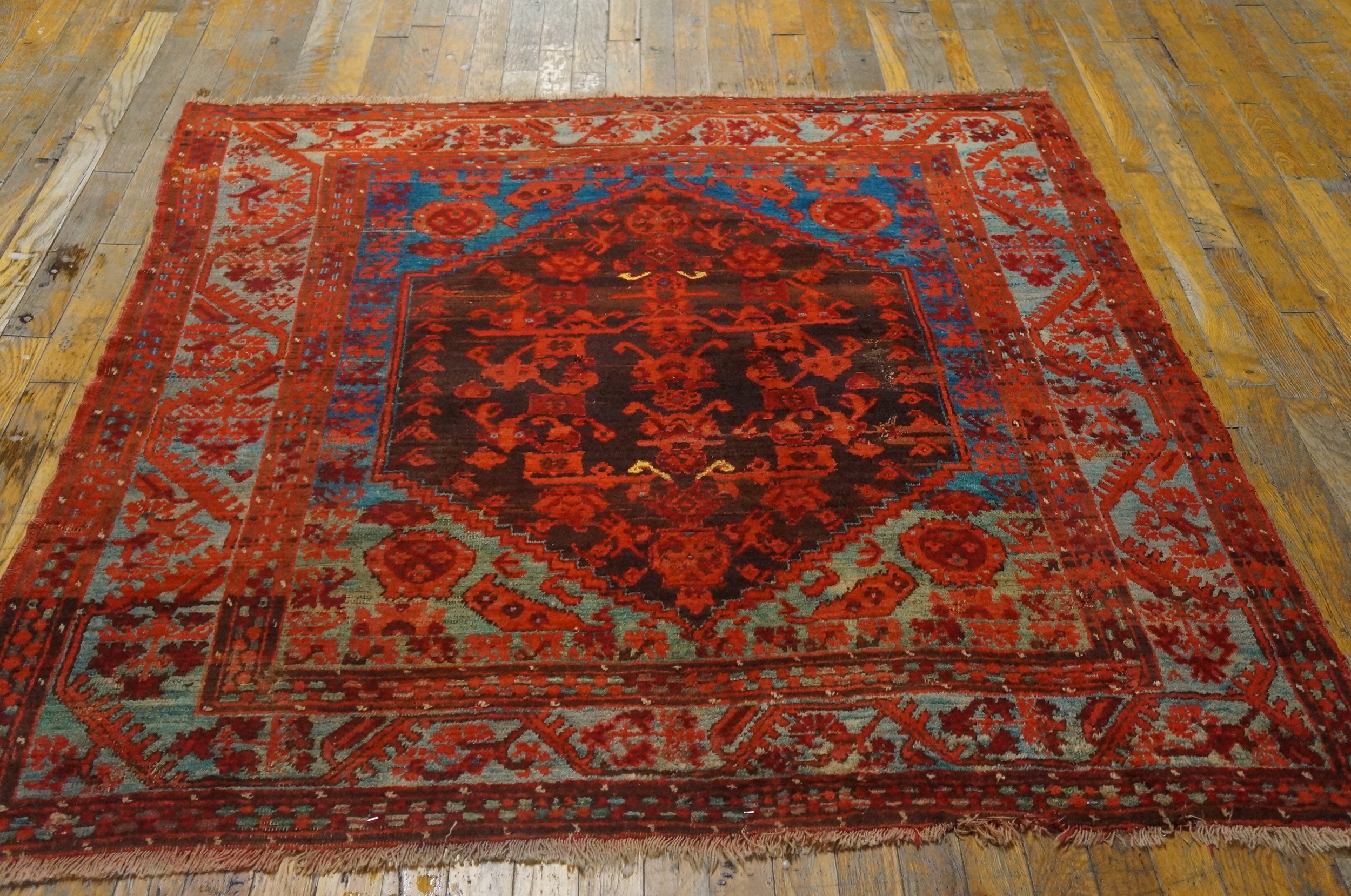
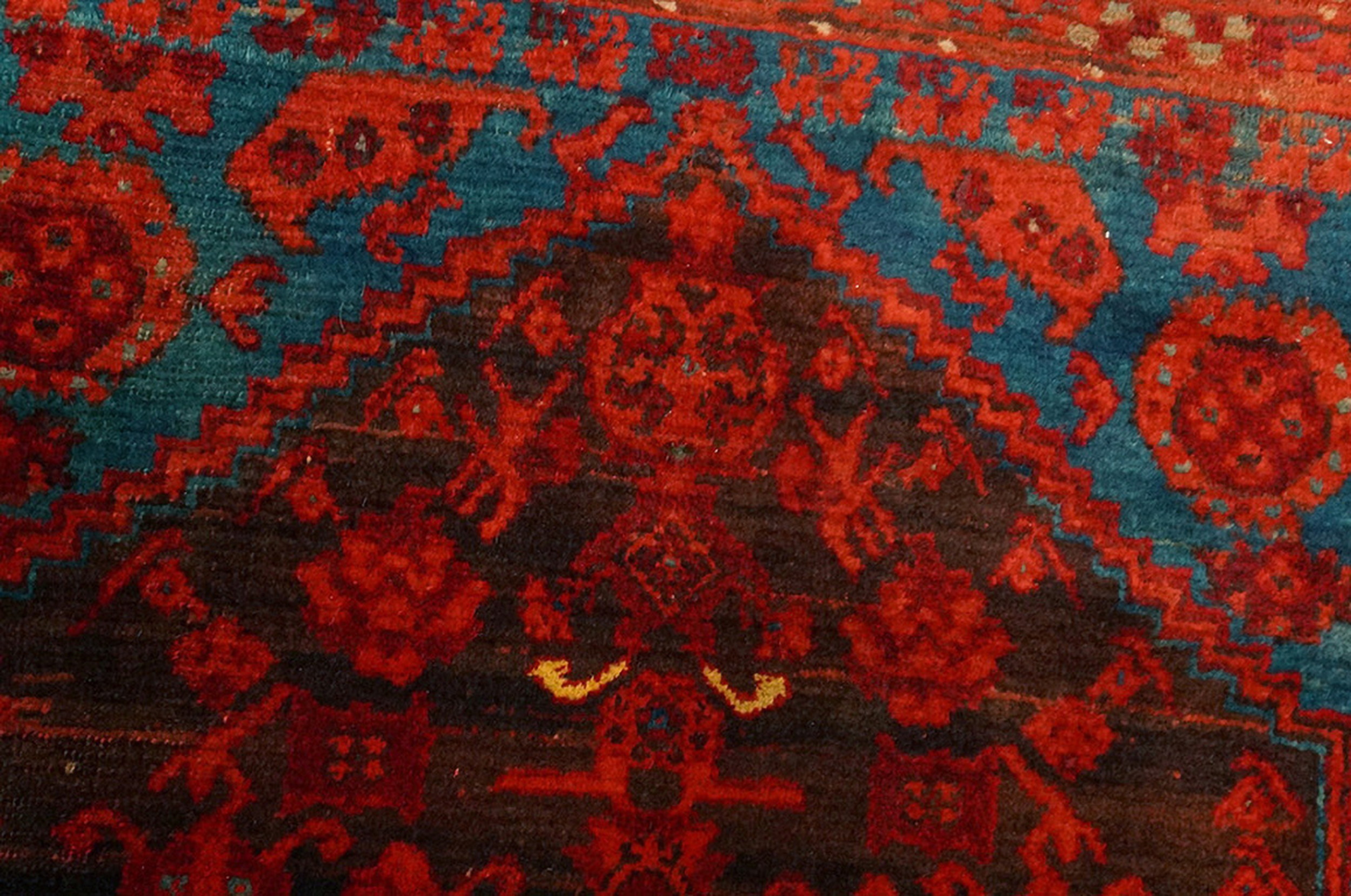

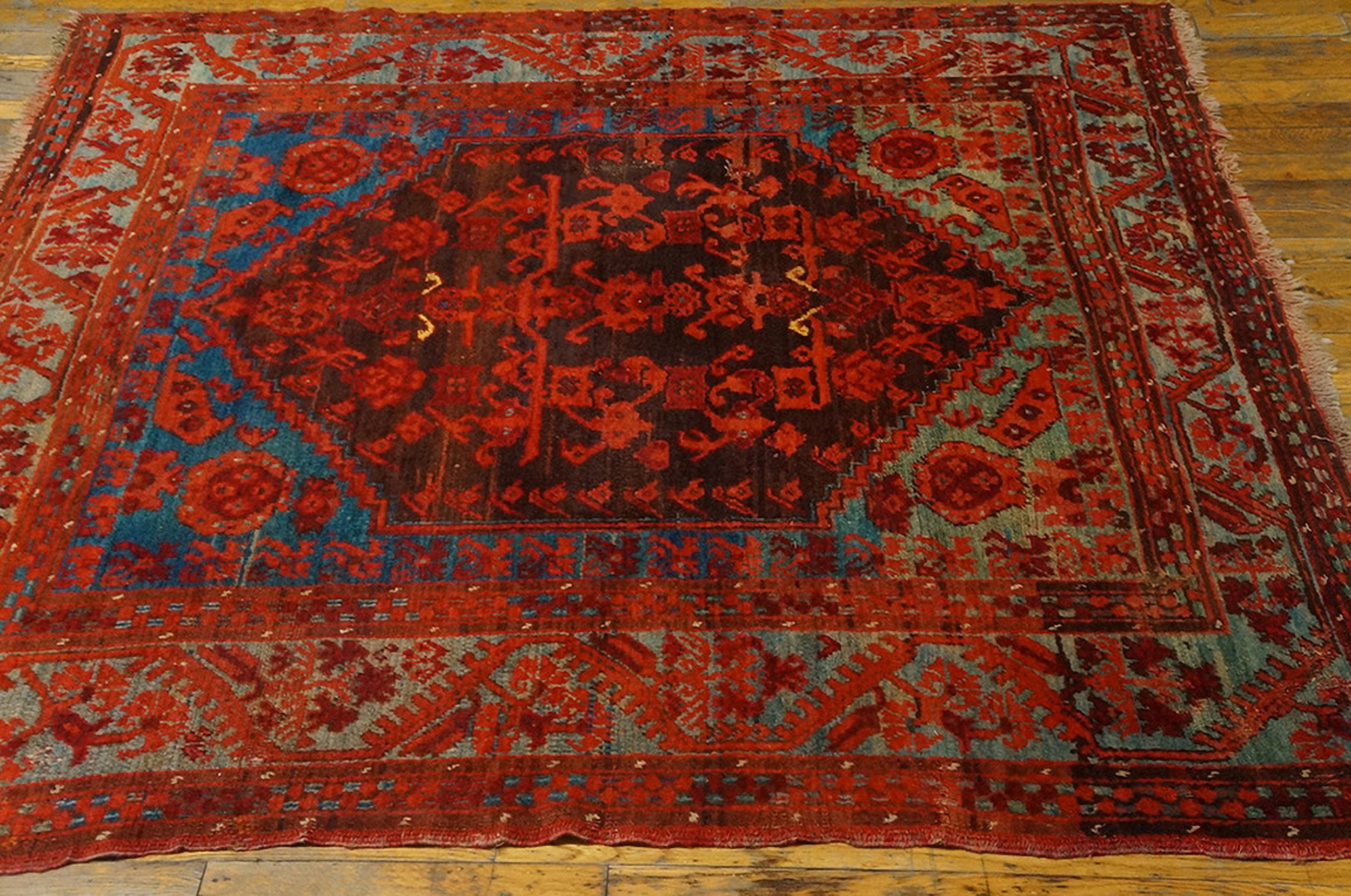


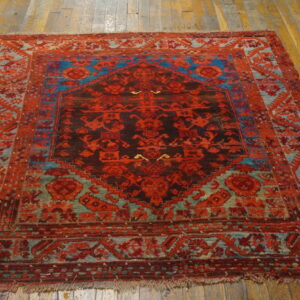
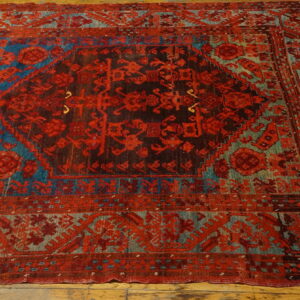


Antique Kula Small Square Scatter Size Wool Rug, Country of Origin: Turkey, Circa Date: 1850s. This exceptional example of early weaving tradition originates from the Anatolian region, placing it among the most sought-after Turkish rugs of the mid-19th century. The deep, rich palette, dominated by madder reds and earthen browns, suggests the use of highly concentrated natural dyes, resulting in a depth of color rarely seen in later pieces.
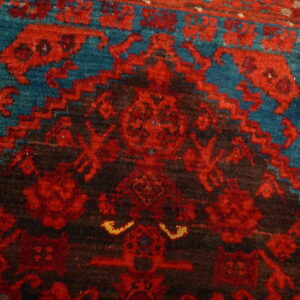
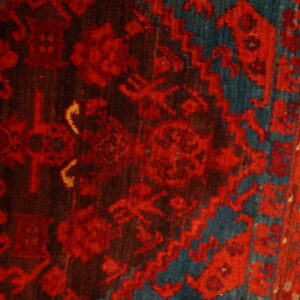
While the style is often associated with the Caucasus, this Anatolian piece captures the vigorous, stylized tribal motifs typical of the Kula tradition. The central diamond medallion, framed by a striking cerulean blue, features highly abstracted human and animal figures woven against a dark, saturated field. The overall composition relies on strong, defined lines and angularity, classifying it among the finest examples of early geometric rugs.
The compact dimensions of this square piece define it as a true example of small scatter size rugs, making it ideal for layering or highlighting a specific architectural feature within a curated interior. Its remarkable preservation, considering its age, speaks volumes about the quality of the hand-spun wool and the enduring strength of the weave structure.
Dating back to the 1850s, this square rug is not merely a floor covering but a significant textile document, reflecting the sophisticated nomadic artistry prevalent before industrialization. Such rare and well-preserved pieces are cornerstones of any serious collection of antique rugs, offering both historical depth and unparalleled aesthetic impact.