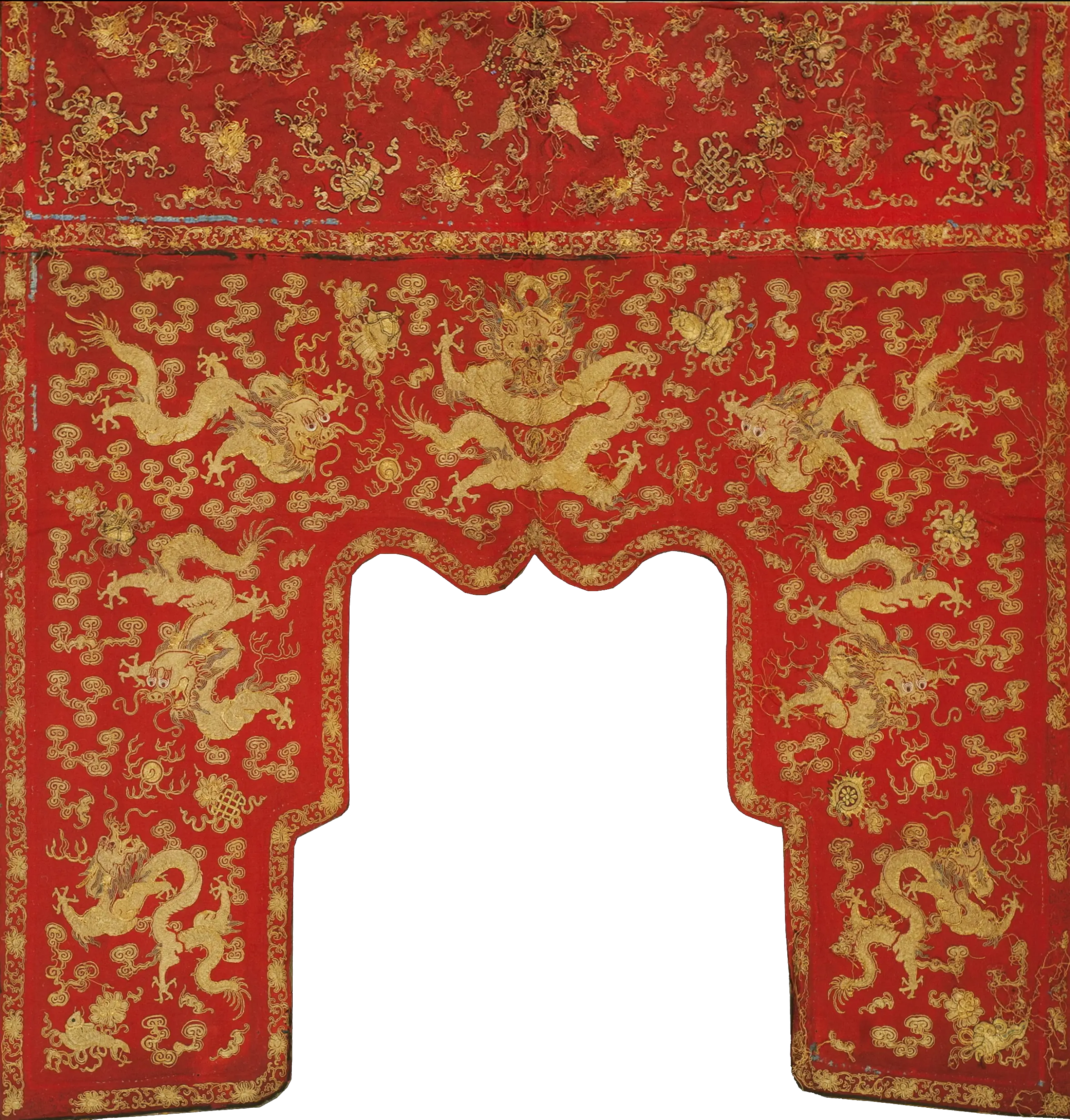
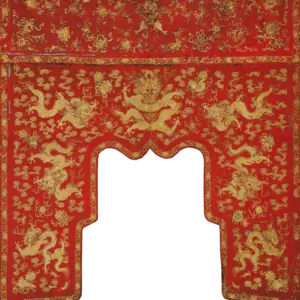
Antique Chinese – Textile Chinese Flat Weave Rug, Circa Date: 1875. This extraordinary square textile, dating to the late Qing Dynasty, showcases the pinnacle of imperial Chinese weaving and embroidery. Its rich ground color, a saturated red hue, is dramatically highlighted by extensive gold metallic threadwork. Such pieces are highly sought after among collectors of antique rugs and historical textiles.
The remarkable palette features a ground saturated in shades of red, providing a vibrant contrast to the shimmering metallic embroidery. This piece is technically a flat weave, though the heavy application of couched gold thread transforms its surface into a three-dimensional tapestry of luxury. The textile’s construction suggests a ceremonial or architectural function, likely serving as a highly decorative valance or door covering within a palace setting.
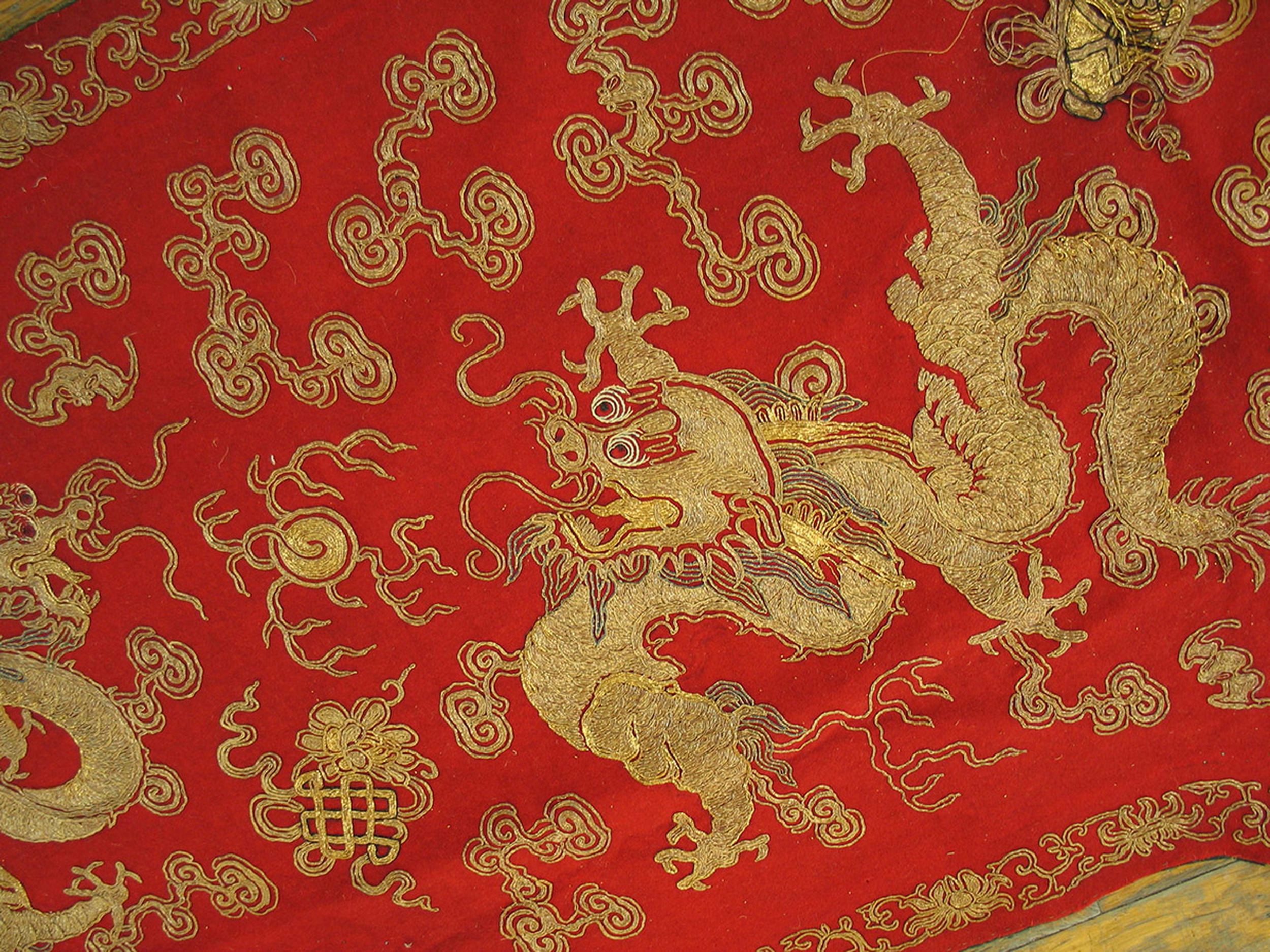
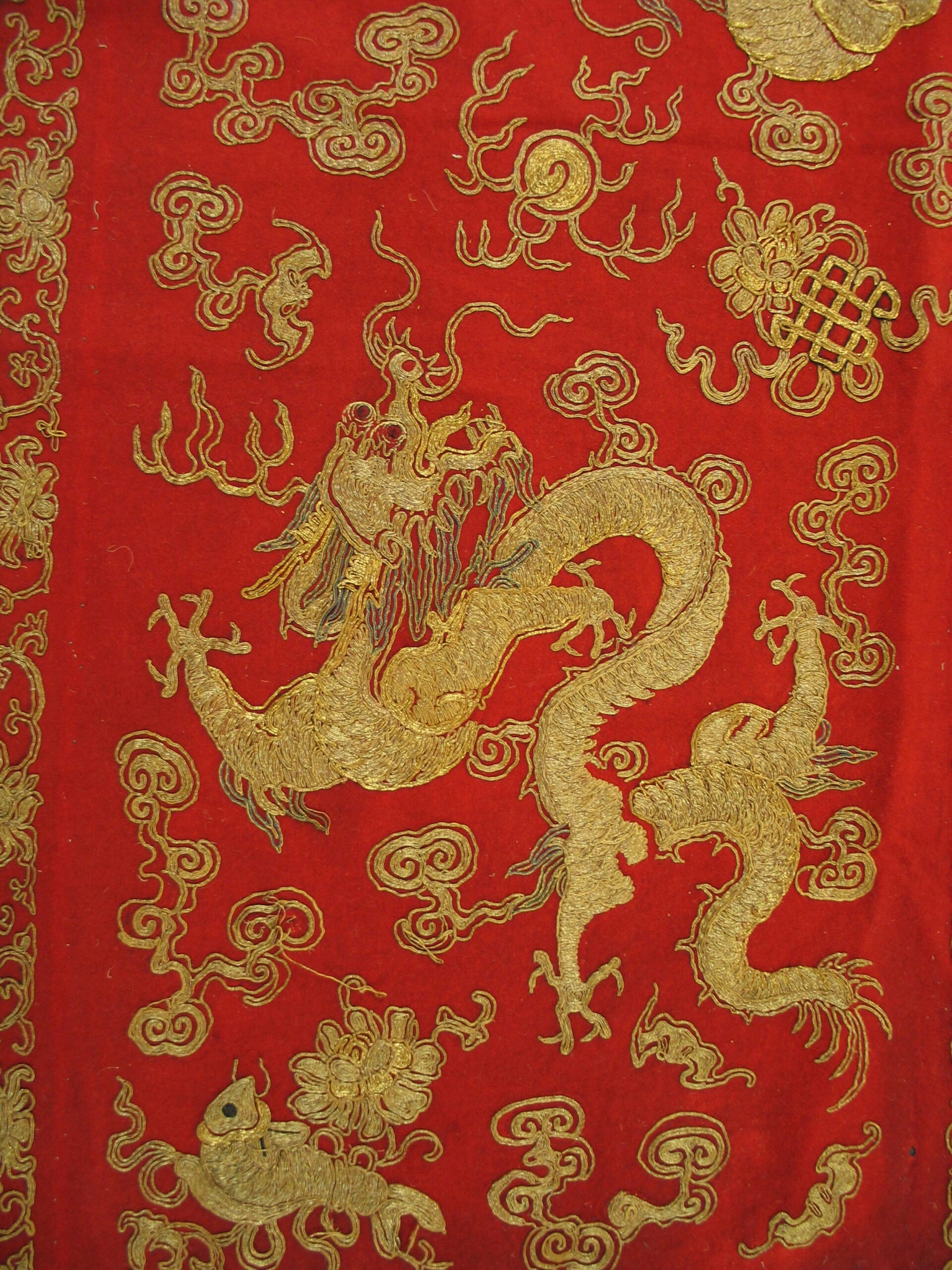
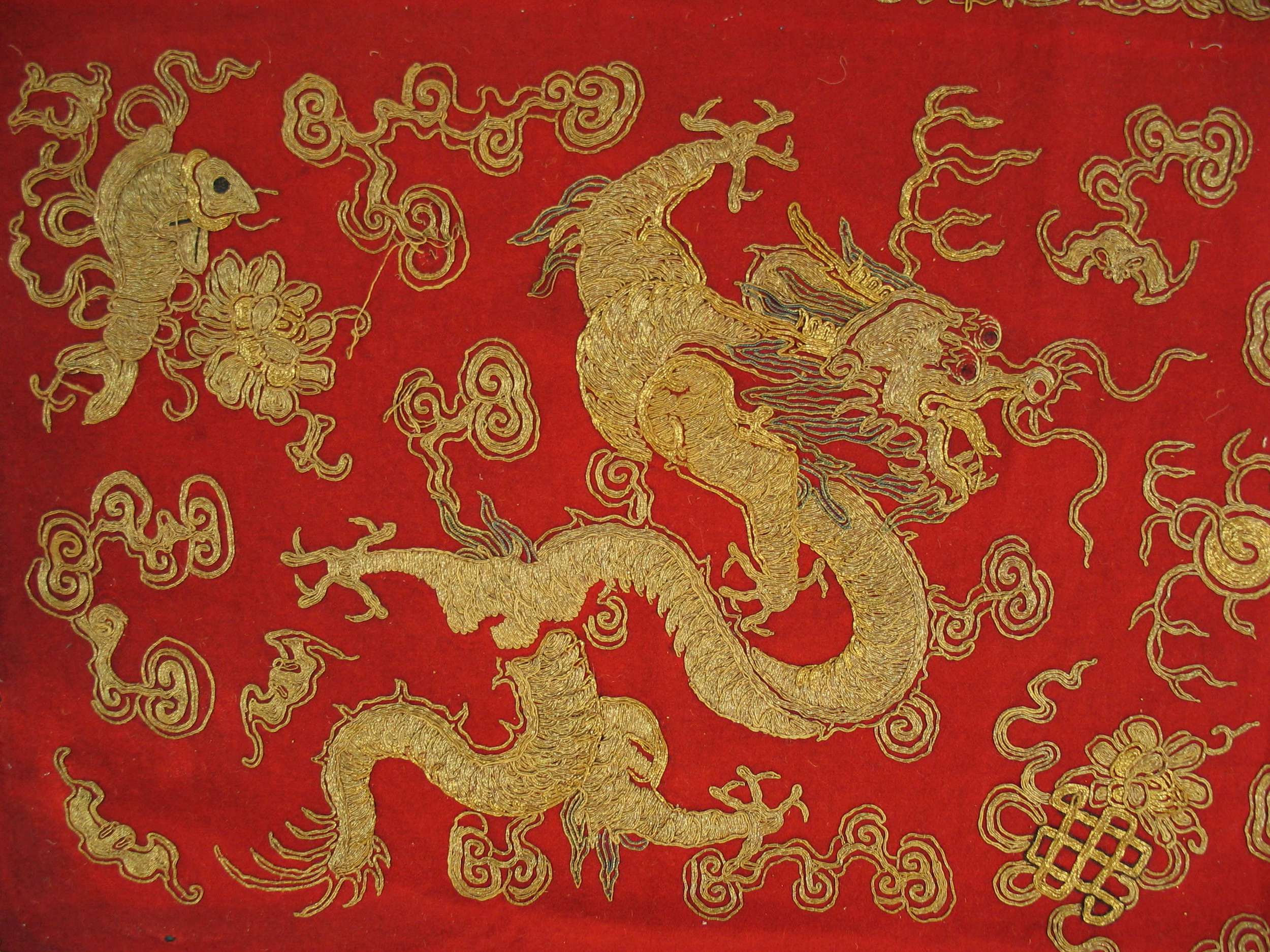
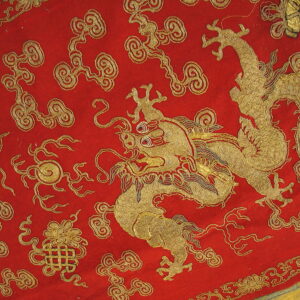
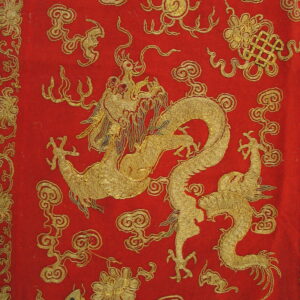
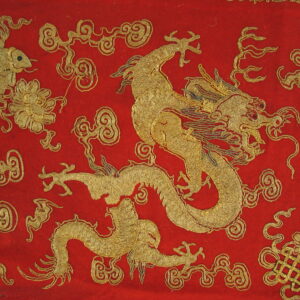
Dominating the field are five-clawed imperial dragons, symbols of power and good fortune, depicted amidst swirling ruyi clouds. The arrangement of these mythical beasts around the central archway creates a highly focused visual narrative, a structure that echoes the composition found in many central medallion designs. The precision of the gold work emphasizes the dynamic movement of the dragons across the red field.
The unique, arched form of this textile distinguishes it from conventional floor coverings, suggesting a bespoke commission for a specific interior architectural feature. Despite its grand imperial scale in design, the physical dimensions place it within the category of small square scatter size pieces, making it an ideal statement artwork for a discerning collector. It remains a rare example of late 19th-century Chinese court artistry.