
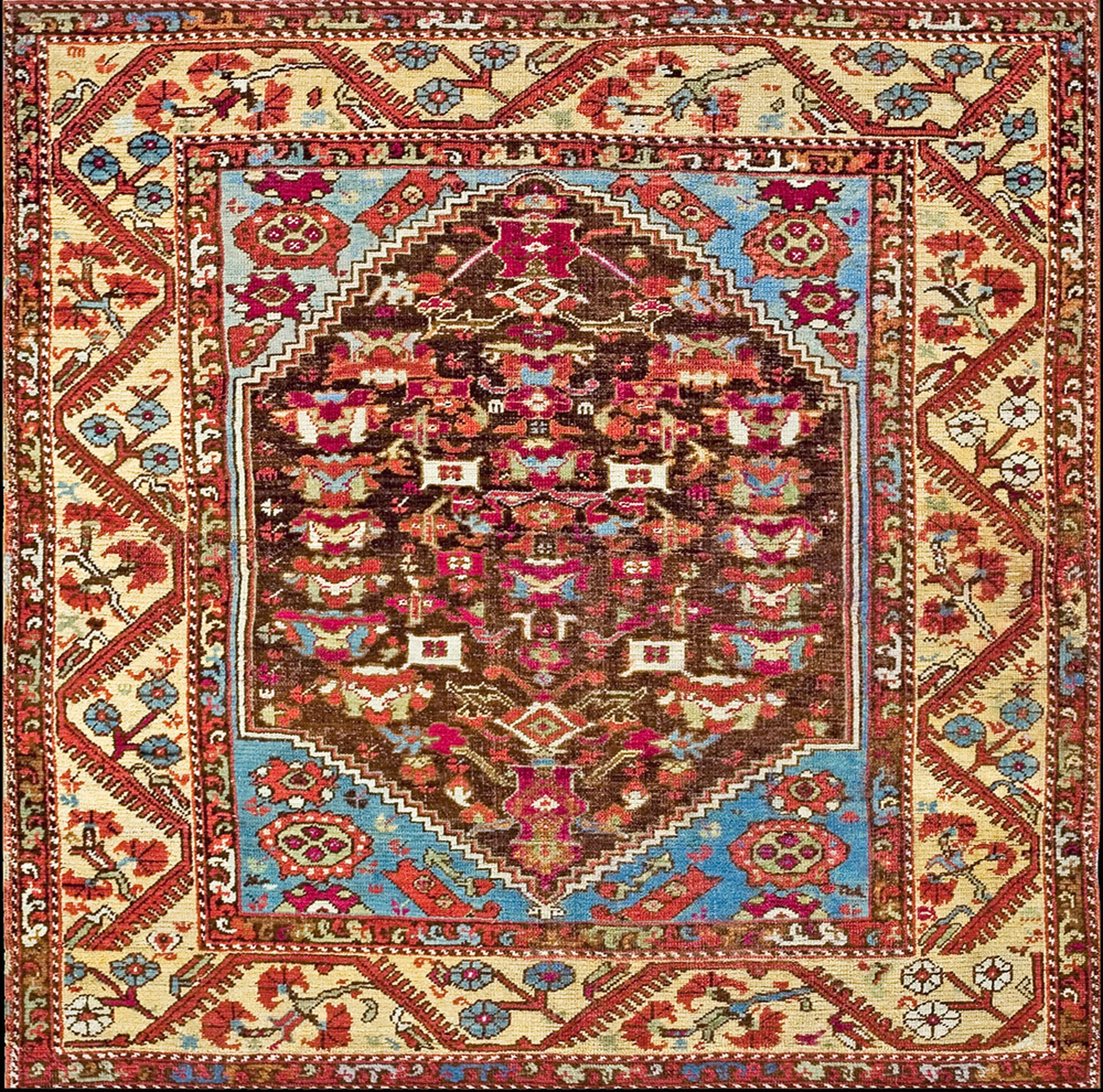
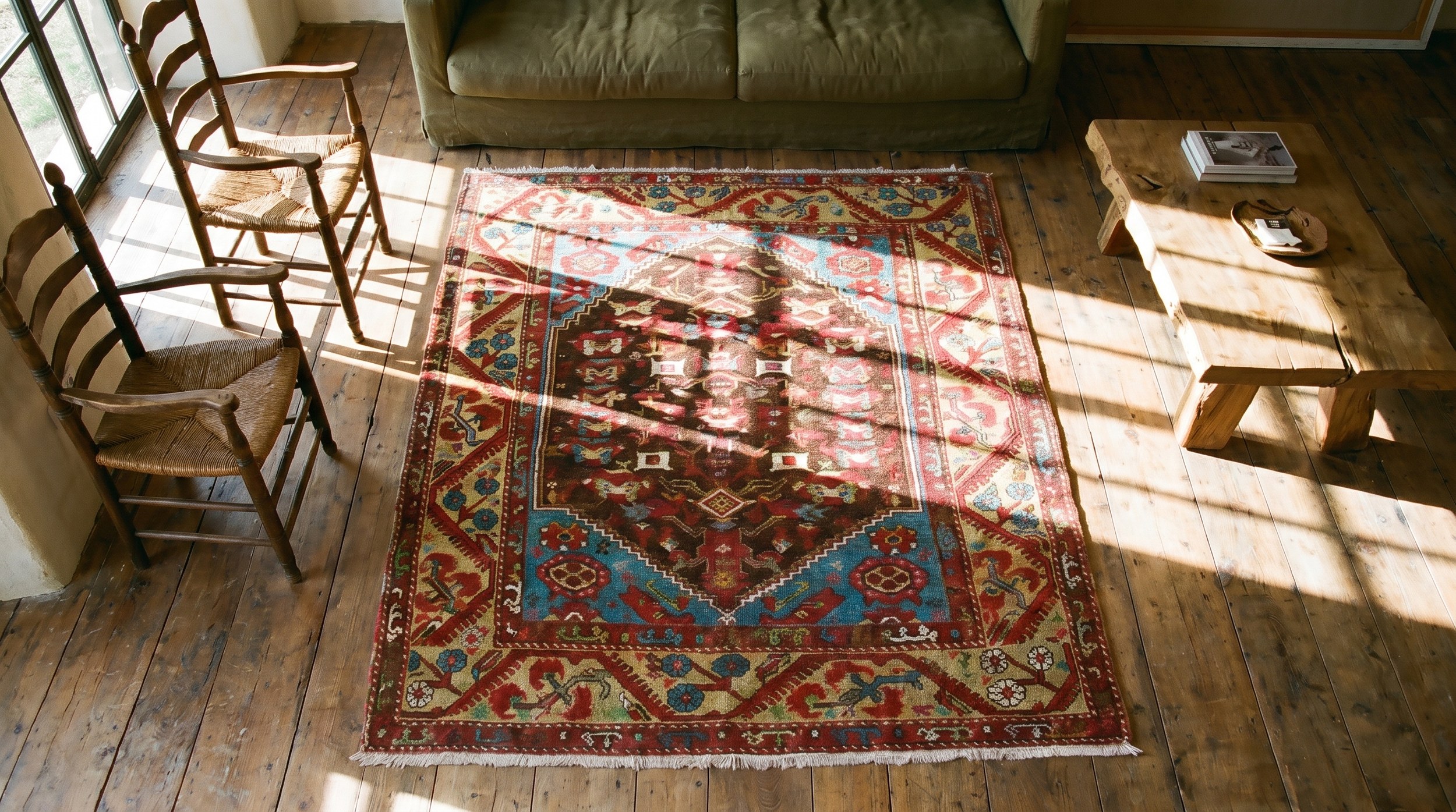
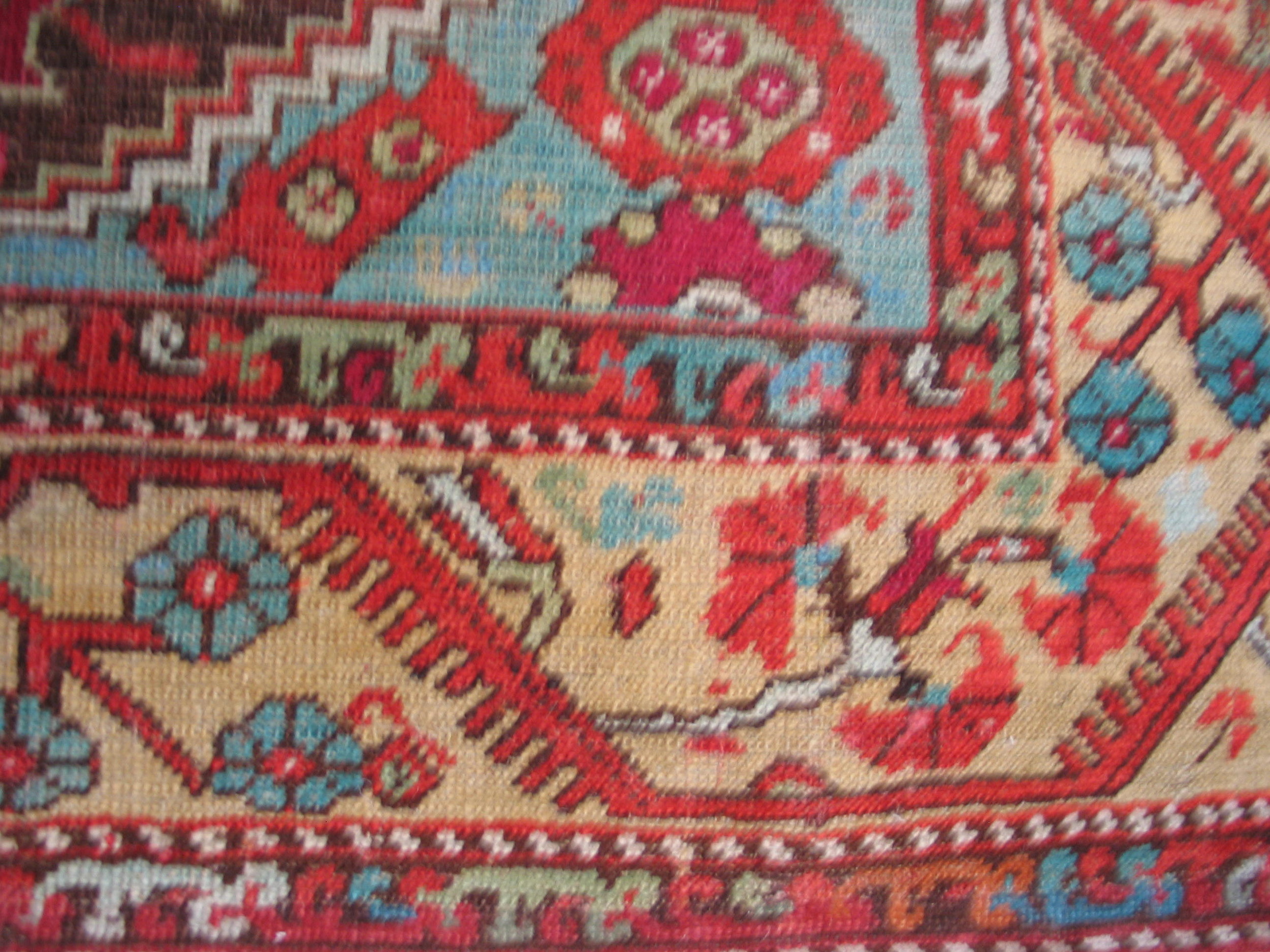
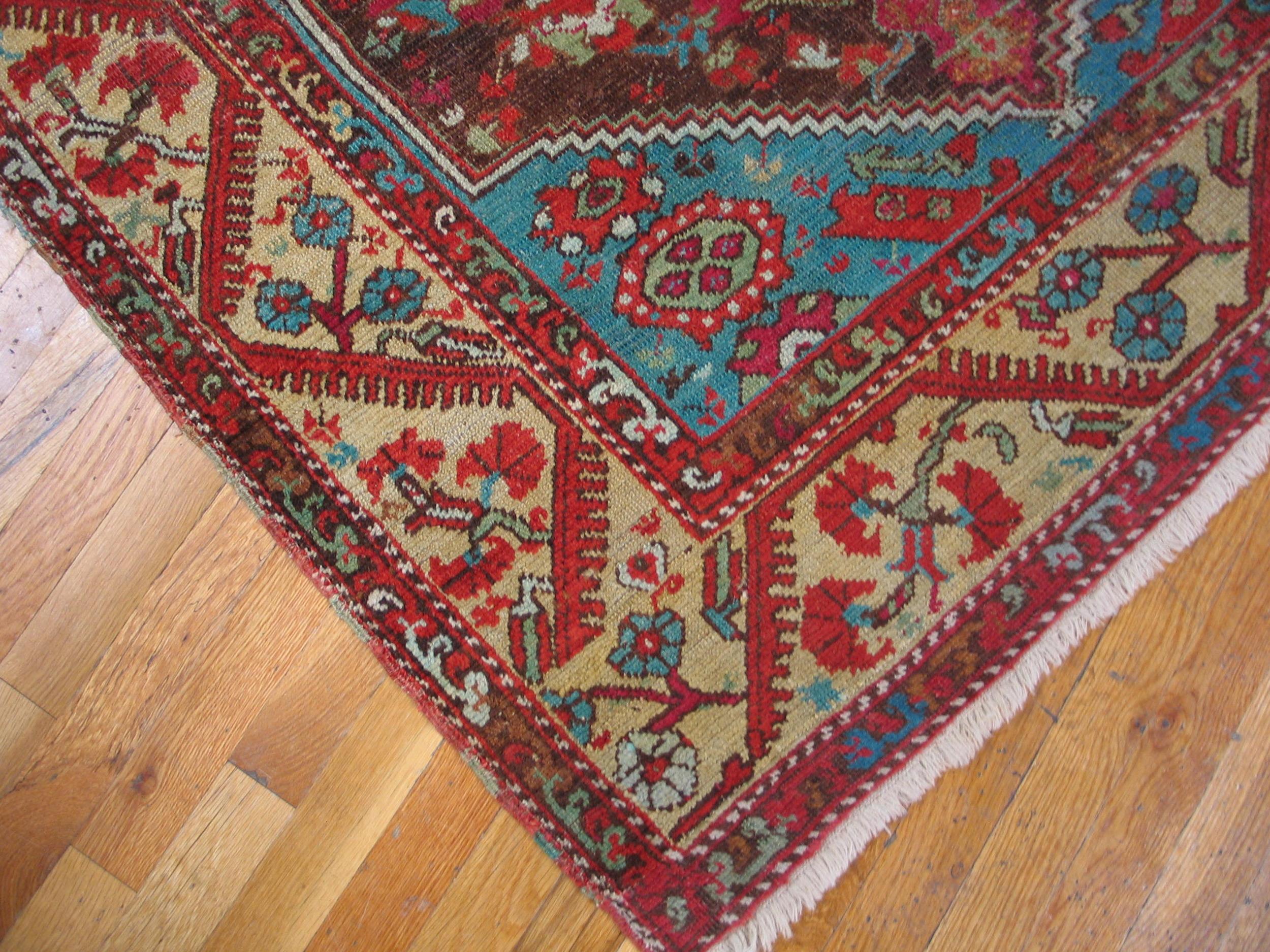
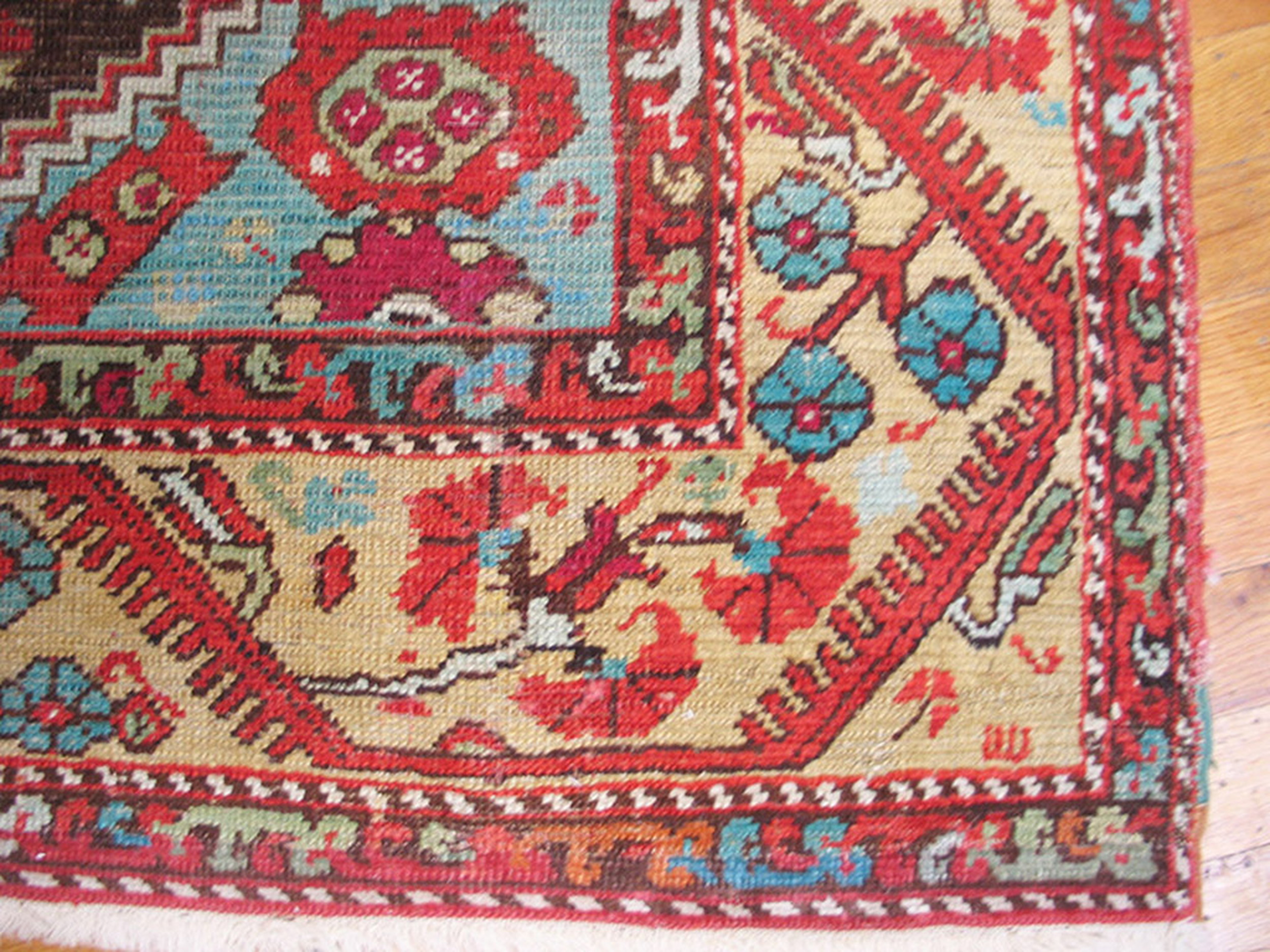
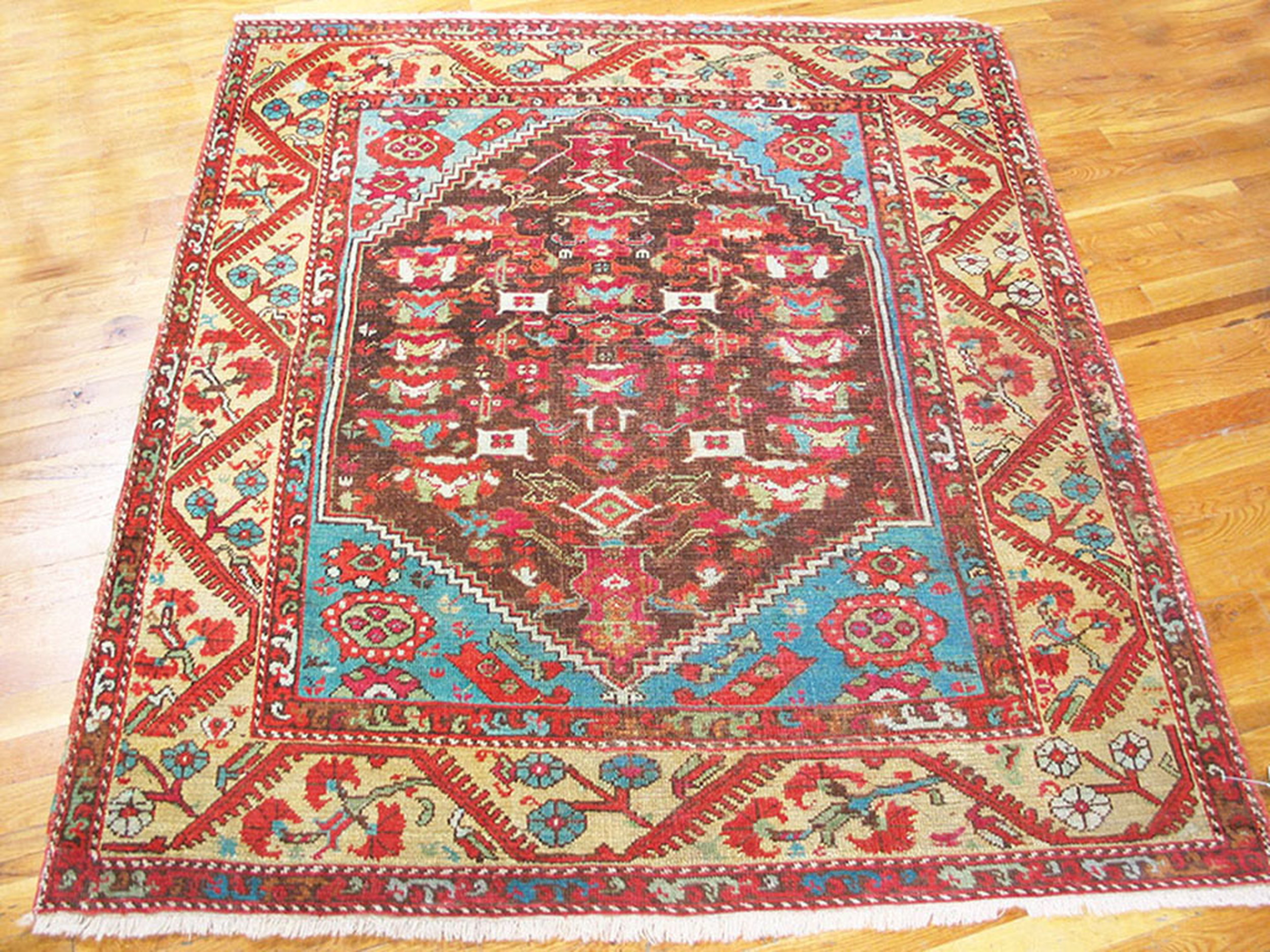

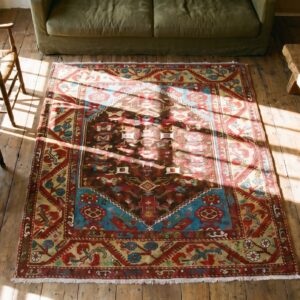
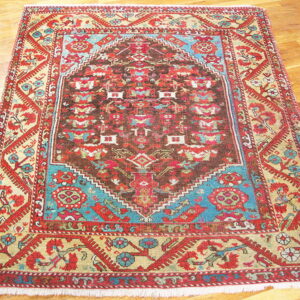

Antique Kula Turkish Knotted Rug, Circa Date: 1820s. This exceptional Square example of Caucasian weaving represents the finest traditions of 19th-century tribal art. Its remarkable preservation and use of vibrant natural dyes distinguish it among comparable antique rugs from the period.
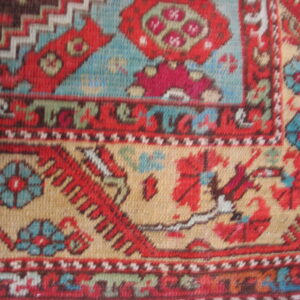
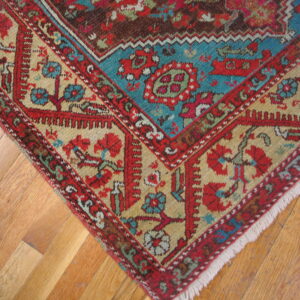
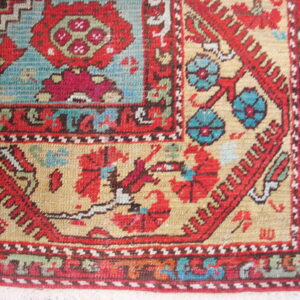
The palette is defined by a rich, deeply saturated field color, utilizing sophisticated shades of madder red and a dense, almost black-brown ground. This deep background allows the secondary colors—cerulean blue, ivory, and shocking pink—to achieve maximum visual impact, making it a powerful example of brown earth tone color rugs.
Characteristic of early Kula production, the design centers on a bold, stepped lozenge medallion filled with highly abstract, talismanic motifs. The overall composition is intensely detailed, showcasing the weaver’s mastery of the highly stylized and intricate geometric rugs typical of the region.
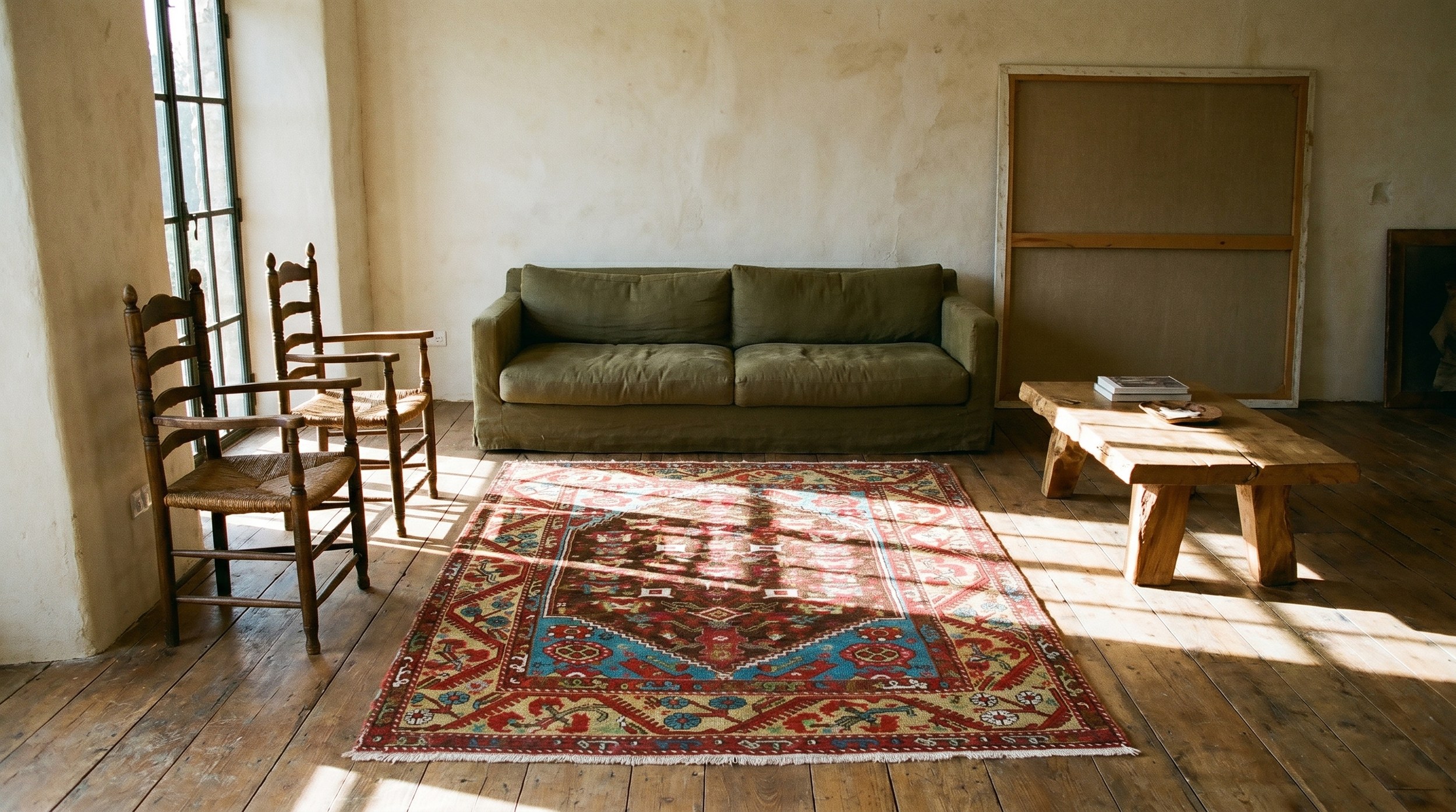
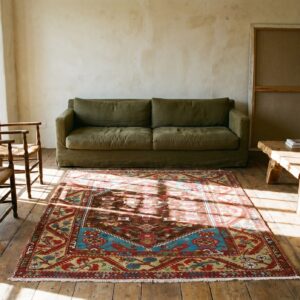
Measuring approximately 3′ x 4′, this Square format piece functions perfectly as a decorative accent or a focal point in a hallway or intimate space. Such finely knotted, early 19th-century pieces are highly sought after by collectors, particularly those seeking museum-quality small scatter size rugs that embody historical authenticity and enduring artistic value.