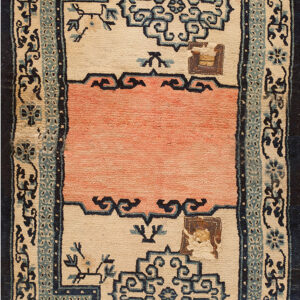
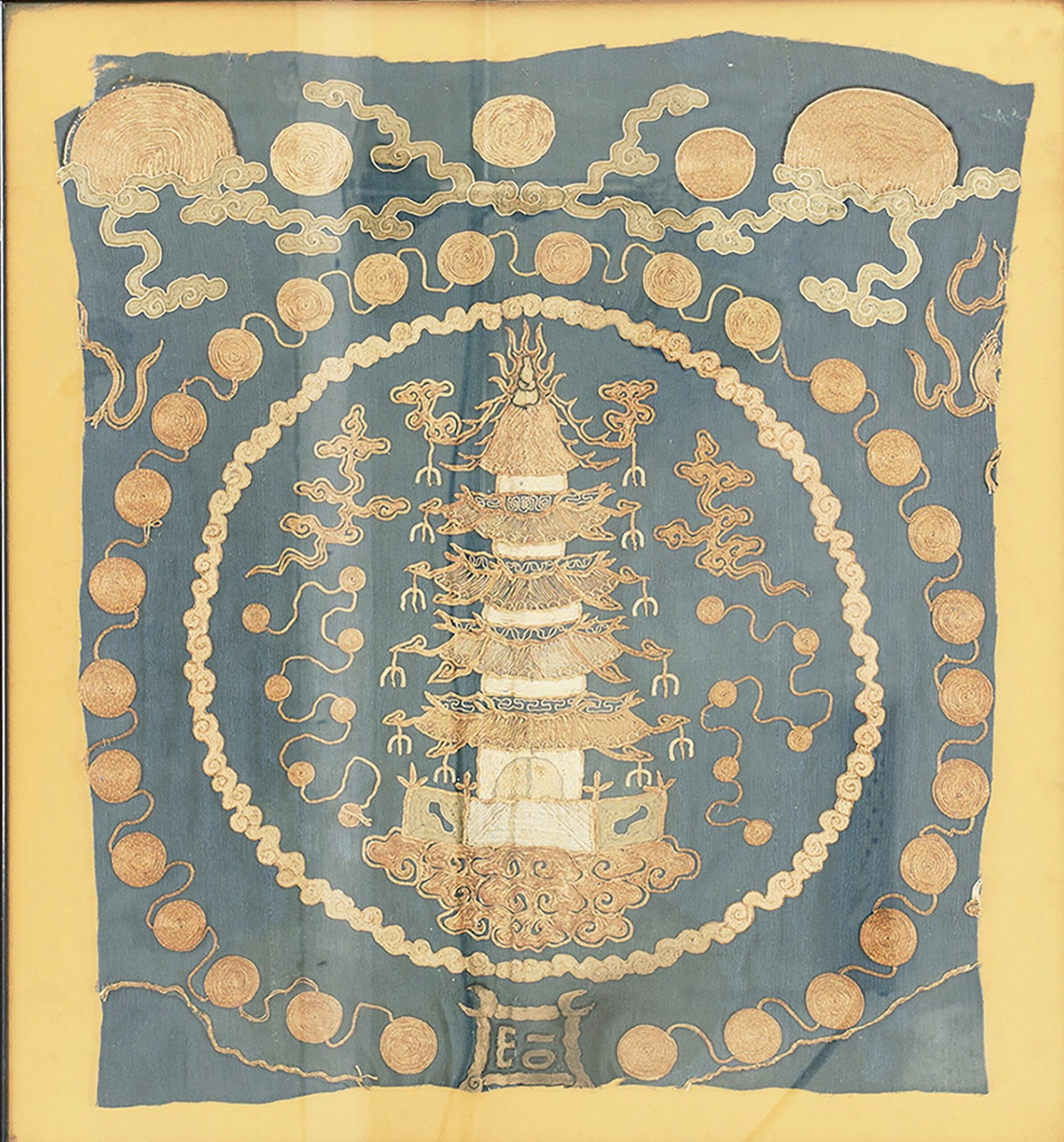
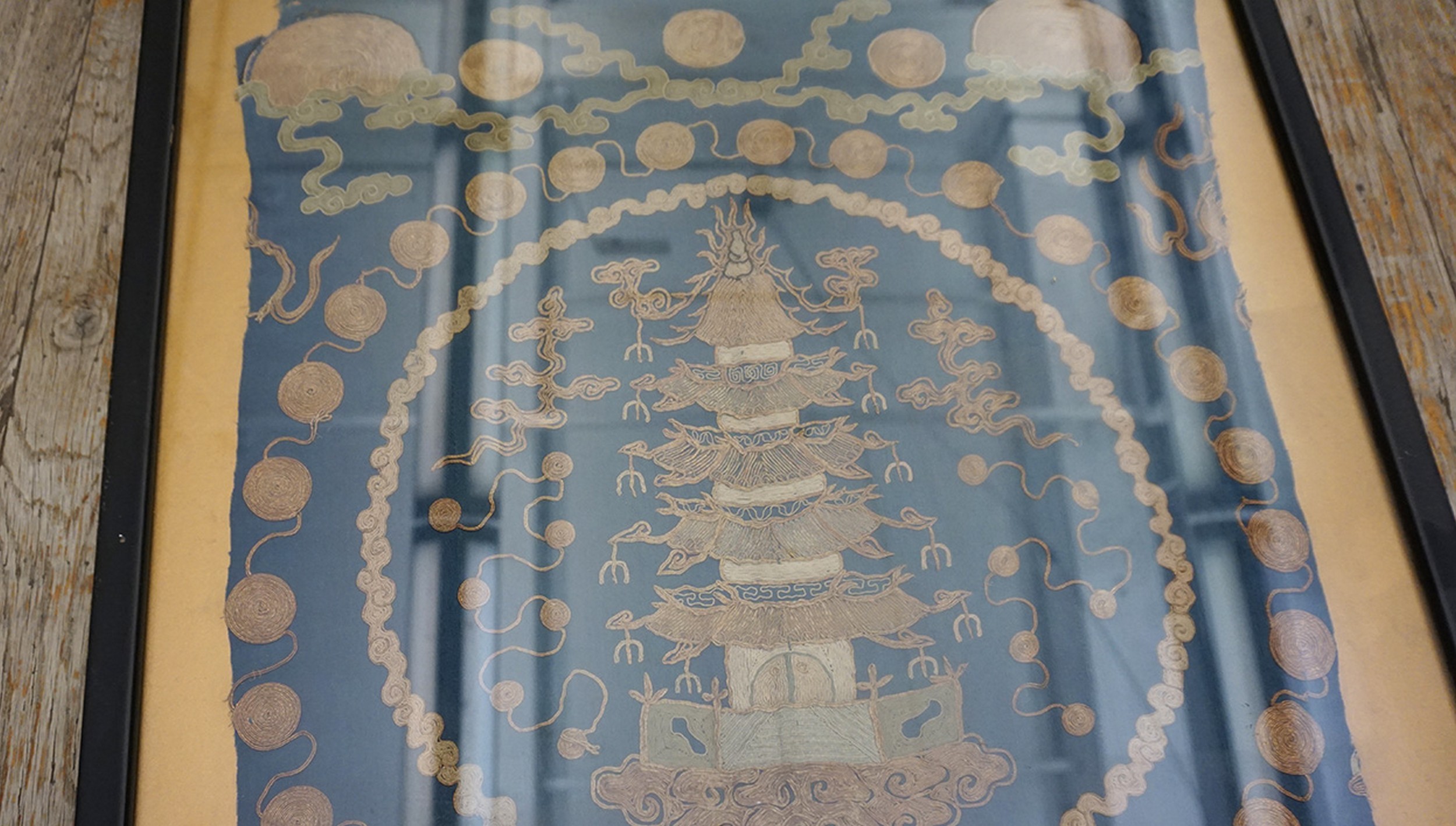
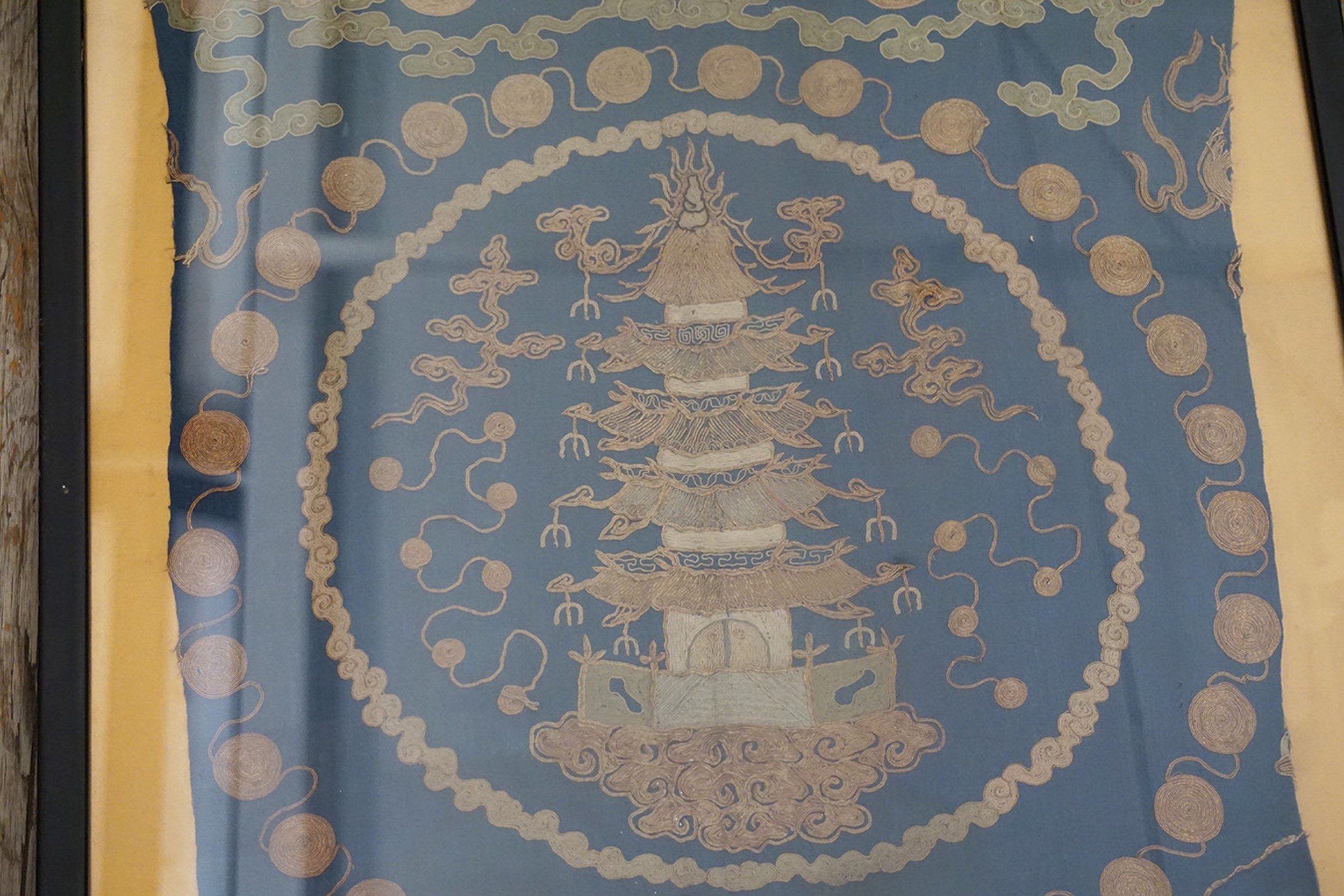
Antique Textile Chinese Medallion Flat Weave Square Rug, Circa Date: 1800s. This exceptional square textile piece, dating from the Qing Dynasty era, transcends the traditional definition of floor covering, presenting instead a masterful example of highly specialized Chinese embroidery. Such rare pieces are highly sought after by collectors of antique rugs and historical textiles alike.
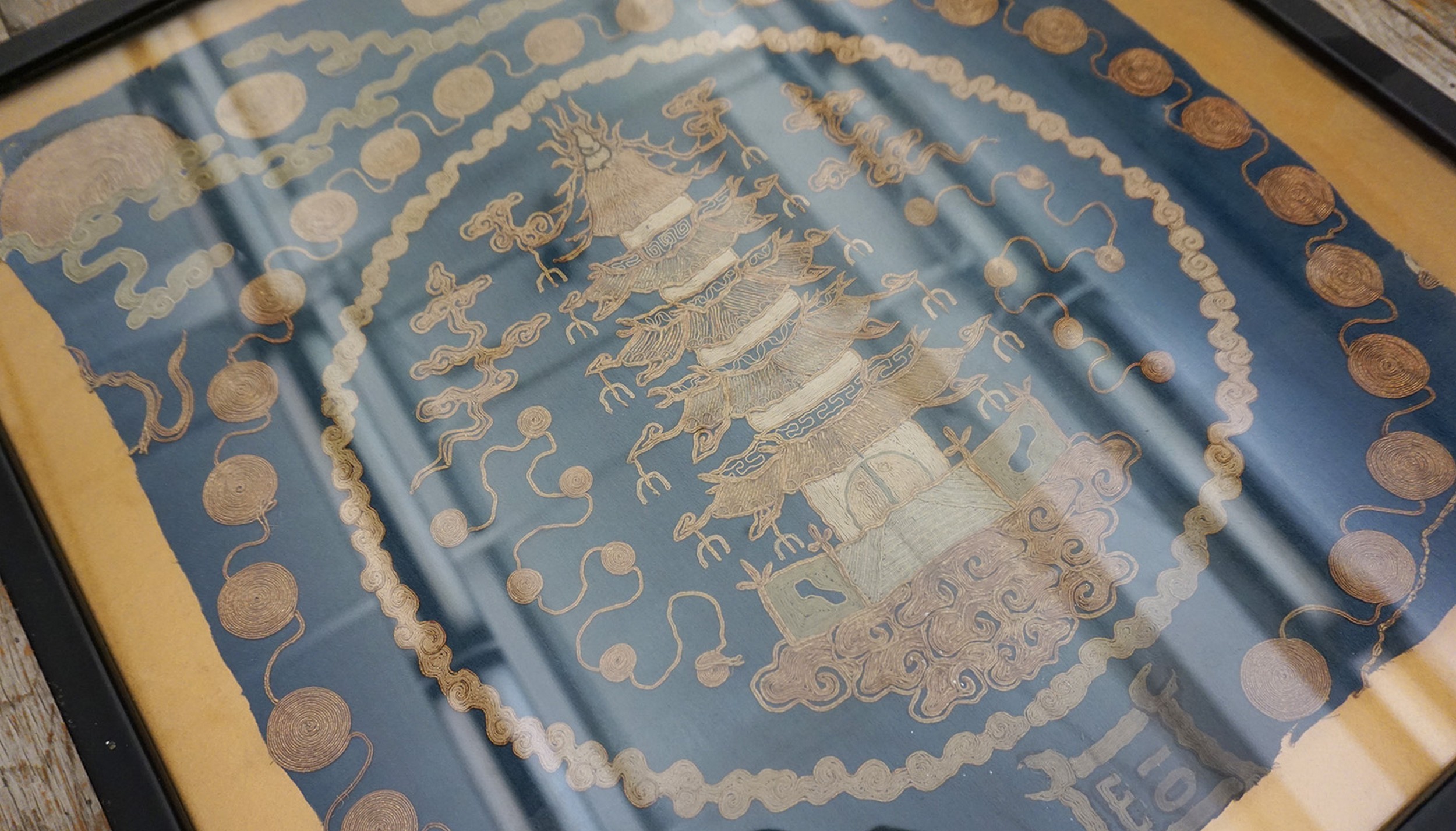
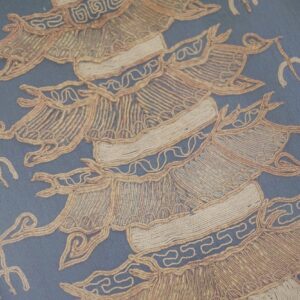
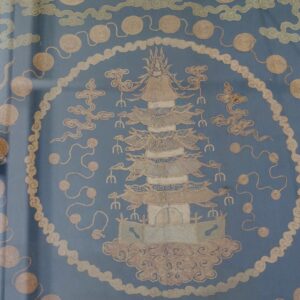
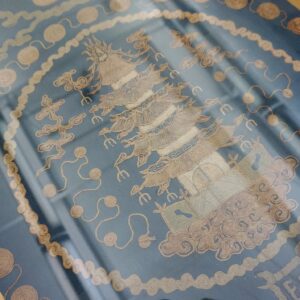
The composition is anchored by a deep, resonant field, providing a striking contrast for the intricate gold and cream silk work. This specific shade of indigo or slate blue lends a profound depth to the overall design, aligning it with the most desirable blue color rugs found in the imperial palette. The central medallion features a meticulously rendered, multi-tiered pagoda, a powerful symbol of Buddhist tradition and spiritual ascension.
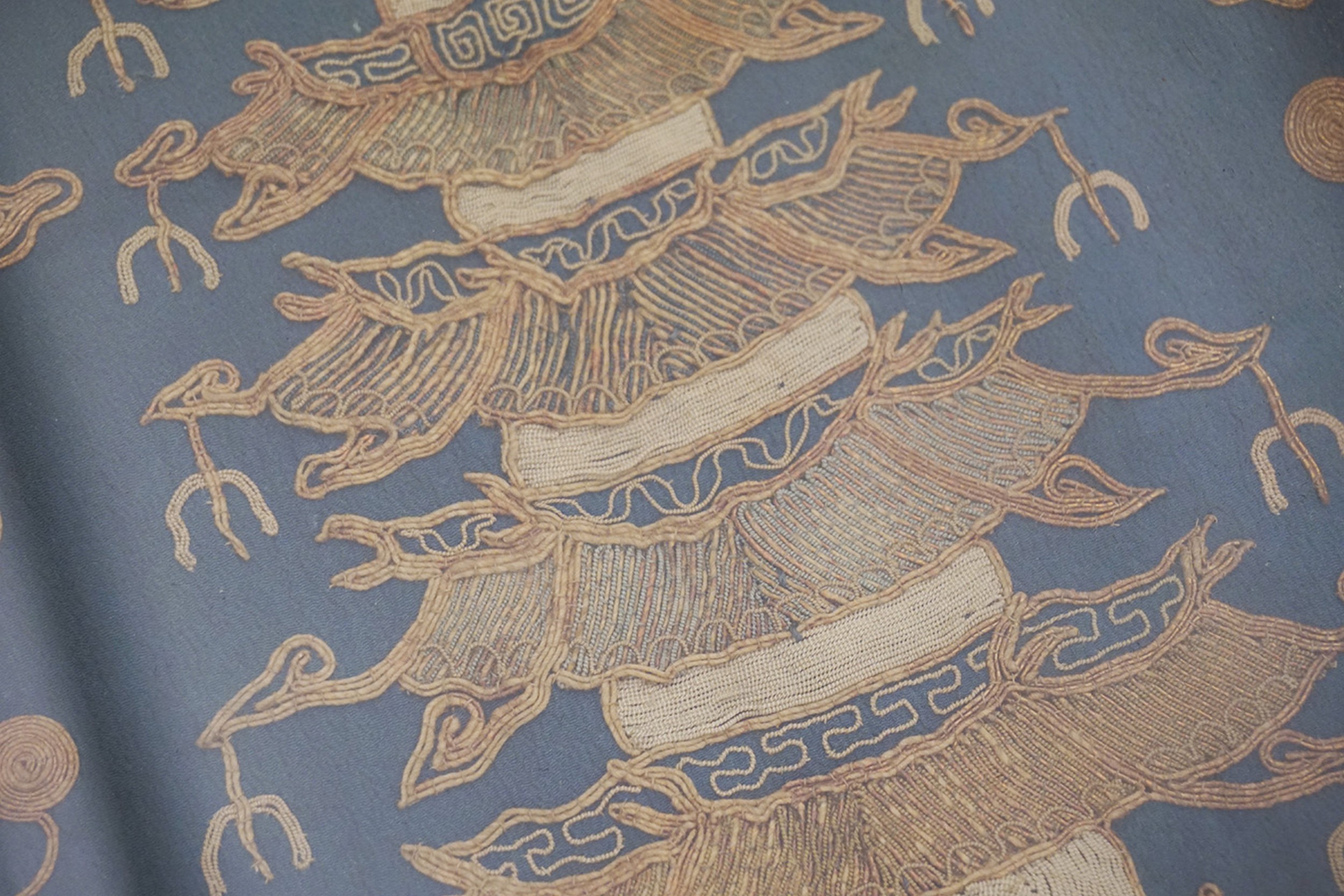
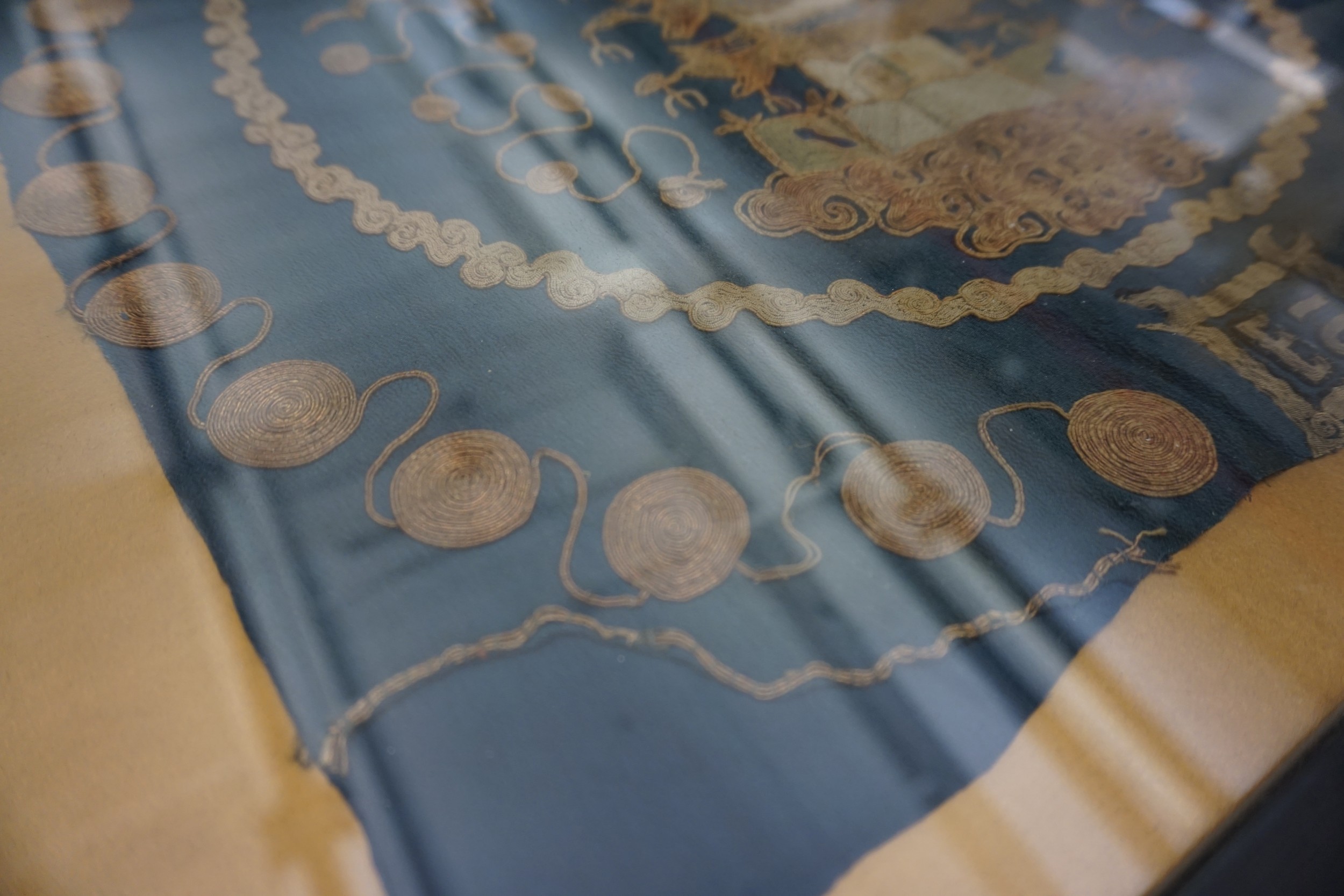
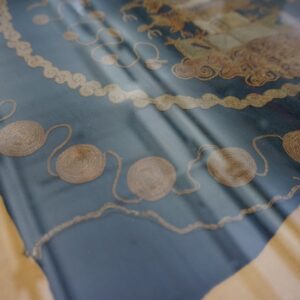
Surrounding the central structure, stylized Ruyi clouds drift among a series of interconnected circular forms, possibly representing the sun, moon, or celestial pearls. The technique employed here—a combination of flat weave foundation and couched embroidery—demonstrates the extraordinary skill of 19th-century Chinese artisans, whose precision ensured that every symbolic element was perfectly articulated within the square frame.
While classified as a flat weave rug in historical records, this piece functions today primarily as a magnificent square wall hanging or framed artwork. Its dimensions place it firmly within the category of small scatter size rugs or textile panels, making it an ideal square accent piece for a curated collection or a focal point in a refined study.