
Introduction to Tibetan Rugs: Origin, Location & Significance
Shop our exclusive selection of luxury Nepalese area rugs perfect for elevating any space.
Geographical Setting of Tibet
Tibet is situated in southwestern China, resting high on the Qinghai-Tibet Plateau, often called the “Roof of the World.” This vast region lies at the heart of Asia, bordered by Nepal, India, Bhutan, and Myanmar, while stretching north toward Qinghai and Sichuan. Its elevation and isolation have shaped a landscape of mountains, valleys, and grasslands that fostered a distinct way of life. Tibet’s position at the crossroads of Central Asia, South Asia, and China made it historically significant for the exchange of trade, religion, and art, all of which influenced the development of Tibetan rugs’ origin and motifs. The region’s geography not only defined the availability of raw materials like highland wool but also helped preserve weaving practices that remained largely untouched by outside trends.
Spiritual and Cultural Significance
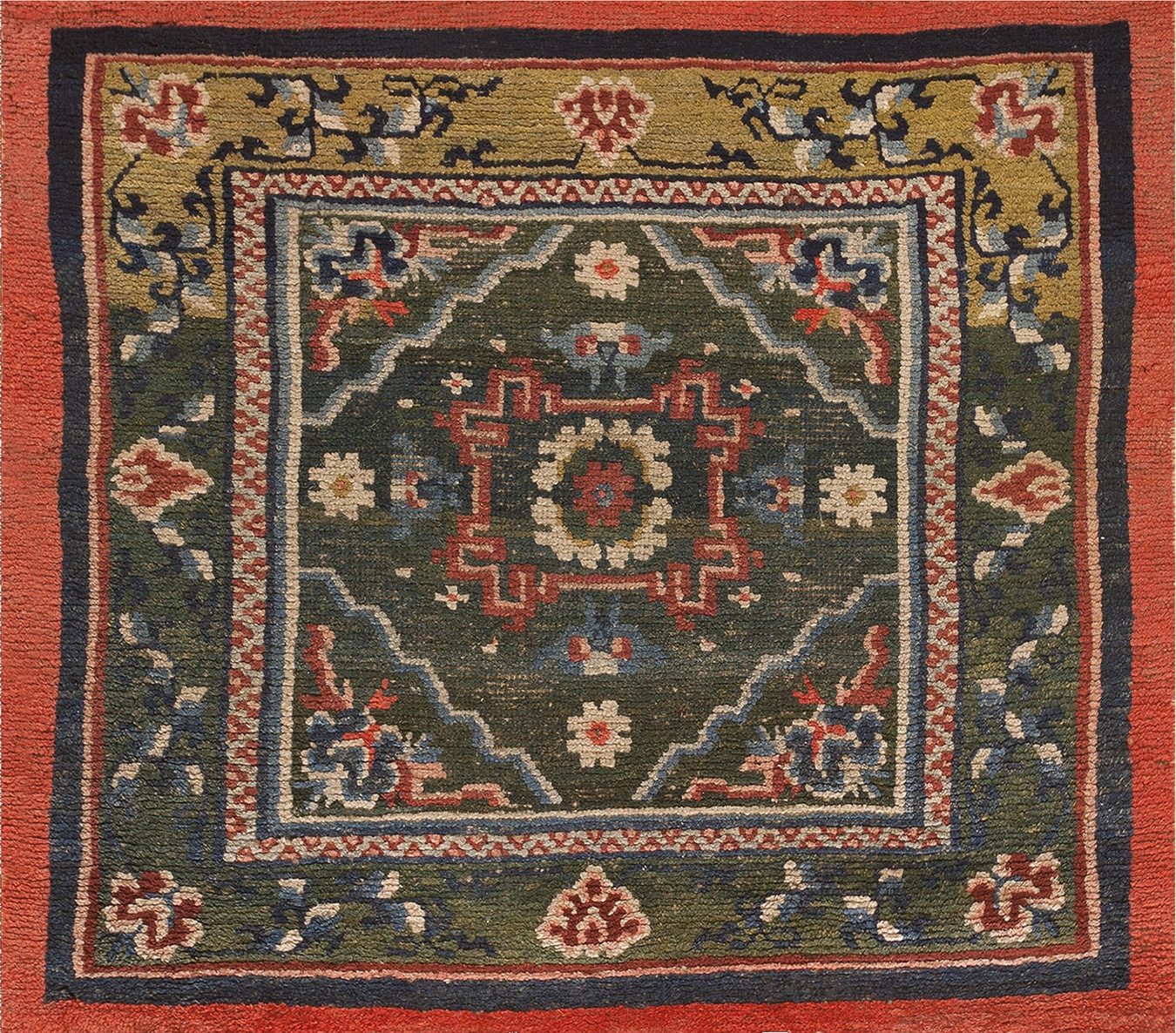
Antique Chinese – Tibetan Chinese Knotted Rug – by Rugs On Net
The cultural significance of Tibetan carpets extends far beyond their functional role. Rooted in Buddhism, Tibet’s primary faith, rugs were designed not just as floor coverings but as integral parts of spiritual life. Monasteries used them as meditation mats, prayer rugs, and throne covers for lamas, often featuring auspicious symbols like dragons, lotus flowers, or endless knots. In domestic life, Tibetan rugs mirrored pastoral traditions, serving as saddle covers, bedding, or seating mats for nomadic families. Each design element carried layered meaning—protection, prosperity, or spiritual awakening—making these textiles both utilitarian and sacred. The artistry of weaving thus became an extension of Himalayan cultural resilience, encoding Tibet’s religious devotion and community identity into every knot.
Where Tibet Is Located and Why It Is Significant
Tibet is located on the Qinghai-Tibet Plateau in southwestern China, bordering Nepal, India, Bhutan, and Myanmar. Its significance lies in being both a physical and cultural high ground: geographically remote yet historically central to trade routes and religious movements. This positioning allowed Tibet to safeguard its Himalayan rug traditions while simultaneously absorbing influences from India and China. Tibetan carpets embody this balance, serving as tangible evidence of a region where geography, spirituality, and craftsmanship converge. Modern interest in these rugs reflects not only their aesthetic design but also their role as carriers of centuries-old cultural memory.
The Enduring Value of Tibetan Rugs
Tibetan rugs represent more than handcrafted textiles; they are emblems of a culture that wove resilience and faith into daily life. The highland geography preserved unique motifs and methods, while Buddhism imbued designs with spiritual meaning. Today, collectors and interior designers prize them for both heritage and beauty, ensuring that the cultural significance of Tibetan carpets continues to resonate far beyond the plateau. These rugs remain powerful symbols of Tibet’s artistry, history, and spiritual depth.
History & Evolution of Tibetan Rug Weaving

Traditional floor coverings used during religious gatherings.
Early Origins & Buddhist Influence
The Tibetan rug weaving history stretches back before the 7th century, when local weavers produced wool textiles for domestic and pastoral use. With the arrival of Princess Wencheng of China in the 7th century—who married Songtsen Gampo, Tibet’s first great emperor—Buddhist imagery began to shape Tibetan art and textiles. Early carpets incorporated Buddhist carpet motifs such as the lotus, endless knot, and protective deities, turning rugs into vehicles of both utility and spiritual symbolism. By the 9th century, Tibetan weaving had fully absorbed Buddhist aesthetics, embedding religious devotion into daily furnishings and temple life.
Mongol Rule, Monastic Demand & Cavalry Rituals
By the 17th century, under the 5th Dalai Lama and subsequent Mongol-influenced rule, Tibetan weaving evolved into a state-controlled craft. Monastic rug workshops were established to meet the demand for ceremonial and religious carpets used in state rituals, monasteries, and cavalry parades. Horses and officials were often adorned with saddle rugs and banners woven with auspicious symbols, reinforcing both spiritual authority and political power. During this period, rug production was tied directly to aristocratic patronage and monastic institutions, which governed the workshops and ensured that designs adhered to religious codes and ceremonial needs.
The 19th–20th Century Heyday
From the 19th to early 20th centuries, Tibetan rug weaving reached its artistic and economic height. Large-scale workshops in centers like Lhasa and Gyantse produced carpets not only for aristocratic households and monasteries but also for the first wave of foreign collectors and traders. Motifs diversified under the influence of trade with India and China, introducing vibrant dyes and design variations. This was the period when Tibetan carpet exports first entered international markets, drawing attention from Western travelers and art dealers. While aristocrats and monasteries still governed the workshops, the growing interest from abroad expanded the audience for Tibetan carpets beyond the plateau.
Diaspora, Disruption & Globalization
- Chinese Occupation and Cultural Revolution (1950s–70s): Carpet weaving in Tibet was nearly extinguished due to political suppression, with workshops dismantled and production halted. — Why: This interruption severed centuries of continuous tradition within Tibet itself.
- Diaspora and Refugee Cooperatives: Tibetan refugees in Nepal and India reestablished rug weaving through cooperatives, using traditional designs while adapting to modern market demands. — Why: Refugee-led workshops revived the craft and gave it new life outside Tibet.
- Global Expansion: By the late 20th century, Nepal and India became the new centers of Tibetan rug production and Tibetan carpet exports, ensuring the global reach of this once-remote Himalayan tradition. — Why: The diaspora’s efforts transformed a local cultural craft into an internationally recognized art form.
Lasting Legacy
The evolution of Tibetan rug weaving reflects cycles of spiritual devotion, aristocratic control, foreign exposure, and diaspora resilience. Historically, monastic rug workshops and noble patrons governed production, shaping both style and symbolism. The international spread began in the 19th century but became fully realized in the late 20th century when refugee weavers globalized the tradition. Today, every Tibetan rug embodies this layered history—woven with the threads of faith, power, disruption, and revival.
Distinctive Rug Types & Symbolic Motifs

Rolled textiles suggest storage of symbolic Tibetan art.
Tiger Rugs (Taksham)
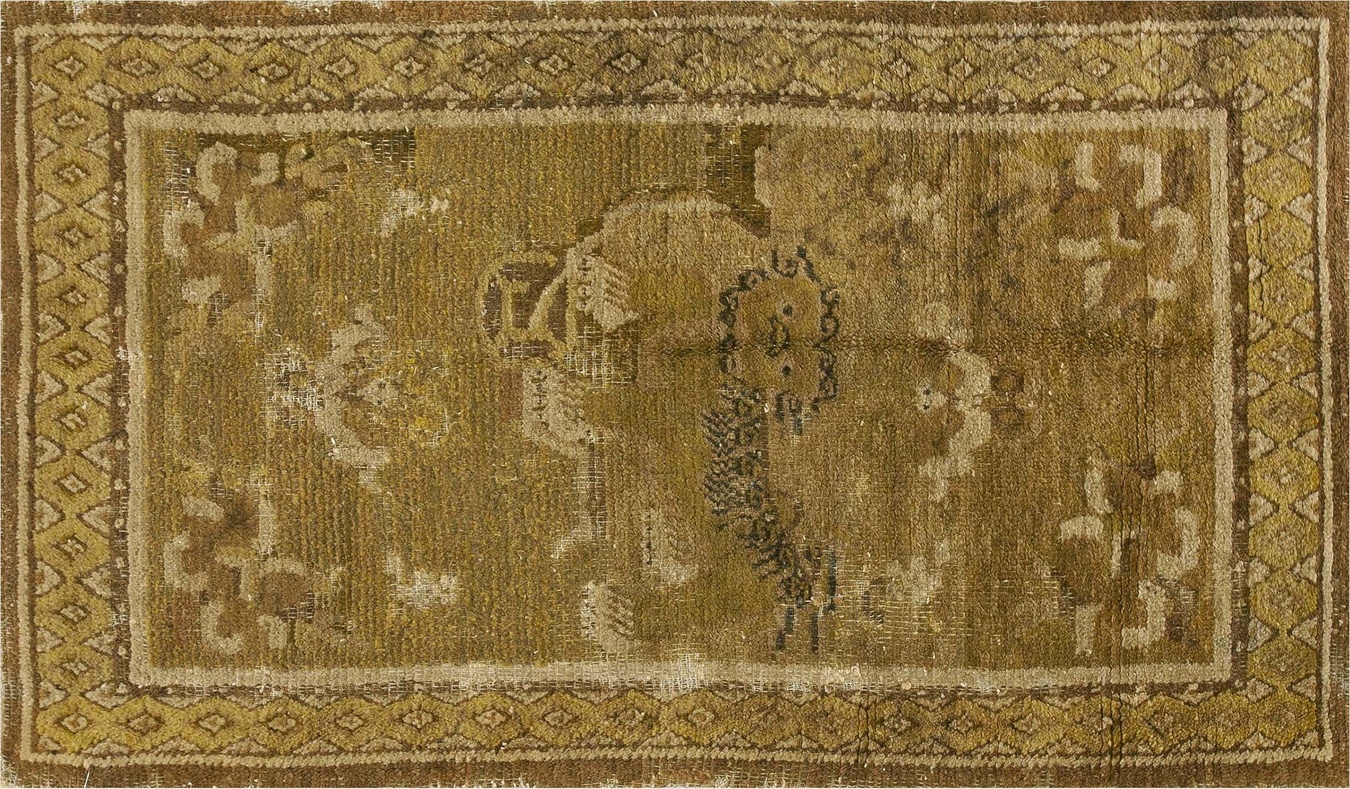
Antique Tibetan Chinese Floral Knotted Rug – by Rugs On Net
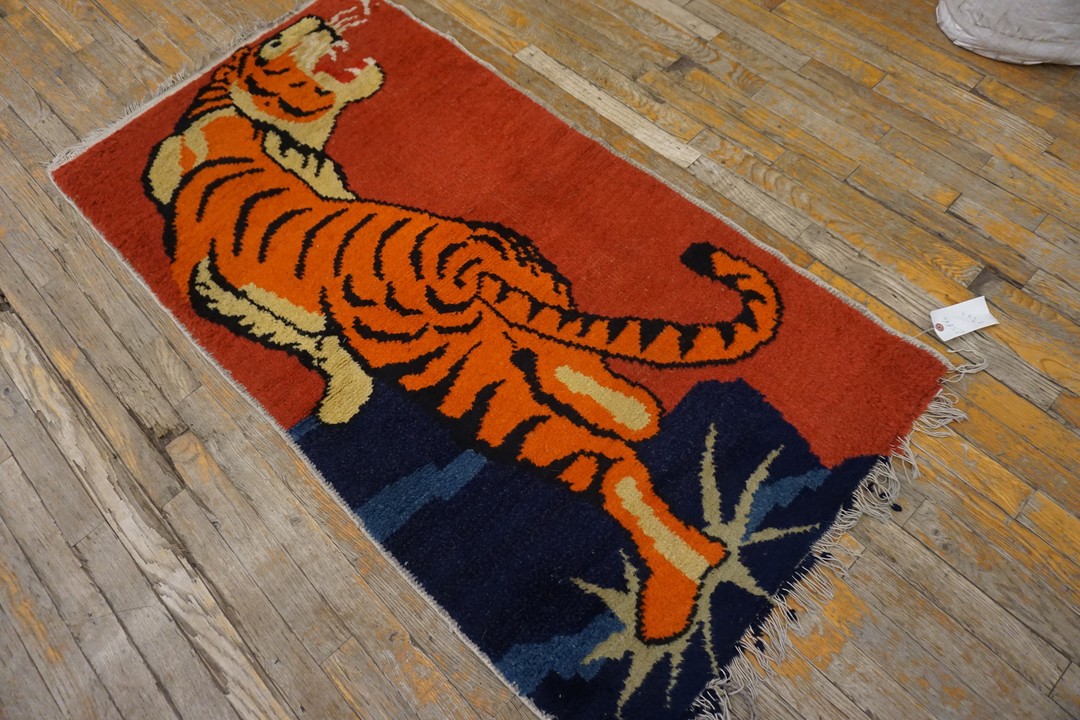
Among the most iconic and spiritually charged textiles are Tiger rugs Tibetan weavers produced, often called Taksham. These rugs embody tantric symbolism, representing protection, courage, and the fierce energy required in advanced meditation practices. Monks and lamas used tiger rugs as meditation mats, believing the tiger skin design could guard against negative forces while enhancing spiritual power. Beyond their ritual role, these rugs are now prized collector’s items for their rarity, bold artistry, and deep Buddhist associations. Their motifs often combine lifelike tiger stripes with stylized geometric framing, making them instantly recognizable as emblems of Himalayan esoteric tradition.
Saddle Rugs
Tibetan saddle rugs reflect the region’s strong equestrian culture, tied to state ceremonies and aristocratic life. Nobles and officials paraded with richly adorned horses, each fitted with ornate saddle carpets featuring thick pile centers and decorative borders. These textiles balanced durability for practical riding with artistry that conveyed wealth and status. Their structured design—divided into sections for the front, back, and sides of a saddle—makes them distinct within Tibetan weaving traditions. Today, saddle rugs stand as reminders of Tibet’s ceremonial pageantry and the integration of craft into daily and political life.
Khaden Rugs vs. Meditation Mats
The Khaden rug vs meditation mat comparison highlights the dual role of Tibetan weaving in both domestic and spiritual spheres. Khaden rugs, typically around 3×6 feet, served as multipurpose sleeping mats. Nomadic families valued them as heirlooms, practical furnishings, and even forms of portable wealth or barter. Meditation mats, often smaller in scale, were designed for focused religious practice within monasteries or homes. While both types share fine craftsmanship and symbolic patterns, Khaden rugs emphasized domestic longevity, while meditation mats concentrated spiritual energy into a defined personal space. Collectors today prize the differences, as each reflects a distinct facet of Tibetan life.
Regional Styles: Wangden, Rebgong, Lhasa, Kathmandu
- Wangden Carpets: Known for a distinctive looping weave that produces a textured, ribbed surface. — Why: They represent local innovation and stand apart from pile-knotting traditions.
- Rebgong Carpets: Famed for fine knotting and influences from Thangka painting, blending textile with sacred art. — Why: They show how Buddhist visual culture shaped weaving.
- Lhasa Carpets: Historically the standard of aristocratic and monastic workshops. — Why: They embody the classical heritage of central Tibetan weaving.
- Kathmandu Carpets: Developed by Tibetan refugees, these combine classical motifs with modern aesthetics for global markets. — Why: They illustrate the diaspora’s creative role in carrying the tradition forward.
Together, these regional Tibetan carpets showcase the adaptability of the craft, from ancient monasteries to contemporary export hubs.
Key Motifs & Symbols
- Lotus: Symbol of purity rising from adversity. — Why: Represents enlightenment within Buddhist teaching.
- Medallions: Centerpiece of many designs, echoing cosmic harmony. — Why: Adds symmetry and balance to carpets.
- Eight Auspicious Symbols (Ashtamangala): Including the conch, parasol, and endless knot, they bring blessings of fortune and spiritual protection. — Why: Rugs became carriers of spiritual merit.
- Dragons: Emblems of strength, guardianship, and connection to Tibetan myths. — Why: Conveyed authority and protective power.
- Geometric Borders: Framing devices that reinforced order and sacred space. — Why: Structured the rug as both a domestic and spiritual object.
Tradition and Meaning
When asked what rugs are traditionally woven in Tibet, the answer encompasses tiger rugs, saddle rugs, Khaden sleeping mats, meditation mats, and regionally distinctive carpets such as Wangden and Rebgong. Each rug type carries its own symbolism, shaped by centuries of ritual, domestic use, and artistry. The prevalence of the tiger motif speaks to why Tibetan rugs feature the tiger motif so prominently: it is not merely decorative but a spiritual protector woven into the very fabric of Buddhist life. These Tibetan rug motifs remain timeless, continuing to bridge art, spirituality, and heritage.
Materials, Weaving Techniques & Defining Features
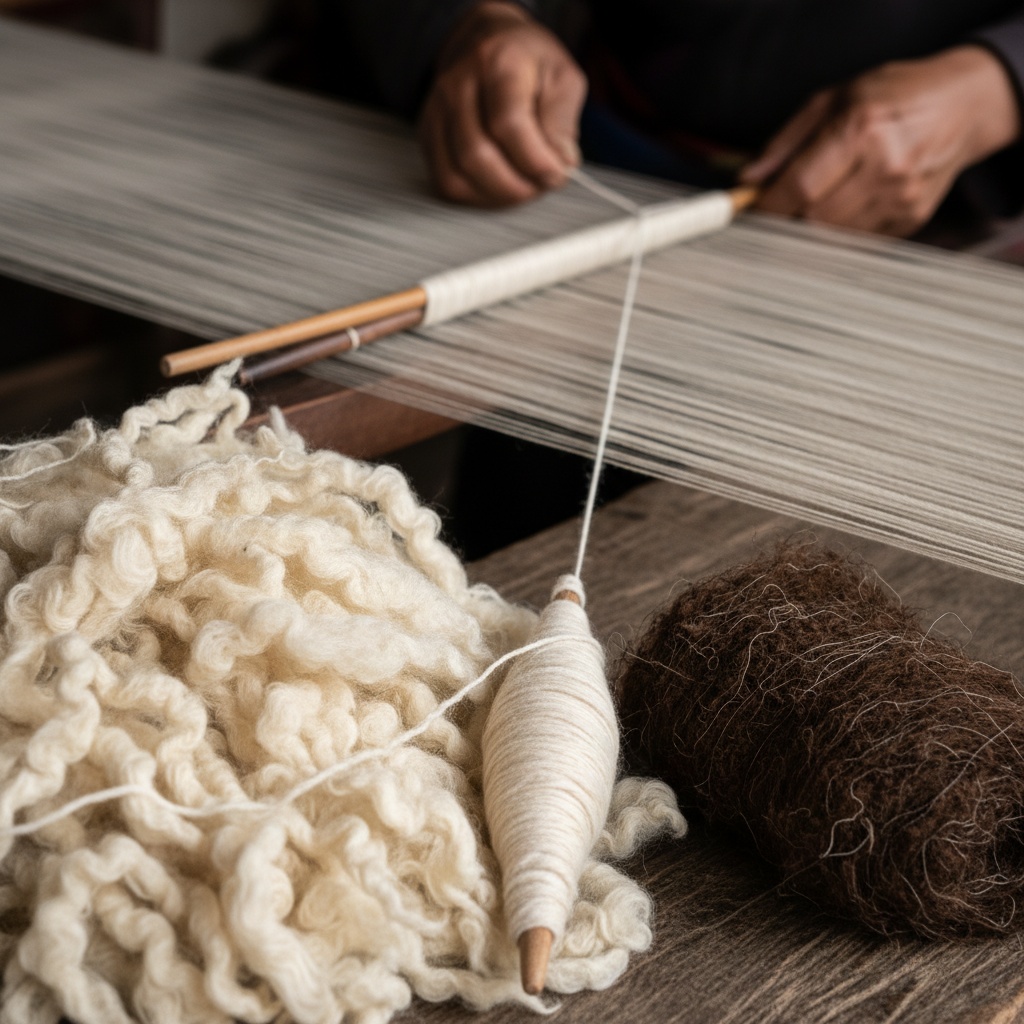
Raw wool and spindle ready for weaving.
Wool & Yak Wool Sourcing
The foundation of Tibetan carpets lies in Tibetan rug wool, known locally as changpel. This highland sheep wool, raised on the harsh Qinghai-Tibet Plateau, is rich in lanolin, giving rugs their trademark softness, sheen, and resilience. In rarer cases, artisans incorporate ethically sourced yak wool, prized for its warmth and natural dark tones. Verifying the authenticity and ethics of yak wool involves checking for cooperative labels, regional certifications, and direct sourcing from Tibetan pastoral groups. For export markets, many workshops also blend or substitute New Zealand wool to ensure consistency in supply and texture, though this changes the rug’s tactile quality compared to traditional Tibetan fibers. Each material choice influences durability, warmth, and the cultural authenticity of the finished carpet.
Tibetan Knotting Method
A hallmark of Tibetan weaving is the Tibetan knotting method, distinct from Persian or Turkish knots. Instead of tying knots individually, weavers loop yarn around a temporary rod laid across the warp threads. Once a row is complete, the rod is cut away, leaving uniform pile knots. This process gives Tibetan rugs their dense, velvety texture and high durability. Knot density varies, but premium Tibetan carpet knots exceed 100 knots per square inch, producing sharper motifs and longer-lasting rugs. Collectors and buyers often use knot count as a key measure of quality, with finer rugs demonstrating extraordinary craftsmanship passed down through generations.
Dyes: Traditional vs. Modern
- Madder (red): Creates deep, earthy crimson shades. — Why: A classic dye tied to Tibetan visual identity.
- Indigo (blue): Provides rich blues for medallions and borders. — Why: Symbolizes spirituality and cosmic harmony.
- Rhubarb root (yellow): Produces golden hues. — Why: Reflects Buddhist associations with wisdom.
- Walnut husk (brown): Yields natural, grounding tones. — Why: Balanced palette for traditional rugs.
- Synthetic dyes (modern use): Expanded color range and consistency. — Why: Cater to export demand, though less authentic than natural dye Tibetan rugs.
Defining Features of Authentic Tibetan Rugs
When asked what materials are used in Tibetan carpet weaving, the answer centers on changpel highland wool, ethically sourced yak wool, and occasionally imported New Zealand wool. Rug buyers concerned with ethics can ensure ethically sourced yak wool by choosing certified co-ops and fair-trade suppliers. As for quality, premium Tibetan carpet knots begin at around 100 knots per inch, distinguishing fine heirloom pieces from ordinary floor coverings. Combined with natural dyeing traditions, these elements give Tibetan rugs their unmistakable texture, longevity, and cultural value—making them both works of art and functional heirlooms.
Centers of Weaving & Regional Differences
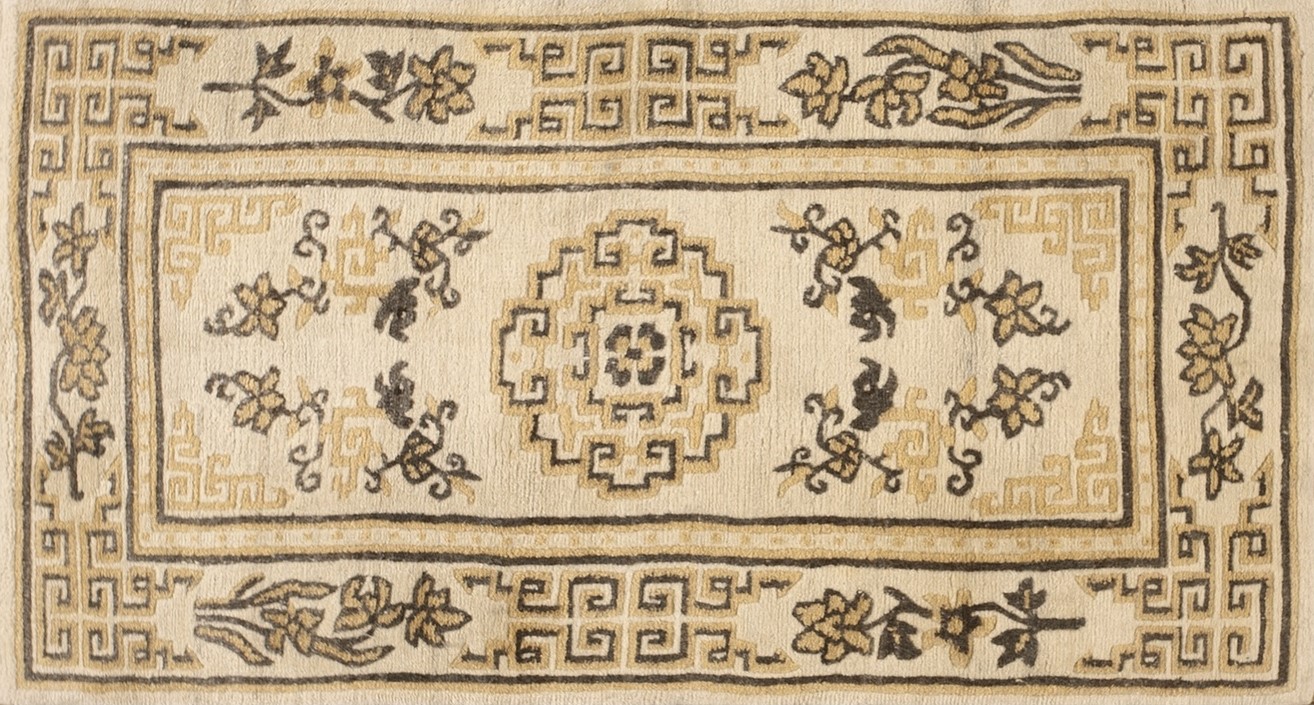
Vintage Tibetan Chinese Medallion Knotted Rug – by Rugs On Net
Gyantse
Once a thriving export hub in the early 20th century, Gyantse Tibetan carpets are now considered prized collectibles. Known for bold geometric motifs and strong colors, antique Gyantse pieces reflect a period when Tibetan weaving first reached foreign buyers. Collectors often prioritize these rugs for their historical significance and fine execution, making them more valuable than most contemporary workshop output. While new rugs inspired by Gyantse designs are produced, antiques remain the benchmark for those seeking investment and authenticity.
Lhasa
The capital’s Lhasa rug workshops today produce carpets largely geared toward tourists, often featuring motifs tied to the Potala Palace or Buddhist iconography. Many use cheaper imported wool to reduce costs, though a number of high-end studios are experimenting with natural dyes and finer craftsmanship. For serious buyers, Lhasa-made rugs may serve as entry-level souvenirs, but higher-quality pieces generally come from regional workshops or diaspora production centers.
Shigatse
For those seeking an authentic encounter with Tibetan weaving, Shigatse weaving tours are among the best options. Local workshops continue the tradition, and visitors can observe artisans hand-weaving carpets using the Tibetan knot method. This region is notable for keeping craft heritage alive within Tibet itself, offering a rare opportunity to see weaving as it has been practiced for generations.
Nyingchi vs. Nagqu
A comparison of Nyingchi vs Nagqu rug softness reveals clear differences tied to local sheep breeds and wool quality. Nyingchi rugs are renowned for their softer texture, making them more appealing for domestic use and comfortable furnishing. By contrast, Nagqu rugs, produced from coarser wool, are more durable and suited for heavy wear. Buyers seeking tactile comfort often favor Nyingchi, while those valuing resilience look to Nagqu.
Rebgong (Qinghai)
- Finer Knotting: Rebgong carpets exhibit a higher knot density, producing sharper motifs. — Why: Indicates exceptional craftsmanship.
- Thangka Art Influence: Motifs borrow from painted scrolls, bringing spiritual iconography into textile form. — Why: Creates strong connections between sacred art and weaving.
- Qinghai as a Carpet Capital: Jiaya and surrounding areas are now central to large-scale Tibetan rug production. — Why: Ensures that Rebgong continues to supply both heritage-inspired and export-oriented designs.
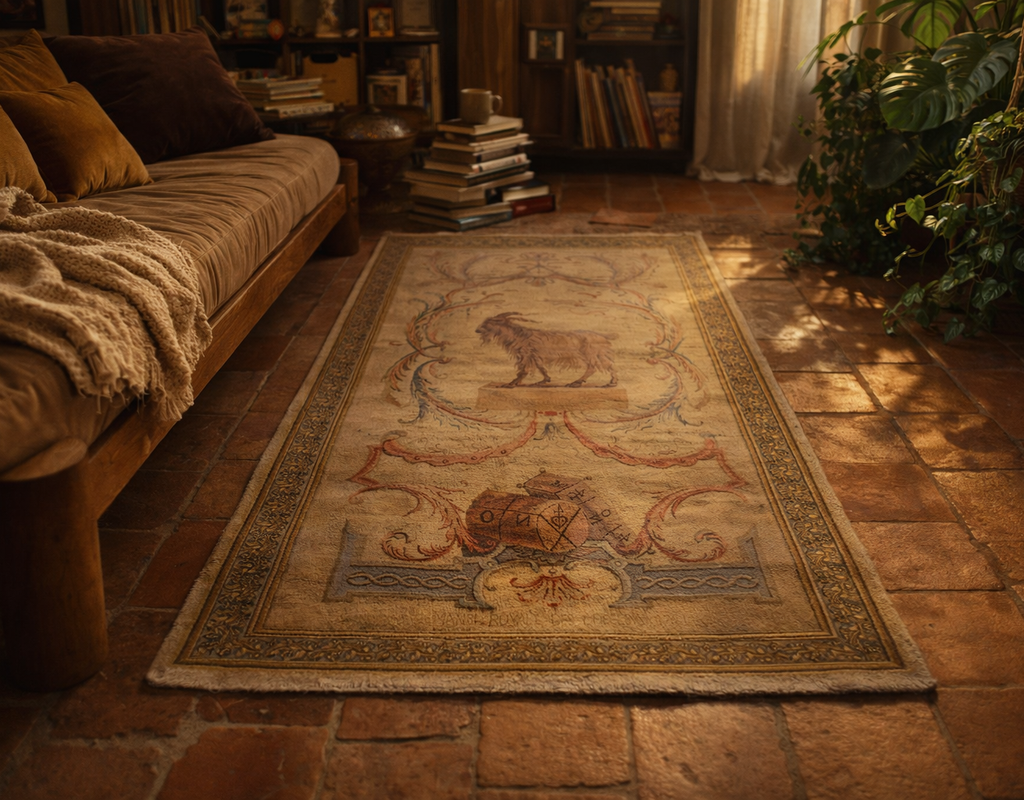
A unique animal-themed rug anchors this moody, bohemian-style reading nook.
Kathmandu Valley, Nepal
Perhaps the most significant modern center is the Nepalese Tibetan carpets industry, established by the Tibetan diaspora after the 1950s. These workshops use the traditional Tibetan knotting method but have adapted to global tastes, offering everything from classical Buddhist motifs to contemporary designs. Buyers often prefer Nepalese-made rugs because production is consistent, materials are traceable, and many cooperatives carry GoodWeave or fair-trade certifications. Compared to tourist-oriented Lhasa rugs, Nepalese carpets are ethically produced, export-ready, and globally respected for quality.
Guidance for Collectors & Buyers
Visitors can still see weaving in Shigatse today, where traditional workshops operate openly. Nyingchi rugs are softer than those from Nagqu, making them ideal for comfort, while Nagqu types excel in durability. Collectors should prioritize antique Gyantse Tibetan carpets over new workshop pieces for historical and investment value, though modern rugs from Nepal or Qinghai offer strong alternatives for everyday use. For conscious buyers, the choice to purchase a Nepalese Tibetan carpet over a Lhasa-made rug often comes down to ethics and quality—diaspora workshops provide greater assurance of authenticity, fair labor, and fine workmanship.
The Modern Tibetan Rug Industry: Markets, Quality & Sustainability
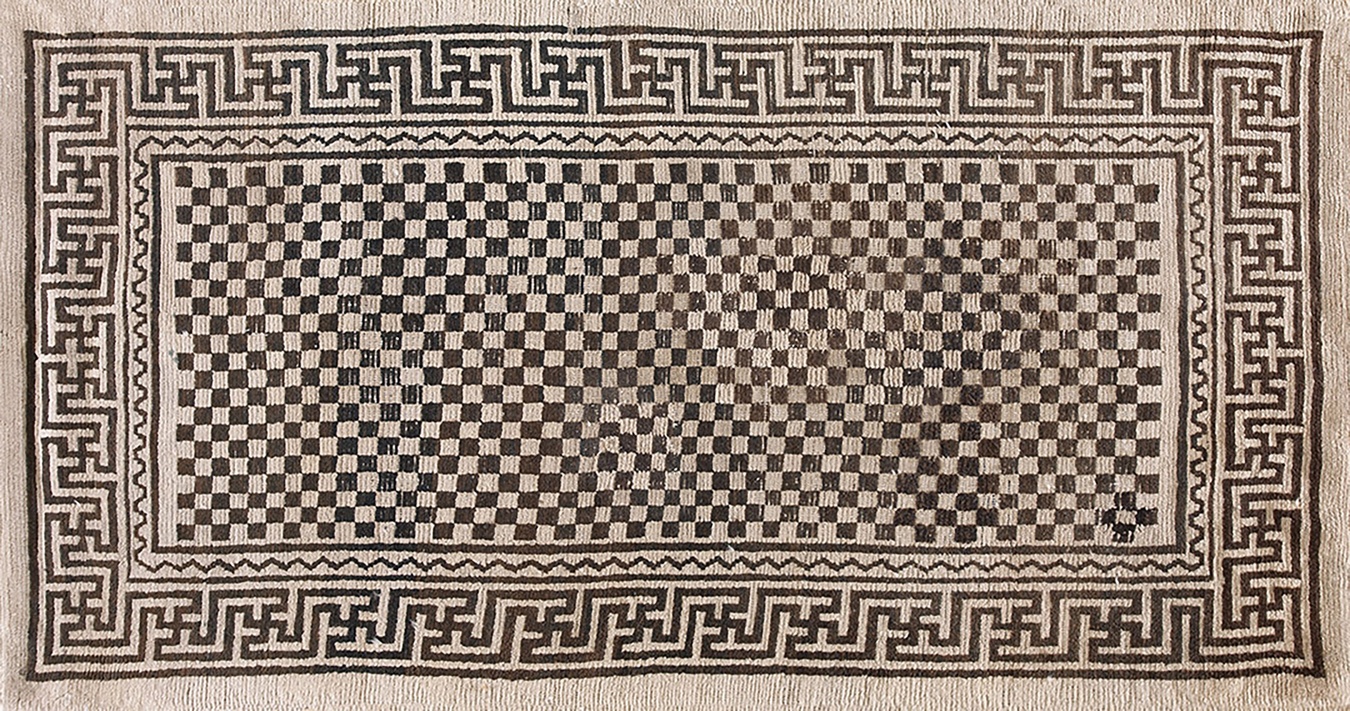
Export Development & International Recognition
Today, the Tibetan rug export industry thrives primarily through Nepal and Qinghai, China. Nepal alone exported over $97 million worth of rugs in 2023, cementing its place as a global leader in production and ethical certification. Qinghai, with its large-scale weaving centers like Rebgong, continues to supply both domestic and international buyers. Demand has grown steadily as collectors, interior designers, and conscious consumers recognize Tibetan carpets for their unique blend of cultural heritage and modern design adaptability.
Artisanship vs. Mass Production
- Hand-Knotted Rugs: Known for resilience and longevity, these rugs embody heritage craftsmanship. — Why: A hand-knotted Tibetan carpet’s durability allows it to withstand high-traffic living rooms without losing quality.
- Mass-Produced Rugs: Often machine-made, with lower-quality fibers and shallow pile. — Why: These lack the durability and authenticity of traditional weaving.
- Collector Value: Genuine hand-knotted rugs hold cultural and financial value. — Why: They are both usable furnishings and collectible art.
- Ethical Production: Artisan workshops sustain communities with fair wages. — Why: Mass production cannot replicate this social impact.
Social & Environmental Sustainability
Efforts toward sustainable Tibetan carpets are evident across the industry. GoodWeave-certified workshops in Nepal and China combat child labor, ensure fair pay, and reinvest in artisan welfare. Environmentally, many workshops embrace biodegradable natural dyes, low-energy processes, and responsibly sourced wool. These measures not only protect cultural authenticity but also appeal to modern buyers seeking sustainable luxury. Certifications like GoodWeave Tibetan rugs help consumers identify and support ethical production while maintaining high aesthetic standards.
Challenges: Materials, Imitations & Apprenticeship
- Material Sourcing: Demand for Tibetan highland wool often exceeds supply. — Why: Creates reliance on substitutes such as New Zealand wool, altering texture.
- Imitations: Machine-made copies threaten traditional livelihoods. — Why: Consumer awareness and certification are key to avoiding counterfeits.
- Apprenticeship Gaps: Younger generations are less likely to pursue weaving. — Why: Risks loss of skills unless training programs and incentives are provided.
Ethical Sourcing & Verification
- Fair Trade Labels: Look for co-op or fair wage certifications. — Why: These ensure purchases support Tibetan rug artisans directly.
- GoodWeave Certification: Guarantees no child labor and ethical production. — Why: Provides confidence in sustainability.
- Yak Wool Verification: Ensure suppliers provide documentation from regional co-ops and certifications. — Why: Confirms the use of ethically sourced yak wool.
- Direct-to-Consumer Purchases: Buying from workshops or verified online dealers maximizes artisan benefit. — Why: Reduces middlemen and boosts weaver income.
Durability, Ethics & Modern Impact
When asked if hand-knotted Tibetan rugs can withstand high-traffic living rooms, the answer is yes—durability is one of their defining features. Purchasing contemporary Tibetan rugs from certified workshops does indeed support local artisans directly, especially in Nepal and Qinghai. For those concerned about fiber authenticity, ethical yak wool can be verified through cooperative labels and transparent sourcing. Ultimately, choosing sustainable Tibetan carpets is not only an investment in long-lasting beauty but also in the preservation of cultural heritage and the livelihoods of weavers.
Collecting, Display, and Use in Contemporary Spaces
Antique vs. Contemporary Rugs
For serious enthusiasts, collecting Tibetan carpets involves balancing historical value with practical considerations. Antique Gyantse rug value lies in their rarity, bold motifs, and early export heritage, making them prized collector items. However, these antiques are fragile, often requiring conservation rather than everyday use. By contrast, high-quality contemporary rugs—especially those woven in Nepalese or certified Tibetan workshops—offer greater durability, ethical sourcing, and adaptability to modern interiors. Collectors seeking long-term usability and social impact increasingly turn to new workshop pieces, while antiques remain cornerstones for investment and historic appreciation.
Tibetan Rugs for High-Traffic Rooms
- Hand-Knotted Durability: Dense knots ensure carpets withstand heavy wear. — Why: Longevity makes them suitable for living rooms and entryways.
- Natural Wool Resilience: Highland wool fibers are naturally stain-resistant and springy. — Why: Ideal for areas exposed to constant foot traffic.
- Easy Maintenance: Regular vacuuming and rotation maintain texture. — Why: Practical Tibetan rug care ensures long life.
- Ethical Buying: Choosing certified rugs sustains weaving communities. — Why: Consumers preserve both craft and culture.
Sizing Khaden for Meditation Spaces
- Traditional Dimension (3×6 ft): Standard Khaden meditation rug size rooted in Tibetan domestic use. — Why: Provides authenticity and proportional comfort.
- Compact Fit: Works in small meditation corners or urban apartments. — Why: Adapts to modern interior layouts.
- Comfort Factor: Ample space for cross-legged sitting and mindful practice. — Why: Enhances spiritual focus.
Featured Sites: Where to See and Buy
- Museums: The Rubin Museum (New York) and the Tibet Museum (Lhasa) showcase historic rugs. — Why: Offer context on symbolism and artistry.
- Workshops in Shigatse and Kathmandu: Visitors can observe weaving firsthand. — Why: Encourages appreciation of living tradition.
- Reputable Dealers: Certified shops and online platforms with GoodWeave labels. — Why: Guarantee authenticity and ethical sourcing.
- Auction Houses: Sotheby’s and Christie’s occasionally feature antiques. — Why: Entry point for serious collectors of historical rugs.
How to Support Artisans
- Buy Certified: Choose rugs with GoodWeave or co-op labels. — Why: Ensures fair wages and no child labor.
- Direct-to-Consumer Purchases: Order from workshop outlets or diaspora cooperatives. — Why: Maximizes artisan income.
- Educate Yourself: Learn regional differences and traditional designs. — Why: Informed buyers drive demand for authentic production.
- Promote Awareness: Share knowledge of sustainable practices. — Why: Expands markets for ethical rugs.
Practical Insights for Modern Collectors
Collectors often ask whether to prioritize antiques or contemporary rugs. The answer is contextual: antiques like Gyantse carpets hold unmatched historical and artistic prestige, but for functional, ethically made pieces, new workshop rugs are the better choice. For meditation practitioners, the traditional Khaden meditation rug size of 3×6 feet remains ideal, marrying comfort with cultural authenticity. Ultimately, knowing where to buy Tibetan rugs and how to verify artisan credentials enables buyers to enjoy durable, beautiful carpets while actively supporting Tibetan weavers and sustaining one of the world’s great textile traditions.
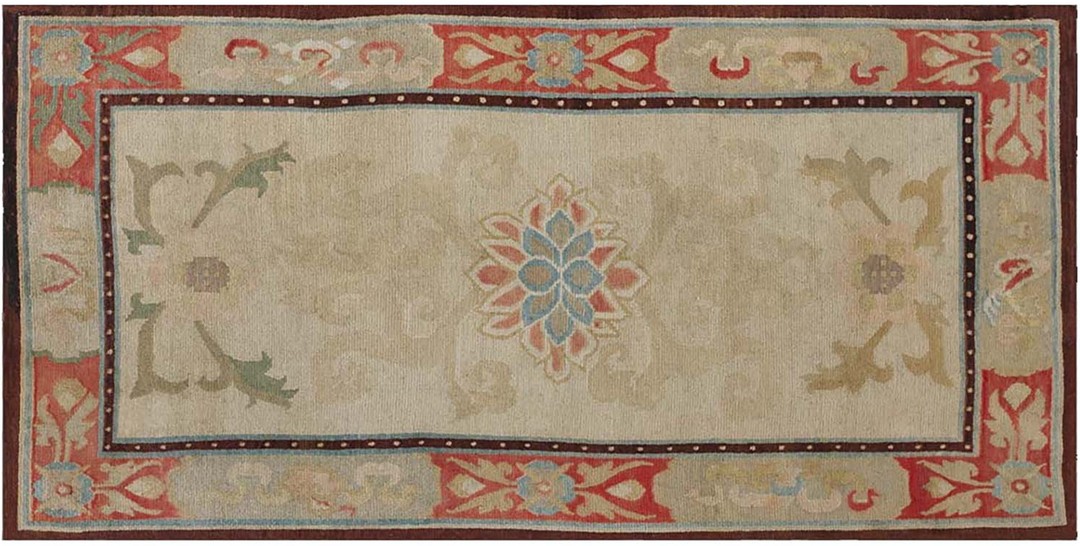
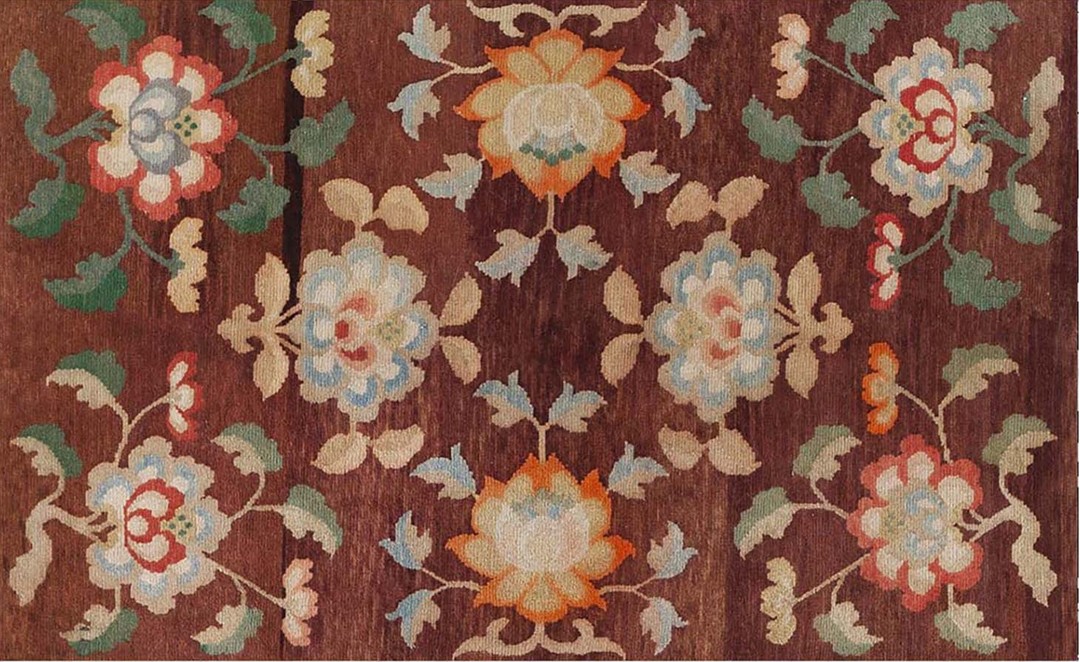
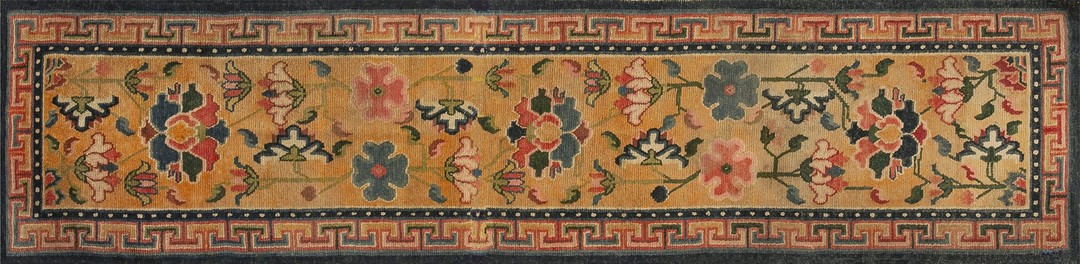
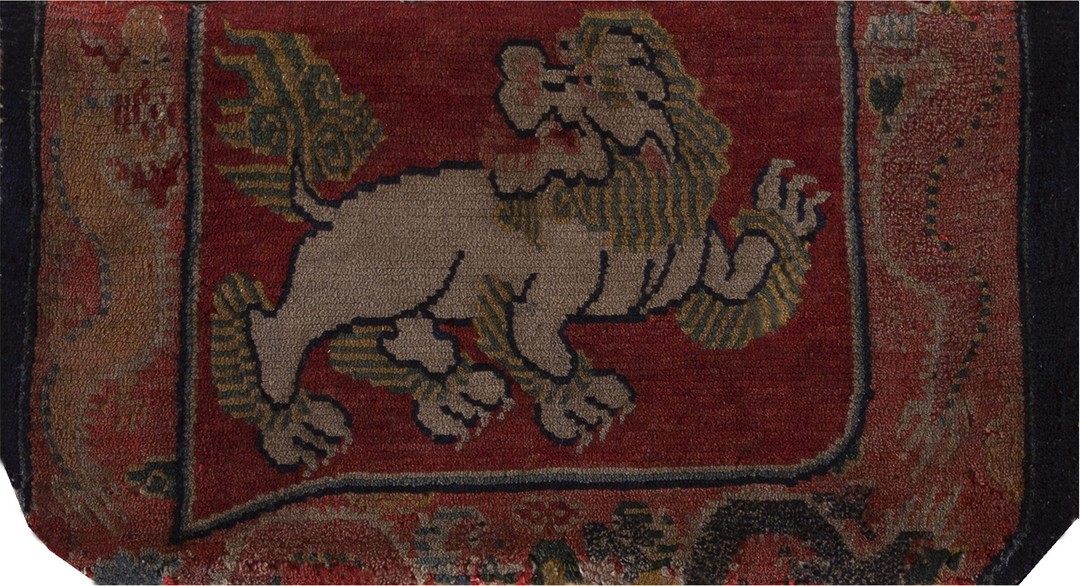
Explore a few of our favorite Tibetan rugs
FAQ
- How should I store a Tibetan rug to prevent moths?
Clean it, roll pile-in, wrap in breathable Tyvek or sealed plastic, and add cedar or traps. Inspect every few months and vacuum hidden areas.
- Will a robot vacuum work with a Tibetan rug?
Usually, but fringe can tangle. Tuck or protect fringes, use gentle modes, and set no-go zones to avoid catching high pile or edges.
- What sizes are typical for antiques?
Besides khaden (\~3×5), you’ll see pillar rugs and small seating or saddle formats. Large room-size antiques are rarer than modern room sizes.
- What motifs appear on Tibetan rugs?
Tigers, dragons, clouds, endless knots, and medallions are classic. Many modern designs reinterpret these with contemporary palettes and carving.
- Can Tibetan rugs be custom made?
Commonly. Workshops offer custom sizes, colors, and 60–150-knot qualities; typical lead times are about 10–16 weeks for an 8×10.
- Which ethical labels should I look for?
GoodWeave and Label STEP certify fair labor and safer production in Nepal and beyond. Look for their labels or documentation at purchase.
- How can I tell a hand-knotted Tibetan rug from a tufted one?
Check the back: hand-knotted shows individual knots and no fabric backing; tufted pieces have a glued canvas/latex backing and often shed more.
- Are “viscose silk” Tibetan rugs a good idea?
Use with caution. Viscose can yellow or stiffen with moisture and performs poorly in high-traffic or spill-prone areas compared with wool or real silk.
- What’s the safest way to treat spills on Tibetan wool?
Blot immediately with clean, dry cloths, then dab with cold water and a wool-safe solution. Avoid scrubbing; if dye transfers, call a professional.
- How often should I get a Tibetan rug professionally cleaned?
Every 1–3 years depending on traffic and soil. High-use family rooms are closer to 12–18 months; low-traffic bedrooms can go longer.
- How should I vacuum and care for a Tibetan rug daily?
Vacuum weekly with a suction-only head, rotate every 3–6 months, and use a pad. Clip—not pull—any stray yarns, and keep fringes out of vacuums.
- What rug pad works best under a Tibetan rug on hardwood?
A felt-and-natural-rubber pad balances grip and cushioning. Aim for roughly ⅛–¼ inch thickness to prevent slipping without smothering heat flow.
- Can I use a Tibetan rug over radiant floor heating?
Yes, with care. Keep floor temperature below about 80°F (27°C), use a breathable pad, and avoid covering more than \~50% of a heated zone.
- Do Tibetan wool rugs shed?
Some shedding is normal early on as loose fibers release. Vacuum with suction-only (no beater bar) and it typically tapers after the first few months.
- Are Tibetan rugs good for high-traffic homes?
Yes—wool is resilient and naturally soil-resistant. Choose lower-to-medium pile, darker or patterned colors, and minimal silk for best wear in busy rooms.
- How much do hand-knotted Tibetan rugs cost?
Expect roughly \$45–\$200 per sq ft depending on knot count, wool/silk blend, size, and brand. An 8×10 could range from about \$3,600 to \$16,000+.
- How thick is a typical Tibetan rug?
Many hand-knotted Tibetan rugs measure around 8–10 mm (about ⅜ inch) pile height. Some thicker, sculpted piles emphasize carved patterns.
- What knot counts are typical for Tibetan rugs?
Common qualities are about 60, 80, or 100 knots per square inch. Higher counts allow finer detail but don’t automatically guarantee better durability.
- How do Tibetan rugs differ from Persian rugs?
Technique and look. Tibetan rugs use the rod-based Tibetan knot and often thicker pile; Persian rugs use Turkish or Persian knots with more curvilinear detailing.
- What’s the meaning behind Tibetan tiger rugs?
Tiger imagery symbolizes protection, fearlessness, and power in Tibetan Buddhism. Monks historically sat on tiger-patterned rugs during meditation.
- Why is Tibetan wool considered special?
Highland sheep wool is rich in lanolin, which enhances softness and natural stain resistance. It also helps the pile spring back under foot traffic.
- Are most new Tibetan rugs made in Nepal?
Many are. Tibetan weaving communities established workshops in Nepal and India after the 1960s; today Kathmandu-made Tibetan rugs are a major part of the market.
- What does “khaden” mean in Tibetan rugs?
Khaden refers to a traditional Tibetan sleeping mat size, roughly 3×5 feet. It’s common in antique and newer Tibetan pieces inspired by original formats.
- What is the Tibetan knot, exactly?
Yarn is looped around warps and a metal rod, then cut across the rod to form one row of pile. This creates dense, resilient tufts and crisp carved details.
- What are Tibetan rugs?
Hand-knotted wool rugs traditionally woven with the Tibetan knot and used as seating or sleeping mats. Many modern pieces are woven by Tibetan artisans in Nepal and India.