
Foundations: Belgium’s Textile Identity and Scope
Explore the artistic heritage of Europe and shop our magnificent collection of Belgian Flemish Tapestry Rugs.
Country Snapshot & Relevance
Belgium’s role in European textile history is deeply rooted in its geography and culture. Situated at the heart of Western Europe, Belgium has long served as a crossroads where trade routes converged, linking England, France, the German states, and the Low Countries. This central location not only gave Belgian towns access to international markets but also allowed them to absorb artistic and technical influences from all sides. Over centuries, this position transformed Belgium into a powerhouse of Belgian textile heritage, producing goods that were prized across Europe. From medieval cloth guilds to Renaissance tapestry workshops, Belgium’s weaving centers became synonymous with quality, luxury, and innovation. The nation’s dual identity—Flemish weaving in the Dutch-speaking north and Walloon tapestries in the French-speaking south—mirrors its role as both a cultural and commercial bridge.
Definitions: Tapestry vs. Rug, “Flemish” vs. “Walloon”
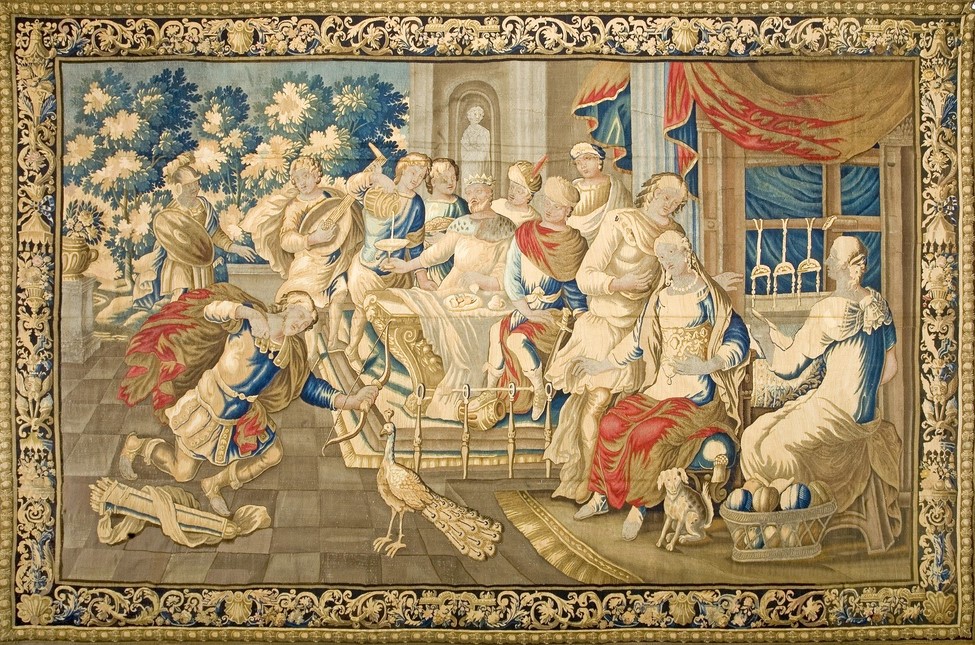
Antique Large Tapestry Belgium Flat Weave Rug – by Rugs On Net
To appreciate Belgium’s contribution to textiles, it is essential to clarify terminology. Tapestries are decorative wall hangings woven on a loom, often depicting detailed pictorial scenes such as biblical stories, mythological themes, or courtly life. These works were meant for vertical display, serving both as insulation and as powerful visual narratives. Rugs, by contrast, are floor coverings designed for practical use, though they too can be woven, knotted, or tufted with elaborate patterns. While Belgian artisans excelled at both, the country became especially renowned for its monumental wall tapestries. Similarly, the terms “Flemish” and “Walloon” are not interchangeable but reflect Belgium’s linguistic and cultural landscape. “Flemish” refers to the Dutch-speaking north, including hubs like Bruges and Ghent, while “Walloon” designates the French-speaking south, with centers like Tournai and Namur. Understanding these distinctions ensures that readers can accurately trace the threads of Belgium’s textile story.
Iconic Landmarks & UNESCO Heritage Sites
- Grand-Place, Brussels — Why: This UNESCO Belgium site was not only the political and economic heart of the city but also a vibrant market square where textiles were bought and sold. Guildhalls surrounding the square testify to the power of the weavers’ guilds and their influence on Brussels’ prosperity.
- Belfry of Bruges — Why: Another UNESCO-listed landmark, the Belfry embodies Bruges’ mercantile and civic pride. The tower overlooked cloth halls that once housed the city’s booming textile trade, making it a living reminder of how weaving shaped urban identity. Together, these sites anchor Belgium’s textile legacy in tangible places, linking architectural grandeur with the history of cloth and tapestry.
Deep History: Timeline of Belgian Tapestry and Rug Weaving
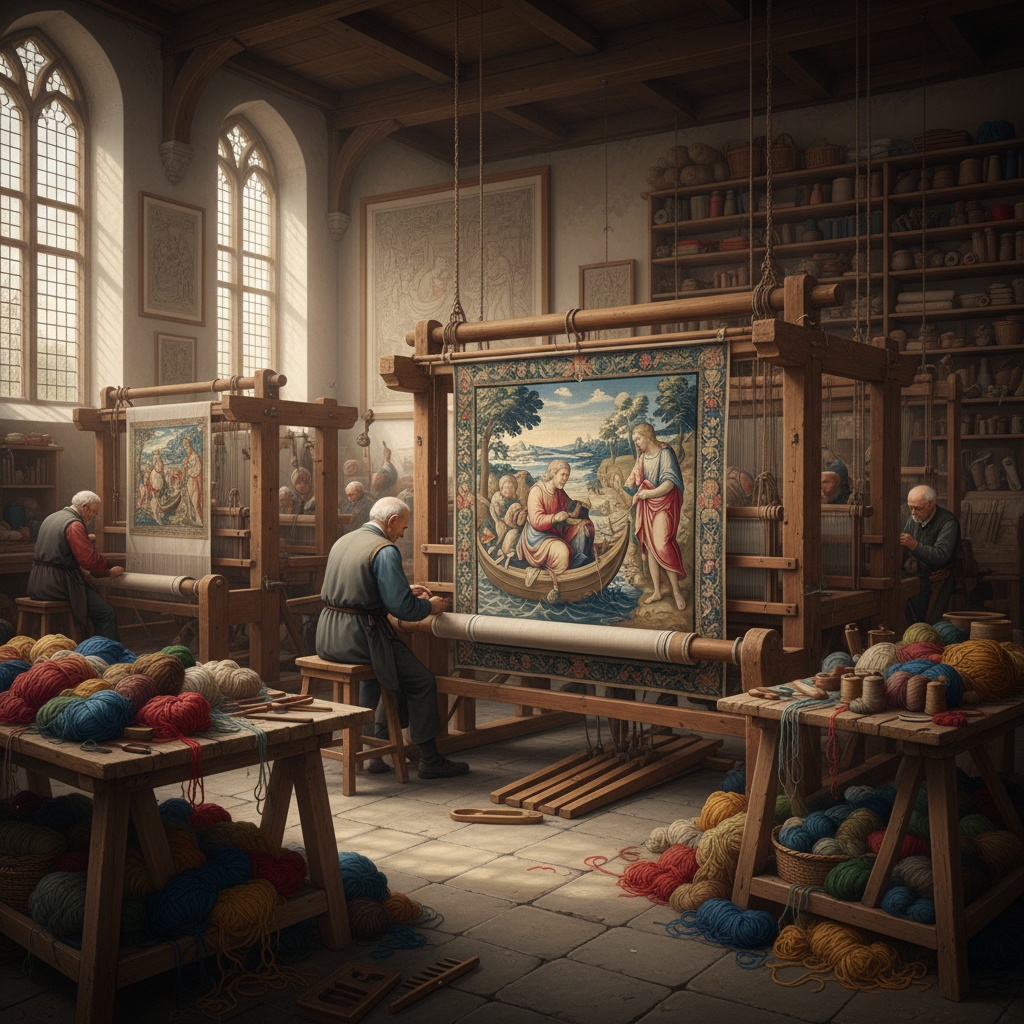
Artisans working on large vertical looms.
- Medieval Roots & Early Guilds
- The story of Flemish tapestry history begins in the late Middle Ages, when Belgium’s weaving centers emerged as hubs of artistry and regulation. The first known tapestry ordinance was issued in Tournai in 1398, setting the standard for craftsmanship and quality. Soon after, guilds formed across East Flanders and beyond, regulating apprenticeships, materials, and production methods. These medieval weaving guilds were not simply trade organizations but guardians of reputation, ensuring that tapestries carrying the mark of a city like Tournai or Ghent reflected consistent excellence. In cities such as Oudenaarde and Ghent, local guilds flourished during the 15th century, embedding weaving deeply into civic pride and economic power. The existence of these early workshops means that the Flemish tapestry tradition is over 600 years old, making it one of Europe’s most enduring textile arts.
- Renaissance Golden Age
- The Renaissance marked the high point of Belgian textile prestige, with Brussels emerging as Europe’s leading tapestry center by the early 16th century. Its reputation was solidified with the monumental commission of the Raphael Acts of the Apostles series for Pope Leo X (1515–1519), woven in Brussels workshops. These vast pictorial hangings not only elevated papal authority but also branded Brussels as the uncontested leader of tapestry Renaissance artistry. Other Flemish cities, including Oudenaarde and Enghien, contributed to the diversity of designs, with Oudenaarde famous for verdure scenes filled with naturalistic foliage. East Flanders supported this rise through its strong guild structures, fostering the exchange of techniques and designs that enabled Brussels and its neighbors to compete internationally. During this period, Flemish tapestries became luxury exports sought after by monarchs, popes, and noble families, cementing their role as symbols of wealth and power.
- Decline, Revival, and Preservation
- By the 18th century, shifting tastes and competition from France’s Gobelins workshops, combined with economic challenges, led to the decline of tapestry production in Oudenaarde and other Flemish towns. Once-thriving weaving centers lost commissions as aristocratic patrons favored alternative textiles or French imports. Yet the 19th century saw a renewed interest in historical textiles, leading to a tapestry revival across Belgium. In 1889, the Royal Manufacturers De Wit was founded in Mechelen, focusing both on creating new works and restoring masterpieces from earlier centuries. This institution became a symbol of continuity, ensuring that the legacy of Flemish weaving was not lost to industrialization or neglect. De Wit’s work remains internationally recognized, with restorations displayed in major museums and palaces, underlining Belgium’s role as custodian of its own artistic heritage.
- Modern Industry Transitions
- As Europe entered the industrial age, Belgium pivoted from handcrafted masterpieces to mechanized production. The rise of the Belgian carpet industry in the 19th and 20th centuries brought machine-made rugs and wall coverings into global circulation. Cities like Kortrijk and Sint-Niklaas became industrial centers, producing carpets and upholstery textiles for both domestic and export markets. While the artisanal tapestry trade had narrowed, Belgium adapted by becoming a leader in machine-woven quality, balancing tradition with modern efficiency. Today, the legacy of guild regulation, Renaissance artistry, and revival institutions like De Wit continues to shape how Belgium is perceived—a country where art, industry, and identity remain tightly woven together.
Signature Styles & Techniques of Belgian Tapestries and Rugs
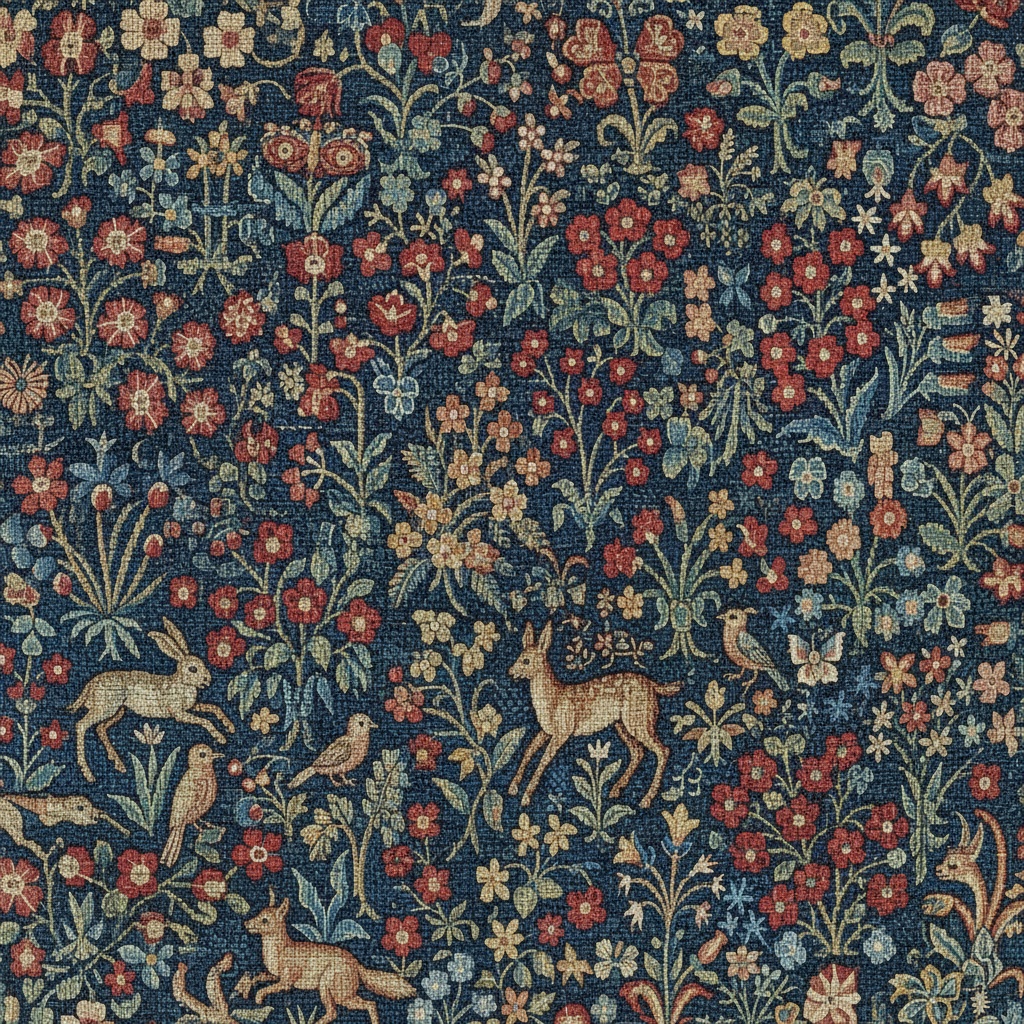
Intricate floral and fauna design typical of classic weaving.
Millefleurs Tapestries
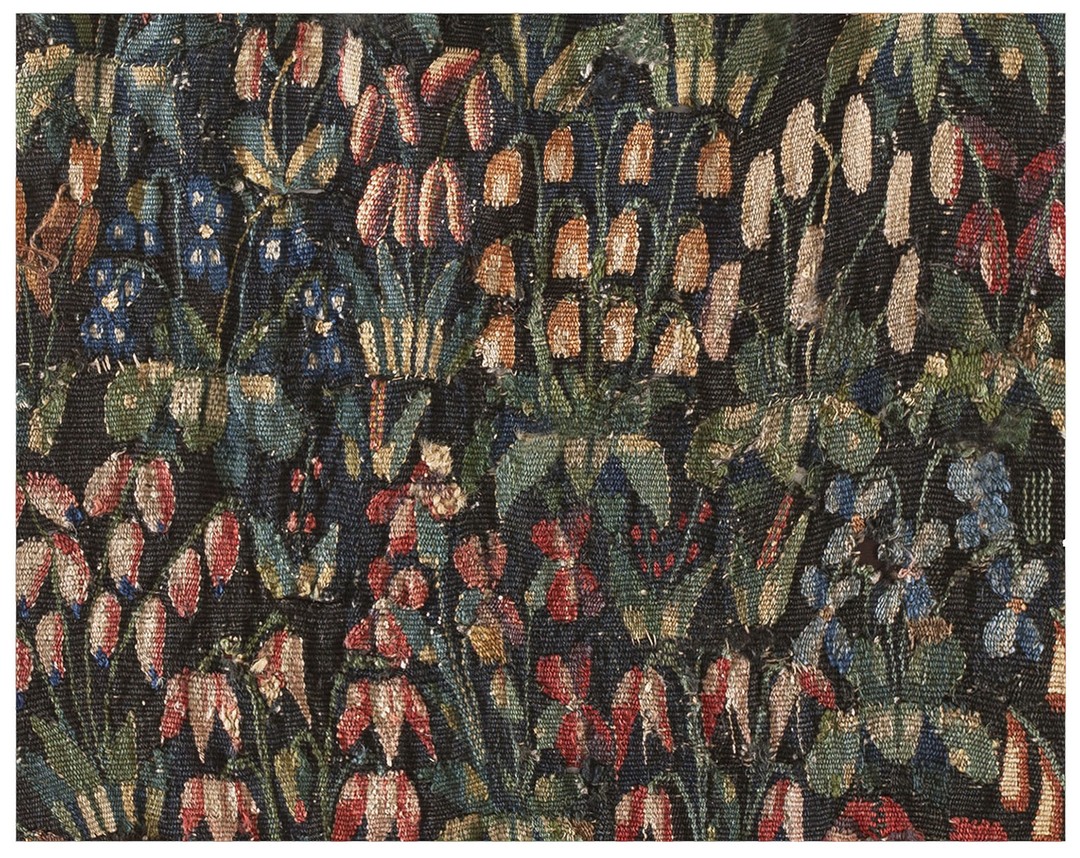
The Millefleurs tapestry (“thousand flowers”) is one of the most iconic styles linked to late medieval and early Renaissance Flanders. Although long associated with France, scholarship now suggests that many were woven in Flemish workshops such as Tournai and Brussels. These works are characterized by dense, repeating patterns of tiny blossoms, herbs, and animals scattered across a dark field, sometimes surrounding floating figures of nobility or allegorical subjects. Their historic function was both decorative and symbolic: courtly patrons used them to project wealth, refinement, and even moral lessons. The distinct Flemish contribution lies in the technical fineness of the weave and the subtle use of Belgian wool, which gave the tapestries durability and a vibrancy of color that has lasted for centuries. Compared with French Millefleurs, Flemish examples show greater density of detail and a livelier treatment of flora.
Verdure (“Feuilles-de-Choux”) Tapestries
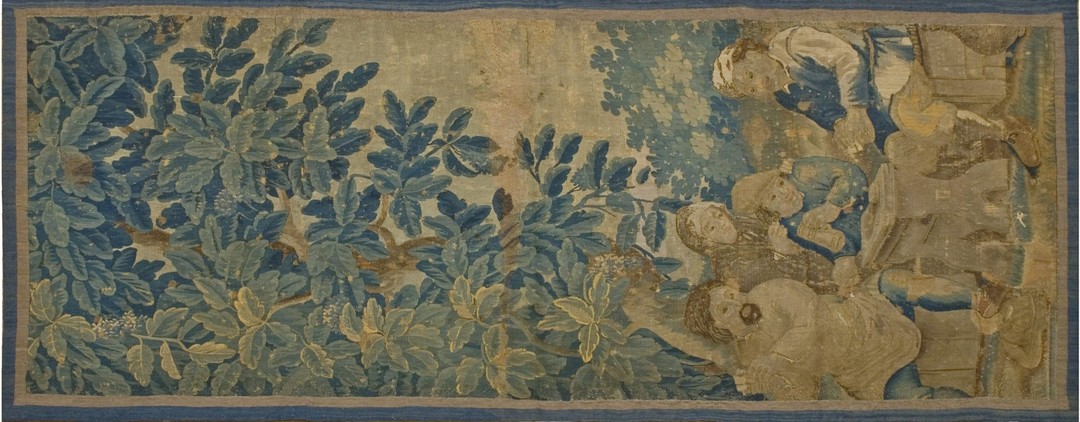
Another hallmark of authentic Flemish textiles is the Verdure tapestry, literally “greenery.” Produced in centers like Oudenaarde, Geraardsbergen, and Mechelen, these works feature oversized foliage—often broad, cabbage-like leaves, hence the nickname feuilles-de-choux. Landscapes with forests, rivers, or animals were framed by architectural devices such as stone balustrades, creating an illusion of depth. Each town had its preferred motifs: Mechelen’s verdure tapestries frequently incorporated stylized birds amid the leaves, while Oudenaarde favored broad foliage panels with occasional hunting or pastoral scenes. While Brussels became known for narrative subjects, Oudenaarde’s legacy is firmly tied to these lush, naturalistic designs, which appealed to buyers seeking tapestries suited for aristocratic halls and châteaux.
Brussels Figurative Tapestries
The Brussels tapestry achieved legendary status in the 16th century as the pinnacle of Flemish weaving. Unlike the repeating florals or foliage of Millefleurs and Verdure, Brussels workshops specialized in large-scale figurative compositions. These often depicted biblical stories, classical mythology, or contemporary historical events. The designs were supplied by renowned painters, forging collaborations between artists and weavers that elevated tapestry into a fine art equal to painting itself. Brussels’ reputation was reinforced by its system of tapestry maker marks: the city’s distinctive red shield with two “B”s, woven into the border, guaranteed authenticity and quality. These marks remain essential for scholars and collectors today, as they authenticate origin and significantly affect appraisal value. A Tournai tapestry, by contrast, tended toward simpler narrative structures, while Brussels’ versions dazzled with lifelike figures, refined shading, and monumental scale—some measuring more than 20 feet in width, designed to envelop entire palace walls.
Modern Belgian Rug Styles
- Luxury wool rugs — Why: Continue the tradition of high-quality Belgian wool, prized for durability and color retention.
- Tufted synthetics — Why: Offer affordability and practicality, serving contemporary home design needs.
- Technical floor textiles — Why: Belgium has developed advanced machine-made carpets for commercial and industrial use, exporting worldwide.
- Design hybrids — Why: Modern manufacturers experiment with historical motifs, referencing Millefleurs or Verdure patterns in a contemporary palette.
Belgium’s textile identity today thus extends from its heritage of Flemish tapestry history to a thriving Belgian wool rugs industry, bridging artistry and technology. What sets Belgian tapestries apart from other European textiles is their combination of painterly collaboration, regional specialization, and wool quality that ensured both longevity and color vibrancy. From the floral intricacies of Millefleurs to the architectural depth of Verdure and the grand narratives of Brussels, each style reflects the artistic pride and technical mastery of its region—a heritage still echoed in Belgium’s modern carpets and rugs.
Regional Hotspots & Their Distinct Contributions
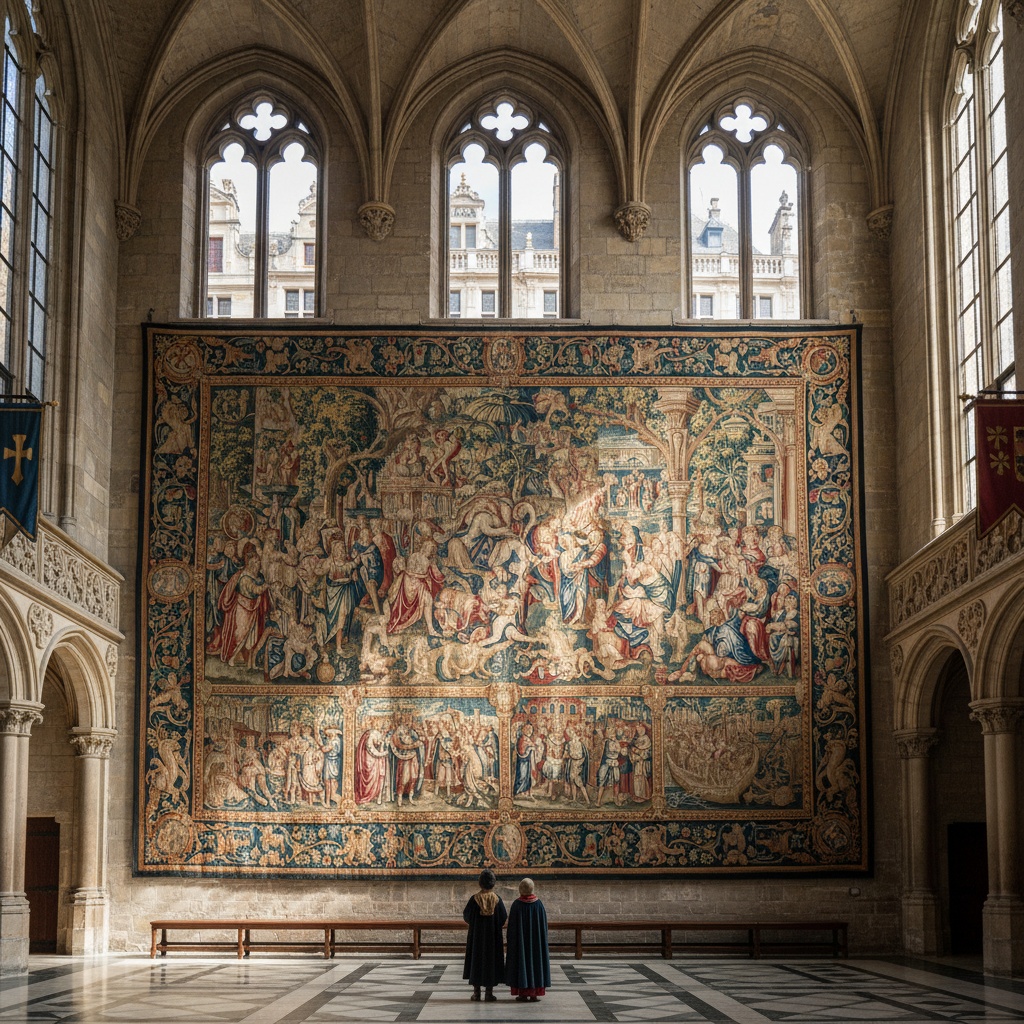
Grand scale tapestry displayed in a historic European hall.
Brussels
As the leading Brussels tapestry center, the capital city reached its artistic zenith during the Renaissance, when its workshops produced the most celebrated narrative wall hangings in Europe. From papal commissions to royal courts, Brussels tapestries became symbols of status and political messaging. The city still honors this heritage with the Grand-Place, a UNESCO site once lined with guildhalls, and the biennial Flower Carpet festival, which transforms the square into a living textile of blooms. Today, Brussels’ museums, including the Royal Museums of Art and History, preserve and display some of the finest examples of these works, ensuring the city’s role as steward of its tapestry legacy.
Bruges
The Bruges textile history is anchored in its medieval cloth trade, which supplied high-quality woolen fabrics across Europe. While Bruges was better known for cloth than tapestry during its peak, the city’s wealth created fertile ground for the decorative arts. Today, Bruges retains its artisanal spirit: visitors can still find artisan tapestry looms in local studios, where weavers demonstrate historic methods and produce small-scale works inspired by Gothic and Renaissance styles. This blend of heritage tourism and craftsmanship keeps the city’s textile past visible in the present.
Oudenaarde
Famed for its Oudenaarde verdures, this East Flemish town specialized in lush green tapestries featuring oversized leaves, birds, and landscapes framed with stone balustrades. During the 16th and 17th centuries, these verdure hangings were among the most fashionable exports from the Low Countries, adorning castles and palaces throughout Europe. However, after 1700, Oudenaarde’s industry declined as patrons turned to French workshops and many Flemish weavers migrated southward in search of work. Though production slowed, Oudenaarde’s identity remains closely tied to these tapestries, celebrated in museum collections and exhibitions that highlight their influence on European decorative art.
Tournai
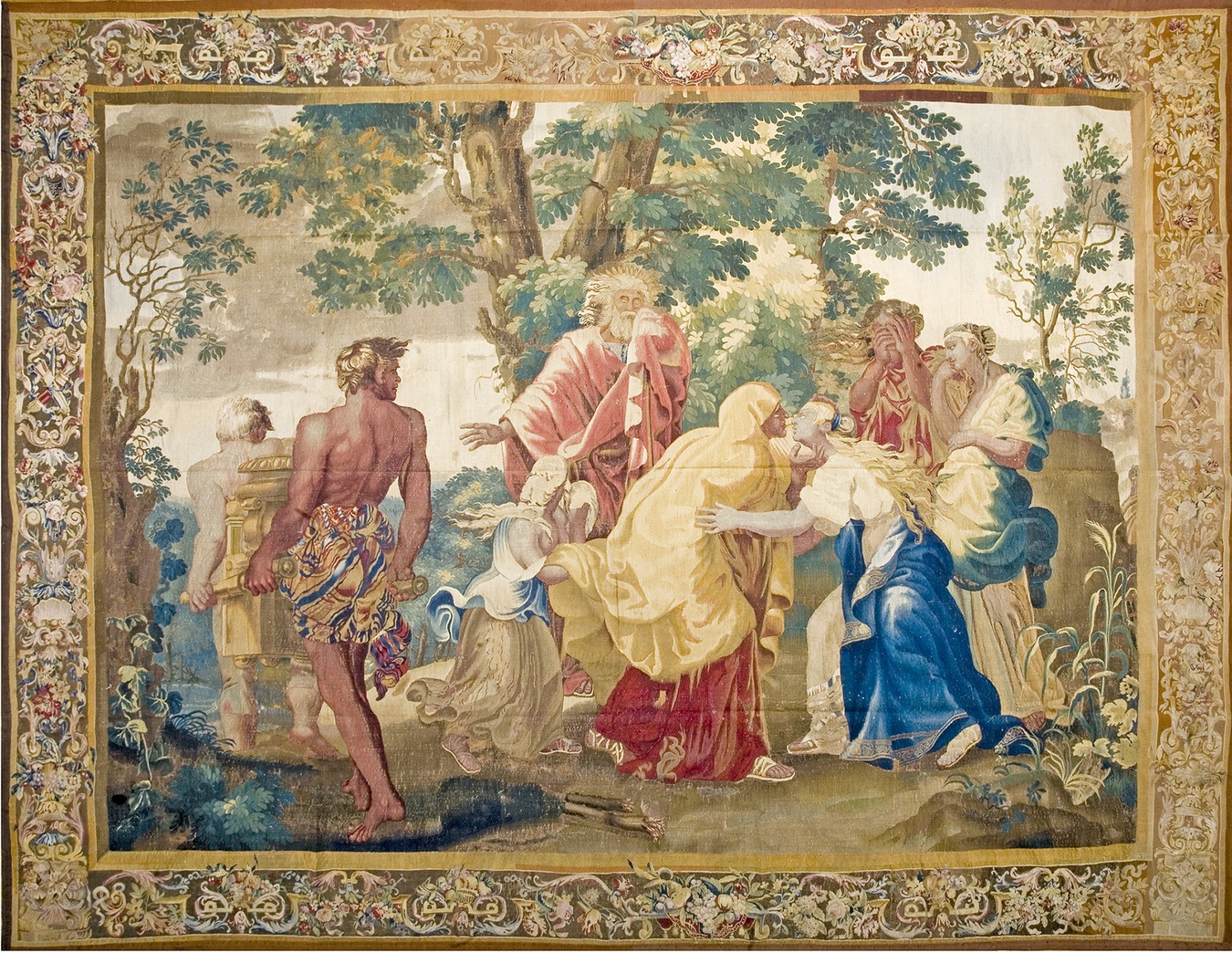
One of Belgium’s earliest tapestry hubs, Tournai tapestry workshops pioneered Gothic narrative styles in the 15th century. Their designs often featured biblical and chivalric themes rendered in bold outlines and rich colors, laying the foundation for later Renaissance achievements in Brussels. While production waned after the Renaissance, Tournai preserved its textile heritage through the TAMAT Museum (Musée de la Tapisserie et des Arts Textiles), which today houses historical examples and supports contemporary textile innovation. Visitors can experience the full sweep of Tournai’s contribution, from medieval works to modern artistic experiments.
Kortrijk & West Flanders
Unlike the handweaving centers of the past, Kortrijk carpet industry towns such as Kortrijk and Waregem became modern leaders in machine-made carpet and rug production. Companies like Balta and Beaulieu shifted Belgium’s textile identity toward industrial output, supplying both domestic and global markets with high-quality floor coverings. These manufacturers emphasize durability, innovation, and design versatility, representing the industrial counterpart to the artisanal traditions of Flanders. The region demonstrates how Belgian textiles adapted to economic changes while maintaining international influence.
Mechelen
De Wit Mechelen, founded in 1889, is the premier institution for tapestry restoration and preservation, making Flanders the global leader in this field. While it also produces new works, De Wit is best known for conserving fragile masterpieces, often for museums, cathedrals, and royal collections worldwide. The workshop combines historical expertise with cutting-edge conservation science, ensuring that Belgium remains central to the global effort to protect historic textiles. For those seeking the answer to which Flemish province leads modern tapestry restoration, the answer is unequivocally Mechelen in Antwerp Province.
Walloon Workshops
In contrast to the bustling Flemish hubs, the Walloon tapestry tradition has largely diminished, with only a handful of small-scale workshops still active today. These ateliers, often tied to cultural centers or artist-led initiatives, occasionally produce handwoven pieces inspired by regional motifs, but large-scale production has ceased. While Wallonia no longer competes with Flanders as a textile powerhouse, its surviving artisans represent a vital thread of continuity, keeping alive the techniques of handweaving even in the face of industrial dominance. Belgium’s regional tapestry and rug story is one of contrasts: some cities like Brussels and Mechelen preserve heritage through museums and restoration, while industrial towns like Kortrijk drive forward with modern carpets. Bruges maintains artisan looms for cultural tourism, while Oudenaarde and Tournai embody the historical memory of once-flourishing workshops. This mosaic of contributions ensures that each region’s identity continues to shape the broader narrative of Belgian textiles.
Techniques, Materials, and Artistic Innovations
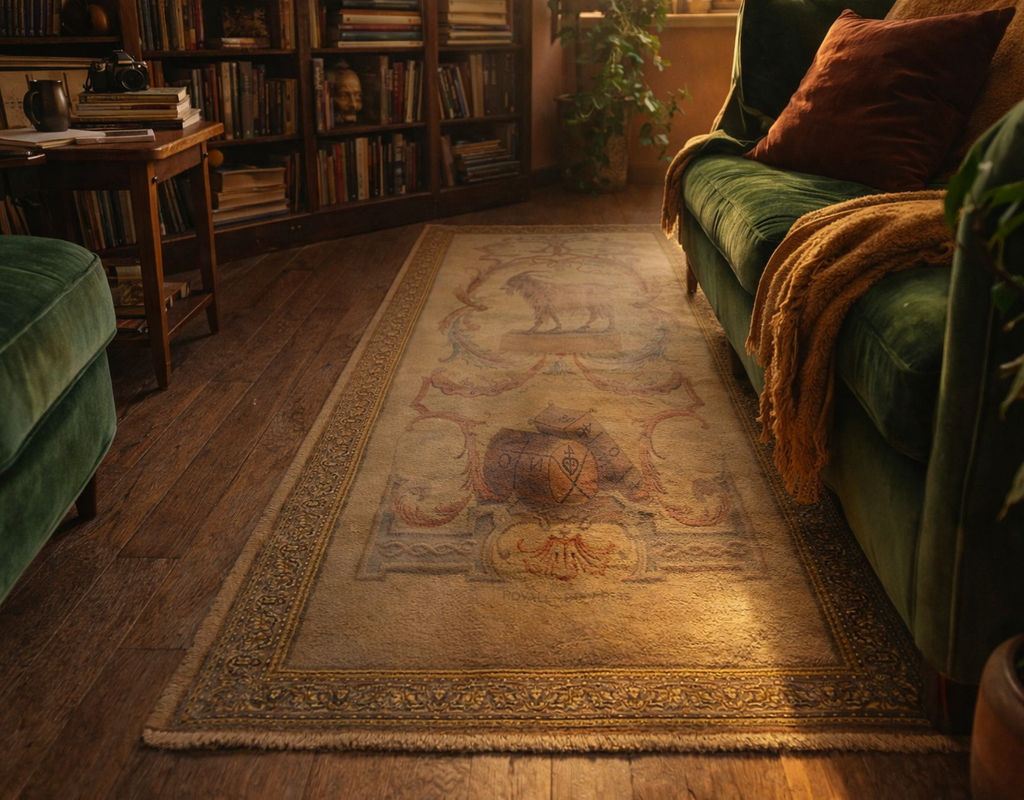
A distinctive tapestry-style area rug anchors the intimate, scholarly space furnished with deep jewel-toned seating.
Traditional Materials & Natural Dyes
Authentic Belgian wool tapestry production relied on a rich palette of materials. The foundation was always fine-quality wool, valued for its resilience and ability to absorb color. To enhance brilliance and texture, silk threads were often integrated, while luxury commissions included accents of gold and silver. Dyes historically came from locally available plants: woad for blues, madder for reds, and weld for yellows. These natural sources created the vibrant yet harmonious tones that defined Flemish weaving techniques in the Middle Ages and Renaissance. Today, contemporary Belgian workshops balance heritage and sustainability. Some artisans continue to use traditional plant-based dyes sourced from organic suppliers across Europe, while others employ eco-friendly synthetic alternatives that replicate historical hues with greater consistency. This combination preserves authenticity while meeting modern environmental standards.
Signature Weaving Techniques
What made Flemish methods unique was the union of artistry and regulation. Weavers in Brussels, Tournai, and Oudenaarde worked with fine warp counts, producing dense, smooth surfaces that allowed for painterly detail. The process often began with cartoons—full-scale designs provided by leading painters such as Raphael or Rubens—demonstrating the collaborative spirit between artists and craftsmen. Guild oversight reinforced these standards, ensuring every piece met city-approved quality benchmarks. These Flemish weaving techniques distinguished Belgian works from those of France or Italy, allowing tapestries to rival painting as a medium of narrative and visual grandeur.
Maker’s Marks & Quality Seals
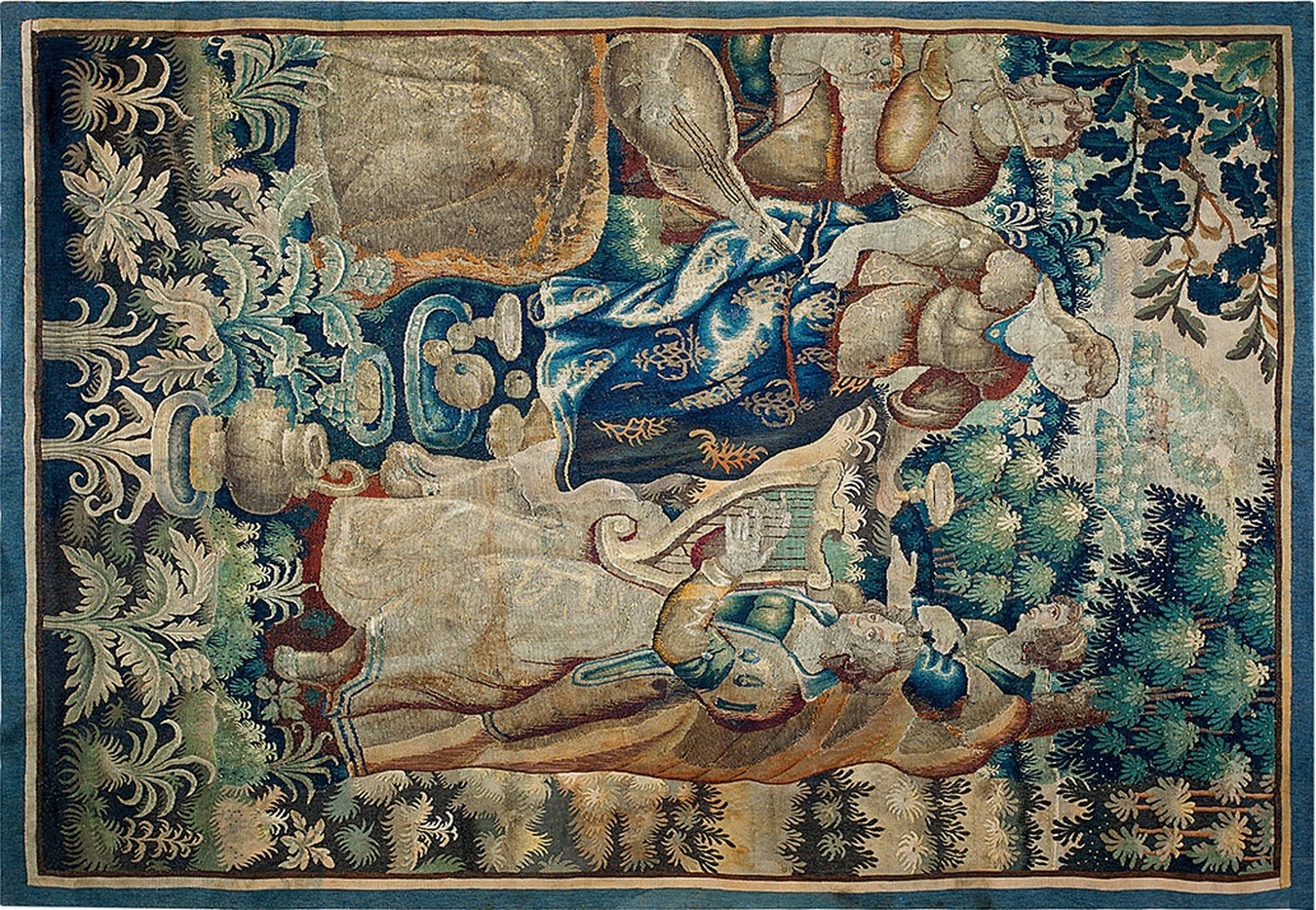
Antique Tapestry Belgium Allover Multicolor 1650s Rug – by Rugs On Net
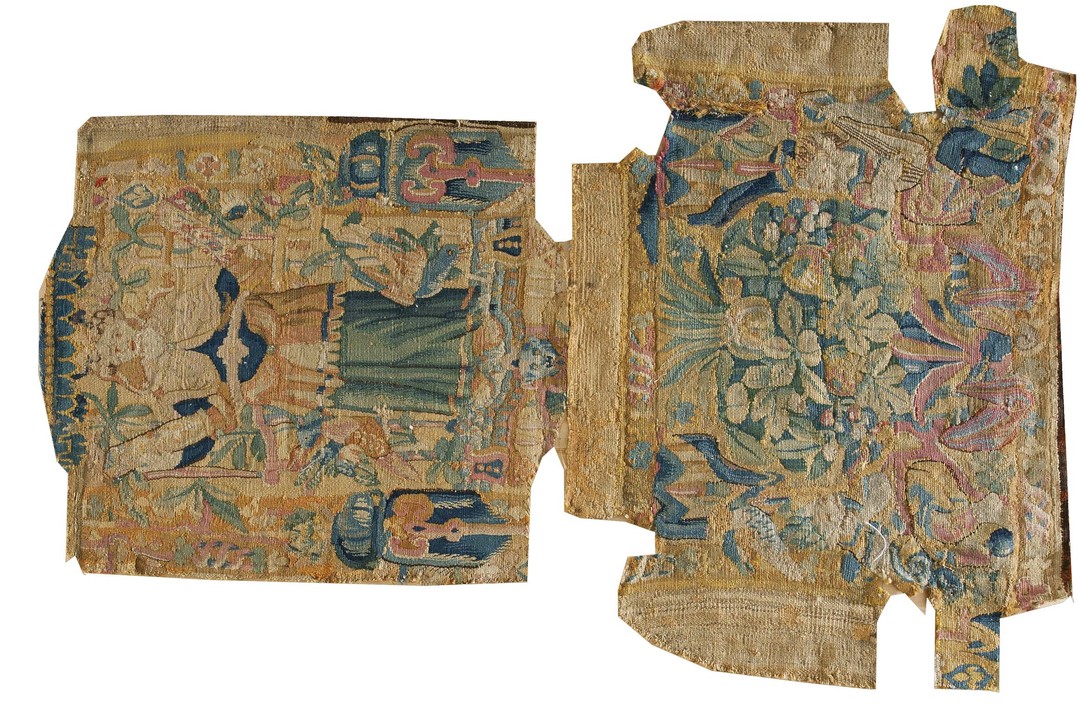
A defining feature of Belgian textiles is the presence of tapestry maker marks, woven directly into the border. The most famous are the Brussels red shield with two Bs, which guaranteed authenticity and regulated output. Merchant marks, added by individual producers or workshops, further authenticated origin. For collectors, these symbols are not decorative but crucial for tapestry authentication and tapestry valuation. A Brussels maker’s mark can transform a tapestry from an anonymous work into a verified masterpiece, often doubling or tripling its market value. They remain one of the most important tools for museums and appraisers in determining provenance.
Impact of Belgian Wool Quality
- Durability — Why: Belgian wool fibers are naturally strong, allowing tapestries to survive centuries with minimal wear.
- Color absorption — Why: The wool’s porous structure holds dyes deeply, giving tapestries their signature richness.
- Longevity of vibrancy — Why: Colors in Belgian works often remain vivid even after 500 years, a testament to material quality.
- Texture — Why: Belgian wool’s smooth yet resilient finish provides an ideal surface for fine weaving and painterly shading.
The impact of Belgian wool quality cannot be overstated. It is one of the reasons why historic tapestries from Brussels and Flanders have retained both their structural integrity and their striking visual presence. Combined with natural dyes, innovative weaving, and unmistakable maker’s marks, these materials and techniques ensured that Belgian textiles achieved—and still maintain—an unparalleled place in European art history.
Museums, Viewing, and Collecting Belgian Tapestries
Museums & Exhibitions in Belgium
Belgium houses several world-class institutions dedicated to preserving and showcasing its textile legacy.
- Royal Museums of Art and History (Brussels tapestry museum) — Why: Home to one of the most significant Flemish tapestry collections, including works from Brussels’ Renaissance golden age.
- TAMAT (Tournai) — Why: Combines historic Gothic tapestries with contemporary textile art, bridging past and present.
- MOU (Museum of Oudenaarde and the Flemish Ardennes) — Why: Celebrates the city’s legacy of Oudenaarde tapestries museum collections, especially its famous verdures.
- Hof van Busleyden (Mechelen) — Why: Displays Renaissance art alongside tapestry-related exhibits, highlighting the city’s role in weaving and restoration.
These institutions not only protect Belgium’s rich textile heritage but also provide vital research centers for scholars and enthusiasts.
Where to View the Battle of Pavia and Major Tapestry Sets
The celebrated Battle of Pavia tapestry series, commissioned in the 16th century to commemorate Emperor Charles V’s victory, is one of the finest narrative works of the Brussels workshops. The complete set can be viewed at the Museo di Capodimonte in Naples, while related works and fragments are displayed in Brussels and Madrid. These monumental hangings, often spanning several meters, embody the grandeur of Flemish weaving at its height, combining fine detail with powerful political messaging.
Collecting, Auctions, and Provenance
For collectors, Flemish tapestry collection pieces remain among the most coveted in the art market. Museum-quality works with verified provenance and maker marks—such as the Brussels double-B shield—are particularly valuable, with prices at tapestry auctions often reaching millions of euros. Because of their rarity and fragility, experts strongly recommend that owners insure antique Belgian tapestries at replacement value. Proper care is equally essential: avoiding direct sunlight, controlling humidity, and scheduling professional cleanings extend the life of these centuries-old textiles. Provenance documentation, including museum or archival records, not only secures value but also ensures legal and cultural clarity for future generations.
Contemporary Artisans & Restoration Leaders
Belgium continues to lead in conservation thanks to tapestry restoration Belgium institutions.
- De Wit (Mechelen) — Why: Recognized internationally as the foremost tapestry restoration workshop, entrusted by museums and royal households worldwide.
- TAMAT, Tournai — Why: Functions as both a museum and research center, fostering innovation in conservation techniques.
- Independent artisan studios — Why: Keep weaving alive by producing small-scale works, often inspired by traditional motifs.
With De Wit Mechelen anchoring restoration efforts, Flanders maintains its role as the global leader in conserving textile heritage. Restoration not only preserves masterpieces for display but also ensures that Belgian artistry continues to inspire, centuries after the looms first wove their threads.
Modern Industry, Sustainability, and Future Outlook
Belgium’s Carpet/Technical Textile Sector
Today, Belgium is as much an industrial textile leader as it is a guardian of heritage. The country exports over $1 billion in carpets annually, with nearly 90% of production destined for international markets. Towns such as Kortrijk and Waregem dominate this Belgian carpet exports sector, where major firms like Balta and Beaulieu specialize in machine-woven carpets, technical floor textiles, and upholstery fabrics. Innovation drives competitiveness: flame-retardant fibers, acoustic-absorbing carpets, and modular flooring solutions demonstrate how Belgium has fused tradition with high-tech production. This balance of heritage prestige and industrial scale ensures Belgium remains a vital hub in global textile markets.
Circularity and Eco-Initiatives
Sustainability has become a cornerstone of the industry, particularly under the influence of ECRA sustainability (European Carpet and Rug Association), which has set a goal for all carpets to be recyclable or produced from recycled content by 2030. Belgium’s producers are at the forefront of this shift, introducing take-back schemes to recycle used carpets and experimenting with bio-based yarns made from renewable resources. These initiatives reduce waste and carbon impact while meeting growing global demand for circular textiles. As environmental responsibility increasingly defines consumer and corporate choices, Belgium’s textile leadership now extends beyond artistry to ecological innovation.
Training, Apprenticeships & Preserving Intangible Heritage
- La Cambre, Brussels — Why: Offers advanced programs in textile arts, ensuring students engage with both traditional tapestry weaving and contemporary design.
- Regional weaving workshops — Why: Provide hands-on apprenticeships in dyeing, weaving, and conservation, passing down endangered skills.
- Government and EU-backed initiatives — Why: Fund projects that keep traditional crafts alive by connecting older master weavers with younger artisans.
These textile apprenticeships Belgium are critical to sustaining intangible heritage. Without them, centuries of accumulated skill risk being lost. By investing in training, Belgium ensures that its artistry remains a living tradition rather than a museum artifact.
Contemporary Belgian Tapestry Design
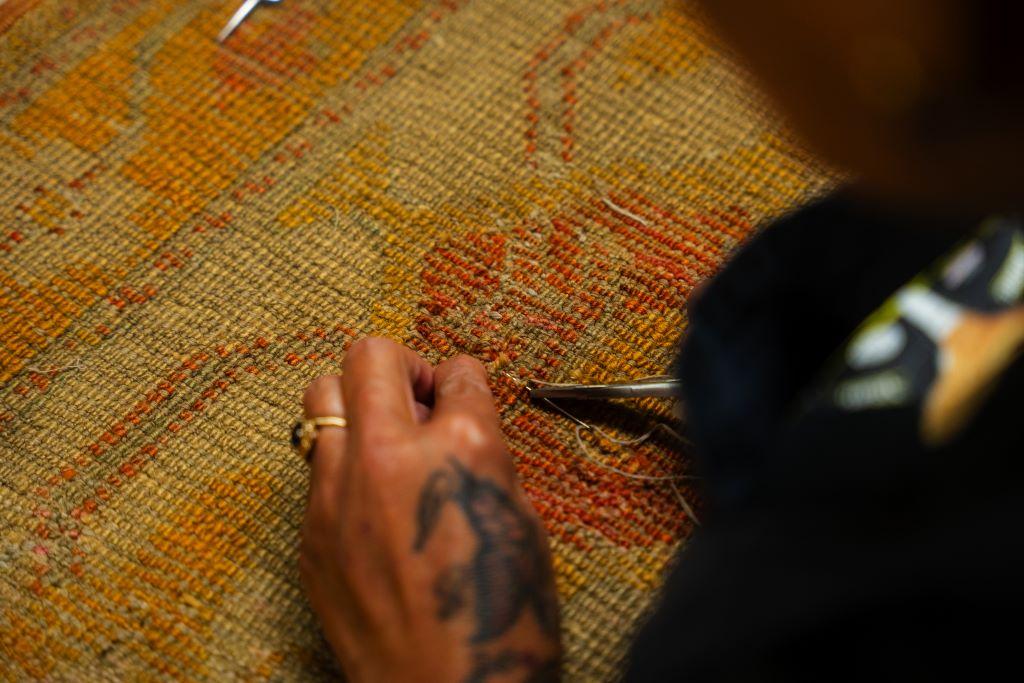
Detail of hands mending a rustic, richly colored woven rug.
- Mixed materials — Why: Artisans incorporate bamboo fibers, metallic threads, and synthetics alongside wool and silk, creating hybrid forms.
- Conceptual art tapestries — Why: Contemporary artists use tapestry as a medium to explore political, social, and ecological themes.
- Tradition-inspired works — Why: Some designers revive motifs like Millefleurs or Verdure, reinterpreting them in modern palettes and scales.
- Gallery collaborations — Why: Belgian designers work with international galleries, positioning tapestry as both textile and fine art.
This flourishing of modern Belgian tapestry design demonstrates that weaving is not locked in the past but continues to evolve. Just as Brussels once collaborated with Renaissance painters, today’s weavers and artists collaborate to push boundaries. Belgium’s textile outlook rests on two intertwined priorities: industrial innovation and ecological responsibility on one hand, and cultural preservation and artistic renewal on the other. With global exports, sustainability commitments, and a strong training infrastructure, the country ensures that its reputation as a textile crossroads will remain strong well into the future.
Browse a Few of Our Belgian Rugs
FAQ
- Are there historical Belgian rug styles?
Yes—Brussels (loop pile) and Wilton (cut pile) weaves shaped modern carpeting. Their techniques still influence today’s Belgian production.
- Which Belgian brands are well-known?
Notable names include Louis De Poortere, Balta, Lano, and Ragolle. Each specializes in different constructions and design aesthetics.
- How can I tell if a rug is made in Belgium?
Look for “Made in Belgium” on the label, metric sizing (cm), and a manufacturer name. Certificates or hangtags often list the origin.
- What price range should I expect?
Polypropylene 5×8 rugs often run \~\$80–\$200; designer Belgian flatweaves can be \~\$400–\$900 for similar sizes. Prices vary by material and brand.
- How do Belgium rugs compare to Persian or Turkish rugs?
Belgian rugs are typically machine-woven and consistent; Persian/Turkish are often hand-knotted and unique. Maintenance and price expectations differ.
- Are Belgium rugs investment pieces?
Most machine-made Belgian rugs are for daily use, not appreciation. Historic Flemish tapestries or rare vintage pieces may be collectible.
- Do I need a rug pad under Belgium rugs?
Yes—a felt-and-rubber pad reduces slipping, protects floors, and extends rug life. Thickness around 1/8″–1/4″ works for most rooms.
- How do I care for a Belgian viscose rug?
Keep dry and blot immediately with absorbent towels—avoid scrubbing. Seek professional dry cleaning for stains.
- How do I clean a Belgian wool rug?
Vacuum without a beater bar; blot spills with cool water and neutral soap. For deep cleaning, use a professional rug cleaner.
- How do I clean a Belgian polypropylene rug?
Vacuum regularly and spot-clean with mild detergent; rinse and dry thoroughly. Test any cleaner in an inconspicuous area first.
- Can Belgium rugs be used outdoors?
Polypropylene flatweaves can, provided they’re labeled indoor/outdoor and UV-resistant. Elevate to dry and bring indoors off-season.
- Are Belgium rugs pet- and kid-friendly?
Polypropylene and flatweaves handle messes and high traffic well. Pair with a washable or waterproof rug pad for extra protection.
- Are Belgium rugs good for dining rooms?
Yes—choose low-pile or flatweave for easy chair movement and crumb cleanup. Aim for at least 24″ of rug beyond the table edges.
- What EU sizes map to common US sizes?
160×230 cm ≈ 5’3″×7’7″; 200×290 cm ≈ 6’7″×9’6″; 240×340 cm ≈ 7’10″×11’2″. Always check exact centimeters.
- Do Belgium rugs work over radiant floor heating?
Yes—prefer flatweaves or low-pile wool/synthetics to allow heat transfer. Avoid thick shags that insulate and trap heat.
- Are Belgium rugs safe for indoor air quality?
Many carry OEKO-TEX® Standard 100 certification, meaning components are tested for harmful substances. Verify certification on the product tag or listing.
- Do Belgian wool rugs shed?
New wool rugs may shed lightly for the first 1–3 months. Use a suction-only vacuum (no beater bar) to minimize fiber loss.
- Are viscose Belgium rugs a good idea?
They offer silk-like shine but are moisture-sensitive and prone to yellowing. Avoid kitchens, bathrooms, or high-spill areas.
- How do Belgian polypropylene rugs perform?
They’re durable, stain-resistant, and moisture-tolerant—great for busy rooms. Many can be spot-cleaned with mild soap and water.
- What materials do Belgium rugs use most?
Polypropylene for durability and easy care, wool for resilience and comfort, and cotton chenille in flatweaves. Some designs include viscose for sheen.
- Are Belgium rugs usually hand-knotted?
Most are machine-made; true hand-knotted Belgian pieces are uncommon. Check the label for “hand-knotted” and inspect the back for individual knots.
- What is a Wilton rug?
A cut-pile cousin of Brussels weaving, produced by cutting loops held by wires. It delivers a velvety look and is still widely used in Belgian mills.
- What is a Brussels carpet?
A historic Belgian loop-pile weave with uncut loops forming the pattern. It originated in the 1700s and influenced many modern machine-woven styles.
- Are Belgium rugs good quality?
Generally yes—Belgium is known for precise machine weaving and consistent finishes. Look for OEKO-TEX® Standard 100 labels and reputable makers for added assurance.
- What are “Belgium rugs”?
Rugs designed or manufactured in Belgium, often machine-woven on Wilton or jacquard looms. Common materials include polypropylene, wool, and cotton chenille.