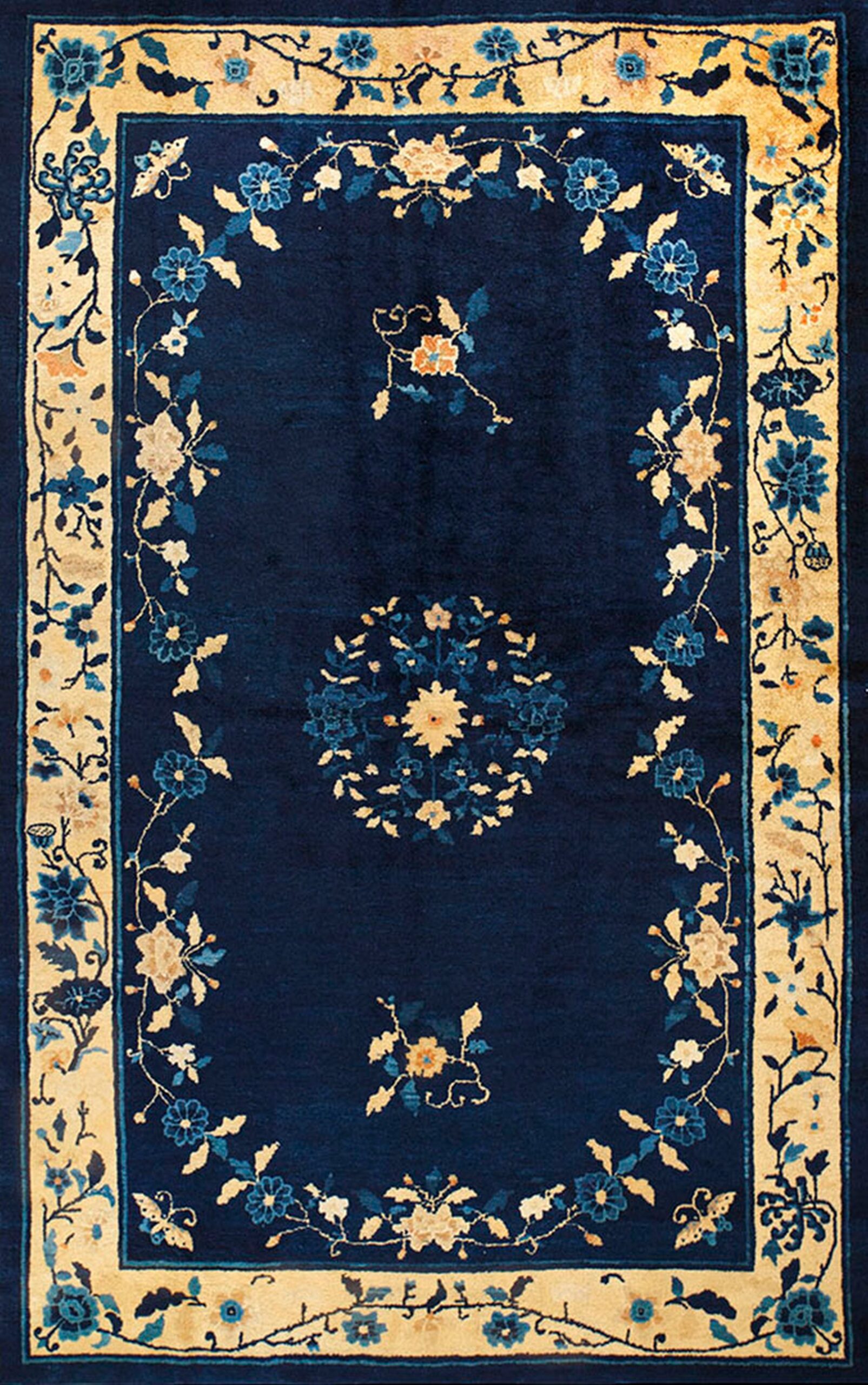
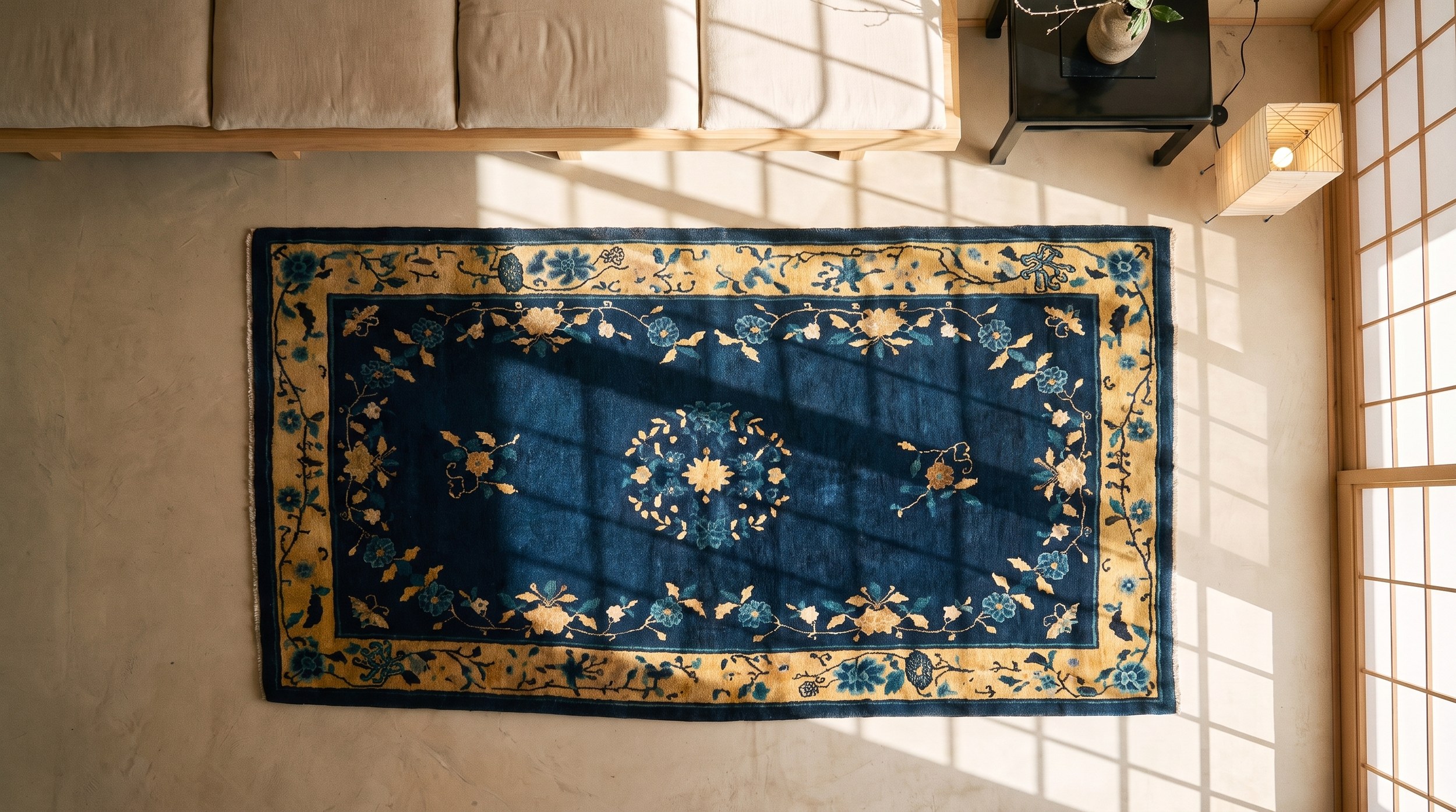
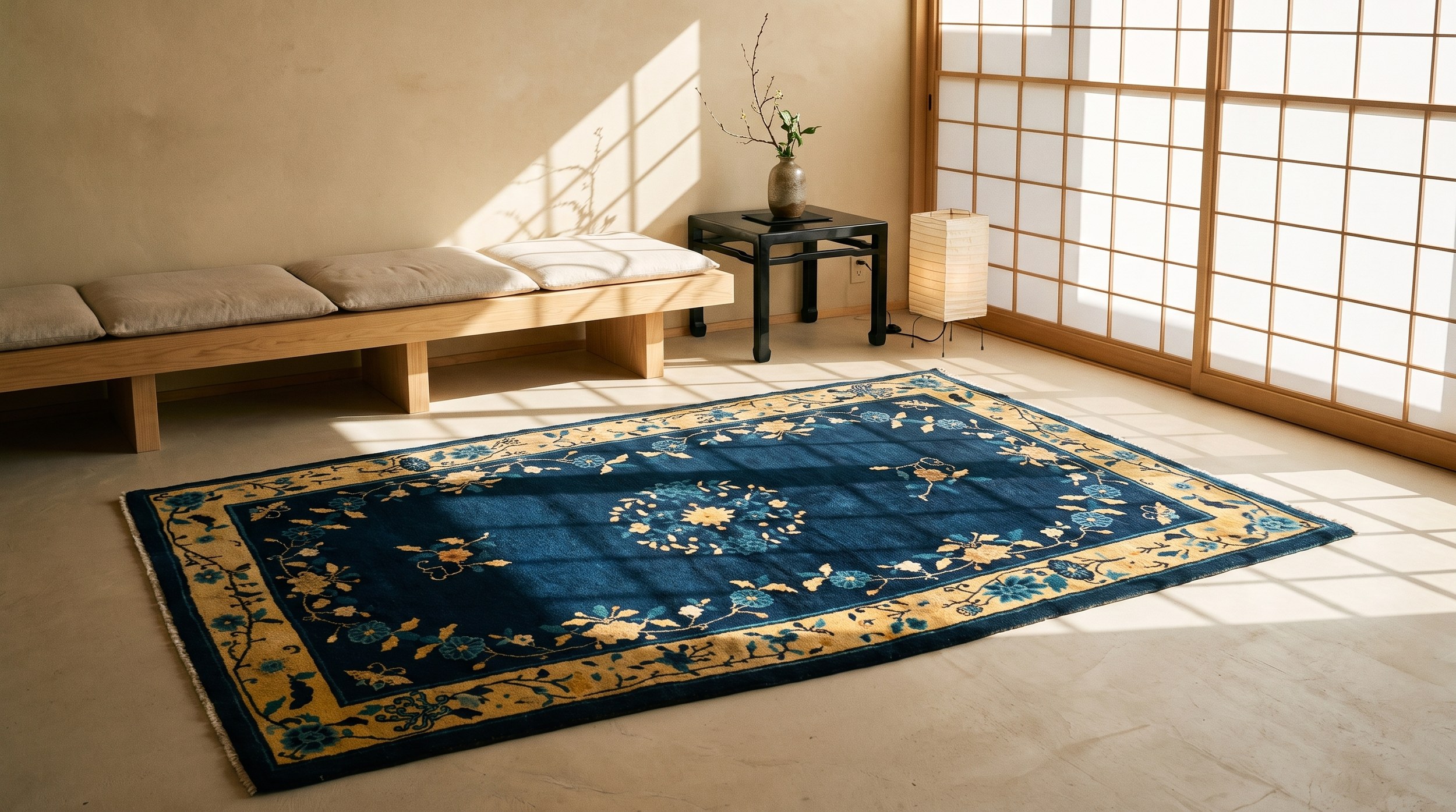
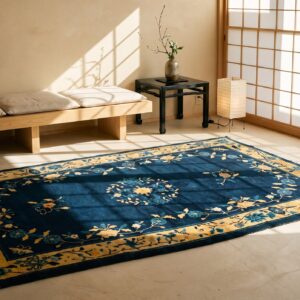
This early twentieth-century antique Chinese area rug is a sophisticated and gem-like example of the “Scholar’s Taste,” representing the height of Beijing’s weaving workshops during the transition into the Art Deco design era. While many antique floral Peking rugs of this period utilized light ivory grounds, this small-format specimen is distinguished by its rare and dramatic navy blue rug color foundation, making it a highly desirable accent piece for collectors seeking a “midnight” aesthetic.
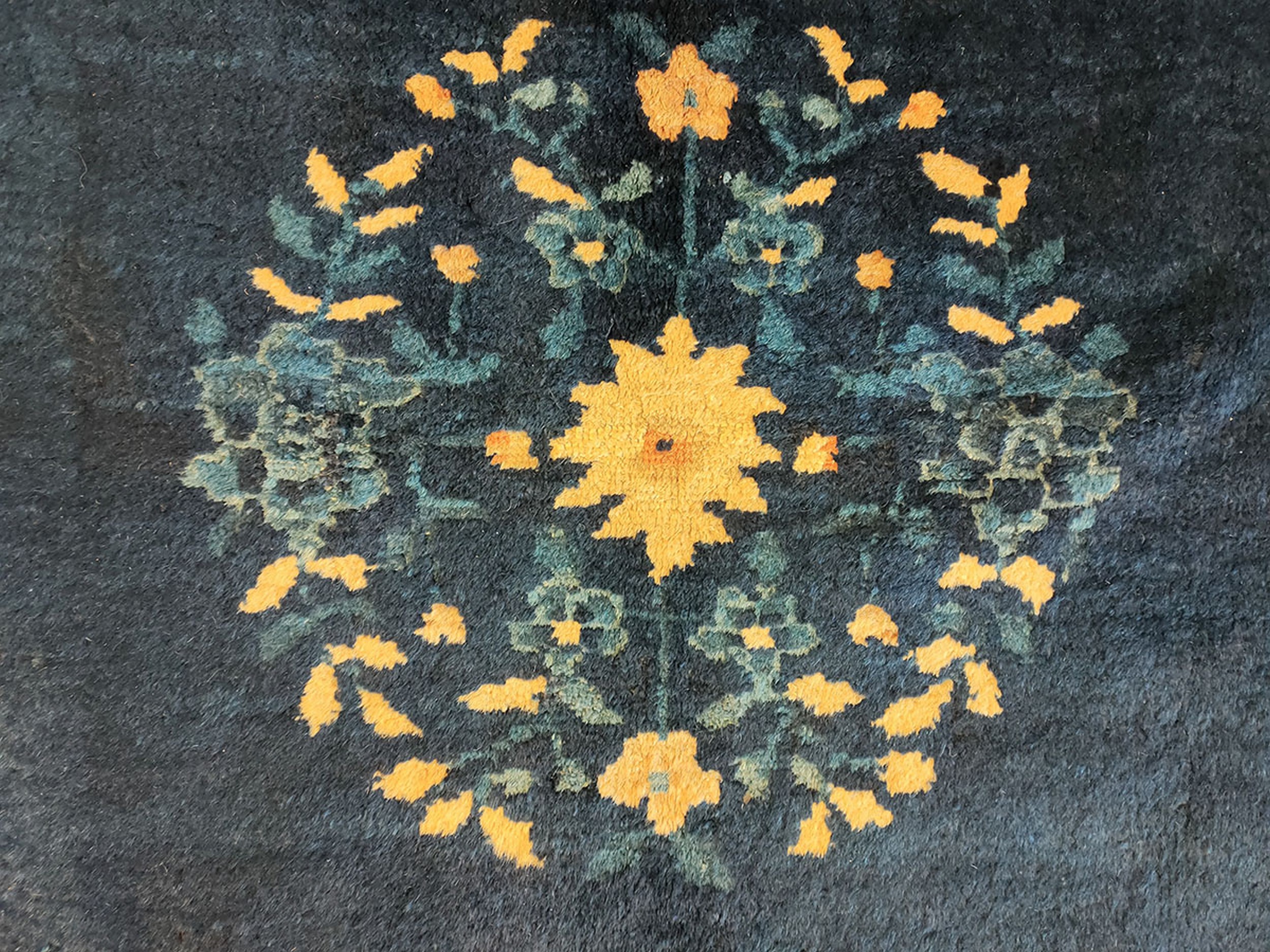
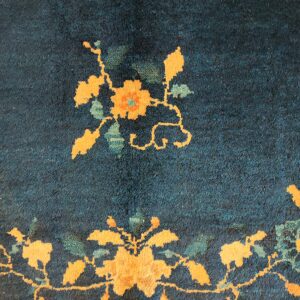
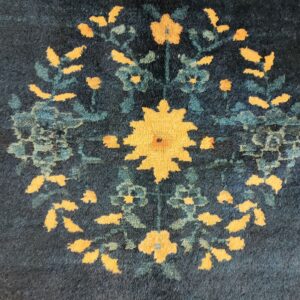
The composition is centered upon a refined floral inlay pattern. The design features a series of delicate floral sprays—likely stylized peonies and lotuses—that appear to be “inlaid” or floating within the field. The drawing is remarkably calligraphic and fluid, characterized by the “painterly” precision that defines high-grade Peking production. By utilizing a “less is more” philosophy, the weaver allows the deep blue negative space to act as a quiet, meditative stage for the botanical motifs, creating a sense of serene, celestial balance.
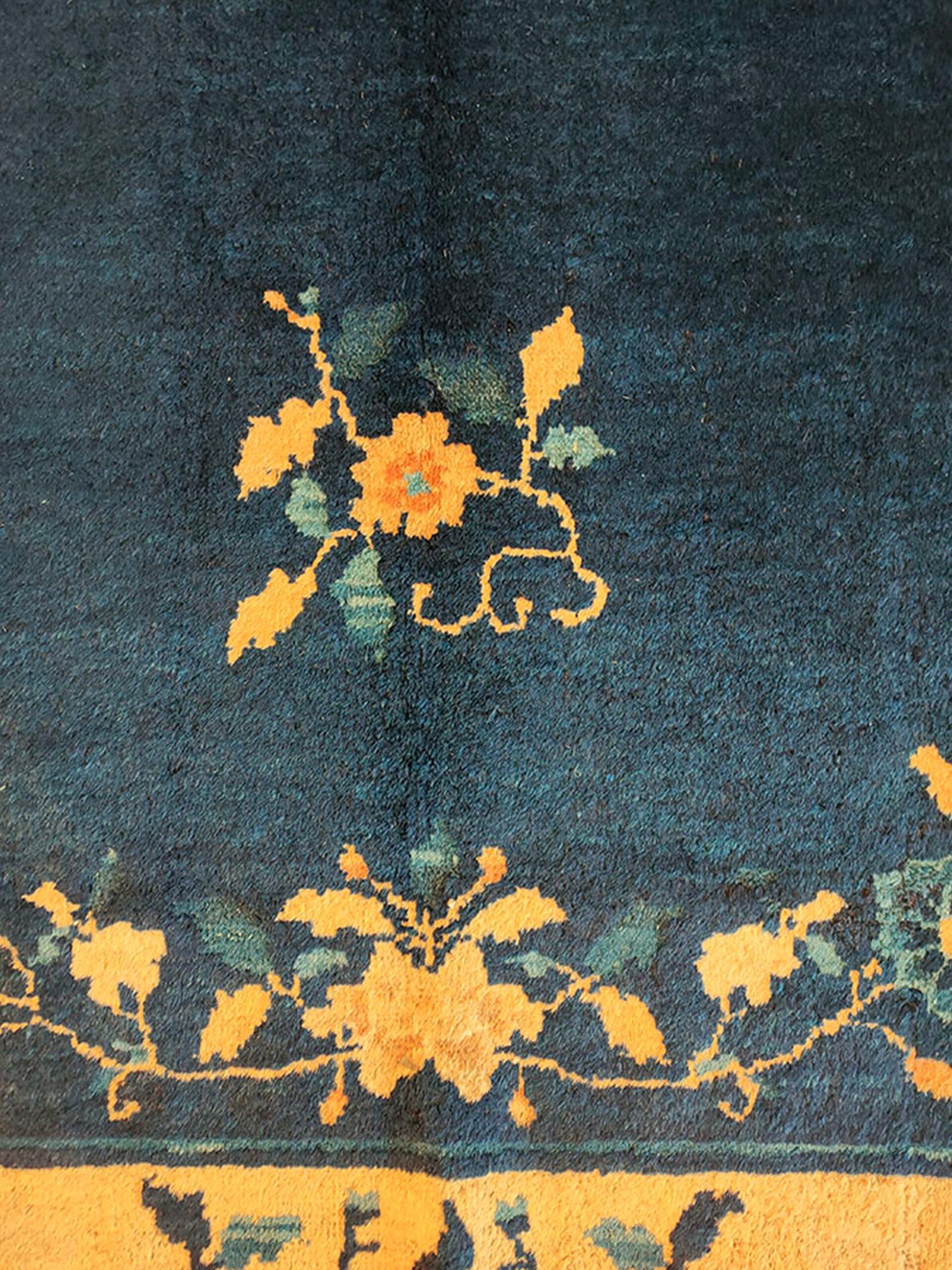
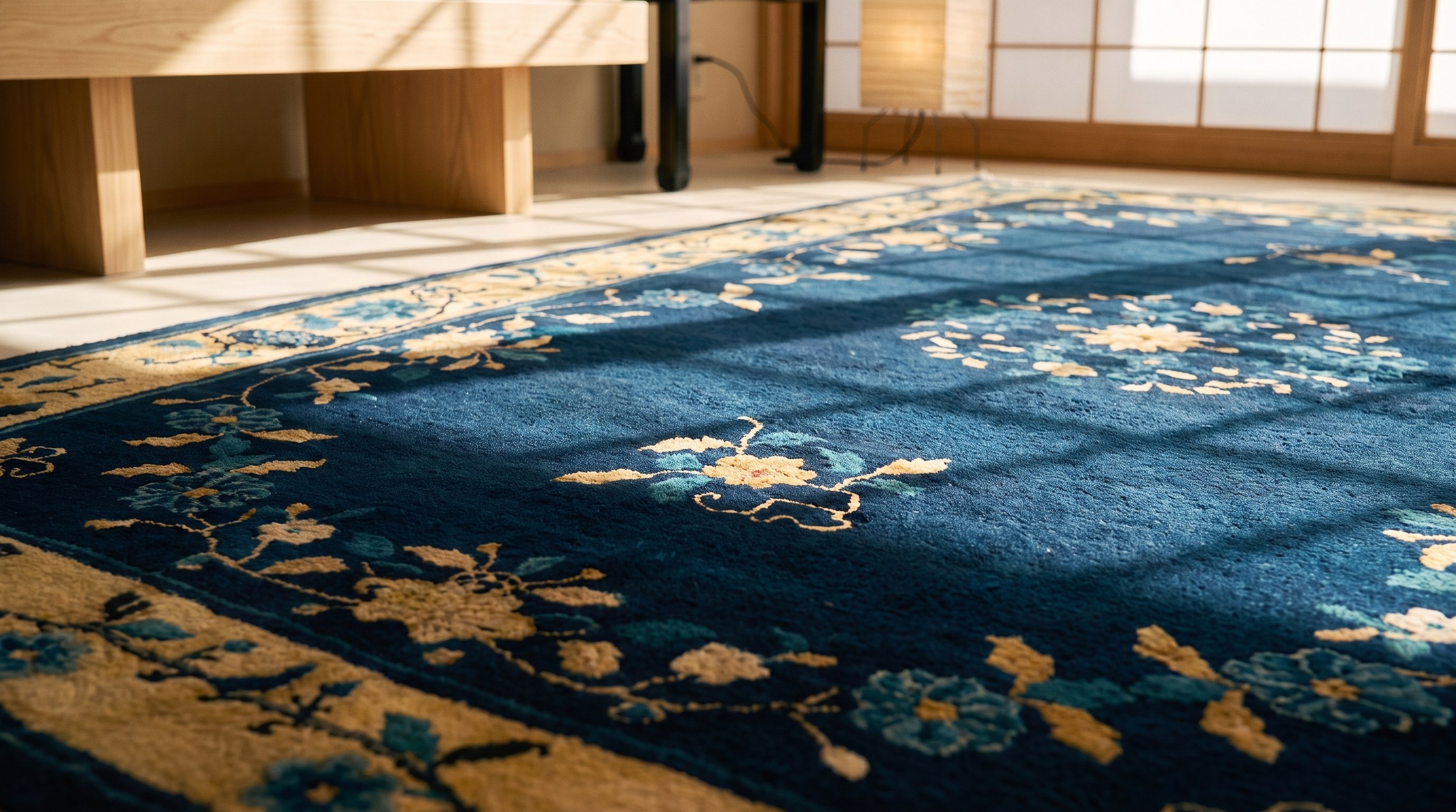
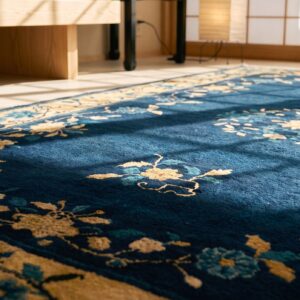
The palette is anchored by a magnificent Deep Navy and Indigo foundation. This rich, obsidian-toned ground has a luminous quality, absorbing and reflecting light in a way that gives the beautiful Oriental rug a “velvety” depth. Against this dark stage, the floral motifs are rendered in crisp ivory, soft slate blue, and hints of pale gold. Because this is an antique specimen, the natural indigo dyes exhibit a beautiful “watercolor” abrash, where the navy shifts in tone like a night sky, providing a three-dimensional richness that synthetic dyes cannot replicate.
Technically, this Peking rug is prized for its lush, high-grade wool pile and substantial, “meaty” handle. The wool, sourced from high-altitude sheep, is exceptionally rich in natural lanolin, resulting in a surface that possesses a subtle, healthy sheen. A defining characteristic of this tradition is the hand-carving or “embossing” technique, where the weaver hand-clipped the wool around the floral motifs to create a sculptural depth, making the blossoms appear to lift away from the indigo field.
The borders act as a disciplined architectural frame, often featuring a simple solid-color band or a “T-fret” (Greek Key) design to symbolize infinity, providing a structural “lock” for the airy elegance of the field. To possess this antique navy blue Peking floral pattern area rug is to own a piece of Chinese artistic history. It bridges the gap between traditional dynastic symbolism and the sophisticated, “dark-mood” requirements of the modern interior—transforming any corner or small space into a sanctuary of historical soul and serene, midnight grace.