
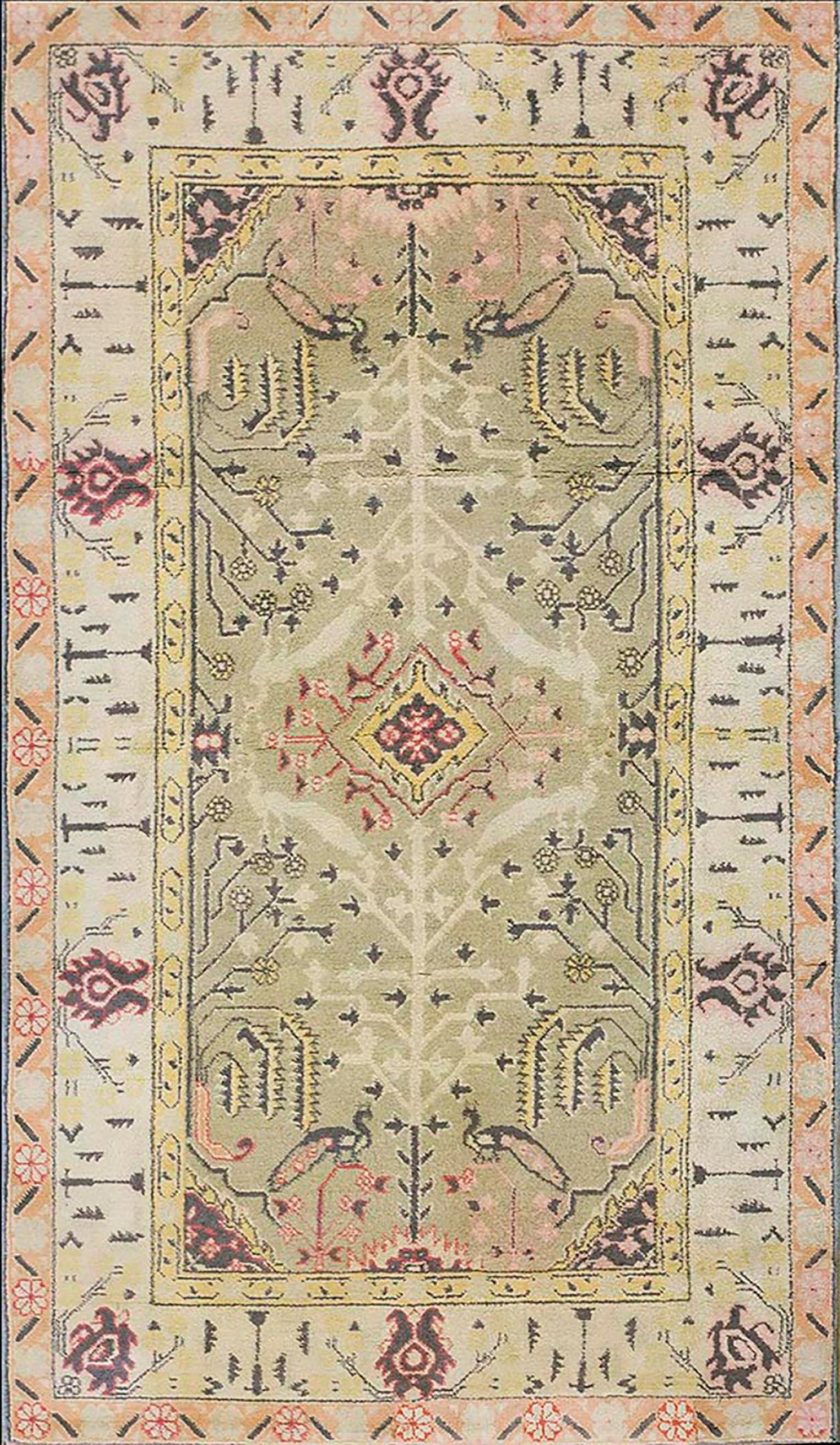
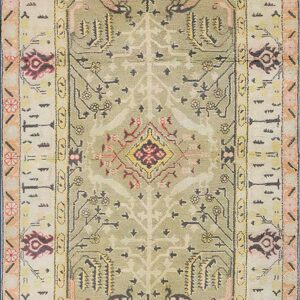
This circa 1900 antique Indian Agra rug is a spectacular example of the “Jail-Woven” or “Master-Workshop” tradition, representing the pinnacle of the British Raj-era textile revival. While Persian rugs of the period often adhered to strict geometric or floral symmetries, the Agra weavers—famed for their grand scale and artistic independence—created “Garden of Paradise” compositions that are among the most sought-after by international collectors.
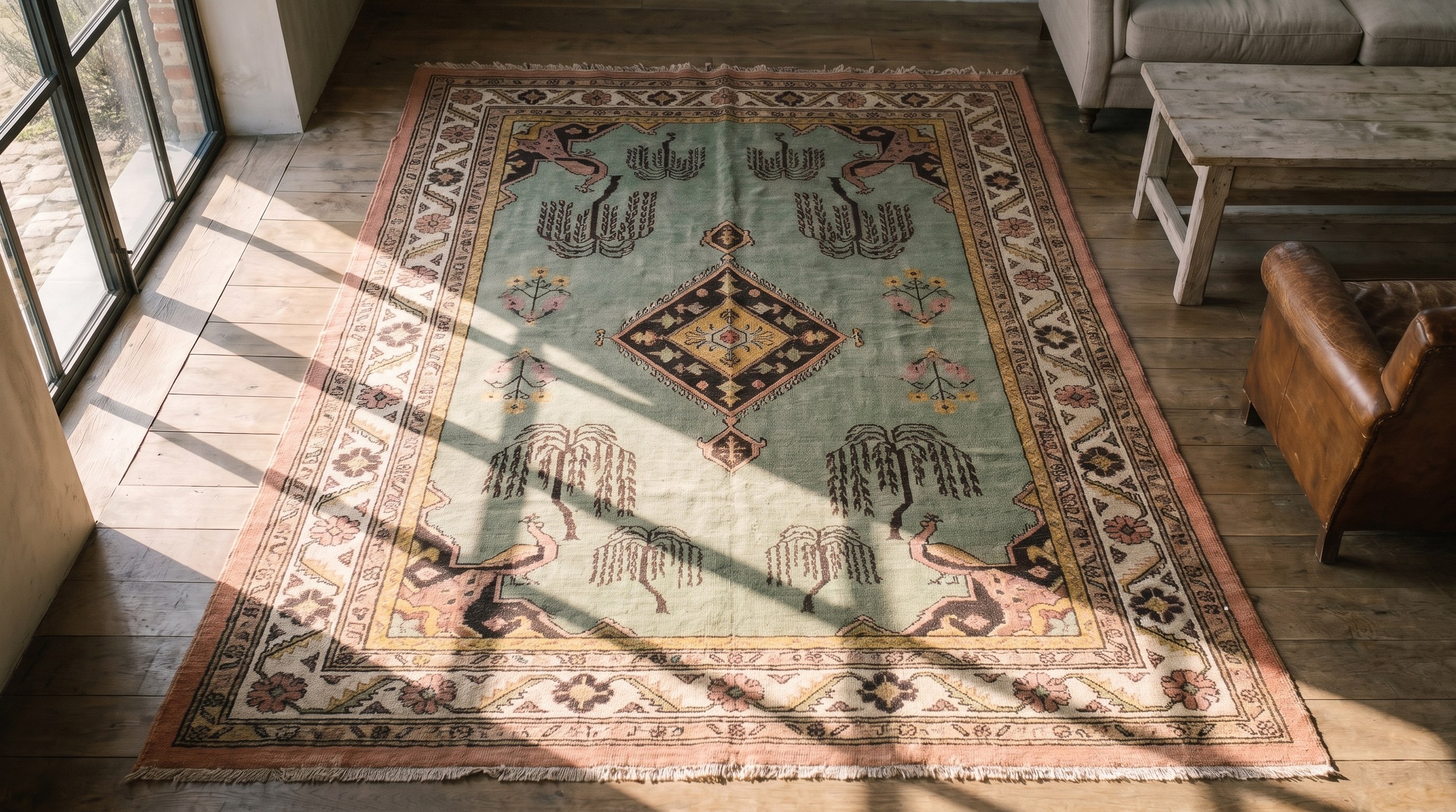
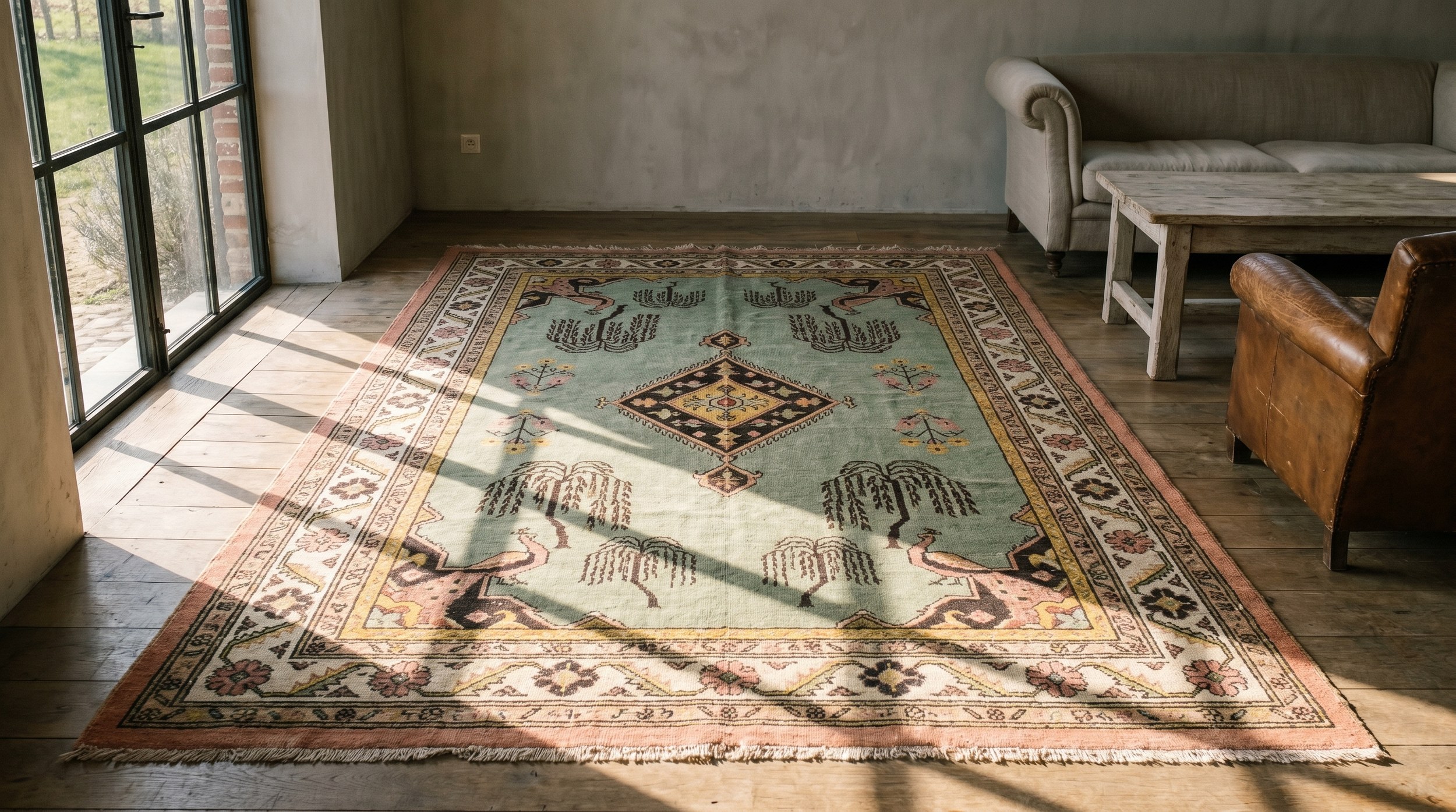
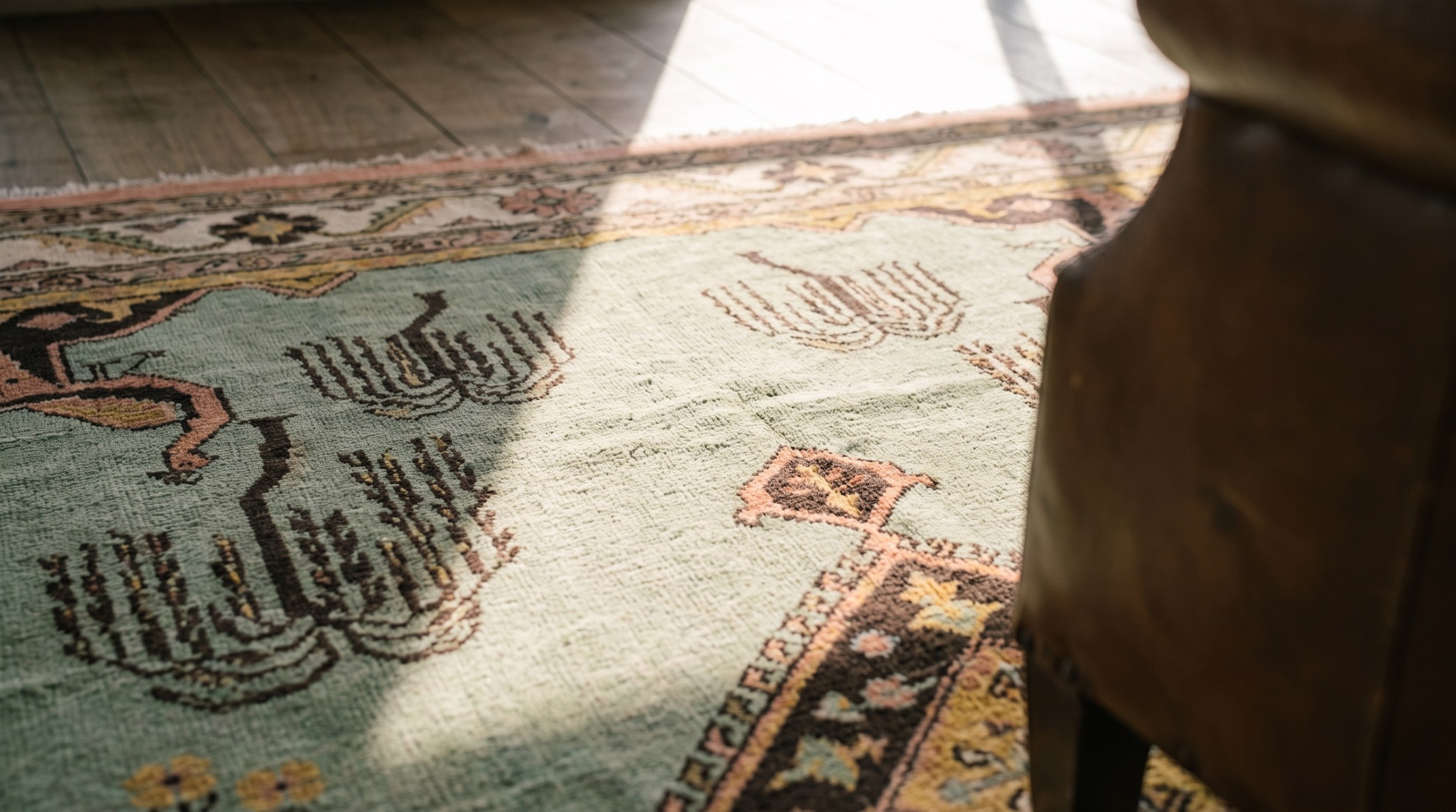
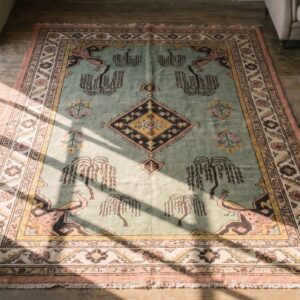
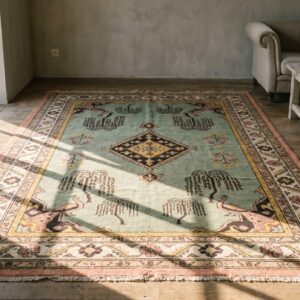
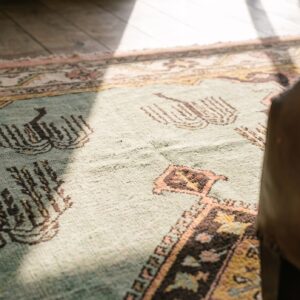
The composition is centered upon a magnificent “Weeping Willow and Peacock” pattern. This is a rare and highly poetic narrative design, where the graceful, drooping branches of the willow tree symbolize immortality and the sorrow of love, while the peacock patterns (often found perched within the foliage) represent royalty, protection, and the lushness of the Indian landscape. The drawing is remarkably fluid and naturalistic, showcasing a “painterly” quality that allows the botanical and avian forms to feel as though they are swaying in a gentle breeze.
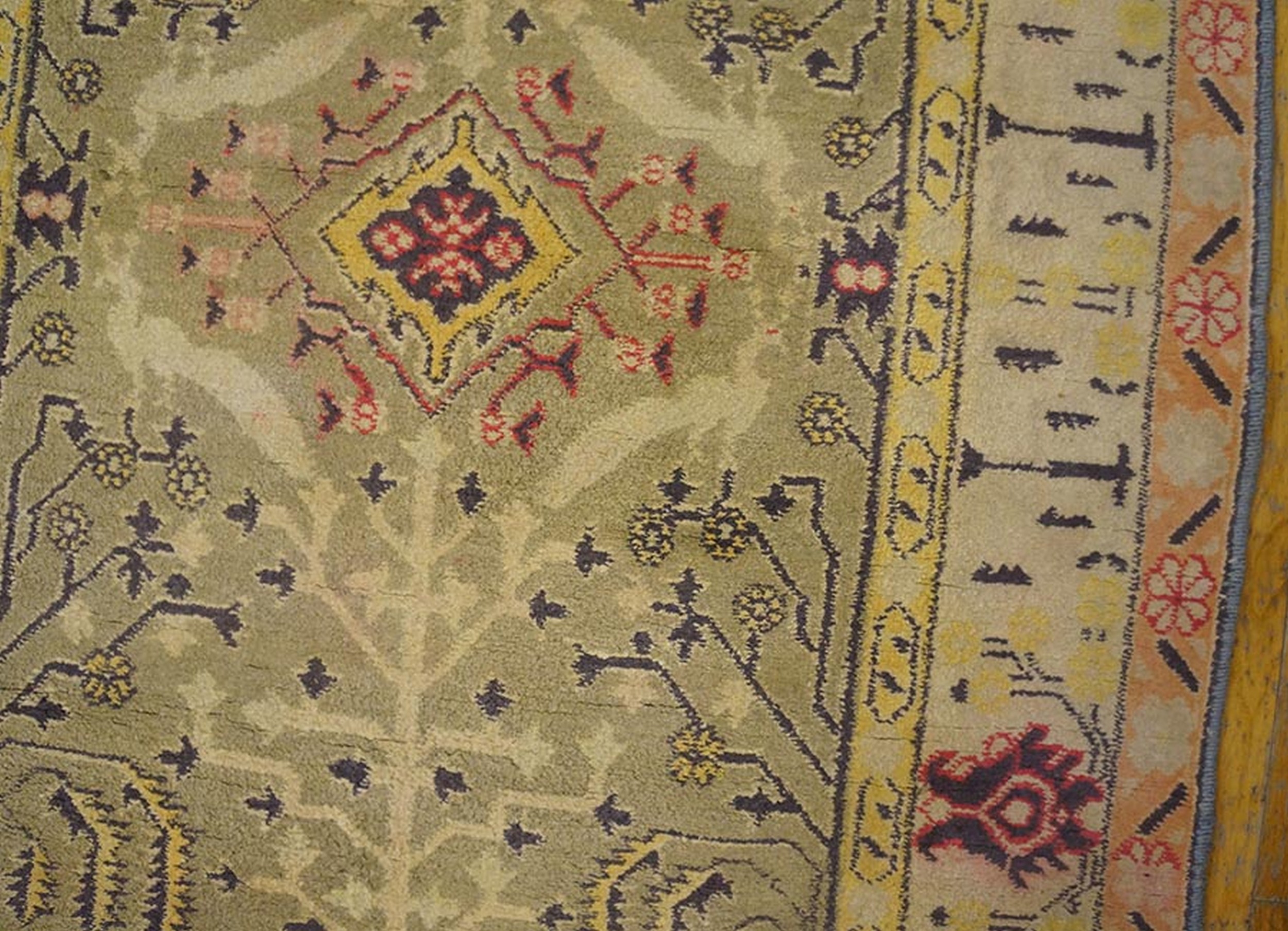
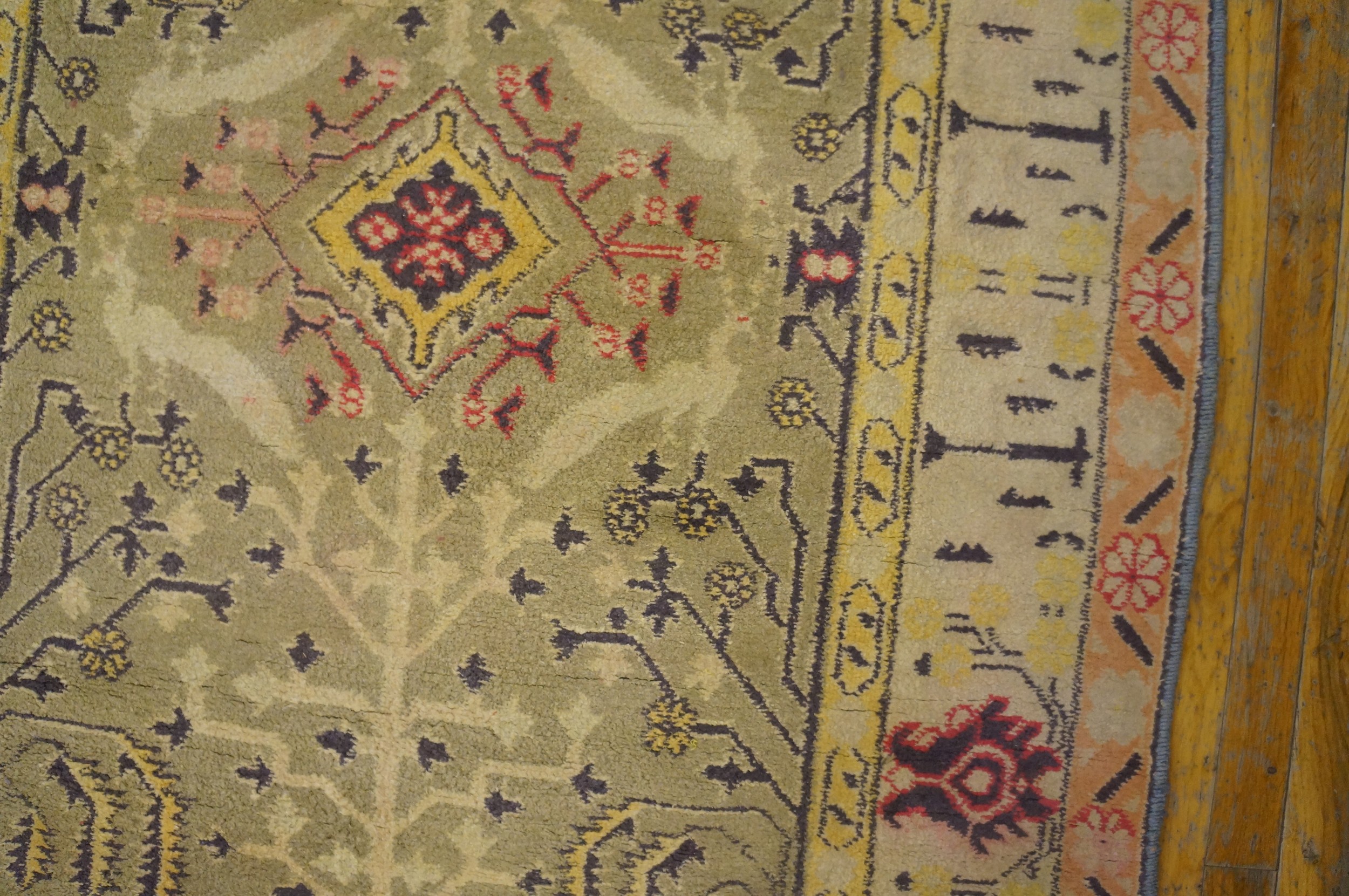
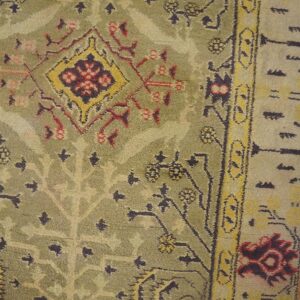
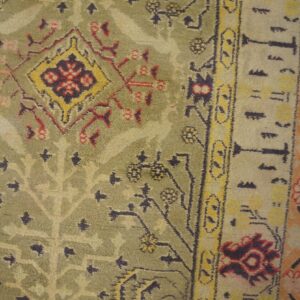
The palette is anchored by a rare and coveted Soft Moss Green ground. Green is one of the most difficult colors to achieve and maintain in antique textiles, and this particular hue possesses a shimmering, organic depth. Against this verdant field, the Jewelry-Box accents of the peacocks and blossoms—rendered in shades of dusty rose, terra cotta, burnt orange, and midnight blue—”pop” with a three-dimensional intensity. Because the rug is woven with premium cotton, the dyes sit on the surface with a matte, chalky elegance that is distinct from the high-luster of wool, lending the piece a sophisticated, “shabby-chic” historical patina.
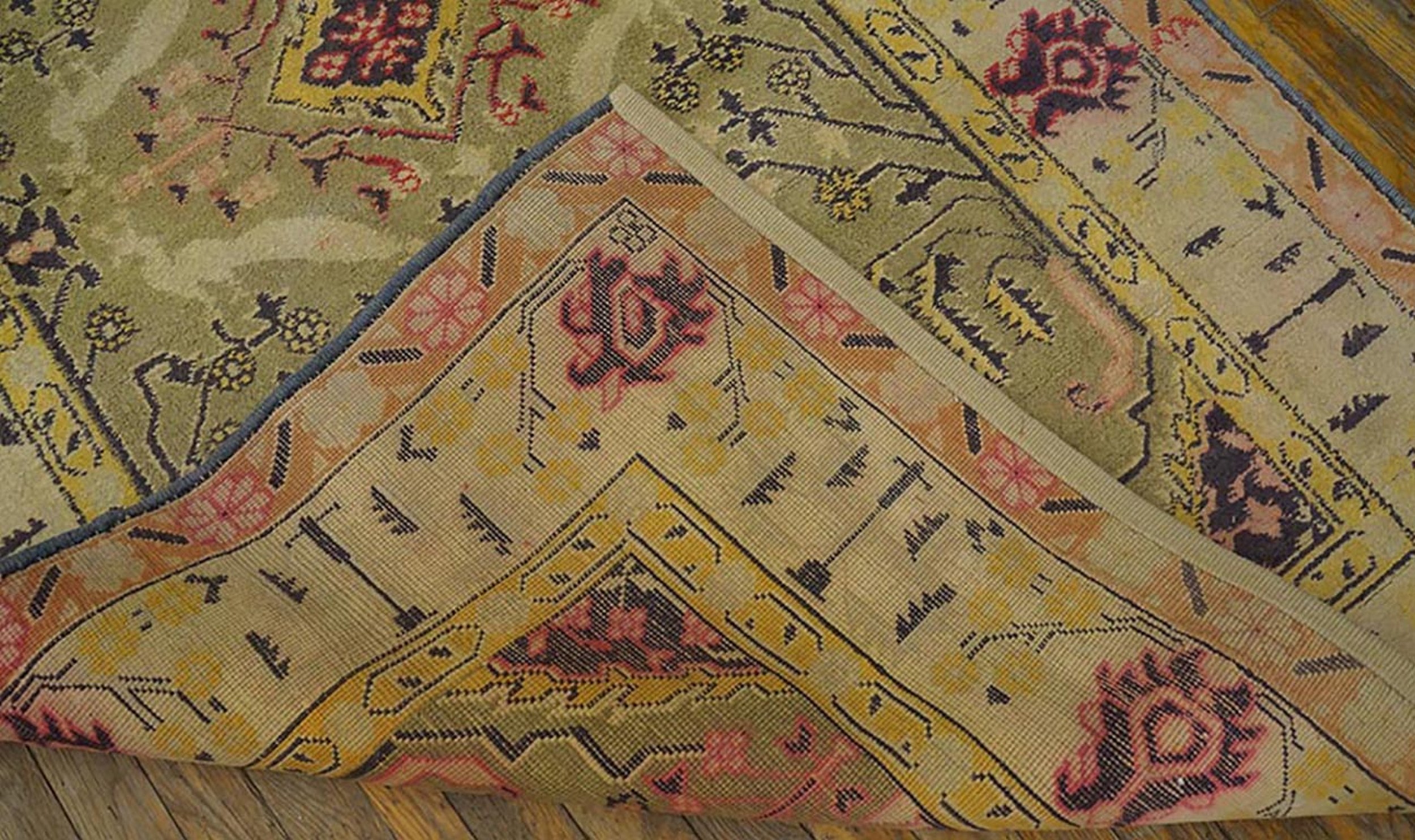
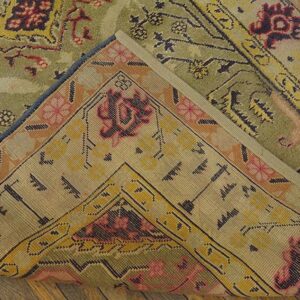
Technically, an antique Agra Cotton rug is prized for its substantial weight and cool, tactile handle. Cotton was often favored in the hotter Indian climates for its breathability and its ability to hold exceptionally fine, crisp details. The weave is dense and sturdy, giving the soft green color area rug a “meaty” feel despite its refined artistic profile. Over more than a century, the cotton fibers have softened into a velvety, “suede-like” texture that feels incredibly luxurious underfoot.
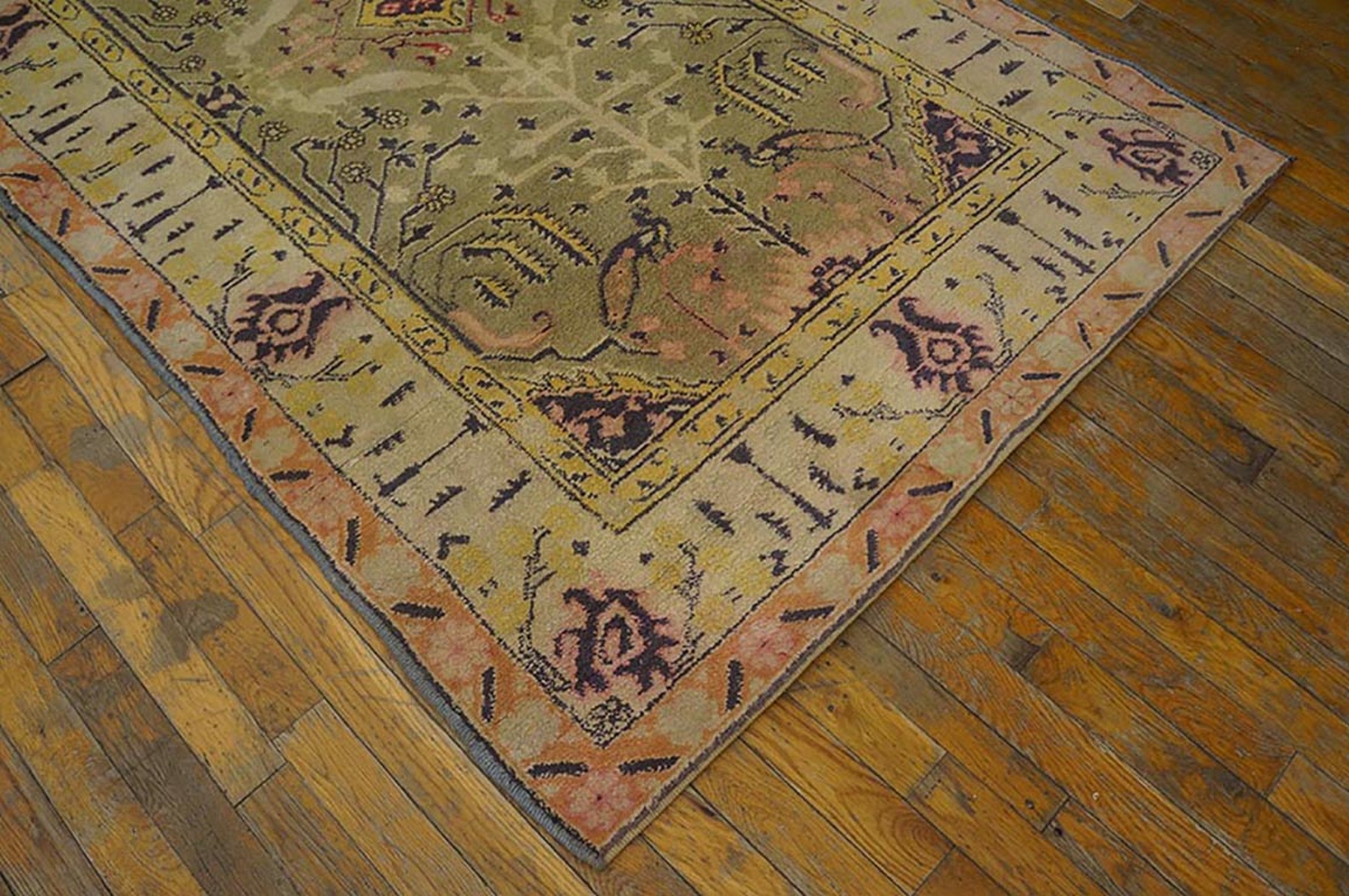
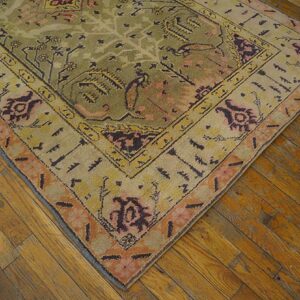
The borders act as a regal frame, typically featuring a “Main Border” of alternating palmettes and scrolling vines that echo the garden theme of the central field. This architectural containment “locks in” the naturalistic energy of the willow trees, providing a sense of historical permanence. To possess this Antique Green Agra rug from India is to own a monument to Indo-Persian excellence—a work that bridges the gap between grand architectural scale and romantic botanical art, transforming any interior into a sanctuary of historical gravity and exotic, verdant grace.
Condition: Good. Repaired. Wear consistent with age and use. Overall Good Condition.