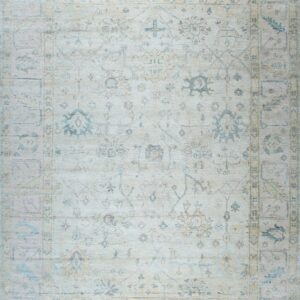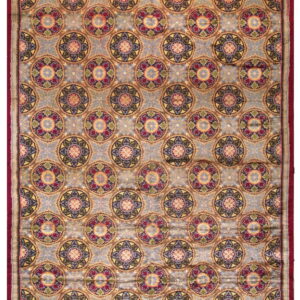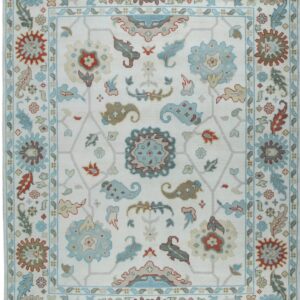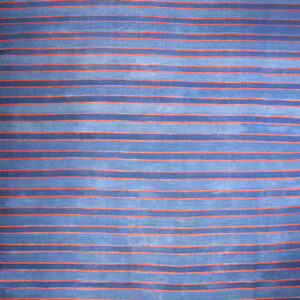
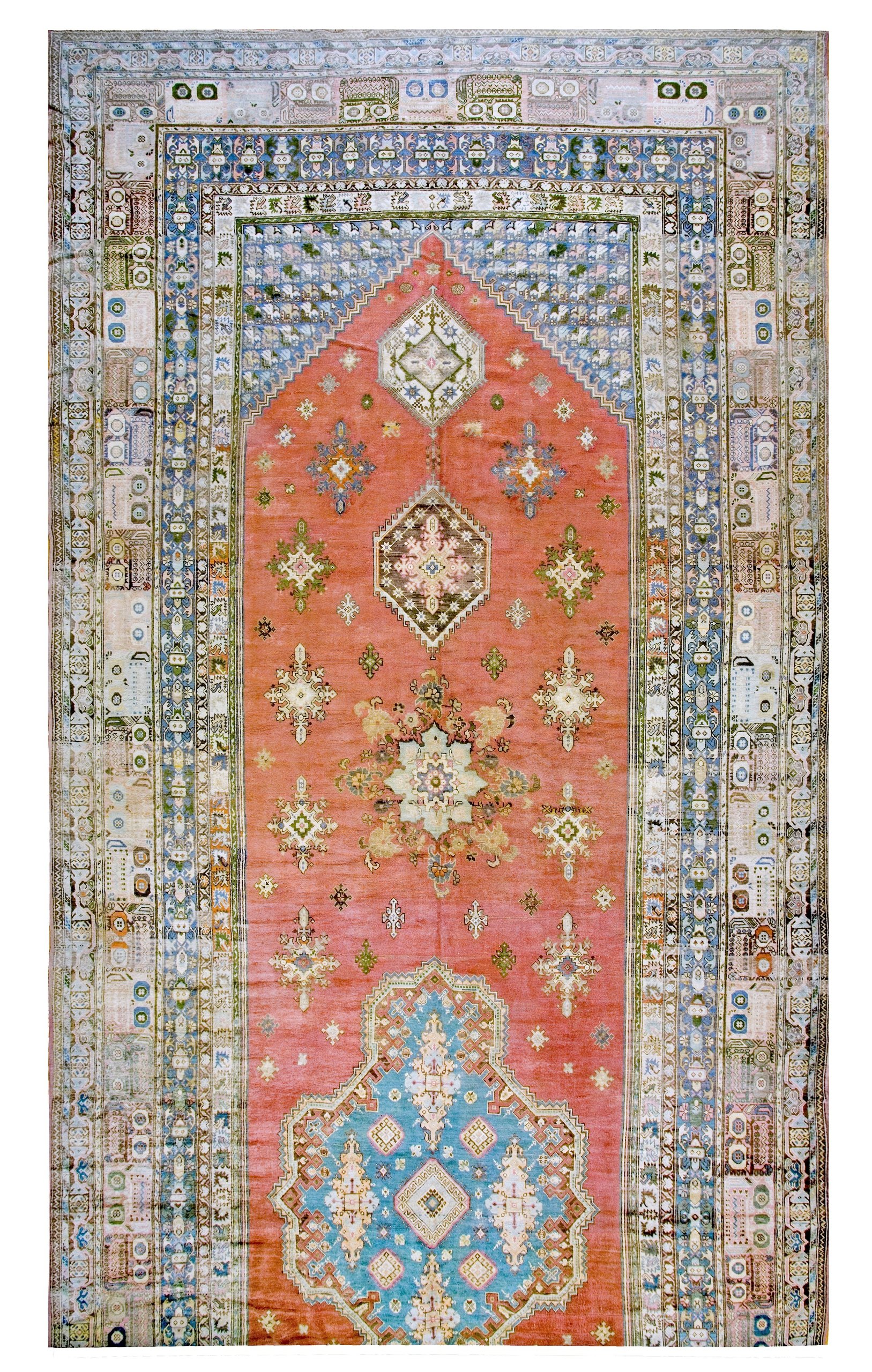
This rare, massive oversized area rug from the early twentieth century represents a fascinating intersection between the rugged, nomadic traditions of the Berber rug weaving tribes and the refined, urban artistry of Rabat. While the term “Berber” often evokes the thick, shaggy pile of the high Atlas Mountains, the Rabat style is a distinct “city” tradition that emerged as early as the eighteenth century, blending indigenous North African weaving techniques with the aesthetic influences of Ottoman Turkey and Andalusia. This specific specimen, with its unusual coral-toned field, is a vibrant testament to the “urban-tribal” evolution, where the structural discipline of the coastal capital met the raw, expressive energy of the rural hinterlands.
Historically, the striking coral hues of these early twentieth-century Moroccan area rugs were achieved through an arduous process of natural dyeing. Weavers utilized local madder root—a botanical staple of the Maghreb—to produce a spectrum of coral tones, often softening them with henna or pomegranate skins to reach this specific, sun-drenched coral. In the Berber worldview, color was never merely decorative; coral and its derivatives were believed to possess baraka (divine blessing or protective power) and were frequently used to ward off the “evil eye” and ensure the fertility of the household. The massive scale of this particular piece suggests it was commissioned for a significant setting—perhaps a tribal leader’s reception tent or a grand Moroccan riad—where its expansive surface could serve as a stage for both communal gatherings and artistic storytelling.
The composition of a Rabat carpet is characterized by a “free field” that allows the color to breathe, often framed by a series of sophisticated, multi-layered borders. These borders act as a structural “fence,” protecting the inner soul of the rug, while the central field often contains a singular medallion or scattered lozenge motifs that represent the “eye” or the “diamond”—symbols of feminine energy and protection. During the early 1900s, when this rug was hand-knotted, Morocco was undergoing significant cultural shifts, yet the weavers remained faithful to the ancient geometric language of their ancestors. To possess a carpet of this magnitude and hue is to hold a fragment of North African history—a piece that reflects the transition from a purely nomadic utility to a high art form that would eventually go on to captivate modernists like Le Corbusier and Alvar Aalto.