
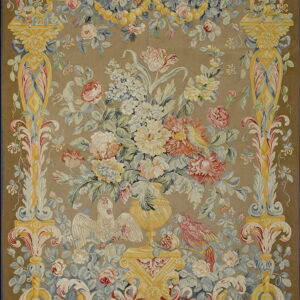
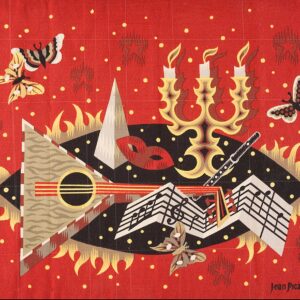
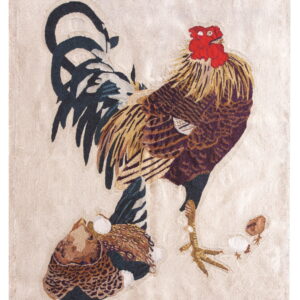
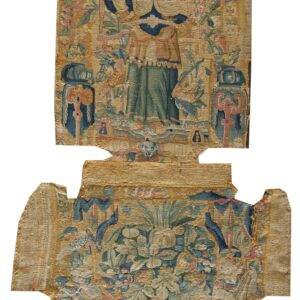
- Can wall hanging tapestries be used as a headboard alternative?
Yes, a large wall hanging tapestry can visually replace a headboard and soften the room. Choose one wider than the bed (often 6–12 inches per side) for a fuller look.
- Are wall hanging tapestries the same as rugs or carpets?
No—wall hanging tapestries are meant for vertical display, not foot traffic. Some are woven with rug-like techniques, but they typically aren’t backed or finished for floor durability.
- How much do wall hanging tapestries typically cost?
Prices vary widely: simple printed wall hanging tapestries can be budget-friendly, while woven or artisanal pieces cost more. Expect a jump in price as size and weave density increase.
- What should I look for when buying wall hanging tapestries online?
Check dimensions, material, weight, and how it’s meant to hang (sleeve, grommets, loops). Zoom in on photos to gauge texture—woven wall hanging tapestries look more dimensional.
- How do I store wall hanging tapestries without damage?
Roll them around an acid-free tube or clean dowel instead of folding to prevent creases. Store wall hanging tapestries in a cool, dry place away from sunlight and moisture.
- Are wall hanging tapestries good for allergy-sensitive households?
They can hold dust like other textiles, so regular vacuuming helps. If allergies are a concern, choose washable wall hanging tapestries and clean them every 4–8 weeks.
- Are wall hanging tapestries safe for homes with pets?
Usually, but choose tighter weaves that snag less and avoid fringe if pets chew. A higher hanging position helps keep wall hanging tapestries away from claws and rubbing.
- Will sunlight fade a wall hanging tapestry?
Yes—direct sun can fade dyes and prints over time. To protect wall hanging tapestries, use indirect light, rotate placement occasionally, or add UV-filtering window film.
- How do I remove wrinkles from a wall hanging tapestry?
Use a garment steamer on low or hang it in a steamy bathroom for 10–15 minutes. Avoid high heat directly on wall hanging tapestries, especially printed designs.
- Can I machine wash wall hanging tapestries?
Some printed wall hanging tapestries are machine-washable on cold gentle cycles, but many woven pieces are not. Always check the care label and air-dry to reduce shrinkage.
- How do I clean wall hanging tapestries safely?
Start with gentle dusting or low-suction vacuuming using a brush attachment. For spots, test a small hidden area first and avoid soaking woven wall hanging tapestries.
- Do wall hanging tapestries add insulation or warmth?
They can reduce drafts and add a cozy feel, particularly on exterior walls. Heavier woven wall hanging tapestries tend to feel warmer than lightweight prints.
- Do wall hanging tapestries help with sound or echo?
Wall hanging tapestries can slightly reduce echo by adding soft surface area, especially in sparse rooms. Thicker woven pieces generally absorb more sound than thin printed fabric.
- Can I frame a wall hanging tapestry?
Yes—shadow boxes or floating frames protect the textile and create a gallery look. Framing is especially helpful for valuable wall hanging tapestries or pieces exposed to dust and sunlight.
- How do I keep a wall hanging tapestry from sagging in the middle?
Add more support across the top (extra hooks, clips, or a full-length rod). For large wall hanging tapestries, tensioning the corners can also help keep edges straighter.
- Should I use a tapestry rod, curtain rod, or dowel for wall hanging tapestries?
Any of the three works; choose based on weight and style. A sturdier rod is best for heavier wall hanging tapestries, while a simple dowel suits lightweight fabric pieces.
- How can I hang wall hanging tapestries without nails?
Use removable adhesive hooks or adhesive clips, especially for lightweight wall hanging tapestries. For better results, add multiple support points along the top edge to prevent droop.
- What’s the easiest way to hang wall hanging tapestries?
The simplest method is a rod or dowel through a top sleeve, then wall hooks or brackets. This keeps wall hanging tapestries flatter and reduces corner sagging.
- How high should I hang a wall hanging tapestry?
Hang a wall hanging tapestry so the center sits roughly at eye level (often around 57–60 inches from the floor). If above a sofa or headboard, leave about 8–12 inches of space.
- Where should a wall hanging tapestry be placed in a room?
Place a wall hanging tapestry where it anchors a focal point—behind a sofa, bed, or dining bench works well. Keep the center near eye level for the most balanced look.
- How do I choose the right size wall hanging tapestry for my wall?
Measure the wall space and leave visible margins on all sides (often 6–12 inches looks intentional). For above furniture, aim for the wall hanging tapestry to be about two-thirds the furniture width.
- What materials are common in wall hanging tapestries?
Wall hanging tapestries are often cotton, polyester blends, wool, or jacquard-woven mixes. Cotton tends to drape well, while heavier weaves feel more structured and “rug-like.”
- What’s the difference between woven wall hanging tapestries and printed tapestries?
Woven wall hanging tapestries are made on looms with threads forming the image, while printed tapestries are fabric with a design printed on top. Woven pieces typically last longer and hide wear better.
- Are wall hanging tapestries woven or printed?
Wall hanging tapestries can be either woven (textured, yarn-based) or printed (flat fabric with ink). Woven versions usually feel thicker and more dimensional than printed ones.
- What are wall hanging tapestries?
Wall hanging tapestries are textile art pieces designed to hang on a wall, often with woven or printed imagery. They add color, texture, and softness without needing a framed canvas.
Tapestry
Wall-hanging tapestries bring art, texture, and storytelling into living spaces, transforming blank walls into expressive focal points. Rooted in centuries of weaving tradition yet perfectly suited for modern interiors, tapestries offer a distinctive alternative to framed art, blending craftsmanship with visual depth.
Whether you’re adding warmth to a minimalist room or layering character into an eclectic space, a tapestry introduces movement, color, and narrative in a way few decor pieces can.
Our wall-hanging tapestries are crafted using detailed weaving techniques and high-quality fibers such as wool, cotton, and silk blends. Designed to showcase intricate imagery, patterns, and symbolic motifs, each piece functions as both textile and artwork.
From historic-inspired scenes and classical designs to abstract compositions and contemporary aesthetics, these woven works suit a wide range of interiors—from traditional to modern.
Explore our collection of wall-hanging tapestries to discover pieces that elevate your walls with texture and meaning. Whether decorative, cultural, or artistic, our tapestries offer a refined way to personalize your space.
Let your walls tell a story through woven design, heritage, and craftsmanship.
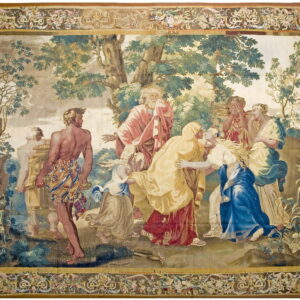
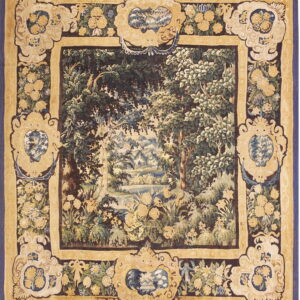
Antique 17th Century Flemish Baroque Mythological Tapestry: “The Triumph of Fidelity”
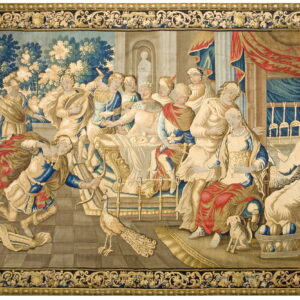
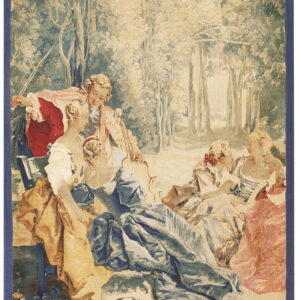
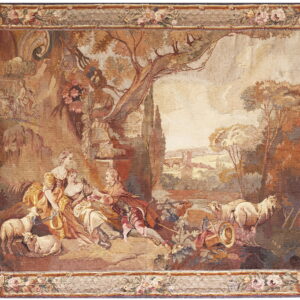
$96,000.00 TapestryRug sizes: 15.06x10.06Mid 18th Century Beauvais Large Tapestry “La Musique” by Francois Boucher Antique French Wall Hanging
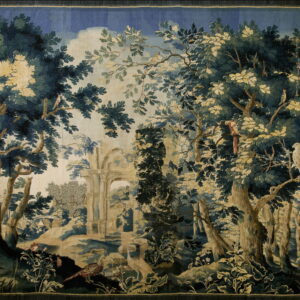
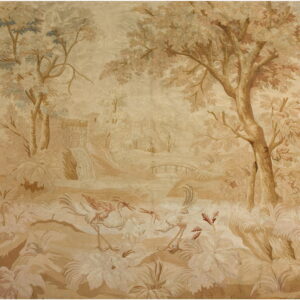
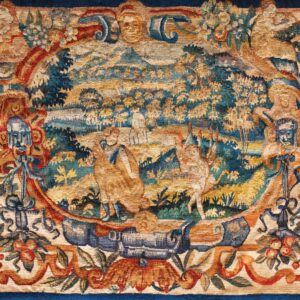
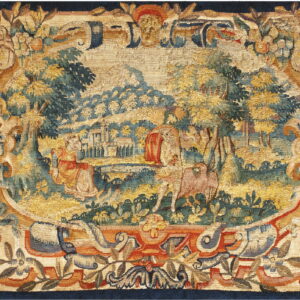
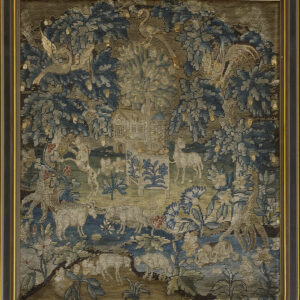
$126,000.00 TapestryRug sizes: 10.06x18Antique “The Aviary and the Triumphal Ruin” 17th Century Flemish Baroque Verdure Tapestry
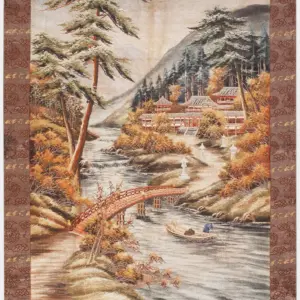
$60,000.00 TapestryRug sizes: 10.09x13.08Artistic Antique Scenic Pictorial Chinese Textile Art Tapestry
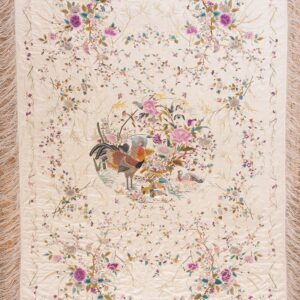
$6,800.00 TapestryRug sizes: 6.04x9.04Early 20th Century Light Ivory Color Birds and Flowers Chinese Silk Embroidery Textile Art
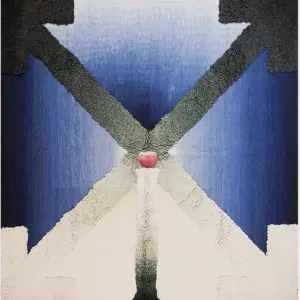
$19,500.00 TapestryRug sizes: 5.1x9Vintage Mid Century Modern Blue and Cream Square Stefan Knapp Tapestry
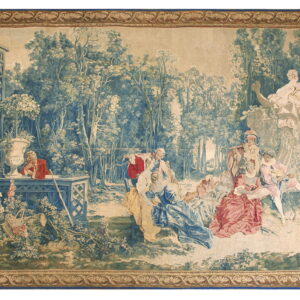
$11,300.00 TapestryRug sizes: 7.09x8.1Antique 18th Century French Romantic Pastoral Rococo Aubusson Tapestry “The Music Lesson”
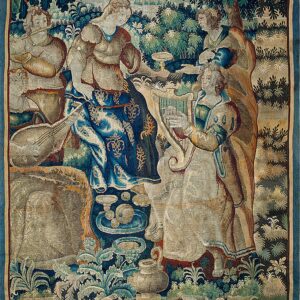
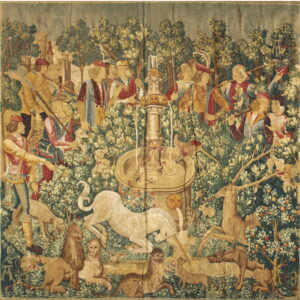
$13,600.00 TapestryRug sizes: 4.09x8.06Antique Late 16th or Early 17th Century Musical Party Garden of Love Scene Vertical Flemish Tapestry
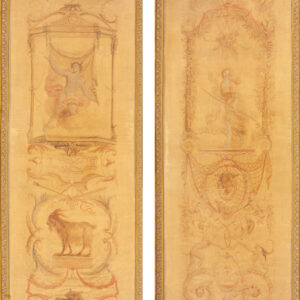
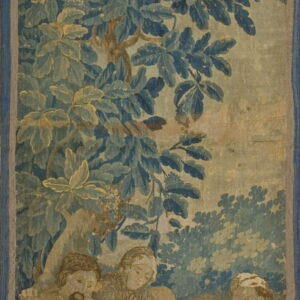
$12,800.00 TapestryRug sizes: 5.09x8.05Pair of Scenic Antique 18th Century Beauvais French Tapestry Hallway Runners Runner
$22,500.00 TapestryRug sizes: 2.09x7.06Vintage Square Tapestry Continental Allover Floral Flat Weave
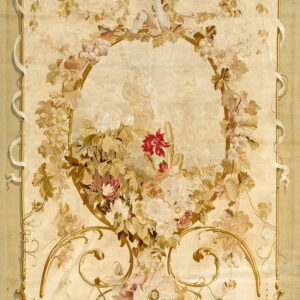
$10,500.00 TapestryRug sizes: 7.04x7.06Antique Louis XVI Style Aubusson Tapestry / Pierment with Putto and Grapevine Wreath
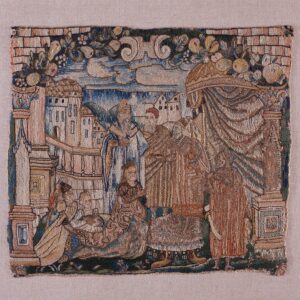
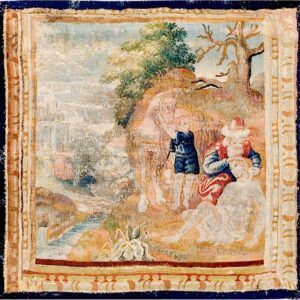
$15,000.00 TapestryRug sizes: 4.02x7.02Antique 16th Century Square Figurative Flemish Wall Hanging Tapestry
$6,750.00 TapestryRug sizes: 3.09x4.06Small Size Wool & Silk Antique 17th Century Wall Hanging Flemish Tapestry
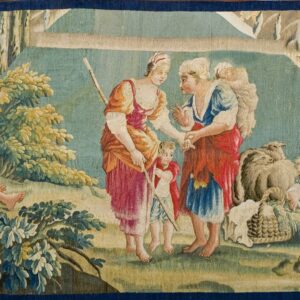
$6,750.00 TapestryRug sizes: 2x3.04Small Horizontal Antique Mid-18th Century French Pictorial Pastoral Scene Wall-Hanging Tapestry
$9,800.00 TapestryRug sizes: 6.06x3.04Antique Square Needlepoint Small Scatter Size Wool & Silk Green
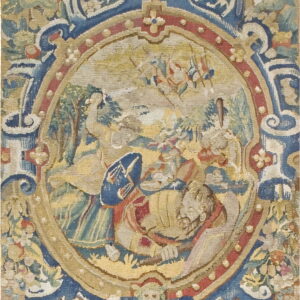
$18,800.00 TapestryRug sizes: 2.04x2.07Antique 17th Century Square Flemish Biblical Tapestry Of David and Goliath
$8,600.00 TapestryRug sizes: 2.03x2.06
Tapestry Defined: A Woven Picture for the Wall
What is a tapestry?
To understand what is a tapestry, one must look closely at how the textile is constructed. A true tapestry is defined as weft-faced pictorial weaving. In this technique, the colored weft threads—the Horizontal yarns—are packed down so tightly that they completely hide the Vertical warp threads. This structure allows the weaver to create a solid, unbroken surface of color.
Unlike standard cloth weaving where threads run from edge to edge, tapestries use “discontinuous wefts.” This means the colored threads are woven back and forth only within specific areas of color to build shapes. This capability allows for complex imagery, enabling weavers to depict detailed figures, animals, and elaborate scenes directly into the fabric.
While most historical examples are designed for vertical display and viewed from one primary face, specific traditions developed double-sided works. Notable examples include Chinese kesi (cut Silk) and certain Andean works, which appear identical on both front and back.
Tapestry vs rug vs flatweave
Shoppers often confuse a tapestry wall hanging with a rug, but the distinction lies in their primary function and construction. A tapestry is designed strictly as a woven picture for the wall, whereas a rug is engineered to withstand the wear and tear of foot traffic.
While a woven wall tapestry is technically a flatweave (meaning it lacks the knotted pile found in plush carpets), it differs significantly from floor flatweaves like kilims. Tapestries are pictorial and delicate, prioritizing visual narrative over structural thickness.
A Pile Rug provides cushion underfoot, but a tapestry provides a visual story at eye level. This distinction between wall art and floor utility is the most critical factor when differentiating tapestry vs rug.
Why tapestries mattered historically
In late-medieval Europe, tapestries were arguably the most prestigious form of artistic expression, often valued higher than paintings.
Their prominence in castles and churches was driven by practical necessity as much as aesthetic desire.
- Portability — Why: Wealthy nobles frequently moved between residences. Unlike frescoes painted directly onto plaster, tapestries could be rolled up and transported easily, allowing owners to display their wealth wherever they traveled.
- Insulation — Why: Castles and churches had large, cold stone walls. Hanging thick woven tapestry art acted as a layer of insulation, trapping heat and blocking drafts to make living spaces more comfortable.
- Status and Wealth — Why: Creating figurative art with hand-woven threads was labor-intensive and costly. Owning a set of tapestries signaled immense power and financial resources.
Core glossary for shoppers
Understanding the mechanics of woven tapestry art helps in identifying quality pieces.
- Weft-faced— Why: This term indicates that the horizontal threads (weft) completely cover the vertical structure (warp), creating the signature smooth surface of a tapestry.
- Discontinuous Weft — Why: This is the technique that allows for “painting with thread.” The weaver changes colors precisely where the image dictates, rather than running a single color across the entire width.
- Warp — Why: These are the structural threads hidden underneath the imagery. If you see the warp peeking through, it is not a true weft-faced tapestry.
Tapestry misconceptions
A common misconception is treating any piece of fabric on a wall as a tapestry. True tapestry is not printed fabric or embroidered cloth; it is a “woven painting” where the design and the fabric are created simultaneously. However, one should not oversell the comparison to painting.
While it functions as a picture, the textile nature adds warmth and texture that paint cannot replicate. The term “upholstery” is historically linked to these hung wall Textiles, reminding us that these works were originally meant to “uphold” the comfort of a room, not just decorate it.
How a Tapestry Is Made: Loom to Wall
Step-by-step tapestry weaving process
To understand how tapestries are made, one must look at the specific sequence of production. This process transforms raw yarn into a structural image through a slow, deliberate method known as tapestry loom weaving.
- Design and Cartoon Creation — Why: Before weaving begins, an artist creates a full-scale model called a cartoon. This serves as the precise roadmap for the weaver to follow, ensuring the final image matches the artist’s vision.
- Warping the Loom — Why: Strong, neutral-colored threads (the warp) are stretched under high tension across the loom. These threads act as the skeleton of the tapestry and will eventually be completely covered by the image.
- Weaving the Weft — Why: Weavers pass colored threads (the weft) over and under the warp threads using bobbins or shuttles. Unlike cloth weaving, they only work on specific sections of color at a time, packing the weft down tightly with a comb or beater to hide the warp.
- Finishing and Mounting — Why: Once the weaving is cut from the loom, finishers must sew up any structural slits, secure loose ends, and often attach a lining or hanging mechanism (like Velcro or rod casing) to prepare the piece for vertical display.
Cartoon as blueprint
The tapestry cartoon design is the critical control system for accuracy and scale. It is not merely a sketch; it is a full-size, 1:1 scale guide that dictates every line and color shift in the final work. In traditional production, this cartoon is placed directly behind or underneath the warp threads.
The weaver consults the cartoon constantly to know exactly where to stop one color and start another. This ensures that complex imagery, such as historical figures or architectural details, remains proportional. Without the cartoon acting as a rigid blueprint, the weaver would be unable to translate a small sketch into a massive wall covering without distorting the image.
High-warp vs low-warp looms
The two primary methods for weaving are high warp tapestry and low warp tapestry. While the final product looks nearly identical to the viewer, the mechanics of the loom differ significantly for the weaver.
| Feature | High-warp Loom | Low-warp Loom |
|---|---|---|
| Orientation | The warp threads are stretched vertically, standing upright like a wall. | The warp threads are stretched horizontally, similar to a standard table table. |
| Weaver Position | The weaver sits upright facing the warp, often working from the back of the tapestry. | The weaver leans over the horizontal warp, working from the back side. |
| Design Control | The cartoon is hung behind the weaver or traced onto the warp; a mirror is used to check the front. | The cartoon is placed directly underneath the warp threads for immediate tracing. |
| Speed | Generally slower due to the physical lifting of warps by hand. | Generally faster as foot pedals (treadles) are used to separate warp threads. |
Color joins: slits vs interlocking
The “engine” behind the pictorial detail in a tapestry is the use of discontinuous wefts. Because the weft threads do not run from edge to edge, the weaver builds the image pixel-by-pixel, section-by-section. When two different colors meet, the weaver must decide how to join them.
If the weaver turns the colored thread back around the warp without linking it to the adjacent color, a vertical opening called a “slit” forms. This is common in kilims and is often sewn shut later in tapestry finishing to maintain structural integrity.
Alternatively, weavers may use interlocking joins, where wefts of different colors loop around each other between warp threads. This creates a stronger, gap-free bond and is frequently used to blend colors or create sawtooth transitions.
Time and labor: how long it takes
Weaving a fine tapestry is an exceptionally slow process, often measured in months or years rather than days. The duration depends entirely on the scale of the piece and the fineness of the weave (the number of warp threads per inch).
Because the process is modular, large historical tapestries were often created by a team of weavers sitting side-by-side at a single wide loom. A skilled weaver might complete only a few Square inches of intricate design in a day.
This immense investment of skilled labor explains why tapestries were historically reserved for royalty and the church. Even today, the time required to manipulate thousands of individual weft threads by hand defines the value and rarity of the medium.
Materials & Structure: What You’re Actually Buying
Common warp materials
To identify authentic tapestry materials, one must start with the internal skeleton: the warp. Since the warp threads are subjected to immense tension during the weaving process and must support the weight of the finished hanging, strength is paramount.
Historically and contemporarily, undyed Cotton and linen are the preferred materials for the warp. These plant fibers offer superior tensile strength and stability, ensuring the tapestry retains its Rectangular shape without sagging or distorting over time.
While Wool is occasionally used for warping in specific rug-weaving traditions, it is less common in fine wall tapestries due to its elasticity; a wool warp might stretch under the weight of the hanging, distorting the pictorial scene.
Common weft materials
The character of the image depends entirely on the weft materials, which cover the warp. The vast majority of European historical pieces are primarily wool tapestry constructions. Wool is the ideal base fiber because it absorbs dye deeply, holds color well over centuries, and provides a matte texture that absorbs light, making the image legible from a distance.
For higher-end commissions, weavers incorporated silk into the weft. A silk tapestry—or a wool tapestry with silk highlights—uses the natural luster of the fiber to mimic the effects of light.
Weavers used silk to depict luminous objects like sky, water, flesh tones, or satin garments, creating a dynamic contrast against the light-absorbing wool background. This mix of fibers signals the intended luxury and expense of the original work.
Metallic threads and luxury construction
At the apex of the hierarchy are tapestries woven with metallic threads. In these ultra-luxury constructions, thin strips of gold or silver were wrapped around a silk core. These threads were used sparingly to highlight halos, crowns, or the clothing of royalty.
The inclusion of metal not only multiplied the cost of production but also served a functional aesthetic purpose: in candlelit castle halls, these metallic threads would catch the flickering light, animating the scene.
The presence of these materials is a definitive marker of an object created for the highest nobility or the church.
Visual signs of true tapestry weave
Identifying a true tapestry weave structure requires looking for specific physical characteristics that differentiate it from other textiles.
- Ribbed Surface Texture — Why: Because the weft passes over and under the warp, the thicker warp threads create subtle vertical ridges (ribs) that run horizontally across the tapestry surface.
- Total Warp Coverage — Why: In a true tapestry, you should never see the vertical warp threads peeking through the front image; if you do, the weft is not packed tightly enough, or the piece is worn.
- Slits or Sewing Lines — Why: Where two colors meet vertically, there may be tiny slits or visible stitching where the weaver closed the gap, a hallmark of discontinuous weft construction.
Handwoven vs machine-made identification
Distinguishing handwoven tapestry vs machine production is the most common challenge for buyers. Machine-made tapestries (often Jacquard weaves) are woven with continuous wefts, meaning the threads run from edge to edge rather than stopping and starting at color changes. Examining the back of the piece is often the most revealing test.
A handwoven tapestry usually requires a lining. This lining is functional protection, not extra decoration, because the back of a handwoven piece is a “messy” mirror image containing loose thread ends and joins.
| Checkpoint | Handwoven Tapestry | Machine-made (Jacquard) Tapestry |
|---|---|---|
| Surface Texture | Irregular, distinct horizontal ribs; the surface feels organic and slightly uneven. | Perfectly flat and uniform; the texture is mechanically consistent with no variation. |
| Color Depth | Rich and varied; weavers can mix threads to create infinite shading. | Limited palette; often uses a fixed set of warp/weft colors that blend optically (pointillism effect). |
| The Back Side | A reverse image (often with loose threads/knots); usually covered by a lining to protect the structure. | Often looks completely different from the front; may show a negation of the image or just a mess of floating threads. |
| Detailing | Images are built by packing weft; curves can be smooth. | Images are built on a grid (pixelated); curved lines may look “stepped” or jagged upon close inspection. |
Tapestry vs Embroidery: Clearing the Confusion
Tapestry vs embroidery basics
The most persistent source of confusion in textile art is the distinction between tapestry vs embroidery. The difference lies fundamentally in construction: tapestry is woven, while embroidery is Stitched.
In a tapestry, the image is structural—it is created simultaneously with the fabric itself. The weaver builds the picture row by row on a loom using discontinuous wefts that cover the warp. If you were to pull out the colored threads of a tapestry, the entire fabric would disintegrate.
Embroidery, by contrast, is a decorative technique applied onto a pre-existing piece of cloth. The embroiderer takes a finished fabric (like linen or velvet) and stitches a design on top of it using a needle and thread. If you were to remove the embroidery stitches, the base fabric would remain intact. For buyers, the “woven-in image” is the easiest test: look closely to see if the colors are part of the weave or sitting on top of it.
Why Bayeux is misnamed
The most famous example of this confusion is the Bayeux Tapestry. Despite its name, this 11th-century masterpiece is not a woven tapestry at all. It is technically an embroidery—specifically, wool yarn stitched onto a plain woven linen ground.
The question is Bayeux tapestry woven can therefore be answered with a definitive “no.” It earned the title “tapestry” largely due to historical looseness with terminology, where the word was used as a catch-all term for any large pictorial wall hanging. However, structural analysis confirms it belongs to the world of needlework, not loom weaving.
Needlework categories shoppers confuse with tapestry
When searching for **Tapestry Wall Art**, shoppers frequently encounter other textile forms mislabeled as tapestry. Understanding these distinctions prevents purchasing errors.
- **Needlepoint / Petit Point** — Why: Often called “tapestry” in kit stores, this is actually stitching wool yarn through a stiff open-grid canvas. It mimics the look of woven tapestry but is created with a needle.
- Crewelwork — Why: This is a form of surface embroidery using wool thread on linen. Unlike the flat surface of a tapestry, crewelwork has a raised, textured feel where the stitches sit on top of the cloth.
- Printed Fabric — Why: Many modern budget items labeled “tapestry” are simply thin cotton sheets with an image printed on the surface. These lack the weight, texture, and value of true woven textiles.
How to read listings and labels
Navigating online listings requires skepticism, as mislabeling is rampant. Sellers often use “tapestry” as a generic keyword for any fabric wall decor. To ensure you are buying woven tapestry vs needlepoint or print, scan the product description for specific technique words.
Look for terms like “Jacquard woven,” “handwoven,” “weft-faced,” or “loom-woven.” Be wary of listings that describe the item as “printed,” “stitched,” or “embellished.” Authentic tapestry wall art meaning refers strictly to the loom-based integration of image and structure.
Shopping confidence comes from understanding the structure of the piece, not relying on the title alone.
Origins & Early Traditions: Antiquity to Global Parallels
Ancient evidence
To answer where did tapestry weaving originally develop, one must look far beyond the castles of medieval Europe. The history of tapestry weaving reveals that this technique is an ancient, global invention that arose independently in several civilizations.
The earliest preserved evidence of ancient tapestry origins comes from Egypt. Archaeologists have discovered linen tapestry-woven cloths in the tombs of Thutmose IV and Tutankhamun, dating back to the New Kingdom (c. 1400 BCE).
These early woven textiles demonstrate that the concept of using discontinuous colored wefts to create imagery—rather than simple Geometric patterns—was already established in antiquity as a method for producing prestigious grave goods and ceremonial garments.
Andean tapestry achievements
While Egypt offers early fragments, the Andean tapestry tradition stands out for its technical mastery and preservation. Long before the Spanish conquest, cultures such as the Paracas and Nazca in modern-day Peru produced some of the finest textiles in history.
Unlike European works focused on realistic narrative, Andean weavers mastered symbolic geometry and stylized iconography. Their weft-faced constructions were often woven with incredibly fine alpaca and cotton yarns, achieving thread counts that rival modern machines.
These works were not merely decorative; they held immense ritual value, often serving as burial shrouds that survived for millennia due to the arid coastal climate.
Chinese kesi technique
On the other side of the globe, the Chinese kesi tapestry tradition developed a unique aesthetic based on the properties of silk. Known as “cut silk” (kesi), this technique dates back at least to the Tang dynasty.
Kesi is distinguished by its extreme delicacy and its distinct construction method. Where European tapestries often leave heavy ridges and loose threads on the reverse, fine Kesi work is double-sided. Weavers meticulously tucked in the weft ends, making the image identical on both the front and back.
This allowed these tapestries to be used as room dividers or fans where both sides were visible, a feat of craftsmanship rarely attempted in Western traditions.
Multiple-origin concept
The existence of these distinct traditions proves that tapestry weaving was not a diffusion of technology from a single source, but a case of independent development.
The mechanics of the tapestry weave—passing a weft over and under a warp to build localized color—is a logical solution for any culture wishing to create non-repetitive, pictorial designs in cloth. Whether in the Andes, the Nile Valley, or the courts of China, weavers discovered that packing the weft to hide the warp was the most effective way to turn thread into a picture.
Why Europe became the later “center of fame”
If the technique is global, why is the word “tapestry” so heavily associated with Europe? Europe became the later “center of fame” because of scale and function. While other cultures focused on garments, shrouds, or smaller silk panels, late medieval and Renaissance Europe utilized the technique to create monumental, wall-covering cycles.
These massive wool frescoes insulated cold stone architecture and told continuous narratives in a way that smaller global counterparts did not. Consequently, the Western art historical canon emphasized these grand wall hangings, often overshadowing the equally sophisticated, yet smaller-scale, global traditions.
Medieval & Renaissance Europe: The Golden Age on Stone Walls
Why tapestries ruled interiors
In the late medieval and early Renaissance periods, tapestries were the ultimate “moveable fresco,” serving as the dominant form of interior decoration for the elite. Their supremacy over painting was driven by a triad of function, symbolism, and practicality.
First, insulation was paramount. The massive stone walls of castles and churches were damp and cold; hanging thick medieval tapestries created a thermal barrier that made vast halls habitable.
Second, their portability suited the itinerant lifestyle of the nobility. Kings and dukes, like Henry VIII, traveled between residences with their entire households, rolling up their woven wealth to transform any barren room into a throne room.
Finally, prestige played a decisive role. Because they were more expensive and labor-intensive than paint, they acted as powerful propaganda, signaling the owner’s immense resources and refined taste to all visitors.
Production centers and trade
The heart of this industry beat in the Burgundian Netherlands, specifically in the towns of Arras, Tournai, and later, Brussels. This region became the production powerhouse of Europe due to its access to high-quality English wool and a highly organized guild system.
The term Flemish tapestry became synonymous with quality. Arras was so famous that “arras” became a generic word for tapestry in English and Italian (arazzi). As tastes shifted toward more complex Renaissance designs in the 16th century, Brussels emerged as the premier center.
Brussels workshops were so regulated that they introduced specific town marks—often a red shield flanked by B’s—woven into the selvage (border) to guarantee quality and combat counterfeits. This Brussels tapestry mark remains a key identifier for collectors today.
Narrative cycles and themes
Tapestries were rarely solitary objects; they were woven in massive sets or “chambers” designed to cover entire rooms with continuous storytelling.
- Religious Allegory — Why: The church was a primary patron, using cycles like The Apocalypse Tapestry (late 1300s) to visualize scripture on a monumental scale for illiterate congregations.
- Heroic Legend and History — Why: Nobles commissioned scenes from the Trojan War or the life of Alexander the Great to draw flattering parallels between themselves and ancient heroes.
- Courtly Life and Hunting — Why: Depictions of aristocratic leisure mirrored the real lives of the owners, reinforcing their social status and dominion over nature.
Millefleurs and flagship works
One of the most beloved styles of the era is the millefleurs tapestry (“thousand flowers”). These works feature backgrounds densely packed with small, distinct botanicals, creating a decorative, flat pattern that rejects depth in favor of surface beauty.
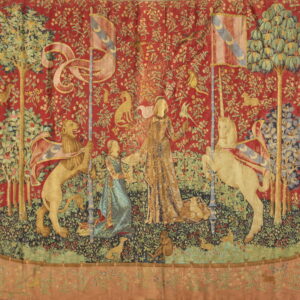
The masterpiece of this genre is the Lady and the Unicorn series (c. 1500). Comprising six panels, five represent the senses (sight, hearing, etc.), while the sixth, labeled À mon seul désir, remains a poetic mystery.
Woven from wool and silk, these panels exemplify the medieval focus on symbolism and decorative richness, standing in contrast to the perspective-driven realism that would follow.
Influential designers and cartoons
The transition to the Renaissance brought a profound shift in design. Renaissance tapestry cartoons began to mimic the depth, perspective, and anatomical realism of oil painting. This change was cemented in 1515 when Pope Leo X commissioned Raphael to design the Acts of the Apostles for the Sistine Chapel.
Raphael’s cartoons treated the tapestry as a woven window into a 3D world, challenging the weavers in Brussels to replicate subtle lighting and massive figures. This moment linked tapestry production directly to the most famous painters of the day, elevating the “cartoonist” from a workshop craftsman to a celebrity artist.
This shift defined what makes medieval tapestries different from later ones: medieval works embraced the flatness of the wall with crowded, decorative surfaces, while Renaissance works tried to dissolve the wall with illusionistic perspective.
Baroque to Rococo: Gobelins, Beauvais, Aubusson
Gobelins Manufactory origins
The Baroque era marked the centralization of tapestry production in France, driven by the ambitions of Louis XIV. In 1662, the king and his minister Jean-Baptiste Colbert acquired the Gobelins workshops in Paris, formally establishing the “Royal Manufactory of Crown Furniture” in 1663. This was not merely a workshop; it was a state-run instrument of royal propaganda.
Colbert appointed the painter Charles Le Brun as the first director and chief designer. Under Le Brun’s meticulous oversight, Gobelins tapestry production focused almost exclusively on glorifying the Sun King. These immense woven cycles depicted Louis XIV’s military victories, royal residences, and diplomatic triumphs.
The output was strictly reserved for the crown—to furnish royal palaces like Versailles or to serve as extravagant diplomatic gifts—cementing Gobelins as the ultimate symbol of French royal prestige.
Beauvais as market workshop
While Gobelins served the king, the Beauvais tapestry manufactory, founded in 1664, was established to conquer the commercial market. Although it enjoyed royal protection, it was a private enterprise designed to sell high-quality works to wealthy aristocrats and foreign bourgeoisie who could not acquire Gobelins pieces.
Beauvais thrived by adapting quickly to fashion. Unlike the rigid, heroic themes of the royal workshop, Beauvais produced lighter, more decorative series that fit comfortably into private homes.
This commercial agility allowed it to become a financial success, proving that a French tapestry manufactory could flourish by catering to private wealth rather than just royal decree.
Aubusson identity and motifs
Further from the capital, the town of Aubusson (and nearby Felletin) developed a distinct identity focused on volume and accessibility. An Aubusson tapestry was typically less expensive than its Parisian counterparts, woven with slightly coarser wool and fewer silk highlights.
To appeal to a broad market, Aubusson workshops specialized in “verdures”—tapestries dominated by lush green foliage, landscapes, and quiet woodland scenes. These pastoral motifs were timeless and versatile, fitting easily into any decor without requiring the viewer to understand complex mythological allegories.
This focus on nature and decorative florals remains the defining characteristic of the Aubusson brand to this day.
Rococo taste shifts
As the 18th century progressed, public taste shifted from the heavy, masculine Baroque style to the lighter, more playful Rococo. The rigid glorification of the monarchy gave way to scenes of romance, leisure, and idealized country life.
François Boucher became the defining artist of this era. His designs for Beauvais and later Gobelins transformed the medium, introducing soft pastels, floating cherubs, and amorous shepherds. This era of Rococo tapestry moved the focus from the “heroic” to the “agreeable,” turning wall hangings into elegant backdrops for intimate salons rather than imposing decorations for throne rooms.
This shift also influenced other centers, including the Royal Tapestry Factory in Madrid, where Francisco Goya would later design vibrant cartoons depicting daily Spanish life.
Dating cues by style
Understanding the evolution of style allows collectors to estimate the age of a tapestry.
- Deep Borders (16th–17th Century) — Why: Early tapestries often featured wide, elaborate borders filled with fruit, figures, and architectural elements, acting like a heavy frame around a painting.
- Central Medallions (Late 17th–18th Century) — Why: As furniture placement changed, designs began to center the action, sometimes imitating framed paintings hanging against a patterned background (alentours).
- Pastel Palettes (18th Century) — Why: The shift to Rococo favored pinks, blues, and soft greens, distinct from the deep reds, blues, and golds typical of earlier medieval and Baroque works.
- Picture-Frame Borders (Late 18th Century) — Why: By the Neoclassical period, borders shrank to resemble simple gilded wood frames, reflecting the desire for tapestries to mimic oil paintings exactly.
Beyond Europe: Persian & Other Tapestry-Weave Analogues
Safavid Persian tapestry-woven silks
While Europe was busy weaving wool cycles for cold castle walls, the Safavid dynasty in Persia (1501–1736) was producing some of the most luxurious textiles in human history, often employing a sophisticated Persian tapestry weave.
These masterworks were distinctly different from the wool hangings of the West; they were smaller, finer, and woven almost exclusively from silk and metal.
A Safavid silk tapestry often incorporated generous amounts of gold and silver thread, creating a shimmering surface that was more jewel-like than architectural. Many of these pieces featured designs similar to knotted pile carpets—central medallions, Floral arabesques, and hunting scenes—but were constructed using the flat, weft-faced tapestry technique.
These textiles blurred the line between function and art; while some may have been used on the floor in elite settings, their fragility and immense value often meant they were preserved as covers, hangings, or royal gifts.
Ottoman and kilim technique overlaps
In the neighboring Ottoman Empire, the tapestry technique found its most widespread expression not in pictorial wall art, but in the geometric world of the kilim. The crisp, bold patterns of Anatolian flatweaves are achieved using the kilim slit tapestry method.
In this technique, the weaver turns the colored weft back around the warp thread where a color change occurs, leaving a small vertical slit between the two colors. This “slit-tapestry” structure allows for the sharp, stepped diagonals characteristic of kilim design.
While Ottomans favored pile carpets and heavy brocades for courtly settings, the fundamental mechanics of their flatweaves are identical to the tapestry structures used in medieval Europe, proving the universality of the technique.
India / Japan analogues
The tapestry technique appears in other major textile traditions, often adapted to local aesthetics. In Japan, the tradition known as tsuzure-ori weaving (literally “binding weave”) is a highly refined form of tapestry used primarily for obi sashes and theatrical costumes.
Like European tapestry, tsuzure-ori is weft-faced and pictorial, but the focus is on extreme precision and density. Weavers use serrated fingernails to pack the weft threads down with incredible force, creating a fabric stiff enough to hold its shape.
In India, similar interlocking weave structures were used to create Kashmir Shawls and durries.
This again demonstrates how the same structural logic—hiding the warp with discontinuous wefts—can serve vastly different cultural functions.
How to describe these correctly in a rug shop context
When navigating the market for non-European textiles, precise language is crucial to avoid confusion between floor coverings and delicate art objects.
- Tapestry-Woven Carpet — Why: This phrase clarifies that the item has the design of a rug but the flat structure of a tapestry. It signals to the buyer that the piece lacks a pile and may be too delicate for heavy foot traffic.
- Flatweave / Kilim — Why: Use these terms for geometric, floor-ready pieces. Reserving “tapestry” for pictorial or luxury silk items helps maintain a clear hierarchy of value and utility.
- **Soumak vs. Tapestry** — Why: Soumak is a wrapping technique that creates a Braided texture, distinct from the smooth over-under weave of tapestry. Distinguishing these textures proves expert knowledge of construction.
19th Century Revival: William Morris & Arts and Crafts
Why tapestry revived
By the mid-19th century, the art of hand-weaving tapestries had largely fallen out of favor, viewed by many as a relic of the past eclipsed by the speed and precision of industrial machinery.
However, the Arts and Crafts movement, led by the visionary William Morris, sparked a powerful revival.
This resurgence was driven by a philosophy of anti-industrial craftsmanship. Morris and his peers rejected the soulless perfection of machine-made goods, believing that factory production degraded both the object and the worker.
Reviving the slow, deliberate process of high-warp weaving was a radical act of resistance, reasserting the dignity of the artisan and the value of human touch in an increasingly mechanized world.
William Morris learning tapestry
Morris did not merely commission designs; he immersed himself in the mechanics of the craft. In 1879, he famously set up a high-warp loom in his bedroom and taught himself to weave by studying a French technical manual from the 18th century.
This hands-on dedication was pivotal. A William Morris tapestry is not just a painting translated into wool; it is a design conceived by someone who understood the limitations and possibilities of the loom.
Morris mastered the technique of interlocking wefts and dyeing wool with natural indigo and madder, ensuring that his modern revival was rooted in authentic medieval practices.
Merton Abbey workshop and collaborations
To produce works on a monumental scale, Morris established a dedicated workshop at Merton Abbey in 1881. This studio became the engine of the Arts and Crafts tapestry movement, training a new generation of weavers—many of whom were young apprentices—in the ancient high-warp technique.
The artistic success of Merton Abbey relied on a collaborative model that echoed the Renaissance but with new values. While Morris designed the lush, intricate backgrounds and borders, his friend and partner Edward Burne-Jones created the figurative elements.
Burne-Jones tapestry cartoons, such as those for the famous Holy Grail series, provided the ethereal, romantic figures that became the hallmark of the style. This partnership ensured that every square inch of the tapestry, from the knight’s armor to the forest floor, was executed with equal artistic intent.
What Arts & Crafts tapestries look like
For collectors and enthusiasts, identifying Merton Abbey tapestries and their followers requires spotting specific aesthetic cues.
- Medieval Inspiration — Why: The figures often wear Arthurian armor or flowing robes, reflecting Morris’s obsession with medieval romance and legend.
- Dense Floral Backgrounds — Why: Unlike the open skies of Baroque works, these tapestries feature claustrophobic, highly detailed backgrounds of swirling acanthus leaves and flowers, a direct nod to the Gothic millefleurs tradition.
- Rich, Natural Colors — Why: Morris insisted on natural dyes, resulting in a palette of deep indigos, brick reds, and soft greens that age harmoniously, avoiding the harsh chemical brightness of synthetic aniline dyes.
Legacy for modern handweaving
William Morris did more than just produce beautiful objects; he re-established tapestry as a living craft rather than a museum curiosity. His work proved that ancient techniques could still speak to modern sensibilities.
The Arts and Crafts revival laid the groundwork for the 20th-century fiber art movement, teaching future weavers that the value of a textile lies not in its speed of production, but in the integrity of its materials and the humanity of its maker.
Modern & Contemporary Tapestry: Lurçat to Today
Jean Lurçat and modern tapestry principles
In the 20th century, Jean Lurçat tapestry designs revolutionized the medium by rejecting the 19th-century trend of merely copying oil paintings.
Lurçat argued that tapestry had lost its soul by trying to compete with the brush, using thousands of subtle dye shades to replicate gradients.
Instead, he established the principles of “design-for-weaving.” He advocated for a limited palette—often using fewer than 50 distinct colors—and bold, simplified forms that relied on the texture of the weave rather than optical illusion.
By returning to the “mural” quality of medieval works, Lurçat ensured that the design was legible and structurally sound, treating the weave as a distinct artistic language with its own rules and strengths.
Ateliers weaving modern artists
Lurçat’s revitalization paved the way for the great Modernist painters to embrace the medium. Famous French ateliers in Aubusson and Felletin began collaborating with giants like Pablo Picasso, Joan Miró, and Fernand Léger.
These works were not simple mechanical reproductions; they were artistic transpositions. The artist provided the design (often a small gouache or collage), and the master weaver translated it into a full-scale cartoon.
This era cemented contemporary tapestry art as a legitimate fine art category. It proved that the loom could capture the energy of Abstract Expressionism and Surrealism, translating fluid lines and bold blocks of color into the warmth and permanence of wool.
Artist-weaver movement
While the French tradition maintained a separation between the artist (designer) and the weaver (craftsman), a parallel “artist-weaver” movement emerged in the 1960s, popularized by the Lausanne Biennials.
This movement saw artists taking control of the loom themselves to create experimental, often three-dimensional works.
Figures like Magdalena Abakanowicz moved modern wall tapestry off the flat wall and into space. Her “Abakans” were sculptural, organic forms woven from heavy fibers like sisal and horsehair.
This shift expanded the definition of tapestry from a pictorial flatweave to a sculptural medium, emphasizing the raw physical presence of the material over narrative imagery.
Aubusson UNESCO recognition
The enduring significance of this craft was formally recognized when the Aubusson UNESCO tapestry tradition was inscribed on the Representative List of the Intangible Cultural Heritage of Humanity in 2009.
This designation highlighted that tapestry weaving is not a dead historical curiosity but a living, evolving skill.
This status helped spur new investment, leading to the opening of the Cité Internationale de la Tapisserie in 2016, a museum and training center dedicated to preservation and innovation.
Similarly, Gobelins today continues to operate as a state-run institution, commissioning contemporary artists to design works that reflect the current era, ensuring the timeline of royal and state patronage remains unbroken.
Modern interior design benefits
Beyond their collectability as fine art, modern tapestries offer functional benefits that solve specific problems in contemporary interior design.
- Acoustic Softening — Why: Modern architecture frequently uses hard surfaces like glass, steel, and concrete; hanging a heavy textile absorbs sound, reducing echo and making cavernous spaces feel intimate and quiet.
- Texture and Warmth — Why: In a sleek, minimalist room, the organic irregularity of a woven surface adds necessary tactile contrast, preventing the space from feeling sterile or “showroom-like.”
- Scale and Portability — Why: Tapestries provide a way to cover large expanses of wall with a single cohesive image, yet they remain easy to roll and transport, offering a “moveable mural” for renters or collectors.
Hanging & Display: How to Hang a Tapestry Without Damage
Hanging methods overview
When deciding how to hang a tapestry, the primary goal is to support the textile evenly to prevent warping or tearing. Different methods suit different types of weavings.
| Method | Best For | Risk |
|---|---|---|
| Rod Pocket / Sleeve | Heavy tapestries, antiques, and large flatweaves. A fabric sleeve is sewn to the back. | Minimal risk if the sleeve is hand-sewn carefully; allows for even weight distribution. |
| Velcro System | Lighter to medium-weight tapestries; allows for a flat, flush mount against the wall. | High security, but requires sewing a Velcro strip to the textile, which must be done expertly to avoid damage. |
| Clips or Clamps | Casual, lightweight decorative throws or inexpensive modern prints. | High risk of distortion; gravity pulls at specific points, creating “scalloping” and potential holes over time. |
| Framing | Small, fragile, or highly valuable fragments that need glass protection. | Expensive; poor air circulation can trap moisture if not mounted by a professional framer. |
Weight distribution principles
The golden rule of tapestry wall mounting is “no point loads.” A tapestry is a heavy, flexible grid of threads. If you hang it from a few nails or clips, gravity concentrates the entire weight of the piece onto those tiny points, inevitably causing the fibers to stretch and snap.
To prevent structural damage, the hanging mechanism must distribute the weight across the entire top width. A continuous rod inserted into a sleeve or a full-width Velcro strip ensures that every vertical warp thread carries its share of the load.
This prevents the unsightly sagging and permanent distortion that ruins the rectangular shape of the artwork.
Protect from UV, moisture, and dust
Once the piece is secure, environmental factors become the primary threat to longevity.
- Avoid Direct Sunlight — Why: UV rays are the biggest invisible threat; they will irreversibly fade natural dyes (especially yellows and reds) and make silk fibers brittle and prone to shattering.
- Stable Humidity — Why: Wool and silk are hygroscopic, meaning they absorb and release moisture. Drastic swings in humidity cause the fibers to expand and contract, stressing the weave and inviting mold growth in damp conditions.
- Distance from Heat Sources — Why: Never hang a tapestry directly above a working fireplace or radiator. Soot, smoke, and heat currents will deposit grime into the fibers and dry them out, accelerating decay.
Styling: scale, placement, layering
Successful tapestry hanging methods also consider the visual impact on the room.
- Scale and Proportion — Why: A tapestry should anchor the space. Ensure the piece is at least two-thirds the width of the furniture below it (like a sofa or buffet) to prevent it from looking like a postage stamp on a large wall.
- Breathing Room — Why: Leave at least a few inches of space between the ceiling and the rod. Crowding the top of the wall makes the ceiling feel lower and the room more cramped.
- Acoustic Placement — Why: Place tapestries on large, flat walls opposite windows or in hallways to maximize their sound-dampening qualities, softening the acoustics of the home.
When to consult a conservator
If you are dealing with a genuine antique, a particularly heavy wool piece, or a fragment showing signs of rot or wear, do not attempt to hang tapestry without nails using DIY adhesive strips or makeshift clips.
These methods often fail catastrophically, dropping the art.
For valuable historic textiles, consult a textile conservator. They can attach a supportive lining that takes the strain off the original fibers and install a custom mounting system that ensures the piece hangs safely for decades.
When in doubt, prioritize the safety of the weave over the convenience of the installation.
Care, Cleaning, and Storage: Preserve the Textile
Condition vs age: what impacts value most
When assessing textile art, buyers often ask: Does condition affect tapestry value more than age? In most cases, the answer is yes. A fragmentary, rotting tapestry from the 16th century is often worth significantly less than a pristine, vibrant example from the 19th century.
Value is driven by “readability” and structural integrity. If the warp threads are breaking, causing the image to distort or the piece to fall apart under its own weight, the tapestry loses its primary function as a display object.
While age provides historical context, condition dictates whether the piece can actually be enjoyed on a wall. Therefore, preserving the physical structure of the weave is the single most important investment an owner can make.
Cleaning do’s and don’ts
Attempting to clean antique tapestry works at home is the fastest way to destroy their value. Wool and silk fibers become brittle over centuries, and dyes can be unstable.
- Do: Vacuum gently with a screen — Why: Use a vacuum with variable suction set to low. Place a fiberglass or Nylon mesh screen over the nozzle to prevent the machine from sucking up loose threads while removing abrasive dust.
- Don’t: Use water or chemical cleaners — Why: Old dyes are often “fugitive,” meaning they will bleed immediately upon contact with water. Moisture can also shrink the wool, causing permanent rippling.
- Don’t: Shake or beat the tapestry — Why: Unlike a rug, a tapestry is not built to withstand violent motion. Shaking it can snap the weight-bearing warp threads, causing immediate structural failure.
Professional conservation cleaning
There is a massive difference between maintenance (dusting) and actual cleaning. Full wet cleaning is a complex chemical operation that should only be performed by a specialist in tapestry conservation.
Conservators use large, custom-built wash tables and purified water with specific surfactants to lift soil without mobilizing the dye. This process is reserved for tapestries that are stable enough to withstand it.
If a tapestry has significant staining or grime, do not attempt a DIY fix; the risk of irreversible dye migration or fabric disintegration is too high.
Storage best practices
If you need to take a piece down for renovation or rotation, knowing how to store tapestry properly is critical to prevent damage during dormancy.
- Roll, Don’t Fold — Why: Folding creates sharp creases that stress and eventually break the fibers. Always roll the tapestry around a large-diameter, acid-free tube, rolling in the direction of the warp (usually bottom to top).
- Use Acid-Free Materials — Why: Wrap the rolled tapestry in washed muslin or acid-free tissue paper. Standard plastic or cardboard can off-gas chemicals that yellow and rot natural fibers over time.
- Implement Pest Control — Why: Moth protection wool textile protocols are essential. Wool is a primary food source for clothes moths and carpet beetles. Ensure the piece is clean before storage and check it regularly for signs of infestation (webbing or casings).
Repairs, relining, and reversibility
Proper conservation often involves adding a new lining to the back of the tapestry. This lining serves two purposes: it acts as a dust barrier and, more importantly, it supports the weight of the hanging, taking the strain off the historic fibers.
Any repairs made to the face of the tapestry must adhere to the principle of “reversibility.” A conservator will use stitching techniques that can be undone in the future without damaging the original object.
Never use iron-on patches, adhesives, or glue to fix a hole, as these create permanent residues that harden and destroy the surrounding textile.
Identification & Dating: Spotting Quality, Age, and Authenticity
True tapestry weave signs
The first step to identify antique tapestry is confirming the technique. A true tapestry will always be weft-faced, meaning the horizontal colored threads completely obscure the vertical warp threads.
If you look closely at the surface, you should see the distinct “ribs” of the warp running horizontally underneath the image.
Another definitive sign is the presence of “slits” or join lines. In handwoven tapestries, color changes create physical gaps or visible stitching where the weaver joined adjacent areas.
If the image appears to be printed on top of a smooth cloth, or if the back looks identical to the front without the “messy” threads typical of hand-weaving (unless it is a double-sided technique like kesi or has a lining), it is likely a machine-made reproduction or a printed fabric, not a woven work of art.
Dating by style and weave
Once the technique is verified, determining the age requires analyzing the artistic style.
Tapestry design evolved in lockstep with painting trends, providing clear visual cues for how to date a tapestry.
| Era | Common Motifs | Typical Palette |
|---|---|---|
| Medieval (14th–15th c.) | Crowded scenes with no depth; millefleurs backgrounds; heraldry; religious cycles. | Deep blues, reds, and greens; limited range of strong, saturated natural dyes. |
| Renaissance (16th c.) | Perspective and depth introduced; monumental figures; wide borders with fruit/flowers. | Broader palette attempting realism; more subtle shading; frequent use of silk highlights. |
| Baroque (17th c.) | Dramatic action; heroic themes; heavy architectural borders; central focus. | Rich, dark tones; gold/silver threads in luxury pieces; high contrast (chiaroscuro). |
| Rococo (18th c.) | Pastoral scenes; romantic couples; central medallions; picture-frame borders. | Soft pastels (pinks, sky blues, pale greens); lighter, airier compositions. |
| 19th Century Revival | Medieval themes (knights/ladies); dense floral patterns (Morris style). | Return to saturated natural dyes; deliberate rejection of chemical brightness. |
Workshop cues and provenance
While style offers a rough date, tapestry authenticity marks provide concrete proof of origin. Many high-quality tapestries, particularly from Brussels and French manufactories, include a weaver’s mark or town mark woven into the selvage (the border edge).
However, many marks have been lost to time or removed during resizing. In the absence of a mark, provenance—the documented history of ownership—becomes the gold standard. A paper trail linking the piece to a known collection, estate, or historic sale can exponentially increase value by verifying its journey through history.
“Workshop name” alone is hearsay; without a woven mark or documentation, attributions are educated guesses.
Condition grading checklist
As previously noted, condition drives value significantly. Buyers should use a mental checklist to grade a potential purchase.
- Structural Integrity — Why: Check if the warp threads are brittle or breaking. A tapestry that cannot support its own weight is a restoration project, not a display piece.
- Color Fading — Why: Compare the front to the back (if possible). Significant fading of reds and yellows indicates heavy light exposure, reducing the visual impact and value.
- Previous Repairs — Why: Look for clumsy patches or non-matching thread repairs. Poor restoration lowers value, while professional, invisible conservation maintains it.
Value drivers beyond age
It is a mistake to assume older is always more expensive. Tapestry value factors are a complex equation where subject matter often trumps age. A “boring” religious fragment from 1600 might sell for less than a vibrant, complete pastoral scene from 1750.
Size also matters; extremely large palace-sized pieces can be difficult to sell because few modern homes can accommodate them, sometimes making medium-sized “gallery” pieces more desirable per square foot.
Finally, materials dictate the ceiling of value: a piece woven with silk and silver thread will always command a premium over an all-wool counterpart, assuming condition is equal.
Buying Guide: Antique vs Reproduction vs Contemporary
Antique vs reproduction decision framework
Deciding whether to buy antique tapestry works or opt for reproductions depends entirely on your goals: history, decor, or investment. The choice often comes down to budget and your tolerance for maintenance.
- **Antique (Pre-1900)** — Why: Choose this for investment potential and historical romance. You are buying a unique artifact that requires climate control and careful lighting, but offers the depth of character that only centuries of aging can produce.
- Handwoven Reproduction — Why: Choose this if you want the authentic texture and status of a woven textile without the fragility of a 400-year-old object. These are often made in traditional workshops (like Aubusson) using historic cartoons but new wool.
- Machine-Woven / Jacquard — Why: Choose this for pure decoration on a budget. These are durable, flat, and uniform. They lack the “ribbed” texture and value of true tapestry but mimic the visual style effectively for casual interiors.
- Contemporary Art Tapestry — Why: Choose this to support living artists and acquire a modern masterpiece. These are original creations, not copies of paintings, and are valued like fine art sculpture or painting.
What “museum-quality” should mean
The term museum quality tapestry is often overused in marketing, but in a serious buying context, it implies specific criteria. First, the construction must be authentic: purely handwoven with discontinuous wefts, never machine-made. Second, the condition must be stable; the piece should be structurally sound enough to hang without risking further deterioration.
Crucially, “museum quality” demands integrity. The piece should not be a patchwork of fragments stitched together to look like a whole scene. It should possess its original borders (or have documented restorations) and retain a significant percentage of its original color palette.
Finally, it requires provenance—a documented history that validates its origin and authenticity.
Price drivers and realistic expectations
When evaluating Gobelins tapestry price or the value of other major manufactories, buyers must manage expectations. There is no fixed “price per square foot.” Instead, value is driven by the hierarchy of desirability.
Subject matter is a primary driver: pastoral scenes, romantic encounters, and mythologies generally command higher prices than obscure religious fragments or heavy, dark biblical cycles. Size is also a factor, but not linearly; “gallery-sized” pieces (8–10 feet wide) often sell for more than massive “palace-sized” works because they fit into modern homes.
Finally, materials dictate the ceiling: the presence of silk or metallic threads immediately places the tapestry in a higher valuation tier than all-wool examples.
Authentic Aubusson/Gobelins cost factors
To understand the asking price of an Aubusson tapestry for sale, consult this breakdown of value drivers.
| Driver | Pushes price up | Pushes price down |
|---|---|---|
| Condition | Fresh colors; stable warp; professional conservation lining; invisible repairs. | Faded “washed out” look; dry rot; brittle silk; visible patches or glued repairs. |
| Provenance | Documented ownership by nobility or famous collections; original purchase receipts or bills of sale. | “Anonymous” sale history; lack of paperwork; gaps in ownership records. |
| Subject Matter | Secular themes; hunting, romance, verdures (greenery); distinct figures. | Dark, heavy religious scenes; violent or obscure historical events; fragmentary cuts. |
| Materials | High silk content (provides luster); gold/silver threads (royalty indicators). | Coarse wool only; synthetic dyes (in later reproductions); uneven weave tension. |
Where to find museum-quality tapestries for sale
Navigating the market requires knowing where legitimate inventory circulates.
- Specialized Antique Dealers — Why: Dealers belonging to trade associations (like CINOA) vet their inventory and offer guarantees of authenticity that general sellers cannot.
- Major Auction Houses — Why: Houses like Sotheby’s, Christie’s, or Bonhams have dedicated textile departments. Their catalogs provide condition reports and provenance research, though sales are final.
- Art and Design Fairs — Why: Events like TEFAF Maastricht bring together the world’s top textile experts, allowing you to compare high-end examples side-by-side.
Buyer checklist before purchase
Before finalizing a purchase, verify exactly what you are buying—specifically distinguishing tapestry reproduction vs antique and confirming condition.
- Check the Weave — Why: Look for the tell-tale horizontal ribs and tiny vertical slits of hand-weaving. If the surface is perfectly smooth or the back is a “negative” image without loose threads, it is likely machine-made.
- Inspect the Back (Lining) — Why: Ask to see under the lining if possible. The back should show the original, unfaded colors, giving you a benchmark for how much the front has faded.
- Verify Repairs — Why: Shine a UV light (blacklight) on the tapestry. Modern synthetic dyes used in repairs often fluoresce differently than antique natural dyes, revealing hidden restoration.
- Measure Exact Dimensions — Why: Tapestries can be irregular. Ensure the piece is not significantly warped or trapezoidal, which can indicate structural failure or bad hanging history.