
Introduction to Tibetan Rugs
Discover our collection of exclusive range of authentic hand-knotted Tibetan rugs that are available now.
What Are Tibetan Rugs?
Tibetan rugs are hand-knotted wool textiles, celebrated for their durability, spiritual depth, and artistry. They are not merely floor coverings but integral objects of daily and ceremonial life. Known internationally as both Tibetan rugs and Himalayan rugs, these carpets carry a legacy rooted in nomadic traditions and Buddhist culture.
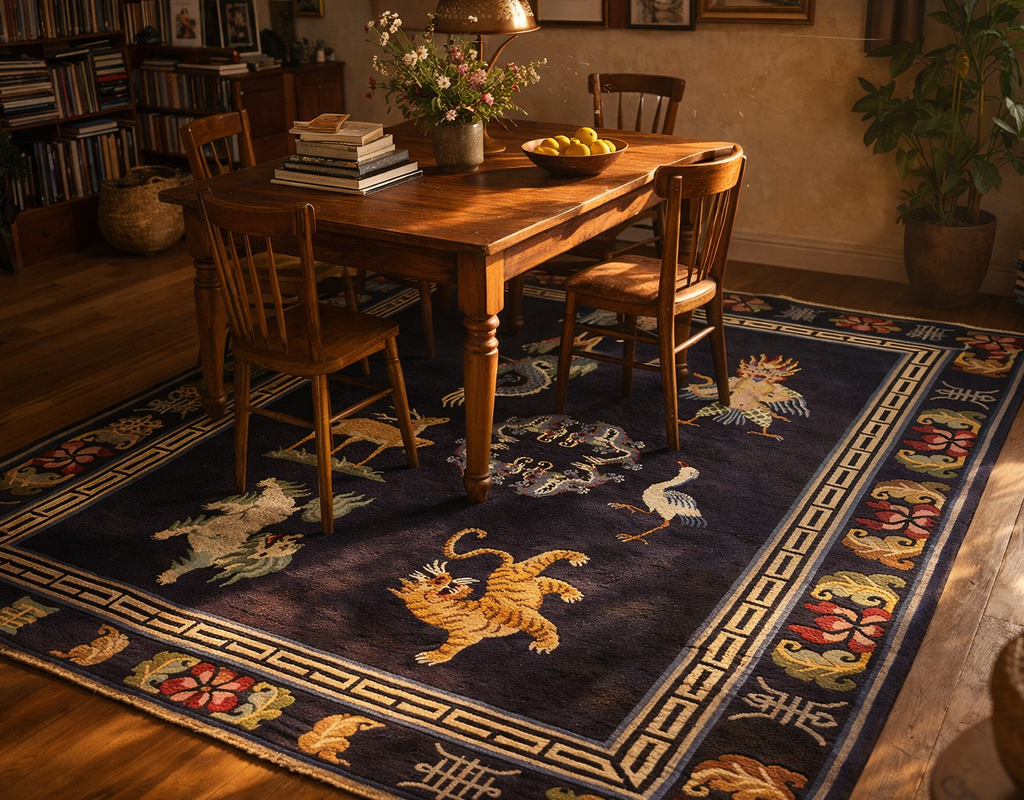
A richly patterned Asian-inspired rug anchors this inviting, warmly lit dining space.
The weaving process is distinct, employing a unique knotting method that sets Tibetan carpet tradition apart from Persian or Turkish weaving techniques. Rugs served multiple purposes in Tibetan homes and monasteries: as bedding, wall hangings, saddle covers, meditation mats, and prayer carpets. Their bold colors, symbolic motifs, and resilient wool made them indispensable in Tibet’s high-altitude environment.
Quick History & Cultural Snapshot
The Tibetan carpet tradition stretches back centuries, closely tied to patterns of nomadic life and the spread of Buddhism across the plateau. Early weavings were simple and functional, crafted by families using local sheep’s wool for warmth and insulation. Over time, Tibetan rugs evolved into expressions of identity and spirituality, incorporating auspicious symbols, dragons, tigers, and floral patterns that carried protective and meditative meanings.
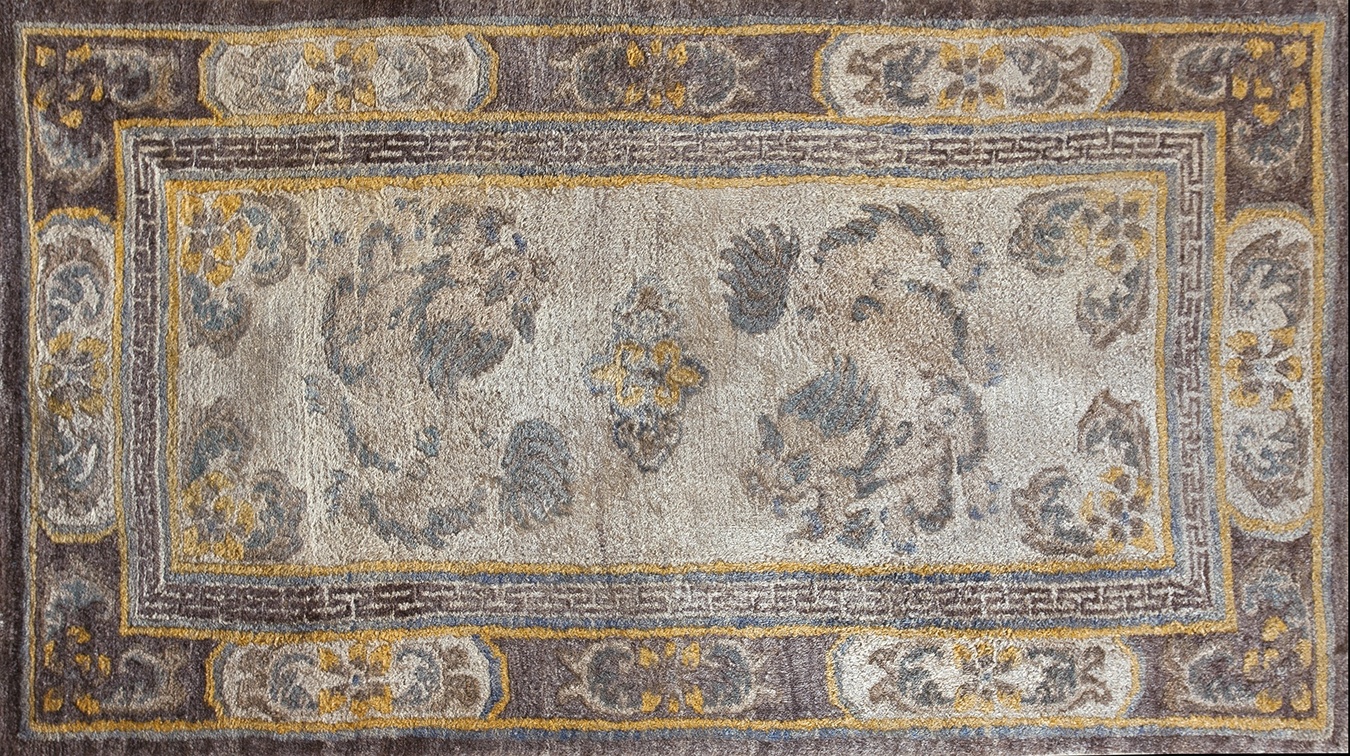
Antique Rug, Chinese – Tibetan Small Scatter Size Wool by Rugs On Net
Monasteries commissioned rugs for religious rituals, while households used them as heirlooms passed down through generations. The cultural importance of weaving extended beyond utility—it reinforced community ties, honored Tibetan culture, and served as a form of portable wealth in a land where trade routes were essential.
Geographic Origin: Tibet as the “Roof of the World”
Tibet is often described as the “Roof of the World,” a nickname earned from its extreme geography. Situated on the Tibetan Plateau, the region rises to an average altitude of more than 14,000 feet (4,300 meters), making it the highest plateau on Earth. This altitude and the surrounding Himalayan ranges shape not only the climate but also Tibetan life and creativity.
The harsh environment—marked by thin air, cold winds, and dramatic seasonal shifts—created a practical need for thick, insulating rugs. Wool from hardy highland sheep became the natural material of choice, producing fibers strong enough to endure the climate yet soft enough for daily use. In such conditions, rugs doubled as blankets, wall insulation, and portable furnishings for nomadic families.
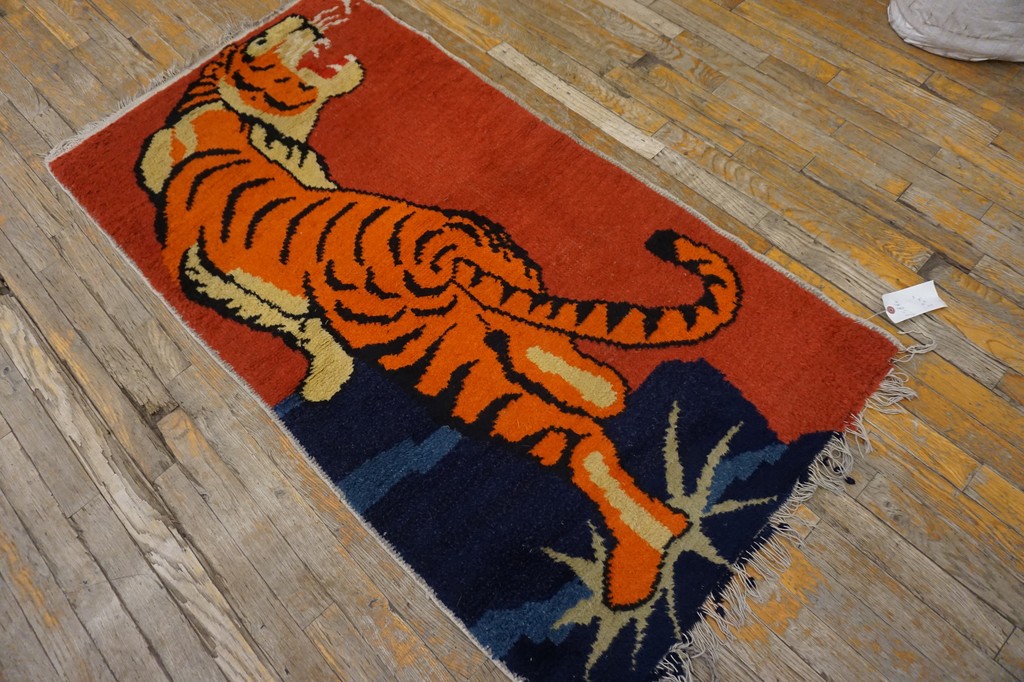
Vintage Chinese – Tibetan Coral 1960s Rug by Rugs On Net
Beyond practicality, Tibet’s geography influenced the spiritual dimension of rug making. The “Roof of the World” has long carried symbolic weight in global imagination, representing both remoteness and mystique. For Tibetans, high-altitude life reinforced a worldview grounded in resilience, harmony with nature, and devotion to Buddhism. These values found expression in rug motifs, from lotus flowers symbolizing purity to endless knots representing interconnectedness.
Tibet’s High Altitude and Daily Life
Living at such elevations profoundly shaped Tibetan culture and material traditions. Agriculture was limited to hardy crops like barley, so pastoralism and sheep herding were central to survival. Wool became one of Tibet’s most versatile resources, used for clothing, tents, and rugs. Daily life required textiles that could withstand both the physical environment and the spiritual needs of Tibetan society.
This reliance on wool weaving cultivated a distinctive rug tradition that balanced function with symbolism. A Tibetan carpet was never just a decorative object—it was a reflection of Tibetan culture, where artistry met necessity, and where spiritual motifs were woven into everyday life.
By combining practical insulation with sacred imagery, Tibetan rugs stand as living artifacts of the Roof of the World, embodying the endurance, faith, and creativity of a people shaped by their unique geography.
Tibetan Geography, Landmarks & Culture
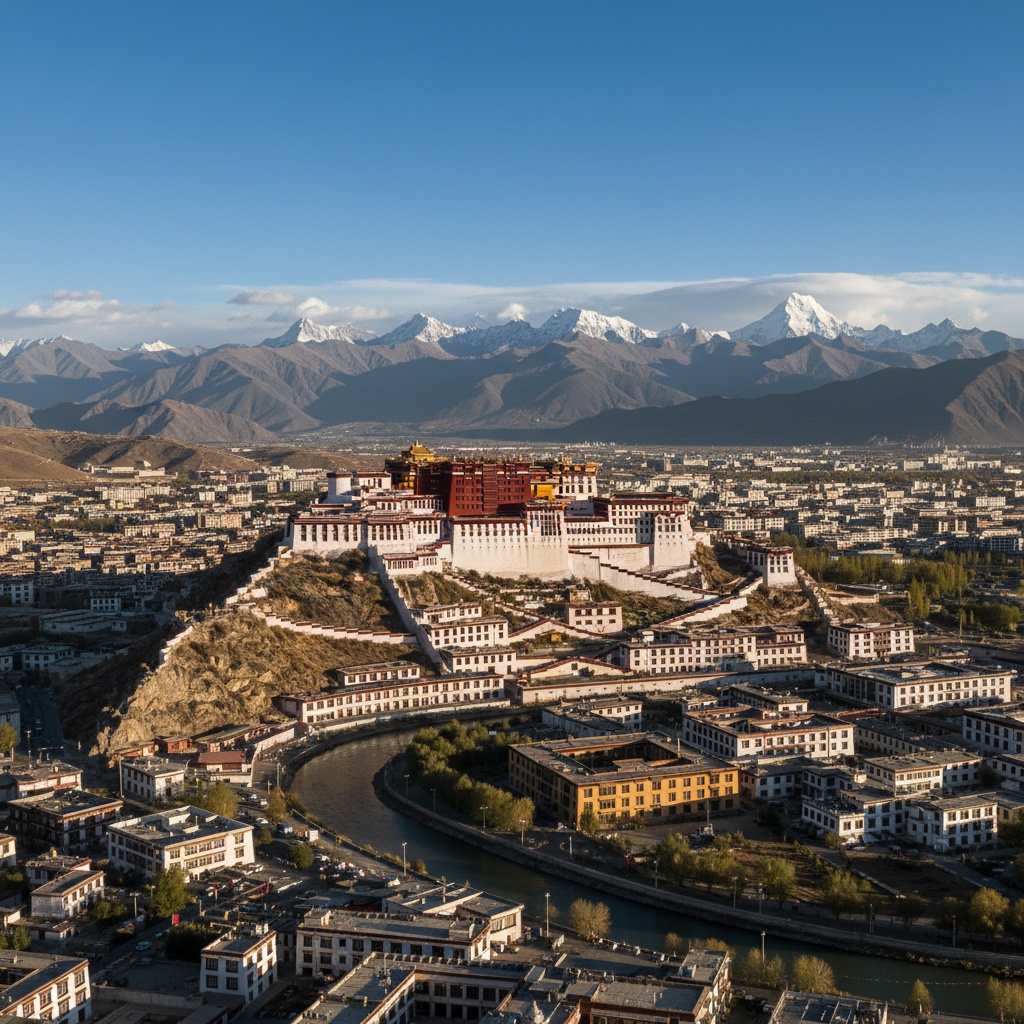
Iconic architecture set against vast Tibetan geography.
Location & Prefectures
Tibet occupies a vast area of Central Asia, resting on the Tibetan Plateau and encircled by the towering Himalayan mountain ranges. Its geography defines its culture, with isolated valleys and dramatic elevations fostering distinct regional identities. Administratively and culturally, Tibet is divided into three traditional prefectures:
- Ü-Tsang – Centered around Lhasa, this is the cultural and spiritual heart of Tibet. It houses the most sacred monasteries, including Jokhang Temple and Potala Palace, and represents the core of Lhasa culture and Tibetan Buddhism. Ü-Tsang rugs often carry strong spiritual symbolism, with motifs tied to monastic traditions.
- Amdo – Located in the northeast, Amdo is known for its pastoral lifestyle, scholarly contributions, and emphasis on monastic education. Its culture reflects openness to trade and exchange, and weaving traditions here favored practical, durable textiles suited for nomadic herders.
- Kham – Situated in the east, Kham is celebrated for its fiercely independent spirit, colorful festivals, and warrior heritage. Kham weavers incorporated bold colors and patterns that mirrored the dynamic energy of the region’s identity.
These three prefectures illustrate how geography and lifestyle shaped weaving practices, from functional nomadic rugs to symbolically rich temple carpets.
Potala Palace: Icon of Tibet
The Potala Palace, towering above Lhasa, is perhaps the most iconic architectural landmark of Tibet. Constructed in the 17th century under the Fifth Dalai Lama, it served as both the winter residence of the Dalai Lamas and the seat of Tibetan government. Rising more than 13 stories and containing over 1,000 rooms, the palace blends fortress-like strength with sacred grandeur.
Its white and red walls symbolize spiritual and temporal authority, while its interior holds golden stupas, shrines, and countless sacred texts. For Tibetans, the Potala Palace represents more than architecture—it is a spiritual beacon, embodying Tibet’s unique blend of religion and governance. Symbolic motifs from the palace frequently appear in Tibetan rugs, where architectural forms and Buddhist iconography intertwine as reminders of resilience and faith.
Jokhang Temple: Pilgrimage Center
The Jokhang Temple, located in Lhasa, is revered as the holiest site in Tibetan Buddhism. Founded in the 7th century by King Songtsen Gampo, the temple enshrines the Jowo Shakyamuni, a sacred statue of the Buddha that is believed to have been blessed in his lifetime. For centuries, Jokhang has been the destination of the Barkhor kora, a pilgrimage circuit that draws worshippers who travel hundreds of miles—often prostrating themselves along the way—to reach the temple.
Pilgrimage to Jokhang embodies devotion and spiritual merit in Tibetan Buddhism. The temple’s influence on Tibetan rug motifs is profound, as sacred symbols such as the endless knot, lotus, and wheel of dharma often appear in weavings inspired by the temple’s ritual life.
Influence of Altitude on Life & Weaving
Tibet’s position at an average elevation of more than 14,000 feet profoundly affects both survival and cultural expression. Thin air, long winters, and limited agriculture fostered a reliance on pastoralism, especially sheep herding, which in turn made wool the foundation of Tibetan material culture.
This climate dictated that Tibetan rugs and other textiles serve multiple purposes: they provided insulation against cold stone floors, warmth for bedding, and ritual coverings for monasteries. Weaving became a communal tradition, with each knot reflecting the adaptation of human ingenuity to high-altitude life. The necessity of thick, warm rugs shaped the Himalayan rug tradition, while spiritual beliefs ensured that even utilitarian objects carried deep symbolic meaning.
Together, Tibet’s geography, landmarks, and altitude form a cultural landscape where Potala Palace and Jokhang Temple anchor spiritual life, regional prefectures express diversity, and weaving traditions reflect both survival and sacred purpose.
History of Tibetan Rugs

Dye materials near rugs overlook monastery setting.
Origins & Early Evidence
The story of Tibetan rug history stretches back nearly a millennium, with the earliest mentions of pile carpets in Tibet recorded as early as the 12th century. These early weavings were modest in scale, made within households to serve practical needs such as bedding, seating, and insulation against the bitter cold of the plateau. At the same time, they carried a spiritual dimension, often woven with Buddhist symbols for use in temples and personal meditation. Tibet’s geographic isolation meant that rug weaving developed independently, creating a distinctive tradition that stood apart from Persian or Chinese carpet cultures.
Weaving Traditions: From Nomads to Monasteries
For centuries, Tibetan rug weaving remained largely a domestic craft, tied to nomadic and agrarian lifestyles. Women wove small, sturdy rugs using wool from local highland sheep, producing textiles suited for saddle covers, sleeping mats, and household furnishings. These utilitarian rugs gradually evolved into objects of spiritual and cultural prestige.
By the 17th century, as Tibetan Buddhism flourished, monasteries became influential centers of textile production. Monastic workshops commissioned rugs not only for practical use—covering cold stone floors or serving as meditation seats—but also as symbolic objects imbued with sacred imagery. Dragons, lotuses, tigers, and geometric borders carried protective and spiritual meanings, transforming rugs into visual texts of Buddhist philosophy. Over time, rugs became prized possessions, traded regionally and woven as tributes for elites.
Evolution Through the 20th Century: Decline & Diaspora Revival
The 20th century brought turbulence to Tibetan carpet tradition. With the Chinese invasion of Tibet in the 1950s–60s, monastic institutions were suppressed, and many weaving traditions faced decline. Household and workshop production diminished sharply as political upheaval disrupted cultural life.
Yet exile brought an unexpected revival. Thousands of Tibetans fled to neighboring Nepal and India, carrying their weaving knowledge with them. In refugee settlements around Kathmandu, Tibetans began weaving again, initially to sustain their communities. The 1960s and 1970s saw the rise of Nepalese Tibetan rugs, produced with local and imported wool but crafted using traditional Tibetan knotting methods. These diaspora weavings attracted Western buyers, fueling a global renaissance of Tibetan rugs. What began as survival in exile soon transformed into a flourishing export industry, ensuring the continuity of the tradition while introducing Tibetan aesthetics to the international stage.
Modern Centers of Rug Production
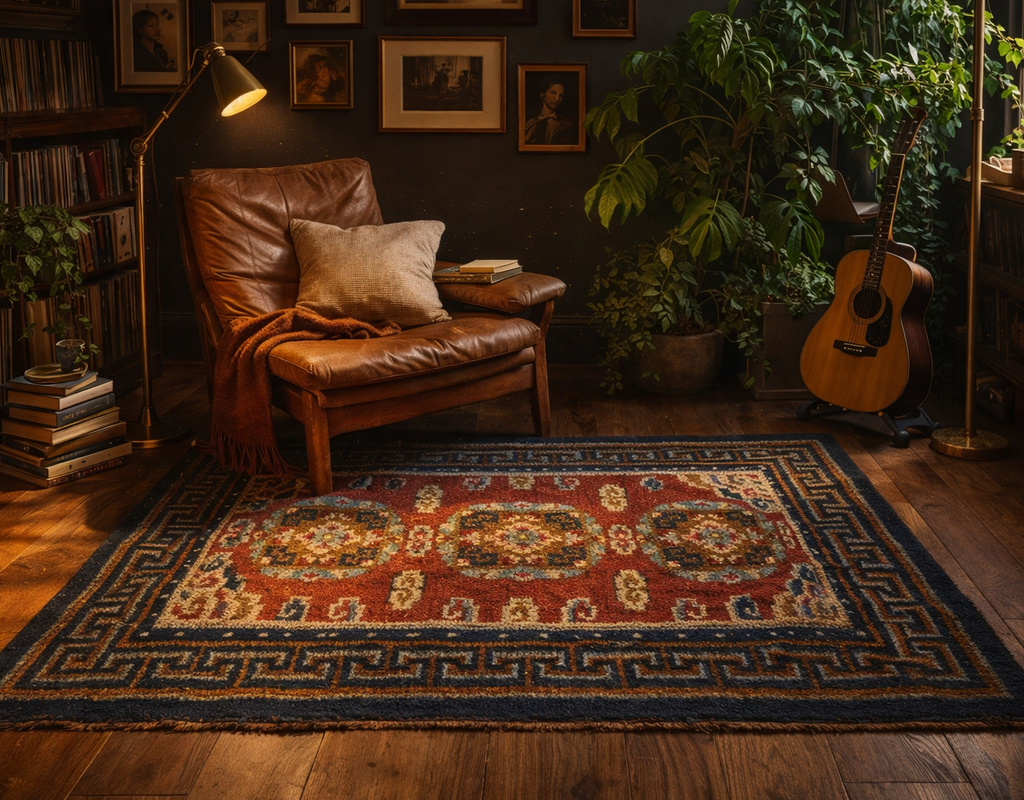
A traditional area rug grounds this moody and comfortable reading space filled with vintage charm.
Today, the story of Tibetan rugs is spread across both Tibet and the diaspora.
- Lhasa – Still regarded as the traditional heart of weaving, Lhasa rugs are closely tied to religious and cultural heritage, often preserving older motifs and patterns associated with monasteries.
- Shigatse – Known for its regional distinctiveness, Shigatse rugs often showcase bolder colors and variations that reflect local tastes. Shigatse has become a symbol of Tibetan regional diversity within rug making.
- Nepal – The largest center of contemporary Tibetan rug production, especially around Kathmandu. Here, refugee-founded workshops developed into international exporters, producing rugs at both artisanal and industrial scales. Nepalese Tibetan rugs are now among the most recognized worldwide, balancing tradition with modern design trends.
From their origins in the 12th century to their survival and expansion in exile, Tibetan rugs embody resilience. The diaspora rug revival in Nepal not only saved the tradition from decline but also ensured its recognition as a global art form. Today, weaving continues in both ancient centers like Lhasa and Shigatse and modern hubs in Nepal, each weaving carrying threads of history, adaptation, and cultural continuity.
Construction, Materials & Techniques
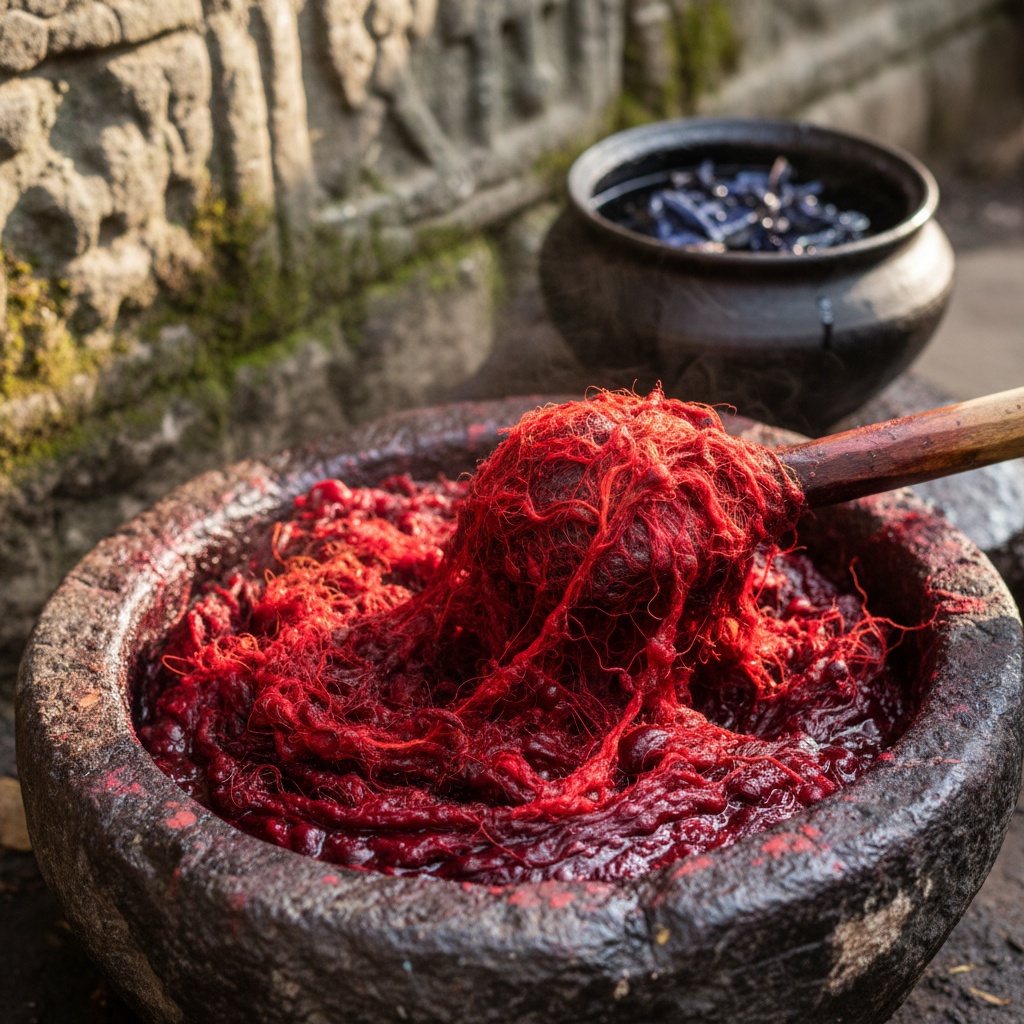
Natural dye preparation for wool coloring
Tibetan Wool: Source & Qualities
The foundation of authentic Tibetan rugs lies in their wool. Traditionally, weavers used the fleece of hardy Tibetan sheep, locally known as changpel. These high-altitude animals developed thick, resilient coats to withstand Tibet’s extreme climate, and their wool became prized for rug making. Changpel wool is notable for its high lanolin content, which gives the fibers natural sheen, water resistance, and a silky softness underfoot. Its long, durable fibers also hold dye exceptionally well, ensuring that Tibetan rugs remain both vibrant and long-lasting. This marriage of practicality and beauty made Tibetan wool central to weaving culture and continues to distinguish Himalayan rugs in the global market.
Tibetan Knotting Method
One of the most defining features of Tibetan rug weaving is the Tibetan knot. Unlike the Persian or Turkish knots, where yarn is tied individually around warps, the Tibetan method involves looping wool around a temporary rod placed across the loom. After weaving several rows, the weaver slices the loops along the rod, producing a dense, plush pile. This technique allows for a thicker, more luxurious texture, perfectly suited for Tibet’s cold climate. The Tibetan knot not only creates warmth and comfort but also gives the rugs a unique structural identity, setting them apart from other global weaving traditions.
Looms, Dyeing, and Finishing
Traditional Tibetan weavers worked on horizontal or vertical looms, depending on whether the rug was intended for domestic or monastic use. Once woven, the rug underwent careful finishing, including trimming and washing. A critical aspect of authenticity lies in the use of natural dyes. Extracted from plants and minerals—such as madder for red and indigo for blue—these dyes produce hues that are rich, nuanced, and enduring. Unlike synthetic alternatives, natural dyes age gracefully, developing a patina that enhances the rug’s beauty over time. For collectors, the presence of natural dyes is one of the clearest indicators of an authentic Tibetan rug, linking the piece to centuries of tradition.
Khaden vs. Floor Carpets
Within Tibetan households, rugs served specific roles. The Khaden rug—a small sleeping carpet, typically around 3 by 6 feet—was essential to daily life. Khaden rugs were versatile: used as bedding, seating mats, and even portable furnishings for nomadic families. Larger floor carpets, in contrast, were designed for communal and ceremonial spaces, such as monasteries or aristocratic homes. These often carried elaborate motifs and were woven to cover expansive stone floors, reflecting both utility and prestige. The distinction between Khaden and floor carpets illustrates the way Tibetan rug making adapted to both intimate family life and grand spiritual settings.
Tiger Rugs: Symbolism & Construction
Among the most iconic Tibetan designs is the tiger rug. Traditionally woven as meditation seats, tiger-patterned rugs symbolize power, protection, and spiritual transformation. In Buddhist culture, the tiger represents both physical strength and the triumph of the mind over fear. Sitting on a tiger rug during meditation was believed to ward off evil spirits and grant spiritual authority. The construction of these rugs emphasized bold stripes or lifelike tiger forms, woven using the Tibetan knot to produce a striking, textured surface. Today, tiger rugs are recognized worldwide as masterpieces of Tibetan artistry, embodying both cultural symbolism and technical brilliance.
By combining the distinctive properties of Tibetan wool, the unique Tibetan knot, and symbolic designs such as Khaden rugs and tiger rugs, Tibetan weavers created a textile tradition unlike any other. The use of natural dyes further elevates their authenticity, ensuring that each rug is both a cultural artifact and a work of enduring beauty.
Design, Motifs & Symbolism
Common Motifs & Iconography
Tibetan rugs are rich in symbolic imagery, with every design element layered with cultural and spiritual meaning. Common Tibetan rug motifs include:
- Lotus – Symbol of purity, enlightenment, and spiritual awakening. — Why: The lotus grows from mud yet blossoms pristine, reflecting the Buddhist ideal of transcending suffering.
- Dragon – Emblem of power, authority, and protection. — Why: A Tibetan dragon rug was believed to guard homes and monasteries from malevolent forces.
- Snow Lion – Tibet’s mythical national emblem, embodying courage, fearlessness, and spiritual strength. — Why: Its imagery reinforced resilience in the face of adversity.
- Phoenix – Associated with rebirth and renewal. — Why: It symbolized cycles of life and cosmic balance.
- Eight Auspicious Symbols – Conch shell, endless knot, lotus, parasol, pair of golden fish, wheel of law, vase, and banner of victory. — Why: These symbols together represent spiritual prosperity, harmony, and blessings in Buddhist rug symbols.
Such iconography transforms rugs into more than textiles—they become vessels of prayer, fortune, and identity.
Buddhist & Folk Symbolism
Tibetan rugs often merge Buddhist rug symbols with folk traditions. For example:
- Endless Knot – Represents interconnectedness of life and eternity. — Why: It reinforces the Buddhist teaching of karma and continuity.
- Wheel of Dharma – Symbol of the Buddha’s teachings. — Why: Weaving it into a rug allowed sacred teachings to permeate everyday surroundings.
- Floral and Geometric Borders – Beyond decoration, they created protective barriers against spiritual harm. — Why: Folk belief held that such borders safeguarded households.
- Animal Motifs (tigers, birds, deer) – Expressed both practical and spiritual associations. — Why: These reflected local environment while reinforcing Buddhist virtues such as compassion and strength.
In this way, Tibetan rugs bridge daily life and higher philosophy, embedding protective and inspirational qualities into household objects.
Tiger Rugs & Tantric Carpets
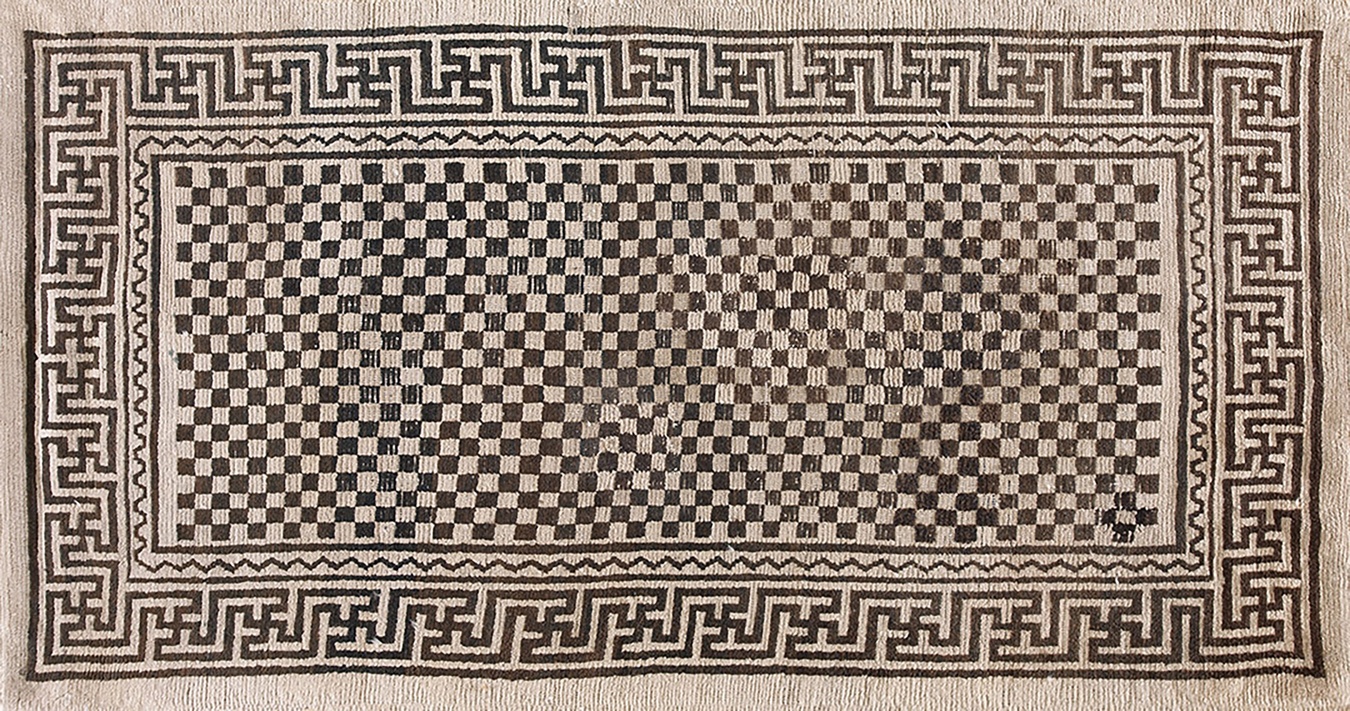
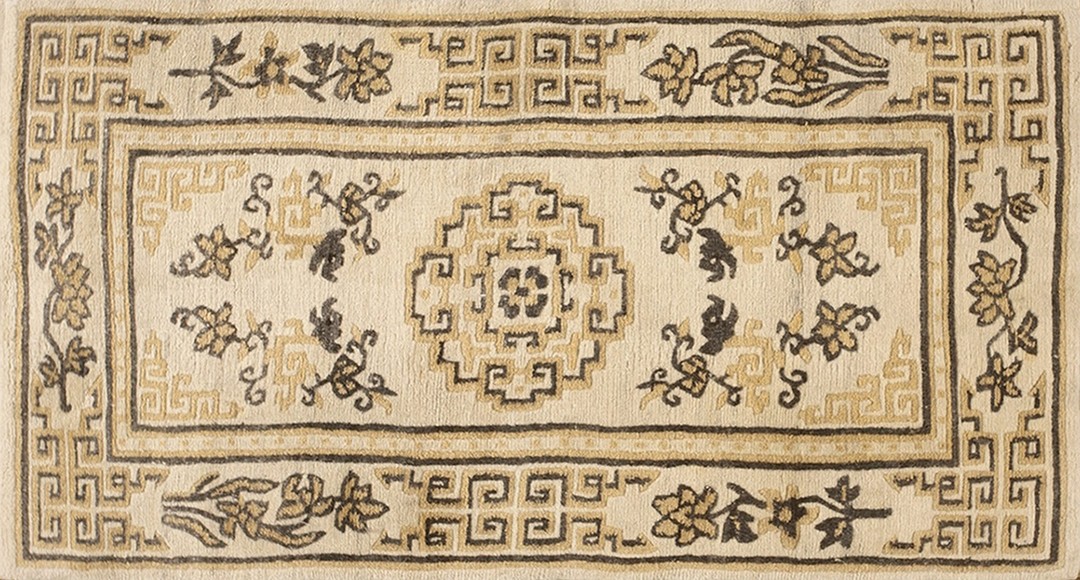
Antique Chinese – Tibetan Ivory 1930s Rug – by Rugs On Net
Among the most striking Tibetan textiles are tiger rugs. Traditionally woven as meditation seats, these rugs carry deep Tantric symbolism. Sitting on the image of a tiger was believed to provide spiritual protection, channeling the animal’s fierce energy to ward off evil spirits and inner fears. The tiger also symbolizes raw power, discipline, and the courage required for Buddhist practice.
More advanced Tantric carpets, including those with flayed skin or skeletal imagery, were used in esoteric meditation rituals. Such rugs were not meant for general household use but for monks engaged in practices designed to confront impermanence, death, and the illusions of the self. Their stark imagery served as a meditative tool, guiding practitioners toward deeper spiritual realization.
Regional Design Differences: Lhasa vs. Shigatse vs. Nepal
Regional styles further diversify Tibetan rug motifs:
- Lhasa rugs – Closely tied to traditional and monastic culture, these rugs preserve a folk-art quality with bold, direct symbolism and slightly rustic execution. They reflect Lhasa’s position as Tibet’s cultural and religious core.
- Shigatse rugs – Known for regional variety, they often incorporate brighter colors and stronger contrasts, reflecting local tastes. Shigatse weaving tends toward more decorative approaches while maintaining Buddhist themes.
- Nepalese Tibetan rugs – Revived by diaspora communities, these rugs expanded into larger formats and finer weaves for international markets. While rooted in tradition, they often blend contemporary motifs with classical symbols, appealing to modern global buyers.
From the Eight Auspicious Symbols rug to the tiger rug, Tibetan designs remain inseparable from their cultural roots. Yet regional and modern innovations ensure the tradition continues to evolve, balancing the preservation of sacred imagery with the creativity of new contexts.
Cultural, Spiritual & Social Roles
Rugs in Monastic, Nomadic, and Domestic Life
Tibetan rugs are deeply embedded in the rhythms of daily and spiritual life. In monasteries, rugs serve as monastic rugs for prayer halls, covering cold stone floors and defining sacred spaces for monks. Their motifs reinforce Buddhist teachings, turning each carpet into both a physical and symbolic foundation for spiritual practice. Among nomadic families, rugs provide warmth, insulation, and portability—vital in the harsh climate of the Tibetan Plateau. In domestic life, smaller pieces such as Khaden rugs double as sleeping mats, cushions, or seating, while larger carpets demarcate communal areas within the home. Across settings, rugs act as both practical furnishings and cultural identifiers.
Rugs in Ritual and Ceremony
The role of rugs intensifies in spiritual contexts. Many ceremonies require specific Tibetan rug rituals, such as using tiger mats for meditation, where the image of the tiger offers protection and strength against negative forces. Tantric carpets, often bearing more esoteric imagery, guide practitioners through advanced meditative exercises that confront impermanence and spiritual transformation. During religious festivals, rugs are displayed as offerings, altar coverings, or processional pieces, marking sacred boundaries and blessing the environment. In these ways, rugs transcend decoration to become instruments of devotion and ritual continuity.
Heirloom & Gift-Giving Traditions
Beyond daily and spiritual functions, rugs carry profound social meaning. Heirloom Tibetan rugs are prized possessions, often kept within families for generations as symbols of heritage and continuity. Passed down through lineages, these rugs embody family stories, shared identity, and ancestral blessings. They are also given as Tibetan carpet gifts, marking auspicious occasions such as weddings, religious milestones, or the establishment of a new home. To present a rug is to offer warmth, prosperity, and protection—a gesture of status, generosity, and deep respect.
Through their roles in monasteries, nomadic tents, households, and ceremonial life, Tibetan rugs reveal themselves as more than textiles. They are meditation mats, sacred vessels, heirlooms, and cultural anchors, embodying the resilience and spiritual devotion of Tibetan society.
The Modern Tibetan Rug Market
Nepalese Revival & International Export
The global prominence of Nepalese Tibetan rugs is one of the most important developments in modern carpet history. After the mid-20th century Tibetan diaspora, refugee weavers in Kathmandu revived the tradition, establishing workshops that blended traditional techniques with larger-scale production. These workshops attracted international buyers, and today Nepal is the leading exporter of Tibetan rugs worldwide. Nepalese weavers often combine time-honored motifs with contemporary palettes, creating pieces that appeal equally to collectors and interior designers. This diaspora revival not only safeguarded Tibetan rug weaving from decline but also introduced it to global markets.
Leading Rug Workshops in Lhasa Today
Inside Tibet, weaving remains vibrant in cultural centers such as Lhasa, where workshops continue to preserve heritage techniques. Leading Lhasa rug workshops focus on hand-spun wool, natural dyes, and traditional motifs, often catering to both local monasteries and international visitors seeking authentic pieces. Many of these workshops are concentrated near historic districts and monasteries, where demand for culturally resonant, high-quality rugs remains strong. Their presence anchors the tradition within Tibet itself, balancing export-driven industries abroad with local continuity.
Ethical Sourcing & GoodWeave Certification
Modern buyers increasingly seek ethical rug sourcing, ensuring that handmade rugs are free of child labor and produced under fair conditions. The GoodWeave Tibetan rug certification has become a benchmark, verifying that workshops meet strict ethical standards. This certification matters for both conscience and value: collectors gain assurance of authenticity and responsible production, while artisans receive fair wages and recognition. In a global market sensitive to transparency, GoodWeave labels strengthen trust between weaver and buyer.
Antique vs. Contemporary Tibetan Rugs
For collectors, both antique and modern pieces have distinct appeal:
- Antique Tibetan rugs – Valued for rarity, artistry, and spiritual resonance. — Why: Their patina, natural dyes, and provenance make them irreplaceable cultural artifacts.
- Contemporary Tibetan rugs – Favored for affordability, size variety, and design innovation. — Why: They suit modern interiors while maintaining links to tradition.
The choice depends on whether a collector seeks history and prestige or creative flexibility at accessible prices.
Fitting Tibetan Rugs in Modern Design
The bold motifs and graphic simplicity of Tibetan rugs allow them to fit seamlessly into minimalist Tibetan rug design schemes. Neutral geometric borders, tiger stripes, or symbolic motifs add a focal point without overwhelming clean interiors. Their balance of bold symbolism and uncluttered patterns makes them adaptable to modern aesthetics, ensuring their relevance in contemporary homes.
Climate Control & Preservation Tips
Preserving handmade Tibetan rugs requires mindful care. Climate control rug care is essential: wool fibers thrive in moderate temperatures and low humidity. Excess humidity risks mold and fiber breakdown, while dryness can make wool brittle. Proper ventilation, rotation, and avoidance of direct sunlight extend a rug’s life. Using protective pads also minimizes wear on floors.
Restoration of Vintage Tibetan Carpets
Restoration specialists employ meticulous techniques to preserve antique Tibetan rugs. Common repairs include re-weaving worn sections, patching holes, and treating edges. Moth damage repair is especially vital, requiring cleaning, stabilization, and re-knotting to restore integrity. Professional restoration ensures not only functionality but also conservation of cultural heritage.
Auction Market & Value Factors
The auction world has embraced Tibetan rugs as collectible art. Tiger rug auctions often attract high bids, with well-documented examples commanding premium prices due to their ritual significance and rarity. Value depends on several factors:
- Provenance – Documentation of origin and ownership is crucial. — Why: Solid provenance authenticates heritage and reassures buyers of legitimacy.
- Condition – Rugs with minimal repair or restoration hold higher value.
- Age & Materials – Natural dyes, hand-spun wool, and older weaving methods elevate prestige.
In high-value sales, Tibetan rug provenance is often the deciding factor, transforming a carpet from a decorative object into an investment-grade artifact.
The modern Tibetan rug market is thus shaped by both heritage and innovation: from Nepalese Tibetan rugs fueling global exports to antique pieces commanding respect in auctions, and from ethical sourcing certifications to climate-conscious care. Each rug bridges past and present, ensuring Tibetan weaving continues as both a cultural tradition and a modern design treasure.
How to Buy, Display & Care for Tibetan Rugs
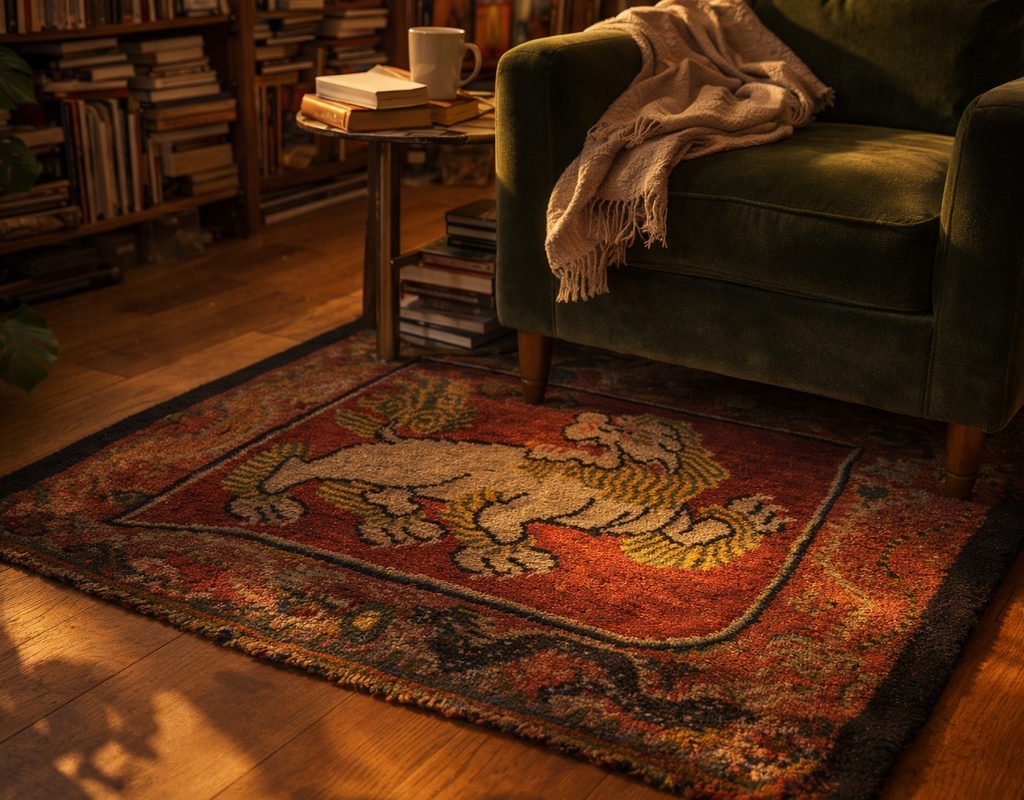
Warm, moody lighting illuminates a richly colored accent rug anchoring a comfortable reading corner beside built-in bookshelves.
What to Look For When Buying
For those wondering how to buy a Tibetan rug, the key lies in careful evaluation of authenticity and ethics. Start with provenance—a documented history of origin and ownership adds value and ensures legitimacy. Examine the materials: genuine pieces use Tibetan wool, renowned for its sheen, durability, and lanolin-rich softness. Look closely at the knotting; authentic Tibetan carpets are woven with the distinctive Tibetan knot, which produces a dense, plush pile.
Another essential factor is dye quality. The presence of natural dyes—such as madder reds and indigo blues—signals a rug’s traditional heritage. Synthetic dyes, while common in modern rugs, lack the depth and aging grace of plant-based hues. Ethical sourcing also plays a central role. Buyers should prioritize a GoodWeave certified rug, which guarantees fair labor practices and supports the communities that keep the tradition alive. In combining material, craftsmanship, dye authenticity, and ethical transparency, collectors safeguard both their investment and the continuation of Tibetan weaving culture.
Display, Use & Maintenance in Today’s Homes
Proper display and Tibetan rug maintenance are essential to preserve both beauty and longevity. Rugs should be placed away from direct sunlight, as UV exposure fades natural dyes over time. A quality rug pad not only protects the floor but also reduces stress on the carpet’s foundation. Regular rotation distributes foot traffic evenly, preventing uneven wear. Gentle vacuuming without a beater bar helps keep fibers free of dust and grit, while spot cleaning should be done with great care to avoid dye bleeding.
In modern homes, Tibetan rugs adapt effortlessly to varied uses. Whether showcased as a centerpiece in a minimalist living room or hung as a wall display, they serve as both functional art and cultural statement. Their graphic motifs and deep symbolism ensure they remain timeless in contemporary interiors.
Restoration, Repair & Long-Term Value
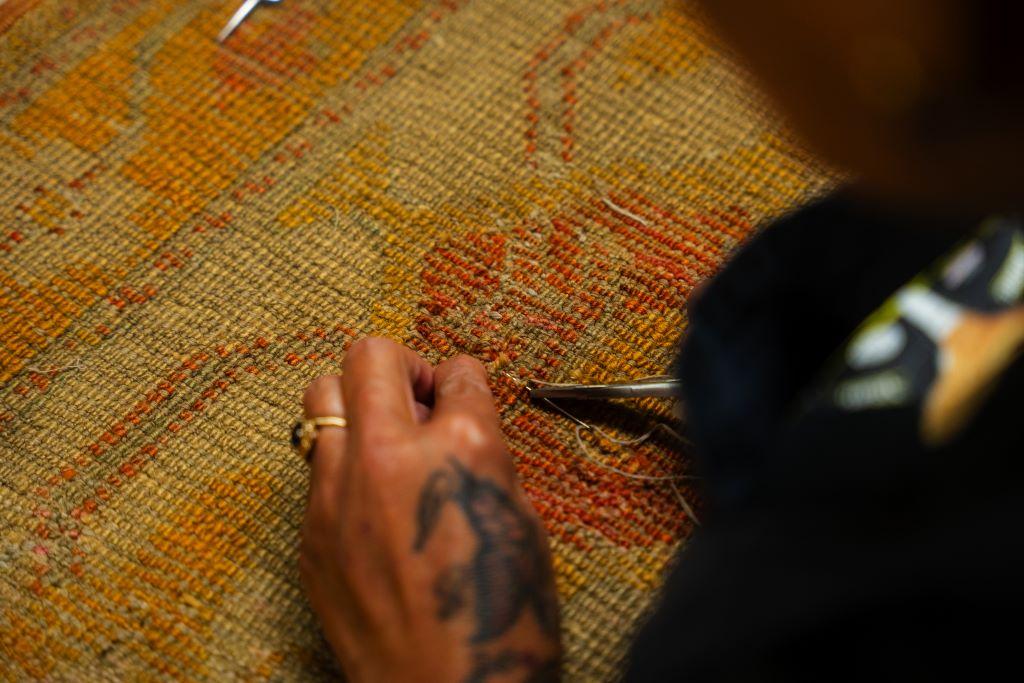
Detail of hands mending a rustic, richly colored woven rug.
Even the most authentic Tibetan carpet will eventually show signs of wear, but professional rug restoration can extend its life for generations. Skilled restorers use techniques like knot reweaving, wool patching, and edge binding to repair damage. One of the most common issues is moth damage, which is addressed by cleaning, stabilizing weakened fibers, and re-knotting affected areas. Unlike superficial fixes, these methods preserve both the structural integrity and artistic detail of the rug.
Such maintenance not only ensures continued use but also protects long-term value. Collectors view well-preserved rugs as investment pieces, with restoration playing a crucial role in safeguarding historical and monetary worth. In this way, care is not merely about upkeep but about honoring the cultural and spiritual legacy embedded in every knot.
By knowing what to look for when buying, committing to responsible display and Tibetan rug maintenance, and investing in professional rug restoration when needed, owners ensure that their rugs remain both treasured artworks and lasting cultural heirlooms. Ethical choices—such as supporting GoodWeave certified rugs—further strengthen the link between buyer and weaver, sustaining a tradition that has endured for centuries.
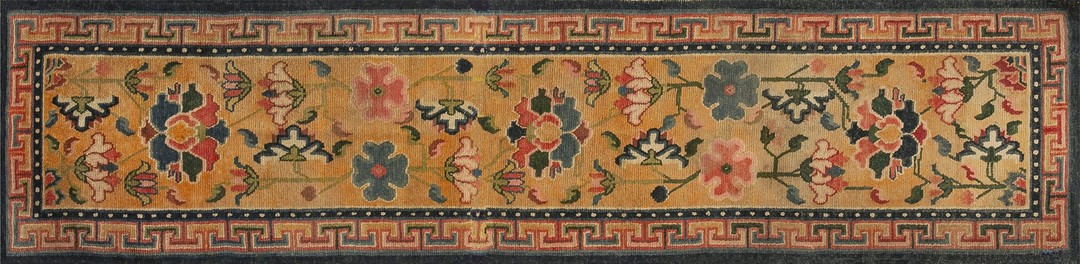
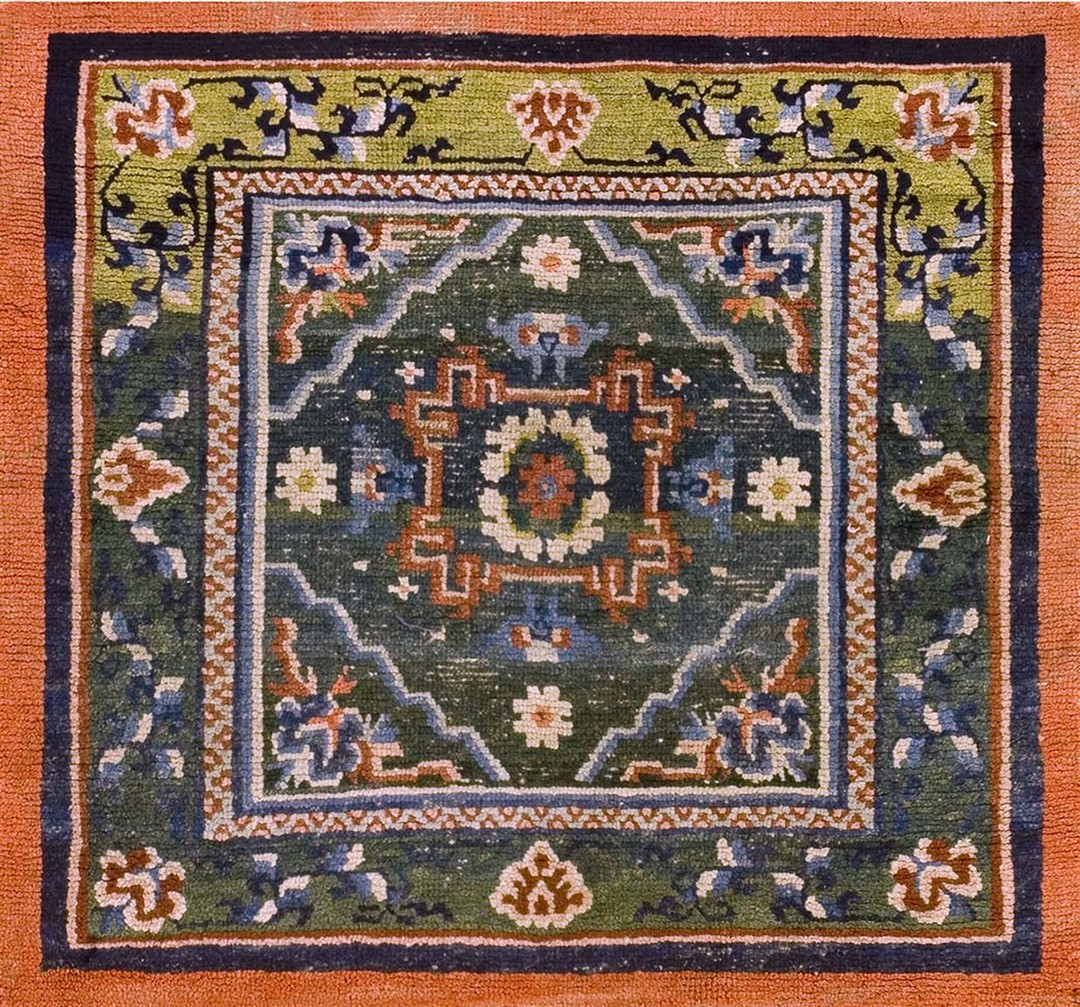
Explore a Few of Our Favorite Tibetan Rugs
FAQ
- How should I store Tibetan rugs to prevent moth damage?
Clean first, treat for moths, then wrap in breathable material and keep cool and dry; avoid long-term plastic and inspect periodically.
- Where are Tibetan rugs made today?
Beyond Tibet, most are woven in Nepal and parts of India by Tibetan-led workshops revived since the 1960s refugee resettlements.
- Can I customize Tibetan rugs for size or color?
Yes—many makers offer made-to-order sizes, shapes, and palettes; expect typical lead times around 3–6 months for custom weaving.
- Do new Tibetan rugs smell?
Hand-knotted Tibetan wool may have a mild “wool” scent that dissipates with ventilation; strong rubber odors signal a hand-tufted rug’s latex backing.
- Are Tibetan rugs good for allergy-sensitive homes?
Wool rugs can trap dust and absorb VOCs, improving air quality when vacuumed regularly with a HEPA filter; most people aren’t allergic to wool fiber itself.
- Can robot vacuums clean Tibetan rugs safely?
Usually yes on low- to medium-pile Tibetan rugs; tuck fringes, secure a non-slip pad, and use “no-go” zones if the robot tangles.
- Are Tibetan rugs ethical and child-labor-free?
Look for GoodWeave certification, which audits looms in Nepal and India and verifies no child or forced labor; certification also funds education programs.
- What rug pad works best under Tibetan rugs?
Felt + natural rubber pads add cushion and grip; size the pad about 1–2 inches smaller than the rug on all sides.
- What are Wangden Tibetan rugs?
Wangden rugs are thicker, shag-fringed monastery seat rugs with lower knot counts and a distinct warp-faced back—great as cozy accent pieces.
- What is a khaden in Tibetan rugs?
A khaden is a traditional Tibetan sleeping rug around 3×5 feet; today, larger room-size Tibetan rugs adapt the same craft.
- What designs are common in Tibetan rugs?
Traditional motifs include tiger pelts, dragons, clouds, and medallions; modern Tibetan rugs also feature abstract textures and subtle solids.
- Do Tibetan rugs fade in sunlight?
All rugs can fade with UV; use window film or shades, rotate every few months, and avoid prolonged direct sun to protect colors.
- How can I tell if a Tibetan rug is hand-knotted, not hand-tufted?
Flip it—hand-knotted Tibetan rugs show the pattern on the back with no canvas backing; tufted rugs have a cloth-covered latex back and often off-gas.
- What’s the difference between Tibetan rugs and Nepalese rugs?
Many “Tibetan rugs” are woven in Nepal using Tibetan knots and designs; the terms often overlap, referring to Tibetan-style weaving made by the diaspora.
- How much do Tibetan rugs cost?
Hand-knotted Tibetan rugs typically range from about \$20–\$100+ per sq ft; designer pieces or silk blends can run \$7,000–\$11,000 for a 6×9.
- What does “60-, 80-, or 100-knot” mean on Tibetan rugs?
It refers to weave fineness; higher counts capture finer detail but often have thinner pile. Common grades equate roughly to \~30–70 kpsi depending on workshop.
- Can Tibetan rugs be used over radiant floor heating?
Yes—natural wool breathes and conducts heat; choose lower-pile Tibetan rugs and avoid extra-thick pads to keep systems efficient.
- Are Tibetan rugs pet- and kid-friendly?
Generally yes—lanolin helps repel soiling; however, pet urine can damage dyes and cause odor, so treat promptly and consider professional wash for accidents.
- How often should Tibetan rugs be professionally cleaned?
Every 1–3 years depending on use; rotate every 3–6 months and vacuum regularly for longevity.
- How should I clean a spill on a Tibetan wool rug?
Blot immediately with plain, cool water and a white cloth; avoid alkaline cleaners and scrubbing, then consult a wool-safe professional if staining persists.
- Do Tibetan rugs shed?
Minimal shedding is normal early on; vacuum gently weekly and use a quality rug pad to reduce loose fibers over the first few months.
- Are Tibetan rugs durable for high-traffic rooms?
Yes—dense hand-knotted Tibetan wool handles traffic well; pick lower pile (around 0.25–0.5″) and patterned designs to hide wear.
- What is special about Tibetan wool in Tibetan rugs?
Highland sheep wool is rich in lanolin, giving Tibetan rugs softness, natural sheen, and better stain resistance; long staple fibers improve durability.
- How is the Tibetan knot used in Tibetan rugs different from Persian or Turkish knots?
Yarn loops around warps and a metal rod, then cut to form plush pile; this technique creates subtle horizontal lines and allows sculpted carving.
- What are Tibetan rugs and what makes them unique?
Hand-knotted using the Tibetan knot and high-lanolin wool; known for soft feel, resilience, and carved textures. Many modern Tibetan rugs are woven in Nepal and India.