
Sweden’s Rug Weaving Heritage: An Overview
Explore our curated selection of authentic Swedish rugs to bring Nordic elegance into your home.
Historic Roots and Cultural Context Of The Rugs of Sweden
The heritage of the iconic rugs of Sweden reflects a unique blend of folk-art traditions and practical necessity, setting it apart within Scandinavian rug traditions. In rural Sweden, weaving was an essential household craft, producing textiles that served both functional and decorative purposes. Farmers’ wives and village artisans developed a repertoire of flatwoven rugs and rag rugs that balanced warmth, durability, and artistry.
Unlike Denmark’s strong orientation toward modernist design or Norway’s emphasis on tapestry-like wall hangings, Sweden cultivated a dual tradition: rustic household textiles alongside refined woven works commissioned for the royal courts. By the 16th century, Flemish weavers introduced advanced tapestry-making techniques to Sweden’s royal workshops.
These influences merged with native folk motifs—geometric diamonds, stylized florals, and bold stripes—to create a distinctly Swedish weaving legacy. This hybridization allowed Sweden to develop a vocabulary of rug styles that were simultaneously functional and highly decorative, embodying the rhythm of rural life while signaling courtly luxury.
Why Do The Rugs of Sweden Stand Out
The rugs of Sweden stand out from other Scandinavian carpets through their crisp geometric and folk motifs, harmonious color palettes, and remarkable technical diversity. Unlike the often minimalist or abstract styles of Denmark and Norway, Swedish weaving traditions emphasized warmth, texture, and narrative patterning.
Flatweaves, rya rugs with shaggy pile, and flossa pieces with dense, knotted surfaces all emerged as iconic forms. Many were signed by celebrated designers, highlighting the recognition of rugs as serious works of art rather than anonymous household crafts.
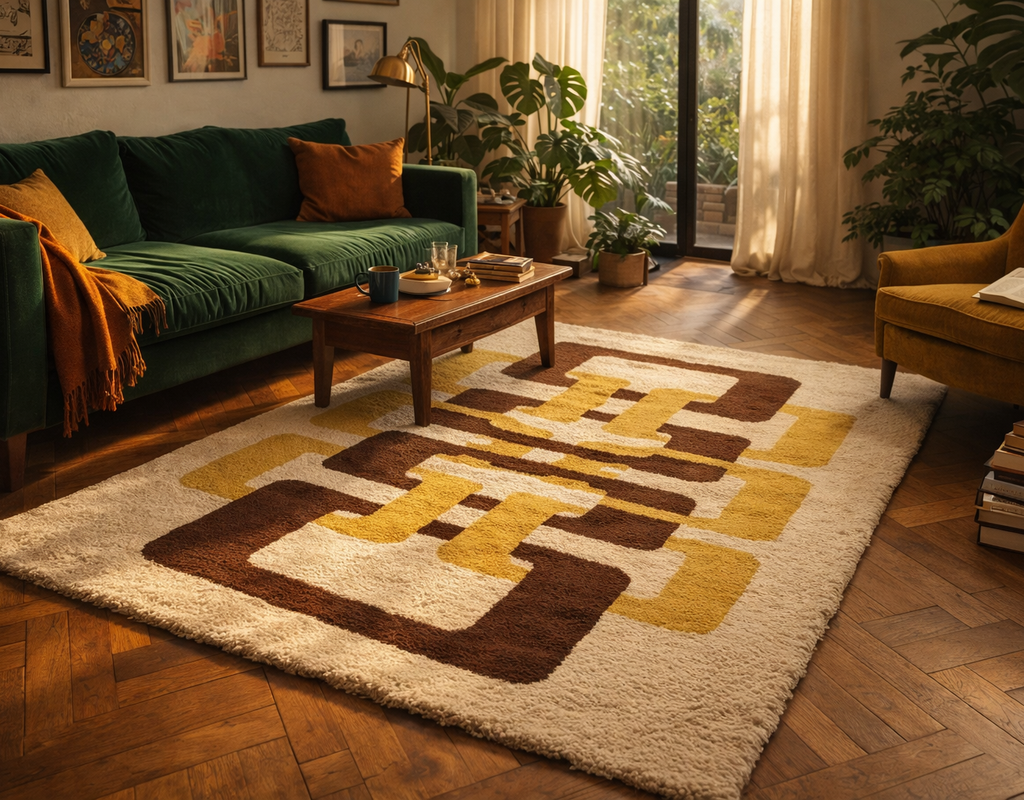
A cozy interior blending mid-century warmth with vibrant retro textile design.
Where Norwegian textiles leaned toward vertical tapestry display and Denmark focused on modernist understatement, the rugs of Swedens fused rustic utility with sophisticated decorative appeal. This balance—functional yet artful, simple yet elegant—is what makes Swedish vs. Danish/Norwegian carpets so distinct and enduring.
Sweden’s Place in Global Rug Design
Sweden’s weaving legacy achieved international acclaim, elevating its rugs beyond domestic use to the status of collectible art. Swedish carpets are displayed in major museums worldwide, including the Louvre in Paris, the Victoria and Albert Museum in London, and the Metropolitan Museum of Art in New York. Their presence in such institutions affirms that these rugs are not only part of Scandinavian rug traditions but also globally recognized as masterworks of textile art.
The rugs of Sweden became especially influential in the 20th century, admired for their ability to balance tradition with modern aesthetics. Their harmonious color palettes and distinctive textures appealed to international audiences, influencing mid-century interior design trends in Europe and the United States. This museum Swedish carpets presence cements their place as both cultural artifacts and timeless design objects, underscoring Sweden’s unique contribution to global rug artistry.
Key Swedish Rug Types & Techniques
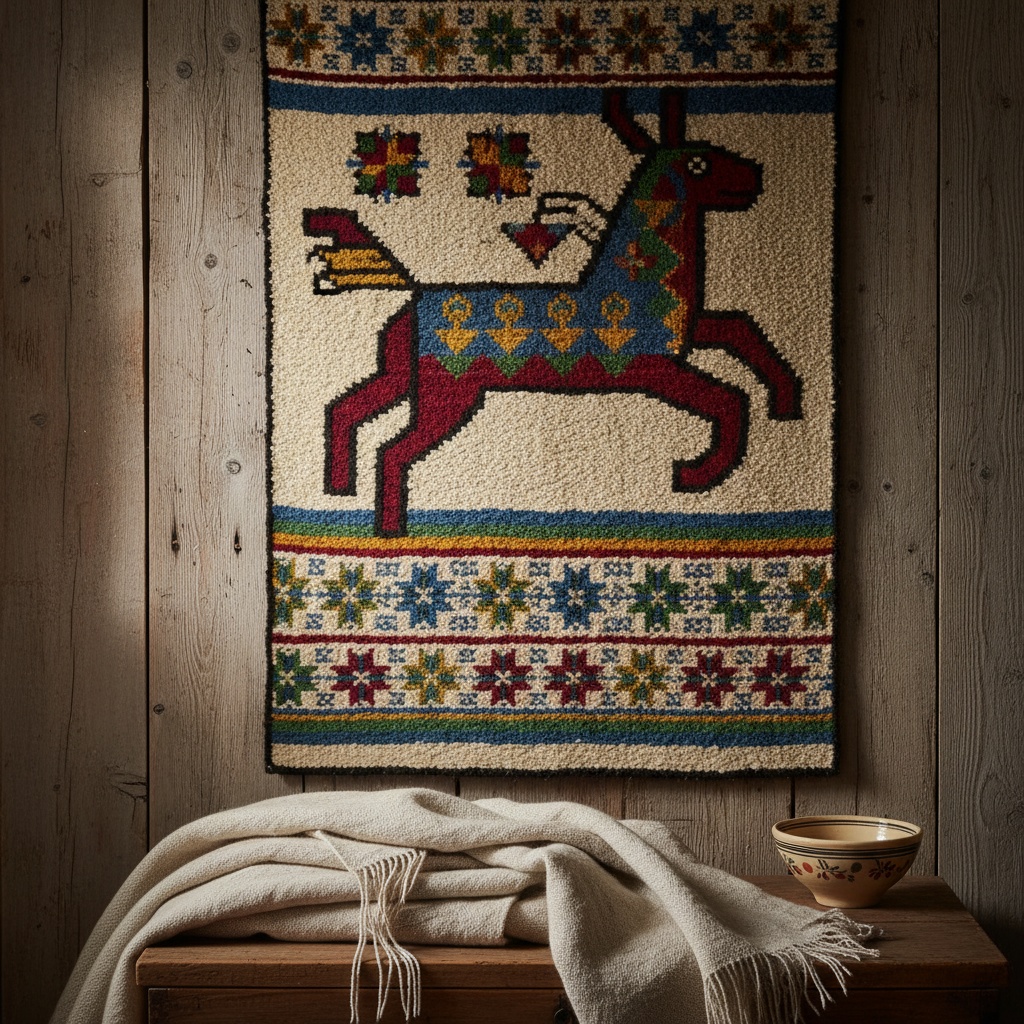
Textile art featuring a stylized horse motif.
Röllakan (Flatweave) Rugs: Motifs & Significance
Among Swedish flatweave rugs, the Röllakan stands as the most iconic. These are reversible, tapestry-woven textiles characterized by bold, graphic patterns. Their motifs often depict geometric fauna and stylized animals—horses, birds, and deer—drawing directly from Sweden’s natural environment and folk traditions. This use of animal motif rugs of Sweden reflects both symbolic meaning and an aesthetic link to rural life, where creatures of the farm and forest were central to survival and storytelling.
Regional styles give Röllakan rugs their unique identity. In Dalarna, motifs lean toward vibrant colors and bold geometric patterns, emphasizing clarity and contrast in design. By contrast, Hälsingland rugs reveal subtler influences, with patterns shaped by the region’s linen heritage—lighter palettes, finer details, and more subdued geometries.

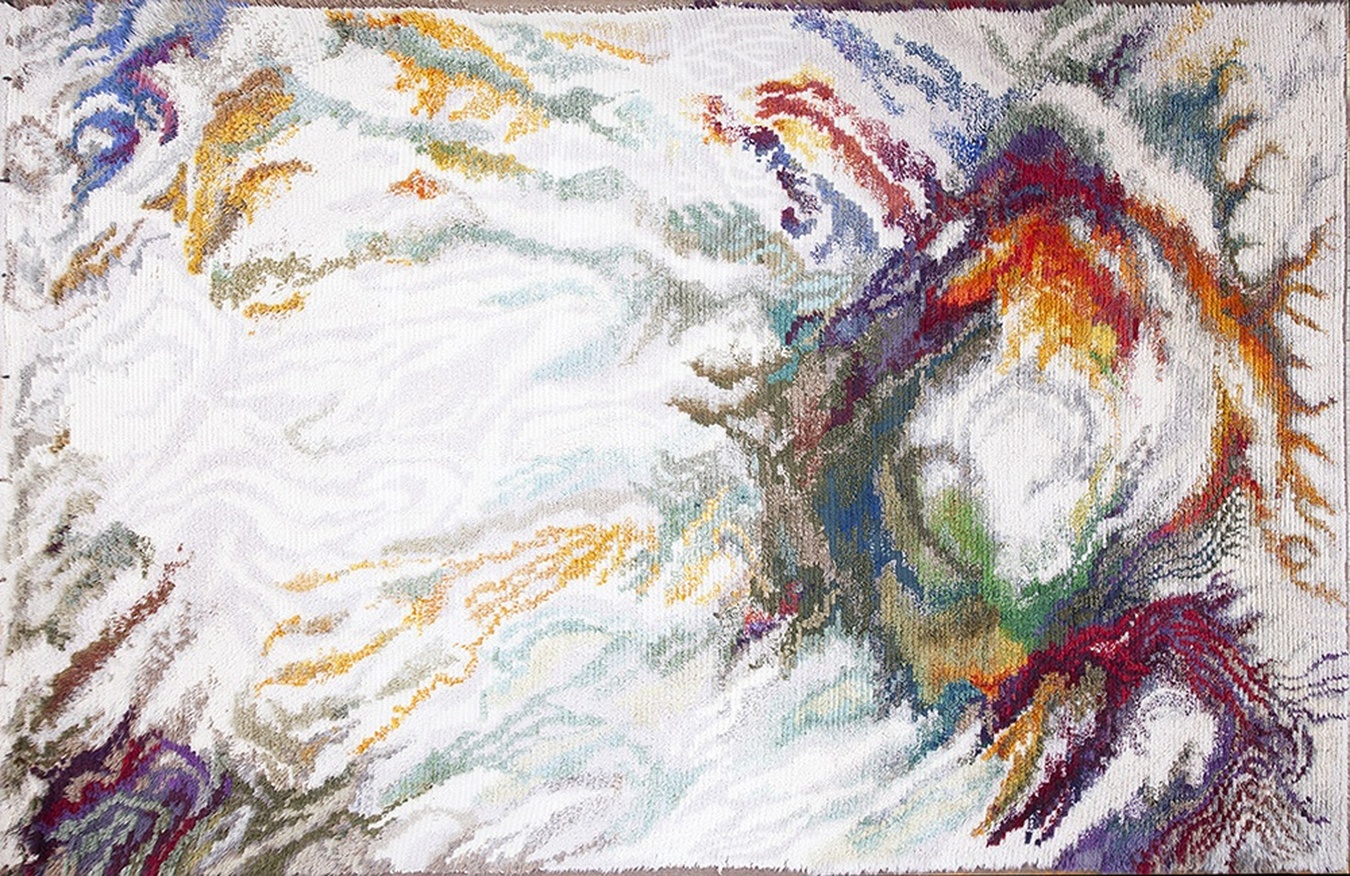
Vintage Rya Room Size Wool Multicolor Rug by Rugs On Net
These regional variations illustrate how Sweden’s weaving legacy fused local materials, cultural symbolism, and everyday function. Many Röllakan pieces were also hung as wall art, valued as much for their decorative beauty as their utility.
Flossa & Rya Pile Rugs: History, Use, and Value
Rya pile rugs are perhaps Sweden’s most famous contribution to the wider textile world. First woven along the west coast and in Skåne, Rya rugs began as long-pile, shaggy covers designed to provide insulation against Sweden’s harsh winters. Originally laid on beds for warmth, they soon transitioned into decorative forms, often mounted as wall hangings.
Their dramatic textures and symbolic motifs made them not only practical but also central to Swedish interior culture. Alongside Ryas, the Flossa rugs offered a shorter, denser pile favored by more affluent homes.
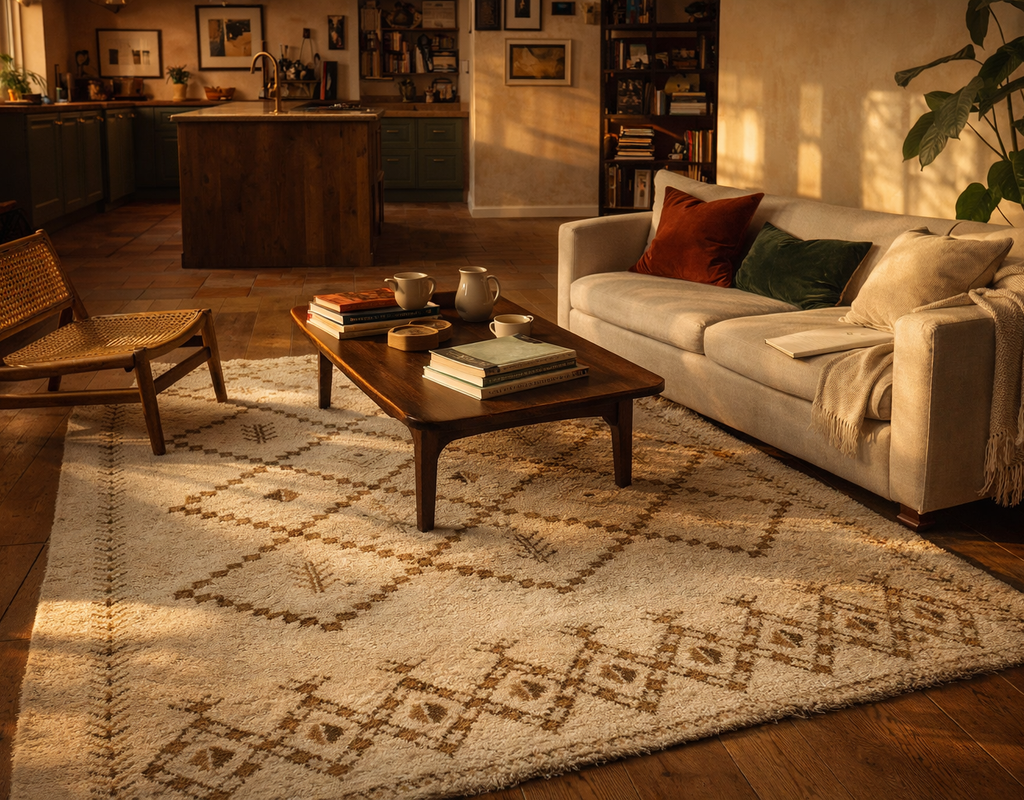
A warm, inviting living area defined by a textured, geometric area rug that anchors the seating arrangement.
While Rya rugs conveyed rustic warmth and folklore-inspired patterns, Flossa carpets leaned toward curvilinear motifs, elegance, and formal interiors. Together, these pile rugs highlight Sweden’s ability to adapt techniques to both humble rural life and refined domestic spaces.
Trasmatta (Rag Rugs): Sustainability & Everyday Living
The Trasmatta, or rag rug, embodies Sweden’s ethos of resourcefulness and sustainability. Woven from upcycled strips of worn clothing and household textiles, these rugs were durable, colorful, and accessible to nearly every household. Their stripes and patterns reflected the rhythm of everyday life, with colors often dictated by available scraps rather than planned design.
Today, Trasmatta Swedish rag rugs remain symbols of circularity, embodying a tradition of waste reduction and reuse that resonates strongly with contemporary sustainability values.
Scanian Wedding Rugs & Regional Styles
One of the most celebrated regional traditions in Sweden is the Scanian wedding rug, woven in Skåne. These are flatweave textiles with intricate floral designs, often incorporating the famous “rose within octagon” motif. Beyond their decorative appeal, they carried deep symbolic meaning, frequently inscribed with the initials of bride and groom and the date of the marriage.
Such area rugs were both heirlooms and statements of status, often hung on walls during wedding festivities to display craftsmanship and prosperity. These Scanian works exemplify the diversity of Swedish weaving, where regional traditions—from Dalarna’s bold Röllakan to Skåne’s richly symbolic wedding rugs—together form a tapestry of local identity within a national heritage.
Regional Hotspots & Motifs in Swedish Rug Weaving
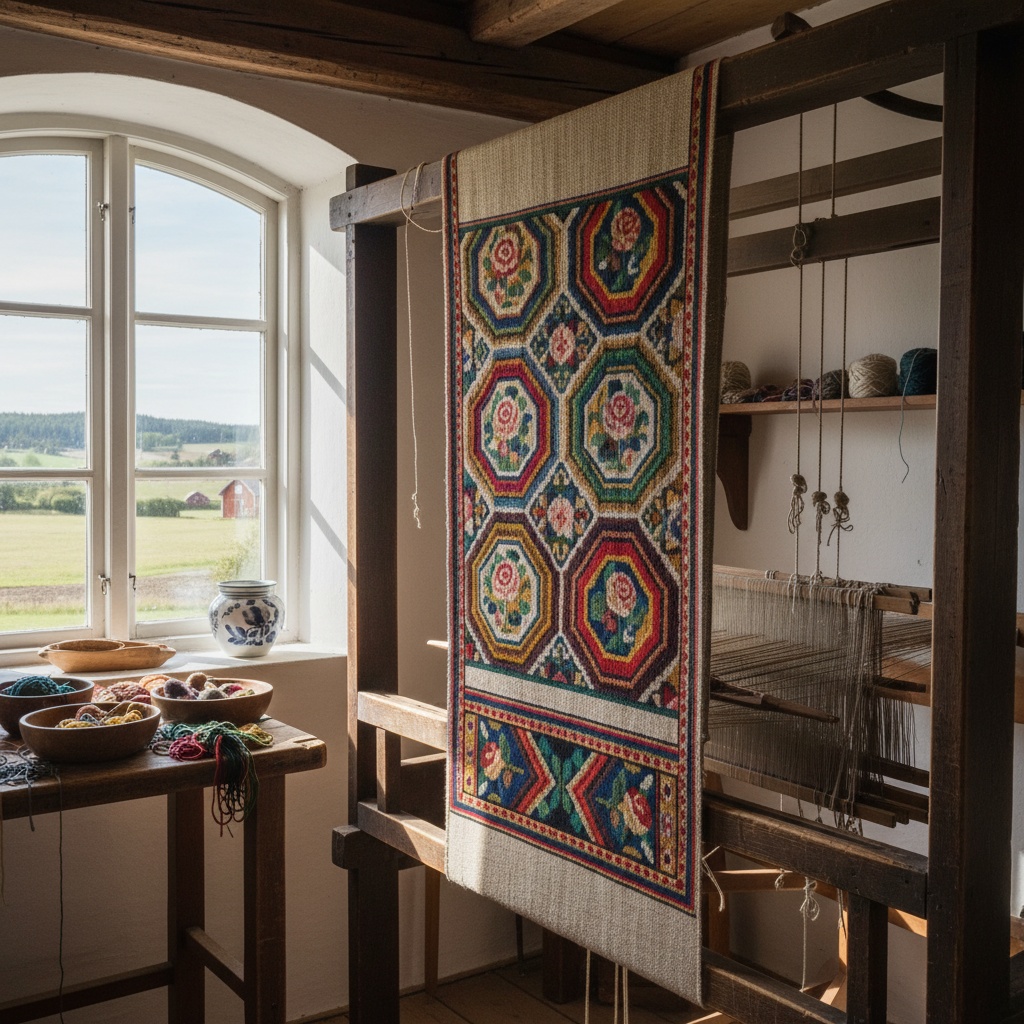
Vibrant motifs on a loom near a window.
Skåne (Scania): Iconic Motifs & Workshop Hubs
Southern Sweden’s Skåne region is the heart of the weaving of the rugs of Sweden. It is home to some of the country’s most iconic styles and motifs. The villages and towns surrounding Båstad, Malmö, and Lund became major centers of production, where folk art and functional craft merged into textiles of extraordinary beauty.
Scanian rugs are celebrated for their bold floral motifs, octagonal medallions, and the distinctive “rose within octagon” pattern that often adorned traditional wedding rugs.
These symbolic pieces, frequently inscribed with initials and dates, marked life’s milestones and were displayed prominently in homes. Skåne also nurtured Sweden’s most influential design hub: the Märta Måås-Fjetterström workshop, founded in Båstad.
This atelier elevated Scanian motifs from folk textiles into works of international acclaim, solidifying Skåne rug weaving as the benchmark of Swedish craftsmanship.
Dalarna, Hälsingland, Gotland, Halland: Unique Local Styles
The diversity of Swedish weaving regions is evident in their distinctive techniques and motifs. Dalarna is famous for geometric brocading (known as krabbasnår), often incorporating bright “X” patterns into flatweaves. These bold textiles reflect the strong folk-art tradition of central Sweden. By contrast, Hälsingland—renowned for its linen production—produced rugs with lighter palettes and more refined, delicate patterns.
The prevalence of linen shaped both the structure and the aesthetic of local weaving, adding a softness and subtlety not always found in other regions. Halland, on Sweden’s west coast, took a modern approach in the 20th century, developing rug-weaving cooperatives that supported local artisans. These cooperatives preserved traditional techniques while adapting production to contemporary markets, helping sustain weaving as a viable livelihood for rural families.
Gotland’s Wool & Island Traditions
The island of Gotland has long been associated with its hardy sheep, and its rugs often celebrate this resource. Gotland wool rugs are prized for their warmth and durability, with motifs that frequently depict rams, sheep, or stylized spirals evoking wool itself.
Local artisans adapted techniques to suit the island’s maritime climate, producing rugs that balanced practicality with folk symbolism. These wool-based designs represent the resource-driven creativity of Swedish island traditions.
Inspiration from Swedish Landmarks
Modern rugs of Sweden also reflect a dialogue with national heritage through landmark motif rugs. Stockholm City Hall, with its striking brickwork and silhouette, has inspired contemporary weavers to create geometric patterns reminiscent of its façade and spire.
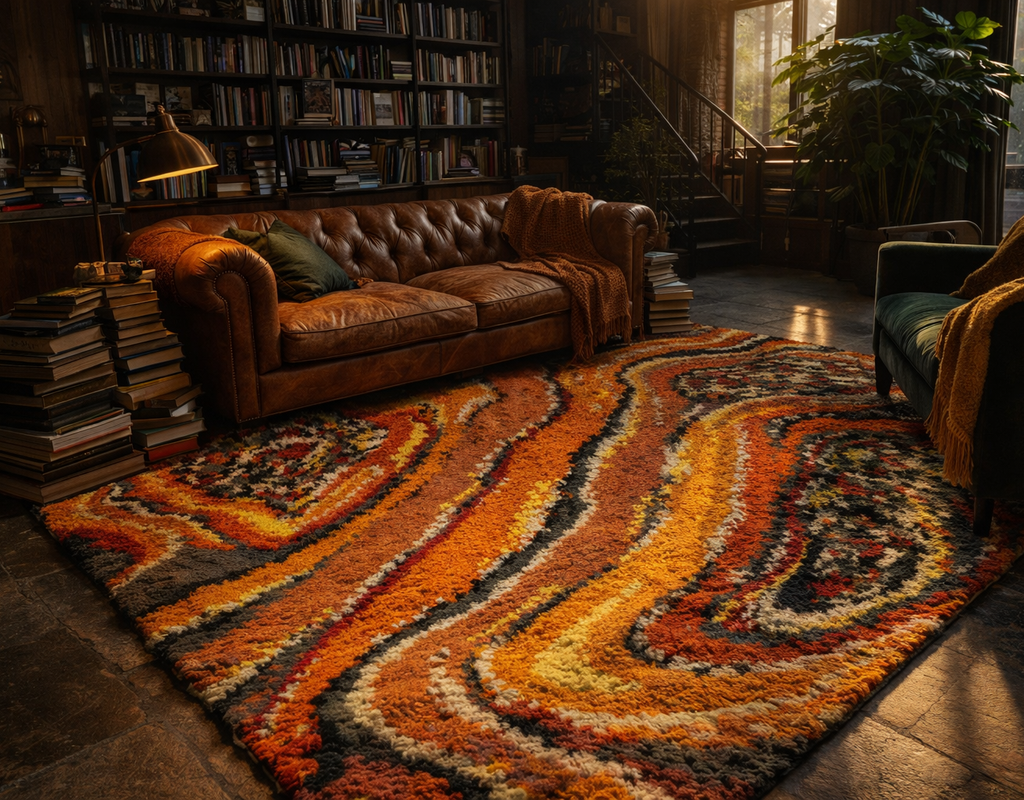
A striking 1970s-inspired geometric rug adds a pop of warm color to this dark, book-filled reading nook.
Meanwhile, on Gotland, rugs sometimes feature designs echoing the medieval walls of Visby, connecting local craftsmanship to the island’s UNESCO-listed architectural heritage. These landmark-inspired motifs root modern textiles in Sweden’s cultural memory, ensuring that rug design continues to honor both history and place.
Evolution of Swedish Rug Design
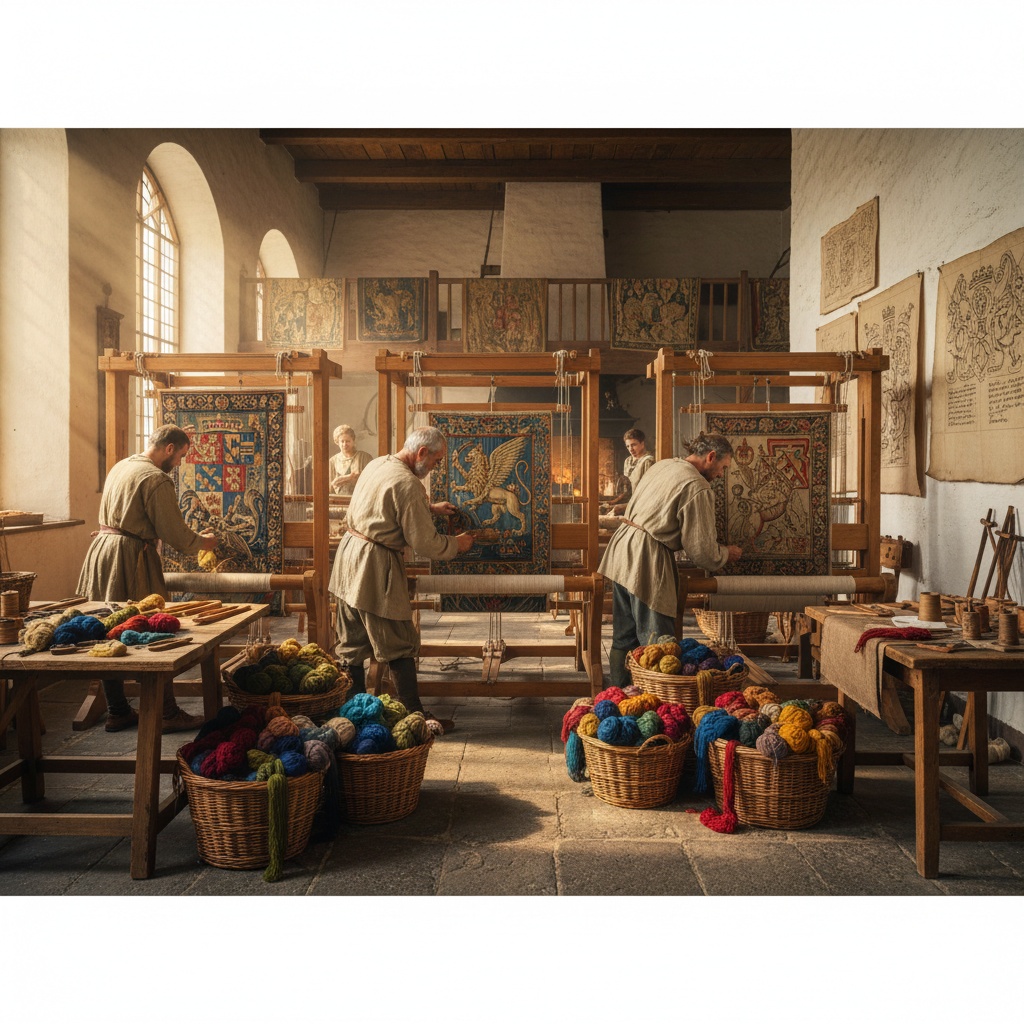
Historic loom setup for intricate tapestry creation
Renaissance & Royal Tapestries: Flemish Influence
The evolution of Swedish rug art begins in the 1530s, when Flemish weavers were invited to the royal court. Their mastery of tapestry introduced advanced weaving structures, pictorial compositions, and the use of luxurious materials into Swedish textile practice.
These imported skills profoundly changed Swedish weaving, blending the grandeur of continental Europe with local folk sensibilities. The Flemish influence laid the foundation for Sweden’s dual identity in rug art: balancing functional household textiles with decorative works worthy of nobility and, later, museums.
Folk Art Flourishing: 18th–19th Century Provincial Styles
By the 18th and 19th centuries, weaving shifted from royal workshops into the hands of rural women, who spearheaded a flourishing of folk textiles. Each province developed its own motifs and techniques, from bold Röllakan flatweaves to intricately patterned Scanian wedding rugs.
These provincial works captured the rhythms of everyday life while also marking special occasions, turning rugs into carriers of local identity. The period set the stage for Sweden’s weaving legacy as both communal tradition and artistic expression.
The Märta Måås-Fjetterström Legacy
A true turning point in Swedish rug history came in 1919, when Märta Måås-Fjetterström founded her weaving studio in Båstad. Her workshop revitalized traditional forms like Röllakan and Rya, reimagining them with modern patterns, harmonious color palettes, and symbolic motifs that bridged folk tradition with avant-garde design.
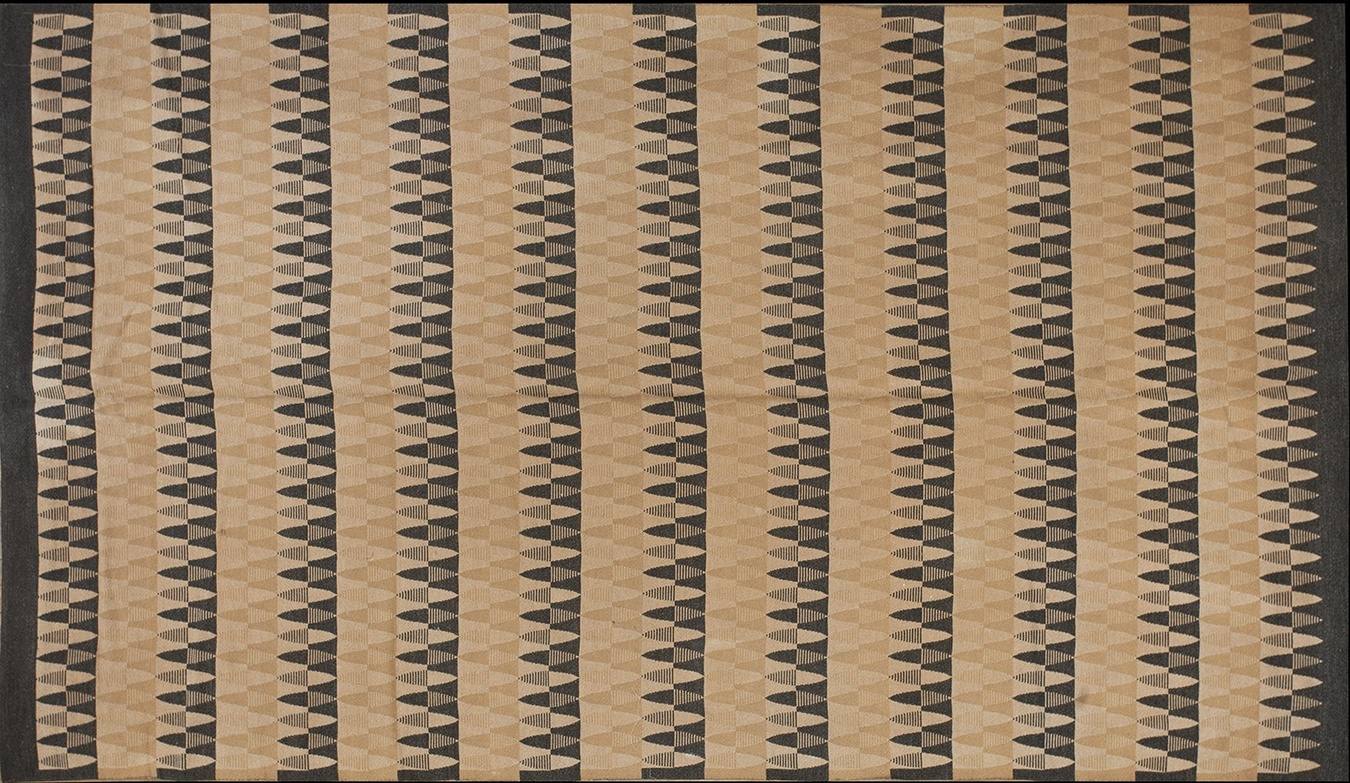
Vintage Swedish Sweden Flat Weave Rug – by Rugs On Net
Måås’s rugs are now among the most sought-after in the world. Signed rugs of Sweden from her atelier—bearing the “MMF” signature—are far more collectible and valuable than unsigned pieces, as they confirm authenticity and direct design attribution.
Today, Märta Måås-Fjetterström rugs remain the pinnacle of Swedish rug art, with her studio still active, continuing to produce designs under her enduring legacy.
The Swedish Grace Movement’s Impact
In the 1920s and 1930s, Swedish rug design was deeply shaped by the Swedish Grace movement, which emphasized natural colors, graceful forms, and an elegant balance of tradition with modernity.
This aesthetic softened the stark geometry of earlier folk styles, aligning rugs with the emerging Scandinavian modern rugs look that came to dominate interiors worldwide. Swedish Grace rugs often blended stylized florals with streamlined patterns, making them versatile and timeless.
Mid-Century & Modernist Swedish Rugs
By the mid-20th century, Swedish rug art had become a global design force. Designers like Märta Måås-Fjetterström, Barbro Nilsson, and Ann-Mari Forsberg created rugs that embodied the ideals of Scandinavian modernism—functional, artistic, and perfectly suited to modern interiors. Many of these works now reside in major museum collections and command high prices at auction, cementing their role as design classics.
The continued presence of these rugs in both private collections and institutions affirms Sweden’s enduring role in shaping modern rug aesthetics. Whether as folk heirlooms or avant-garde art, Båstad workshop rugs and their successors remain cornerstones of international textile history.
Sustainability, Materials & Modern Swedish Rug Industry
Why Swedish Rugs Are Sustainable
Sustainable rugs of Sweden are considered among the most eco-friendly home décor options because of their reliance on natural, locally sourced materials and circular production methods. Traditional weavers use wool, linen, and cotton, often drawn directly from regional resources, which minimizes transportation-related emissions. The Swedish practice of making trasmatta upcycled rag rugs—woven from discarded clothing and textiles—embodies resourcefulness and reduces waste. Modern producers further strengthen this heritage with GoodWeave certifications, climate-neutral standards, and recycling programs, ensuring that every stage of production emphasizes transparency and responsibility.
Local Wool, Dyes, and Plant-Based Techniques
Sweden’s cold, variable climate produces sheep with a dense, durable wool that is particularly well-suited for rug weaving. The long fibers are strong, insulating, and naturally resilient, giving Swedish wool quality an edge over many imported alternatives. This makes rugs of Sweden not only beautiful but also long-lasting and practical for everyday use.
Coloring traditions also contribute to sustainability. Växbo plant dyes, rooted in centuries of Swedish craft, remain a hallmark of natural rug production. These dyes are created using locally foraged plants, bark, and roots, and their recipes can be replicated by artisans today following historical methods. The result is a palette of earthy, stable colors that connect plant-dyed Swedish rugs to both craft tradition and modern eco-conscious living.
Circular Practices & Upcycling
- Trasmatta rag rugs reuse worn textiles into new household rugs — Why: this reduces waste and preserves a folk tradition of sustainability.
- Rug return and recycling programs offered by brands like Kasthall — Why: ensures used rugs are repurposed or recycled rather than discarded.
- Plant-dyed fibers and traceable materials — Why: supports eco-friendly Scandinavian rugs by ensuring natural processes and verified supply chains.
- Carbon-neutral certification — Why: aligns the modern Swedish rug industry with global climate goals and sustainable design leadership.
The Modern Rugs of Sweden Industry: Exports, Quality, Certification
Today, the modern rugs of Sweden industry blends traditional craftsmanship with global market demand. Companies such as Kasthall and Klippan Yllefabrik are internationally recognized for their high-quality rugs that carry sustainability credentials.
Many producers emphasize traceability, GoodWeave certification, and climate-neutral production, ensuring that buyers receive eco-friendly Scandinavian rugs with documented provenance.
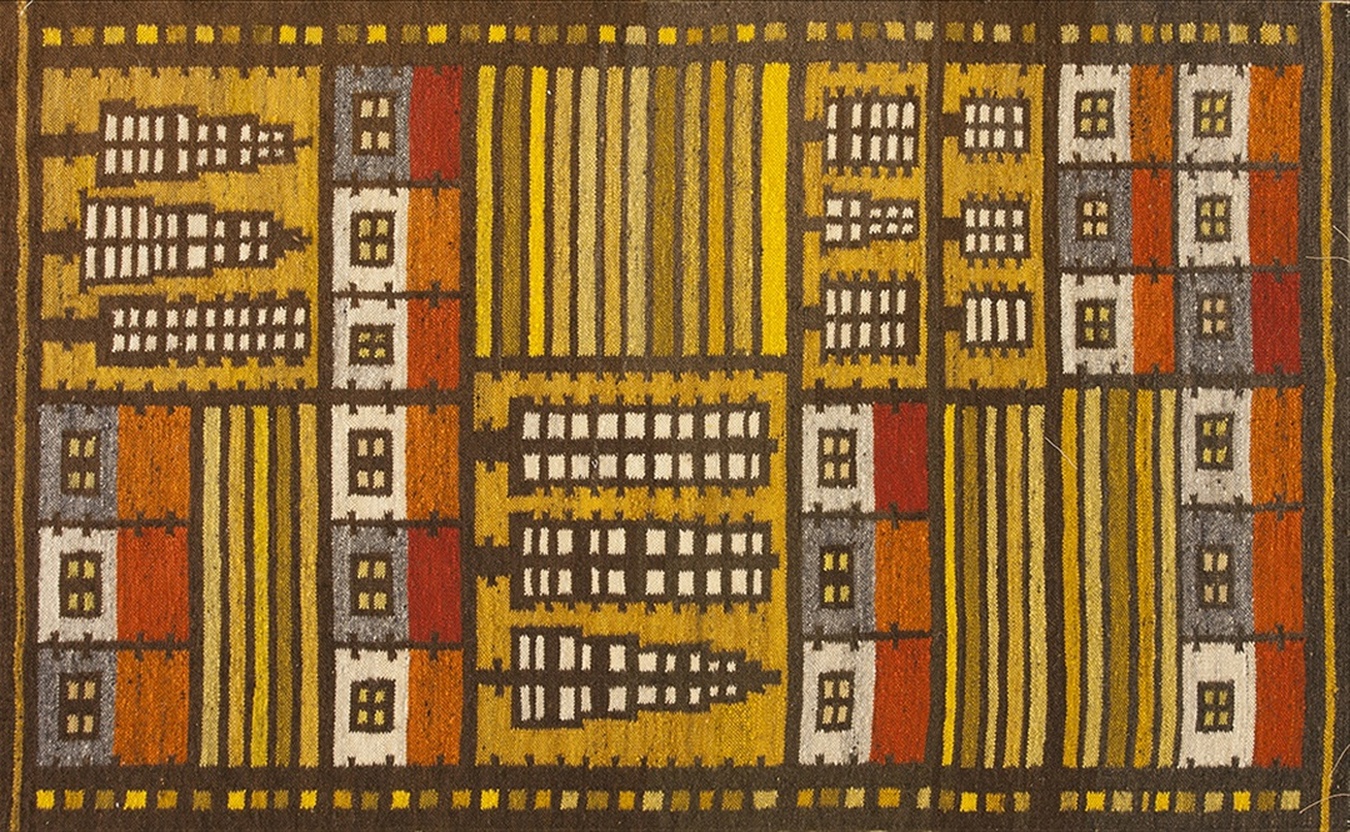
Sweden’s export niche lies in combining folk-inspired design with a contemporary eco-conscious ethos, making its rugs highly sought after in design-driven markets across Europe, North America, and Asia.
Custom Rug Sourcing in Sweden
Commissioning custom rugs of Sweden remains a straightforward and accessible process. Many workshops across Sweden, especially in weaving hubs like Skåne and Dalarna, offer bespoke services for custom Röllakan rugs, rya pile pieces, or modern designer flatweaves.
When buying rugs, people can choose dimensions, motifs, and colors while working directly with artisans or established studios. This collaborative approach not only supports local craft but also ensures a unique, one-of-a-kind textile tailored to modern interiors.
Collecting & Investing in Swedish Rugs
Signed vs. Unsigned Märta Måås Pieces
For serious collectors, signed Märta Måås-Fjetterström rugs are the gold standard. The “MMF” signature authenticates the rug as an original piece from her Båstad workshop, providing both provenance and assurance of design pedigree.
Collectable Märta Måås rugs with signatures consistently command higher prices at auction and in galleries, while unsigned examples—though still beautiful—tend to hold less investment value. Provenance is therefore a decisive factor, making signed Swedish flatweave and pile rugs the most sought-after by connoisseurs.
Are Vintage Swedish Rugs a Good Investment?
The market for vintage Scandinavian rugs has shown steady appreciation, especially for pieces by renowned designers and workshops. Demand has risen internationally due to the enduring appeal of Scandinavian modern design and the rarity of well-preserved examples.
Collectors and interior designers alike view investing in Swedish rugs as reliable, with high-quality mid-century and early 20th-century works continuing to achieve strong results at auction. Their combination of artistry, sustainability, and functional design ensures that vintage Swedish rugs remain both collectible and practical investments.
Sizing Swedish Flatweaves for Narrow Spaces
Actionable Tips for Hallway & Narrow-Space Placement:
- Choose flatweaves 2–3 feet wide and 6–12 feet long — Why: these dimensions suit standard hallways and allow easy placement without crowding.
- Consider custom Swedish rug sizes from workshops — Why: artisans often adapt Röllakan flatweaves to fit awkward or unique layouts.
- Use rug pads beneath narrow flatweaves — Why: prevents slipping and extends the life of collectible rugs in high-traffic corridors.
- Locked Q answered: Swedish flatweaves are ideal for narrow hallways, with standard proportions available and custom options easy to commission.
Buying Guide: What to Look for in a Swedish Rug
- Signature or provenance marks — Why: confirms authenticity and maximizes collectible value.
- Condition of wool and weave — Why: ensures durability and helps determine restoration needs.
- Clarity of motifs and color harmony — Why: crisp patterns and balanced palettes indicate high-quality craftsmanship.
- Workshop origin (e.g., MMF, Barbro Nilsson) — Why: pieces from established studios hold stronger market appeal.
Sourcing and Care Tips
- Work with trusted dealers or Swedish workshops — Why: guarantees authenticity and access to museum-quality examples.
- Rotate rugs annually — Why: distributes wear evenly and preserves pile integrity.
- Avoid prolonged direct sunlight — Why: protects natural dyes from fading.
- Use a protective rug pad — Why: prevents shifting and cushions delicate handwoven fibers.
- Have rugs professionally cleaned — Why: safeguards collectible textiles without damaging dyes or fibers.
Collecting rugs of Sweden combines practical enjoyment with long-term value. With proper sourcing and Swedish rug care, buyers can secure timeless textiles that enhance interiors while appreciating as cultural investments.
Explore Some of Our Rugs of Sweden Collection
FAQ
- Are Swedish rugs good for dining rooms?
Flatweaves excel—chairs slide easily and cleanup is straightforward. Allow about 24 inches past the table edge so chairs stay on the rug.
- What should I inspect when buying vintage?
Check edges, fringe, and warp for breaks, and look for moth nips or color run. Small, well-done repairs are common and acceptable.
- Are moths a risk?
Any wool can attract moths in dark, undisturbed spots. Vacuum under and behind rugs monthly and consider cedar or professional moth deterrents.
- Do Swedish rugs fade in sun?
Wool dyes can lighten with prolonged UV. Use window treatments and rotate quarterly to balance exposure.
- Do Swedish wool rugs shed?
Light shedding is normal early on. Suction-only weekly vacuuming helps; shedding typically drops after several weeks.
- Will a robot vacuum damage these rugs?
Fringes and long pile can tangle. Use boundary strips and suction-only heads, and lift the rug’s edges before runs.
- How do you pronounce röllakan and rya?
Röllakan is roughly “RUR-lah-kahn.” Rya is “REE-uh.”
- Where were many historic Swedish flatweaves made?
The Skåne (Scania) region is famous for röllakan traditions. Many sought-after patterns trace to workshops and guilds there.
- What are the typical sizes available?
Vintage pieces often appear as runners and mid-sizes (around 5×7 to 6×9). Modern offerings also follow US standards like 5×8 and 8×10.
- What colors and patterns are typical in Swedish rugs?
Expect stylized florals, checks, and geometrics in soft blues, greens, ambers, and neutrals. Mid-century palettes pair well with oak, birch, and white walls.
- Are Swedish rugs kid- and pet-friendly?
Flatweaves are excellent—low pile, easy to clean, and wool resists soiling. Skip long-pile rya in food zones or with heavy shedders.
- Can Swedish rag rugs (trasmattor) be machine-washed?
Small ones often can on a gentle, cold cycle if the label allows. Air-dry flat; wet rugs get heavy and can stretch.
- How do I care for a rya (shag) rug?
Shake or vacuum with suction-only; avoid rotating brushes that pull fibers. Professional washing is recommended for deep cleans.
- How should I vacuum a Swedish flatweave?
Use suction only—no beater bar—and vacuum both sides. Rotate every 3 months to even wear.
- Can I use Swedish rugs over underfloor heating?
Yes—prefer flatweaves or low-pile wool and avoid thick rubber backings. Keep total build low; as a rule of thumb, pile around 3/8 inch or less is safer.
- What rug pad works best under Swedish flatweaves?
A felt-and-rubber pad provides grip and cushioning without bulk. Choose roughly 1/4-inch thickness and cut the pad about 1–2 inches smaller than the rug.
- What price range should I expect for vintage Swedish rugs?
Good vintage flatweaves often run \$1,500–\$10,000. Renowned MMF works regularly fetch \$20,000–\$50,000+, with exceptional examples exceeding \$100,000.
- How can I authenticate an MMF (Märta Måås-Fjetterström) rug?
Pre-1941 pieces typically show “MMF”; later works show “AB MMF.” Designer initials (e.g., BN, MR, IS) often appear in the opposite corner.
- Are authentic Swedish rugs still made in Sweden?
Yes—heritage studios in Båstad continue handweaving. Many “Scandi-style” rugs are also produced abroad; check labeling and provenance.
- How do Swedish rugs differ from Persian or Moroccan rugs?
Swedish pieces lean geometric and mid-century; many are flatwoven or low pile. Persian rugs are tightly knotted with intricate florals; Moroccan Beni Ourain are thick, shaggy, and minimalist.
- Are Swedish rugs durable for high-traffic areas?
Flatweave röllakan and dense flossa hold up well with a rug pad. Expect years of service with weekly vacuuming and quarterly rotation.
- What does “flossa” or “halvflossa” mean?
Flossa denotes a Swedish knotted pile surface; halvflossa mixes pile sections with flatweave. The result is a sculpted “high-low” texture that reads modern.
- Could you explain what a rya rug is?
Rya is a Scandinavian long-pile wool rug, originally a warm bedcover. Pile commonly measures about 1–3 inches, giving a shaggy, insulating texture.
- What is a röllakan rug?
A röllakan is a reversible Swedish flatweave, typically wool weft over linen warp. It lies low and durable—great for dining rooms and hallways.
- What are “Swedish rugs”?
Swedish rugs commonly include flatwoven röllakan, long-pile rya, and pile techniques like flossa/halvflossa. They’re usually wool, prized for geometric motifs, soft color harmonies, and excellent craftsmanship.