
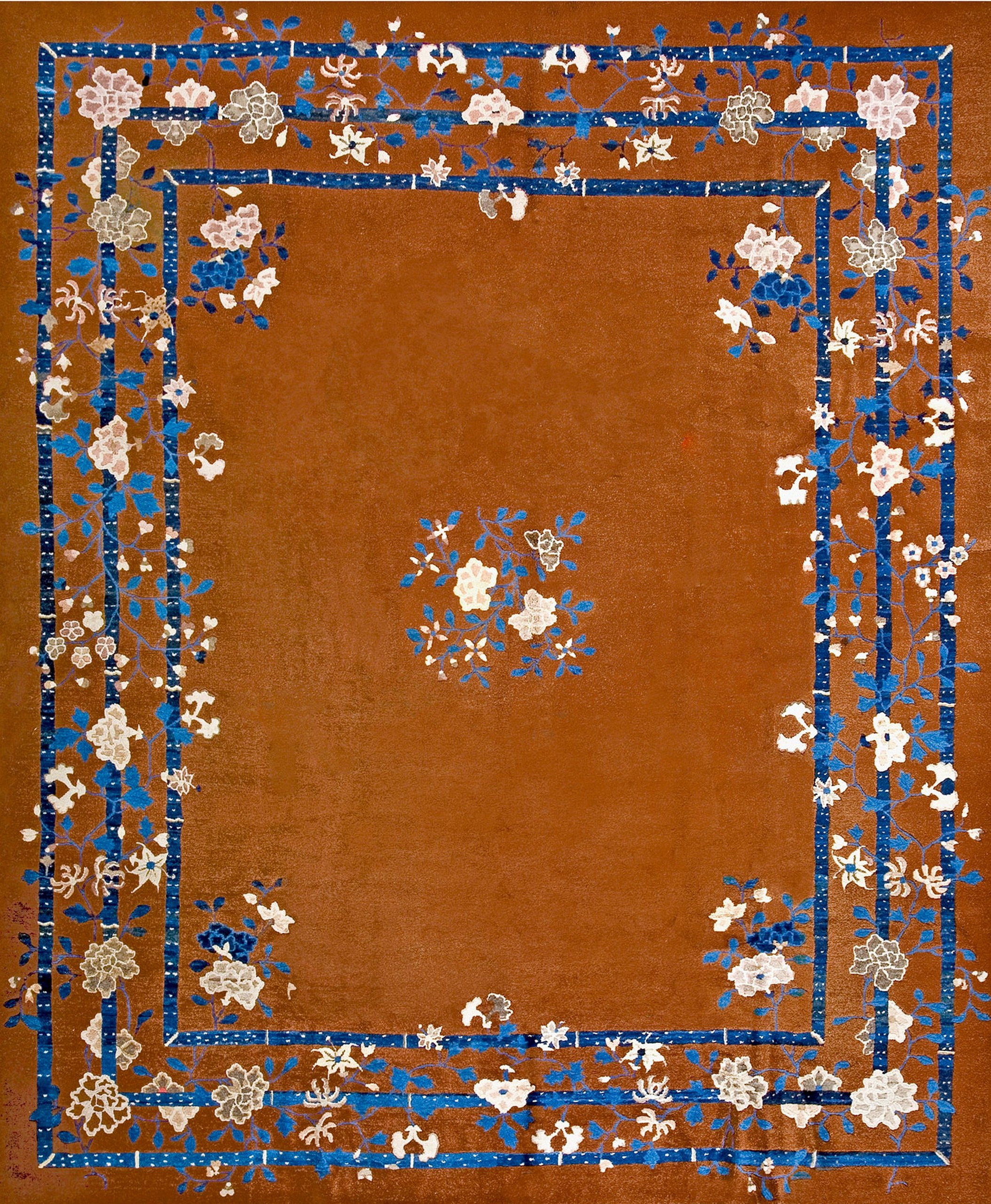
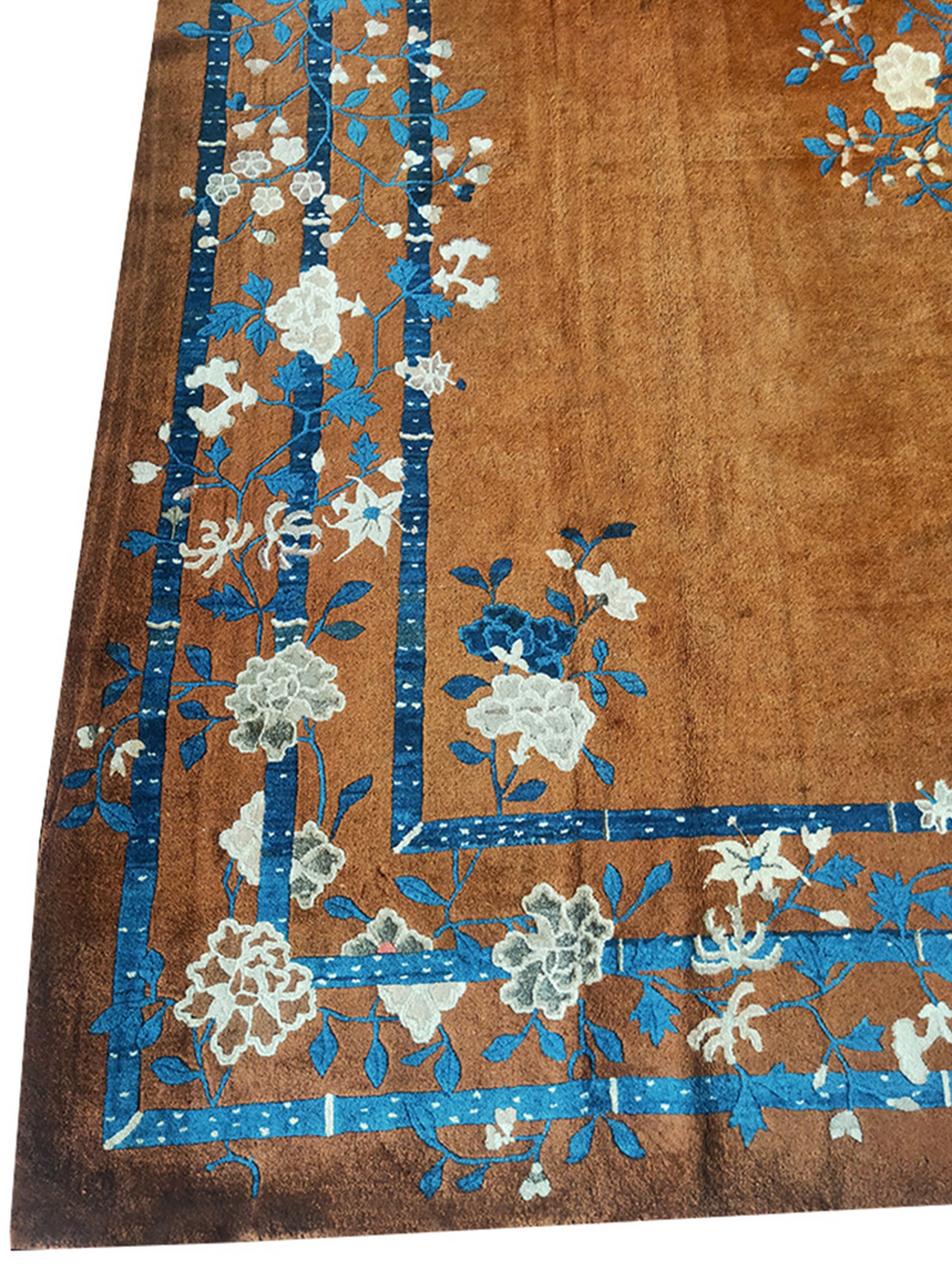
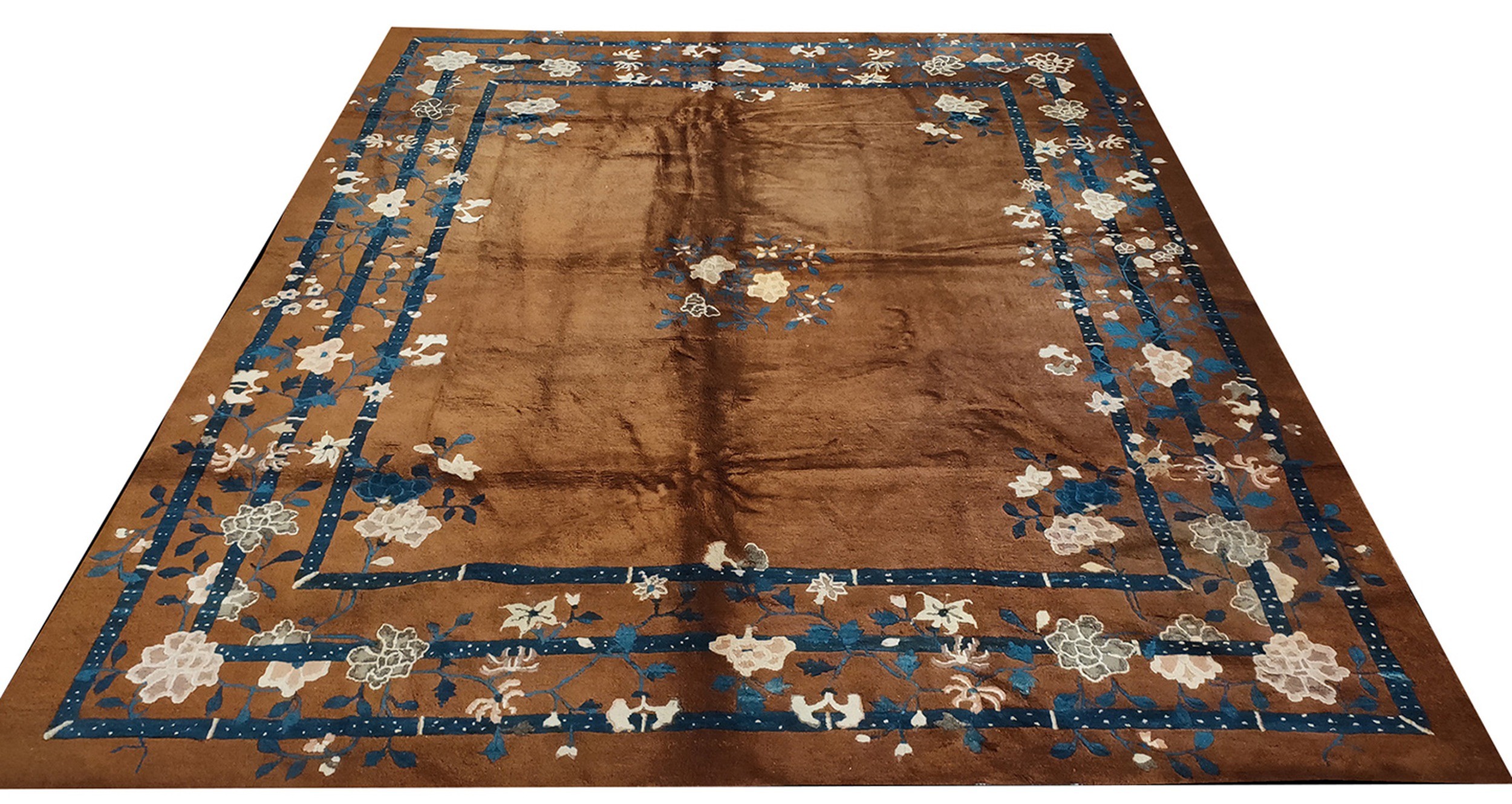
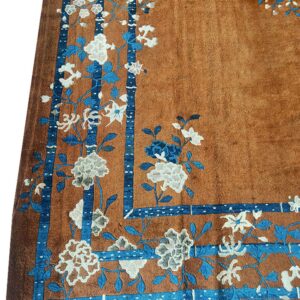
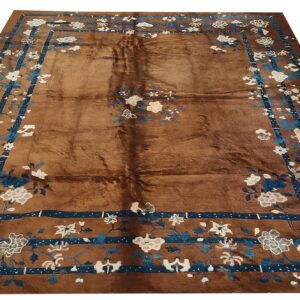
This magnificent early 20th-century Chinese Peking carpet is a superlative example of the “Scholar’s Style,” representing a sophisticated bridge between ancient Eastern aesthetics and the burgeoning Modernist movement of the West. While many antique carpets of this era relied on dense, busy patterns, this specific specimen is distinguished by its Minimalist Open Field—a design choice that emphasizes space, tranquility, and the “luxury of the void.”
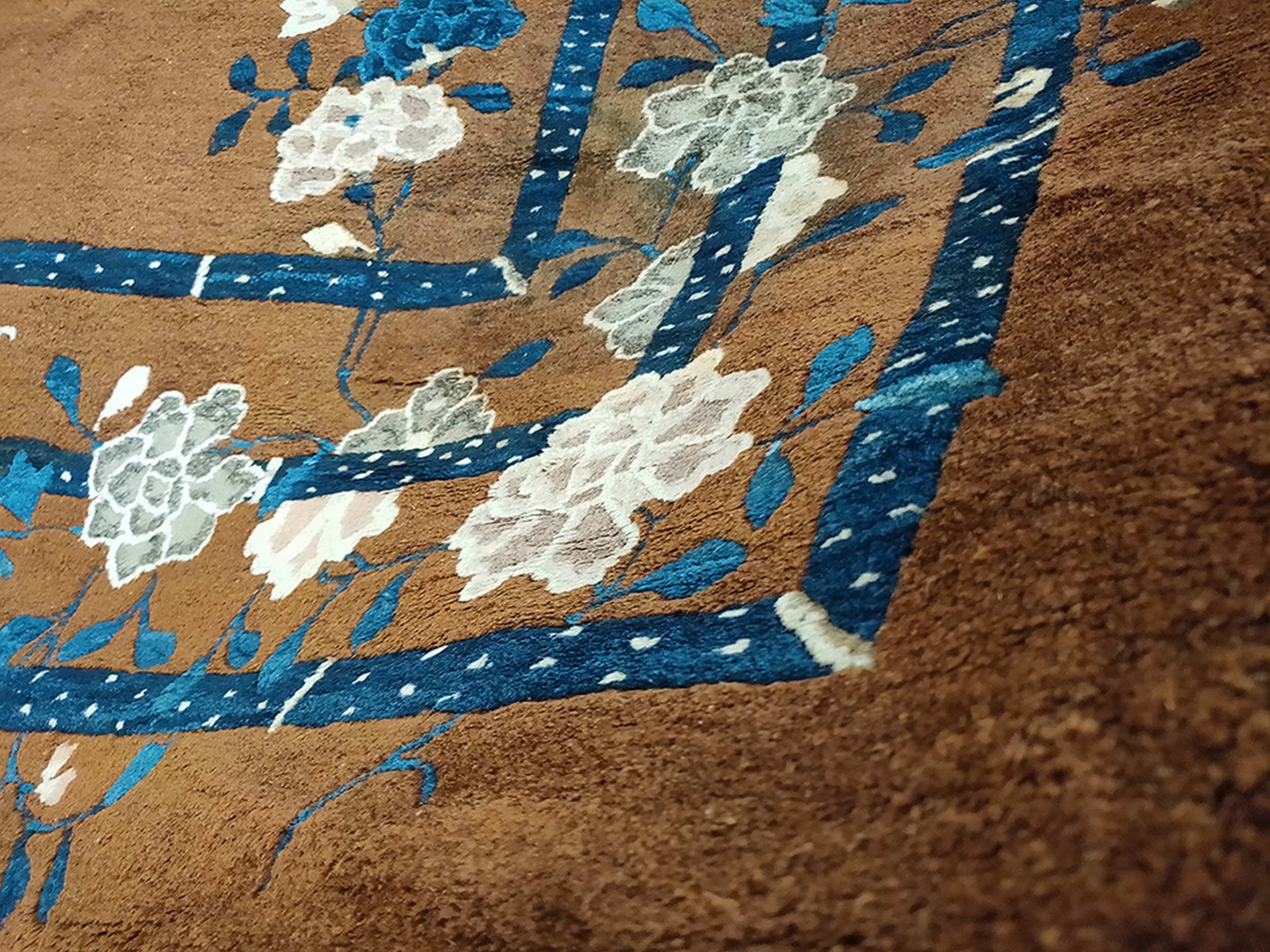
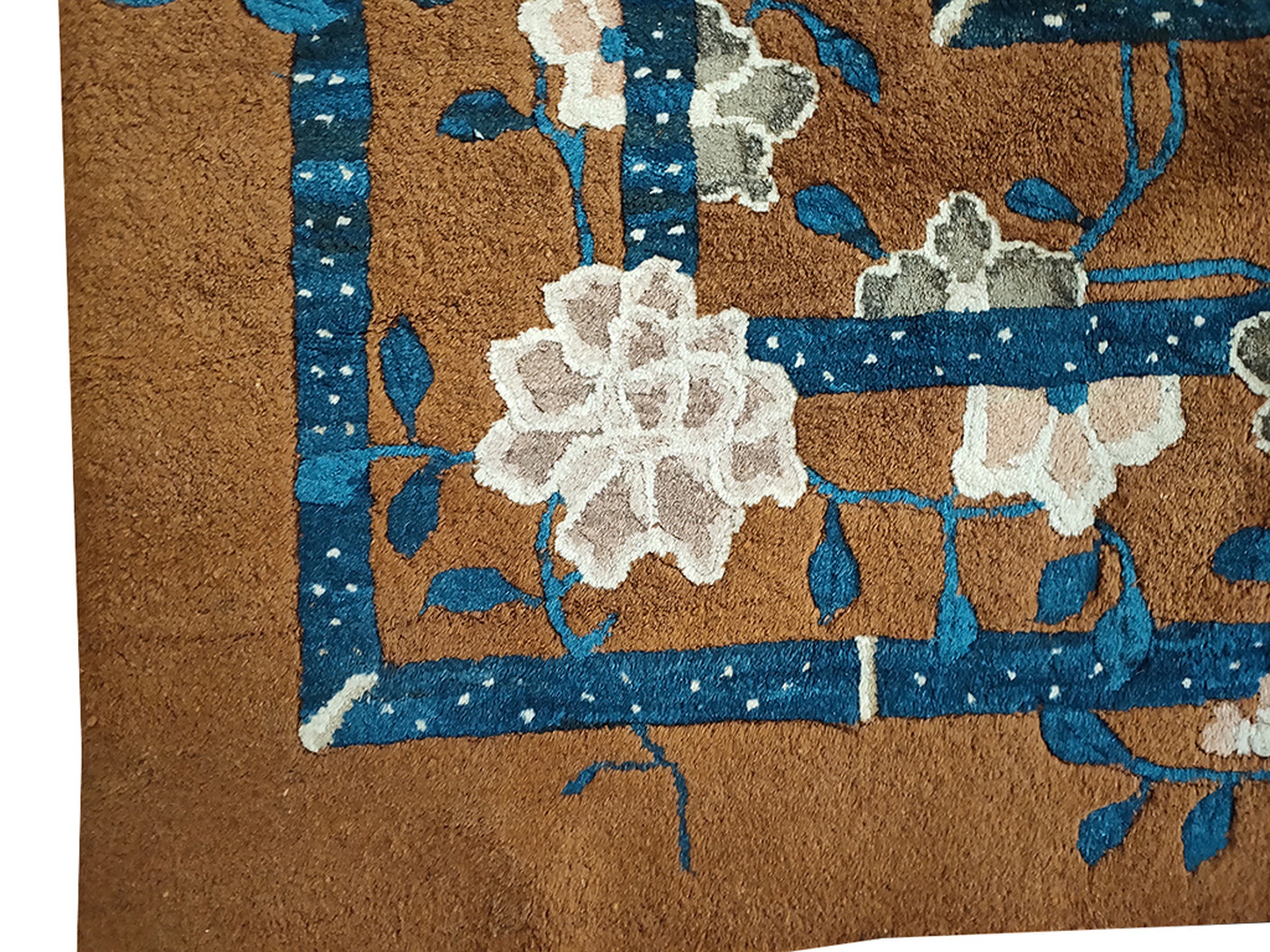
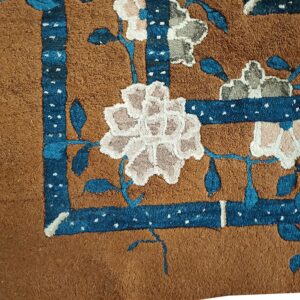
The composition is centered upon a rare, monochromatic Brown color field. This “Earth Tone” palette, likely derived from natural walnut husks or undyed wool, provides a warm, organic foundation that feels remarkably contemporary. The “Open Field” aesthetic allows the eye to rest, focusing attention on the sparse, meticulously placed Floral motifs that traditionally occupy the corners or a small central medallion. These stylized peonies or lotus flowers are rendered with the “painterly” restraint of a Chinese ink wash painting, symbolizing purity, longevity, and the harmony of nature.
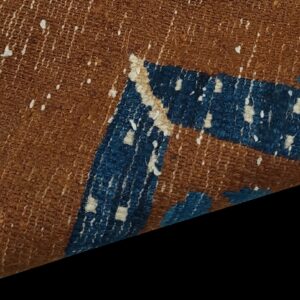
The palette is a masterclass in tonal subtlety. The deep, cocoa-brown ground is accented with a “scholarly” selection of colors—often including soft ivory, sage green, and “Imperial” blue. Because antique Chinese Peking area rugs utilized high-quality, long-staple wool, the brown field possesses a natural luminosity and a beautiful abrash (tonal variation), giving the surface a shimmering, watercolor-like depth that shifts with the light.
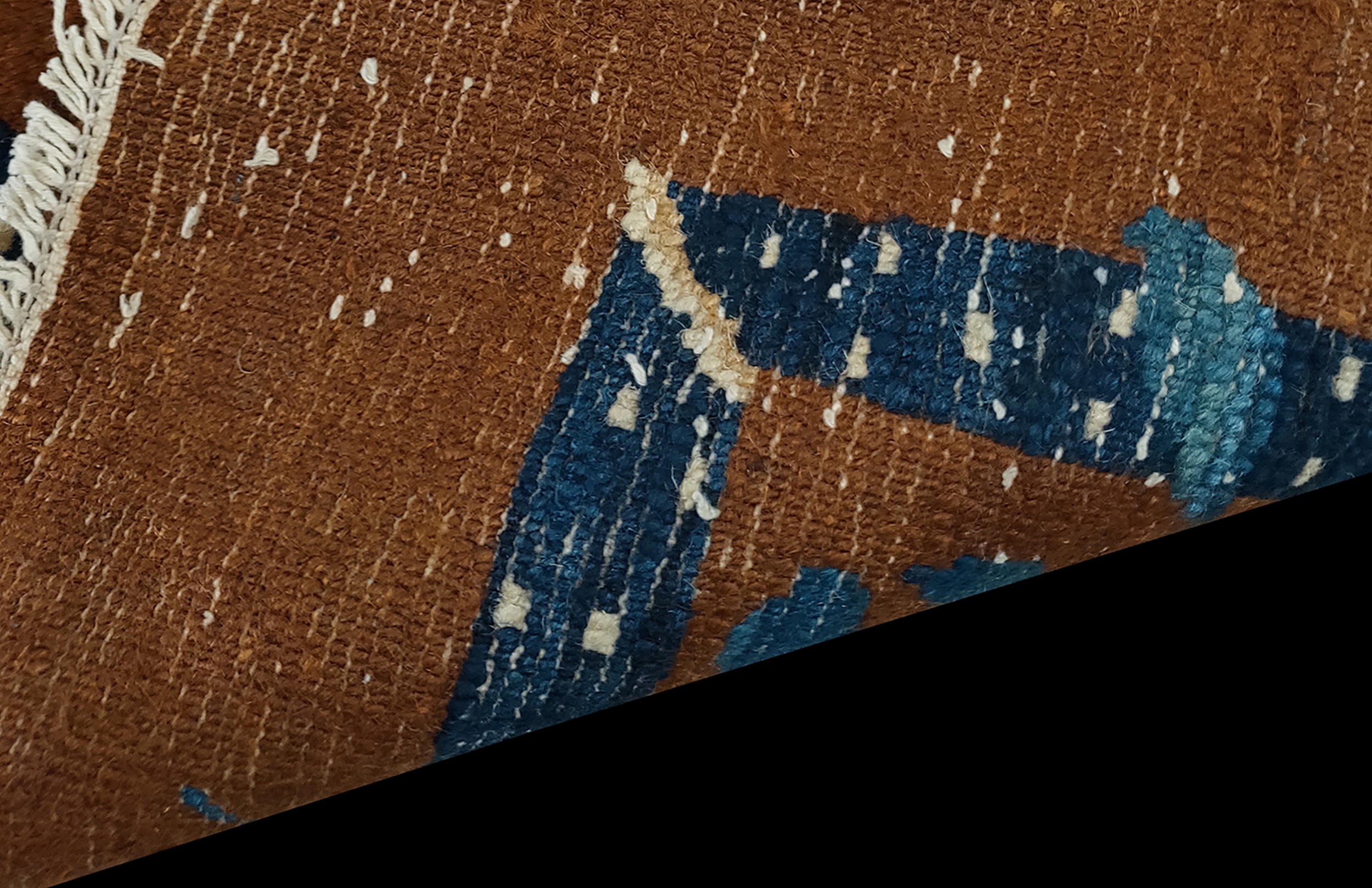
Technically, a Peking rug of this “Room Size” scale is prized for its substantial, plush pile and its exceptional tactile quality. Unlike the thinner urban weaves of Persia, these antique Chinese carpets were designed for comfort and architectural presence, offering a dense, “cloud-like” feel underfoot. The wool is rich in natural lanolin, which has allowed the rug to develop a soft, silken patina over the last century.
The borders act as a disciplined, minimalist frame, often featuring a simple “Solid Band” or a delicate “Fret” pattern that anchors the expansive energy of the central field without interrupting its serenity. To possess an antique “Open Field” Peking rug is to hold a monument to understated opulence. It is a work that feels equally at home in a Zen-inspired sanctuary or a high-concept modern loft—a sprawling, hand-wrought textile that transforms a room into a space of historical gravity and quiet, sophisticated grace.