
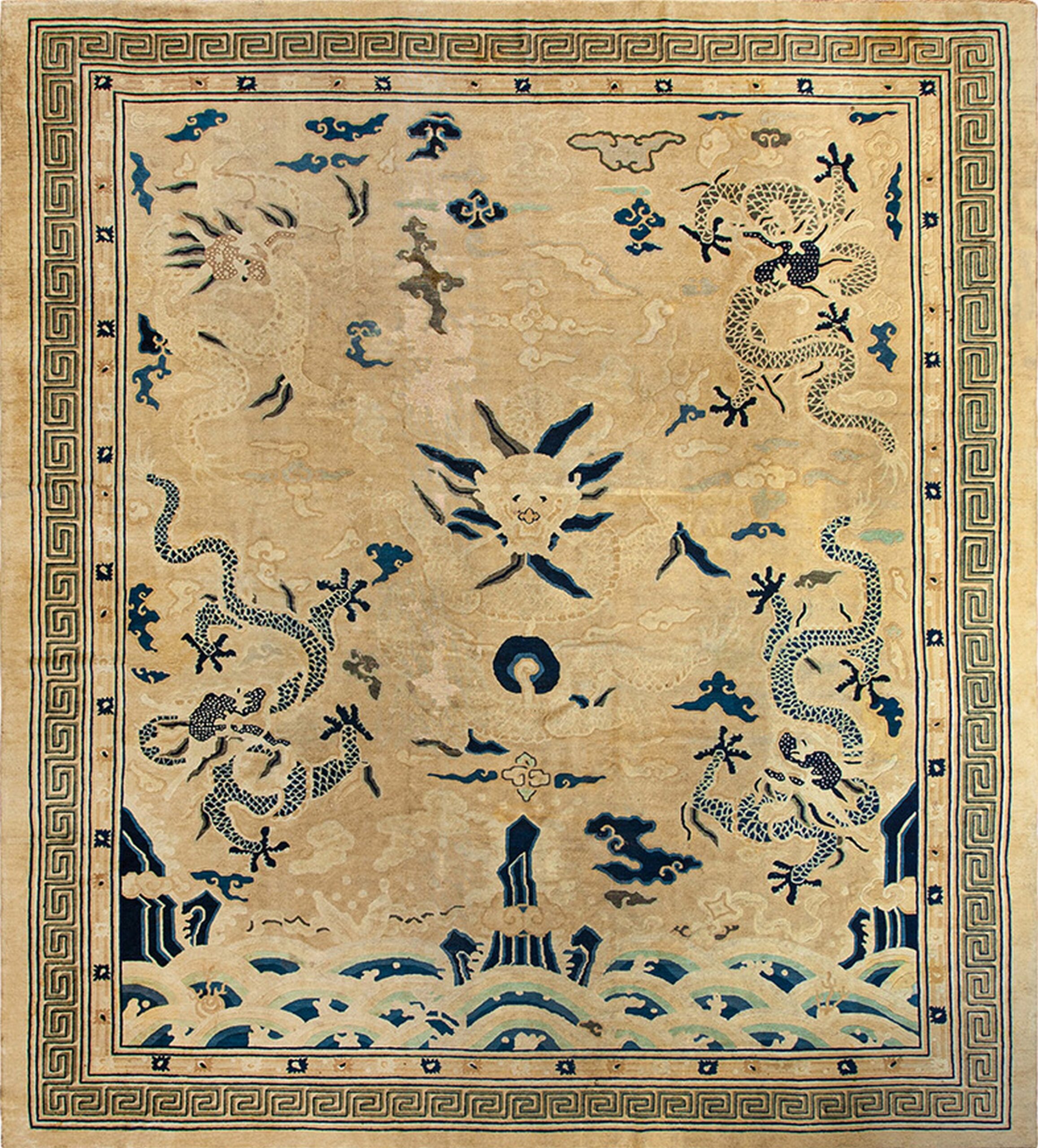
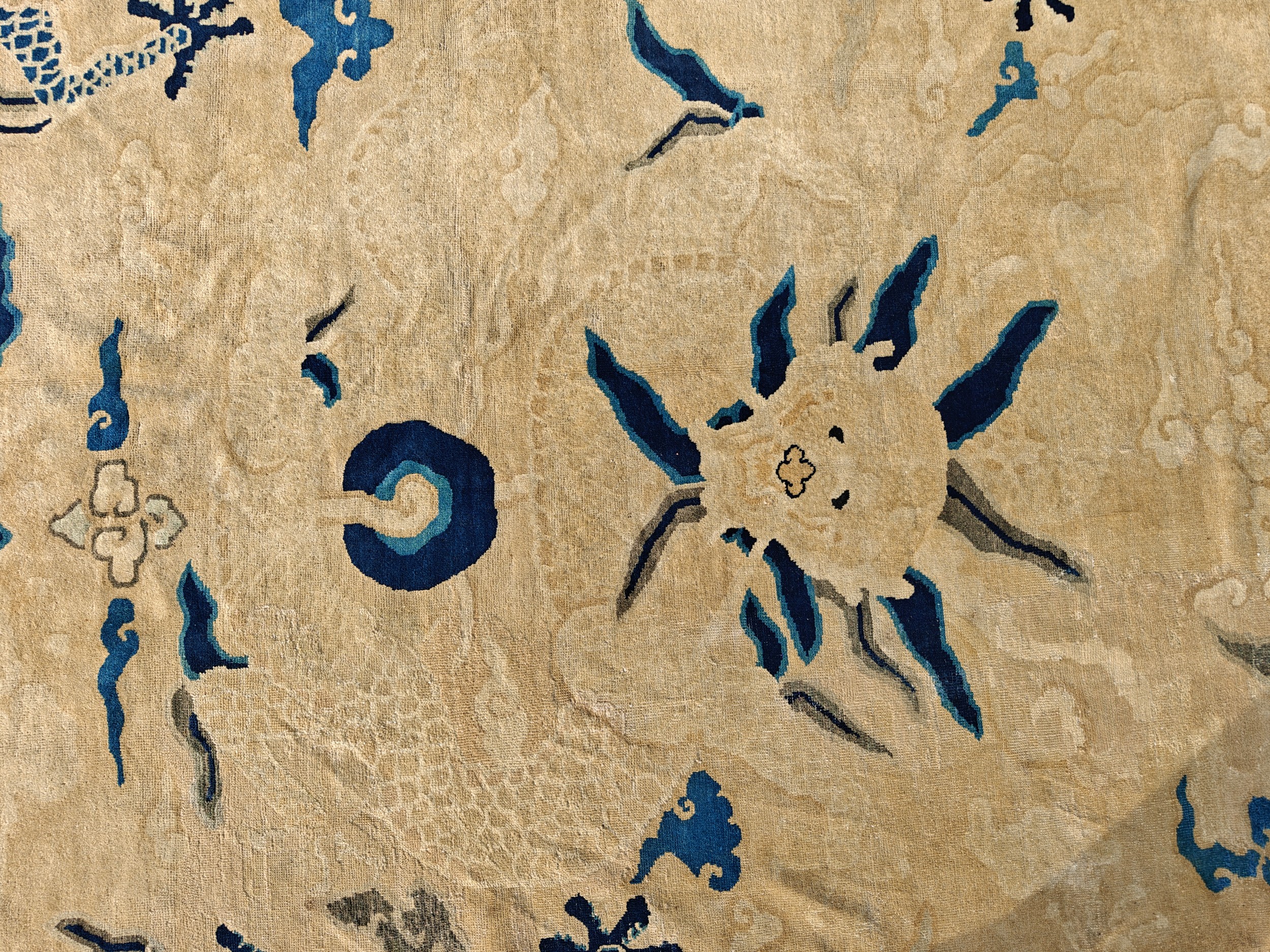
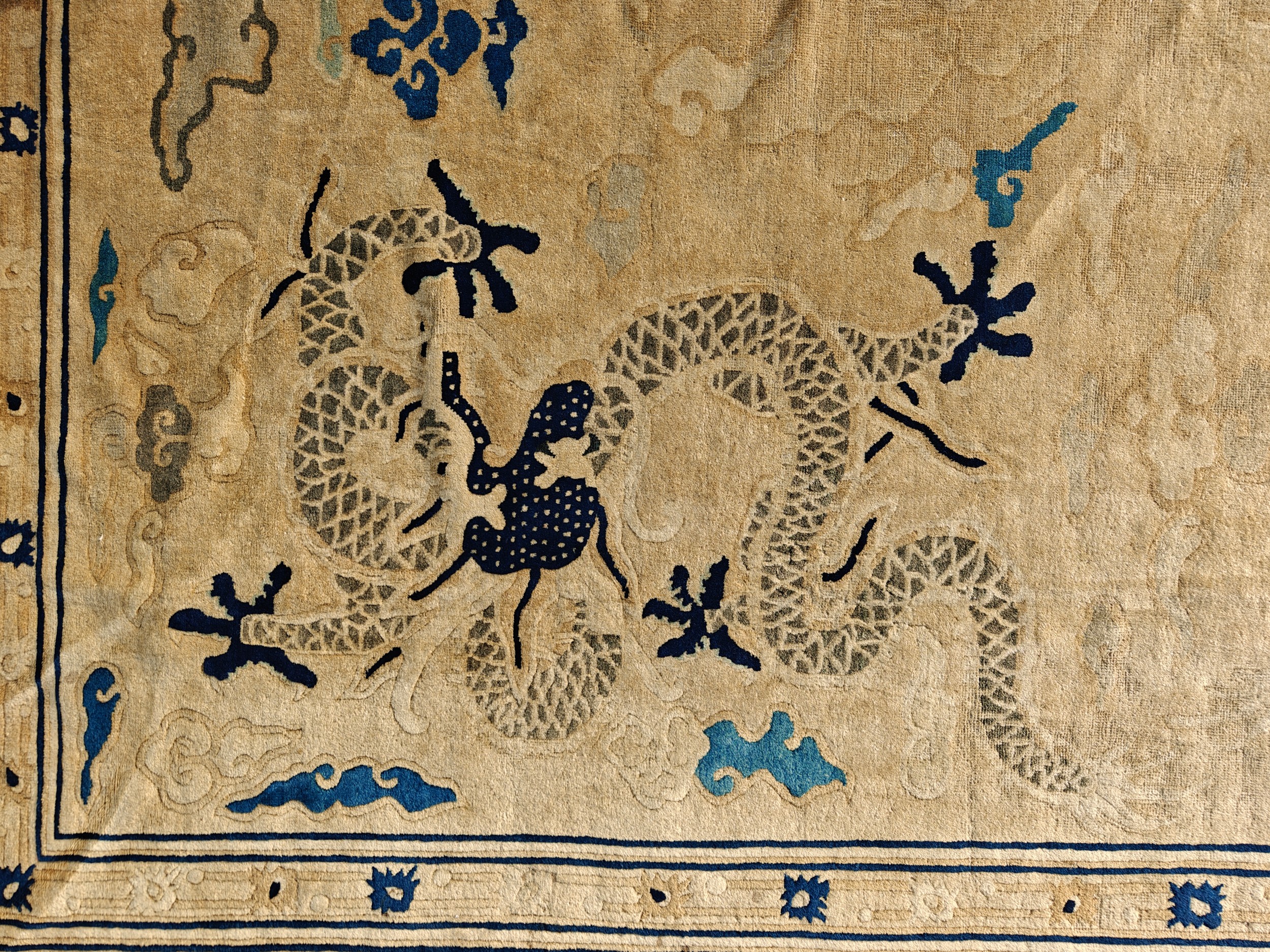
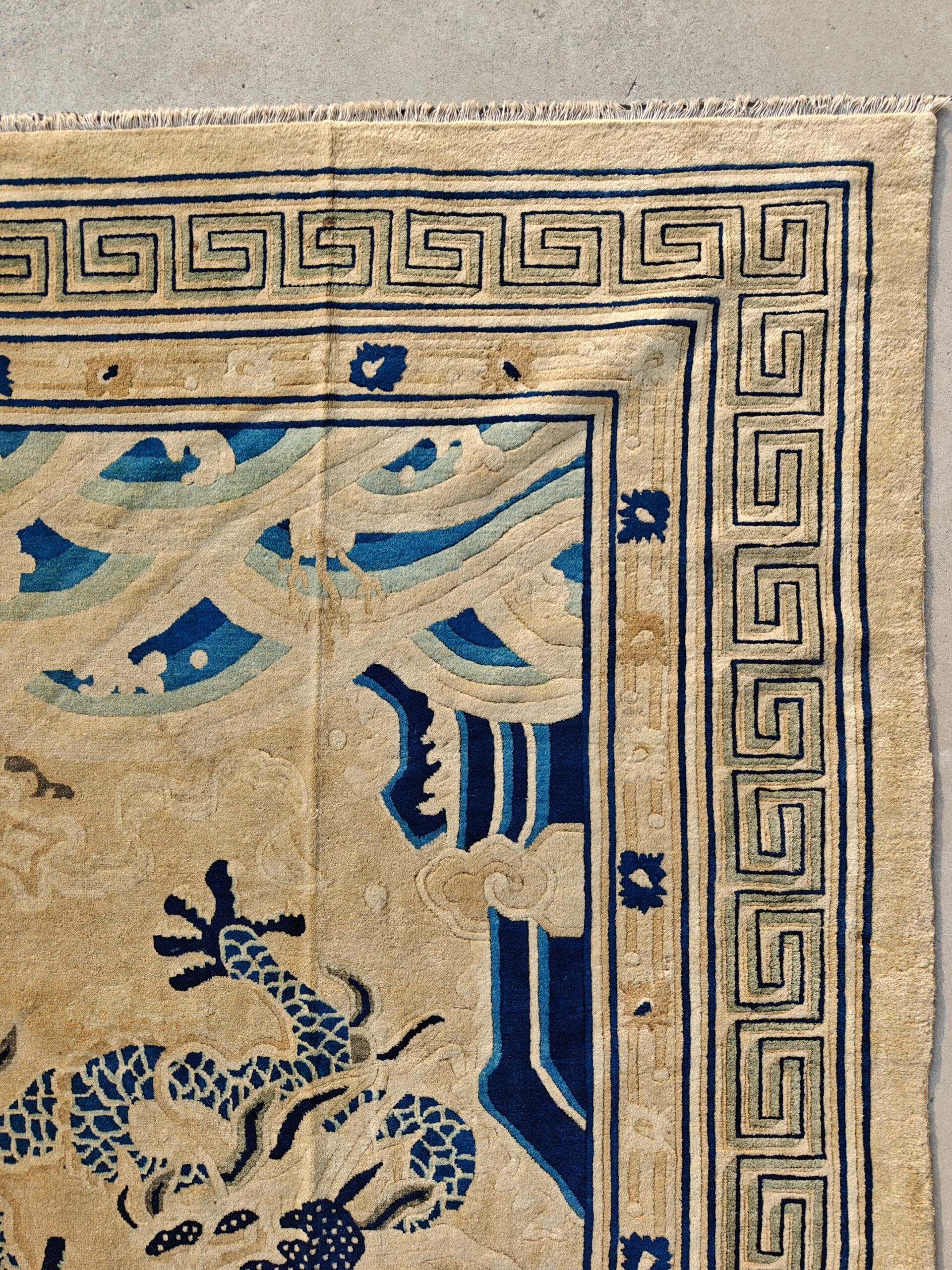
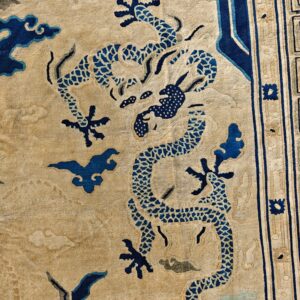
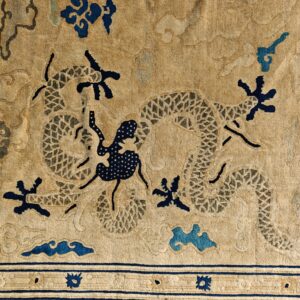
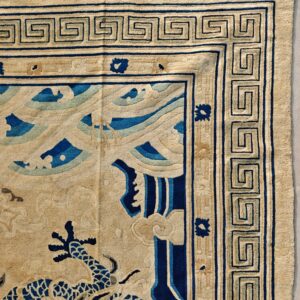
This nineteenth-century Peking carpet from China is a monumental and highly symbolic “Imperial-style” textile, representing the height of the Qing Dynasty’s aesthetic influence on the Beijing workshops. While many Peking rugs are known for their floral or scholar-taste designs, this Square room-size specimen is a significantly rarer find, featuring the powerful and ancient iconographies of the Dragon and the Cloud Band.
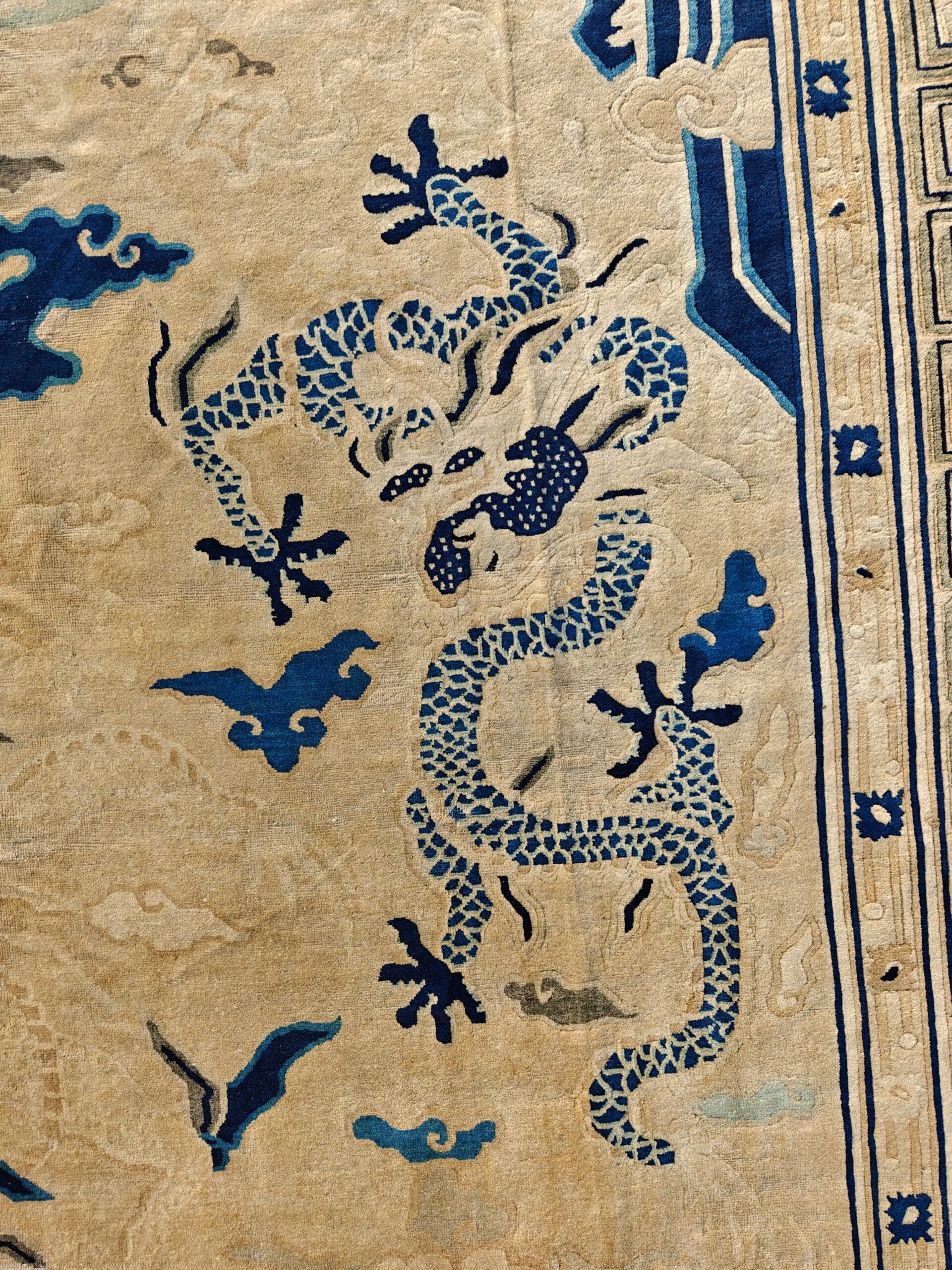
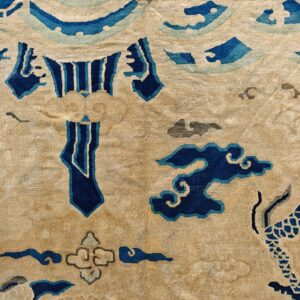
The composition is centered upon a Writhing Imperial Dragon, a motif that for millennia served as the ultimate symbol of the Emperor, representing power, strength, and good fortune. The dragon is typically rendered with a fluid, calligraphic grace, appearing to surge through a field of stylized Cloud Bands (Yun) motifs. These cloud motifs represent the celestial breath of the universe and serve as a bridge between the earthly and spiritual realms. The Square format is particularly notable; it was often a custom commission for specific architectural spaces within a palace or a grand manor, offering a balanced symmetry that is difficult to find in the more common rectangular sizes.
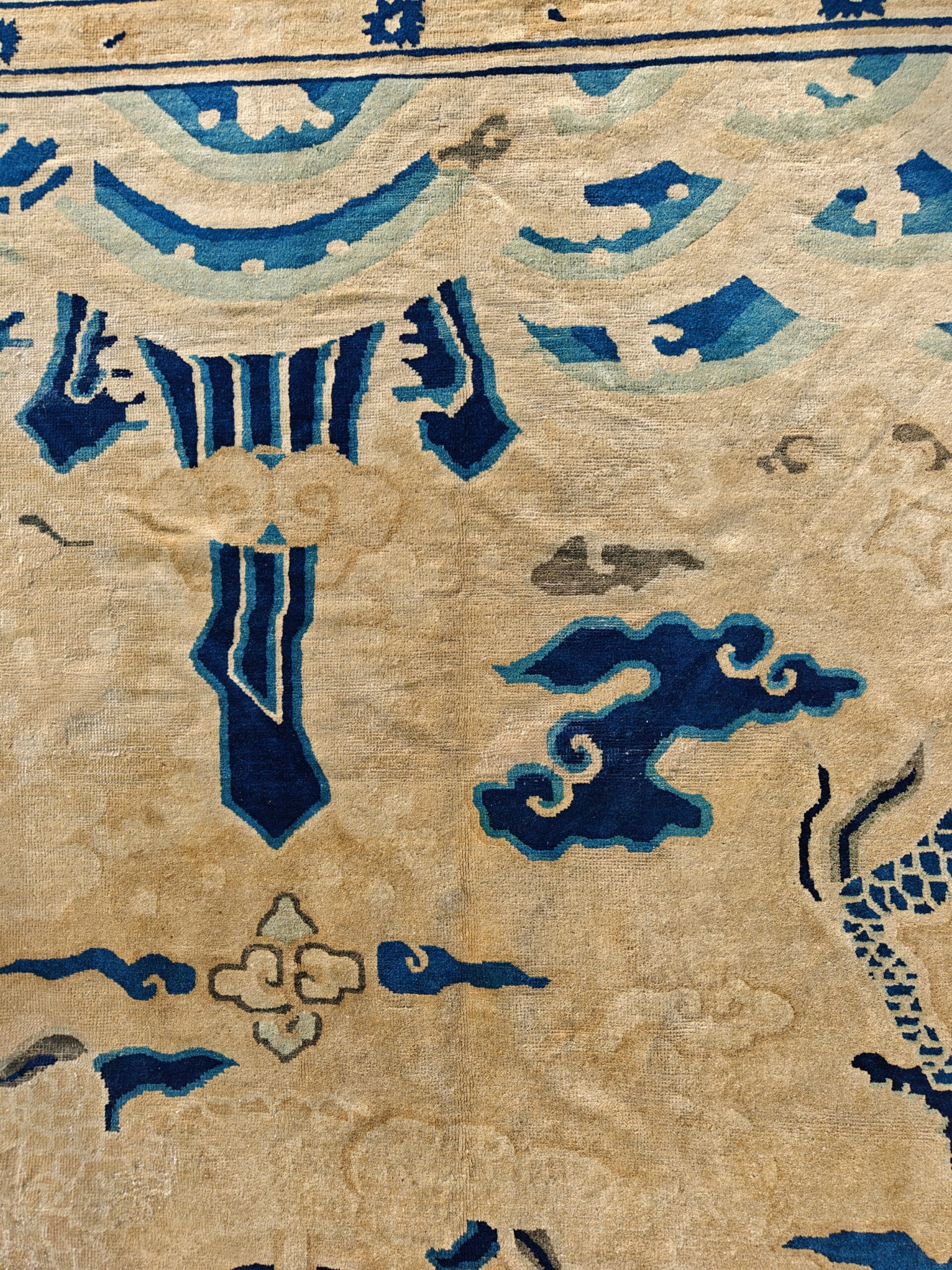
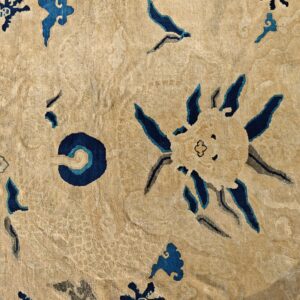
The palette is anchored by a luminous and rare Antique Ivory foundation. This “clotted-cream” or “parchment” ground has mellowed over nearly 130 years into a warm, sun-drenched tone that reflects light with a soft, matte glow. Against this tranquil stage, the dragon and cloud bands are rendered in a sophisticated range of Indigo Blue, Slate, and Midnight. Because this is a 19th-century specimen, the natural indigo dyes exhibit a beautiful “watercolor” abrash, where the blues shift in tone like a shifting sky, giving the monochromatic palette a three-dimensional depth and a sense of historical gravity.
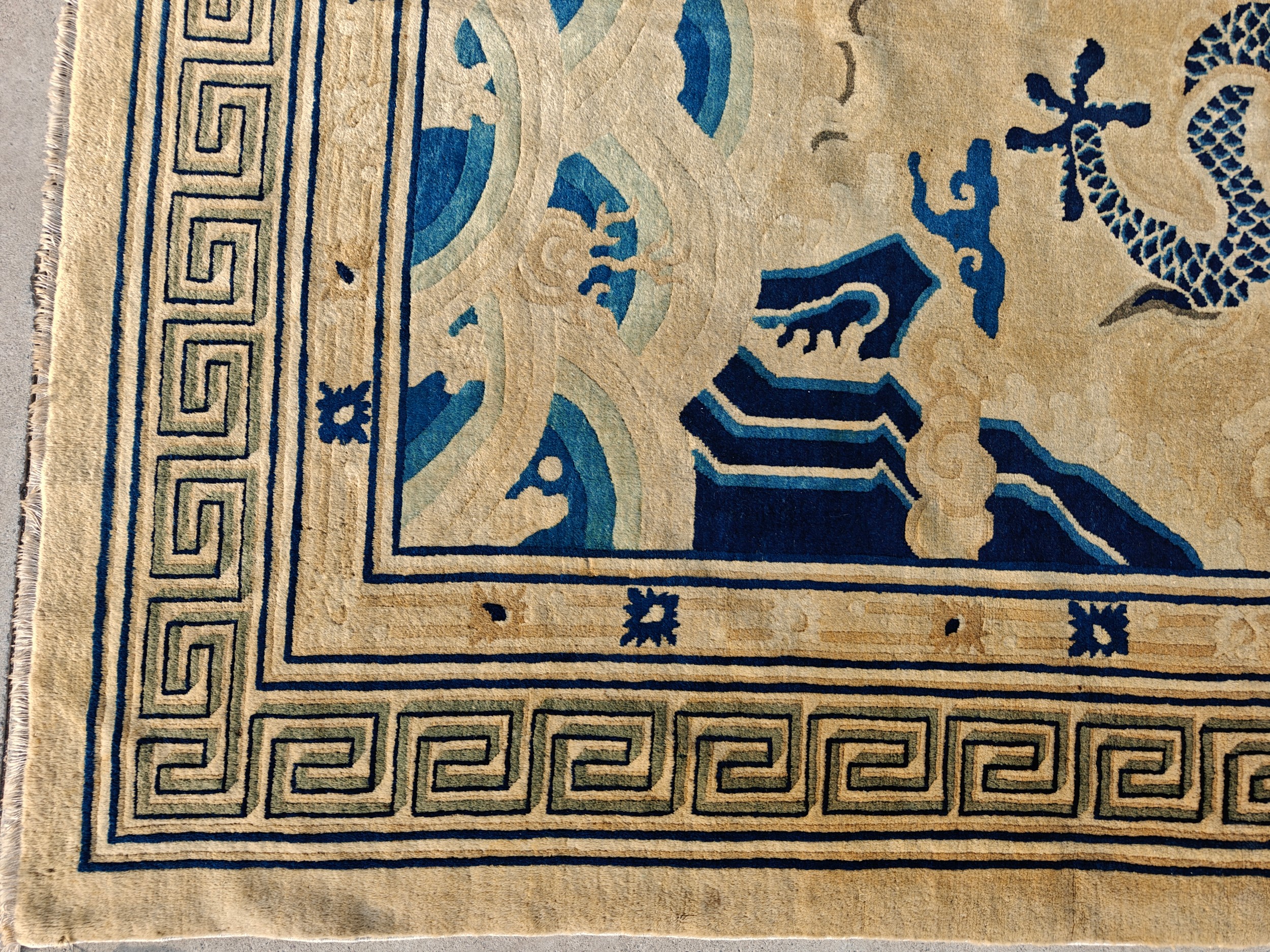
Technically, the antique Chinese Peking carpets are prized for having lush, high-grade wool pile and substantial, “meaty” handle. The wool used in these urban workshops was sourced from high-altitude sheep and was exceptionally rich in natural lanolin, resulting in a velvety surface with a subtle, healthy sheen. A defining characteristic of this era is the hand-carving or “embossing” technique, where the weaver hand-clipped the wool around the dragon and clouds to create a sculptural depth, making the celestial figures appear to float above the ivory field.
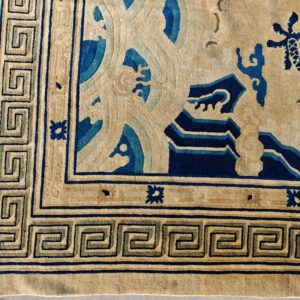
The borders act as a disciplined architectural frame, often featuring a “Cloud Swag” or “Rainbow” border, or the “Shou” (longevity) calligraphic character to reinforce the rug’s auspicious nature. To possess this Antique Square Chinese Peking Dragon carpet is to own a piece of dynastic history. It bridges the gap between sacred mythology and sophisticated decorative art—transforming any space into a sanctuary of historical gravity and serene, celestial power.