
How to Choose a Rug Store: The Connoisseur’s Guide to Dealers, Galleries and Showrooms
Buying a hand-knotted rugs is not a transaction; it is an acquisition of a beautiful piece that will be in the family for years. In a market flooded with mass-produced “fast-decor,” choosing where to buy is just as important as the rug or tapestry itself – or more so even. That is why fining the best rug store is key. This is because, a truly reputable rug dealer acts as a curator, a historian, and a structural auditor, ensuring that the ritual of your purchase results in a piece that will endure for generations.
Beware Of Blindly Trusting Online Searches Like “Rug Stores Near Me”
The internet is a wonderful tool. It open up markets and provides shoppers with far more options than they could ever need. That said, an online search for “rug store near me” we will inevitably provide a mix bag of rug dealers and galleries. At the end of the day, not every rug store is created equal. Not all rug dealers are honest. Not all rug galleries will be straight forward or transparent.
Understanding who you are buying your rugs from and where you shop tells you exactly what kind of service, value and quality to expect.
What do you call a rug dealer?
While many use the term “salesperson,” a specialist is often referred to as a “rug expert”.
Choose a Dealer with a Structural Standard
Don’t buy a floor covering. Invest in a beautiful piece tied by hand.
SHOP OUR CURATED COLLECTIONHow to Choose a Rug Dealer and Audit a Masterpiece
Choosing where to buy a rug is the most significant factor in the longevity of your investment.
“A true rug dealer is a structural auditor; a regular retail rug store is merely a middleman.”
Where shouldn’t I buy my area rugs?
As a starting point, avoid “Liquidators”, Going Out Of Business (GOB) Sales or “Big Box” retailers.
Avoid any store or website that uses these high-pressure tactics:
- The “Going Out of Business” Trap: If a store has been “closing” for three years, their rugs are likely overpriced or low-quality stock cleared from other warehouses.
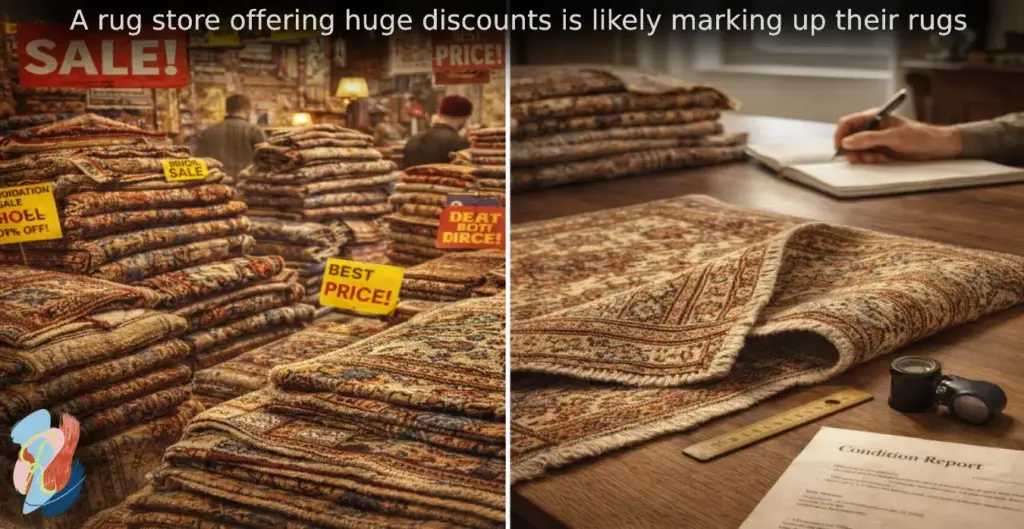
- The 70-80% Discount: High-end, hand-knotted rugs hold their value. A store offering permanent 80% discounts is likely marking up their rugs to an astronomical “suggested retail price” only to drop it back to its true (“low”) value it should be priced at from the start.
Don’t buy from a rug store that hide prices
In the world of rugs, a rug store that has a “Price on Request” and hidden pricing are a legacy tactic used by old-school showrooms to maintain an information imbalance. For the modern consumer, this isn’t just an inconvenience—it’s a major red flag regarding the integrity of the piece.
Why you should avoid dealers who refuse to offer transparent pricing
The “Arbitrary Markup” Trap
When prices aren’t visible, the cost of the rug is often determined by the dealer’s assessment of you, rather than the structural value of the rug.
- The Problem: Hidden pricing allows for “differential pricing”—where two different customers might be quoted two different prices for the exact same Tabriz or Oushak based on their perceived budget, their zip code, or whether they are working with an interior designer.
- The Integrity Standard: A true rug store / dealer, acting as a structural auditor, knows that the value of a rug is fixed by its knot density (KPSI), material rarity, and age. Those metrics don’t change based on who is asking, and the price shouldn’t either.
The “Phantom Discount” Illusion
Rug store / dealer who hides prices will often rely on the 70–80% off “Liquidation” sale model.
- The Tactic: By not having a public, fixed price, a dealer can claim a rug is “valued” at $20,000, only to offer it to you for $5,000 as a “special deal.”
- The Reality: If a rug is permanently on sale for 80% off, the “original price” was never real. Transparent pricing forces a dealer to stand by their valuation in the open market, ensuring you are paying the true fair-market value of the textile.
Lack of Technical Accountability
Price transparency is usually tied to data transparency.
- When a price is listed clearly online, it is almost always accompanied by a spec sheet: Origin, Material, Age, and Knot Count.
- When a dealer hides the price, they are often hiding the technical data that justifies that price. Without a visible price to compare against those specs, it is impossible for you to perform a Structural Audit to see if the investment matches the engineering.
It Complicates the “Trial Option”
You must be able to at least have the option of taking a rug home to see it in your own light.
- The Conflict: If you don’t have a transparent, fixed price in writing (or on the website) before the rug enters your home, the “approval period” becomes a high-pressure negotiation phase.
- The Solution: Transparent pricing allows you to focus entirely on the aesthetic and tactile fit of the rug during your trial period, rather than worrying about whether you’re being out-negotiated on the back end.
Hidden Fees and Commissions
In many “Price on Request” showrooms, the price is padded to include “undisclosed commissions” for third parties. The more shady “bazar” mentality rug dealers may even charge more if they know you can afford it.
- By maintaining a transparent online inventory, Rugs On Net ensures that you are paying for the rug’s structural integrity and artistry, not for a middleman’s referral fee.
The Retail Rug Shop: Selling the “Look”
A standard retail rug store or big-box retailer’s website view their area rugs as merely potential revenue sources. They basically act as middlemen who buy inventory based on current color trends and “fast-fashion” interior styles. Then they look to sell them as the trends continue.
Most rug sales people in the bigger outlets and stores will knot know or care about the history of the area rugs they sell. They have no clue about the dyes used, the types of rug knots or the materials used to make the rug.
Most sales people care about finding something you will like so they could close the sale and move on to the next client. They may try to push your budget, not because they want you to buy a “better” rug – the more you spend, the higher their sales commission.
Why you shouldn’t buy your rugs from a home goods store
If a store sells sofas, lamps, and rugs, they are selling a “look,” not a “structure.” Specialist dealers understand the complexities of weave and the chemistry of the dyes. They understand what a rug is and is not and have the knowledge to guide you to the perfect rug based on your individual needs and wants.
Why Rugs On Net Is A Trusted and Best Rug Store / Rug Dealer Vs Others
The Dealer Audit: Rugs On Net vs. Traditional Showrooms
| Standard of Integrity | Old-School Showrooms | The Rugs On Net Standard |
|---|---|---|
| Pricing Model | “Price on Request” / Hidden prices change based on the buyer’s income / profile. | Transparent & Fixed. Value is based on quality metrics. |
| Logistics & Shipping | High-cost delivery fees or “Buyer-Arranged” freight for larger pieces. | Free Domestic Shipping. We manage the logistics of the process. |
| The “Safety Net” | Final Sale or Store Credit only. High-pressure “all sales final” policies. | Full Returns Accepted. If the rug doesn’t pass your home audit, we take it back. |
| Technical Data | Vague origins (e.g., “Persian Style”) with limited info on knot count. | Full Structural Audit: Specific village, KPSI, and dye chemistry. |
| Authenticity | Verbal promises; rarely provides written provenance or appraisals. | Certificate of Authenticity included with every hand-knotted piece. |
| Trial Process | In-store viewing only; fluorescent lighting masks the true color. | Risk-Free Home Trial. See the rug in your actual light and space. |
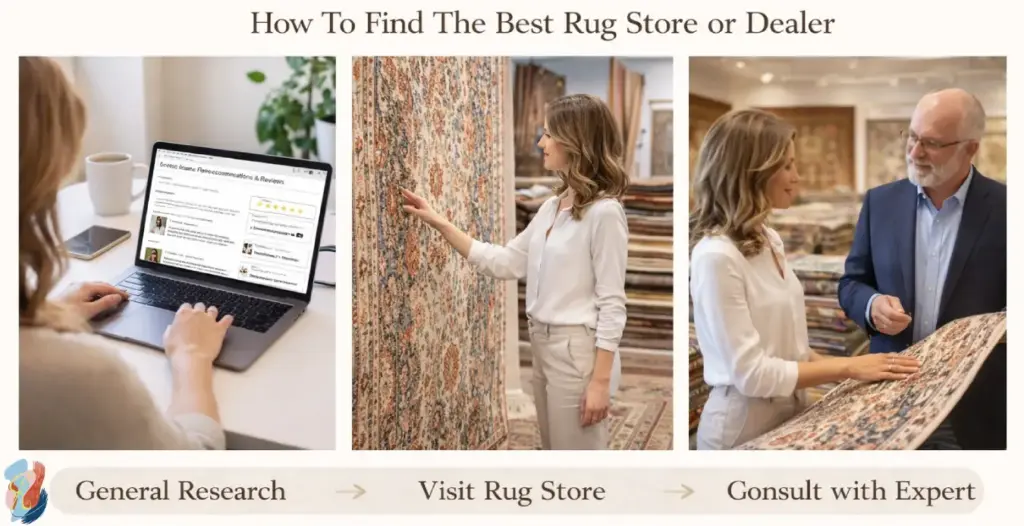
How To Find The Best Rug Store
Finding the best rug store requires moving beyond basic retail and finding a dealer who operates as an expert. Because high-quality fine area rugs, especially if your shopping for antique rugs, can be significant investments, the “how” of your search should focus on technical transparency and risk mitigation.
Finding a reputable rug store or dealer is about moving past the “sales pitch” and identifying a structural auditor who prioritizes transparency over a transaction. Here is exactly how to find and vet a trustworthy purveyor.
Evaluating Their Online Presence
A rug store / dealer’s website and social media should be an educational resource, not just a catalog.
- The “Blueprint” Test: Look at their product pages. A reputable dealer / rug store will show you high-resolution photos of the back of the rug, the selvage (edges), and a close-up of the pile. If they only show one “glamour shot” from the front, they are hiding the structural details.
- Technical Data vs. Marketing Fluff: Experts provide specific data: dye chemistry (natural vegetable vs. synthetic), yarn type (hand-spun vs. machine-spun), and specific village rug origin. Avoid sites that use vague terms like “Modern Persian Rug Style” or “Luxury Traditional.”
- Educational Content: Reputable dealers often have informative rug blogs or rug knowledgebase guides that explain the ritual of weaving and how to identify quality. If their content is only about “decor trends,” they are likely a middleman, not a purveyor.
Critical Policies to Look For
The best dealers offer policies that acknowledge the complexity of buying a hand-knotted textile:
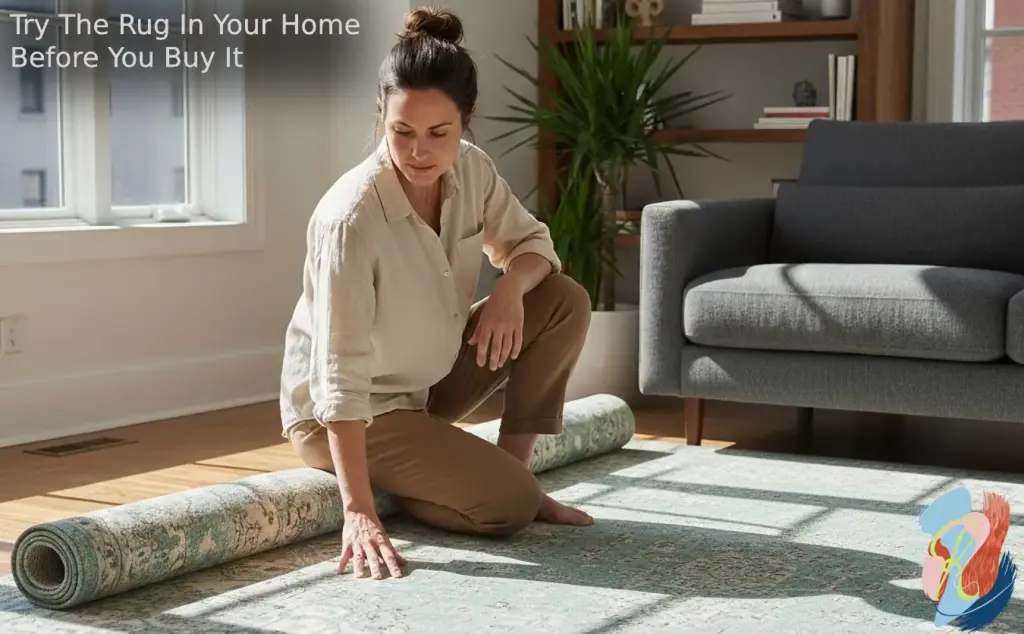
- The Home Approval Process: Because natural wool is metameric (colors change drastically in different light), a trustworthy rug store insists you try the rug in your home. Look for a risk-free trial period.
- Transparent & Fixed Pricing: Avoid “Price on Request.” This often means the price is based on the dealer’s assessment of your budget. Transparent pricing ensures you are paying the fair market value of the construction.
- Certificates of Authenticity: An expert will provide a physical document for every hand-knotted rug that guarantees its age, origin, and materials.
Why Reviews are a “Grain of Salt” Metric
Don’t rely solely on the rug store star ratings, as they often measure the wrong things:
- Initial Impression only: Most reviews are written immediately after delivery. They reflect shipping speed, not whether the rug will survive its first professional wash or if it will begin to shed due to low-quality “clamped” fibers.
- Manufactured Reputation: Be aware that some dealers hire third-party reputation companies to write fabricated reviews. If you see a sudden influx of reviews that all sound similar or lack technical detail, they may be inorganic.
- Incentivized Praise: Many retailers offer discounts or gift cards in exchange for a 5-star rating. This creates a “pay-to-play” feedback loop where the review reflects the customer’s happiness with a discount, not the long-term structural integrity of the rug.
- What to look for instead: Search reviews for mentions of the dealer’s technical knowledge, their honesty about repairs, and how they handled returns.
Where to Find These Dealers
Finding a specialist requires looking where other textile experts go:
- Rug Restoration Specialists: Call a local company that does submersion hand-washing and antique repair. They see the “insides” of rugs daily and know which dealers sell structurally sound pieces versus those that use toxic glues.
- Estate Appraisers: Professional appraisers know which galleries sell rugs that actually hold or increase in value over decades.
- Interior Architects: Unlike general decorators, architects prioritize material honesty and structural integrity. Ask them for their “source of truth” for textiles.
- Auction Houses: Reach out to the rug departments at reputable regional or international auction houses. Their specialists handle thousands of pieces and can recommend galleries that maintain high standards for provenance and condition reporting.
Here are some of the best places to buy area rugs?
When you are ready to find the perfect piece, knowing where to look is half the battle. To ensure you are buying from a reputable source / rug store that values quality and transparency, it helps to understand your options.
Where to Find the Best Area Rugs
Finding the right dealer or rug store depends on your budget and the type and style of rug you are looking for.
Here are the most common places to start your rug search:
- Specialized Rug Store / Gallery: These are your best bet for investment-grade, hand-knotted pieces. A reputable rug store or gallery will act as a structural auditor, providing full technical data on knot density, dye chemistry, and provenance.
- Estate Sales and Auction Houses: If you enjoy the hunt, these can be goldmines for finding unique, high-quality vintage or antique rugs at lower prices. Pro tip: Always reach out to the rug departments at reputable auction houses; their specialists handle thousands of pieces and can recommend galleries that maintain high standards for condition reporting.
- Rug Restoration Specialists: While not always traditional “stores,” these experts are the ultimate insiders. They see the “insides” of rugs daily—through submersion hand-washing and repair—and they know exactly which dealers sell structurally sound pieces versus those held together by toxic glues.
- Large Online Retailers: Platforms like Wayfair or Overstock are generally suitable if you are looking for commercial-grade or “fast-fashion” rugs at low price points. Keep in mind that these pieces are typically mass-produced and lack the structural longevity of hand-knotted textiles.
Haggling Over The Price Of A Rug
While haggling is a cultural tradition in many rug bazaars, it is generally not major point in a professional rug gallery experience. A reputable dealer prices their inventory based on a rigorous structural audit—including age, material rarity, and knot density.
In a professional gallery setting, the price of a rug isn’t a starting point for a negotiation—it is a conclusion reached through a technical audit. When a dealer prices a piece, they are calculating the engineering costs and historical rarity of that specific textile.
If a rug store drops the price by 30% or 50% simply because you asked then you may want to walk away. Such high price variations is an indication that the “original” price was likely inflate. Some old school rug dealers will use this model because they feel people will “feel better” if they walk away thinking they squeezed the rug dealer and hammered down the price themselves. But in reality, it was all part of the “game” some dealers play.
The Anatomy of Professional Pricing
A reputable dealer treats a rug like a fine asset. The price is determined by verifiable metrics. These metrics should not change based on who is walking through the door.
Some of the factors that influence the price of rugs:
- Material Used: The cost difference between wool rugs and pure high grade silk rugs, for example, if significant.
- Dye Complexity: Natural vegetable dyes require days of fermentation and specialized knowledge, making them far more valuable than instant synthetic chrome dyes. This is true more so in the new area rugs being produced today.
- Knot Density and Type: The complexity of the weave (like the difference between a Senneh knot and a Ghiordes knot) dictates the labor hours invested.
Why Massive Discounts are a Red Flag
If a rug store offers a discount and drops the price by thousands the moment you hesitate, they are admitting that their initial price was inflated. It is a sign that they are trying to cheat you.
- Arbitrary Markups: High-pressure retailers often mark a rug up by 400% just to “discount” it back to a still-inflated price. This creates a false sense of urgency and “winning.”
- The “Rug Bazaar” vs. The “Rug Store / Gallery”: In a bazaar, you are haggling over a commodity. In a gallery, you are paying for curation and a guarantee of authenticity. A fixed price is a sign that the dealer stands by their structural audit.
What defines the best rug store and carpet dealer
The best rug store or dealer is defined by their technical transparency, educational approach, and structural integrity rather than just their sales tactics. A top-tier rug store / dealer operates more like an auditor, providing you with verifiable engineering data about a rug’s construction and history.
Core Qualities of a Top-Tier Rug Dealer
- Radical Transparency: Reputable dealers are upfront about a rug’s origin, materials, and age. They avoid “illusionary” sales (like constant 70% off tags) and instead price inventory based on verifiable metrics like knot density (KPSI), age, rarity and dye quality.
- Knowledge & Education: A great rug store / dealer wants you to understand what you’re buying. They can explain the difference between hand-spun and machine-spun wool or why a natural vegetable dye offers more depth and durability than a synthetic chrome dye.
- Trustworthy Reputation: Look for stores with a documented history and genuine third-party reviews. They should be willing to provide a physical Certificate of Authenticity and allow for home trials, as rug colors can shift dramatically depending on your home’s lighting.
- Professional Sourcing: The best rug dealers often have direct relationships with artisans or work with rug restoration specialists. Experts who clean and repair rugs are often the best at identifying which pieces are built to last versus those held together by glues or toxic chemicals.
- Condition transparency: The best rug dealers will be very upfront about the condition of the rug you are considering. The feel no need to hide and will factor any conditions issues in the price.
The best rug store will always be honest about the condition of their rugs
Upfront transparency regarding rug condition is one of the clearest indicators of a reputable rug store or dealer. Unlike mass-produced home goods, handmade rugs—especially antique or vintage area rugs—will almost always have “character marks.” A trustworthy dealer doesn’t hide these; they document them.
What “Condition Transparency” Looks Like Online
When reviewing a dealer’s website, look for a condition report or make sure to get a condition report that includes:
- Pile Wear: They should specify if the rug has “low pile,” “areas of wear,” or “corrosion” (where certain dyed wool wears down faster than others, creating a 3D effect).
- Structural Repairs: Every antique rug has likely had a repair. A good dealer or rug store will point out re-woven sections or re-bound edges. If a 100-year-old rug looks “perfect” and has no repair history and is cheaply prices, it’s likely a modern reproduction.
- Foundation Integrity: They should state if the warp and weft are brittle. A “good-looking” rug with a dry, brittle foundation will crack when folded and will disintegrate over time.
The “Paint and Tint” Red Flag
In the world of high-end rugs, “paint” and “tint” are controversial terms that describe how a dealer handles honest wear. When an older rug’s colorful wool pile wears down, it often reveals the light-colored internal foundation, appearing as tiny white dots (sometimes called “white heads”). For some collectors, these dots are a badge of honor that adds to the rug’s authentic patina, but others find this “distressed” look distracting and prefer a more uniform appearance.
To bridge this gap, a specialist might use a technique called tinting, where a fountain pen or a fine-tipped pen is used to apply a tiny amount of high-quality textile dye directly to those specific white foundation dots. If the dye is applied correctly by an expert, it should be steadfast, meaning it won’t wash away or bleed during a standard professional cleaning. This delicate process is often considered an acceptable cosmetic enhancement for buyers who want the history of an antique rug without the visual “noise” of a showing foundation.
The real danger arises when a rug store uses heavy painting as a substitute for structural repair. While tinting a few foundation dots is a minor cosmetic touch-up, “painting” involves covering large areas of wear with thick pigments to hide bald spots that actually require new wool. Unlike expert tinting, this heavy paint is often not permanent; it can stiffen the wool, rub off on furniture, or wash out completely during a cleaning, suddenly revealing massive amounts of damage that the buyer wasn’t aware of. A reputable rug store will always be upfront about whether a rug has been lightly tinted for aesthetics or heavily painted to mask structural failure.
Buying from a rug store’s online website vs in person and how to shop with confidence
Choosing between an online gallery and a physical store / showroom often comes down to a balance of convenience and tactile verification. Shopping in person allows you to feel the lanolin content of the wool and see the rug’s colors in a single lighting environment, but it often limits your selection to what a local dealer has in stock. Conversely, shopping online provides access to a global inventory of rare textiles, but it requires a much higher level of digital vetting to ensure the rug store is a true structural auditor and not just a high-volume reseller.
To shop with absolute confidence online, you must look for a dealer who treats their website as a transparency portal. A truly reputable dealer will provide high-resolution “structural” photography that includes the back of the rug, the side selvages, and the fringe foundation. If a dealer only shows one or two “beauty shots” of the front, they are likely hiding wear or structural flaws. Furthermore, a top-tier rug store will offer a risk-free home trial period, acknowledging that a hand-knotted rug’s colors are metameric and will shift significantly depending on the specific light in your home.
The ultimate mark of a reputable rug store is their willingness to provide a written Certificate of Authenticity that legally guarantees the rug’s age, origin, and material composition. Whether you are standing in a showroom or browsing a website, an expert purveyor should be able to answer technical questions about dye chemistry and yarn spinning with ease. If a dealer pressures you with “limited-time” liquidations or refuses to disclose fixed pricing, they are likely prioritizing a transaction over the long-term integrity of your investment.
Make sure to ask questions before buying
To truly audit a rug like a professional, your questions should move past “Is this a good rug?” and into the technical specifics of its construction, history, and current state.
A reputable rug store will welcome these questions because they prove you value the structural integrity of the piece.
Structural Quations
- “Is the fringe structural?” Ask if the fringe is a natural extension of the warp threads (the rug’s “skeleton”) or if it has been sewn on later. A sewn-on fringe is often a sign of a machine-made or lower-quality rug.
- “What is the foundation material?” For older rugs, you want to know if the warp and weft are cotton, wool, or silk. This tells you how the rug will handle humidity and tension over time.
- “Is the wool hand-spun or machine-spun?” Hand-spun wool retains more natural lanolin, which makes the rug significantly more soil-resistant and gives the colors a more organic “glow.”
Condition & Transparency
- “Are there white foundation dots showing, and have they been tinted?” As we discussed, tiny white dots (wear) are normal in antiques. Ask if a fountain pen or dye was used to touch them up and if that dye is colorfast.
- “Has the rug been heavily painted?” Verify that no large sections of the rug have been painted over to hide bald spots or structural failure.
- “Is there any evidence of dry rot?” Ask the dealer to “fold” the rug to check for a snapping sound. A reputable dealer will have already checked that the foundation is supple, not brittle.
Material Honesty
- “What type of dyes were used?” Ask specifically for natural vegetable dyes versus synthetic chrome dyes. Natural dyes age with a beautiful patina, while cheap synthetics can look “flat” or bleed.
- “Has the rug undergone a ‘Luster Wash’?” Some modern dealers use harsh chemicals to make a rug shiny. This can strip the wool’s natural oils, making it brittle and harder to clean in the future.
Dealer Integrity
- “Is this rug in your physical possession?” Ensure they aren’t just a drop-shipper. You want to buy from the person who has personally audited the knots.
- “Can I see a photo of the back next to a ruler?” This confirms the knot density (KPSI) and shows you the “fingerprint” of the weaver.
- “What is your home trial policy?” Because rugs are metameric (they change color based on your light bulbs and windows), a reputable dealer should always allow a trial period.
Why Shop From Rugs On Net?
Buying a hand-knotted rug is an acquisition of a piece of history. At Rugs On Net, we don’t just sell floor coverings; we act as structural experts for every piece in our collection. We understand that our reputation as a top rug store is woven into the integrity of the pieces we provide.
Radical Transparency in Condition
We believe that patina is part of a rug’s story, but we also believe you should know exactly what that story is. We are upfront about every repair and area of wear. While some dealers use heavy paint to hide bald spots, we use only expert tinting with steadfast textile dyes for minor cosmetic “white heads,” ensuring the fix is permanent and the rug’s true condition is never a mystery.
Risk-Free Digital Vetting
We know that shopping online requires a high level of trust. That is why we provide a “Blueprint Gallery” for our rugs—including high-resolution photos of the back and different angles—so you can inspect the weave yourself. Because rugs are metameric, we insist on a risk-free home trial; you shouldn’t have to guess how the colors will shift in your specific lighting.
Fixed, Technical Pricing
We reject the “bazaar” mentality of arbitrary markups and phantom 80% discounts. Our pricing is a conclusion reached through a technical audit of knot density, age, and dye chemistry. When you shop with us, you are paying for the verifiable engineering of the rug, not a negotiated figure based on your budget or zip code.
A Partnership Beyond the Rug Store Purchase
At the heart of our philosophy is a simple truth: we are not a rug store that is here to just sell a rug and disappear. We view every acquisition as the beginning of a multi-generational relationship. A high-quality, hand-knotted rug is a living textile that requires proper care, occasional maintenance, and expert advice as it matures. Our commitment to you doesn’t end when the rug is unrolled in your living room. We remain your dedicated resource for guidance on professional cleaning, restoration, and even future appraisals.
We take pride in knowing the history of our pieces and the homes they go to. By choosing a rug store and dealer who values continuity over commissions, you ensure that your investment is protected by experts who are as invested in the rug’s future as you are. Whether you need advice on rotating your rug to manage sunlight exposure or help identifying a rare weave years down the line, we are here to ensure your carpet remains a source of pride in your home for decades to come.
FAQ
- What does “a partnership beyond the rug store purchase” actually look like?
It means the dealer stays useful after delivery—helping with care guidance, cleaning direction, and long-term stewardship of the rug. The relationship continues as the rug ages, rather than ending at checkout.
- What does “fixed, technical pricing” mean at a rug store or dealer?
It means the price is derived from the rug’s measurable attributes (quality, age, construction) rather than negotiation pressure or buyer profiling. You’re paying for the rug’s engineering and integrity, not a sales game.
- What is “risk-free digital vetting” when shopping a rug store like Rugs On Net online?
It means giving you enough detailed photography and information to inspect structure remotely, then backing it with a home-trial style safety net. You’re not forced to “guess” from a single front-facing photo.
- What does “radical transparency in condition” mean at Rugs On Net as a rug store/dealer?
It means documenting wear and repairs instead of hiding them, and distinguishing minor cosmetic touch-ups from anything that masks structural issues. The goal is that the rug’s true condition is never a surprise.
- Why will the best rug store always be honest about the condition of their rugs?
Because handmade, vintage, and antique rugs naturally show wear and “character marks,” and a reputable dealer documents them. Condition transparency is how you know the price matches the real state of the textile.
- Why are massive discounts a red flag when choosing a rug store or dealer?
Huge “instant” discounts often imply arbitrary markups designed to create urgency and the illusion of a deal. In a quality-focused rug store, a fixed price signals confidence in the audit and authenticity.
- What is the anatomy of professional pricing at the best rug store or dealer?
Reputable dealers price by verifiable factors like materials, dye work, and weave complexity—not by who’s asking. The point is consistency: the rug’s structural reality should drive the number.
- Should I haggle over the price at a professional rug store or dealer?
In a true gallery-style experience, pricing should reflect a technical evaluation, not a back-and-forth game. If a dealer drops 30–50% instantly, it can signal the original price was inflated.
- Where can I find the best area rugs if I want better quality than a typical home goods store?
Start with specialist rug stores/galleries, then explore estate sales and auction routes if you’re experienced or guided. Restoration specialists are also “insider sources” because they see which rugs are built right when cleaned and repaired.
- Is it better to buy from a rug store online or in person, and how do I shop with confidence?
In person helps you verify feel and color quickly but limits selection; online expands selection but demands stricter vetting. Shop online only if the dealer provides structural photos, clear policies, and a real home-trial safety net.
- How do I find the best rug store or dealer in a practical, step-by-step way?
Vet their website like a “blueprint”: clear photos of the back, edges, and pile + real technical specs, not vague marketing. Then prioritize fixed pricing, a home approval option, and a written authenticity/condition standard.
- Where shouldn’t I buy my area rugs if I’m trying to choose the best rug store or dealer?
Avoid liquidators, perpetual “going out of business” sales, and big-box-style sellers that rely on pressure tactics. If the business model is permanent deep discounts, you’re usually not buying true quality metrics.
- What do you call a rug dealer at a rug store, gallery, or showroom?
A knowledgeable specialist is often called a rug expert rather than just a salesperson. The key difference is whether they can explain construction, origin, materials, and condition—not just “the look.”
- Why should I beware of blindly trusting online searches like “rug stores near me” when choosing a rug store?
Because those results mix true specialists with generic retailers, and they don’t guarantee honesty or technical knowledge. Your goal is to identify a dealer whose service, transparency, and standards match the rug you’re investing in.
- What’s a smart way to finalize a purchase with the best rug store or dealer?
Get everything in writing: exact size, material, construction, origin claims, condition notes, total price, and return terms. Pay using a method that offers buyer protection for higher-value rugs.
- How do I pick the best rug store or dealer for custom rugs?
Choose dealers who provide samples (strike-offs), detailed specs, and written timelines. Ask how many revisions are included and what happens if the final color is slightly off.
- What’s the best rug store or dealer policy for damage on arrival?
They should spell out a clear claims window (often 24–72 hours) and require photos of packaging and the rug. Don’t discard packaging until the rug is inspected.
- Should a best rug store or dealer help with appraisals or insurance values?
A quality dealer can often provide an appraisal or recommend a qualified appraiser for high-value rugs. For antiques, expect documentation of origin, age estimate, size, and condition.
- Does a best rug store or dealer offer “try before you buy” or home viewing?
Some do, especially locally, via loaners, home trials, or approval shipments. If offered, confirm the trial window (often 2–7 days) and who pays return transport.
- What should a best rug store or dealer do if colors look different in my home?
They should encourage viewing in your lighting and offer photos/videos in multiple light conditions. Many shoppers check rugs near windows and under warm bulbs before committing.
- What shipping details should I confirm with a best rug store or dealer?
Confirm processing time, carrier, delivery method (doorstep vs. white glove), and packaging. For large rugs, ask whether it ships folded or rolled and how to handle creases.
- How can a best rug store or dealer prove ethical sourcing?
Ask if they support programs like GoodWeave or Care & Fair and what supply-chain checks they use. Ethical dealers can explain where and how rugs are produced without dodging specifics.
- Can a best rug store or dealer help me with a rug’s smell or pet odors?
Many dealers can advise on safe deodorizing and when professional washing is needed. Avoid soaking or harsh chemicals unless the dealer confirms it’s safe for that fiber and dye type.
- What should a best rug store or dealer say about cleaning and maintenance?
They should give fiber-specific guidance (wool vs. silk vs. synthetics) and recommend professional cleaning intervals. A practical baseline is vacuuming 1–2 times weekly in busy rooms.
- How do I choose between a best rug store or dealer’s handmade and machine-made rugs?
Handmade rugs tend to be more repairable and hold value better, while machine-made rugs are usually cheaper and consistent. Ask for durability expectations in high-traffic areas before deciding.
- What should a best rug store or dealer recommend for rug pads?
They should match pad type to floor and rug: felt for cushioning, rubber for grip, combos for both. A common tip is choosing a pad about 1–2 inches smaller than the rug.
- Is a best rug store or dealer supposed to help with sizing?
Yes—good dealers help you choose a size based on furniture layout and traffic flow. Expect guidance like leaving 12–24 inches of floor border in many living rooms.
- How do I verify a best rug store or dealer’s “hand-knotted” claim?
Ask for close-up photos of the back, edge, and fringe construction, and request a written guarantee. Hand-knotted rugs typically show individual knots on the back, not a uniform grid.
- What are red flags when shopping at a best rug store or dealer?
Vague origin claims, no construction details, pressure tactics (“today only”), and unclear returns are big warnings. Another red flag is refusing to provide measurements or extra photos.
- How do I check rug quality at a best rug store or dealer showroom?
Flip it over and look for tight, even structure and crisp pattern definition on the back. Also check edge binding, fringe attachment, and whether the rug lies flat without rippling.
- What information should a best rug store or dealer disclose for vintage or antique rugs?
You want a written condition report noting repairs, wear, color runs, stains, and any foundation issues. If they won’t document condition, treat it as a red flag.
- Can I negotiate with a best rug store or dealer?
Often yes, especially for handmade, vintage, or higher-ticket rugs. Ask politely if there’s flexibility, a cash/transfer discount, or a better price on a rug + pad bundle.
- How do I compare prices across a best rug store or dealer without getting scammed?
Compare rugs that match on size, material, construction, and condition—then compare price per square foot. If one price is far lower, ask what’s different (fiber blend, repairs, machine-made).
- Does a best rug store or dealer provide a certificate of authenticity?
Many reputable dealers can provide a certificate or written guarantee for handmade/antique rugs. Ask that it includes origin, materials, size, and any stated age/quality claims.
- What return policy should a best rug store or dealer offer?
Prefer at least 14–30 days with the rug returned unused and in original condition. Confirm who pays return shipping and whether any restocking fees apply before you order.
- Should I buy from a best rug store or dealer in person or online?
In-store helps you judge color, texture, and density; online usually offers wider selection and easier comparison. A good rule is to shortlist online, then see finalists in person when possible.
- How can I tell if a best rug store or dealer is reputable online?
Look for detailed listings (pile/material, construction, exact size), real photos, and straightforward returns. A trustworthy dealer clearly states shipping timelines, fees, and who pays return shipping.
- What questions should I ask a best rug store or dealer before buying?
Ask what it’s made from, where it’s made, how it’s constructed, and how to clean it. Also ask for a written return policy and a condition report for any vintage/handmade rug.
- How do I find the best rug store or dealer near me?
Start with dealers that publish clear specs (material, construction, origin) and offer in-person viewing or easy returns. Shortlist 3–5 stores, then compare service, transparency, and policies.