
Introduction to Garden Design Rugs
Discover our curated selection of elegant Garden Design Rugs available now.
Definition and Style Features
The iconic garden designs in rugs are instantly recognizable by thier unique organization and motifs, which are drawn from the layout of Persian gardens. These rugs often depict a stylized map of a garden, divided into quadrants or compartments by water channels, pathways, or geometric borders.
At the center of this design lies the chahar bagh plan, a composition that splits the rug into four harmonious fields, symbolizing both earthly gardens and the eternal paradise promised in spiritual tradition. Within each panel, intricate botanical motifs—flowers, trees, shrubs, or even animals—fill the design, creating a woven landscape.
Unlike abstract or medallion rugs, garden rugs are narrative in nature, presenting a miniature world underfoot. Their motifs carry layers of symbolism: blooming flowers evoke renewal, cypress trees suggest immortality, and flowing water channels embody life and divine order.
Origins and Etymology
The etymology of chahar bagh rugs reveals their cultural depth. “Chahar bagh” translates from Persian as “four gardens,” referencing the cross-shaped design of Persian royal gardens, which themselves drew inspiration from ancient cosmology and the idea of paradise. This concept—where water and greenery meet in balanced quadrants—first emerged in Safavid Persia during the 16th century, when rulers commissioned carpets that reflected the grandeur of their palace gardens.
From Persia, the design traveled east, influencing the opulent Mughal garden carpets of India, which adapted the form with exotic flora and courtly refinement.
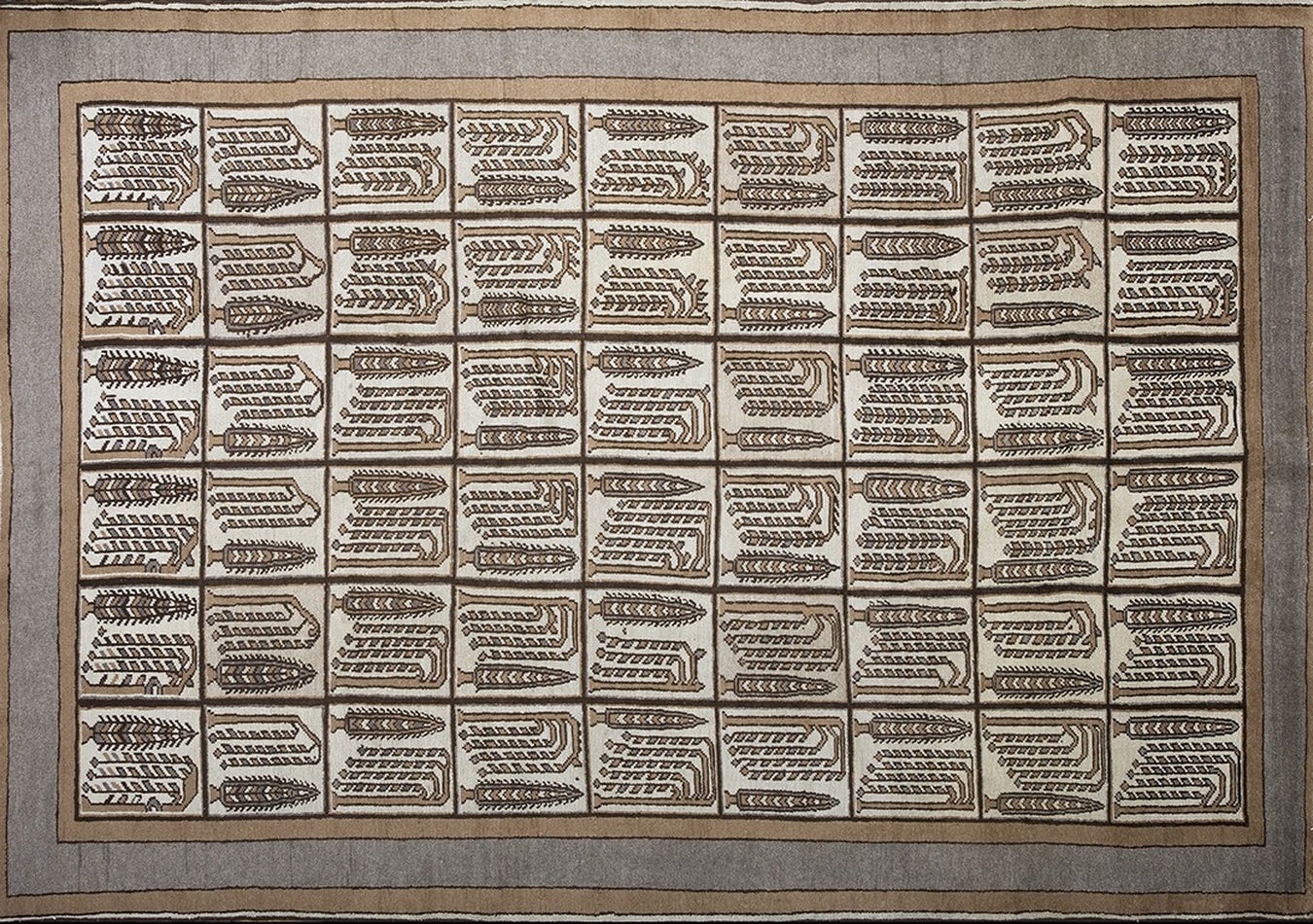
The style even reached China, where imperial workshops wove carpets with grid-like layouts inspired by Persian precedents. In every region, the idea of the paradise garden designs remained central, reinforcing the link between earthly beauty and divine order.
Why Persian Garden Rugs Are Iconic
The Persian garden rug holds a special place in textile history because of its extraordinary balance between artistry and symbolism. Woven in royal ateliers with masterful precision, these carpets showcase some of the finest weaving techniques ever developed. They feature densely knotted fields, vivid natural dyes, and botanical details that almost resemble illustrated manuscripts.
But beyond technical mastery, their deeper power lies in their meaning. A paradise garden carpet is not simply decoration—it embodies the vision of eternal spring, cosmic harmony, and the promise of heaven. This duality of purpose—luxury object and spiritual metaphor—sets them apart from other rug traditions. While the design spread widely, it was the Persian interpretations that cemented the style’s global reputation.
Collectors, museums, and scholars alike revere these works as benchmarks of cultural expression. In summary, garden design rugs are defined by their chahar bagh layout, narrative botanical imagery, and profound symbolism. They first appeared in Safavid Persia, expanded through Mughal India and Chinese adaptations, and remain iconic today because of Persian weaving’s unparalleled finesse. These rugs stand at the intersection of art, spirituality, and history, inviting viewers to walk not only across woven fields but through imagined gardens of paradise.
History and Global Spread of Garden Designs In Carpets
Ancient and Persian Beginnings
The origin of garden designs in carpets can be traced to ancient Persia, with one of the earliest and most legendary examples being the Sasanian “Spring of Khosrow” carpet. Woven for the royal palace at Ctesiphon, this immense textile depicted a lush springtime garden filled with blossoms, streams, and pathways—an eternal spring laid out in wool, silk, and precious stones.
Though the original was lost, its memory lingered, inspiring later dynasties. During the Safavid era (16th–17th century), the concept was revived and refined into what we now recognize as the chahar bagh garden carpet, with its four-part design, flowing water channels, and meticulously detailed floral panels. These Safavid masterpieces embodied not only courtly luxury but also spiritual ideals of paradise, cementing Persia as the birthplace of the style.
Mughal India and Cross-Cultural Exchange
From Persia, garden designs in area rugs traveled to Mughal India, where they underwent a transformation shaped by local aesthetics and cultural exchange. Mughal emperors, deeply influenced by Persian art, established their own royal weaving ateliers. Here, designs became more naturalistic and vibrant, with lush flowering plants, exotic birds, and architectural motifs reflecting the grandeur of Mughal gardens like Shalimar and Humayun’s tomb gardens.
This Indo-Persian synthesis produced carpets that were more pictorial, often filled with lively, colorful imagery rather than rigid geometric divisions. The Mughal garden carpet represents a fusion of Persian spiritual order with Indian love for natural abundance, marking one of the high points of textile history.
Chinese and East Asian Garden Carpet Traditions
In China and East Asia, the garden designs were adapted with symbolic rather than structural interpretations. Instead of adhering strictly to the chahar bagh layout, Chinese weavers infused carpets with symbolic garden designs—peach blossoms for longevity, peonies for wealth, pine trees for resilience, and lotus flowers for purity.
These motifs carried their own cosmological meaning and reflected the Chinese philosophy of harmony between humanity and nature. East Asian workshops thus wove garden symbolism into their textiles, blending imported Persian ideas with indigenous artistic traditions. This fusion reinforced garden designs as truly cross-cultural art form that could transcend geography and still retain spiritual resonance.
Worldwide Popularity in Modern Era
- Museum Exhibitions — Why: 20th-century displays in Europe and America showcased Safavid and Mughal garden rugs, sparking global appreciation.
- Collector Demand — Why: Connoisseurs prized these carpets for their fine craftsmanship, rarity, and symbolic richness.
- Modern Production — Why: Workshops in Iran, India, Turkey, Afghanistan, and Pakistan began reinterpreting the style, making it accessible beyond royal courts.
- Decorative Versatility — Why: The balanced layouts and botanical motifs suited both traditional and modern interiors, broadening their appeal.
The history of garden carpets thus spans from the mythical Spring of Khosrow to the global popularity of rugs with garden designs today. Emerging first in Safavid Persia, then evolving in Mughal India and East Asia, these designs now circulate worldwide, admired as both cultural heritage and timeless decoration.
Their journey reflects a unique blend of luxury, symbolism, and universal human fascination with the idea of paradise woven into textile form.
Characteristics of Garden Designs Rugs
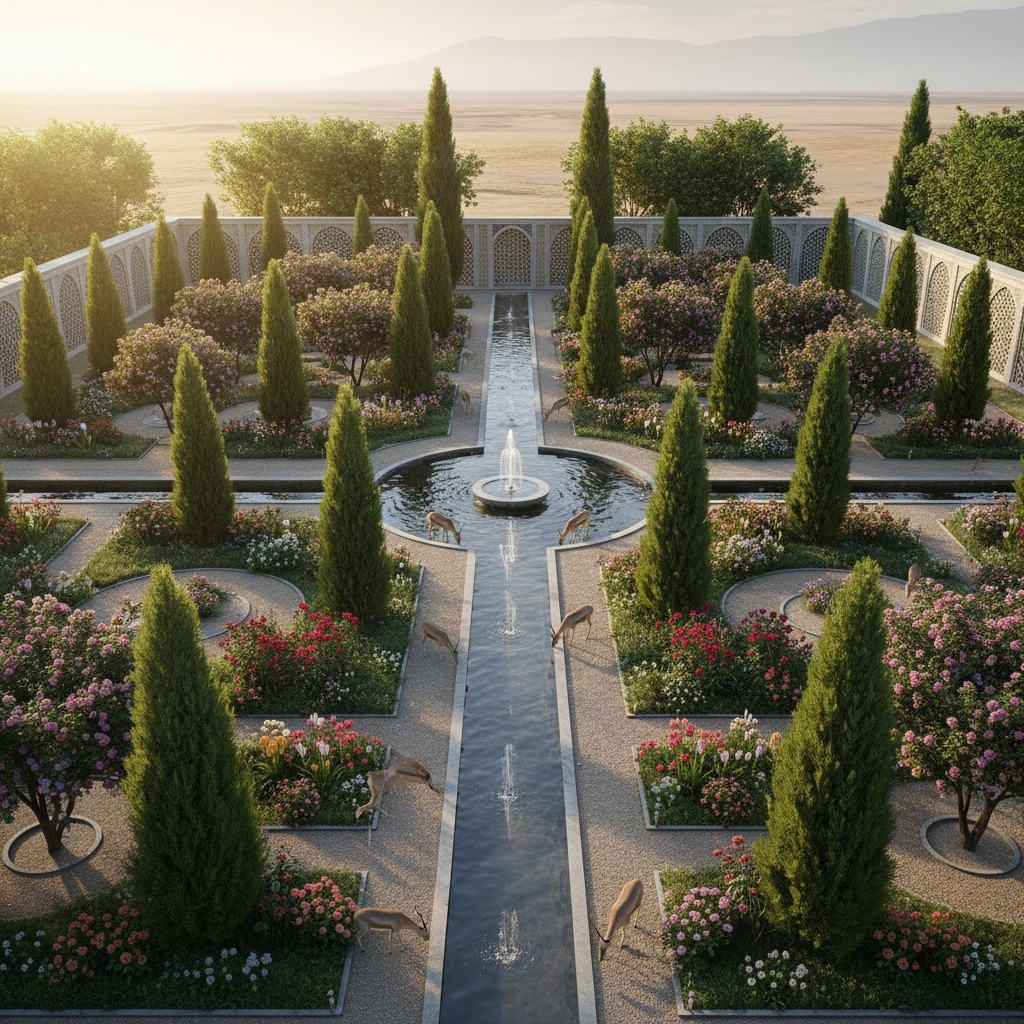
Symmetrical garden layout inspiration
The Chahar Bagh (Four Gardens) Layout
The defining feature of garden designs layout in a rug is the chahar bagh design, a blueprint of paradise woven into textile form. This layout divides the field into four quadrants using intersecting water channels or pathways, often converging at a central pool or fountain.
Within these plots, weavers arranged trees, shrubs, and flowers in balanced compositions, creating the impression of walking through an ordered garden.
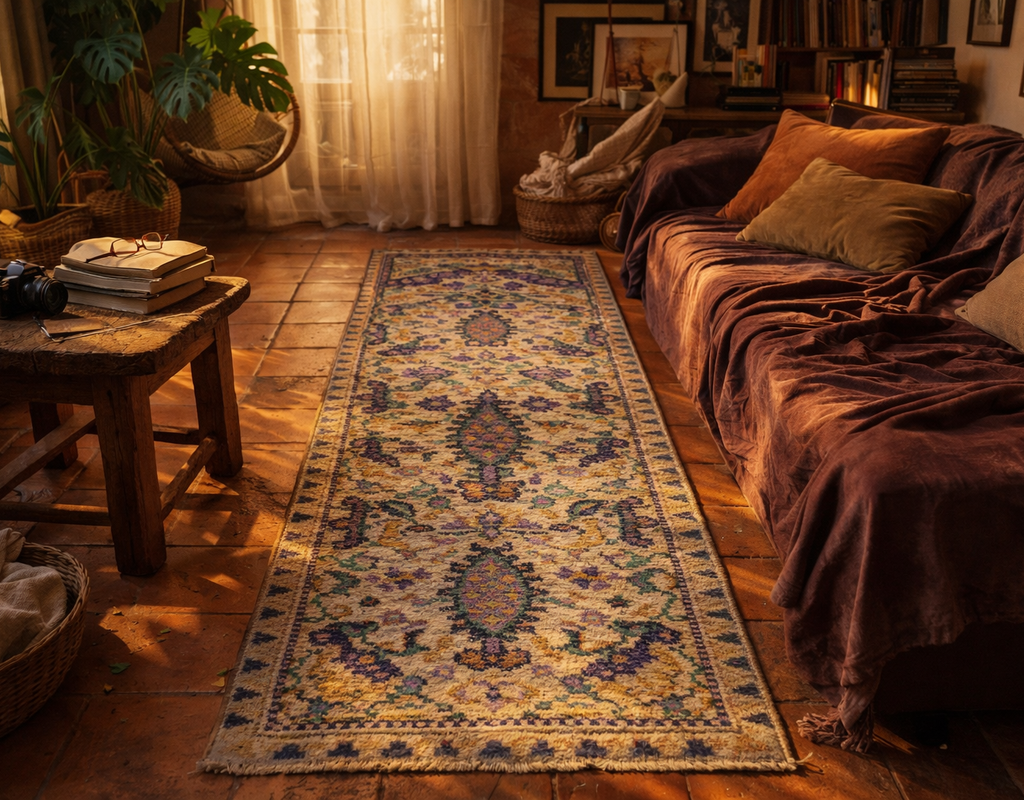
Golden hour sunlight illuminates the colorful, intricate runner rug in this earthy and inviting bohemian interior.
More than a visual plan, the chahar bagh acts as a cosmic diagram, symbolizing harmony between earth and heaven, life and eternity. The viewer does not simply see a carpet but a stylized map of paradise—streams flowing, trees blossoming, and renewal eternally in bloom.
Typical Motifs: Water Channels, Trees, Flowers, Animals
Beyond the layout, garden designs are richly layered with symbolism. Flowing water channels signify life and divine sustenance. Cypress trees represent immortality, while fruit trees—pomegranate, orange, or date palm—stand for abundance. Flowers vary in meaning: roses evoke love, tulips vitality, lotuses purity.
Animals enliven the scene with naturalistic and symbolic presence: birds perched in trees suggest freedom of the soul, gazelles speak of grace, and fish swimming in pools embody fertility and eternal life. Together, these motifs transform the rug into a woven ecosystem where nature, order, and spirituality coexist.
Color Palettes & Symbolism
Light Grounds (ivory, pale blue) — Why: evoke the sky, water, and infinite openness. Greens and Blues — Why: symbolize growth, renewal, and harmony with nature. Reds and Crimson — Why: convey vitality, passion, and cosmic energy. Deep Crimson Fields in Mughal Carpets — Why: reflect royal grandeur and visual drama.
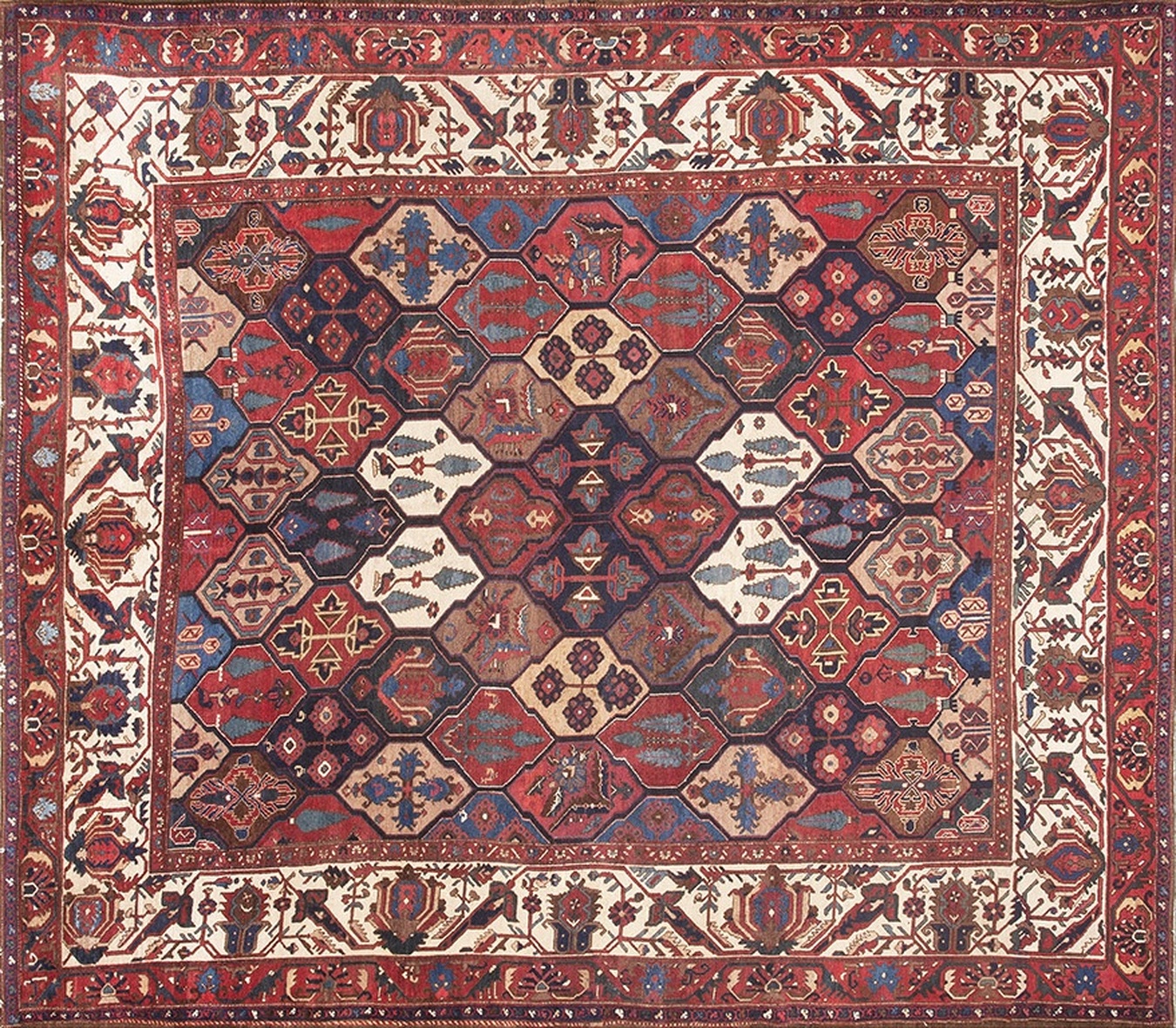
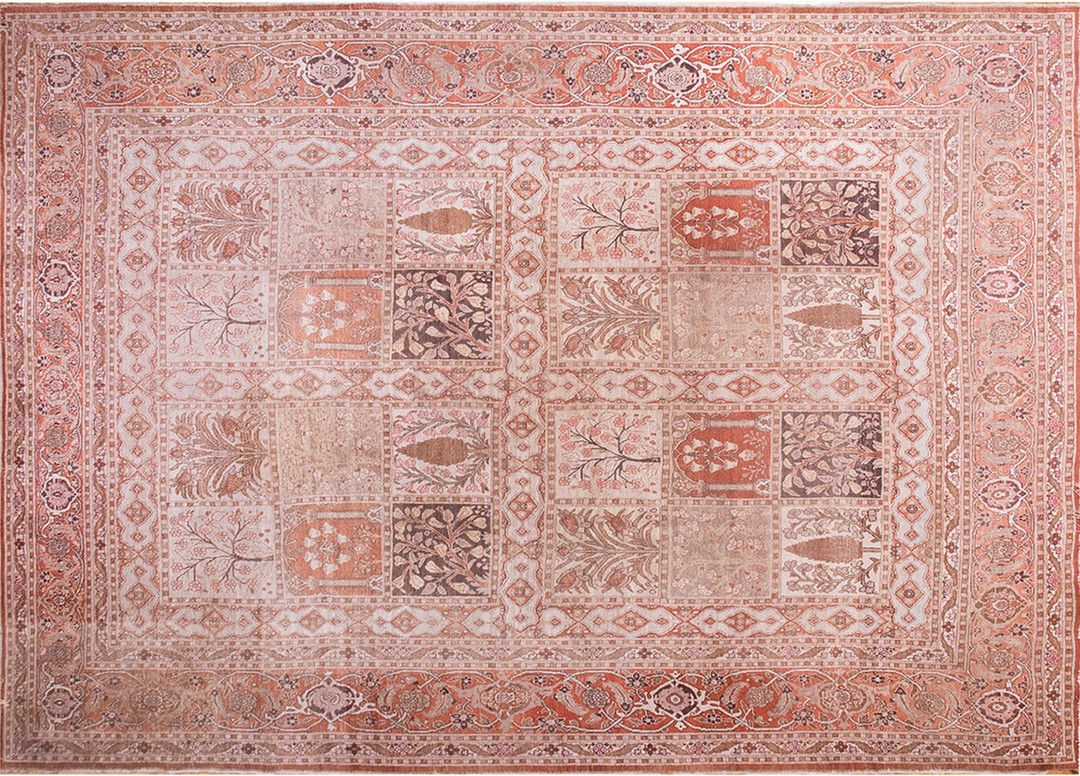
Antique Bakhtiari Room Size Wool Rug – by Rugs On Net
Ivory or Pastel Fields in Persian Rugs — Why: highlight delicate floral detail and cosmic purity. These symbolic colors in rugs are not chosen at random; they reinforce the spiritual message of the garden designs, making them multisensory experience of paradise.
Bakhtiari Garden Panel Rugs: Visual Hallmarks
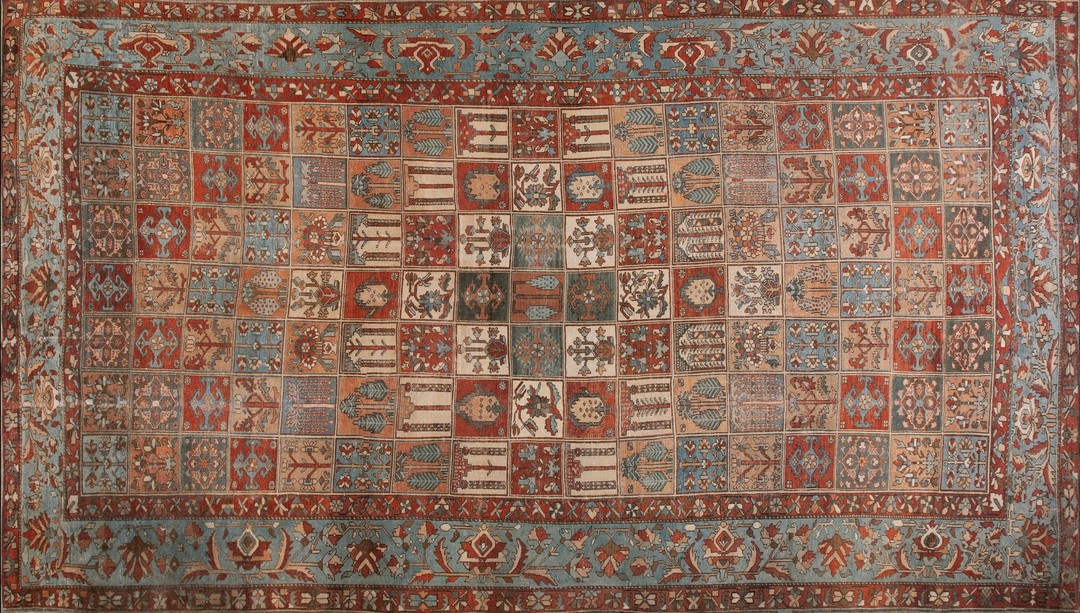
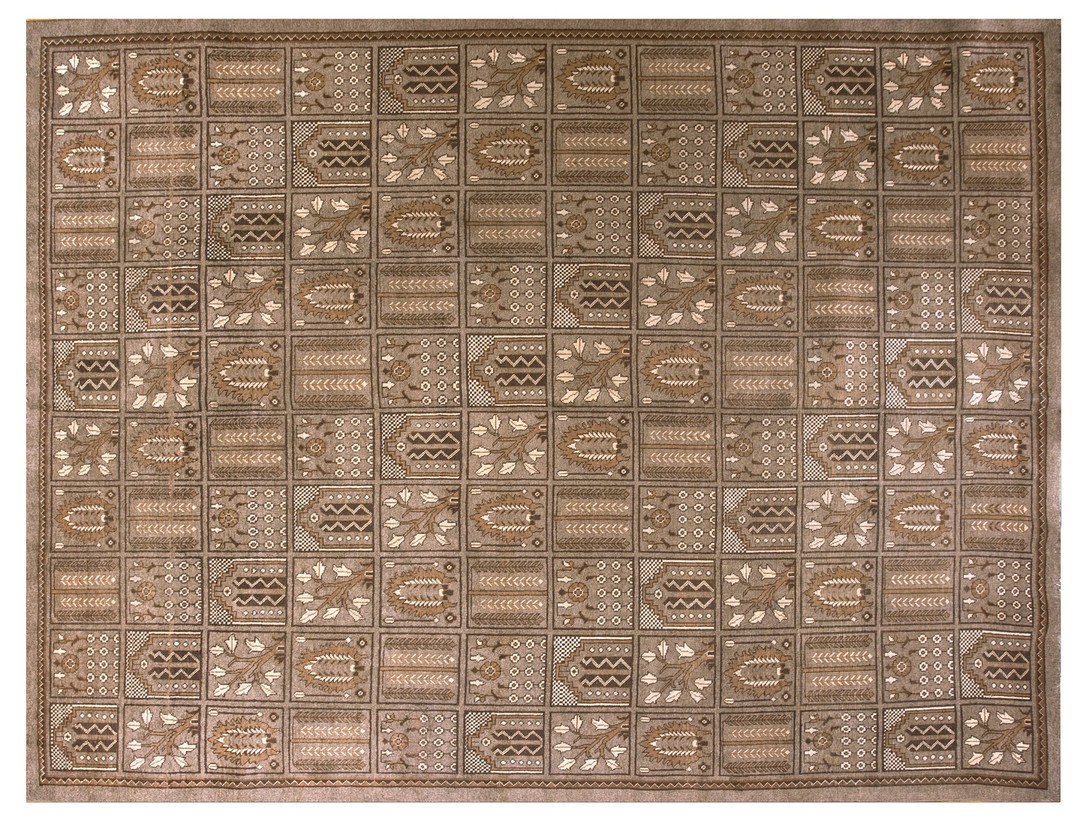
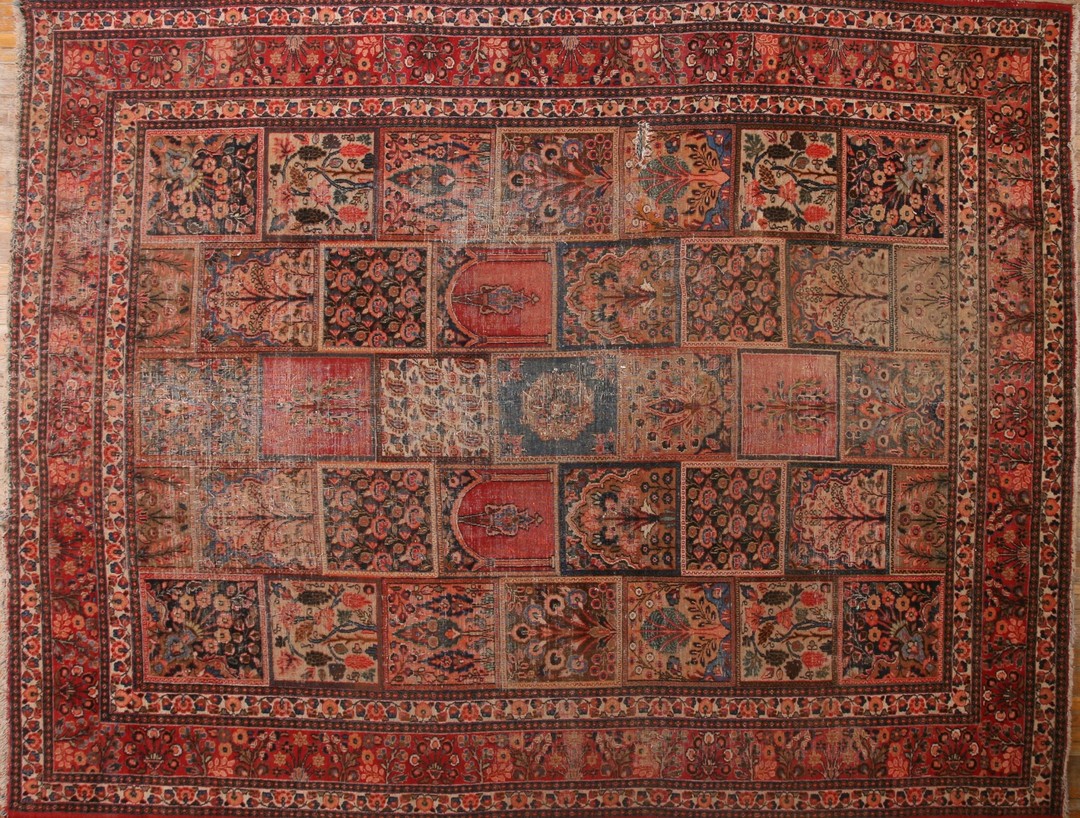
One of the most distinctive regional interpretations is the Bakhtiari garden designs / panel rugs. Unlike the flowing chahar bagh, these carpets present a grid of compartments, each filled with a self-contained image—often a tree, a vase, an animal, or a flowering shrub. The effect is mosaic-like, with strong color contrasts that animate each panel.
This compartmentalization creates a visual rhythm and turns the rug into a tapestry of miniature gardens, each symbolic yet united by the grid. It is this panel structure, with its vibrant variety and modular design, that makes Bakhtiari examples instantly recognizable among collectors and scholars.
In essence, garden rugs weave together layout, motif, and color as both art and philosophy. The chahar bagh provides a sacred plan, motifs infuse it with life, colors imbue it with meaning, and Bakhtiari innovations expand its visual language into a mosaic of paradise underfoot.
Materials & Weaving Techniques
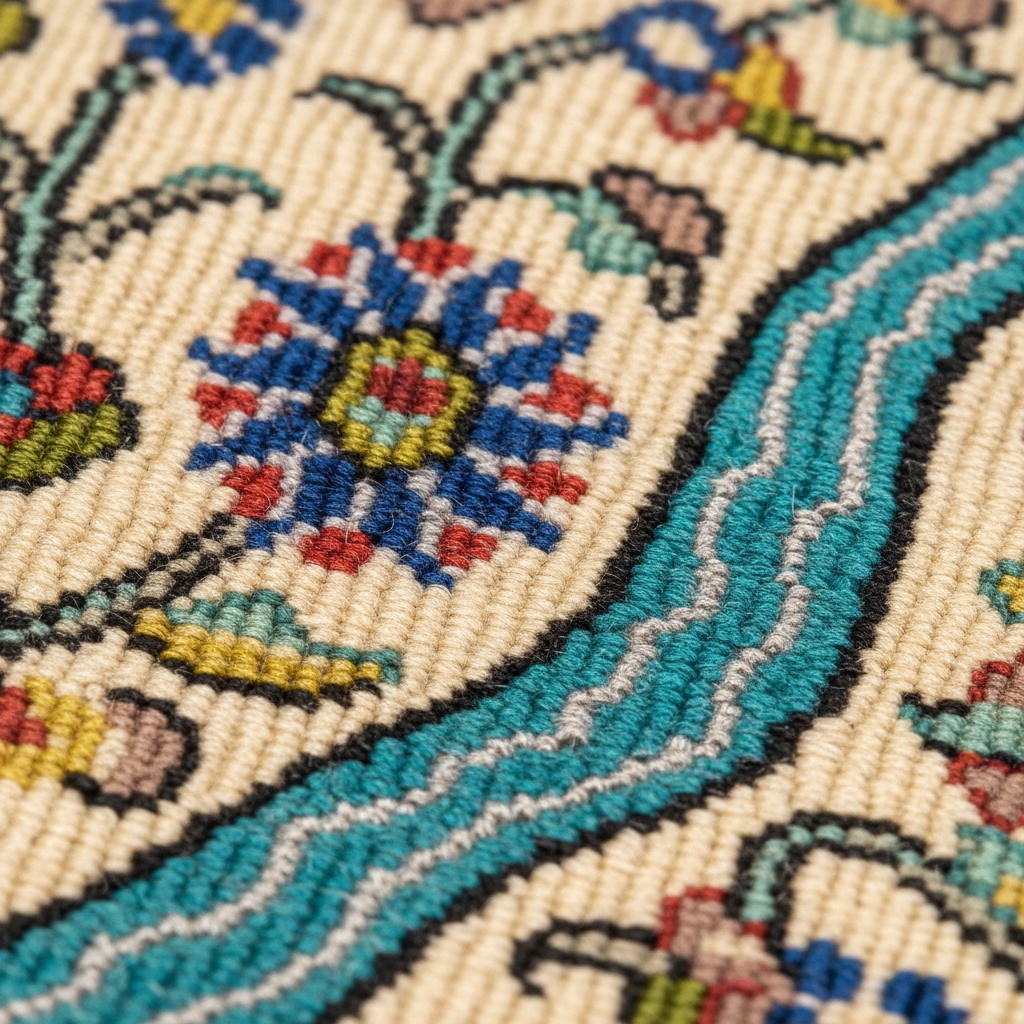
Close-up of tight needlework and yarn texture.
Typical Materials Used
The most common garden rug materials are wool, silk, and cotton, each chosen for specific qualities. High-quality wool provides durability, warmth, and a rich surface for dyes, making it the primary material in most historic and regional examples. Cotton, often used for foundations, gives the rug structural stability and helps maintain shape over time.
For luxury pieces, especially those woven in Persian or Mughal royal ateliers, silk garden carpets stand out for their luster and finesse. Silk not only elevates the tactile experience but also enhances the brilliance of colors, turning motifs into near-paintings in thread.
Knot Density and Weave Quality
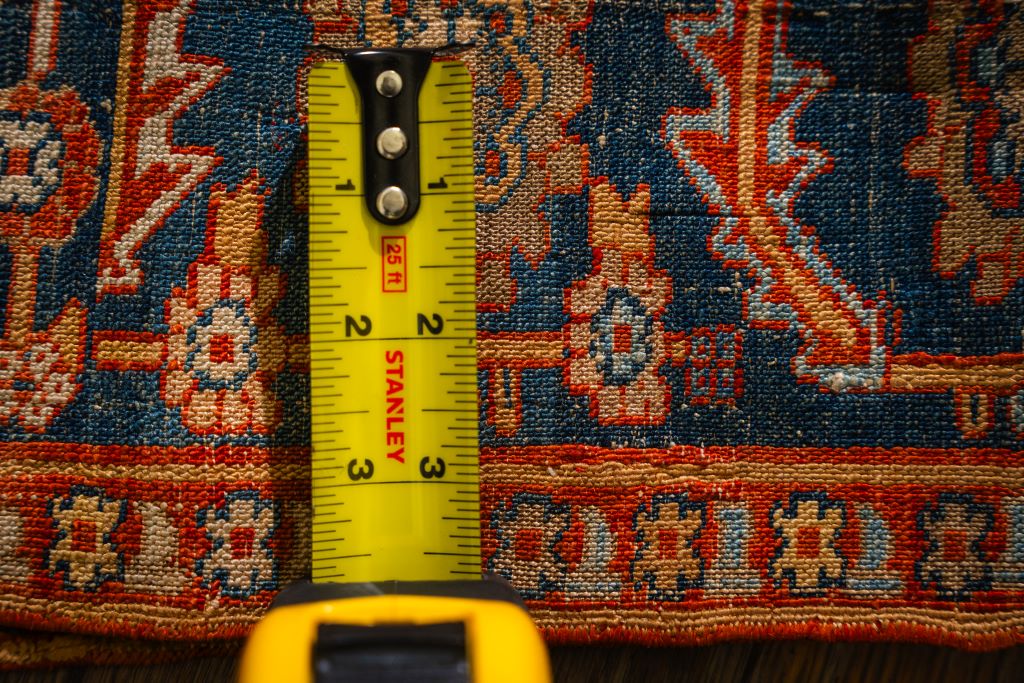
A detailed inspection of a richly colored oriental rug pattern while measuring its dimensions.
The knot density in garden carpets varies greatly by region and era, directly affecting clarity of design and overall quality. Persian and Mughal garden rugs often exceed 300 knots per square inch (KPSI), allowing intricate depictions of flowers, streams, and animals with remarkable detail.
In contrast, Bakhtiari and Kurdish garden designs typically feature coarser weaves, prioritizing bold, compartmentalized imagery over fine linework. This variation demonstrates how geography, cultural priorities, and intended use shaped the technical execution of garden rugs. Fine knotting produces delicate, manuscript-like designs, while looser knotting conveys a more rustic, powerful aesthetic.
Hand-Knotted vs. Machine-Woven Modern Garden Designs in Rugs
Today, both hand-knotted garden rugs and machine-woven interpretations are available. Hand-knotted examples remain the most prized, as each knot represents hours of artisan labor and centuries of tradition. These rugs are sought by collectors for their craftsmanship, durability, and authenticity.
On the other hand, machine-woven garden carpets provide an affordable option for modern households. While they lack the nuanced detail of hand-knotting, they still capture the essence of garden designs and motifs, making the style accessible for decorative purposes in a wide range of interiors.
Silk vs. Wool: Motif Clarity and Aging Effects
The choice between silk and wool impacts not only a rug’s appearance but also how it ages. Silk garden carpets display motifs with unmatched sharpness and sheen, making blossoms, birds, and water channels shimmer in lifelike detail. However, silk is delicate and susceptible to wear if placed in high-traffic or sunlit areas.
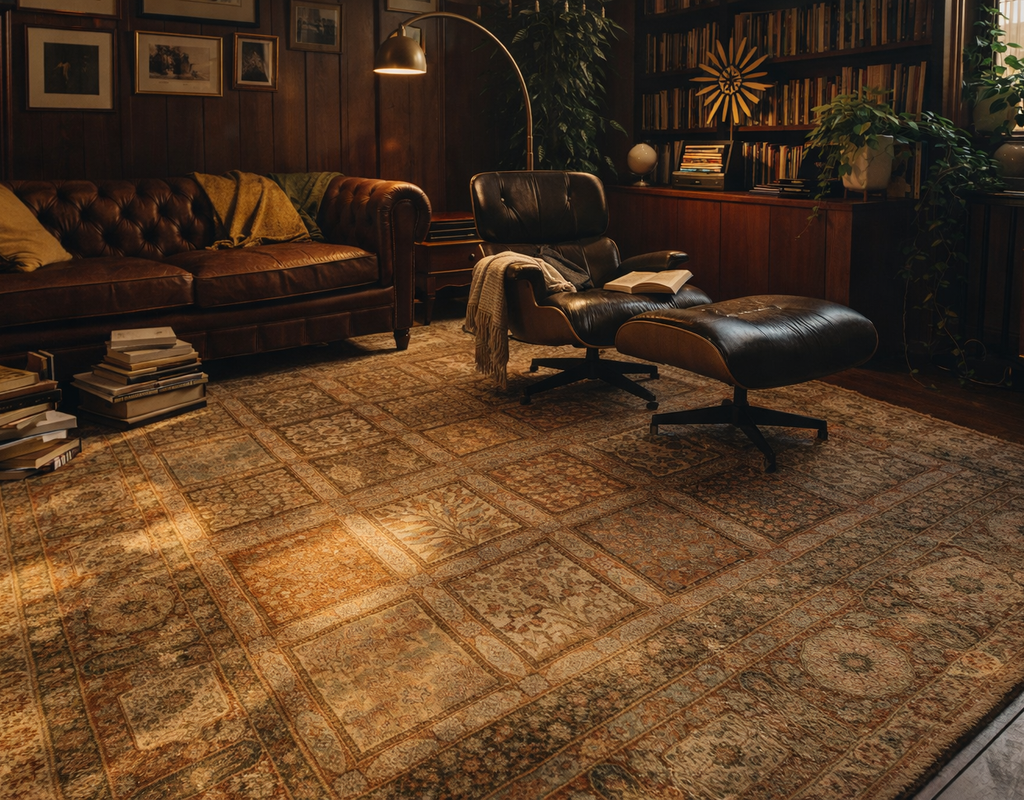
The warm, moody lighting enhances the textures of the leather furniture and the intricate, faded colors of the traditional rug.
Wool rugs with garden designs, by contrast, age with grace. Over decades, their surfaces develop a patina—a softening of tones and sheen—that is highly desirable to collectors. This aging enhances the sense of history and depth, turning antique wool rugs into even more valuable cultural artifacts.
In sum, the materials, knot density, and weaving techniques behind garden rugs define both their aesthetics and longevity. Silk showcases brilliance, wool matures with timeless patina, and hand-knotting ensures authenticity. These factors together distinguish the artistry of garden designs across centuries, whether woven in Safavid Persia, Mughal India, or recreated in today’s workshops.
Collecting & Displaying Garden Rugs
Sizing for Garden Designs Panel Rugs
- Large Rectangular Rugs — Why: They best showcase the full garden panel layout, allowing water channels, trees, and compartment grids to be read as a complete visual map. These sizes are ideal for living rooms, dining areas, or formal halls where symmetry enhances the design’s impact.
- Medium Rugs — Why: Useful for secondary spaces like studies or bedrooms, these pieces still preserve much of the garden’s storytelling while adapting to more intimate interiors.
- Small Garden Rugs or Panels — Why: These often function as wall tapestries, highlighting one or two panels of imagery. When mounted, they allow collectors to enjoy motifs at eye level, similar to viewing fine art.
Proper sizing is essential because scale directly affects the clarity of a chahar bagh or Bakhtiari grid—larger rugs convey the garden plan with grandeur, while smaller pieces emphasize detail.
Where to Find Authentic Antique Rugs with Garden Designs
Collectors seeking authentic antique garden designs must work with trusted sources. Reputable dealers and specialist galleries curate verified examples with documented provenance, while international auction houses frequently feature garden rugs in sales of Islamic or Asian art.
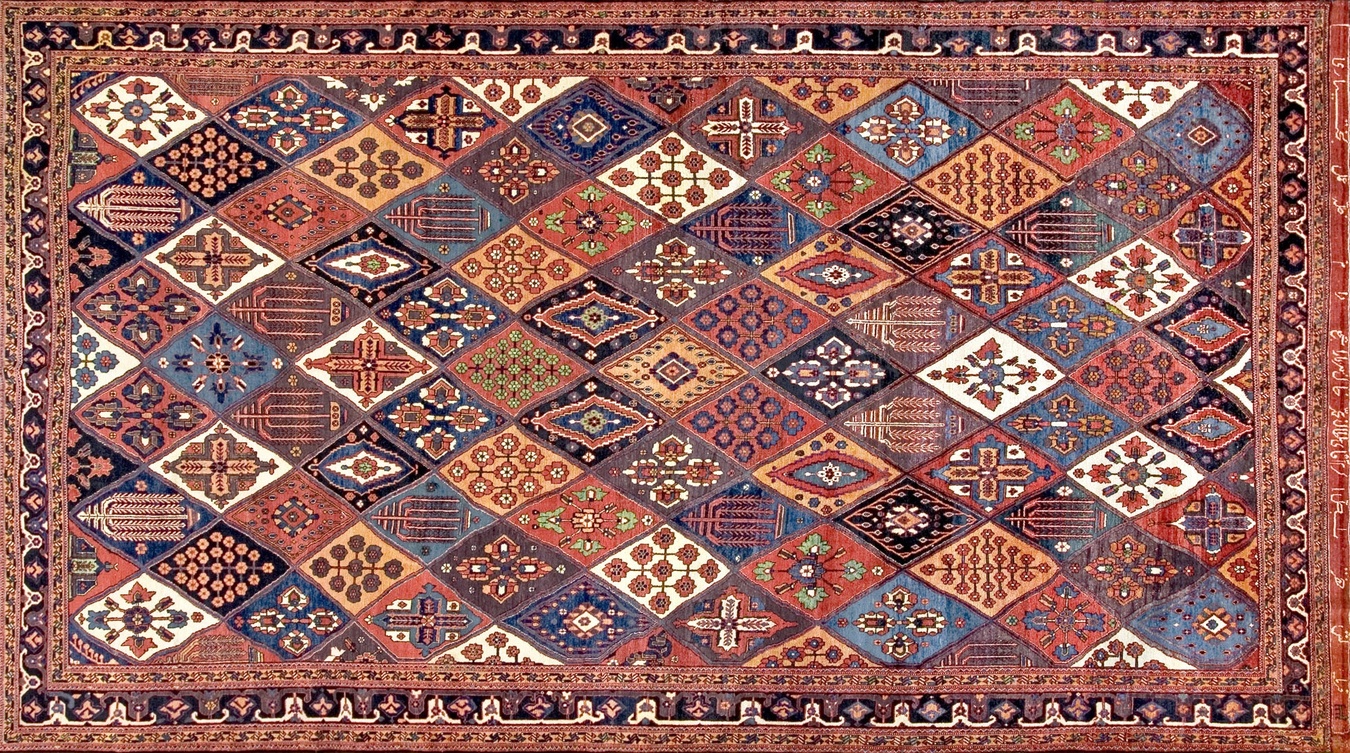
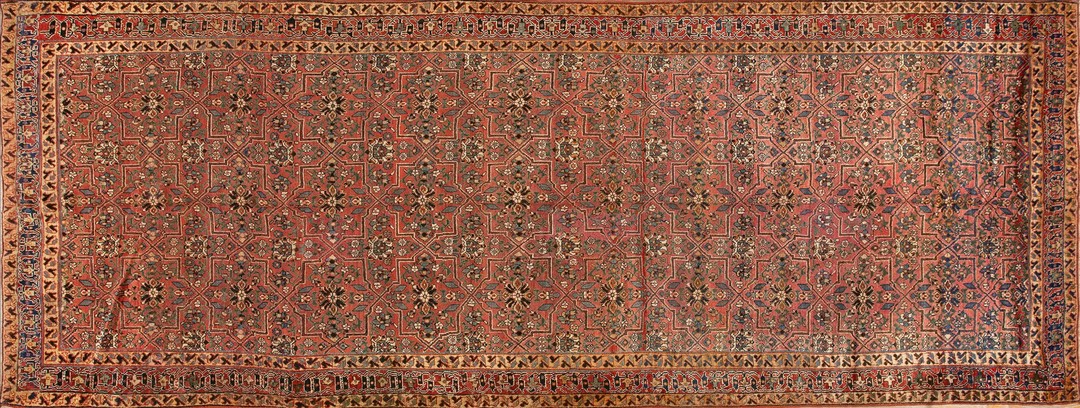
Antique Bakhtiari Persian 1890s Rug – by Rugs On Net
Museum-quality pieces occasionally appear in major sales, often commanding record-breaking bids. For those seeking scholarship and assurance, dedicated galleries that specialize in antique Persian rugs remain the most reliable venues, as they can provide detailed expertise on origin, weaving technique, and age.
Valuation: Provenance, Age, and Auction Trends
- Provenance — Why: A well-documented ownership history enhances credibility and trust, directly raising the rug’s market value.
- Age and Condition — Why: Older rugs with intact pile, preserved dyes, and original structure are rare, and rarity drives price.
- Workshop or Regional Origin — Why: Rugs from renowned Safavid or Mughal workshops carry prestige and often command premium valuations.
- Auction Trends — Why: In recent decades, garden carpets have achieved landmark prices at major sales, reflecting ongoing global demand.
Garden rug valuation hinges on these intertwined factors, with provenance and authenticity weighing as heavily as artistry. A rug with clear historical lineage can be worth several times more than a similar piece without documentation.
Restoration, Re-dyeing, and Investment Concerns
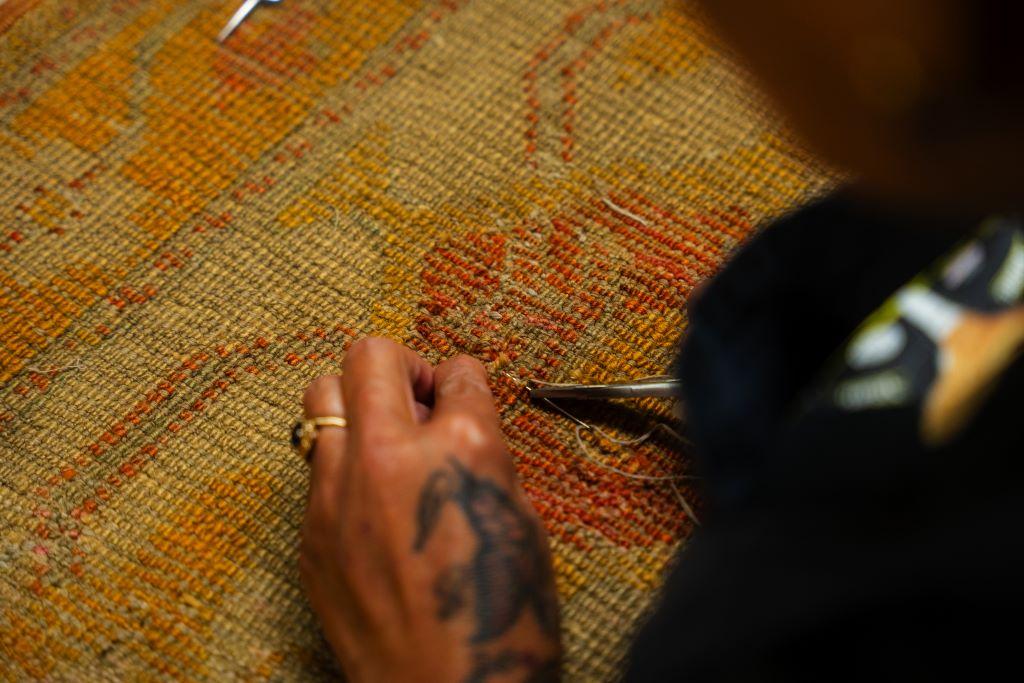
Detail of hands mending a rustic, richly colored woven rug.
Garden rug restoration is a highly specialized field. Professional, authentic restoration can preserve structure and prolong a rug’s life without diminishing its value—sometimes even enhancing it if discreet repairs stabilize a rare piece. However, re-dyeing is generally discouraged in the collector’s market. Over-dyeing masks the original artistry, diminishes authenticity, and typically reduces resale value.
Collectors of rugs with garden designs should also budget for restoration, as costs can be significant for large or fragile pieces. From an investment standpoint, antique garden design rugs with original dyes, intact motifs, and documented provenance are the safest and most rewarding acquisitions. In essence, collecting rugs with garden designs involves balancing aesthetics with scholarship.
Size dictates how the design reads, provenance secures value, and careful restoration safeguards longevity. Authentic, antique pieces remain not only prized artworks but also enduring investments in cultural history.
Cultural and Symbolic Meaning of Garden Designs
Garden Rugs as “Portable Paradise”
At their core, carpets with garden designs embody the idea of a “portable paradise.” Woven with depictions of flowing streams, flowering trees, and balanced quadrants, they bring the imagery of eternal gardens into the home. In Islamic and Persian traditions, these gardens symbolized paradise, a vision of spiritual bliss where the righteous rest in perpetual spring.
Sufi poets often likened the garden to the soul, a place of renewal, wisdom, and divine love. By spreading a garden carpet beneath one’s feet, the owner symbolically walked across paradise itself, bridging the earthly and heavenly worlds. This paradise carpet meaning gave the rug both practical and devotional functions—an artwork to admire, a prayer mat to contemplate, and a reflection of spiritual ideals woven into daily life.
The Chahar Bagh as Cosmic Order
The chahar bagh design goes beyond aesthetics, acting as a cosmological map. Its fourfold division mirrors the universe: the four rivers of paradise, the four elements, and the four cardinal directions. At the center lies the axis mundi, the spiritual heart of the cosmos. This arrangement transformed the rug into more than decoration—it became a symbolic blueprint of harmony and divine order.
Garden designs and rug symbolism thus carried profound meaning: flowing water signified sustenance from heaven, cypress trees eternal life, and blossoming flowers the cycle of love and rebirth. In this way, the chahar bagh functioned as both an earthly garden plan and a cosmic diagram, tying the human experience to universal truth.
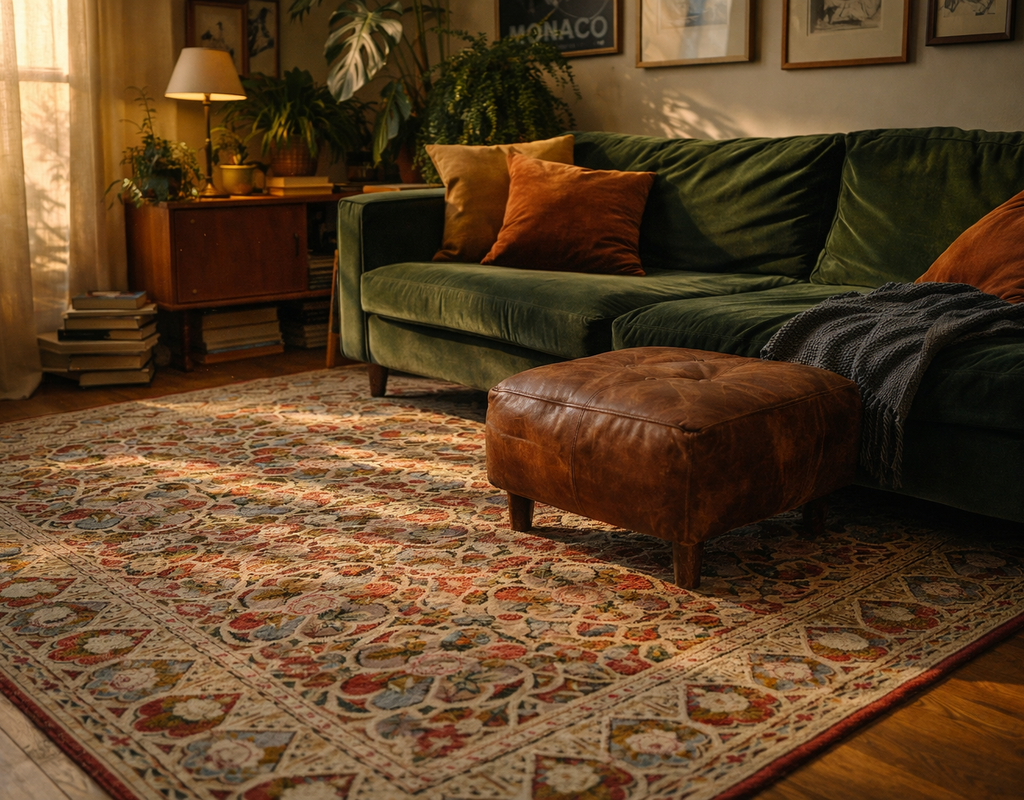
The juxtaposition of rich textures and colors creates a welcoming, layered living space.
Modern Relevance: Biophilic Design & Living Art
While steeped in history, garden designs continue to resonate in today’s interiors. Their lush patterns align with biophilic rug design, a modern approach that integrates natural imagery into living spaces to promote calm, wellness, and connection to nature. The repeating motifs of water, greenery, and flowering plants create a soothing effect, making these rugs as relevant for mindful living as they were for spiritual contemplation centuries ago.
Displayed in contemporary homes, rugs with garden designs function as living art—a reminder of cultural heritage, a link to timeless symbolism, and a daily source of beauty and serenity. Ultimately, garden rugs weave together history, spirituality, and design. They are at once decorative objects and metaphors for paradise, carrying forward a cross-cultural vision of harmony that continues to inspire both collectors and modern homeowners.
Contemporary Market and Sustainability
Modern Garden Designs Production: Hand-Knotted vs. Machine-Made
In today’s market, modern garden designs in rug production spans both hand-knotted and machine-made techniques. At the premium end, hand-knotted garden rugs dominate, continuing the centuries-old tradition of individually tied knots that create rich texture, clarity of design, and long-lasting quality. These rugs are valued by collectors and design professionals alike for their craftsmanship and authenticity.
Machine-made options, meanwhile, offer affordability and accessibility, capturing the essence of garden layouts and motifs without the painstaking labor of hand-knotting. While they lack the subtle detail and heirloom durability of their handmade counterparts, they remain a popular choice for buyers seeking style at a lower price point.
Sustainable Materials and Traditional Aesthetics
- Organic Wool — Why: Provides durability and warmth while reducing chemical processing, making rugs safer for homes and better for the environment.
- Vegetable Dyes — Why: Replicate the vibrancy and depth of historic palettes while avoiding synthetic toxins.
- Natural Foundations (cotton, hemp, jute) — Why: Maintain structural integrity in a more eco-conscious way.
- Artisan Revival Practices — Why: Support traditional communities, preserve weaving heritage, and align with fair-trade values.
These innovations show how sustainable garden rugs can replicate the look and feel of antique masterpieces while appealing to contemporary eco-conscious buyers. Sustainability no longer means compromising aesthetics; instead, it reinforces authenticity by returning to the very materials that defined classical garden designs.
Comparing Vintage and Contemporary Garden Rugs
The market offers a clear contrast between vintage vs. new garden carpets. Vintage pieces carry unique patina, provenance, and craftsmanship that cannot be replicated—qualities that make them highly collectible and often more valuable over time. Their aging wool surfaces soften into warm tones, and their dyes mellow into harmonious depth, enhancing their desirability.
By contrast, contemporary replicas offer design flexibility, accessibility, and cost savings. They allow homeowners to enjoy garden designs in a wide range of colors, sizes, and price points without the fragility of antique textiles. Both categories carry distinct appeal: vintage for authenticity and investment, modern for practicality and personalization.
Sustainability has become a defining feature of the garden rug’s modern evolution. Collectors and homeowners today navigate a marketplace where tradition and innovation coexist—hand-knotted artistry alongside machine-made convenience, vintage patina beside eco-friendly new production. The enduring symbolism of paradise garden designs continue to inspire, now paired with materials and methods designed for a more sustainable future.
Explore a Few of Our Favorite Garden Rugs
FAQ
- How can I authenticate older garden design rugs?
Examine the back, dyes, wear, and handwork on garden design rugs, then seek expert evaluation. Appraisers can verify age, region, and condition before you commit.
- How do I orient garden design rugs in a room?
Align garden design rugs so central channels run with the room’s main sightline or walkway. Center key furniture—like a coffee table—over the rug’s visual intersection.
- Do garden design rugs come as flatweaves?
Yes—garden design rugs appear in kilims and other flatweaves, though detail is more graphic than knotted pile. Flatweaves are lighter, reversible, and easier to move.
- Where can I see garden design rugs in the U.S.?
The Met in New York and Harvard Art Museums in Cambridge display notable garden design rugs. Museum visits help you study authentic layouts, colors, and weaving.
- Are antique garden design rugs a good investment?
Potentially—rare, well-preserved garden design rugs can appreciate, but condition and provenance matter most. Buy what you love and consult a qualified appraiser before spending significantly.
- Can robot vacuums be used on garden design rugs?
Carefully—robot vacuums can snag fringes on garden design rugs. Use low suction, lift fringes, and test first; occasional manual vacuuming with a brushless head is safer.
- How much do garden design rugs cost?
Prices vary widely: machine-made garden design rugs start low, while hand-knotted vintage or tribal examples command premium pricing. Age, condition, size, and fineness drive value.
- Are garden design rugs pet-friendly?
Yes—garden design rugs’ busy motifs disguise minor stains and shed less when densely woven. Keep pets away from fringes and blot accidents quickly to prevent dye migration.
- What pad should I use under garden design rugs?
Use a felt-and-rubber pad under garden design rugs for grip and cushioning. A 1/4″ low-profile pad helps doors clear while improving longevity.
- Which colors are typical in garden design rugs?
Garden design rugs often feature earthy reds, indigo blues, greens, ivory, and soft golds. Contrasting borders frame the “beds” and water channels for strong visual structure.
- Do garden design rugs fade in sunlight?
They can—rotate garden design rugs every 6–12 months and use UV shades where possible. Natural dyes are beautiful but sensitive to prolonged direct light.
- What’s the difference between garden design rugs and Tree-of-Life rugs?
Garden design rugs show compartmented plots and channels; Tree-of-Life rugs center on a single axis tree motif. Both celebrate nature, but compositions and symbolism differ.
- Are there outdoor versions of garden design rugs?
Yes—outdoor garden design rugs in polypropylene or recycled PET resist moisture and sunlight. They trade hand-knotted nuance for weatherproof practicality on patios and porches.
- How do garden design rugs fit modern interiors?
Pair garden design rugs with clean-lined furniture and neutral upholstery to let the grid and waterways stand out. One large statement rug can balance minimalist rooms.
- What sizes do garden design rugs come in?
Garden design rugs commonly appear in 5×8, 8×10, and 9×12 area sizes, with some runners and square formats. Panel layouts often shine in larger sizes where compartments read clearly.
- Do garden design rugs work under dining tables?
Yes—garden design rugs look great beneath tables; allow about 24 inches beyond the table so chairs stay on the rug when pulled out. Choose patterns that camouflage crumbs and scuffs.
- How should I clean garden design rugs after spills?
For garden design rugs, blot immediately with a white cloth and cool water; avoid scrubbing. For deep cleaning, use a professional rug cleaner—especially for antique or vegetable-dyed pieces.
- Are garden design rugs durable for high-traffic rooms?
Wool garden design rugs handle foot traffic well, especially with a quality pad. Dense pile and busy motifs help hide wear in living rooms, dining rooms, and hallways.
- What materials are common in garden design rugs?
Most hand-knotted garden design rugs use wool pile on a cotton foundation for durability and clarity of detail. Modern versions may also appear in hand-tufted wool or machine-made synthetics.
- How can I tell if garden design rugs are hand-knotted or printed?
Flip garden design rugs over: hand-knotted pieces show individual knots and slight irregularities; printed or machine-made backs look uniform. Authentic fringes are warp threads, not sewn-on strips.
- Are there Mughal-style garden design rugs?
Yes—Mughal-inspired garden design rugs adapt the chahar bagh plan with channels, pavilions, and fruit trees. Expect lively fauna and symmetrical watercourses reminiscent of historic palace gardens.
- What is a Bakhtiari garden design rug (khesti)?
Bakhtiari garden design rugs use panel (khesti) layouts—checkerboard squares, each with a tree, vase, bird, or shrub. The compartments read like miniature garden beds across the field.
- How are garden design rugs different from floral rugs?
Garden design rugs organize nature into structured plots or channels, while floral rugs scatter blossoms in all-over repeats. Look for grids, paths, or streams in garden designs versus continuous florals.
- What do garden design rugs symbolize?
Garden design rugs usually symbolize paradise and renewal, echoing Persian and Mughal chahar bagh gardens with four life-giving waterways. The imagery suggests harmony, abundance, and restful order.
- What are garden design rugs?
Garden design rugs depict formal garden layouts—often a four-part “chahar bagh” plan with water channels, trees, flowers, and wildlife—seen from above. Think gridded beds, streams with fish, and orchard-like blocks.