
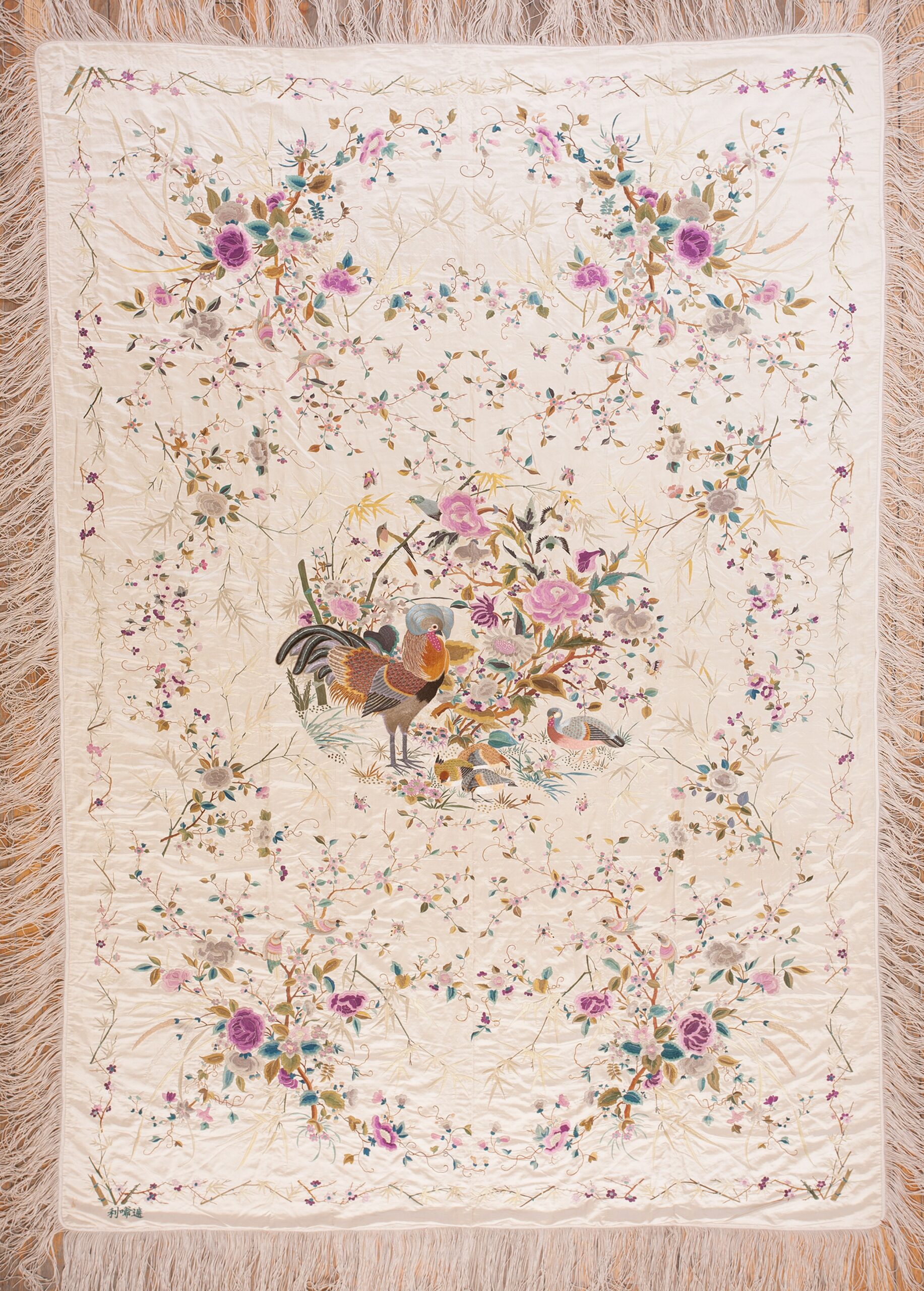
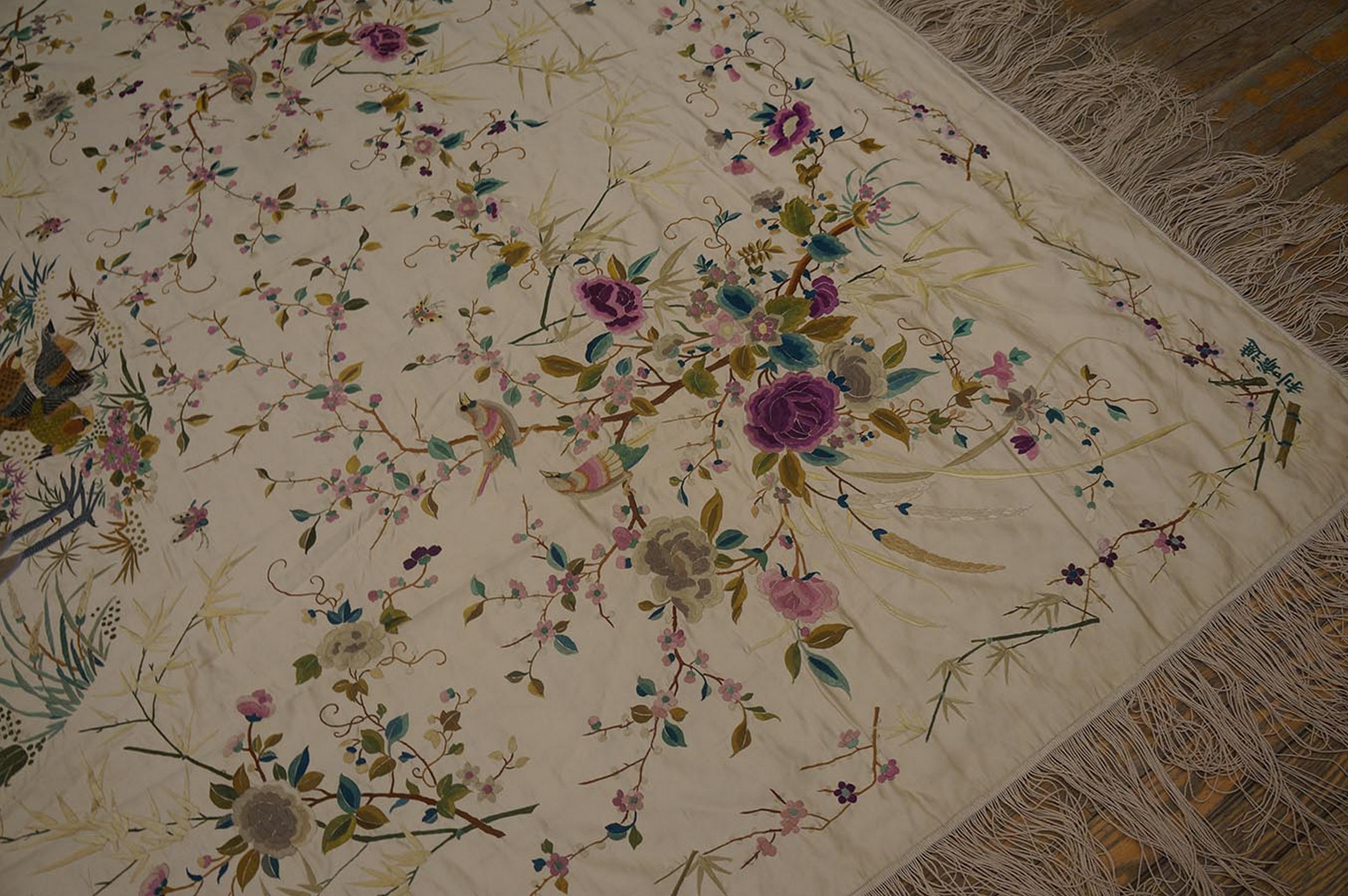
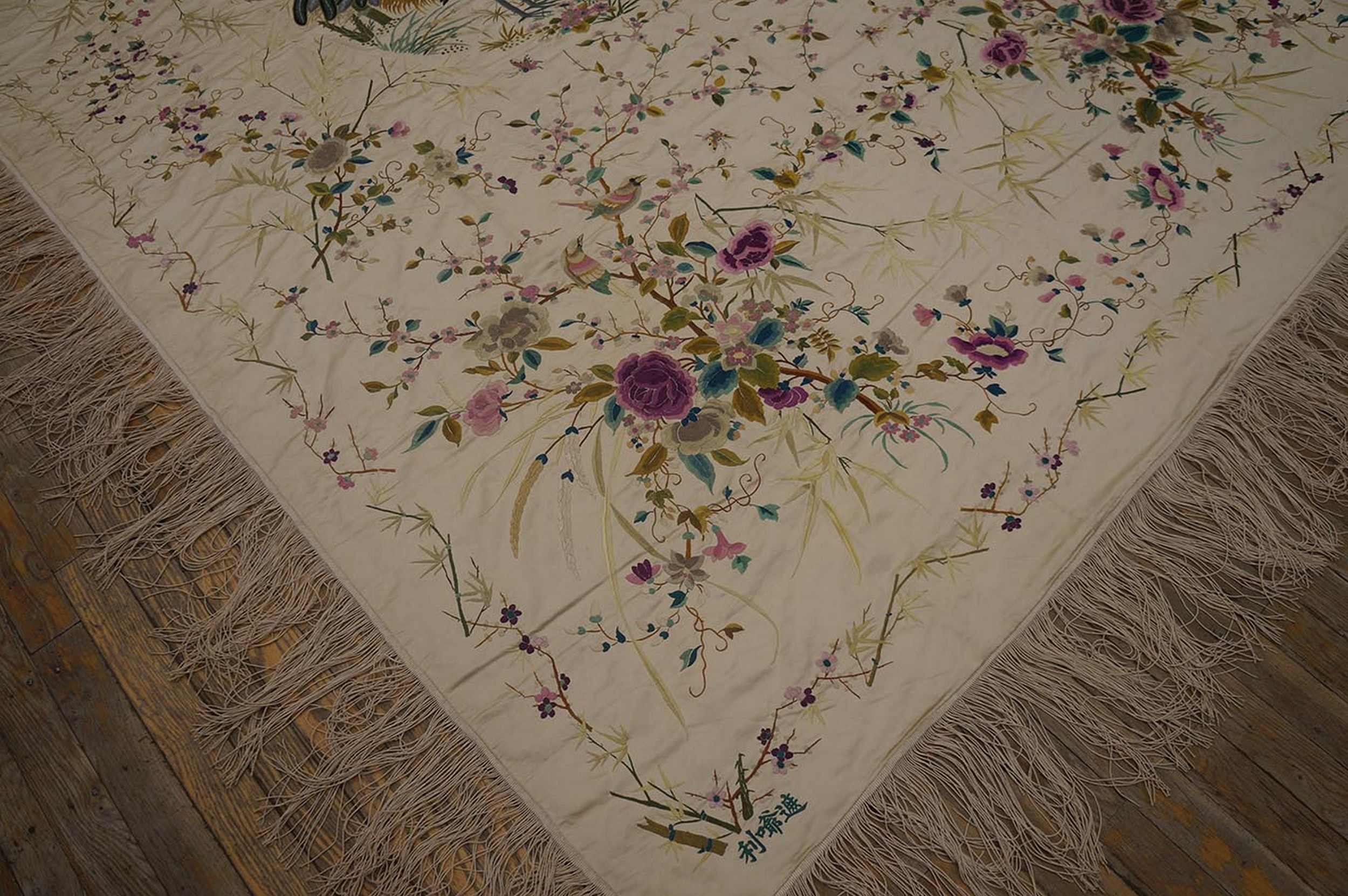
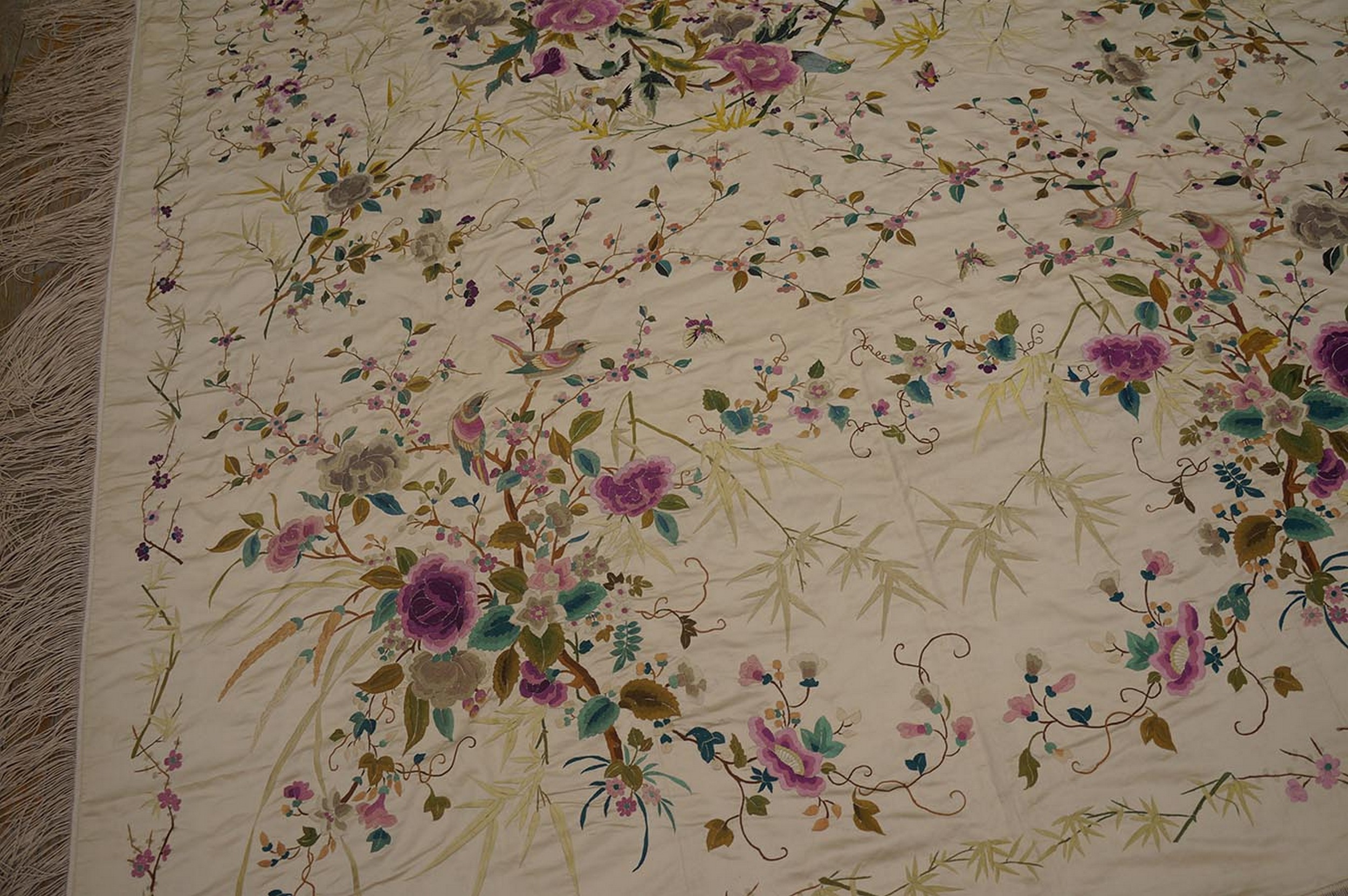
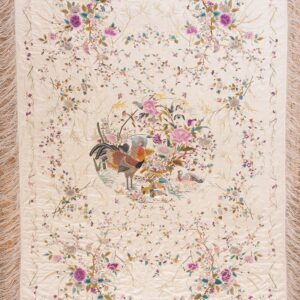
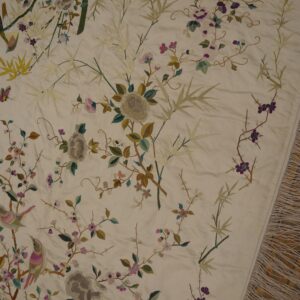
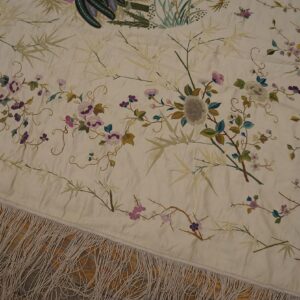
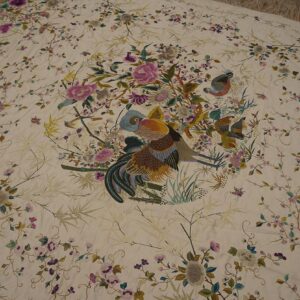
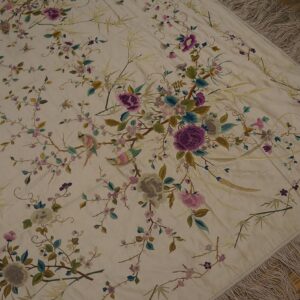
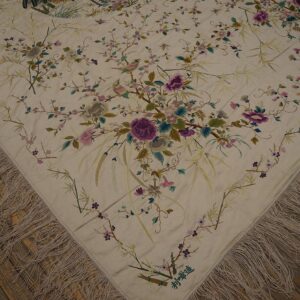
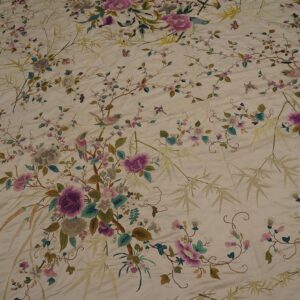
This early twentieth-century Chinese Silk Embroidery is a breathtaking masterpiece of “Needle Painting,” representing the pinnacle of the Suzhou (Su Xiu) or Canton (Guang Xiu) embroidery traditions during the late Qing to early Republican era. Unlike pile rugs, this antique textile is a delicate work of fine art, created using ultra-fine silk threads on a silk backing, intended for use as a grand wall hanging, a decorative screen, or a framed collector’s piece.
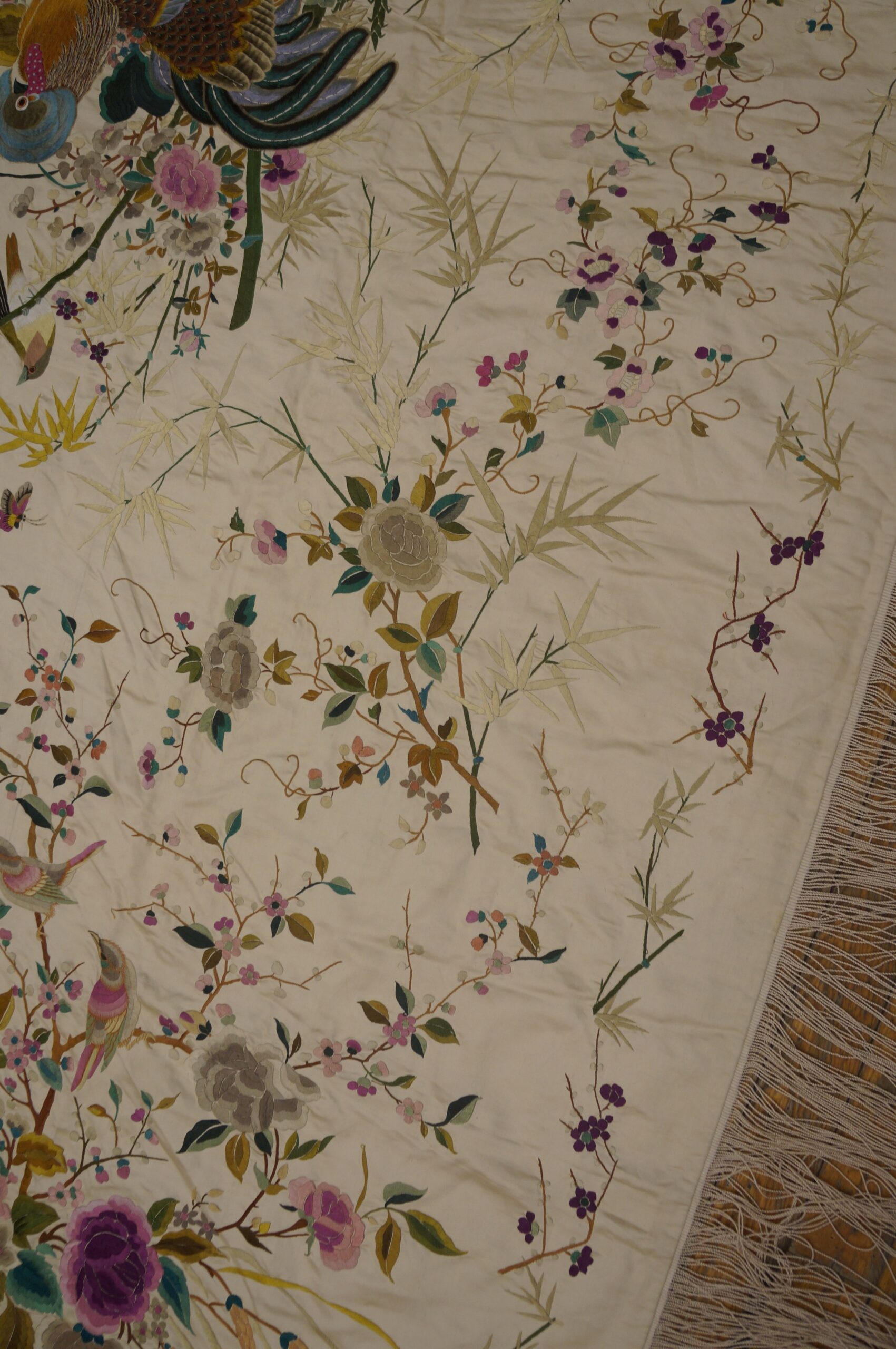
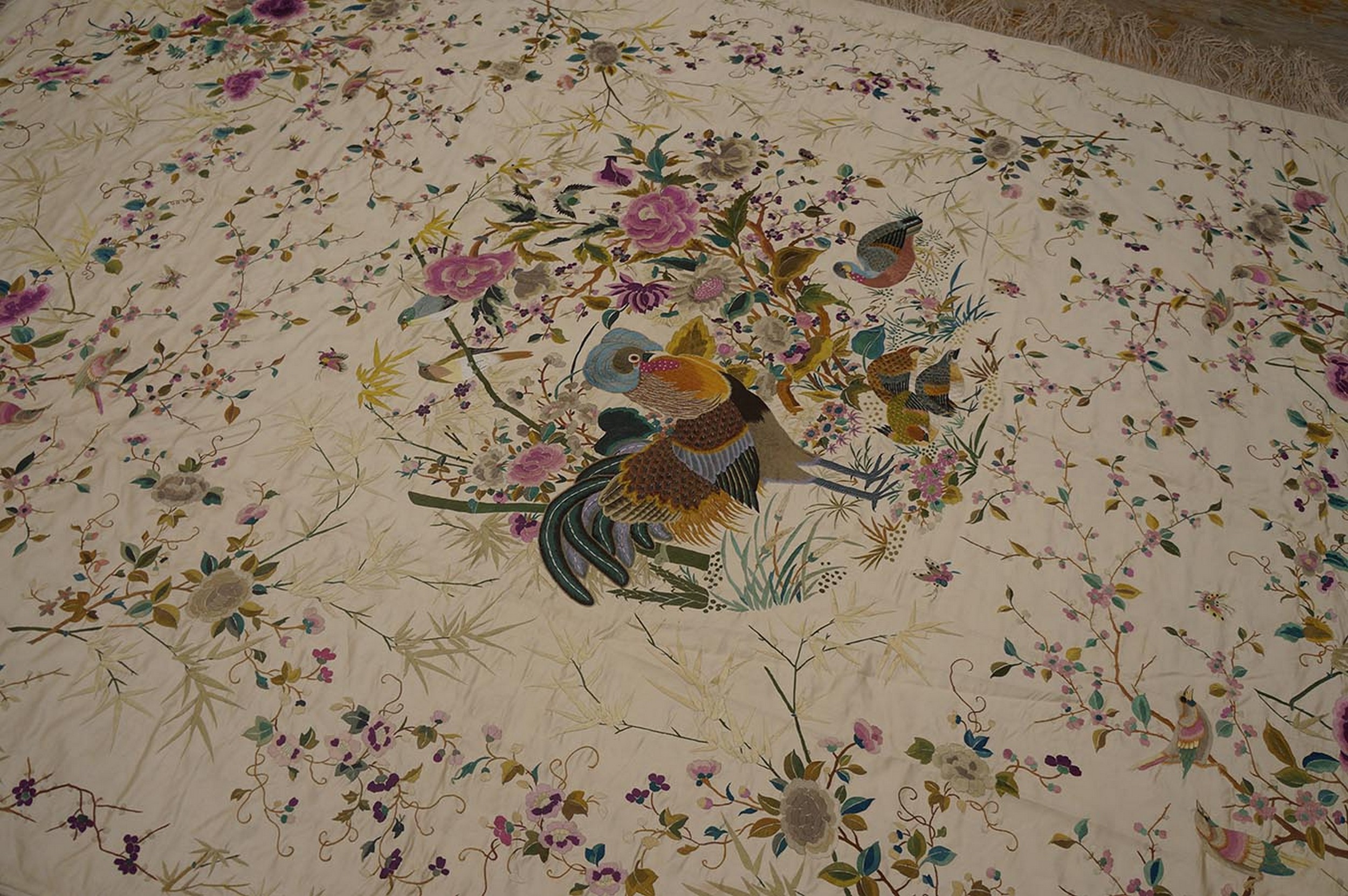
The composition is centered upon a classic “Birds and Flowers” (Huaniao) motif, a genre of Chinese painting that has been celebrated for over a millennium. The scene typically features a pair of auspicious birds—often phoenixes, cranes, or mandarin ducks—symbolizing longevity, high status, or marital harmony. They are nestled within a lush botanical landscape of peonies (wealth), lotuses (purity), and plum blossoms (resilience). The “drawing” is executed with such microscopic detail that the feathers of the birds and the veins of the petals possess a lifelike, three-dimensional realism that rivals the finest brushwork.
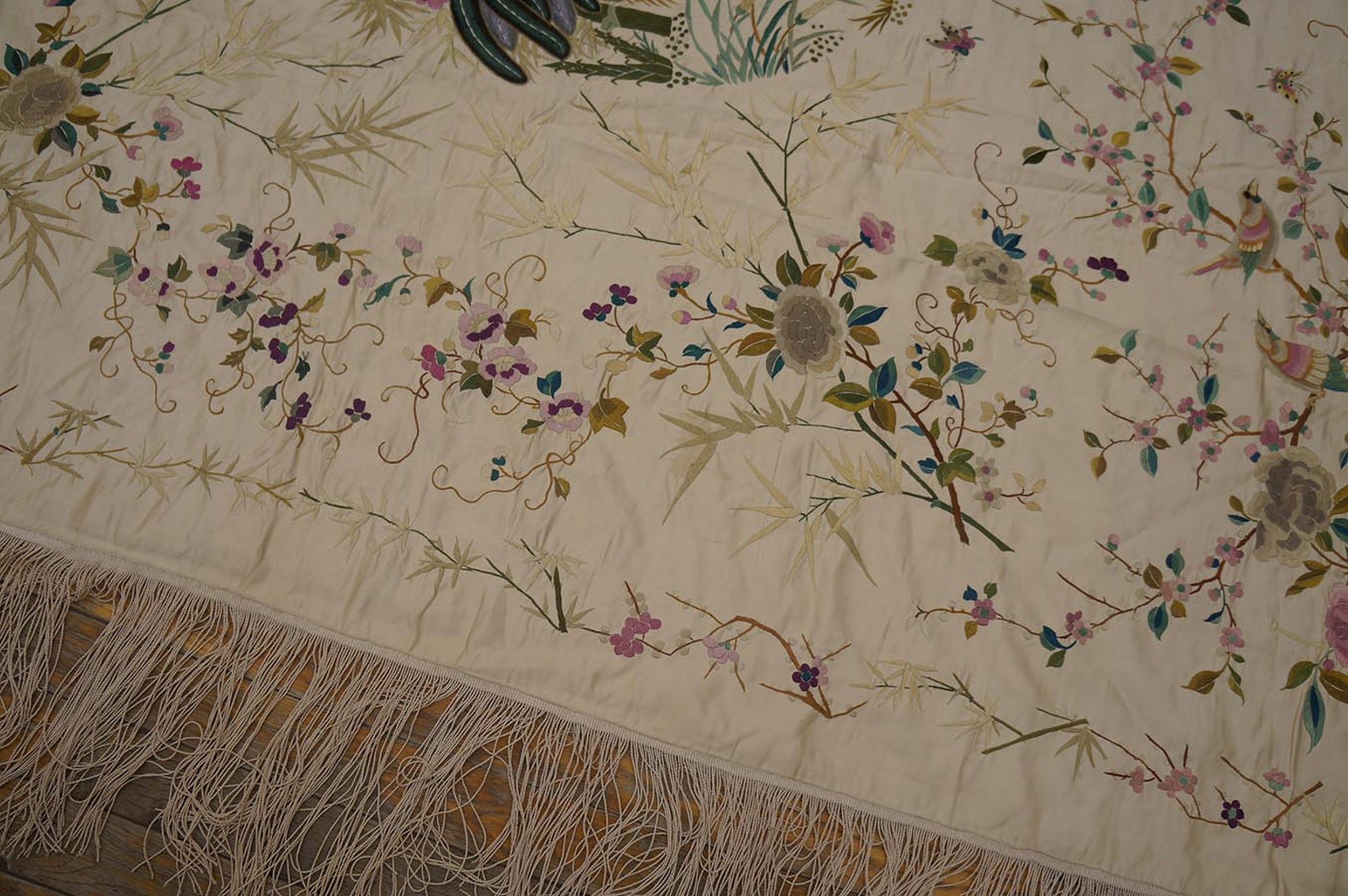
The palette is anchored by a luminous and rare Light Ivory silk foundation. This “pearl-tone” background provides a shimmering, reflective stage that catches the light with a natural, protein-rich luster. Against this tranquil stage, the motifs are rendered in a kaleidoscopic array of jewel-toned silks, including emerald greens, sapphire blues, vibrant corals, and burnished golds. Because this is an early 20th-century specimen, the natural silk dyes have mellowed into a sophisticated, soft patina, giving the entire work a “moonlit” glow that is far more nuanced than modern synthetic productions.
Technically, this textile is prized for its virtuoso “Split-Stitch” and “Satin-Stitch” work. Master embroiderers would often split a single silk thread into multiple finer filaments to achieve the seamless color gradations (shading) seen in the flower petals. The varying directions of the stitches allow the silk to reflect light differently from every angle, a technique known as “shimmering” or “optical mixing.” The sheer density and precision of the needlework represent thousands of hours of disciplined hand-labor.
The borders of such embroideries often feature a contrasting silk brocade or a secondary embroidered frame of scrolling vines or Buddhist symbols to “lock in” the vibrant energy of the central scene. To possess this antique Chinese woven silk birds and flowers embroidery is to own a monument to Eastern feminine art and courtly refinement. It bridges the gap between decorative textile and high-art masterpiece—transforming any wall into a sanctuary of historical gravity, unparalleled luxury, and serene, botanical grace.