
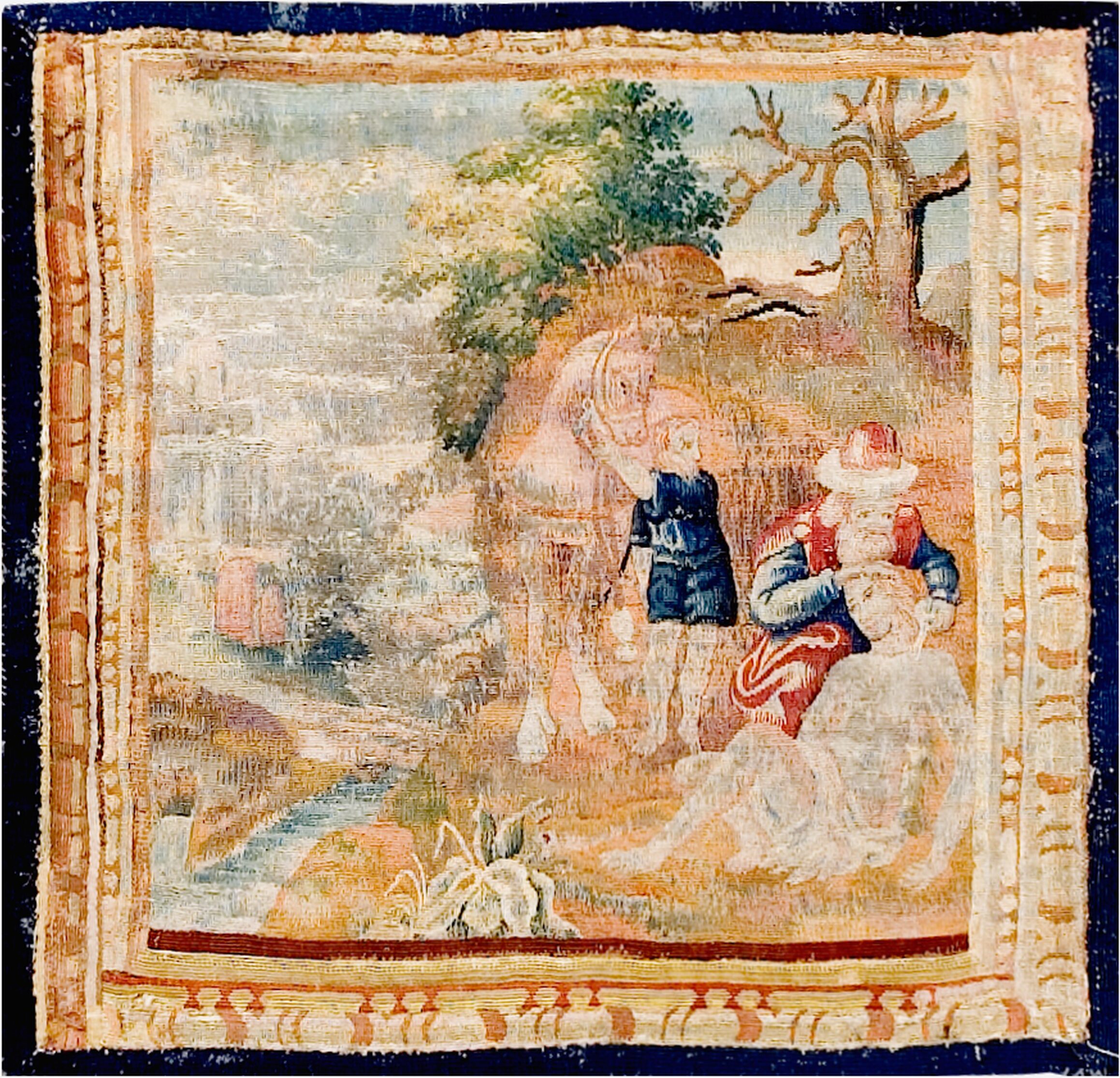
Antique Tapestry Belgium Allover Flat Weave Rug, Circa Date: 1700s. This exceptional piece of textile art hails from the height of European tapestry production, likely created in or near Brussels during the 18th century. It represents a rare surviving example of antique rugs that served both decorative and narrative purposes in aristocratic homes, showcasing the technical mastery of the period’s weavers.
The central field presents a finely woven pastoral vignette, characteristic of the period’s preference for idyllic, classical scenes. Two figures are depicted in a wooded landscape beside a stream, rendered with remarkable detail despite the small scale of the weaving. This narrative approach places it firmly within the category of classic traditional rugs design, prioritizing pictorial representation over abstract pattern.
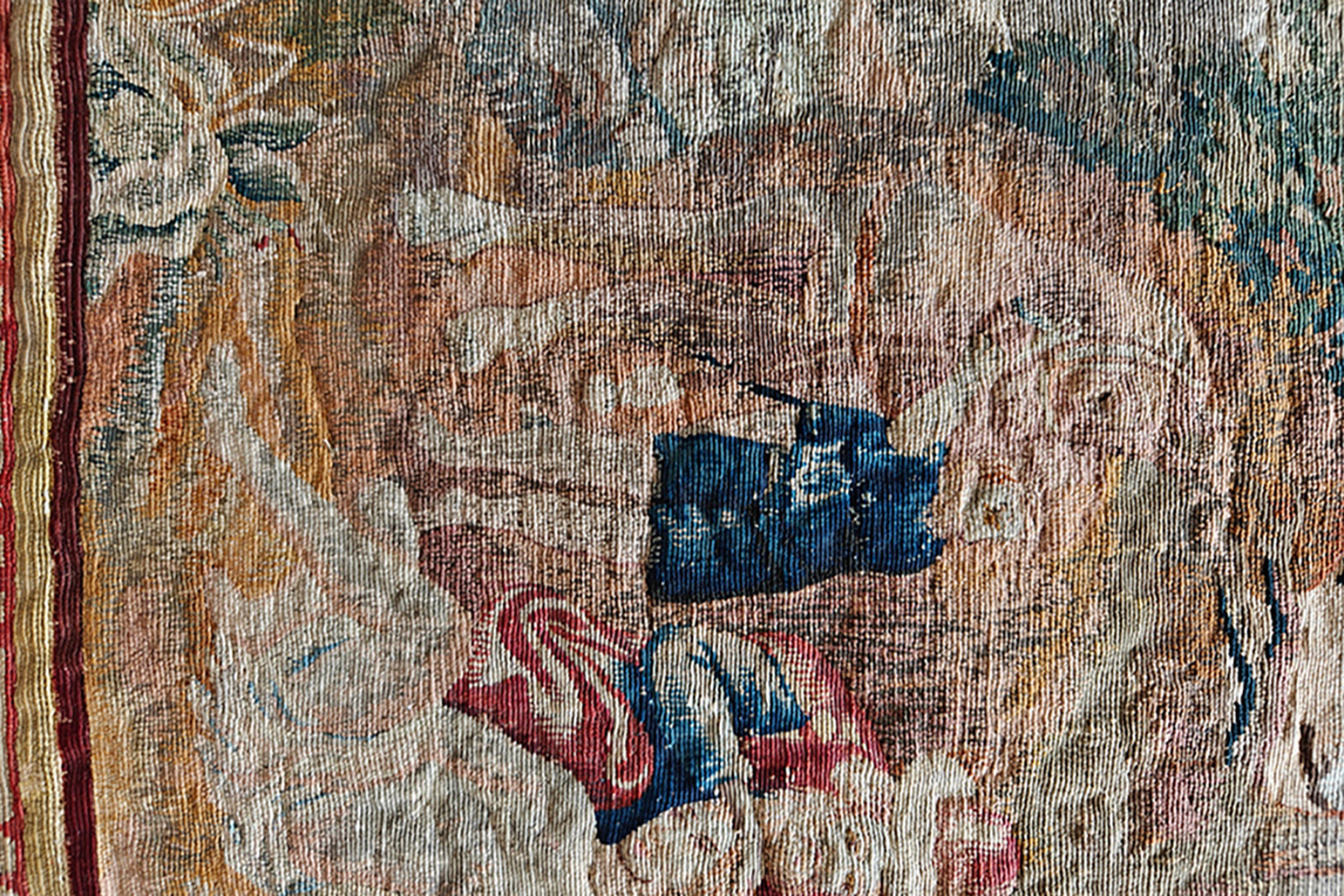
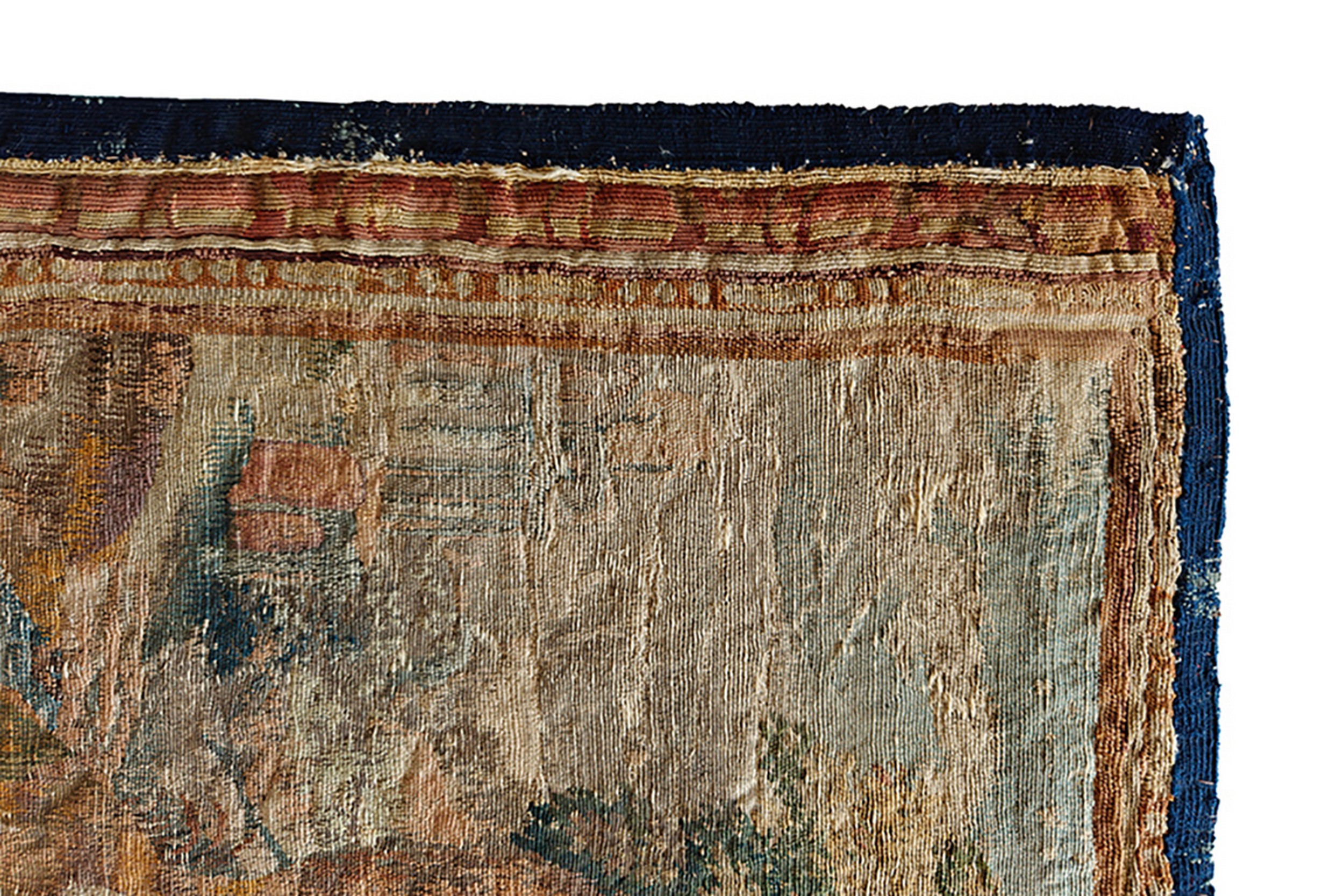
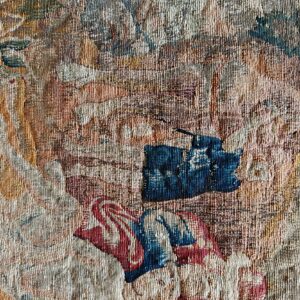
Executed in a precise flat weave technique, the texture is refined, allowing the subtle shifts in shading to create depth and perspective across the complex scene. The palette is a masterful blend of aged hues, featuring soft creams, oxidized golds, and deep indigo accents, creating a sophisticated display of multicolor jewel tone rugs that have mellowed beautifully over three centuries.
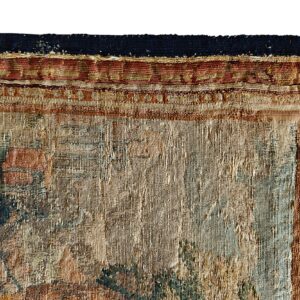
Given its age and delicate construction, this tapestry fragment is remarkably well-preserved, showcasing the enduring quality of 18th-century European textiles. Its dimensions classify it among the highly sought-after small scatter size rugs and wall hangings, making it an ideal accent piece for a curated collection or a focal point in a refined study or salon.