
17th Century Flemish Biblical Tapestry Fragment: David and Goliath. Origin: Southern Netherlands (likely Brussels or Antwerp). Date: Circa 1650–1680 (Late Baroque).
While it falls under the umbrella of “Flemish,” the sophistication of the cartouche suggests it may have come from a Brussels workshop. This square tapestry fragment represents the gold standard for these framed narrative pieces, often following “cartoons” (designs) inspired by artists like Peter Paul Rubens.
Design Style: Cartouche with architectural strapwork and a central narrative medallion.
Materials: Hand-woven wool and silk.
The Scene: David and Goliath
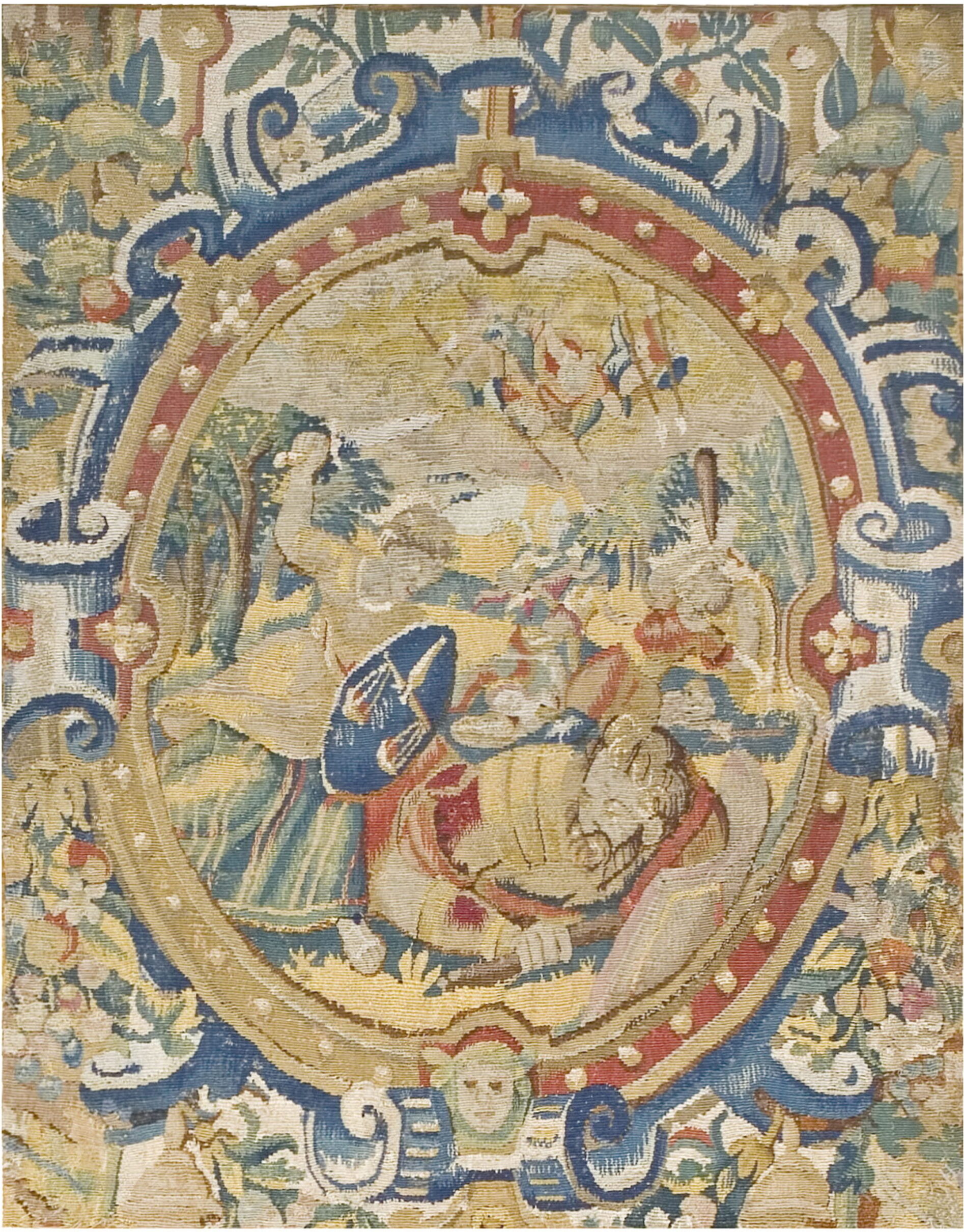
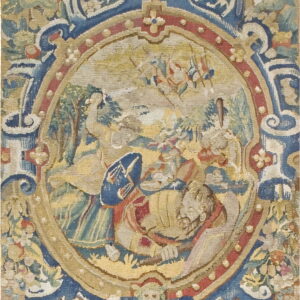
The central medallion depicts the immediate aftermath of the biblical battle between David and Goliath.
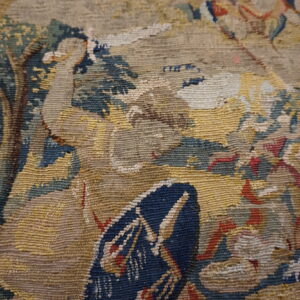
The Action: You can see the young, athletic figure of David standing over the fallen, armored giant, Goliath. David is often shown in this specific pose—grasping the giant’s hair or preparing to use the giant’s own massive sword to finish the deed.
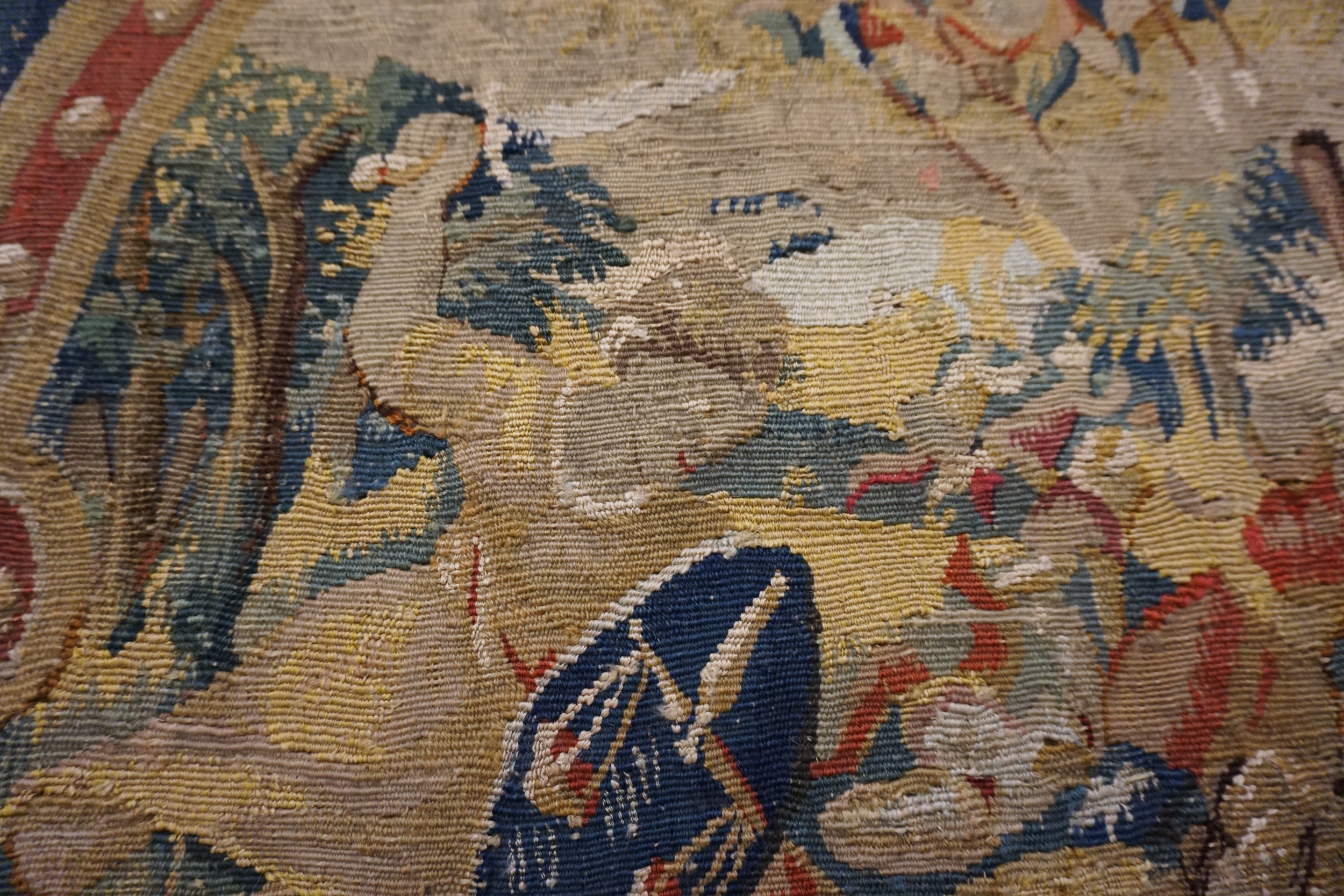
The Background: In the upper register of the medallion, you can see a faint, secondary scene of soldiers or a mountainous landscape, representing the valley where the Israelite and Philistine armies were stationed.
The Symbolism: In the 1600s, this scene wasn’t just religious; it was often used as a political allegory for a smaller nation or a righteous cause overcoming a massive, oppressive force.
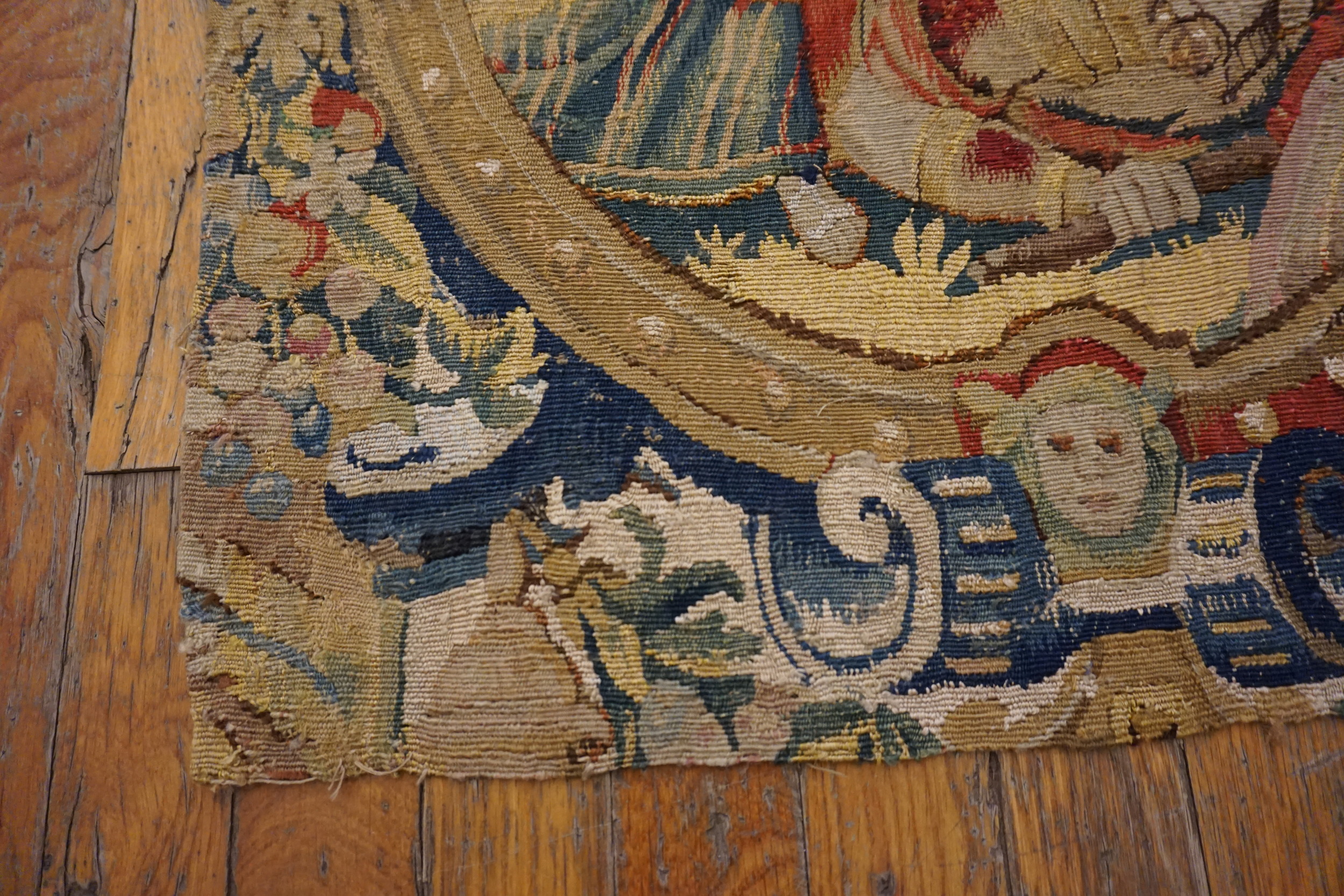
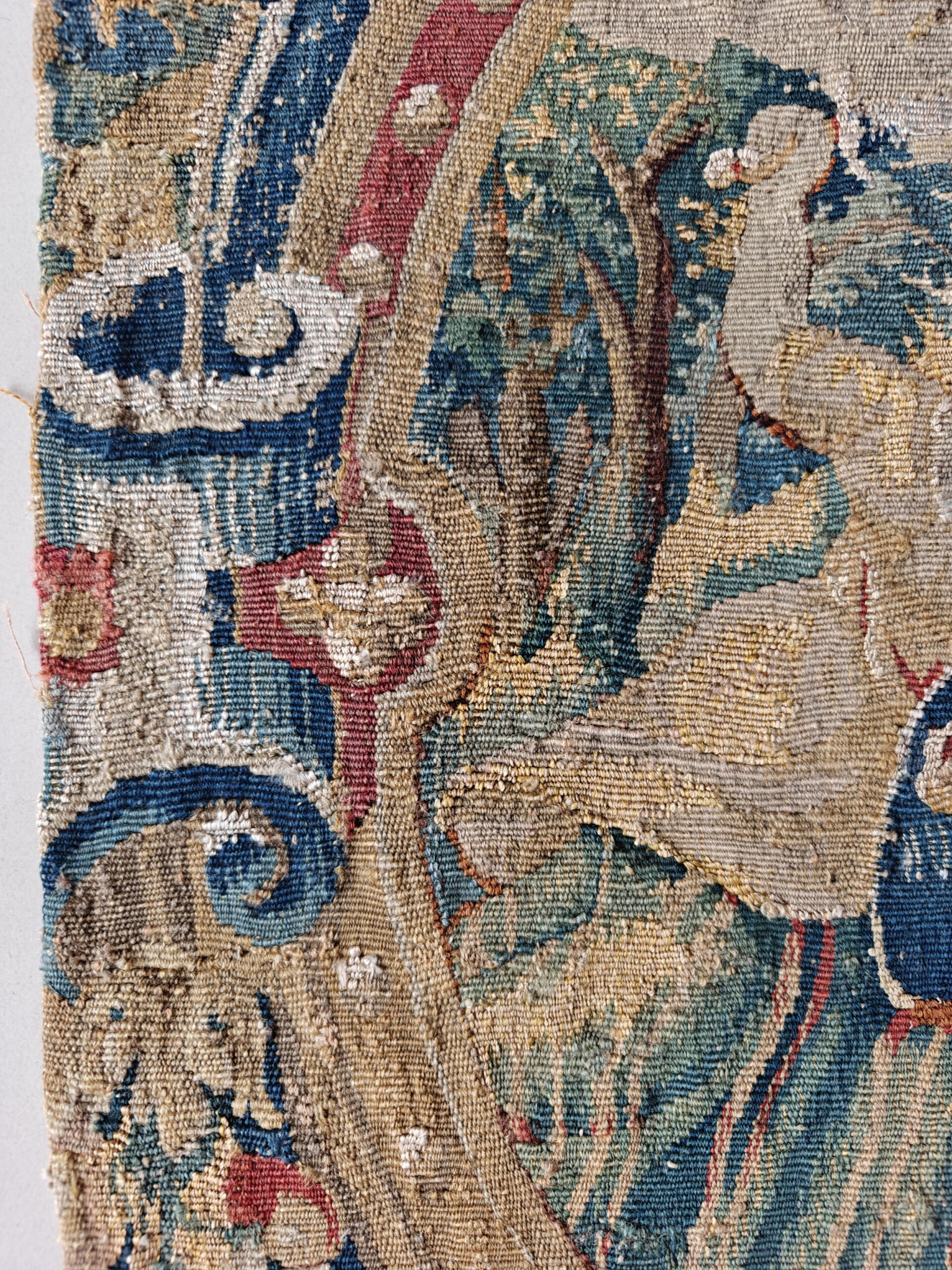
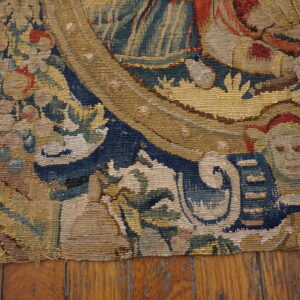
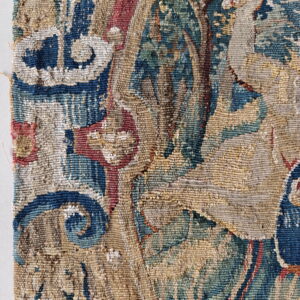
Scrollwork & Masks: The oval is surrounded by “strapwork” and blue scrolling “crescents.” At the bottom center, there is a small, stylized human mask or “mascaron,” which was a staple of Baroque decorative arts.
Foliage: The corners are filled with lush fruit and floral clusters, representing abundance. The blue and gold tones are highly characteristic of the high-quality dyes used in major Flemish workshops.
Capturing a moment of triumphant drama, this square seventeenth-century Flemish tapestry fragment centers on the timeless narrative of David and Goliath. Enclosed within a masterful Baroque cartouche, the scene depicts the young hero standing over the fallen giant, a powerful allegory of courage and divine favor. The central medallion is framed by exquisite blue strapwork and architectural C-scrolls, punctuated by a delicate classical mascaron (mask) at its base and overflowing with the lush floral abundance characteristic of the golden age of Flemish weaving.
Woven with an artistry that transforms wool and silk into a vivid historical window, the piece showcases the deep indigo and soft ochre palette that defines the finest European textiles of the era. A closer look at the upper register reveals the faint, ethereal figures of the Philistine army, providing an atmospheric depth that contrasts beautifully with the finely detailed armor of the foreground figures. This square fragment is more than a textile; it is a storied relic of seventeenth-century grandeur, offering a sophisticated blend of heroic storytelling and ornamental elegance that commands attention in any setting.