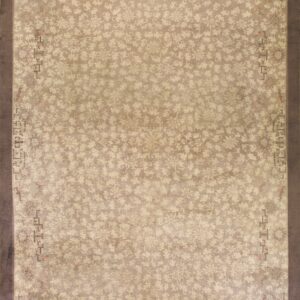
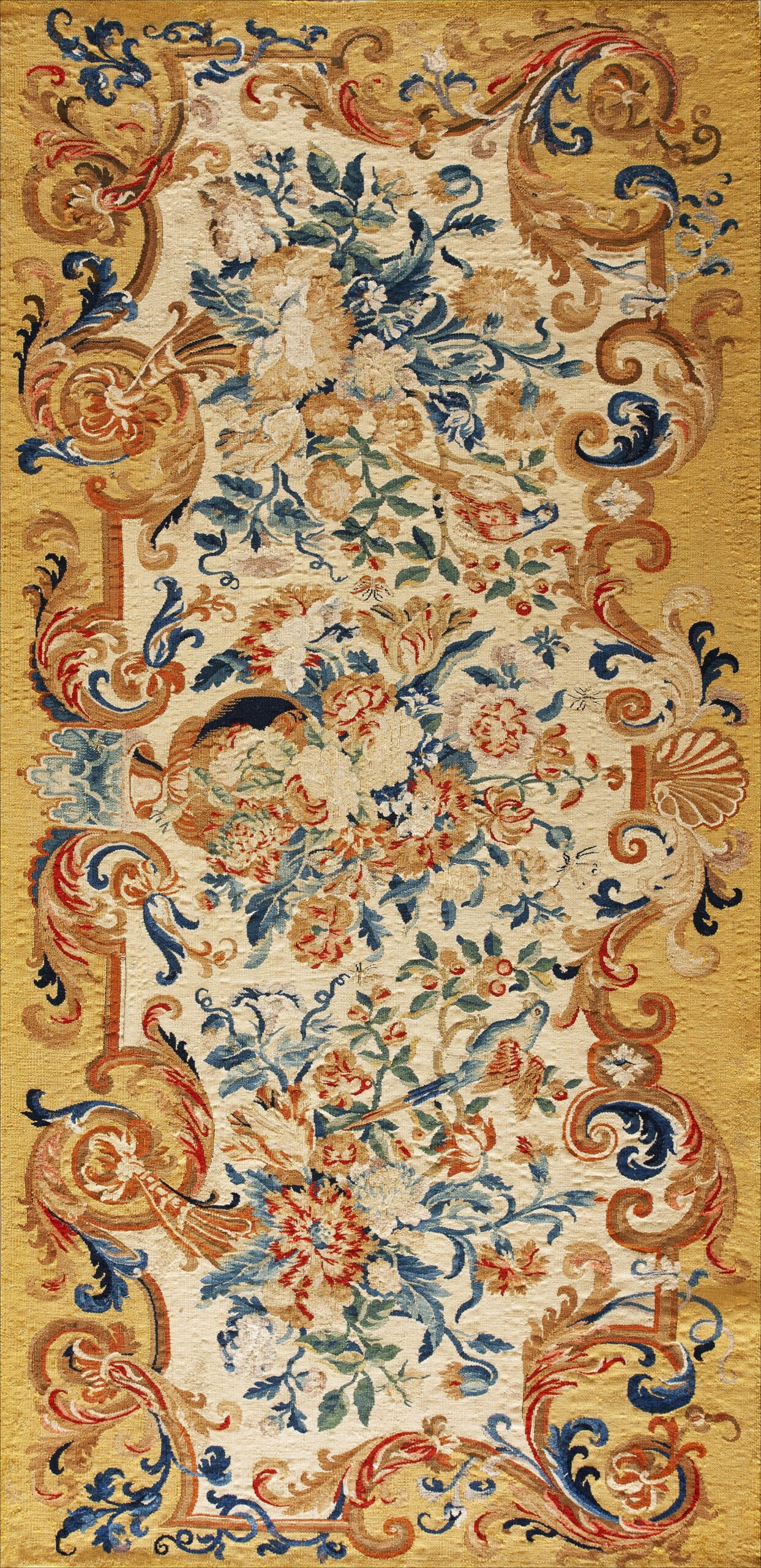
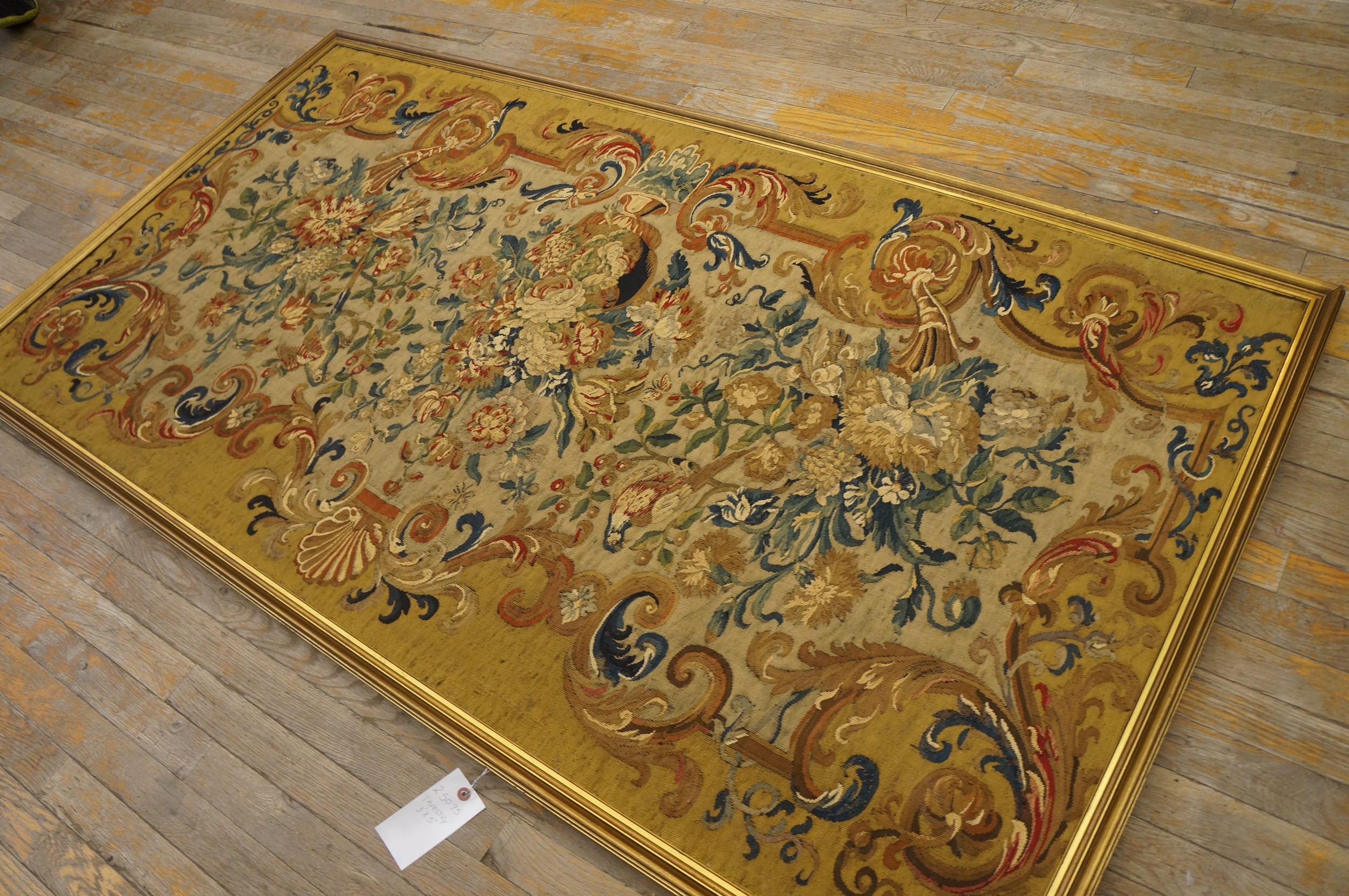
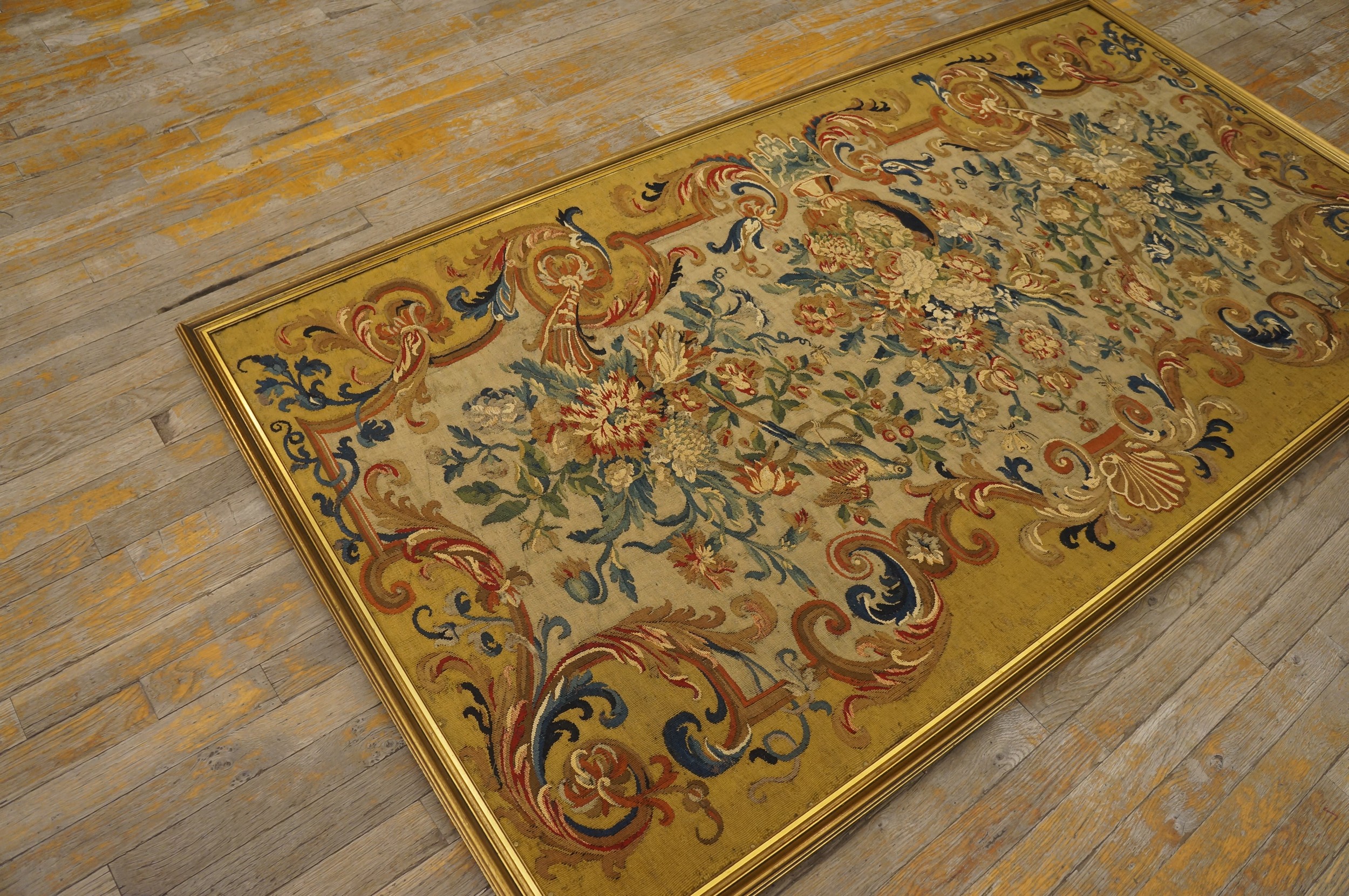
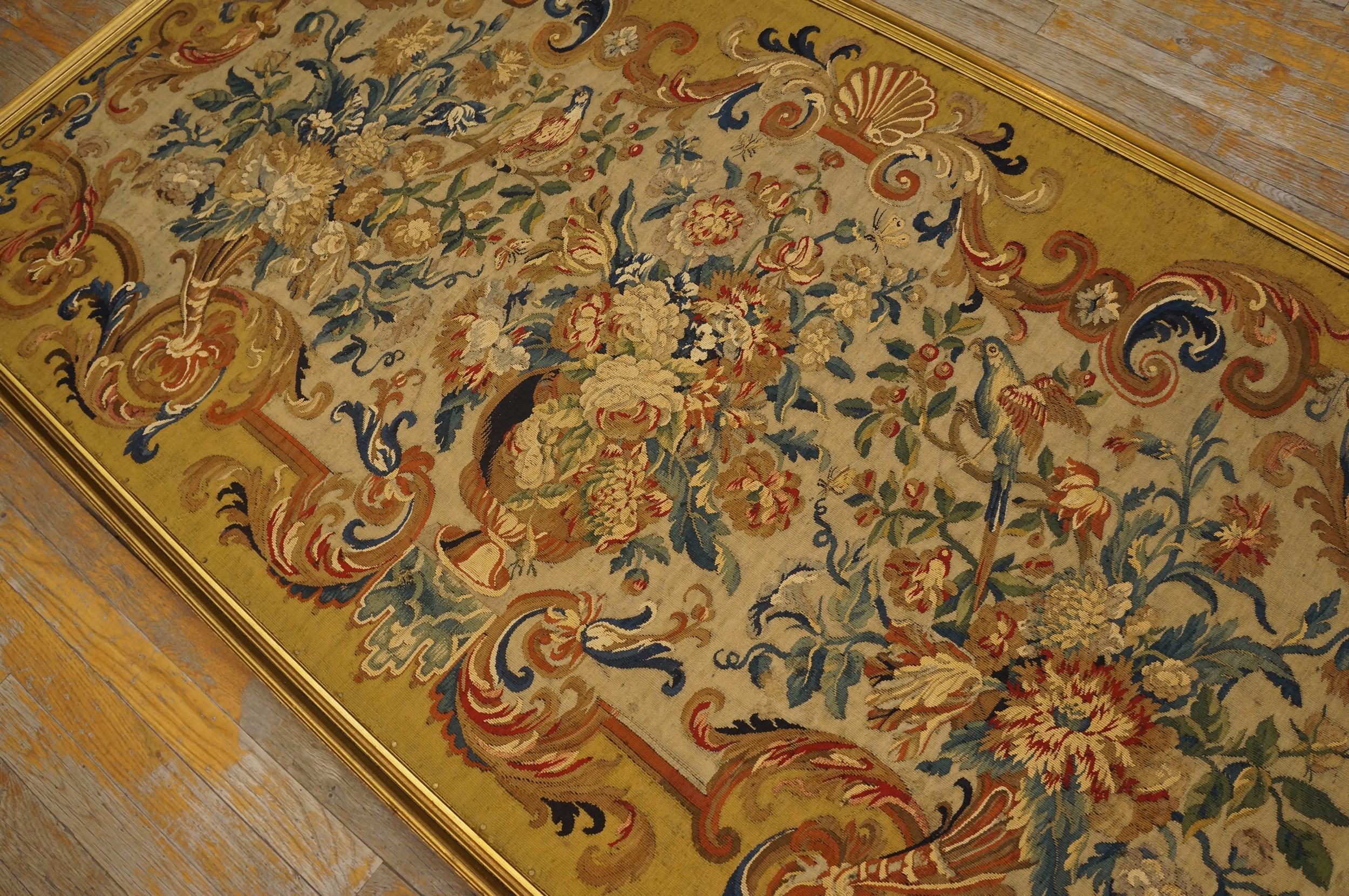
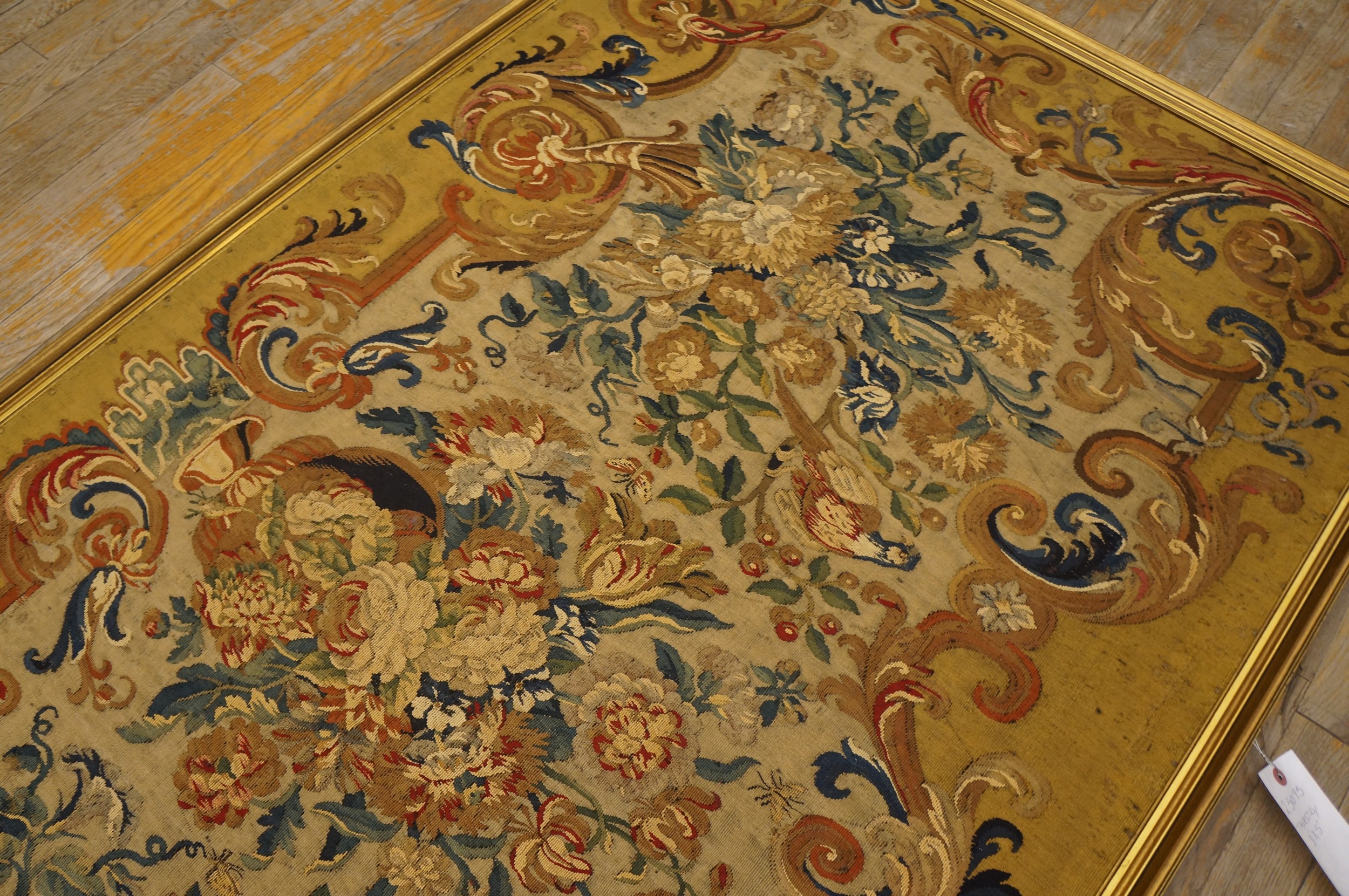
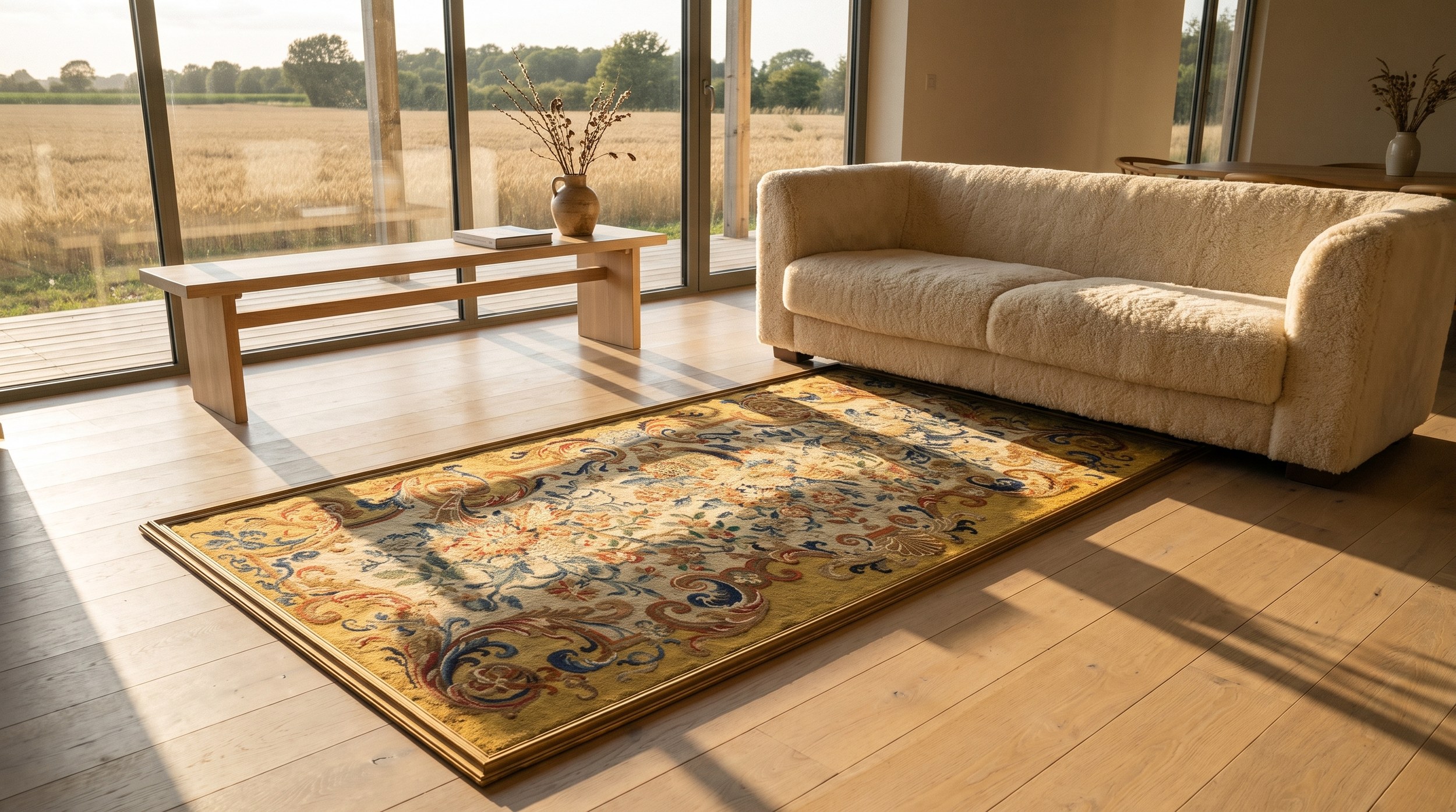
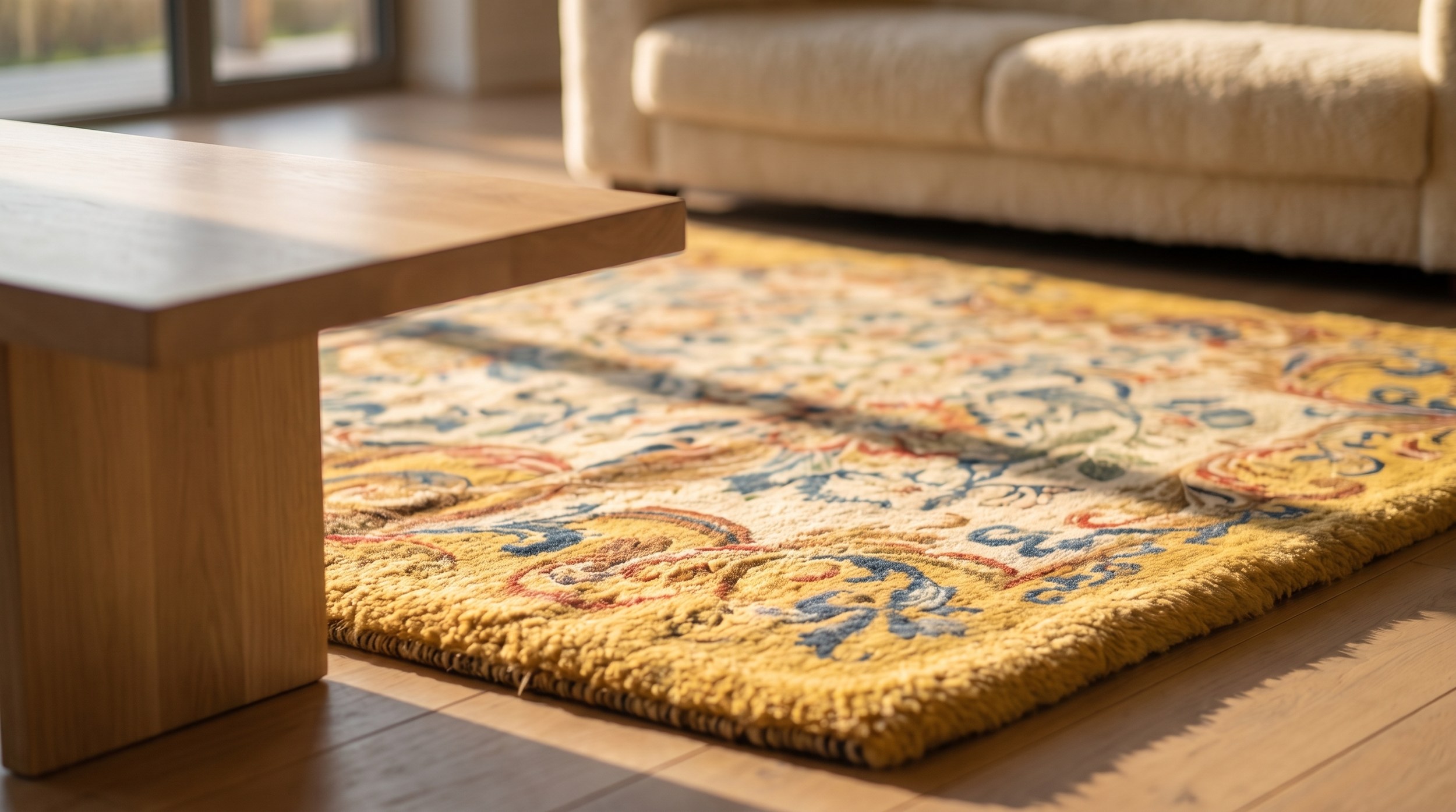
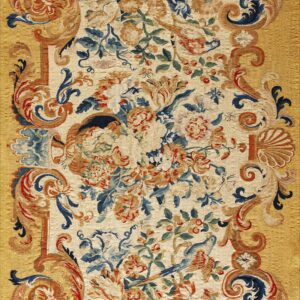
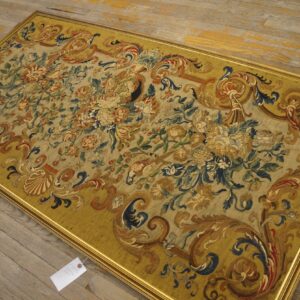
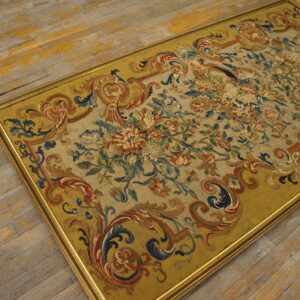
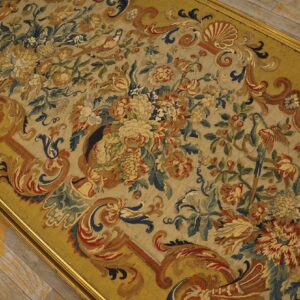
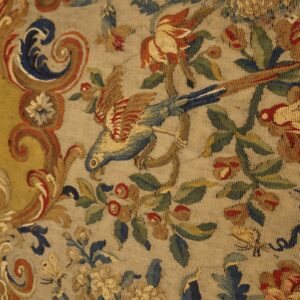
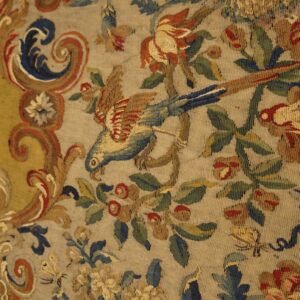
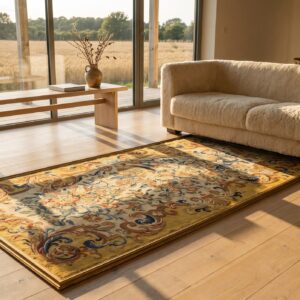
Antique French Allover Floral Flat Weave Rug, Country of Origin: France, Circa Date: 1700s. This exquisite example of 18th-century textile art represents the height of courtly design. Its flat weave construction suggests a connection to the esteemed Aubusson or tapestry workshops, known for their detailed pictorial quality. The design employs an allover pattern where a dense, naturalistic bouquet of blossoms fills the central field, avoiding a rigid medallion structure.
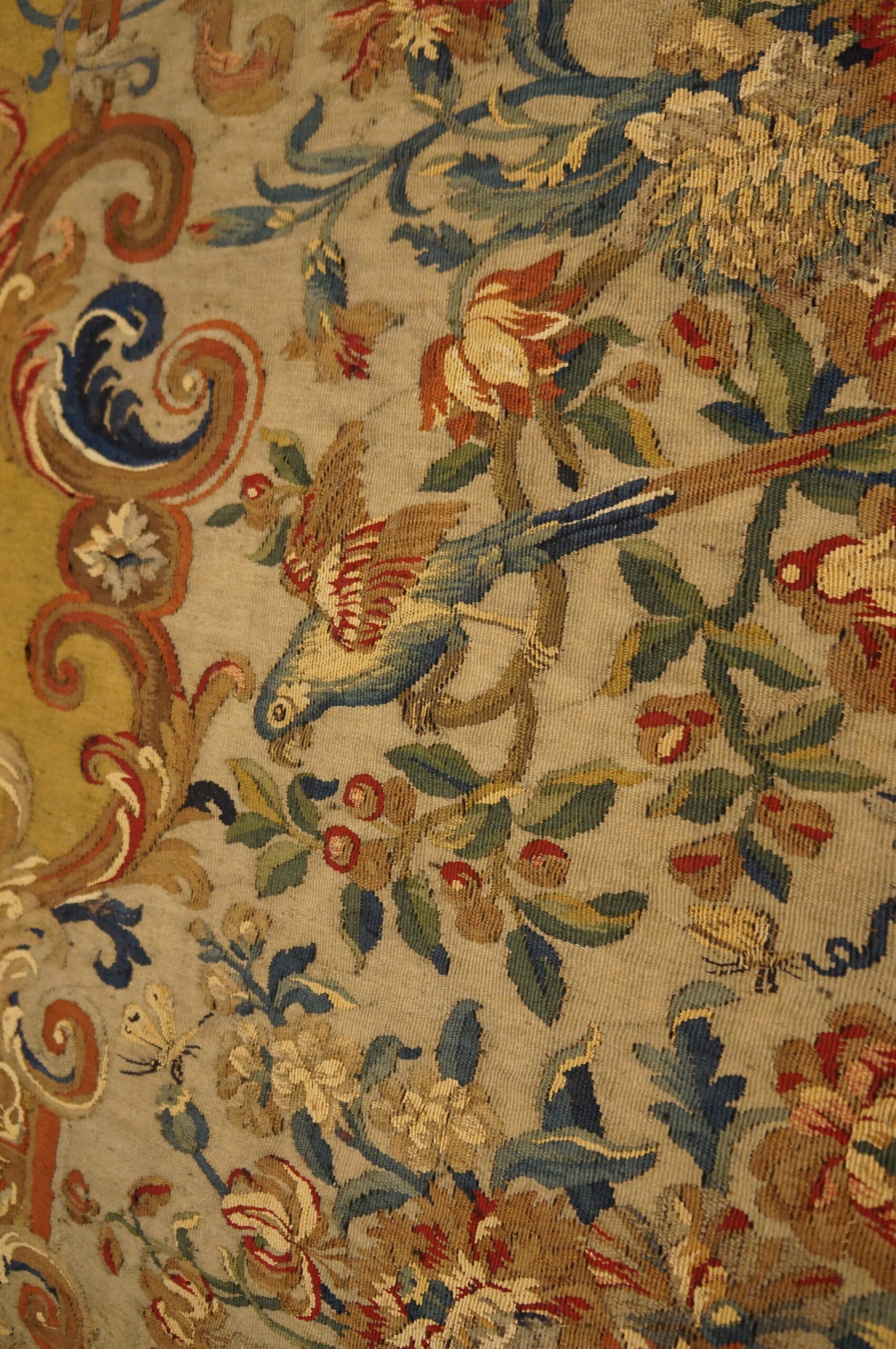
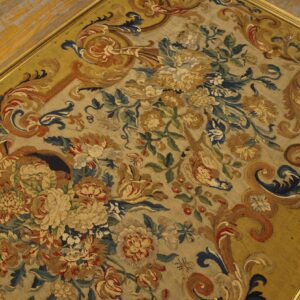
The delicate coloration is anchored by a soft, luminous ground, characteristic of the period’s preference for light interiors. This ivory beige cream field allows the rich botanical elements—rendered in subtle blues, muted reds, and earthy greens—to flourish without overwhelming the composition. The naturalistic depiction of roses and foliage, often interspersed with small birds, is a hallmark of the Rococo aesthetic, celebrating organic asymmetry and movement.
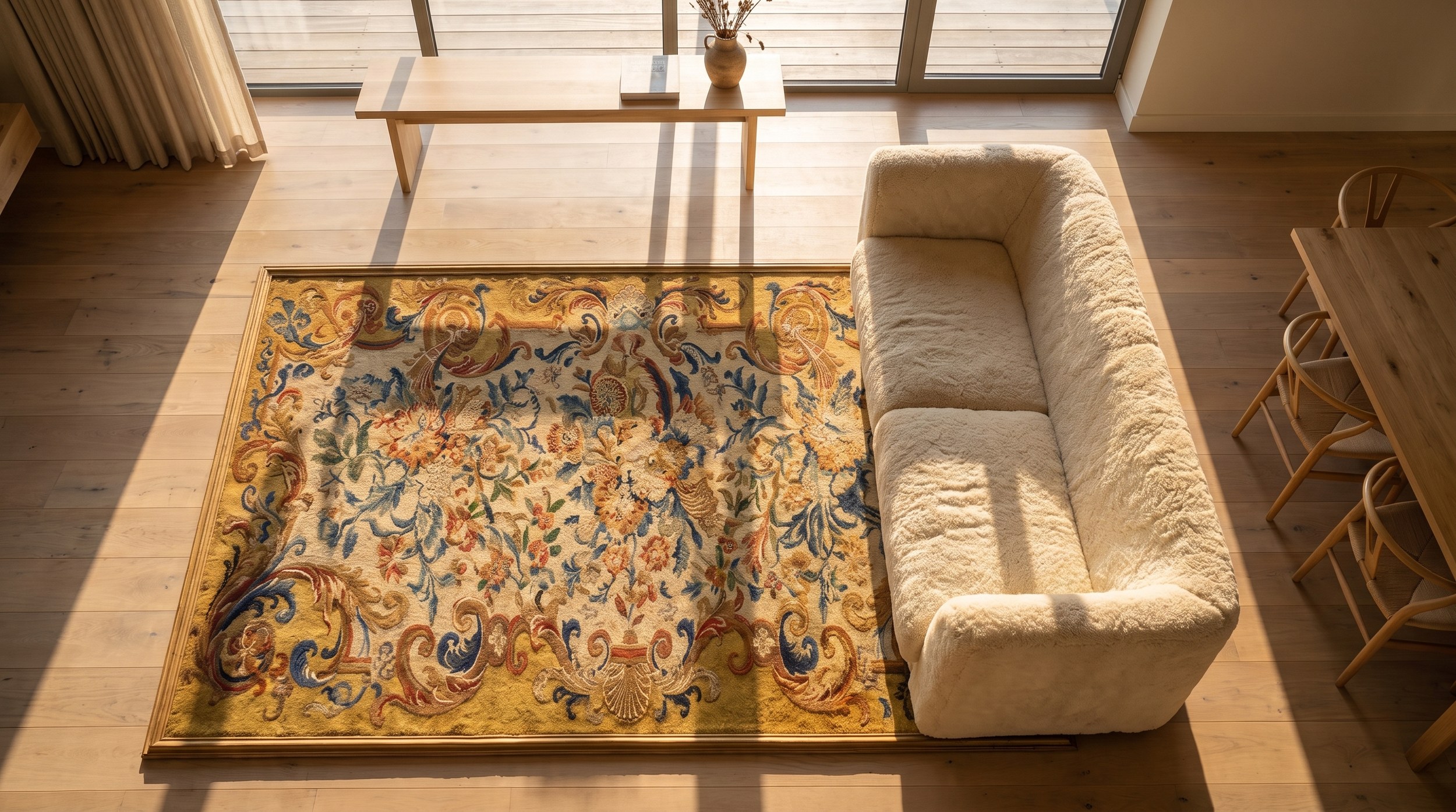
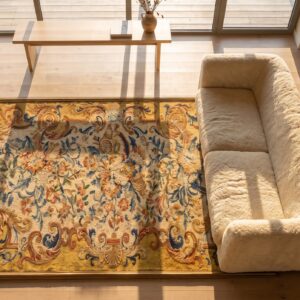
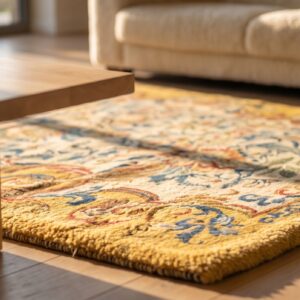
Framed by a striking gold border, the rug features elaborate cartouches and scrolling acanthus leaves, typical of high Baroque ornamentation adapted for the French court. This contrast between the pale center and the vibrant frame enhances the visual impact of the piece. Given its dimensions, this textile functions beautifully as one of the highly desirable small scatter size rugs suitable for defining a specific area or serving as a magnificent wall hanging.
Originating in French rugs workshops during the Age of Enlightenment, this piece embodies the refinement and luxury associated with pre-Revolutionary European design. Such rare, early flat weaves are highly sought after by collectors of antique rugs and textiles, standing as a testament to the enduring elegance and masterful craftsmanship of the 18th century.