
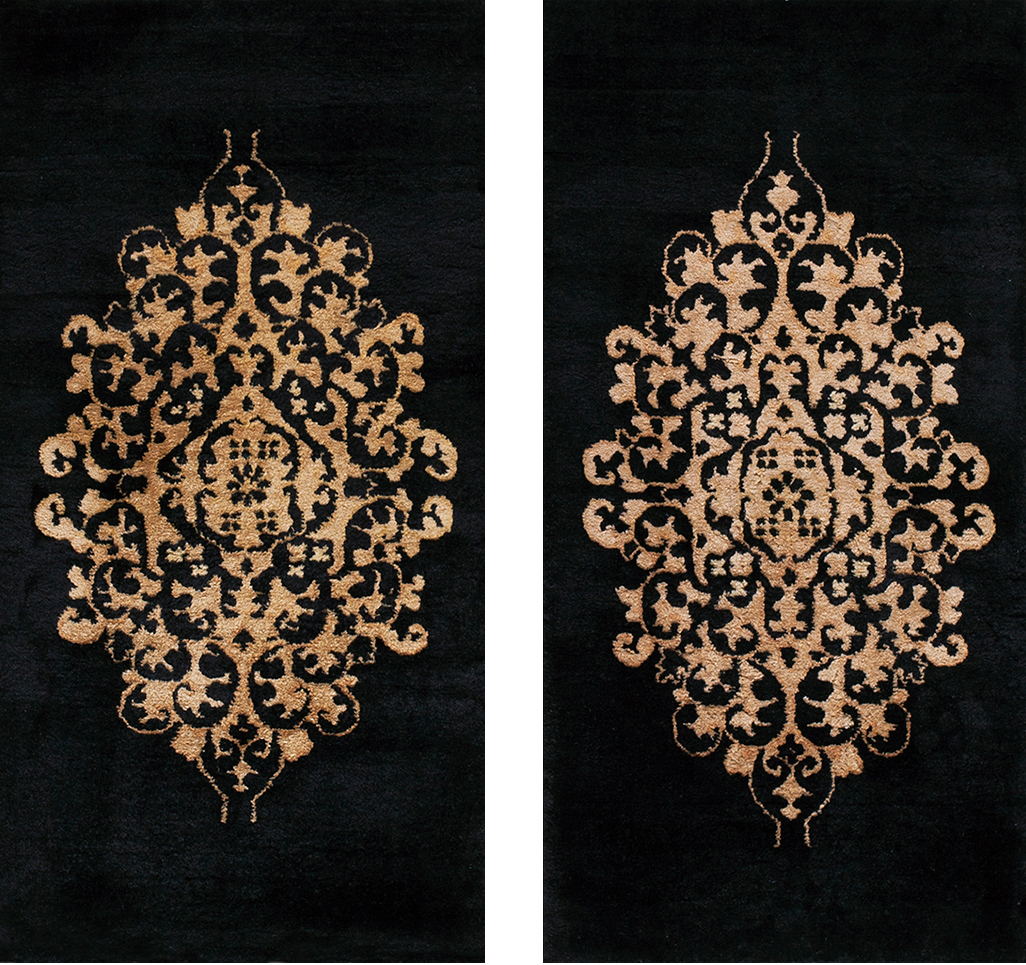
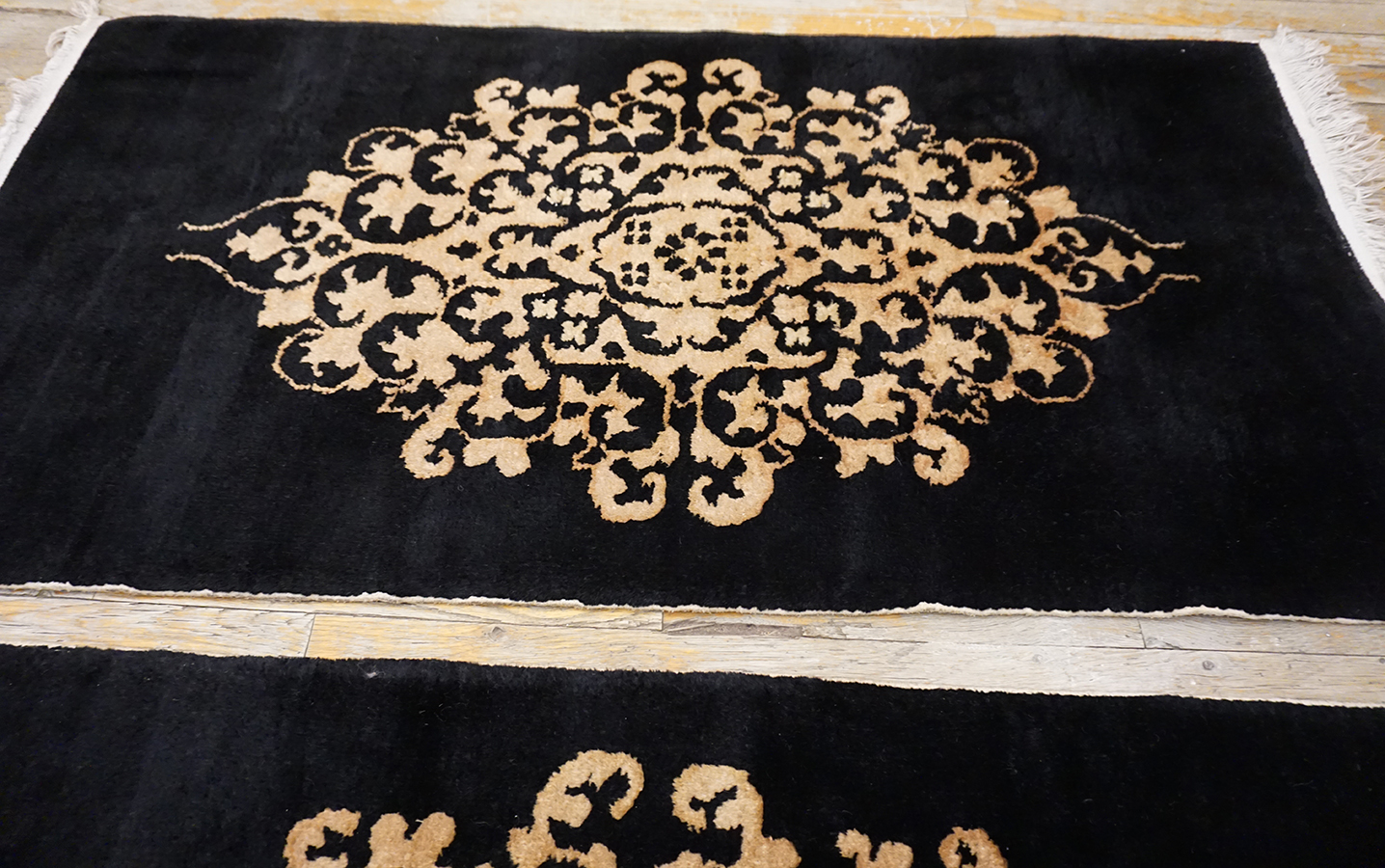
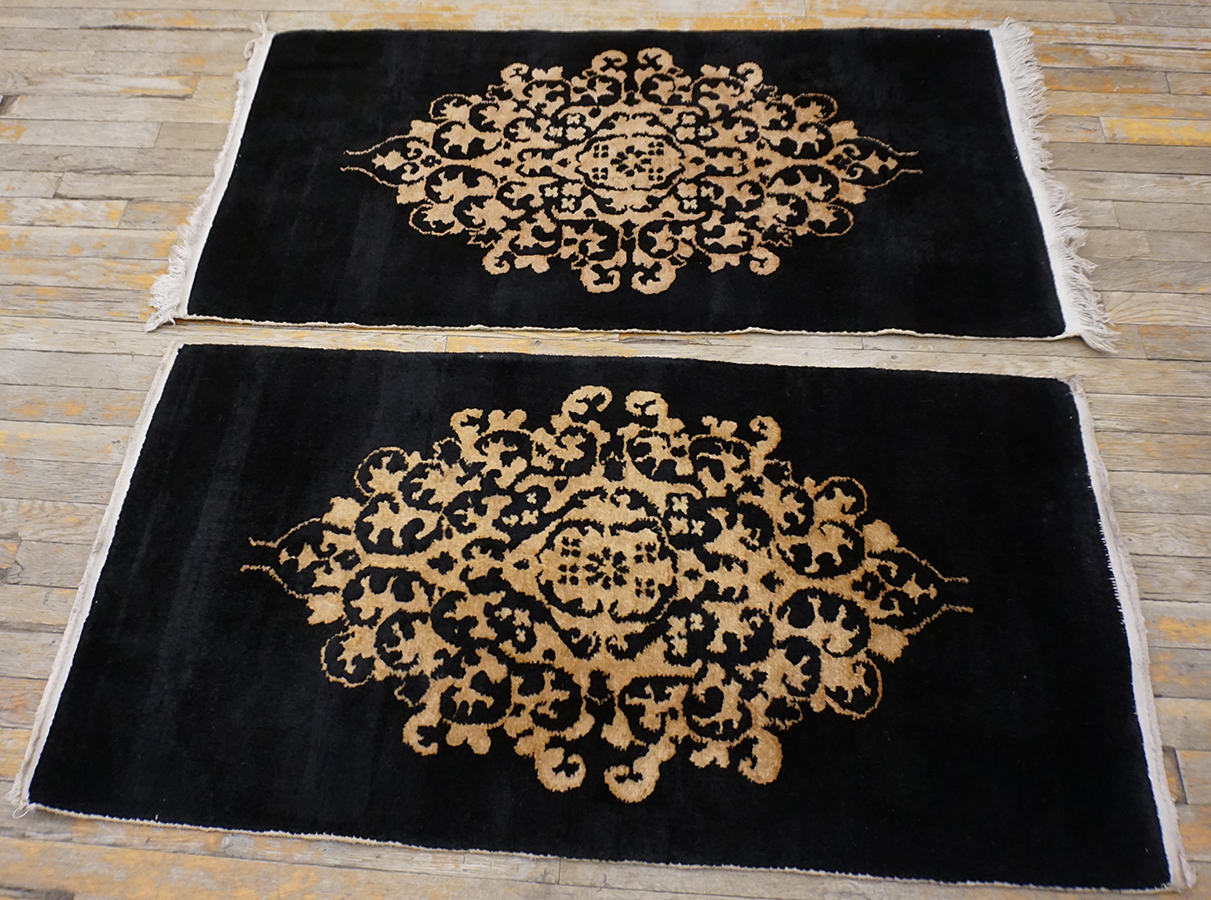
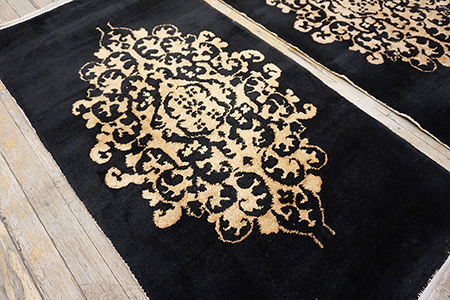
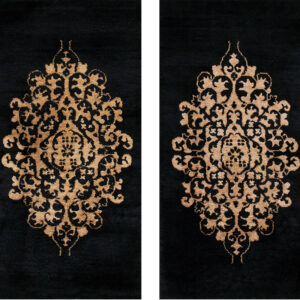
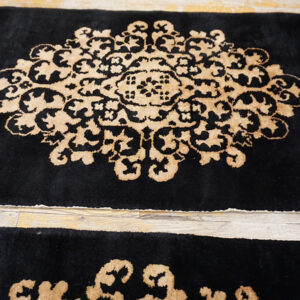
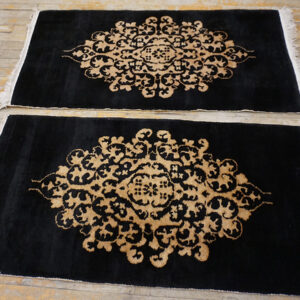
This rare pair of circa 1920s Chinese Art Deco rugs represents the pinnacle of “Jazz Age” glamour and Eastern sophisticated design. Finding an identical pair of antique Chinese rugs from this era is a significant discovery for collectors, as they were originally intended to flank a grand doorway, a bed, or a fireplace, providing a symmetrical “mirror-image” of high-style luxury.
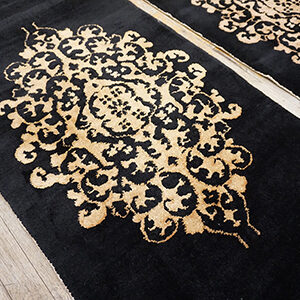
The composition is a masterclass in minimalist asymmetry, a hallmark of the “Nichols” and “Fette” workshops of the period. Rather than a traditional central medallion, these fascinating area rugs typically feature “cascading” botanical motifs—perhaps flowering peonies or weeping cherry branches—that emerge from a single corner or along the edge. This deliberate use of negative space creates a modern, airy feel that allows the quality of the materials and the depth of the color to take center stage.
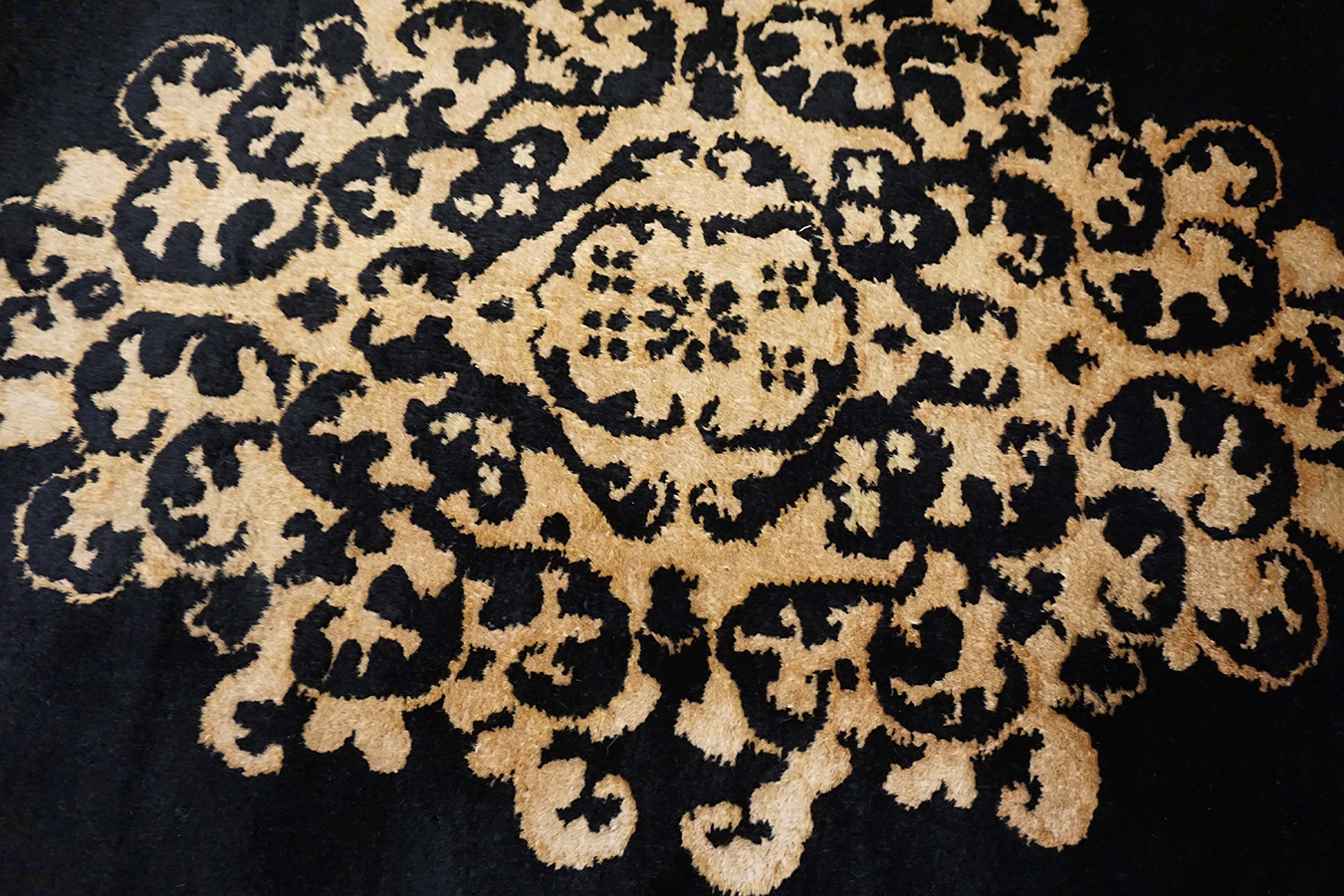
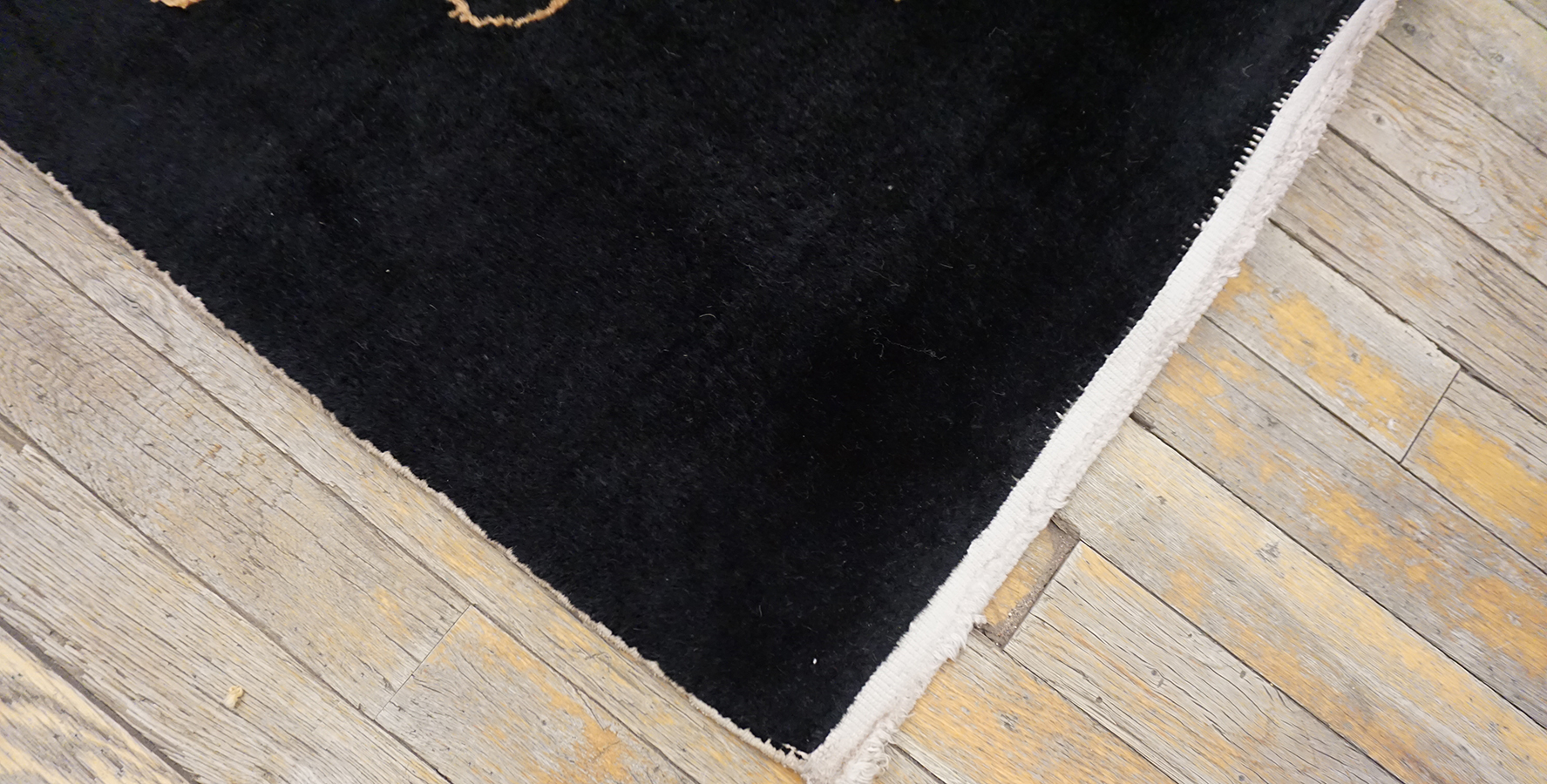
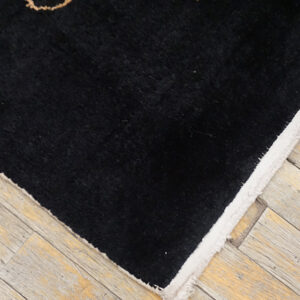
The palette is anchored by a dramatic and prestigious Midnight Black ground. In the 1920s, the use of a true black foundation was a bold choice that epitomized Art Deco chic. This deep, “inky” field provides a high-contrast stage for the secondary accents, which often feature a vibrant “Jewelry Box” palette of emerald green, imperial yellow, and dusty rose. Because these antique area rugs were made and finished with specialized care, the wool possesses a shimmering, silk-like sheen that catches the light, giving the black field a liquid, three-dimensional depth.
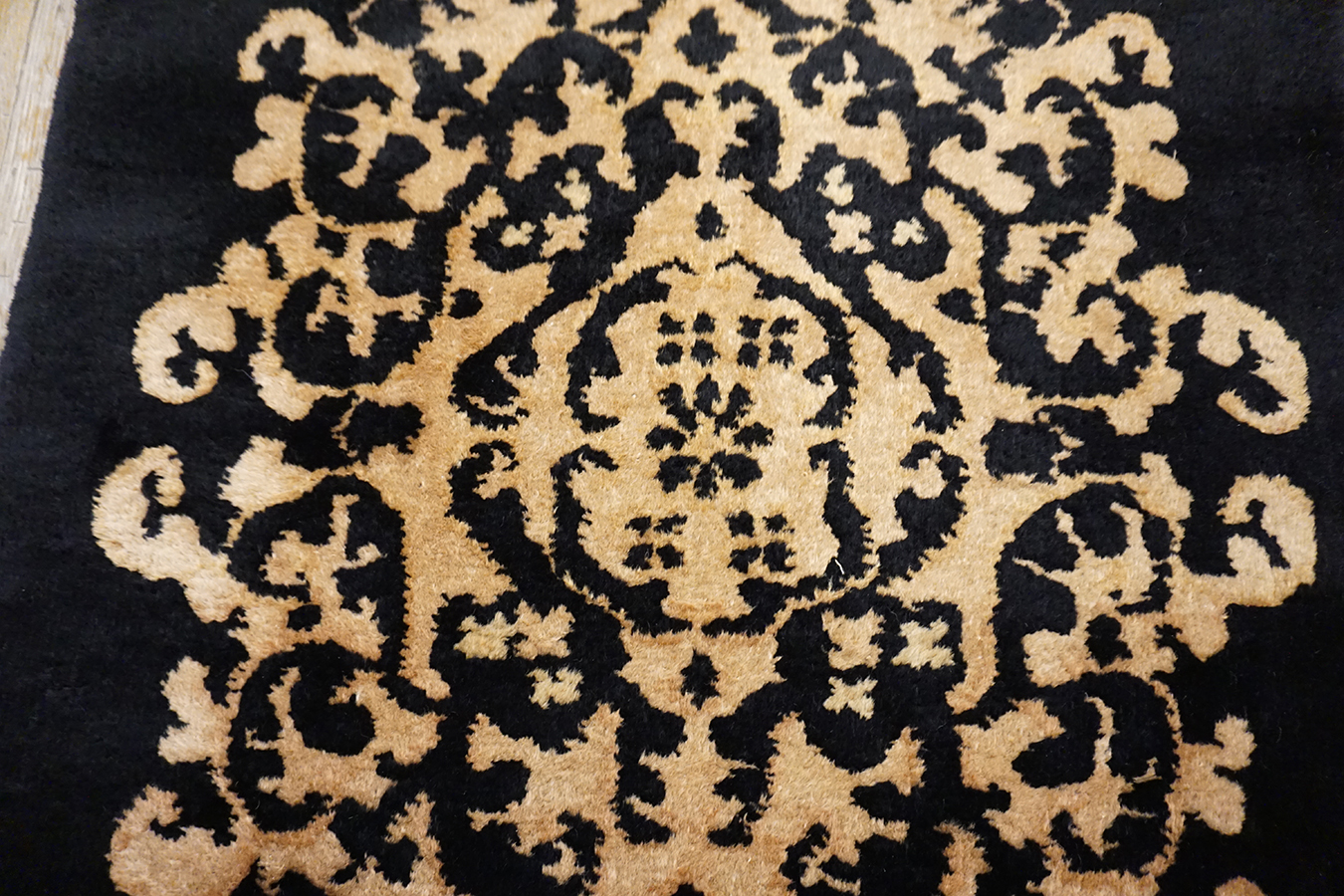
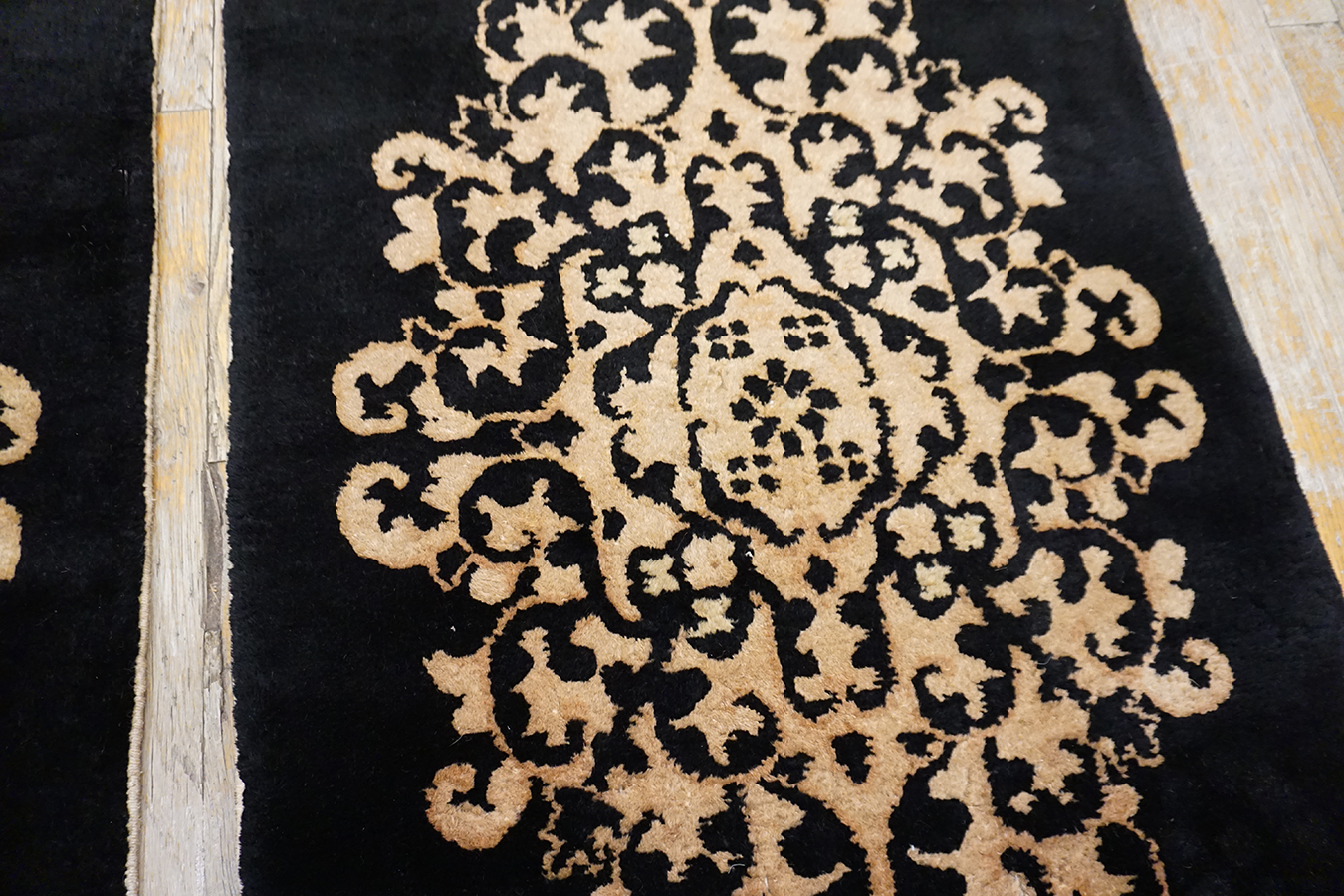
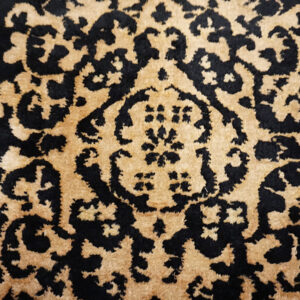
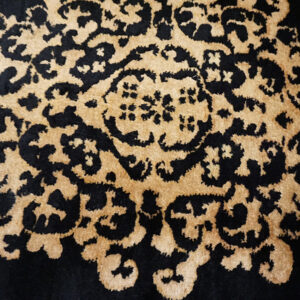
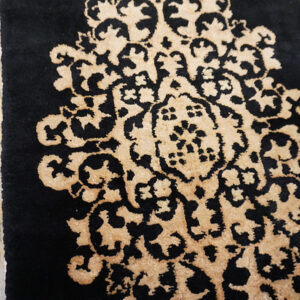
Technically, these small scatter-size rugs are prized for their exceptionally plush and “meaty” pile. Chinese Art Deco rugs are famous for their weight and durability, woven with thick, high-grade wool on a multi-ply cotton foundation. A defining feature of this pair is the hand-carving or “sculpting” around the floral motifs; the weavers used specialized shears to cut into the pile, creating a three-dimensional, embossed effect that gives the botanical elements a lifelike, sculptural presence.
The lack of a formal border (an “open field” design) further emphasizes their modernist credentials. To possess a matched pair of antique black Chinese Art Deco rugs is to own a monument to the 1920s global aesthetic. They bridge the gap between ancient Chinese botanical symbolism and the high-fashion requirements of the Western “Roaring Twenties” interior—transforming any space into a sanctuary of historical gravity and rare, cinematic opulence.