
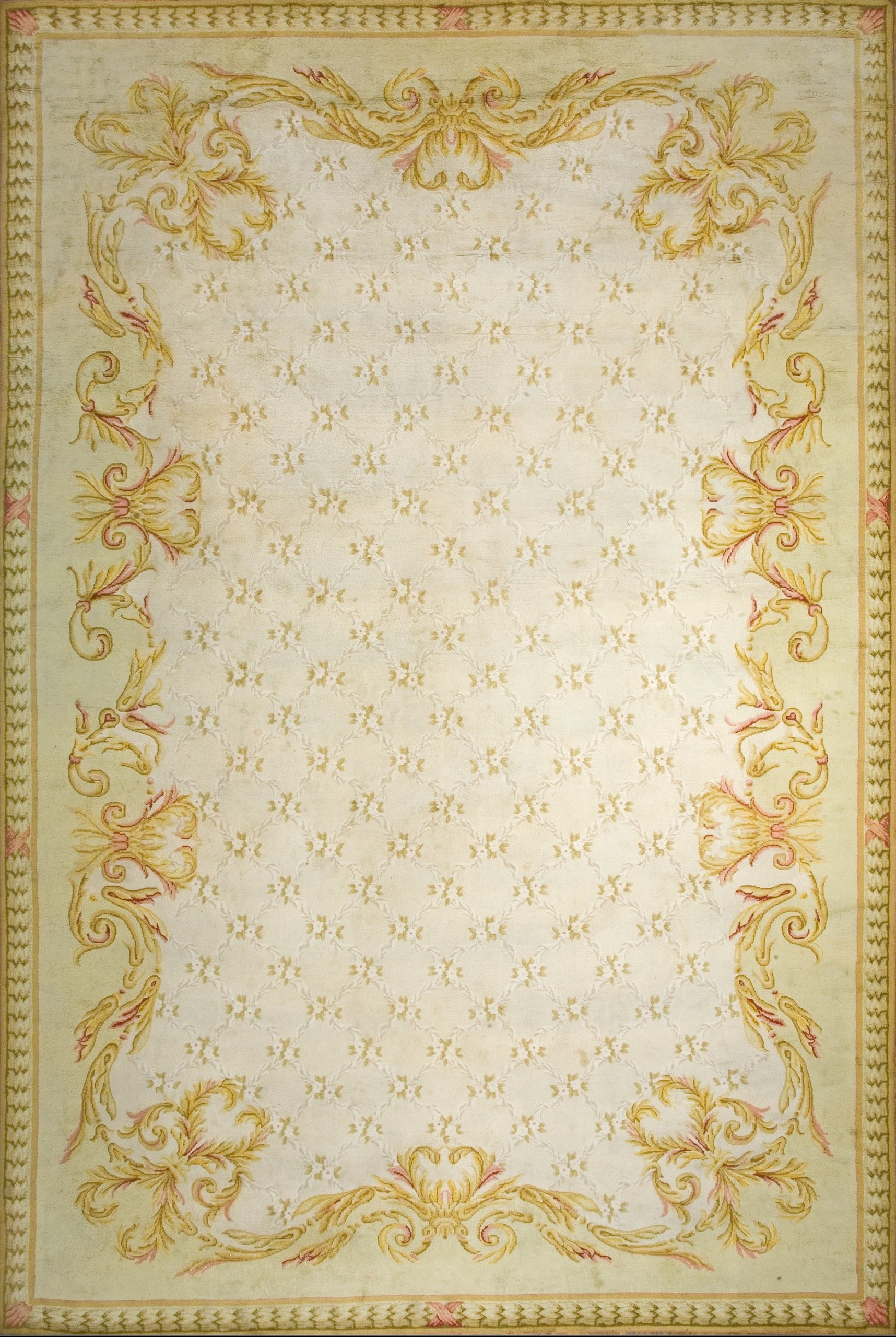
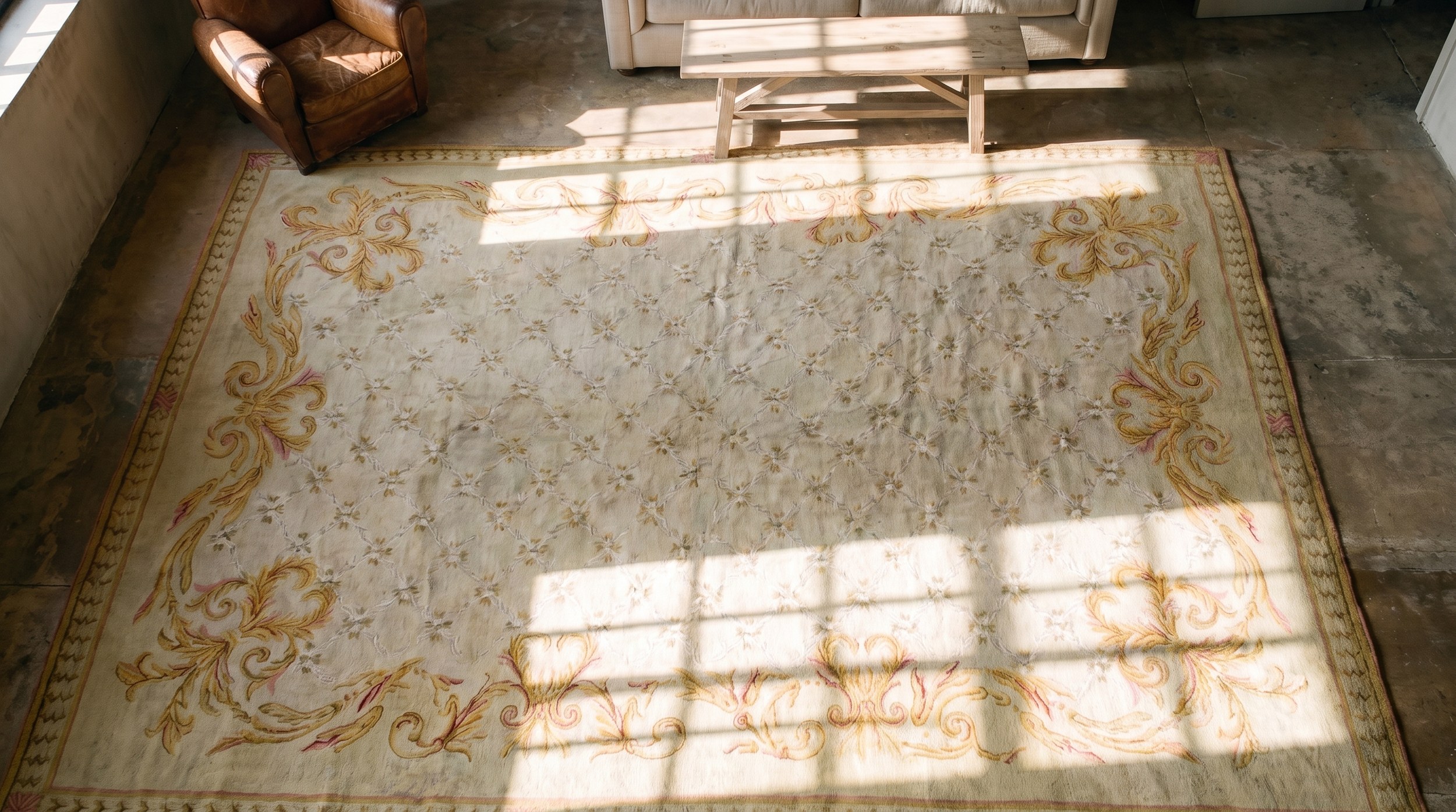
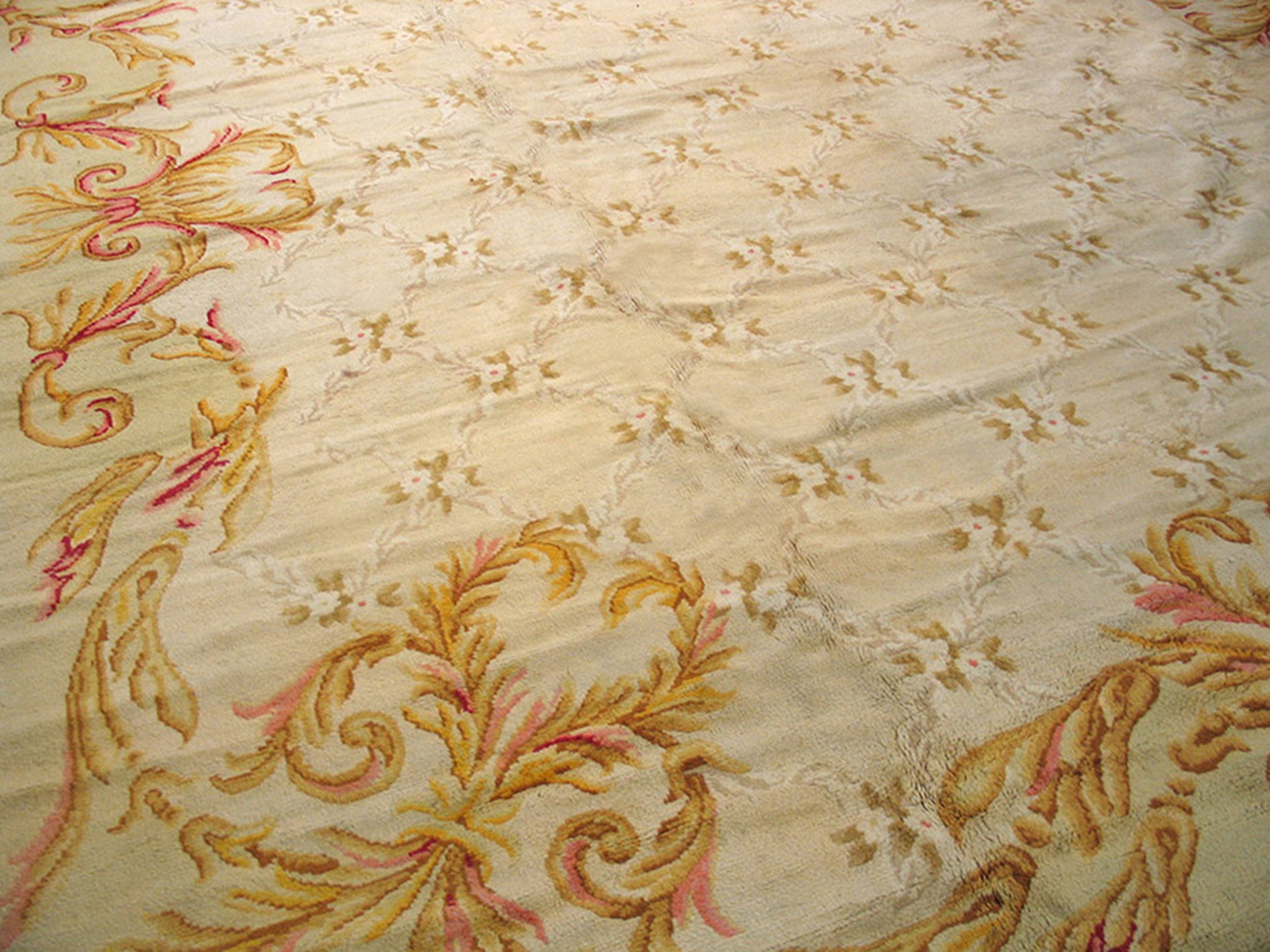
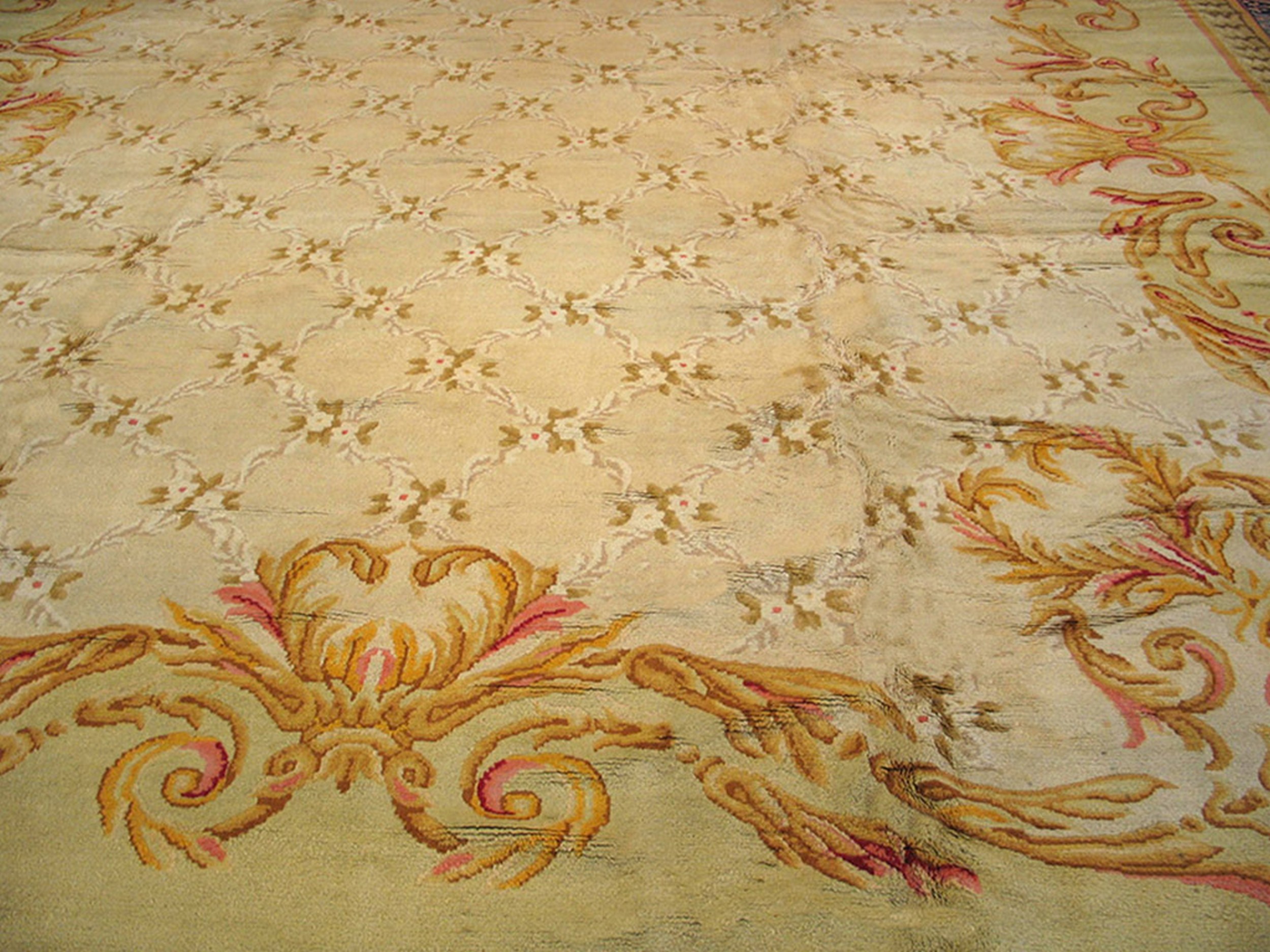
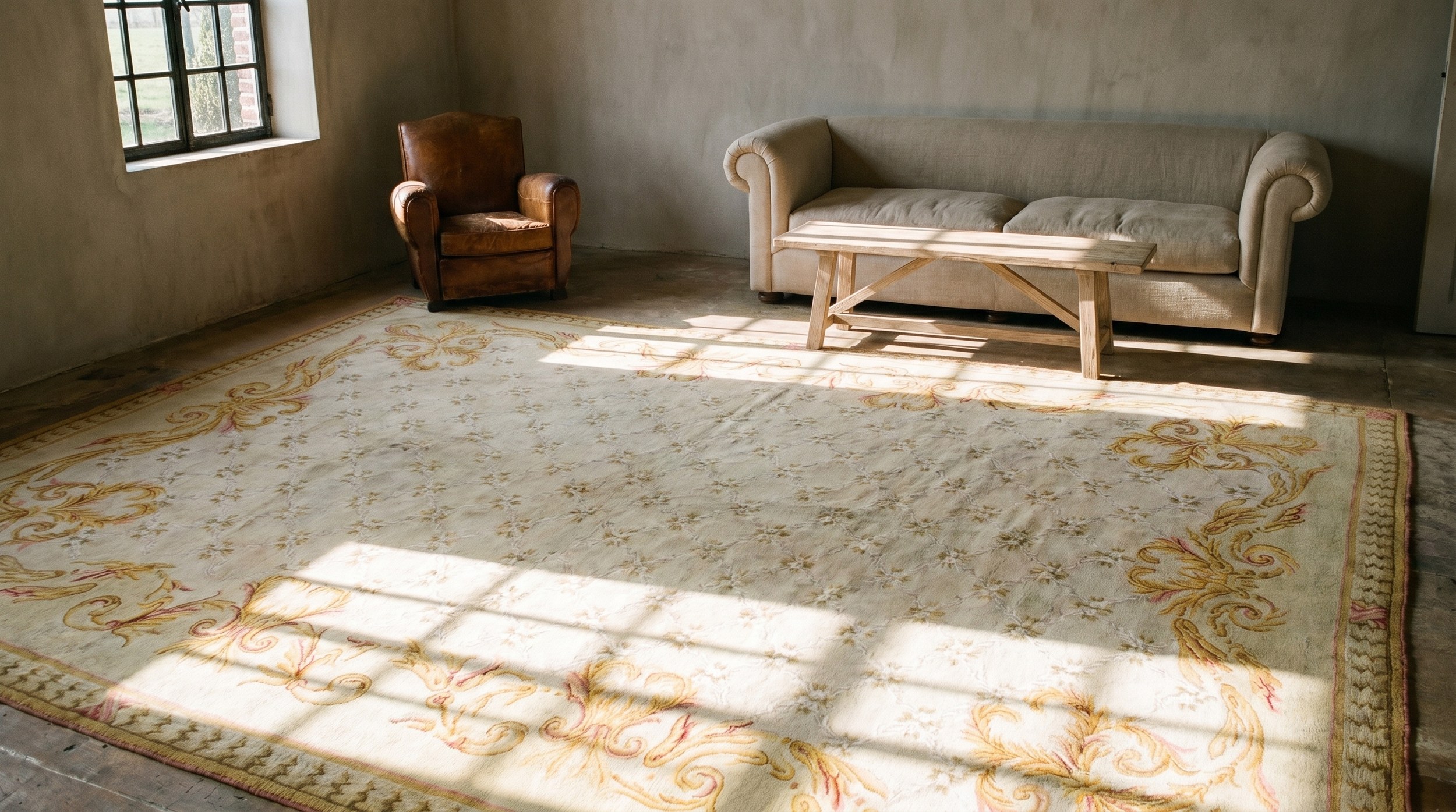
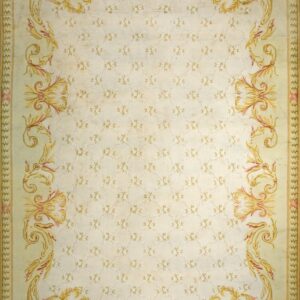
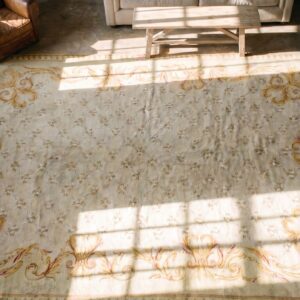
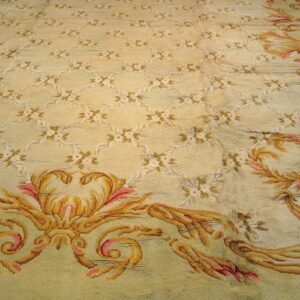
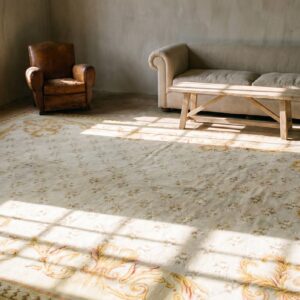
This magnificent early 20th-century Spanish Savonnerie carpet is a superlative example of the “Iberian Renaissance,” a period when the weaving centers of Spain—most notably the Royal Manufactory—adapted the grand, courtly traditions of France’s Savonnerie carpets workshops into a uniquely Mediterranean aesthetic. Historically, Savonnerie carpets from Spain are celebrated for their distinctive “Spanish knot” and a structural heft that combines the regal elegance of the French court with a warmer, more rustic soul. This specific specimen is distinguished by its Large Scale and its ethereal, Light Ivory palette.
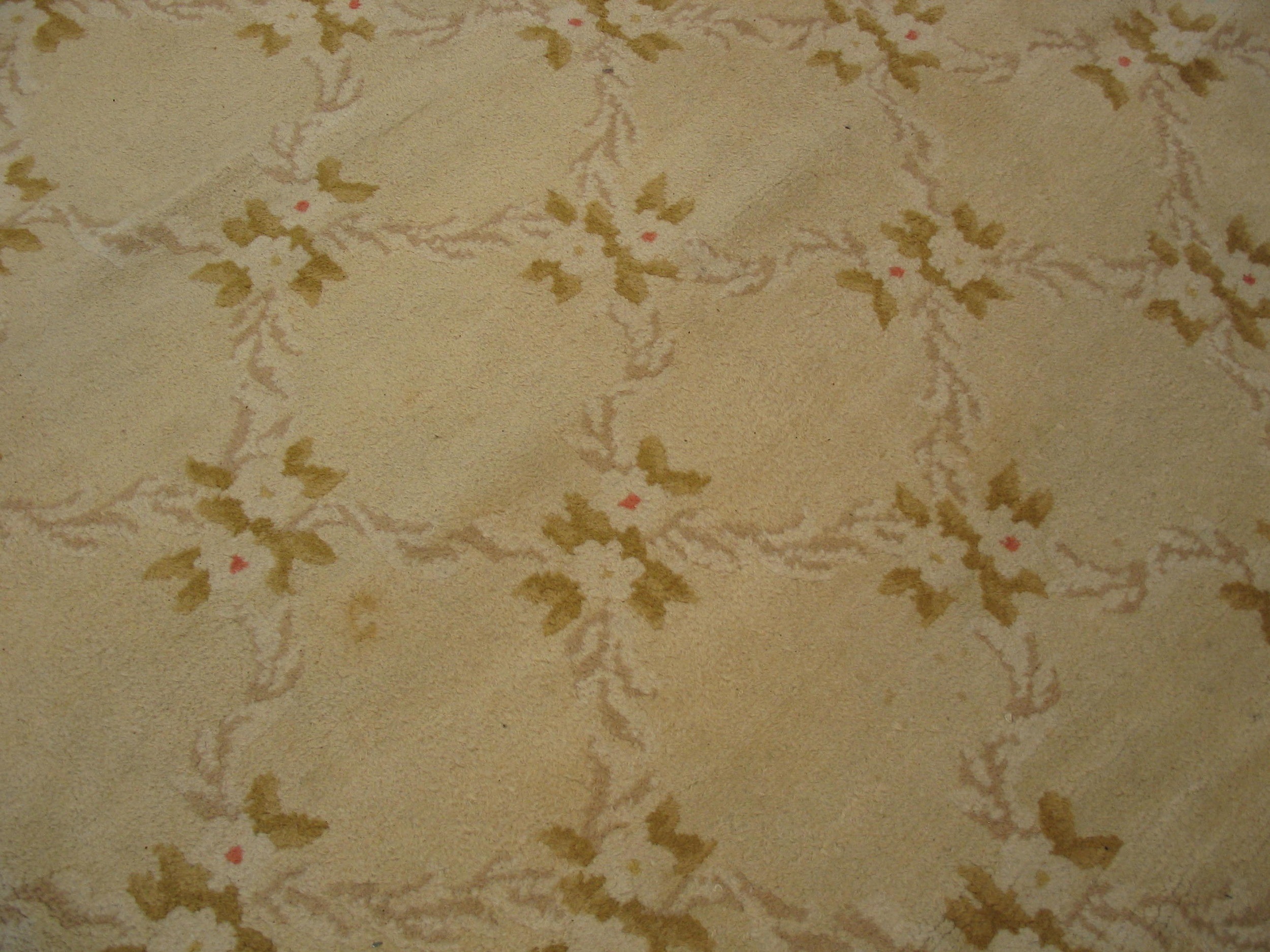
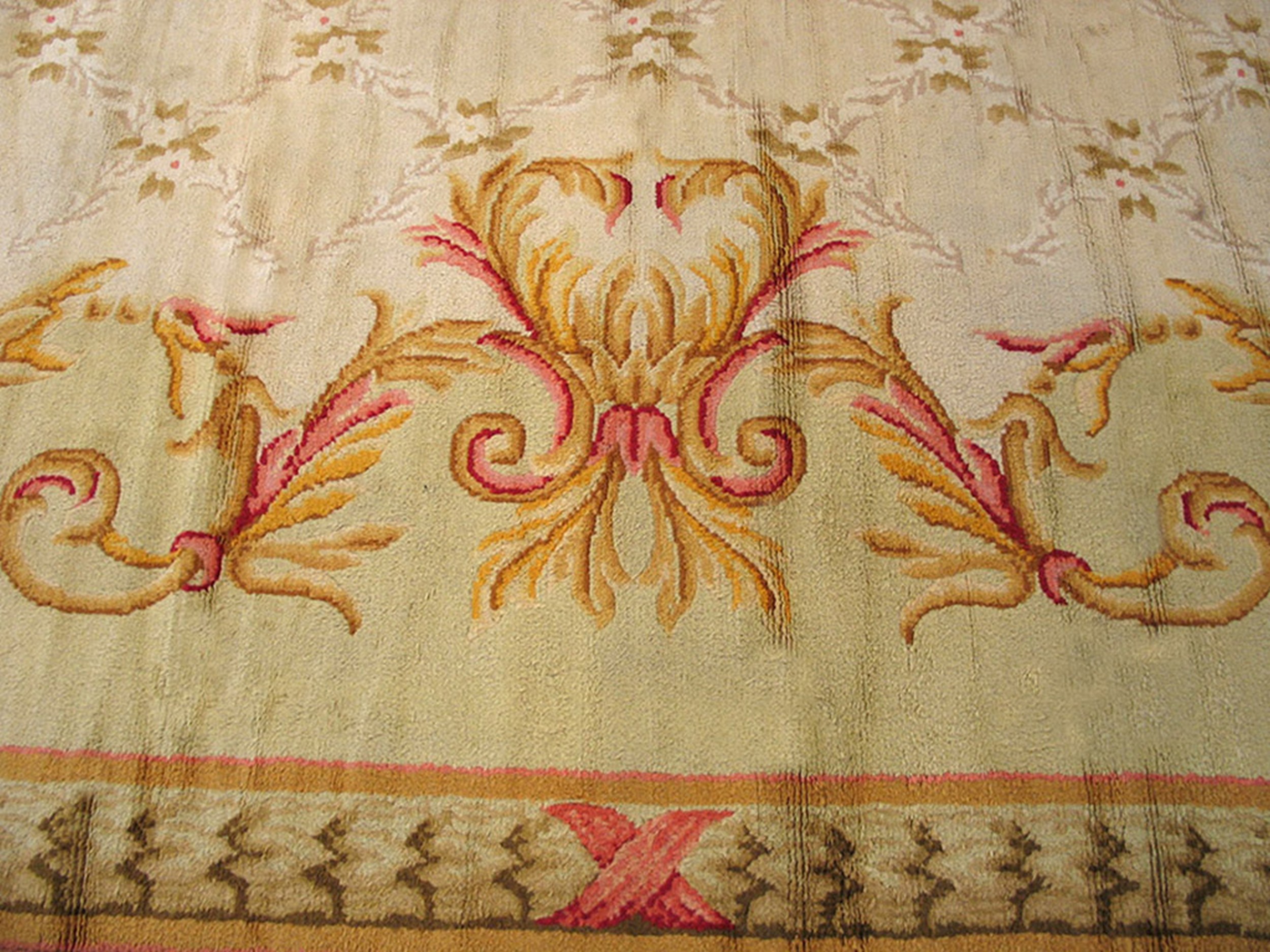
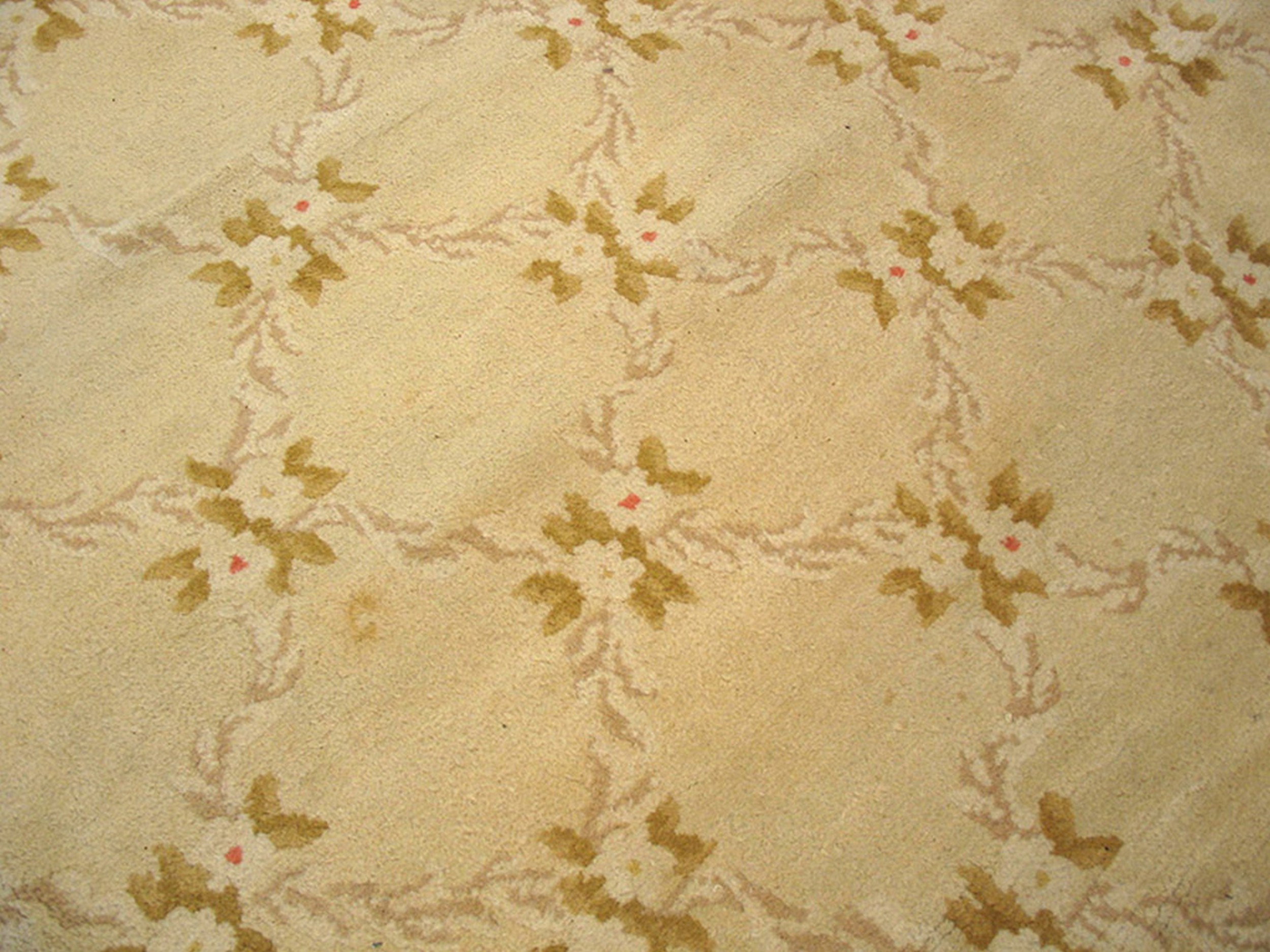
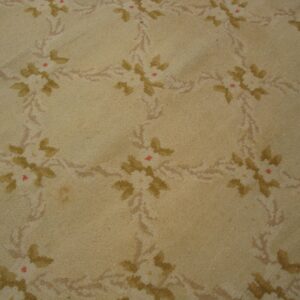
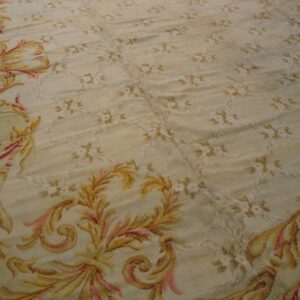
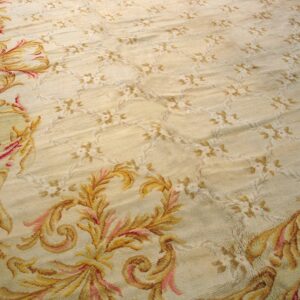
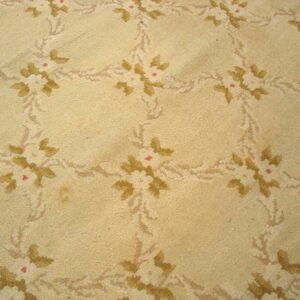
The composition is defined by a sophisticated Trellis (Lattice) design, a rhythmic and architectural pattern that became highly fashionable during the late Victorian and Edwardian eras. This lattice is not merely geometric; it is often “alive,” composed of scrolling vines, stylized foliate rhombs, or delicate floral sprigs that intersect at precise intervals. This “all-over” format creates a sense of infinite expansion, making it an ideal choice for grand architectural spaces. The ivory field serves as a luminous, “breathtaking” stage, allowing the subtle patterns to emerge with a quiet, scholarly grace.
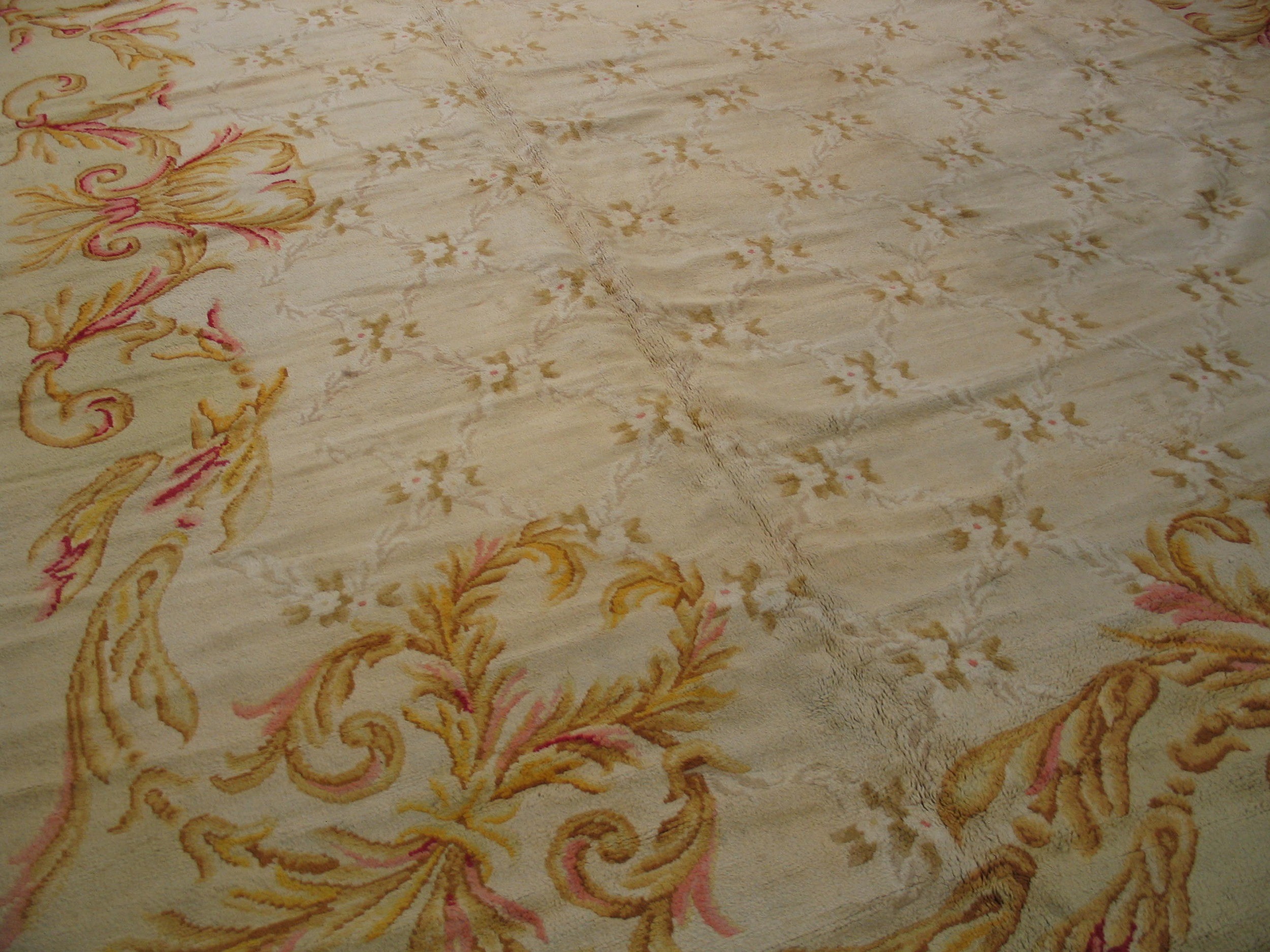
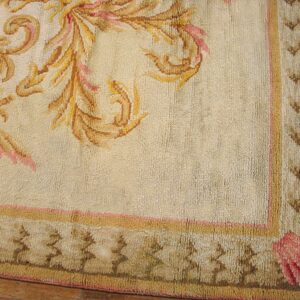
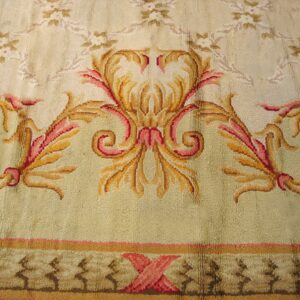
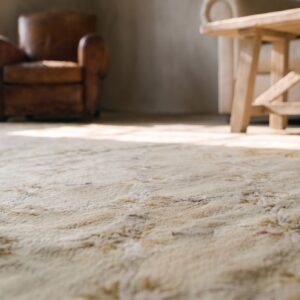
The palette is a masterclass in the use of sophisticated neutrals. The cream-to-ivory ground is accented with soft, vegetable-dyed tones—often featuring sage green, muted gold, or dusty rose—that have developed a beautiful abrash (natural color variation) over the last century. This “shimmering” quality gives the carpet a watercolor-like depth, reflecting light across its dense, hand-knotted pile. Unlike the dense, dark reds common in 19th-century carpets, this light-toned Savonnerie offers a sense of modern “airiness” that remains highly coveted by contemporary designers.
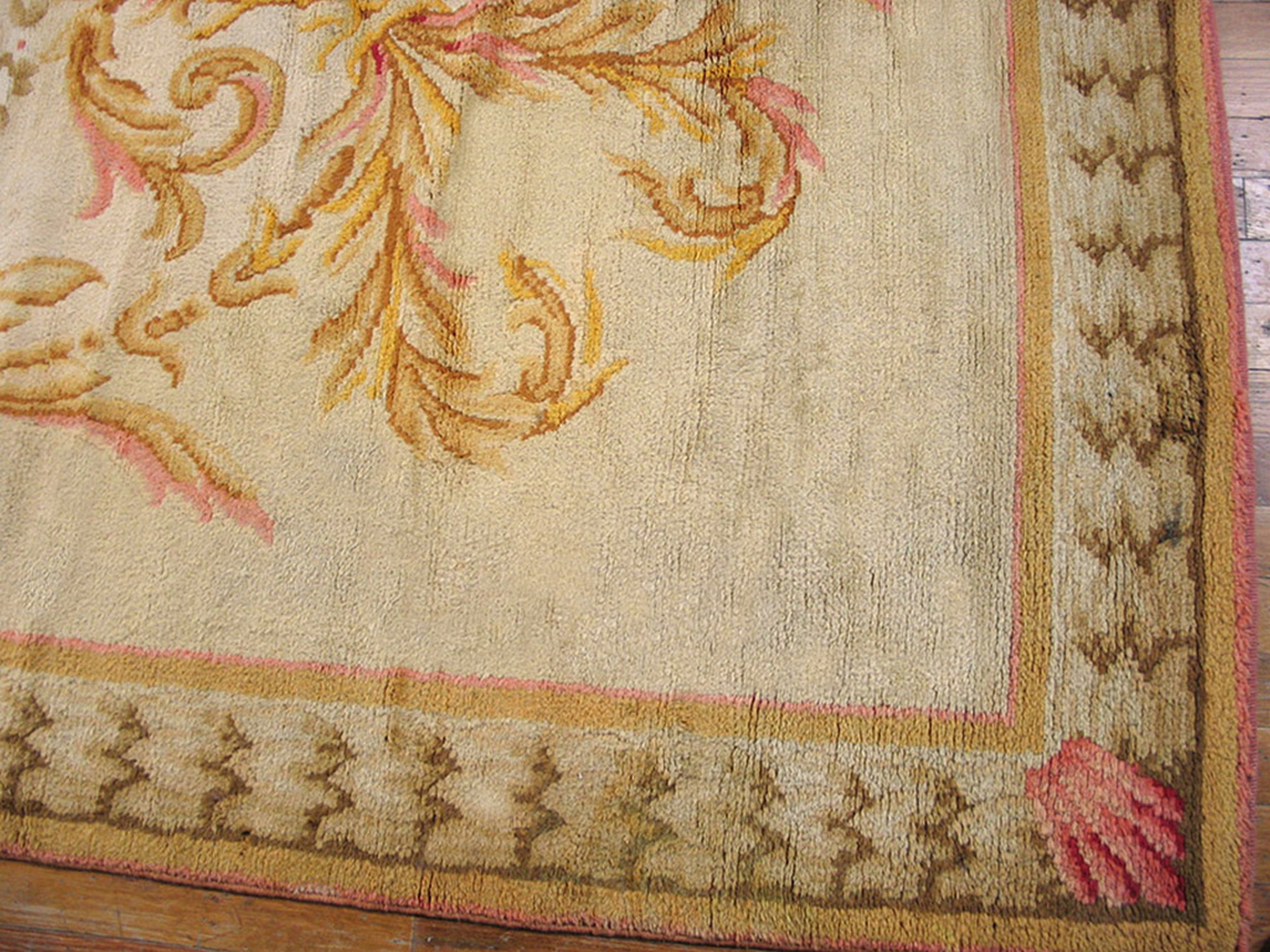
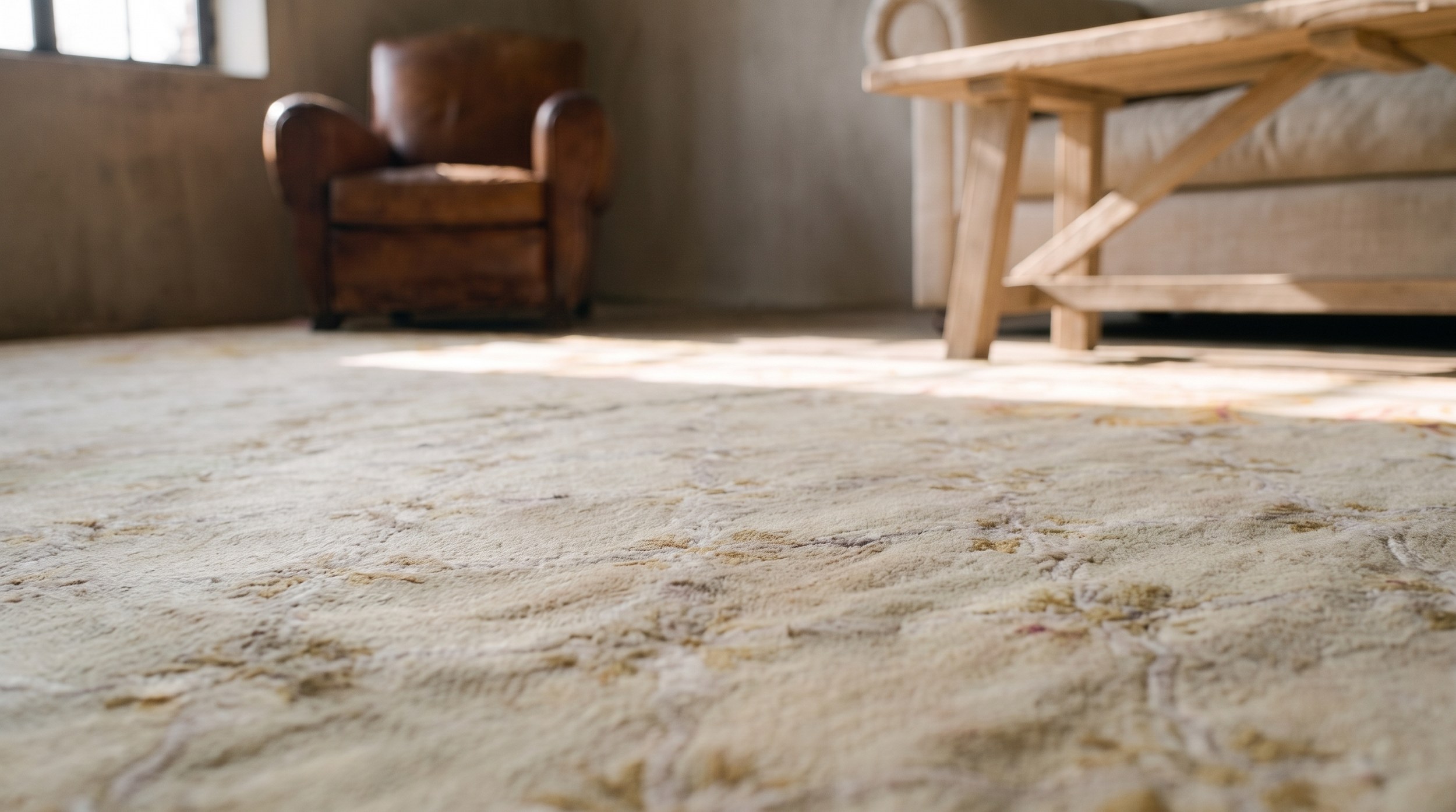
Technically, antique Spanish carpets of this caliber are prized for its high-quality, lanolin-rich wool and its substantial, durable handle. The wool used in the Spanish highlands was famously resilient, providing a plush tactile experience that has only improved with age. The borders typically act as a structural frame, featuring a primary band of classical Greek keys, scrolling acanthus leaves, or alternating rosettes that ground the expansive energy of the central trellis.
To possess a large-scale, ivory antique Spanish Savonnerie is to hold a monument to a refined, cross-cultural heritage. It is a work that bridges the gap between the rigid formality of the French Enlightenment and the sun-drenched, organic spirit of Spain—a sprawling, hand-wrought textile that transforms a room into a sanctuary of timeless, understated opulence.
Condition: Good. Repaired. Wear consistent with age and use. Overall Good Condition.