
Study Rugs 101: Definition, Why They’re Different, and What “Good” Looks Like
A study rug helps define focus. It anchors the workspace, softens sound, and visually separates work from the rest of the home. These two pages help keep proportions and placement in check.
Good background reading: placement rules by room and a comprehensive rug buying guide.
Explore the other room guides: Living Room, Family Room, Dining Room, Bedroom, Foyer / Entry, Library, Kids Rooms.
What is a “study rug”?
A study rug is not merely a decorative textile; it is a performance surface designed to support focused work. While a living room rug prioritizes soft comfort underfoot, a rug for a study acts as a functional layer that balances chair mobility, acoustic dampening, and floor protection. To answer the question of what makes a rug good for a study, one must look beyond aesthetics to mechanics. It serves as the foundation for your workspace, directly influencing ergonomics and concentration.
In a dedicated workspace, visual perception shifts. The way color and pattern read changes under the specific lighting conditions of work sessions, which often involve screen-lit environments or focused task lighting. A proper home office rug provides a calming visual anchor that does not distract from the task at hand. Ultimately, this textile is an infrastructure choice. “Looks good” isn’t enough; the surface must prioritize smooth glide for chairs, stability against shifting, and acoustic comfort to minimize distractions.
Why studies stress rugs differently
Studies and home offices subject flooring textiles to unique physical forces that do not occur in other rooms. Standard rugs are built for footsteps—vertical compression and release. A rug for a desk area, however, must endure rolling chair abrasion and intense shear forces. Every time you shift in your seat or roll back to stand up, the wheels grind into the fibers, creating a concentrated “chair travel rectangle” of wear that can quickly destroy standard piles.
Studies punish rugs with repeated swivel shear, not just footsteps. This lateral friction twists fibers at the root, leading to premature balding or matting in high-traffic zones. Beyond physical wear, studies face acoustic challenges. Hard surfaces reflect sound, creating echoes that disrupt focus during calls or deep work. A rug absorbs these frequencies, clarifying audio for both the speaker and the listener. Furthermore, the constant pressure of chair wheels creates a risk of crushing the subfloor; a rug acts as a critical buffer to prevent scratches and gouges on hardwood or laminate.
The 5 performance pillars
To select the best rug for a home office, evaluate the product against these five pillars of functionality.
- Chair Glidability
— Why: A rug must allow casters to roll freely without getting stuck or requiring excessive physical effort, which reduces leg strain and fatigue over long work sessions.
- Shear Resistance
— Why: The fiber construction must withstand the twisting force of pivoting wheels without unraveling or pulling loose from the backing.
- Acoustic Dampening
— Why: Dense materials absorb ambient noise and keyboard clatter, reducing echo to create a professional audio environment for remote communication.
- Structural Stability
— Why: The combination of backing and rug pad must lock the textile to the floor, preventing the rug from bunching up or creeping under the movement of a rolling chair.
- Visual Ergonomics
— Why: Patterns and colors should reduce eye strain and hide specific office debris like pencil dust or ink, maintaining a clean appearance between vacuuming.
Study-suitable quick checklist
When shopping for a study rug, run the candidate through this checklist to ensure it meets the durability requirements of a workspace. Note that for some plush rugs, using a chair mat is a legitimate strategy, not a design failure, to preserve the pile while maintaining the aesthetic.
- Chair rolls without tugging
— Why: This reduces physical fatigue for the user and protects the rug’s edges from fraying due to friction.
- Low edge profile with strong finishing
— Why: A flat edge prevents the rug from curling up when chair wheels cross the threshold, eliminating a common tripping hazard.
- Dense, firm surface
— Why: High-density low pile resists crushing in wheel lanes, ensuring the rug retains its appearance despite concentrated weight.
- Pattern hides micro-soil
— Why: Intricate or heathered designs mask common office debris such as pencil dust, crumbs, and shoe marks effectively.
- Proper pad and anchoring
— Why: A high-quality pad is essential to prevent shifting and corner lift, which are exacerbated by the multidirectional movement of office chairs.
The Core Performance Specs: Pile, Density, Construction, and Backing
Pile height vs density
The interaction between a chair’s wheels and the floor covering is determined primarily by pile height and fiber density. While a low pile rug for office chair use is the standard recommendation, height alone does not guarantee performance. Density—the number of fiber tufts packed into a square inch—is the critical factor that resists crushing. A sparse low pile will eventually flatten into permanent “wheel ruts,” whereas a dense pile supports the weight of the chair, allowing it to glide on top of the fibers rather than plowing through them.
High pile creates significant rolling resistance. When asking, “Does high pile make desk chairs hard to roll?” the answer is a definitive yes. Deep fibers wrap around casters, increasing drag and causing physical fatigue for the user. Conversely, the best pile height for office rug selection is typically under 1/4 inch, provided the density is high enough to prevent the backing from feeling spongy.
| Spec | What it affects | Best targets for studies |
|---|---|---|
| Pile Height | Roll clearance, door clearance, and drag. | Under 0.25” (6mm) to minimize resistance. |
| Density | Crush resistance and structural memory. | High density (100k+ knots/sq. meter or equivalent). |
| Construction | Snag risk and surface smoothness. | Tight weaves; avoid loose loops. |
| Backing | Stability and resistance to distortion. | Canvas or latex-reinforced for rigidity. |
Best constructions under desk chairs
Selecting the right rug construction for home office environments requires balancing tactile comfort with mechanical resilience. Not all weaves can withstand the concentrated pressure of rolling casters. When evaluating how flatweave rugs compare to low pile options, flatweaves generally offer superior glide because they lack a vertical pile that can be crushed. However, high-quality, tightly woven low-pile hand-knots can also perform exceptionally well, offering a compromise between plushness and performance.
| Construction | Chair glide | Wear risk | Notes |
|---|---|---|---|
| Flatweave (Kilim/Dhurrie) | Excellent | Moderate (snagging) | Zero pile ensures smooth rolling; check weave tightness. |
| Low-Pile Hand-Knot | Good to Excellent | Low | High knot counts create a dense, firm surface suitable for rolling. |
| Tufted (Canvas Back) | Moderate | Moderate (delamination) | Glue can break down under heavy caster pressure over time. |
| Plush/Shag | Poor | High | Wheels sink deeply; fibers tangle in casters. |
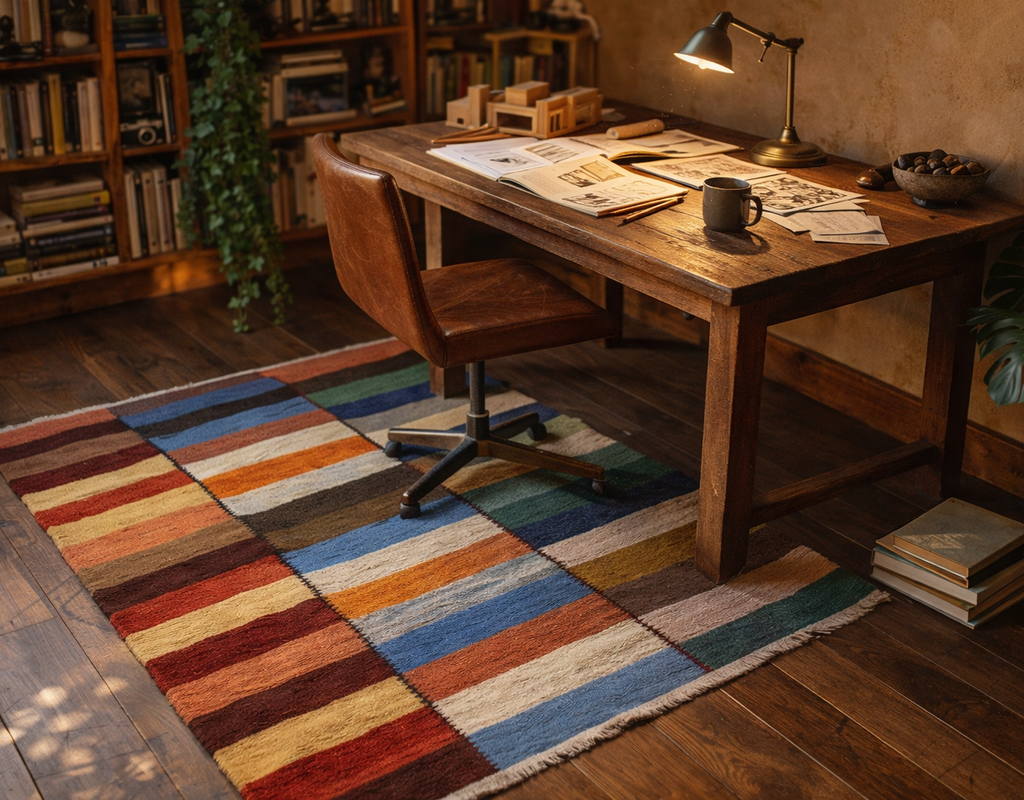
Backing, edges, and corner stability
In a study, the forces applied to a rug are rarely linear. Office chairs swivel, pivot, and slide diagonally. These movements create intense shear forces—lateral friction that tries to twist the rug’s surface separately from its base. This is why backing and edge finishing are often the hidden failure points in studies. A rug with weak structural integrity will ripple or “walk” across the floor as the chair moves, creating trip hazards and unsightly bunches.
Corner stability is equally vital. The constant movement of a chair near the edge of the rug can cause corners to curl upward. To mitigate this, look for chair-friendly rug options with strong finishing details. Bound edges, firm selvages (the finished sides of a woven rug), and reinforced corners help the textile resist the distorting torque of a swivel chair. Secure edges ensure the rug remains a flat, safe platform rather than a stumbling block.
“Caster sink” and chair glide
“Caster sink” occurs when the weight of the user concentrates on the small surface area of the chair wheels, compressing the rug fibers deeply. This creates a depression that the user must constantly climb out of to move, leading to significant strain on the legs and lower back. Minimizing caster sink is essential for maintaining focus and ergonomic health. A flatweave rug for desk chair use eliminates this issue almost entirely by removing the compressible layer.
Can you put a rolling chair on a rug? Yes, but you must prioritize glide and stability. If the rug allows wheels to sink, it also increases the risk of snagging, where a caster catches a loose loop and pulls it, unraveling the rug. For those who prioritize aesthetics and insist on a plush or high-pile texture, the only viable solution is a compromise: plan for a rigid chair mat over the rolling zone. This is a legitimate strategy to protect the investment, as plush fibers cannot survive direct caster contact without rapid degradation.
Fiber Physics for a Study: Wool, Cotton, Silk, and Practical Blends
Wool resilience and recovery
When selecting the best rug material for study environments, wool stands out as the superior choice due to its unique molecular structure. The secret lies in the fiber’s natural “crimp”—a microscopic, spring-like coil that allows the wool to stretch and compress without breaking. In a home office, where chair wheels constantly press down on the floor covering, this crimp provides essential “bounce-back.”
A wool rug for home office use acts as a forgiving work fiber. Unlike synthetic equivalents that may plastically deform and flatten permanently under heavy furniture, wool fibers attempt to return to their original shape once the pressure is removed. This resilience helps the rug recover from the tracks left by rolling chairs, maintaining both its appearance and its acoustic dampening qualities over time. It offers a balance of firm support for casters and tactile comfort for the user.
Cotton foundations and dimensional stability
While wool is often the face of the rug, cotton frequently serves as the skeleton. In many flatweaves and hand-knotted rugs, cotton is used for the warp and weft—the internal grid that holds the rug together. This cotton foundation rug stability is crucial for studies because cotton is structurally rigid and stretches less than wool. This rigidity helps the rug maintain its rectangular shape and lay flat against the floor, resisting the shearing forces of a swiveling chair that might otherwise distort a more elastic foundation.
However, cotton introduces specific maintenance constraints. It is highly absorbent and prone to holding moisture. In a study environment where coffee spills or ink accidents are possibilities, cotton foundations require immediate attention. If left damp, cotton can rot or shrink, destabilizing the entire rug structure. Therefore, while cotton adds necessary stiffness to the weave, it must be treated with care regarding moisture and wet-cleaning.
Silk accents placement strategy
Silk is prized for its luminosity and tensile strength, but it is less forgiving under the grinding abrasion of rolling wheels. When silk fibers are crushed and rubbed by hard plastic casters, they can fracture or lose their sheen, leading to dull patches in the rug’s design. Consequently, silk accent rug placement requires strategic planning.
To utilize silk effectively in a study, ensure that the silk elements are located in low-contact zones—such as the borders or corners—rather than the central “chair travel rectangle.” Silk should serve as a visual highlight that catches the light from a desk lamp, not as a load-bearing surface. If a rug features high silk content in the center, it is generally ill-suited for a rolling chair unless protected by a mat.
Wool vs cotton decision logic
Is wool or cotton better for a study rug? The answer depends on whether you prioritize crush resistance or a low profile. Wool is generally superior for the surface pile due to its recovery capabilities, while cotton is excellent for achieving a flat, rigid construction in flatweaves.
| Fiber | Strengths | Risks | Best use in studies |
|---|---|---|---|
| Wool | High resilience (crimp); hides soil; fire retardant. | Can shed initially; susceptible to moth damage if undisturbed. | The primary pile for any area with rolling chairs. |
| Cotton | High dimensional stability; low profile; breathable. | Absorbs moisture/stains; low crush resistance (flattens easily). | Flatweaves or as the warp/weft foundation for wool rugs. |
| Silk | Visual depth; high tensile strength. | Abrasion sensitive; difficult to clean; expensive to replace. | Decorative borders or accents away from the desk. |
| Blends | Balances cost and performance. | Uneven wear if fibers degrade at different rates. | Wool/cotton blends for durable, flat-lying durable fibers for office rugs. |
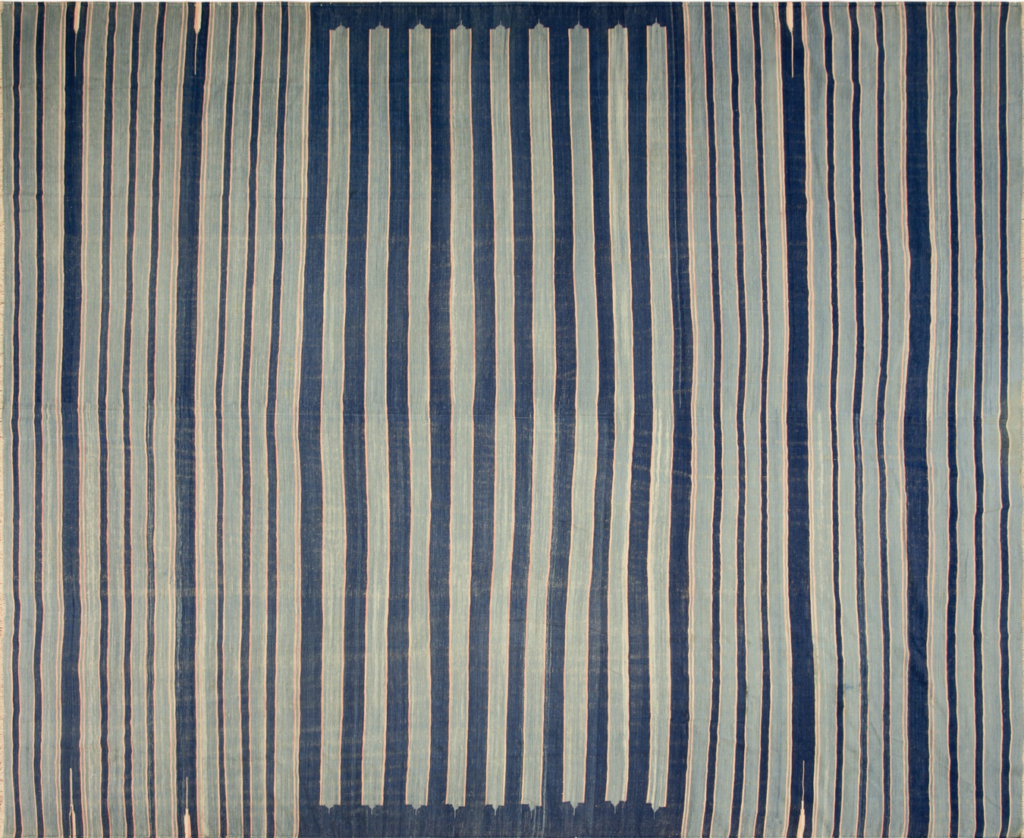
Acoustics and “Quiet”: Reducing Echo, Footfall, and Room Brightness
Does a study rug help reduce echo and noise?
Does a study rug help reduce echo and noise? Absolutely. In a room dominated by hard surfaces like drywall, glass, and hardwood, sound waves bounce rapidly, creating reverberation and “slap echo.” This acoustic brightness makes conference calls difficult to understand and amplifies minor distractions, such as a pen dropping or a chair rolling.
A rug to reduce echo in office environments functions as a porous absorber. The fibers trap airborne sound energy and convert it into minute amounts of heat through friction, rather than reflecting it back into the room. This process significantly dampens high-frequency noises—like keyboard clatter and ringing phones—resulting in a “deadened” room tone that feels more private and conducive to concentration. Rugs can materially change the perceived quiet of a space, turning a hollow, echoing chamber into a professional broadcast environment.
Coverage strategy for quieter rooms
To effectively quiet a room, surface area is key. A small accent rug under a desk provides minimal acoustic benefit because sound waves can still easily reflect off the exposed floor around the perimeter. For maximum impact, bigger rugs often “sound better” than small accents in studies.
An effective acoustic rug for study design should cover as much of the hard flooring as possible. The goal is to interrupt the path of sound waves bouncing between parallel surfaces (floor and ceiling). A large area rug that extends to within 12 to 18 inches of the walls will capture significantly more reflected noise than a postage-stamp-sized rug. This extensive coverage also helps reduce footfall noise with rugs, softening the thud of steps outside the immediate work zone, which is critical if the study is located on an upper floor.
Underlay for acoustic tuning
Many overlook the rug pad, but underlay is a performance upgrade, not just an anti-slip safety measure. A high-quality sound absorbing rug pad can double the acoustic efficiency of the rug itself by adding density and air pockets that trap lower-frequency vibrations.
- Thicker felt pads
— Why: Adding mass and loft significantly increases sound absorption, making them ideal for echo-prone rooms with high ceilings.
- Dense rubber-felt combos
— Why: High density prevents the chair from destabilizing the rug while still blocking sound transmission to the floor below.
- Exact sizing
— Why: Cutting the pad to fit the rug perfectly (minus 1 inch on all sides) prevents edge lift, ensuring the acoustic barrier remains uniform and safe.
- Layering strategy
— Why: Combining a dense pad with a thick rug provides a cumulative acoustic benefit that is more effective than either component alone.
Study types and acoustic priorities
Not all home offices have the same sonic requirements. Identifying your primary work mode will dictate the type of rug for quiet home office setups you need.
- Video Conference Hubs
— Why: The priority is eliminating slap echo to ensure voice clarity for the microphone; high-coverage, absorbent wool rugs are essential here.
- Deep Work / Writing Zones
— Why: The focus is on dampening external household noise and internal fidgeting sounds; a dense pile with a thick underlay helps isolate the thinker.
- High-Traffic Family Offices
— Why: Durability meets acoustics; the goal is to mute foot traffic and chair movement so multiple users can work without disturbing one another.
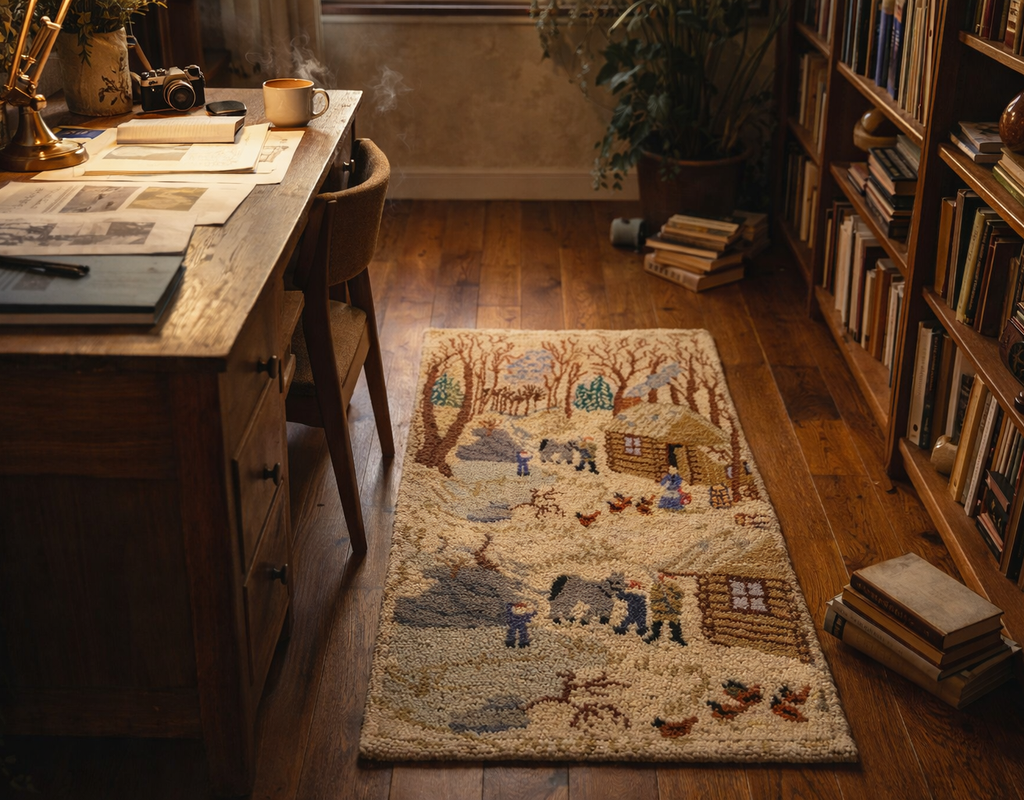
Rug Layout Under a Desk: Fit, Start Lines, and Chair Travel Geometry
How should a rug sit under a desk?
The most critical factor in rug placement under desk setups is defining the “chair travel rectangle.” This is the invisible zone where your chair moves daily—swiveling, sliding back to stand, and scooting forward to work. A common layout mistake is sizing the rug based solely on the desk’s footprint, ignoring this dynamic area. If the rug edge falls within this travel zone, the wheels will constantly grind against the binding, causing rapid fraying and creating a frustrating speed bump every time you move.
To answer “How should a rug sit under a desk?”, the rule is simple: the rug must fully contain the chair’s movement. The surface should extend far enough back that even when you push the chair away to stand up, the rear casters remain on the textile. This continuity prevents the jarring transition between rug and hard floor, which destabilizes the sitter and accelerates wear on the rug’s perimeter.
Rolling chair on rug: the reality
Can you put a rolling chair on a rug? Yes, but the mechanics of the setup are unforgiving. As detailed in earlier, the interaction between caster wheels and fiber density determines whether the experience is smooth or strenuous. In terms of layout, the reality is that a rolling chair rug setup demands a generous buffer zone. If the chair repeatedly crosses the edge of the rug, the lateral shear forces will eventually delaminate the backing or curl the corners, regardless of the rug’s quality.
Therefore, the layout strategy must prioritize keeping the chair “islanded” on the rug. By ensuring the wheels never touch the bare floor during normal operation, you eliminate the friction point where most damage occurs. This approach preserves the structural integrity of the rug and ensures a consistent, ergonomic glide for the user.
Should desk and chair both fit?
Should the desk and chair both fit on a rug? Ideally, yes. Placing both the desk and the chair on the rug anchors the furniture visually and physically. The weight of the desk acts as a massive anchor, preventing the rug from creeping or bunching up under the force of the rolling chair. This desk and chair on rug configuration creates a unified workspace where the floor protection is seamless.
If room dimensions restrict you from covering the entire area, the compromise is to have the rug start just in front of the desk’s front legs (or partially under them) and extend backward. However, the absolute non-negotiable is that the entire rolling zone of the chair must be covered. If you compromise here, you invite tripping hazards and uneven wear.
Where should rug start if desk is against wall?
When positioning a desk against a wall, the starting line of the rug shifts. You do not necessarily need the rug to touch the baseboard behind the desk, as that area sees no foot traffic or chair movement. Instead, focus on the user’s side.
Where should the rug start if desk is against wall?
- Anchor Point: Start the rug at least 12 to 18 inches under the desk to ensure the front legs (or the weight of the pedestal) hold it down.
- Pull-Back Space: Extend the rug at least 30 to 36 inches behind the desk’s working edge. This accommodates the full “push-back” distance needed to stand up without the rear wheels dropping off the edge.
- Door Swing: Check that the rug placement does not interfere with the swing radius of the room’s entry door or nearby closet doors.
- Drawer Clearance: Ensure the pile height does not block the bottom drawer of a filing cabinet or desk pedestal from opening smoothly.
Proper rug positioning for home office layouts is about geometry, not just decor. By mapping the “chair travel rectangle” first, you ensure the rug serves its purpose as a durable, functional platform for work.
Sizing Guides: Standard Desk, L-Desk, Reading Nook, and Small Studies
Rug size under a standard desk
When determining the rug size under desk setups, you must size for movement, not just furniture silhouettes. The textile needs to capture the desk’s footprint and, crucially, the “chair travel rectangle” behind it. A rug that ends exactly where the chair sits when tucked in will fail the moment you slide back to stand up.
What rug size works under a standard desk? Generally, you need at least 30 to 36 inches of clearance behind the desk edge. For a typical 60-inch executive desk, an 8×10 rug is often the minimum requirement to ensure the chair remains on the rug during full extension.
| Desk Width | Chair Travel Needs | Recommended Rug Size Range |
|---|---|---|
| Small (48″ or less) | 36″ push-back depth | 5’x8’ (minimum) or 6’x9’ |
| Standard (60″) | 36″-42″ push-back depth | 6’x9’ (tight) to 8’x10’ (ideal) |
| Executive (72″+) | 48″ push-back + side swivel | 8’x10’ to 9’x12’ |
Rug size for an L-desk
Sizing for an L-shaped desk is more complex because the user moves laterally between two workstations. How big should a rug be for an L-desk? The rug must cover the diagonal path of the chair as it pivots from the computer screen to the return side (often used for writing or filing). L-desks require thinking in “travel corridors,” not just one rectangle.
If the L desk rug size is too small, one set of wheels will drop off the edge every time you swivel, destabilizing the chair. The most effective strategy is a large rectangular rug (often 8×10 or larger) placed diagonally or centered to encompass the entire inner quadrant of the “L.” Alternatively, a square rug (8×8 or 10×10) can provide uniform coverage for the pivoting zone, ensuring the casters never cross a transition threshold.
Reading nook sizing
A reading corner is a static zone compared to a desk, but precision is still required. How do you size a rug for a reading nook? The goal is to create a cohesive island that includes the armchair, the ottoman, and any side table. A common error is using a small “postage stamp” rug that floats in the middle, leaving the chair’s rear legs on the bare floor.
For a proper reading nook rug size, all legs of the chair and ottoman should fit comfortably on the surface. A 5×8 rug or a 6-foot round rug is typically sufficient to frame a standard club chair and footrest. This “zone rug” defines the space visually and provides acoustic softening for the quiet activity of reading.
Common mistakes in small studies
Small rooms punish layout errors harshly. In compact spaces, thickness can be more limiting than width, as high piles often block door swings or file drawers. Avoiding these small office rug ideas pitfalls ensures the room remains functional.
What are common rug mistakes in small studies?
- Too-plush pile without a chair mat
— Why: Deep fibers increase rolling resistance, turning every movement into a physical fight against friction.
- Rug edge in the chair lane
— Why: Placing the transition point exactly where wheels roll causes snagging, curling, and accelerated edge wear.
- Oversized rug blocks doors or drawers
— Why: Failing to account for vertical clearance means the door rubs against the rug or drawers get stuck, creating a daily annoyance.
- Solid high-contrast rugs
— Why: A plain dark or light rug highlights every speck of micro-soil (dust, lint, crumbs), making the small room look dirty faster than a patterned option.
Rug Pads, Chair Mats, and Door/Doorway Clearance
Rug pad in a study
Should you use a rug pad in a study? The answer is an unequivocal yes. While often marketed simply as “anti-slip,” a rug pad for home office use is a critical infrastructure component that provides stability and extends the life of the textile. In a room where swiveling chairs generate intense lateral shear forces, a rug without a pad will “walk,” bunch up, and develop curled corners that become tripping hazards.
A dense, high-quality felt or rubber-backed pad locks the rug to the subfloor, resisting the twisting motion of caster wheels. This mechanical anchor reduces the strain on the rug’s weave, preventing the backing from delaminating or the edges from fraying prematurely. Essentially, the pad acts as a shock absorber, mitigating the grind of daily use and ensuring the rug lies flat and safe.
Chair mat strategy
For those who prioritize longevity or have chosen a softer, less durable rug, a chair mat over rug placement is the most effective defense. It is not a design failure but a legitimate preservation strategy.
- Use when chair rolls daily
— Why: A mat provides a rigid, low-friction surface that eliminates abrasion on the rug fibers and significantly improves glide speed for the user.
- Place over “work lane”
— Why: Targeting the specific area of highest wear—the “chair travel rectangle”—allows you to protect the investment while keeping the rest of the room soft and textured.
- Choose size for full chair travel
— Why: The mat must be large enough so the wheels never roll off the edge, which would crack the plastic and damage the rug underneath.
- Pair with stable pad under rug
— Why: A rolling chair mat solution only works if the foundation is solid; a good rug pad prevents the rug from shifting or bunching up beneath the weight of the mat and chair.
High pile + chair rolling
Does high pile make desk chairs hard to roll? As established earlier, high pile creates significant rolling resistance. The deep fibers wrap around casters, increasing drag and requiring more physical effort to move. Without mitigation, this friction leads to rapid “crushing” of the pile in the wheel lanes, creating permanent ruts that ruin the rug’s appearance.
If you are committed to a plush aesthetic, a rigid chair mat is non-negotiable. It creates a bridge over the soft pile, distributing the chair’s weight and preventing the wheels from sinking into the fibers. This allows you to enjoy the visual warmth of a high-pile rug without sacrificing ergonomic function or destroying the textile.
Doors and desk drawers clearance
One of the most common installation headaches is discovering that a new rug blocks a door or a filing cabinet. Can a rug block doors or desk drawers? Absolutely, and it is a daily source of frustration that can damage both the rug and the joinery.
- Measure door swing clearance
— Why: Before buying, check the gap between the bottom of the door and the floor; the rug plus the pad must be thinner than this measurement to avoid scraping and bunching.
- Account for total thickness
— Why: When calculating door clearance rug thickness, remember to add the height of the rug pile to the thickness of the best pad for study rug applications to get the true vertical rise.
- Keep thick rugs away from tight-clearance doors
— Why: If a door has zero clearance, the rug must stop short of the swing radius, or you must commit to shaving the door bottom, which is a permanent alteration.
Durability and Wear: Wheel Lanes, Edge Curl, and Traffic Management
How durable should a study rug be?
When asking, “How durable should a rug be for a study?”, the answer lies in understanding the nature of the wear it will face. Unlike a hallway that sees linear foot traffic, a study endures “micro-traffic”—intense, repetitive movements concentrated in a tiny area. A durable rug for home office use must withstand thousands of small shifts, swivels, and rolls every week, all occurring within the same 4-foot square zone. Consequently, durability here is not just about fiber strength; it is about structural integrity against grinding and shear forces.
A study rug requires commercial-grade resilience in a residential package. The pile must be dense enough to rebound from compression, and the backing must be rigid enough to resist delamination under torque. If the rug is too delicate, the constant friction will rapidly degrade the fibers, turning a beautiful textile into a worn-out mat within months.
Caster wear lanes
The most common failure point in study rugs is the formation of rolling chair rug wear lanes. These are the visible tracks where the wheels travel back and forth daily. This localized damage occurs because the casters grind abrasive particles—like dust, sand, and crumbs—deep into the pile. Effectively, the wheels act like millstones, and the grit acts like sandpaper, cutting the fibers at their base.
To mitigate office chair caster damage rug issues, one must recognize that grit management is durability management. Regular vacuuming is essential not just for cleanliness, but to remove these microscopic blades before they can sever the yarn. Without this maintenance, even the highest quality wool rug will develop bald spots in the caster paths.
Edge curl & corner lift prevention
Edges often fail before the main field of the rug because office chairs pivot aggressively near the perimeter. This lateral force can cause the binding to loosen and the corners to curl upward, creating a permanent trip hazard.
- Use a fitted pad
— Why: A high-quality, dense pad that grips the floor prevents the rug from shifting, reducing the strain on the corners during swivels.
- Choose strong edges and selvages
— Why: Rugs with reinforced or double-bound edges are better equipped to resist the shear forces that cause fraying and separation.
- Avoid chair rolling on borders
— Why: Keeping the “chair travel rectangle” fully within the field of the rug ensures the delicate edges are never subjected to direct crushing weight.
- Consider corner anchors
— Why: If prevent rug corner curl measures fail, applying rigid corner stiffeners or adhesive anchors can physically lock the rug flat, preserving its geometry and safety.
Maintenance cadence: vacuuming + grit control
A proactive study rug maintenance routine is the only way to extend the life of the textile against the unique stresses of a workspace. Studies invite specific debris like paper dust, eraser shavings, and food crumbs, all of which accelerate wear.
- Vacuum weekly with suction only (or high pile setting)
— Why: Frequent removal of abrasive grit prevents it from settling at the base of the knots where caster pressure does the most damage.
- Rotate the rug annually
— Why: Spinning the rug 180 degrees distributes the localized wear of the chair lane to a fresh section of pile, effectively doubling the rug’s lifespan.
- Immediate spill response
— Why: Prevention beats aggressive spot chemistry; blotting spills instantly prevents liquid from weakening the latex backing or cotton foundation, which are vulnerable to rot.
- Monitor caster condition
— Why: Checking chair wheels for trapped debris or rough spots ensures they remain smooth rolling surfaces rather than cutting tools.
Pattern, Color, and “Work Mode”: Calm Visuals that Hide Real Life
Calm study colors
When designing a workspace, the visual environment directly impacts focus. What rug colors make a study feel calmer? The goal is to reduce visual noise, especially in rooms dominated by the artificial glow of computer screens. High-contrast patterns or jarringly bright hues can cause eye strain and distraction. Instead, calming rug colors for office spaces typically involve muted, low-contrast palettes—think sage greens, slate blues, or warm taupes.
However, “calm” does not necessarily mean “light colors.” A pristine cream or white rug might look serene in a photo, but in practice, it becomes a source of anxiety as every coffee drip or shoe scuff becomes a focal point. True visual calm comes from a surface that looks clean even when it isn’t perfect, allowing you to stay in “work mode” without being distracted by maintenance concerns.
Patterns that forgive micro-soil
Studies are magnets for “micro-soil”—specific debris like pencil dust, eraser shavings, crumbs, and paper lint. A hide dirt office rug strategy relies on patterns that camouflage these particles. Large-scale medallions or solid blocks of color often highlight mess, acting as a canvas for every speck of dust.
The best defense is a best rug pattern for study use: small-scale allover motifs, intricate Herati designs, or tight geometrics. These busy but balanced patterns break up the visual field, making small debris effectively invisible between vacuuming sessions. Additionally, rugs featuring “abrash”—intentional color variations within the dye—are excellent at masking the inevitable traffic lanes that form under a rolling chair.
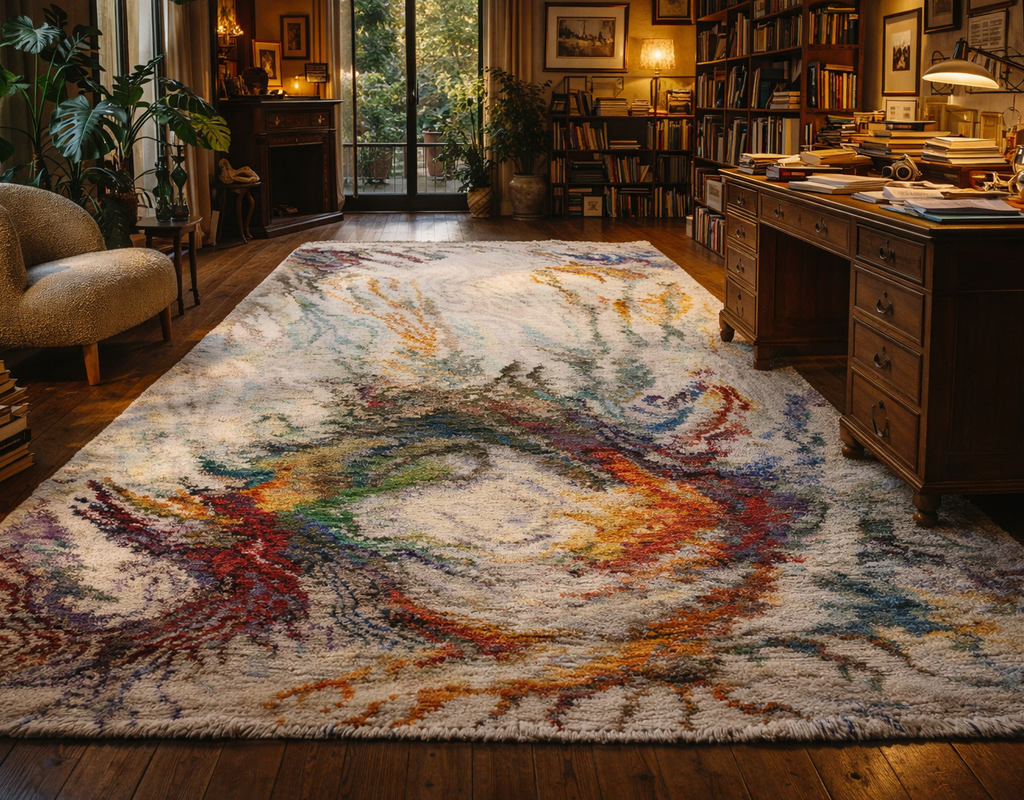
Pattern to hide wear
Should you choose a patterned rug to hide wear? Absolutely. Beyond just hiding dirt, a rug that hides wear is essential for longevity. As discussed earlier, the “chair travel rectangle” will eventually show signs of crushing or shading. On a solid-colored rug, this wear pattern appears as a distinct, discolored patch.
On a rug with a heathered texture or a low-contrast allover design, these texture changes are visually absorbed into the pattern. The eye is tricked into seeing the design rather than the condition of the pile. This optical illusion extends the aesthetic life of the rug significantly, keeping the room looking professional long after the fibers have started to show their age.
- Choose low-contrast patterns
— Why: Subtle tonal shifts reduce visual fatigue while still providing the camouflage needed for a high-use zone.
- Avoid pristine solids in high-traffic lanes
— Why: Single-color surfaces act like a spotlight for debris and wear patterns, requiring constant cleaning to look presentable.
- Use mid-tone grounds
— Why: Extremely dark rugs show light dust/lint, and light rugs show dark soil; mid-tones balance visibility for the easiest maintenance.
- Match pattern scale to room size
— Why: Keeping the motif proportional prevents the low contrast rug for focus from feeling cluttered or overwhelming in a small study.
Bare floor border: how much should show
How much bare floor should show around a study rug? The border of exposed flooring serves as a visual frame that grounds the workspace. In a study, this negative space is crucial for preventing the room from feeling stuffed or claustrophobic.
Ideally, aim for 12 to 18 inches of bare floor between the rug edge and the walls. This reveals enough of the hardwood or tile to define the room’s architecture while ensuring the rug is large enough to capture the “chair travel rectangle.” In smaller nooks, you can reduce this to 6–8 inches, but avoid pushing the rug flush against the baseboards unless you are installing wall-to-wall carpet. This border creates breathing room, reinforcing the sense of order and structure necessary for a productive environment.
Vintage and Antique Rugs in Modern Studies: Beauty vs Practicality
Are vintage rugs practical for modern study spaces?
Are vintage rugs practical for modern study spaces? The answer is a qualified yes, but success requires a shift in mindset from “user” to “steward.” A vintage rug in home office settings offers unmatched character, acoustic warmth, and a unique narrative that mass-produced textiles cannot replicate. However, these benefits come with non-negotiable compromises regarding protection.
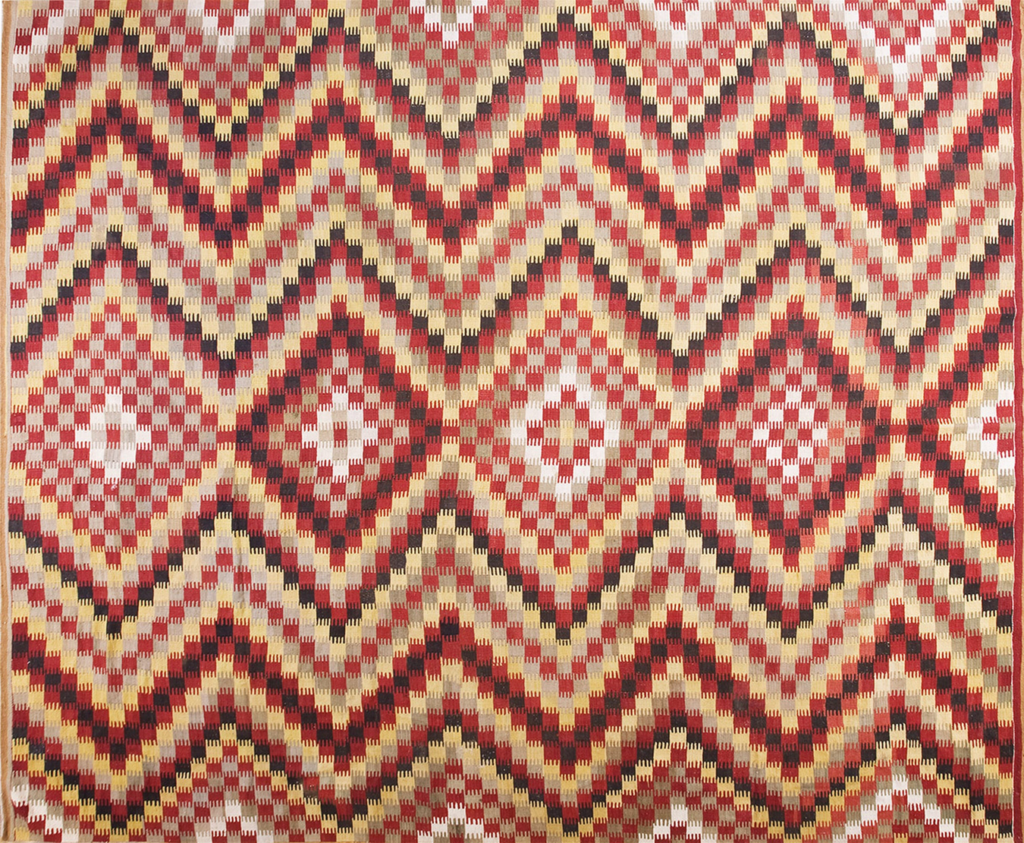
Unlike contemporary performance rugs designed to be abused, an antique rug under desk chair setups faces immediate threats from caster abrasion and localized pressure. Practicality here means planning protection from day one. You cannot simply roll a modern ergonomic chair over a 100-year-old Heriz without destroying it. The “working lane” is the enemy of fragile fibers; therefore, using a rigid chair mat or restricting the rolling zone is essential to preserve the rug’s structural integrity while enjoying its aesthetic value.
Collector vs contemporary priorities
The decision to use a vintage piece in a workspace often highlights a divergence in priorities. A collector accepts certain functional limitations to live with art, while a contemporary user typically demands frictionless performance.
| Priority | Collector Approach | Contemporary Approach |
|---|---|---|
| Durability | Values patina and repairability; accepts careful use. | Demands high crush resistance and low maintenance. |
| Protection | Will use a chair mat or swap casters to save the pile. | Expects the rug to withstand direct rolling without aids. |
| Maintenance | Willing to vacuum gently (suction only) and spot clean. | Prefers aggressive vacuuming and stain-resistant fibers. |
| Aesthetics | Prioritizes narrative, history, and unique dye lots. | Prioritizes consistent color and predictable wear patterns. |
Mug-zone rules for valuable rugs
Introducing high-value textiles into a zone where coffee, ink, and snacks are present creates a “danger zone.” To mitigate risk, specific rules must be established for the study.
- Mandatory chair mat usage
— Why: This is the single most effective way to protect vintage rug with chair mat strategies, creating a physical barrier against spills and grinding wheels.
- No food/drink over the rug perimeter
— Why: Prevention beats aggressive chemistry; antique dyes can bleed or fade instantly if treated with modern stain removers, making avoidance the only safe policy.
- Rotate quarterly, not annually
— Why: Vintage structures may already be fragile; frequent rotation ensures that UV exposure and foot traffic do not accelerate degradation in a single spot.
- Silicon caster upgrade
— Why: Replacing standard hard plastic wheels with soft “rollerblade-style” casters reduces the cutting force applied to the knot heads if the chair ever leaves the mat.
Repairability and stewardship
One significant advantage of a study rug for collectors is the potential for repair. High-quality, dense hand-knotted rugs are built on a grid that can often be re-woven or re-piled by a professional conservator. In contrast, a tufted or machine-made rug with a glued backing is disposable once damaged.
Stewardship mindset beats perfection. Protecting a durable vintage-style office rug means accepting that it is a living object. If you choose a piece with silk highlights, ensure they are positioned away from the rolling zone, as silk shatters under pressure. By committing to gentle cleaning and strategic protection, you can enjoy the soul of an antique rug without sacrificing the functionality of a modern office.
Indoor Air Considerations: Emissions, Maintenance, and Sensitivity Planning
Do rugs worsen indoor air?
The assertion that “Rugs automatically worsen indoor air”—what’s the real story? In reality, the impact of a rug on indoor air quality (IAQ) is conditional and manageable. It depends entirely on the materials used and the user’s maintenance habits. A neglected rug can become a “sink” for allergens, trapping dust, pollen, and dander that are later resuspended into the air by foot traffic or chair movement. However, a well-maintained rug can actually improve air quality by holding these particles at the floor level until they are removed by a vacuum, preventing them from floating freely in the breathing zone.
In a study where you might spend eight or more hours a day, indoor air quality rugs are not inherently villains. The danger comes from two sources: Volatile Organic Compounds (VOCs) off-gassing from new synthetic backings or adhesives, and the accumulation of biological contaminants due to poor cleaning. Therefore, IAQ is about product plus habits, not just “rug vs no rug.”
Low-emission programs/certifications
To mitigate chemical exposure, especially in a small, closed-door environment like a home office, look for low emission rug for home office certifications. These programs test for the release of harmful chemicals that can cause headaches, dizziness, or respiratory irritation.
- Green Label Plus (CRI)
— Why: This industry standard certifies that the carpet, adhesive, and cushion meet stringent criteria for low chemical emissions.
- Oeko-Tex Standard 100
— Why: This independent certification ensures that every component of the textile, from the yarn to the dyes, has been tested for harmful substances.
- Greenguard Gold
— Why: Designed specifically for sensitive environments like schools and healthcare facilities, this certification limits VOCs to incredibly low levels, making it ideal for VOC safe rug options.
- Natural Fiber Assurance
— Why: Choosing untreated wool, cotton, or jute eliminates the synthetic glues and treatments that are the primary sources of off-gassing.
Dust and resuspension habits
For a rug to remain a healthy addition to a study, dust management with rugs must be disciplined. “Resuspension” occurs when walking or rolling a chair disturbs the dust trapped in the fibers, launching it back into the air you breathe. In a high-occupancy, long-duration room like a study, this can lead to chronic respiratory fatigue.
The solution is simple but demanding: frequent, high-suction vacuuming. Vacuuming frequency is a bigger lever than most people expect. A weekly routine removes the dust load before it reaches a critical mass, ensuring the rug acts as a filter rather than a pollutant source. Choosing constructions that vacuum cleanly—like low-pile or flatweaves—prevents debris from becoming deeply embedded and impossible to remove.
Match choices to behavior
Sensitivity planning involves honest self-assessment. As discussed in Pregarding durability and regarding fiber physics, your choice of rug must align with your willingness to maintain it. If you know you will not vacuum more than once a month, avoid high-pile shags that hoard dust. Instead, opt for a tightly woven wool rug that releases dirt easily.
Practical steps for a healthy office rug cleaning routine:
- Prefer low-emission options
— Why: Starting with a chemically inert product reduces the initial VOC burden on your workspace.
- Keep a consistent vacuum schedule
— Why: Regular removal of particulate matter prevents the buildup of allergens and abrasive grit that degrades air quality and rug fibers.
- Avoid over-wetting cotton foundations
— Why: As noted earlier, damp cotton is a breeding ground for mold and mildew; use dry cleaning methods or controlled spot cleaning to limit moisture risks.
- Choose constructions that vacuum cleanly
— Why: A smoother surface allows the vacuum to capture dust efficiently, minimizing the effort required to keep the air clean.
Cultural Context: Why Rugs Belong in Studies (and How to Use That Tastefully)
Carpets as cultivated ground
The instinct to place a rug in a library or workspace has deep cultural roots. Historically, fine carpets were not just floor coverings; they were portable architecture that signaled elite cultivation. In Western painting traditions, imported “Oriental” rugs frequently appear in the studies of scholars, merchants, and kings, serving as a visual foundation for intellectual authority. This “study rug instinct” persists today because a rug defines the room as a place of serious intent.
However, historical prestige must align with modern mechanics. What makes a rug good for a study? As detailed in the performance pillars and core specs, a successful rug combines this cultural weight with functional density. It creates a “cultivated ground” that is acoustically hushed and physically supportive, ensuring that the space feels settled and conducive to deep focus.
Court carpets → executive study logic
The modern executive office rug is the direct descendant of court carpets used in Ottoman, Safavid, and Mughal contexts to frame the ruler. In a contemporary home office, the rug serves the same purpose: it anchors the desk and the user, creating a distinct zone of command within the home. This visual anchoring is why layout is critical.
How should a rug sit under a desk? Recalling the geometry rules, the rug must be large enough to contain the entire “chair travel rectangle.” When the rug properly frames the desk and the user’s movement, it reinforces the sense of stability and authority. Conversely, a rug that is too small, where the chair rolls off the edge, breaks the visual hierarchy and disrupts the “executive” feel of the room.
Geometry vs florals: order vs imagination
The design of the rug subtly influences the psychological tone of the room. When selecting a calm rug for productivity, consider the difference between geometric and floral motifs. Geometric lattices and grid-based patterns generally read as rational and architectonic, reinforcing a “work mode” suited for tasks requiring logic, order, and precision.
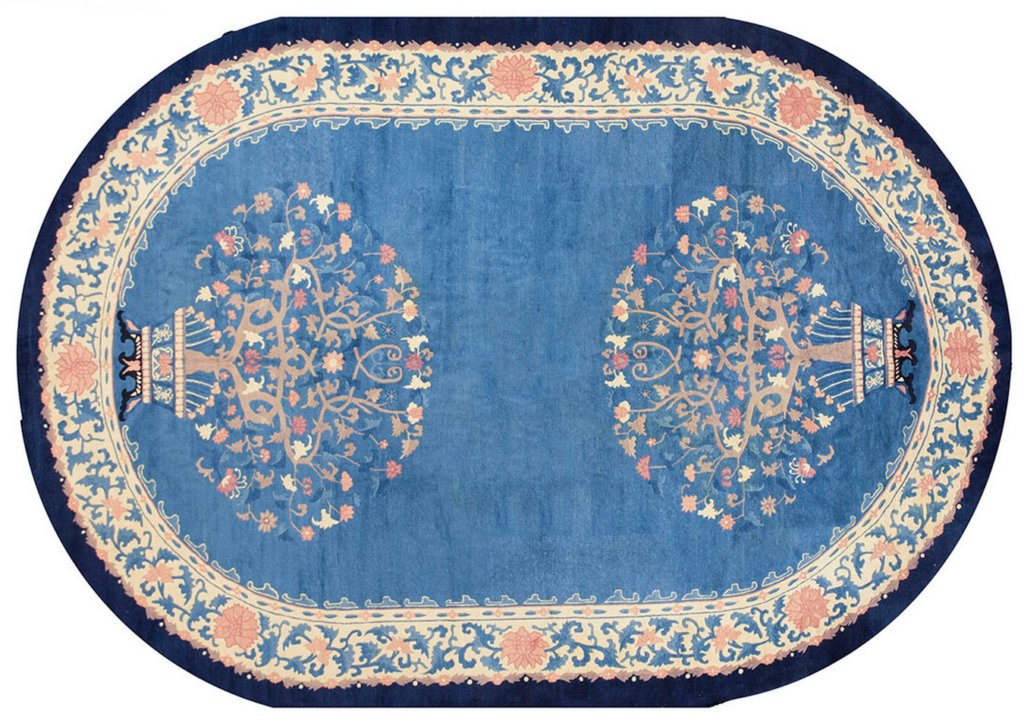
In contrast, floral fields or “garden” designs read as contemplative and organic, making them ideal library study rug ideas where the goal is reading, reflection, or creative wandering. Regardless of the motif, pattern plays a functional role. Should you choose a patterned rug to hide wear? Yes. As explored in earl, complex patterns—whether geometric or floral—are essential for camouflaging the inevitable “micro-traffic” wear lanes and soil that accumulate in a busy study.
Buying priorities by study type
To finalize this home office rug buying guide, match your purchase priorities to the specific way you use the room. A best rug for a study room is one that solves the specific friction points of your workflow.
- Library study
— Why: Prioritize acoustics and warmth. Does a study rug help reduce echo and noise? Yes, so choose a plush wool rug with a thick pad to absorb sound and create a quiet, hermetic atmosphere for reading.
- Task-heavy office
— Why: Prioritize mobility and protection. Select a low-pile or flatweave construction with a rigid chair mat to ensure the rolling chair glides effortlessly without damaging the floor or the user’s joints.
- Creative studio
— Why: Prioritize durability and cleanability. Look for forgiving patterns and stable, non-slip foundations that can handle the active movement and potential mess of an artist or crafter at work.
FAQ
- What’s the biggest mistake when buying rugs for the study?
The biggest mistake when buying rugs for the study is choosing a thick, plush rug. High pile interferes with chairs and wears unevenly.
- Do rugs improve comfort when working long hours in a study?
Yes, buying rugs for the study improves underfoot comfort and reduces fatigue. Even thin rugs add warmth and acoustic comfort.
- How often should I replace a study rug?
Buying rugs for the study typically results in long-term use. A quality rug can last 8–15 years with regular care and a rug pad.
- Are synthetic rugs okay when buying rugs for the study?
Synthetic rugs can work when buying rugs for the study, especially for budget or easy maintenance. Look for tightly woven, low-pile options.
- How do I clean rugs used in a study?
When buying rugs for the study, choose materials that vacuum easily and spot-clean well. Occasional professional cleaning extends rug life.
- Can rugs help define a study within a shared room?
Yes, buying rugs for the study helps visually separate the workspace from other areas. A rug acts as a clear boundary for focus.
- What rug shape is best for a study?
Rectangular rugs are most common when buying rugs for the study. They align easily with desks, shelves, and wall layouts.
- Should a study rug cover the entire floor?
Buying rugs for the study does not require full floor coverage. Most studies benefit from a rug that anchors the desk area only.
- Are vintage rugs suitable when buying rugs for the study?
Yes, vintage rugs can work well when buying rugs for the study if they are low-pile and structurally sound. They add character without excess bulk.
- How thick should a rug be for a study?
When buying rugs for the study, thin to medium thickness works best. Aim for under ½ inch pile for smooth chair movement.
- Can I place a rug under a heavy desk in a study?
Buying rugs for the study that are dense and well-supported allows placement under heavy desks. A rug pad helps prevent compression marks.
- Is wool a good choice when buying rugs for the study?
Yes, wool is ideal when buying rugs for the study because it is resilient, naturally soil-resistant, and helps regulate sound and temperature.
- Do rugs in studies collect a lot of dust?
Low-pile rugs collect less dust when buying rugs for the study. Regular vacuuming once or twice a week keeps dust buildup minimal.
- How durable should a study rug be?
Buying rugs for the study requires durability since chairs and desks create constant friction. Dense wool or tightly woven constructions hold up best.
- Are patterned rugs distracting in a study?
Subtle patterns are fine when buying rugs for the study, but bold, high-contrast designs can be distracting. Low-contrast geometrics or textures work best.
- What colors work best when buying rugs for the study?
Neutral or muted tones are popular when buying rugs for the study because they reduce visual distraction. Grays, blues, and soft earth tones support focus.
- How do I prevent a study rug from curling at the edges?
When buying rugs for the study, choose tightly woven rugs and use a quality rug pad. Heavy furniture placement also helps keep edges flat.
- Can I use a rug with a rolling chair in a study?
Yes, buying rugs for the study with a low pile or flatweave works well with rolling chairs. Pairing with a firm rug pad improves mobility and prevents bunching.
- Are flatweave rugs good for a study?
Flatweave rugs are excellent when buying rugs for the study. They are thin, stable, and compatible with rolling chairs and heavy desks.
- Should I use a rug pad when buying rugs for the study?
Yes, a rug pad is essential when buying rugs for the study. It prevents slipping, protects floors, and adds cushioning without increasing pile height.
- Do rugs help reduce noise in a study?
Buying rugs for the study helps absorb sound and reduce echo. A dense rug with a pad can noticeably quiet footsteps and chair movement.
- What materials are best when buying rugs for the study?
Wool and flatwoven cotton are top choices when buying rugs for the study. Wool offers durability and sound dampening, while cotton flatweaves stay thin and easy to clean.
- Are low-pile rugs better when buying rugs for the study?
Yes, low-pile rugs are ideal when buying rugs for the study because they allow rolling chairs to move easily. They also trap less dust than high-pile options.
- What rug size works best when buying rugs for the study?
Buying rugs for the study usually works best with a rug large enough to fit the desk and chair, such as a 6×9 or 8×10. This keeps all legs on the rug during movement.
- What should I prioritize when buying rugs for the study?
When buying rugs for the study, prioritize low-to-medium pile, durability, and sound absorption. Dense construction helps reduce noise while allowing chairs to move smoothly.