Jewish Designs
Jewish rugs represent a profound intersection of textile artistry and religious identity, serving as “woven stories” that span centuries of the Jewish diaspora. Unlike many other categories defined purely by geography, Jewish rugs are unified by their rich iconographic language, which draws from biblical narratives, liturgical symbols, and the collective memory of the Holy Land. Common motifs include the seven-branched menorah, the Star of David, and the Tablets of the Law, often framed within architectural arches that evoke the Parokhet (the curtain of the Holy Ark). From the intricate pictorial carpets of 19th-century Persia depicting figures like Moses and Aaron to the symbolic “Shiviti” hangings used as directional pointers for prayer, these textiles embody the principle of hiddur mitzvah—the beautification of a commandment.
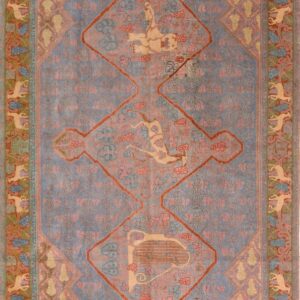
A significant chapter in this tradition emerged with the Bezalel School of Arts and Crafts in Jerusalem during the early 20th century, which sought to create a distinctive “Hebrew style” by blending Middle Eastern weaving techniques with European Art Nouveau and Arts & Crafts influences. These “Bezalel” or “Marvadiah” rugs are celebrated for their sophisticated use of Hebrew calligraphy and detailed landscapes of Jerusalem and the Western Wall. Whether used as ritual hangings in a synagogue, decorative pieces in the home, or commemorative gifts, Jewish rugs offer more than aesthetic value; they function as cultural artifacts that preserve religious traditions and ethnic heritage through vibrant wool, silk, and symbolic design.
Jewish rugs showcase profound cultural heritage and spiritual symbolism, with designs often incorporating meaningful iconography like the Star of David or traditional menorahs. These special pieces provide historical depth and sophisticated artistry for collectors and decorators alike; read more about Jewish motifs designs in our dedicated guide.
Artistic Art Nouveau Animal Design Room Size Antique Israeli Marbediah Rug
$9,800.00 Antique RugsRug sizes: 5.1x9