Art Nouveau Rugs
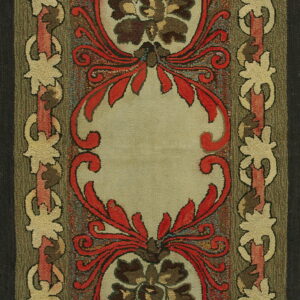
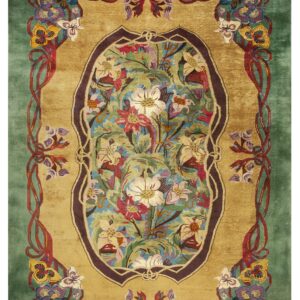
The Art Nouveau movement at the turn of the 20th century marked a poetic departure from the rigid, formal symmetries of the Victorian era, favoring instead the fluid and asymmetrical rhythms of the natural world. Art Nouveau rugs are defined by this “New Art” philosophy, characterized by the iconic “whiplash” curve—a dynamic, sinuous line that mimics the winding growth of vines, the unfurling of flower petals, and the graceful flow of water. These carpets function as organic works of art, often featuring stylized botanical motifs like irises, lilies, and poppies that appear to grow across the floor, breaking free from traditional borders to create a sense of boundless movement and ethereal beauty.
Woven during an era that prioritized hand-craftsmanship as a reaction to industrial mass production, these rugs brought a sense of the Gesamtkunstwerk, or “total work of art,” into the home. Their palettes typically lean toward muted, sophisticated tones such as sage green, dusty rose, amber, and peacock blue, allowing the intricate, swirling patterns to command attention without overwhelming a space. Today, an Art Nouveau rug serves as a sophisticated focal point in both period-correct and contemporary interiors, offering a rhythmic, romantic counterpoint to the straight lines of modern furniture and imbuing any room with the timeless elegance of the Belle Époque.
Art Nouveau rugs capture the elegance of the late 19th century, defined by their graceful, organic lines and stylized natural forms that reject rigid geometry. These textiles stand out with their distinctive asymmetry and elegant color palettes, bringing historical romance and fluid artistry into modern interiors; learn more about Art Nouveau’s design principles in our comprehensive guide.
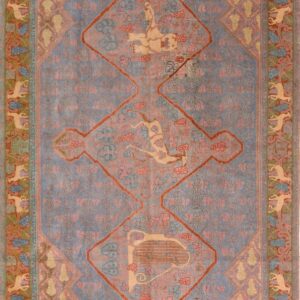
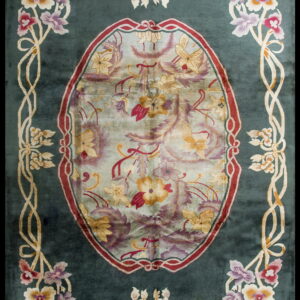
Artistic Art Nouveau Animal Design Room Size Antique Israeli Marbediah Rug
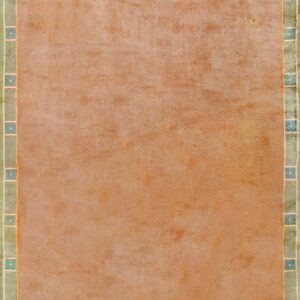
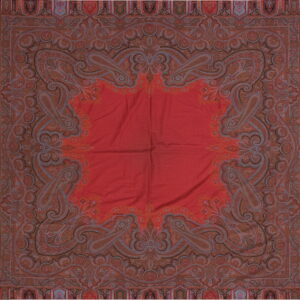
$9,800.00 Antique RugsRug sizes: 5.1x9Open Solid Coral Color Field Austrian Art Nouveau Werkstätte Viennese Carpet
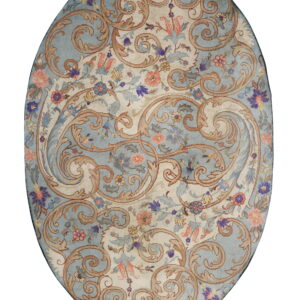
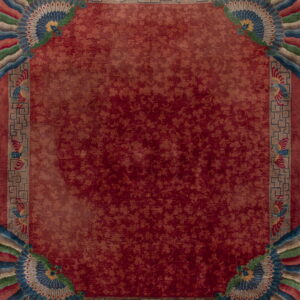
$22,750.00 Antique RugsRug sizes: 9.04x13.06Red Allover Hand Knotted Antique Chinese Art Nouveau Design Rug
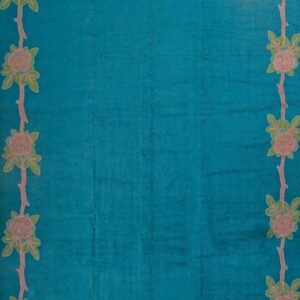
$7,810.00 Antique RugsRug sizes: 8x9.06Open Green Bule Color Field Antique Oversized Irish Donegal Art Nouveau Rug
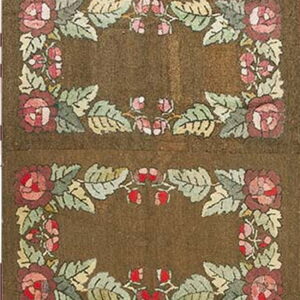
$75,000.00 Antique RugsRug sizes: 12.06x25.02Rare Antique Artistic Art Nouveau Design American Hooked Folk Art Rug
$1,200.00 Antique RugsRug sizes: 2.05x3.1Antique Yellow Art Deco Art Nouveau Room Size Wool Chinese Rug
$22,500.00 Antique RugsRug sizes: 9.1x13.04