Rugs Circa 1937
1937: The Culmination of Art Deco and the Dawn of Modernism
A rug woven in 1937 represents a masterpiece of the “Interwar Period,” an era where the rug industry reached a new level of professional standardization and artistic refinement. By the late 1930s, the world had moved away from the heavy ornamentation of the Edwardian years, favoring the clean lines and geometric balance of the Late Art Deco movement. Rugs from 1937 often showcase this shift; even in traditional workshops like those in Sarouk or Kerman, designs began to feel more spacious and organized, catering to the sophisticated apartments of Paris, London, and New York. This year is prized by collectors for producing rugs that possess “modern souls” while still being crafted with the high-mountain wool and manual labor of the antique world.
Technologically, 1937 was a year of exceptional stability in the dye houses. By this time, the industry had successfully moved past the experimentation of early synthetics, perfecting the use of Chrome dyes. These pigments offered a level of colorfastness and vibrancy that allowed for the “jewel tones”—deep burgundies, sapphire blues, and champagne golds—that define the late 1930s aesthetic. Furthermore, the wool quality from this specific year was notably high; as international trade routes were fully optimized before the disruptions of WWII, weavers had access to the finest materials and most consistent looms. A 1937 circa rug is effectively a “technical peak,” offering the durability needed for high-traffic modern homes without sacrificing the artistic depth of a handmade textile.
The global landscape of 1937 was one of high drama and technological wonder. While the world was beginning to feel the tremors of the approaching conflict in Europe, it was also celebrating the heights of human achievement. This was the year the Golden Gate Bridge opened in San Francisco, an icon of the same Art Deco engineering that influenced the architectural borders of the era’s carpets. It was also the year of the Paris International Exposition, where the “Modern Style” was showcased to the world, further pushing rug designers to experiment with the minimalist “American Sarouk” and “Open Field” styles. A rug from 1937 captures this exact moment: it is the final, polished expression of an old-world craft perfected for a modern, global society.
Circa 1937 rugs capture the craftsmanship of the late pre-war period. Their designs often show maturity and restraint in pattern and color.
Prefer to see a rug in person?
-
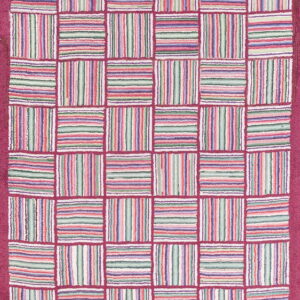
Antique American Folk Art Hooked Hallway Runner Rug
$3,400.00 Antique RugsSKU: 19237Rug sizes: 3 ft 2 in x 10 ft 4 in (0.97 m x 3.15 m)