Rugs Circa 1871
1871: The High Victorian Aesthetic and the Dawn of Global Connectivity
A rug woven in 1871 is a testament to the enduring nature of classical weaving during a period of intense global change. In the West, the High Victorian style was at its zenith; interiors were characterized by rich, saturated colors and a demand for textiles that displayed both grand scale and intricate detail. Consequently, 1871 circa rugs often feature the bold, sprawling floral patterns and deep madder-red fields that were designed to anchor the stately dining rooms and libraries of the burgeoning middle class. This year represents a bridge between the purely tribal origins of the mid-century and the more structured, workshop-driven “Golden Age” that would define the end of the century.
Technologically, 1871 was a critical year for the chemistry of the loom. While the “Aniline Revolution” was beginning to introduce synthetic purples and pinks to the market, the most prestigious workshops—particularly in regions like Ziegler-managed Sultanabad or the master looms of Tabriz—doubled down on traditional vegetable dyes to maintain the archival quality that Western collectors demanded. A rug from this year is prized for its “chemical purity”; it captures the final years where natural indigo and insect-derived cochineal were used with absolute mastery before the widespread (and often problematic) adoption of early chemical dyes in the 1880s.
The world of 1871 was one of dramatic rebirth and technological milestones. This was the year of the Unification of Germany, a geopolitical shift that created a massive new market for luxury Persian carpets. In the United States, 1871 was defined by the Great Chicago Fire, an event that led to an unprecedented architectural rebuilding phase, during which the “Oriental Rug” became the essential centerpiece of the new, sophisticated American interior. While the West was modernizing through steel and steam, the weavers of the East remained committed to the slow, rhythmic art of the hand-tied knot. A rug from 1871 captures this unique balance: it is a robust, “industrial-strength” antique built to last for generations, yet it remains infused with the ancestral soul of the pre-modern world.
Rugs from circa 1871 highlight period craftsmanship and established decorative traditions. These pieces offer balanced design and durability.
Prefer to see a rug in person?
-
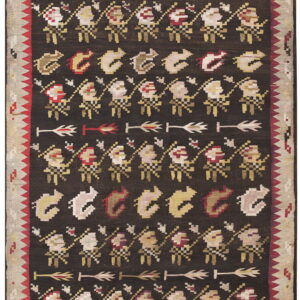
Antique Tribal Geometric Flora and Fauna Design Romanian Bessarabian Flat Weave Kilim Rug
$11,400.00 Antique RugsSKU: 21519Rug sizes: 5 ft x 11 ft 2 in (1.52 m x 3.40 m)